Over the course of eight weeks between May and June, Mid lachlan Landcare sampled the microbiome of twenty eight unique sites spanning from public (Cemeteries, Travelling Stock Reserves) to private (Cropping and Grazing farms). With each site being sampled an average of four times we ended up with one hundred and fifteen sample plots, each of which played a small yet important role in uncovering the rich and diverse microbiome of the Mid Lachlan region.
Why did we carry out this experiment?
There’s growing recognition that the soil microbiome plays a pivotal part in a healthy ecosystem. In the past it has been difficult for independent farmers, conservationists, gardeners and citizen scientists to assess their soil’s microbiome in a timely, cost-efficient and readily accessible manner.
In investigating options to fill this gap for our community, we came across the microBIOMETER and decided to invest resources into answering the following questions:
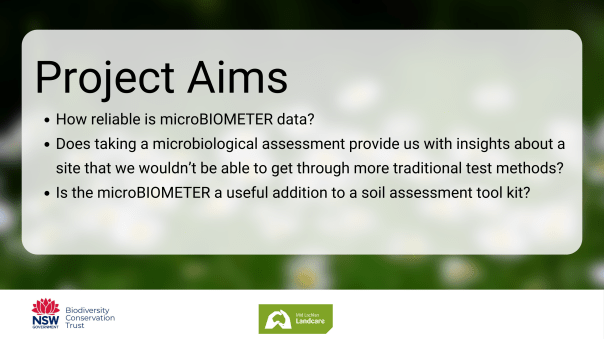
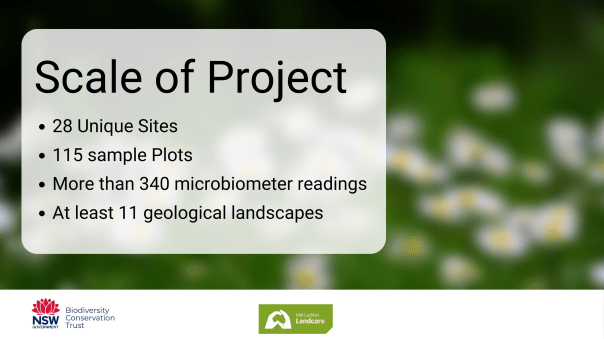
The overall goal of this project was to collect and analyse enough data to give us a meaningful data set for the region so that we might answer the above questions in an applied, narrative way that made sense to our community. We conclude that while the microBIOMETER has some limitations and is not the only way to assess soil microbiology, the insights it provides are useful as part of a soil assessment protocol for informing land management decisions over time.
It’s estimated that each teaspoon of soil contains around one billion microbes representing somewhere between ten and fifty thousand species. For comparison a healthy human gut contains around one thousand species, each of which plays a role in how our bodies access and absorb nutrients and process toxins and waste. Soil microbiomes are no different, with fungi, bacteria and other microorganisms ensuring nutrients are both available and accessible to plants and that waste material is broken down and recycled safely and efficiently.
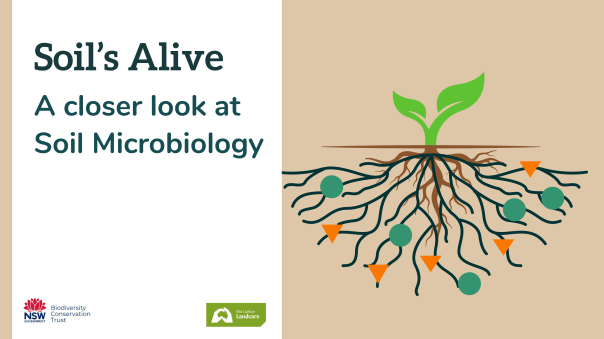
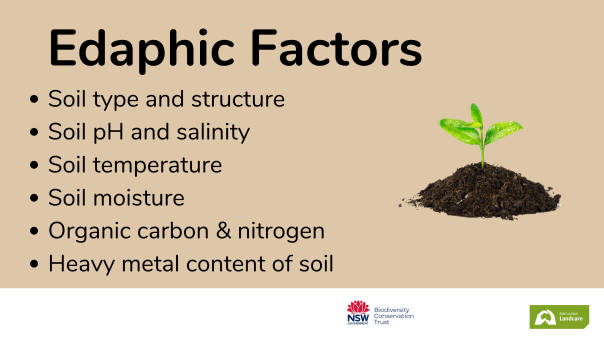
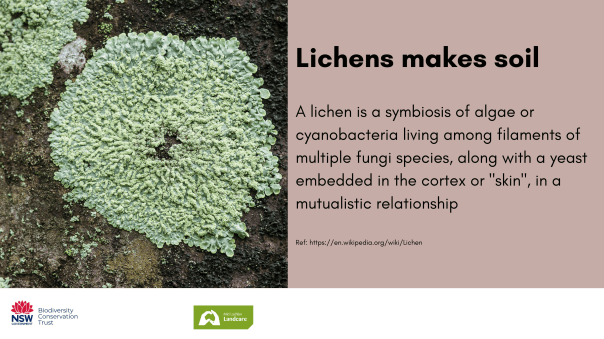
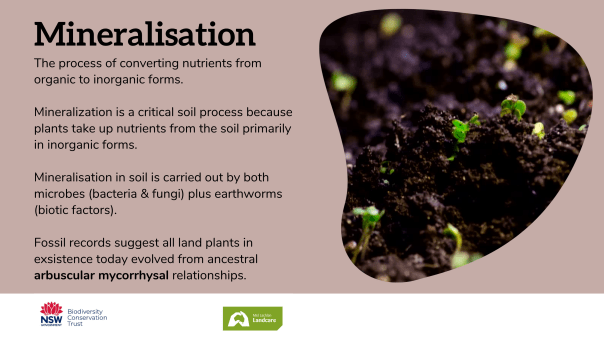
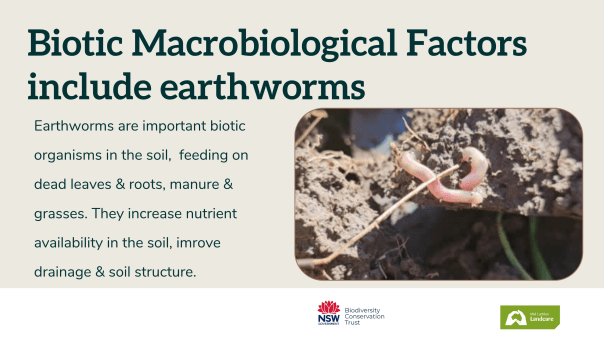

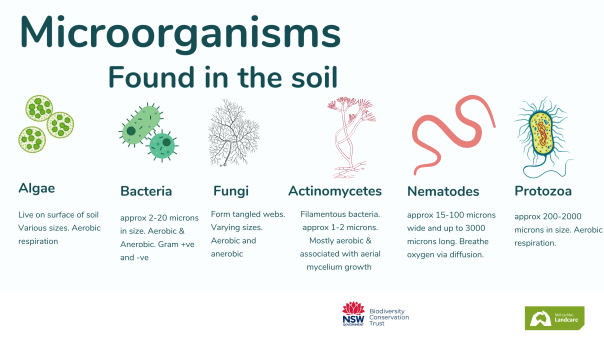
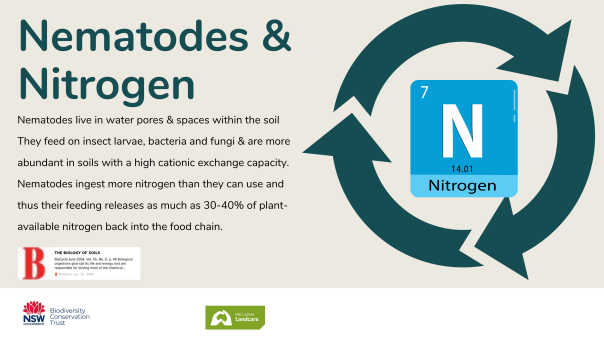

Soil microbiome research projects have exploded in number over the past five to ten years with conservation groups, farmers and horticulturists alike, seeing value in accomodating a microbiome-informed approach to their management plans.
Soil Microbiome: The entire ecosystem relating to the
soil microbiota and how they function in that environment.
This includes the environmental conditions, microbial
metabolism and interactions between microbes.
With this in mind, Mid Lachlan Landcare set about designing a pilot project to map and model our regional microbiome with a view to better understanding where we sit currently – is our collective microbiome healthy – and potentially, where we could get to in the future. The resulting project was funded through the Private Land Conservation Matters project by the NSW Biodiversity Conservation Trust.
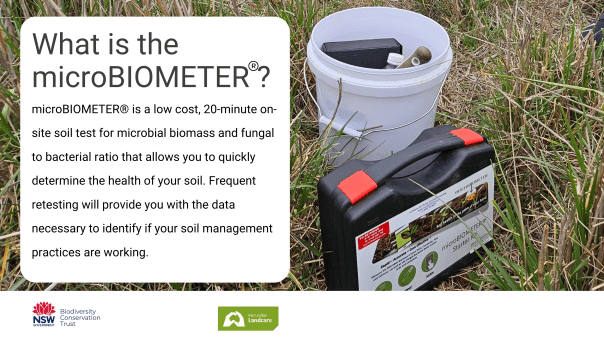
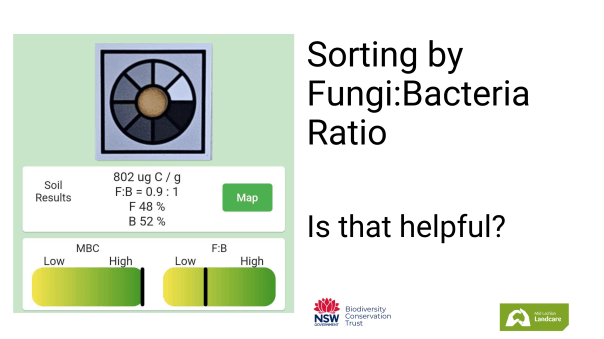
We were sampling from what’s known as the Rhiosphere – the top 10cm of soil or the space where symbiotic plant:microbe activity is most likely. The microbiometer® is a low cost device that can give you a value for the sites total microbes, fungi:bacteria ratio and fungi percentage within 20 minutes for less than $10 per test strip. The speed, cost and all round convenience of this test is what attracted us to it in the first place, sentiments that were shared by our community when surveyed during our field day/ results sharing event.
- Optimising our test method – what we learned about what to consider during this trial.
- Analysing the results – We learned it was hard to make sense of the results and spot patterns when relying only on the test numbers.
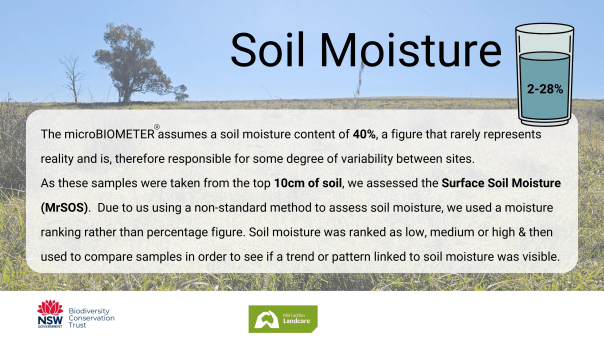
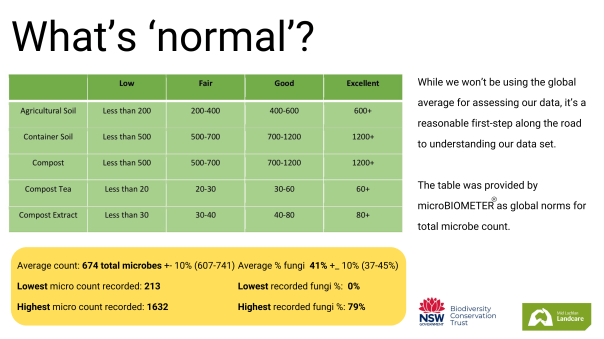
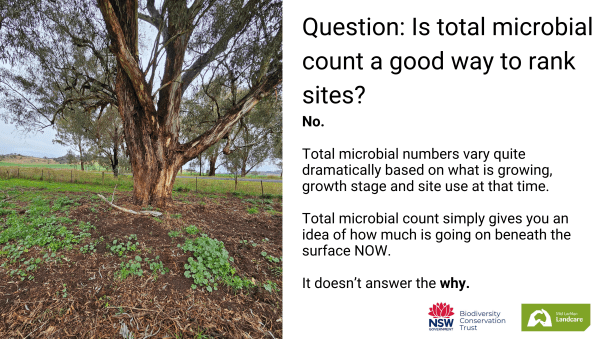
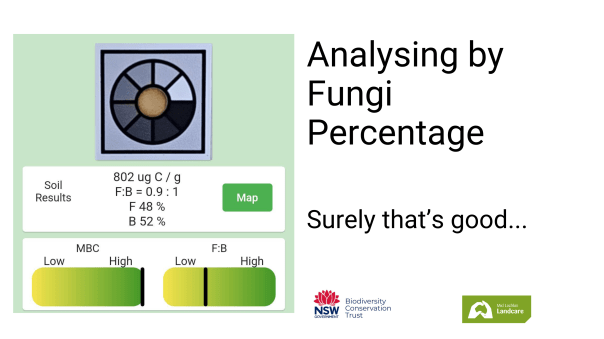
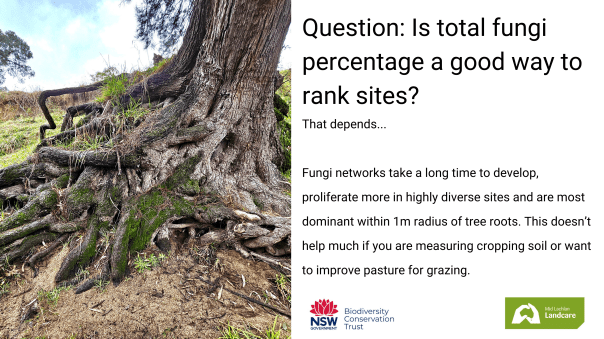
We found it best to view our Microbiometer® results in a more narrative rather than absolute or stand-alone context. In that way it could also be described as a formative rather than summative test. Creating a narrative helps capture the whole microbe ecosystem in a way that allows us to add meaning and context to the numbers:
Narrative assessments build stories that help us to learn more about the subject, to monitor, evaluate and communicate its worth.
A formative assessment tool provides insights that inform ongoing actions.
We developed a five-factor criteria which involved ranking our test sites for Site Diversity, Weathering potential, Water availability, Underlying site Geology and Land use/ management decisions. While this study was not large enough to provide granular insights into how management decisions impact the soil microbiota, we did start to see some patterns emerging & could sort the sites based on their current function.
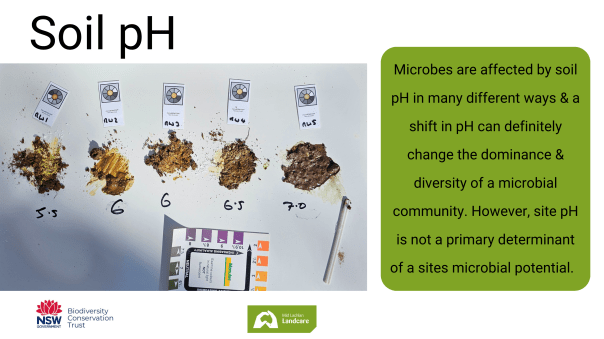
In addition, we tested soil pH for each sample, recorded collection date, temperature, sampling date and a brief site history where possible.
The microbiometer® returns a result for total number of microbes based on the mass of carbon present in the solution tested. We see that as a number, most commonly between 200-1200+. An excellent result for agricultural soil is one that’s above 600 so when our global average came in at 674, it felt like we were on the right track.
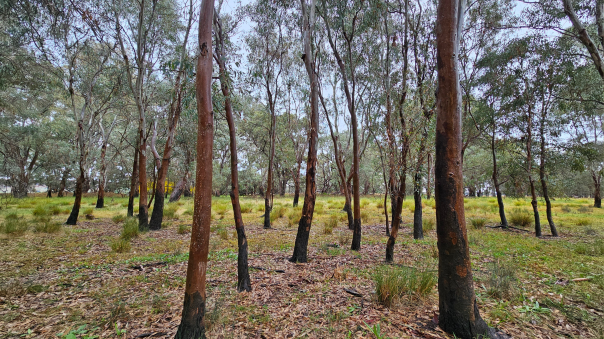
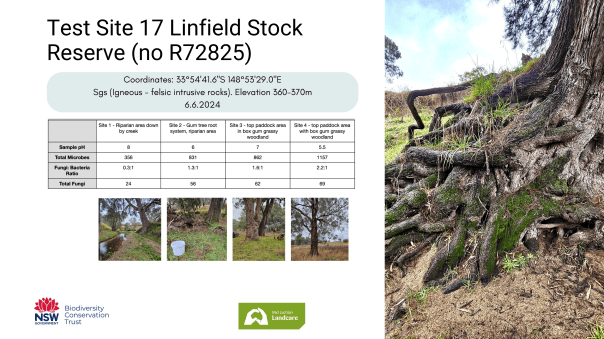
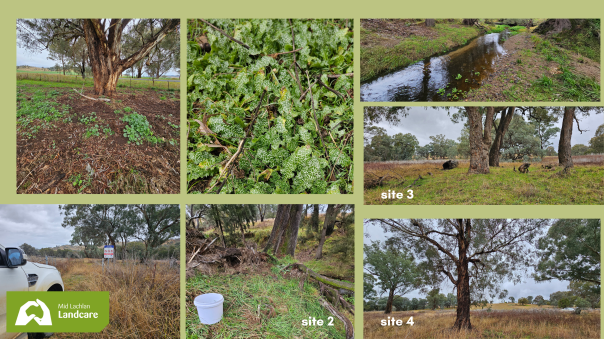
Existing scientific research taught us fungi networks take a long time to develop, proliferate more in highly diverse sites and are most dominant within a one meter radius of tree roots and our experimental data was in alignment with that. Some of our highest results came from the area around established gum trees that had experienced light grazing. One notable result was from Linfield Travelling Stock reserve near Cowra, a site resting on volcanic rock at an elevation of 360-370 meters and one infrequently grazed. We recorded a reading of 1157 total microbes, 2.2:1 ratio of fungi: bacteria and a total fungi percentage of 69% under one of the established eucalyptus trees.
Our trial did not have enough pH diversity for us to make any conclusions about the role of pH and microbe numbers or ratio but microbe numbers were low in sites with known salinity issues.
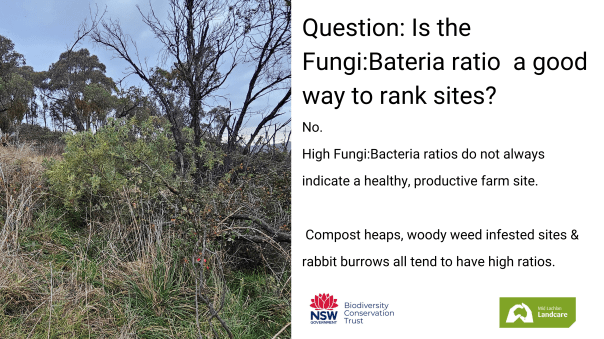
When viewing results from a fungi: Bacteria ratio perspective, we tended to find the sites that were dominated by fungi were more likely to be diverse in their flora, be grazed either lightly or not at all and be in close proximity to trees or deep rooted perennial grasses – especially native red grasses. Fungi dominant sites were typically among our most active sites with microbe counts over 1000. Fungi dominance reduced in line with total microbe numbers.
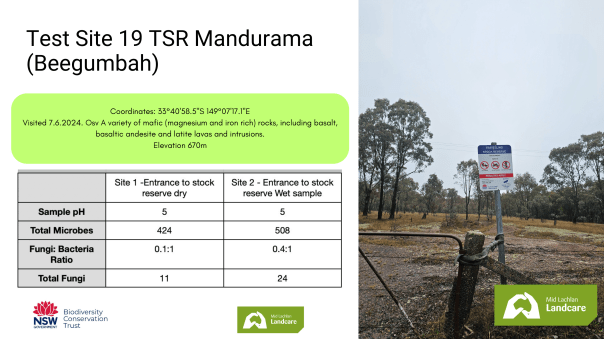
Finally we found underlying site geology to be a strong predictor of a sites ability to sustain a healthy microbiota with sites based on volcanic rocks appearing more resilient and productive than sites based on geological sediments. Our average total microbe count and fungi percentage for volcanic sites was 726 and 42% vs 467 and 34% for sedimentary sites. Another way this could be interpreted is it appeared the sites with underlying volcanic geology were more resilient to land-use pressures than sites built on sedimentary-type geology.
On July 19th 2024, we presented the results of our trial at a booked-out field day in Cowra and sought feedback from our community of farmers, conservationist and community gardeners by asking what we should do next with this technology/project.
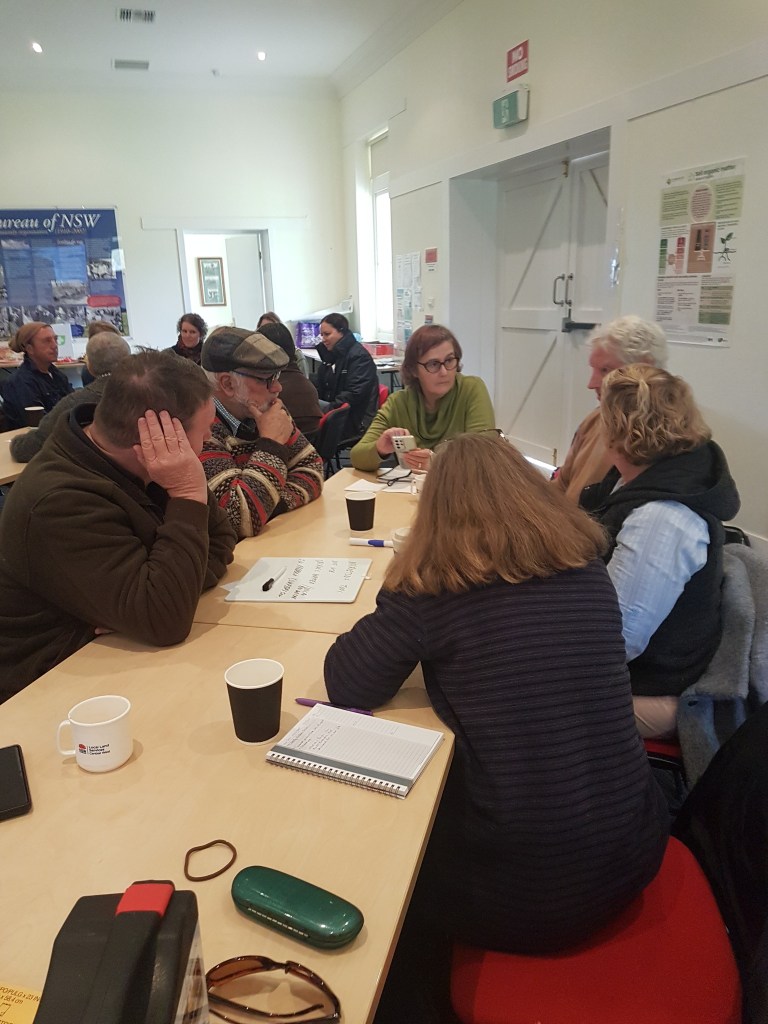

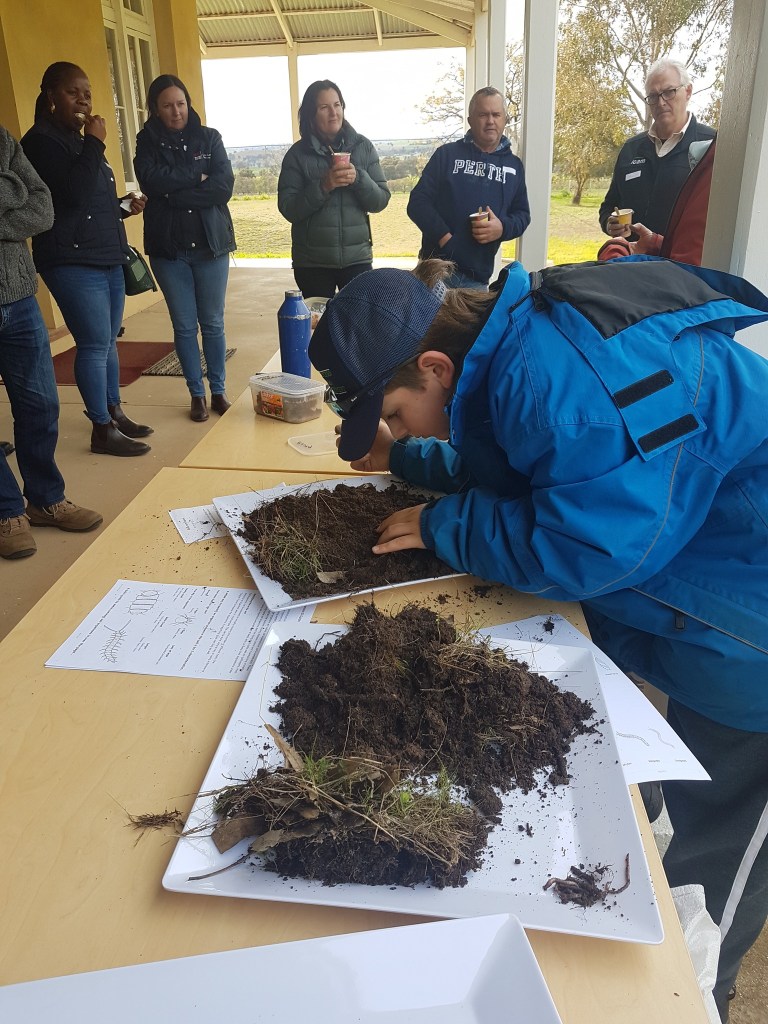
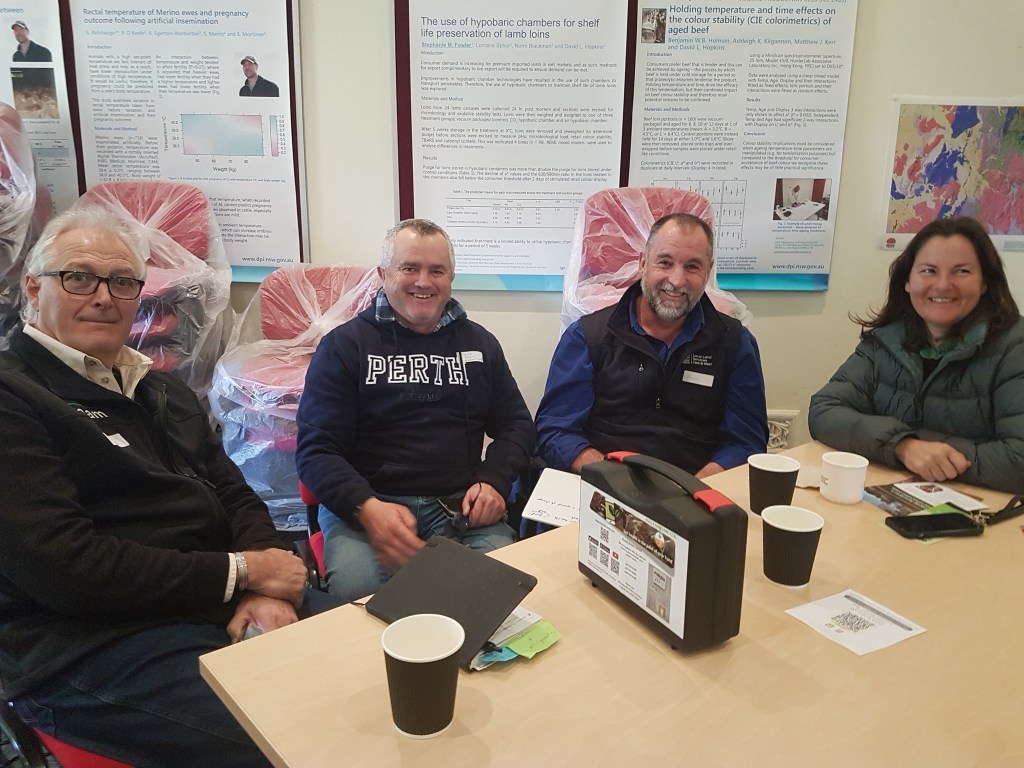


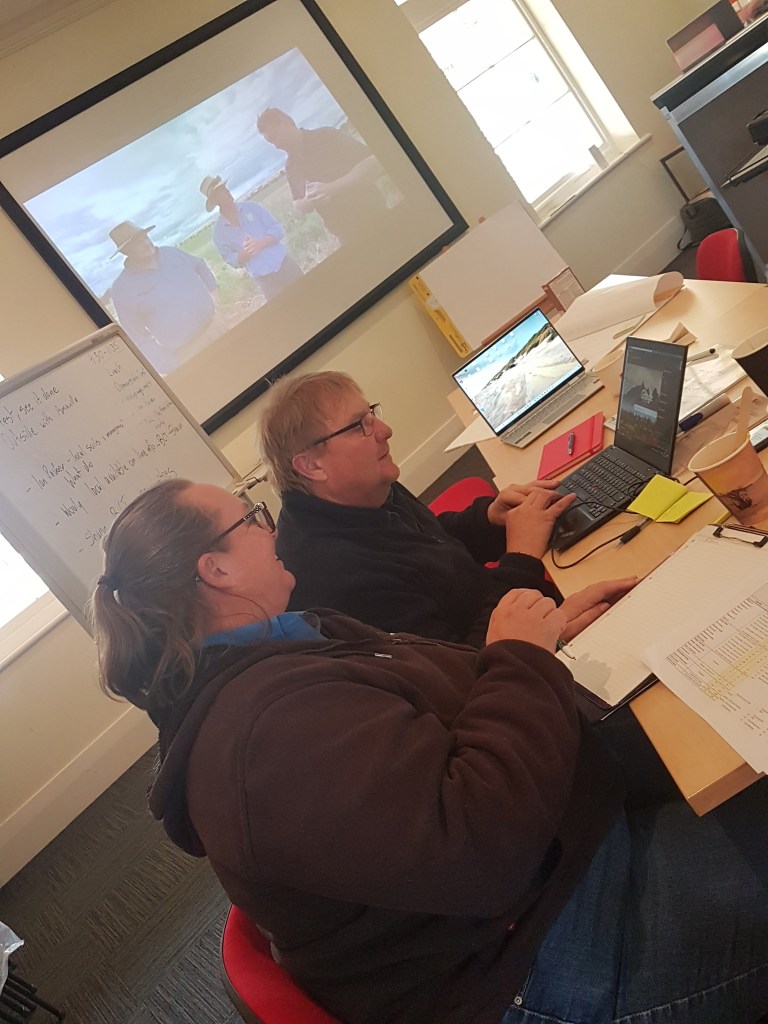
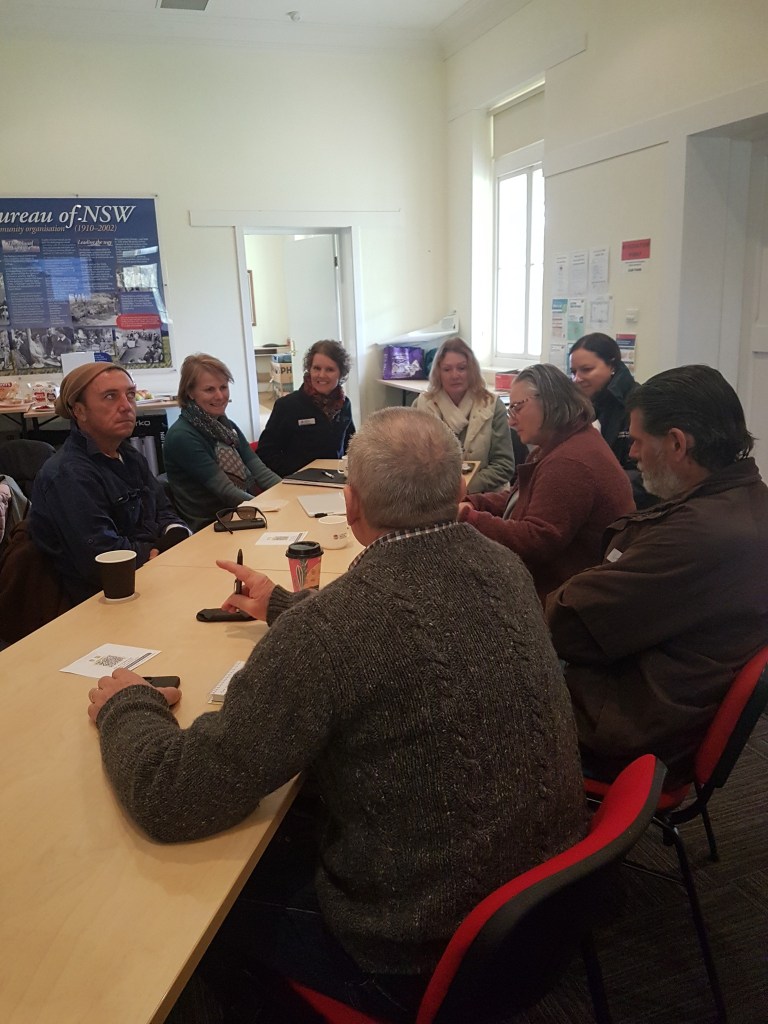
The feedback was overwhelmingly supportive with many wanting more information on how the Microbiometer® stack up against standard soil test methods as well as more information on what other farmers had found with the test.
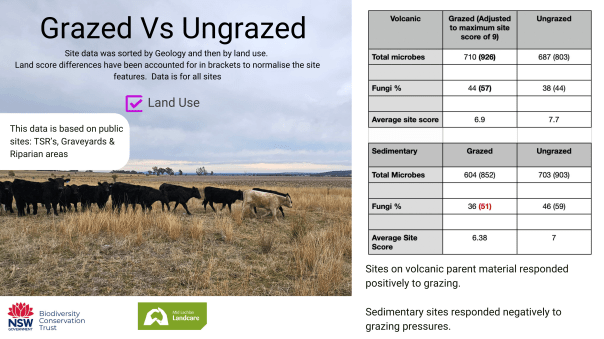
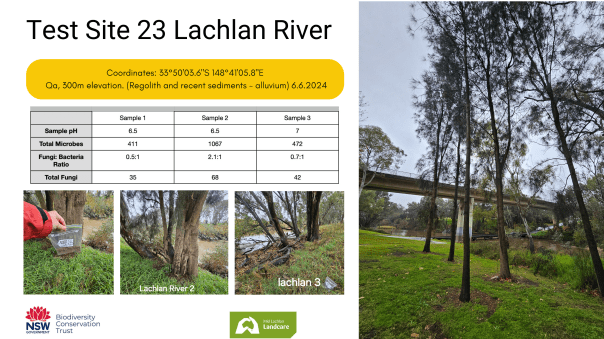
Results:
- How reliable is microBIOMETER data?
Microbe populations can shift and change quite rapidly meaning it’s important to standardise the time between collecting the sample and analysing it. Quoting the DPI’s Soil Biology Basics fact sheet:
‘Populations of microbes can boom or bust in the space of a few days in response to changes in soil moisture, soil temperature or carbon substrate. To gain advantage in this process, many microbes release antibiotic substances to suppress particular competitors. In this way some species can suppress other disease-causing microorganisms’
We quickly found that analysing samples in the field was difficult due to light conditions, other weather events (rain, wind etc) and the space and time requirements needed for each test.
Our method consisted of bagging up samples in zip lock bags then storing them in refrigerated conditions (approx 5-7C) for between 2-3 days before testing them. It was hoped the cooler temperatures plus sealed-in moisture would provide enough stability of the environment to make the test results meaningful.
As we used this protocol for all samples, the results yielded can be compared against each other although it’s likely the microbe communities in our soil samples are somewhat altered from when the samples were first collected. The assumption made at this point is our sample collection & storage protocol was standardised enough that all samples would be affected and altered similarly.
Our five-factor site analysis backs up the above assumption as when results were analysed this way, patterns emerged that made sense given what we know about microbes and what we could measure of each site. These patterns were not immediately evident when other site factors were not considered.
Overall, the microBIOMETER produces data that’s reliable although we’d caution in relying too heavily on the numbers alone and instead, focus on whether total count was low, medium or high (for this type of environment) and the fungi: bacteria ratio.
2) Does taking a microbiological assessment provide us with insights about a site that we wouldn’t be able to get through more traditional test methods?
We believe so although we’d caution against relying on a one-off biological measure for long-term land management due to how rapidly a microbial community can change.
Our goal as a Landcare community is to protect, preserve or restore ecosystems so it makes sense to consider the soil microbiome in that equation. The microBIOMETER provides a cost-effective and rapid way to gain an insight of the soil’s biology.
3) Is the microBIOMETER a useful addition to the soil testing tool kit?
This test provides us with another perspective on the sites current health status and future potential in a way that’s cost and time effective. For those reasons it becomes a question of ‘why not?’ rather than ‘why bother’.
Conclusion:
Overall we feel this project has successfully delivered insights into how the Mid Lachlan region’s soils microbiome functions with respect to landscape features and management decisions although it’s clear there’s still a lot more work to do. Also, after putting the microBIOMETER through it’s paces we believe it’s a useful tool for those looking to gain a deeper understanding of their soil. Our advice would be to use the microBIOMETER or similar microbiology assessment tool/ protocol alongside your existing soil testing tools, at regular intervals to monitor the effect management decisions have on the soil microbiota over time.
This project and our event was possible thanks to the shared work of the NSW Biodiversity Conservation Trust and Landcare NSW under the Private Land Conservation Matters project.


 Mid Lachlan Landcare
Pingback: Customer Spotlight: Mid Lachlan Landcare - microBIOMETER
Pingback: Soil Microbiology on Farms | Mid Lachlan Landcare