Mid Lachlan Landcare
supporting sustainable agriculture and restoring the environment
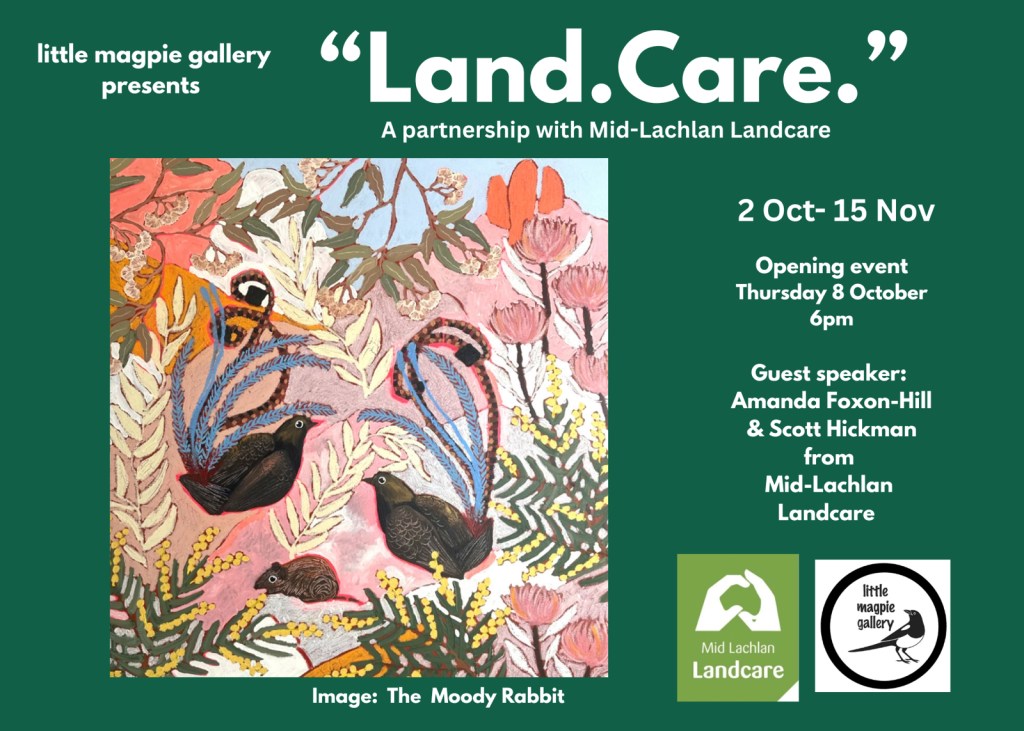
Land Care Exhibition at Cowra’s Little Magpie Gallery
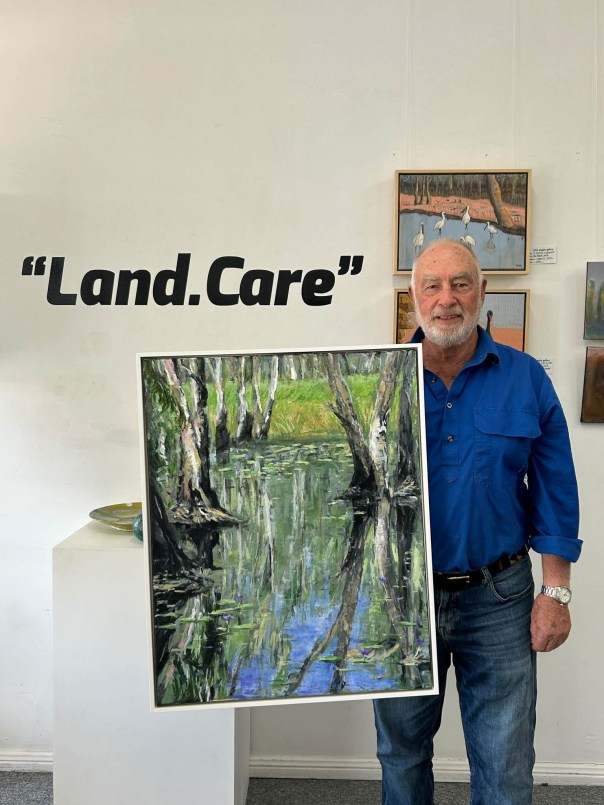
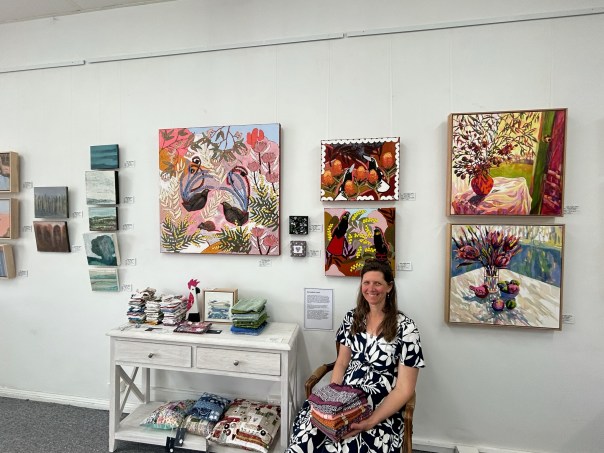
Back in August we were invited to collaborate on an exhibition at the Little Magpie Gallery that included curating (choosing) the art and the story we wanted it to tell. The theme for our big entrance into the art world is ‘Spring Salon’, an art and environment partnership that invites us to discuss how both art and science can be powerful tools for discussing environmental issues.
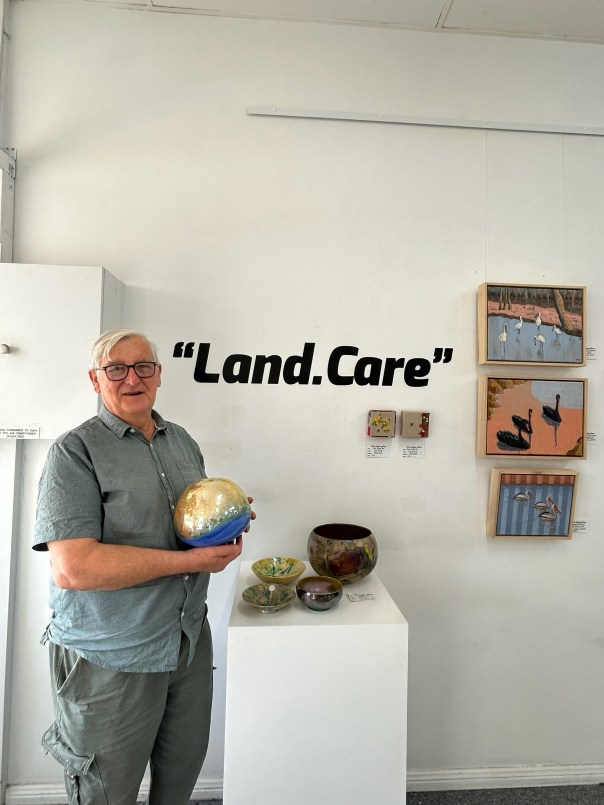
Having never curated an art exhibition myself and having no qualifications that would help me do so, I turned to one of the many members in our Landcare team that could help – Ken Hutchinson. Now Ken is a bit of a quiet achiever in our Landcare team, having taken on the important but often thankless (and almost invisible at times) task of tackling the weeds up on Mulyan Hill (also known locally as Billy Goat Hill or Bellevue Hill) in Cowra. It felt good to offer him the opportunity to contribute via a less prickly task around town and thankfully he said yes.
So now all that’s left to do is for Scotty and I to polish our short intro speeches and make sure you, our readers know about the event. We really are looking forward to participating in the discussions that this beautiful collection of art brings up and can’t wait to see you all there.
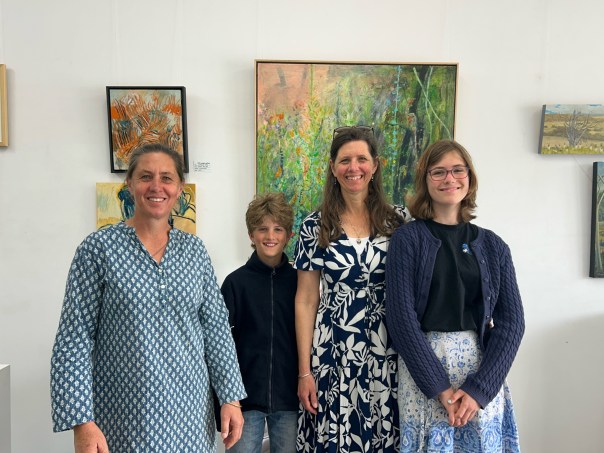
Some sneaky-peak pictures of what we’ve lined up with the help of Little Magpie Gallery. We really do have the best community – you’re all so arty, it’s wonderful!
Landcare in the Library
Libraries are one of the few places left in our communities that offer so much and demand so little in return – I mean they don’t even demand you keep your mouth shut any more, you are allowed to talk! AND craft and connect with people and stay warm or cool depending on the season, the list goes on…
This year for Landcare week we decided to try ‘Landcare in the Library’ which is to say we set ourselves up for a day in Cowra and then a day in the beautiful new facilities over in Canowindra and invited the public to come in for a natter about Landcare-related stuff. We ended up liking that idea so much that we’re planning on making it a regular thing, after all if nobody comes in, we can still get on with our regular work AND catch up on the latest author news and book releases. As we’re both keen readers that sounds like heaven!
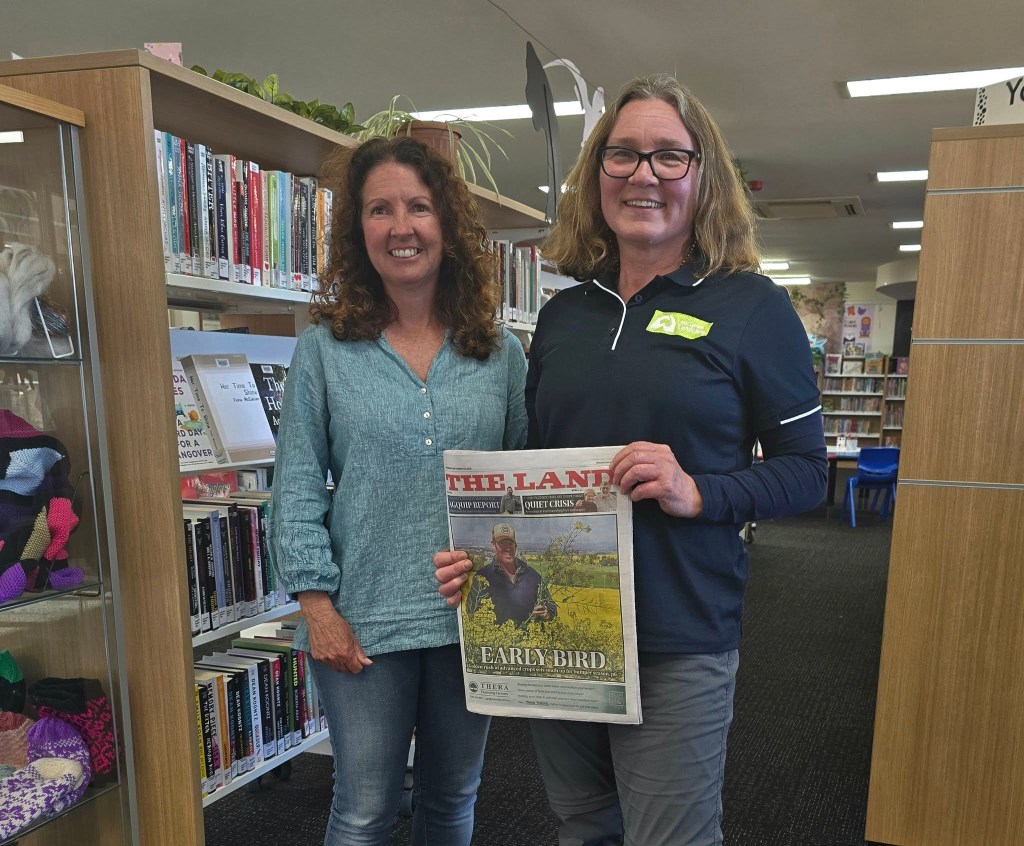
Cowra Library now stocks ‘The Land’, a newspaper that often features locals and stories from this very area – it’s a great read and brilliant that it’s now available for everyone to enjoy.
September’s Landcare-in-the-Library was held the day after our committee meeting (Committee meeting is third Wednesday of the month) – we’re hoping to make this a regular event and will most likely stick with that protocol. This month we decided to trial a little up-cycled crafting and opted for seed-packet making, using old magazines (that we provided) and paper shopping bags. There’s usually something in seed most of the year but the run up to Christmas is particularly busy for wattles and she-oaks (with August/ September being a good time for Kurrajong seed collection). Our aim is to create a stock of seed packets that we can provide to our community of growers and seed collectors. We may also use them to contribute to the Seed Library that Central West Libraries are currently rolling out across the region – if they’d like that.
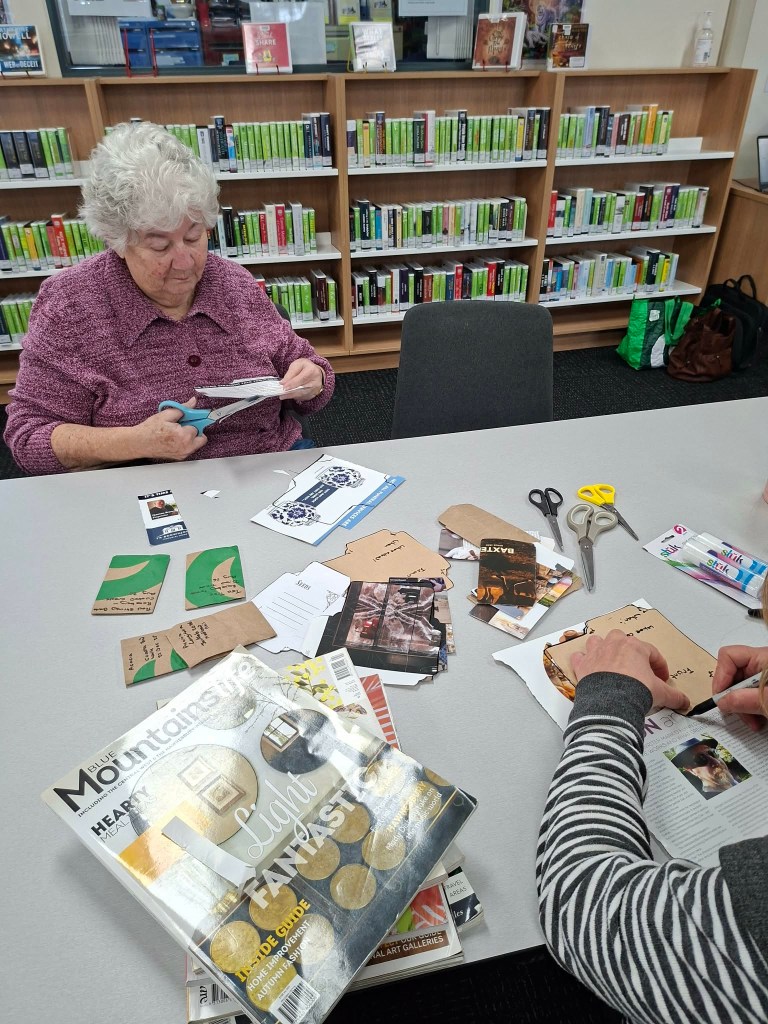
There are lots of seed packet design templates online but this is the one we downloaded. The main reason for choosing this one was a) we found it quickly and b) it reminds you to pop the date and some other details down on the packet!
In terms of material to make the packets out of we’ve found glossy magazines really good as the paper has a higher level of water and mould resistance than the paper shopping bags you now get. That said, the paper shopping bags are a decent resource and something many of us regularly have lying around.
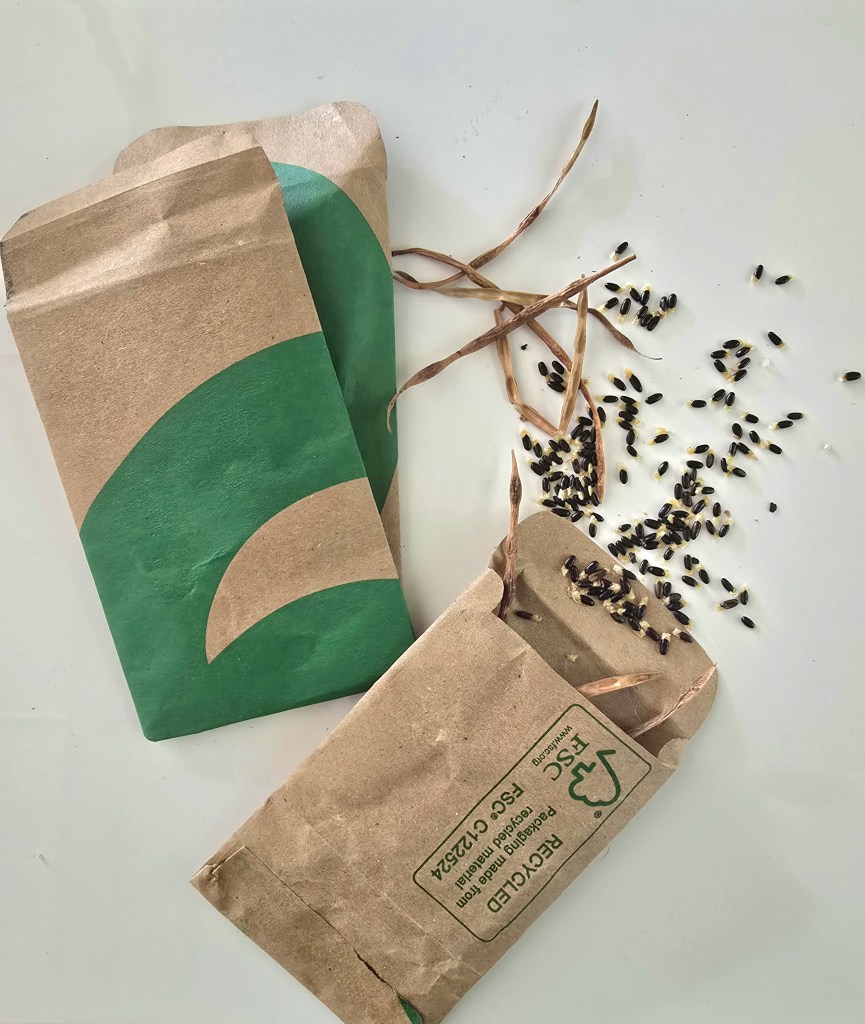
Our next Landcare-in-the-Library date will be on Thursday 22nd October at the Cowra Library. Hope to see you there!
Hooray For The Second Canowindra Carp Muster!
Sunday just gone saw our Landcare team out on the steps of the Age of Fishes Museum in Canowindra for the town’s second Carp Muster, taking over the organising from Jacquie (ex Canowindra Connections) who did a fabulous job of getting this wonderful event established in the village last year.
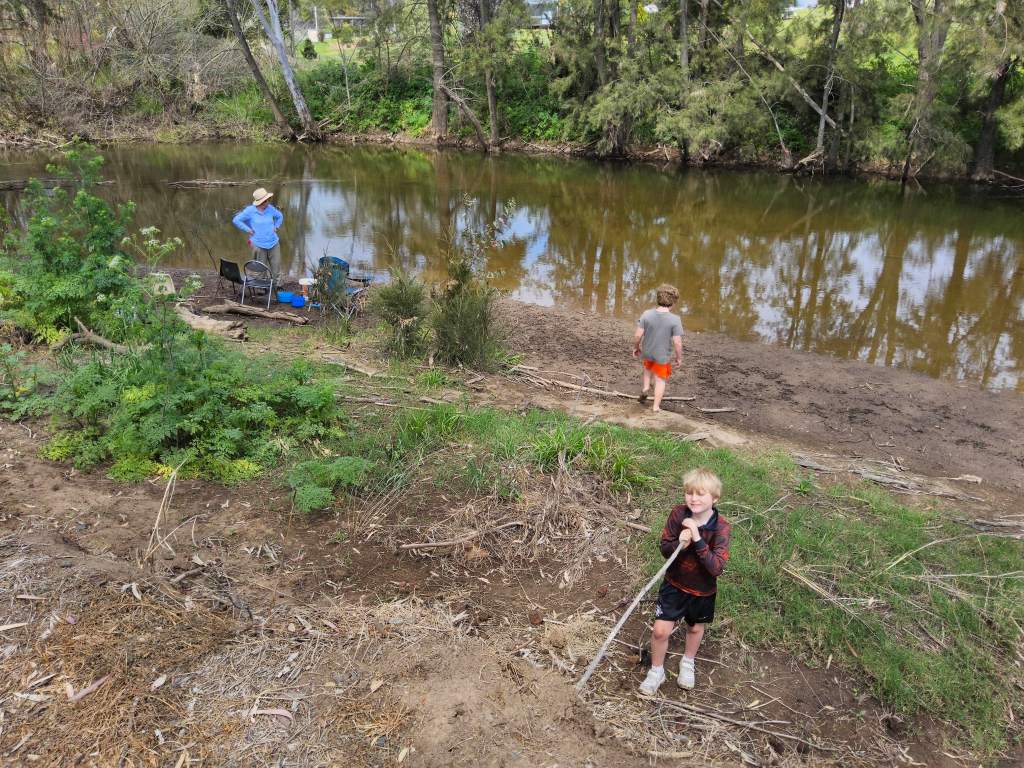
We moved this years muster to the end of September to avoid the frosty start and sluggish fishing conditions and thankfully it paid off. With temperatures in the early 20’s, plenty of fresh air and fluctuating air pressure, the fish were biting in the Belubula & a good number of our fisher folks got lucky!
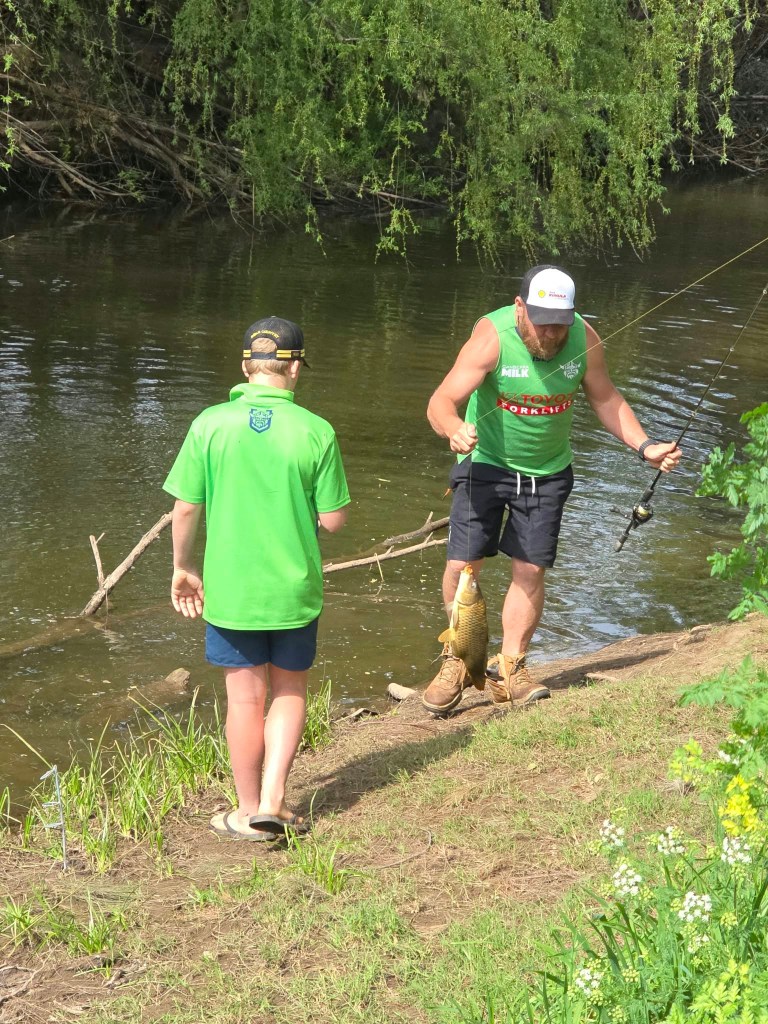
Bait was mostly sweet corn or worms and that got us a haul ranging from around 40cm to around 68cm – a mud loving monster of a fish.
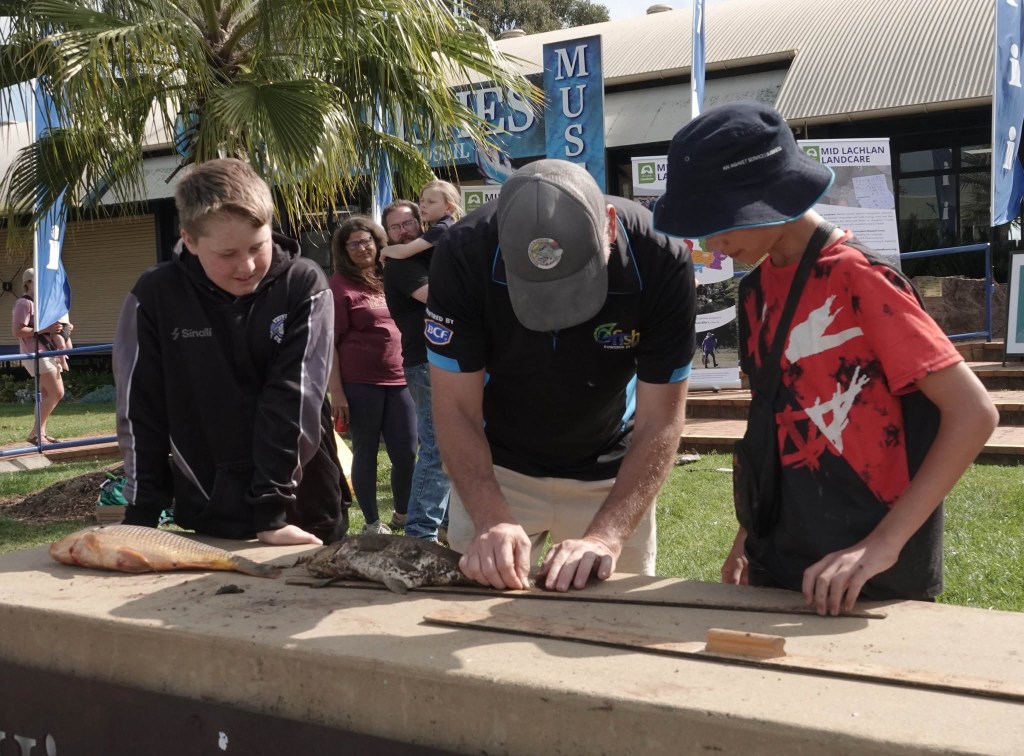
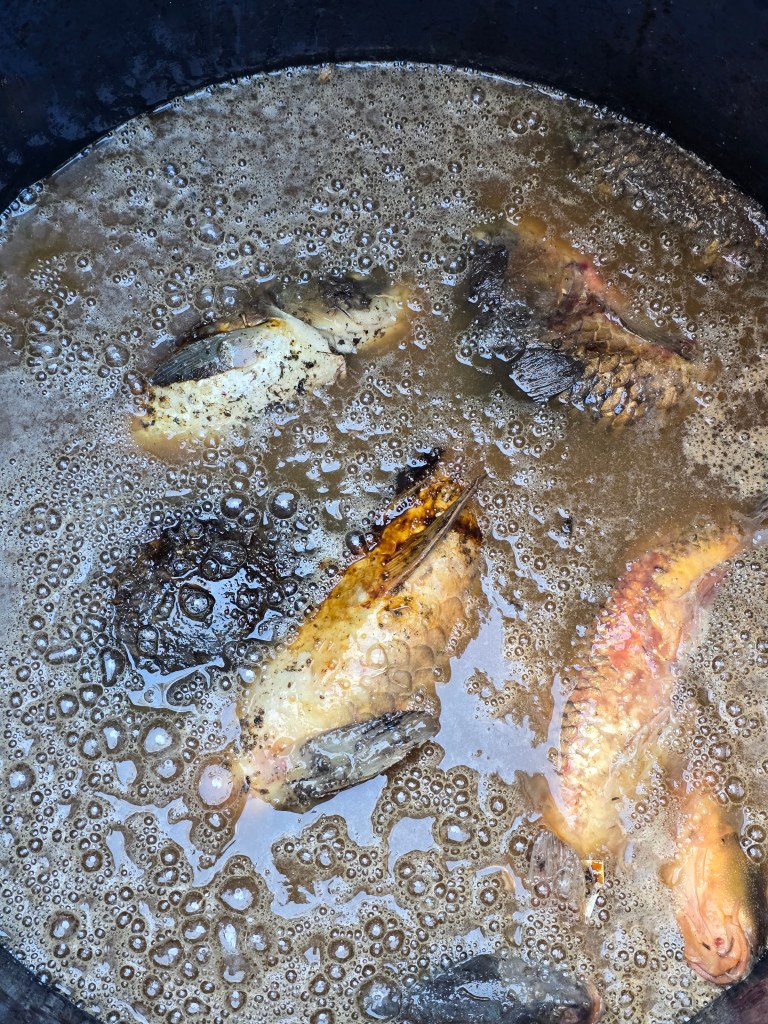
By the time the competition closed we had a bucket load of around 30 carp to turn into fertiliser for our gardens. You can read about our fish fertiliser here.
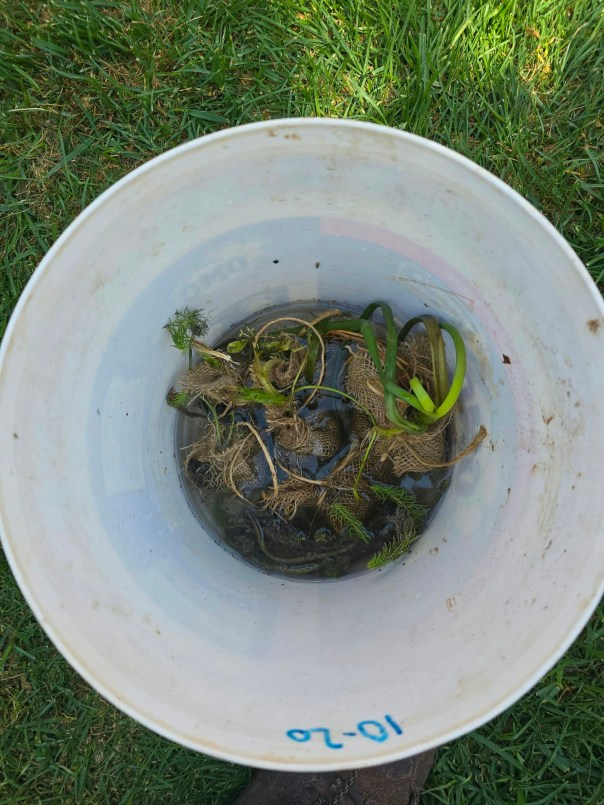
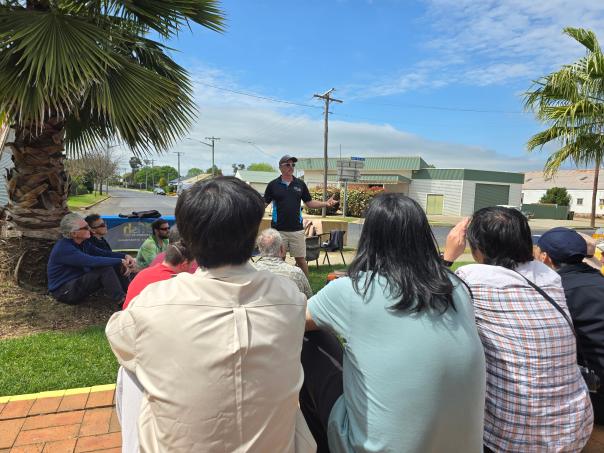
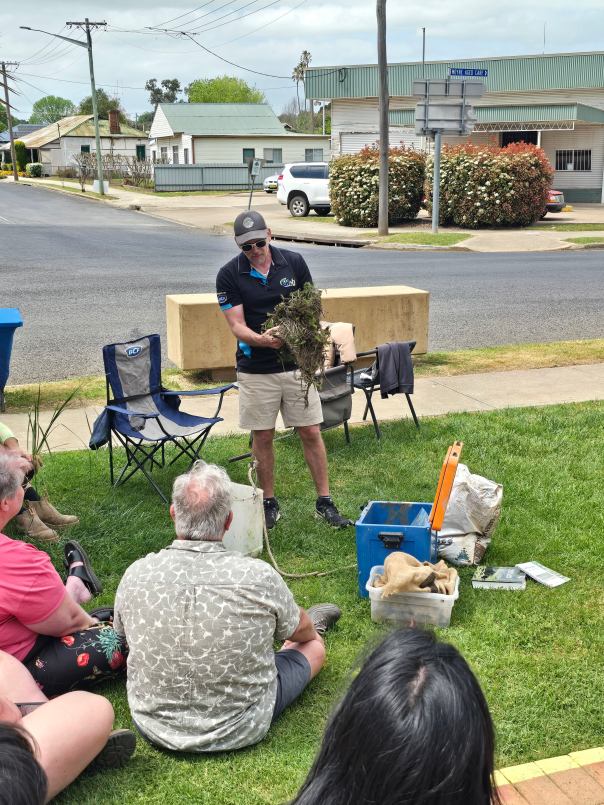
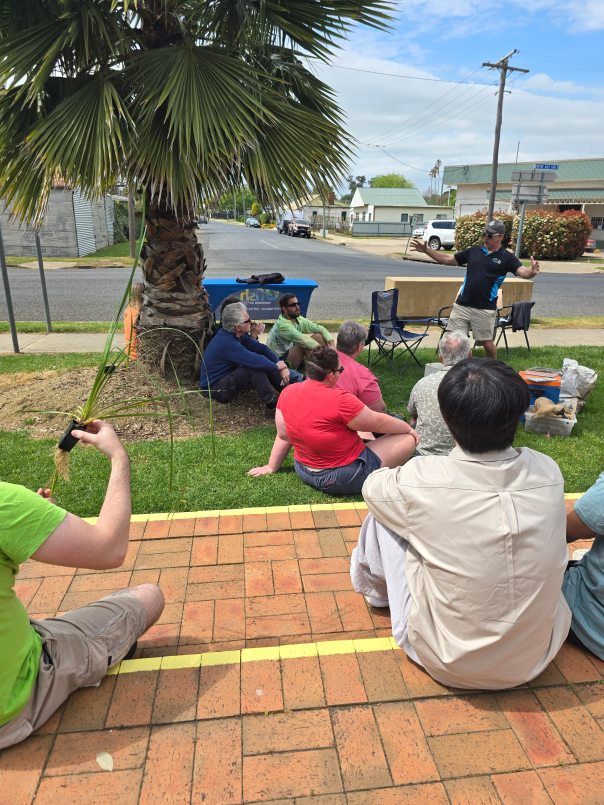
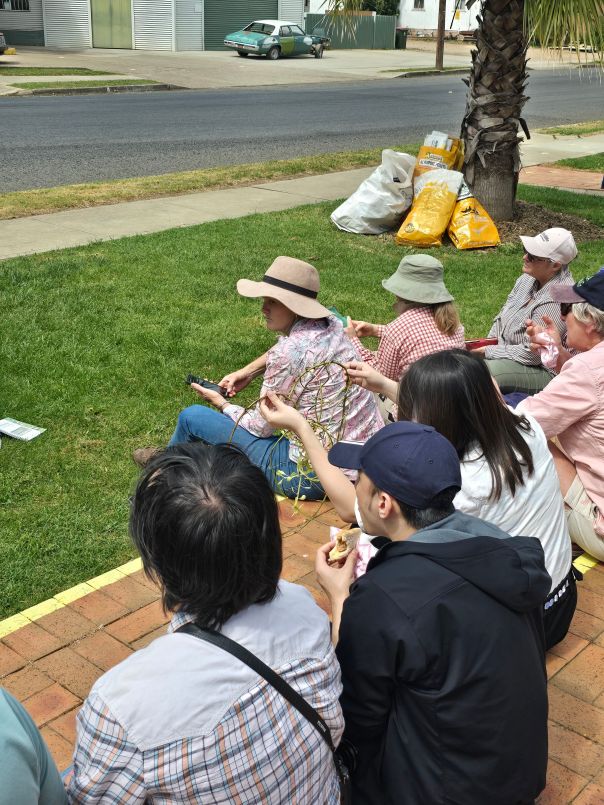
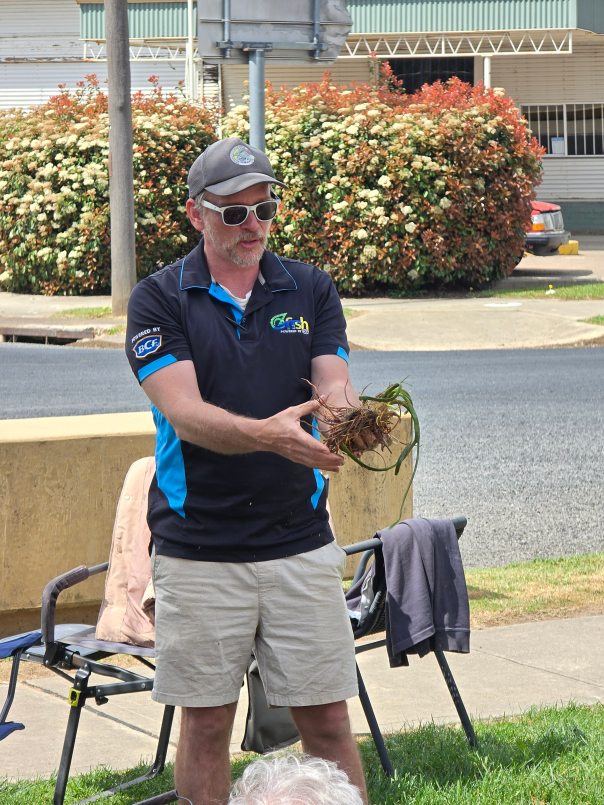
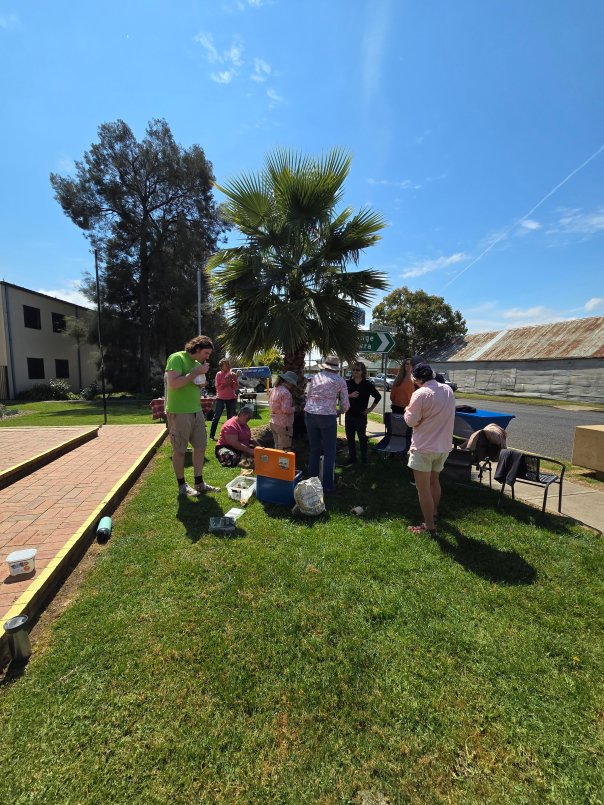
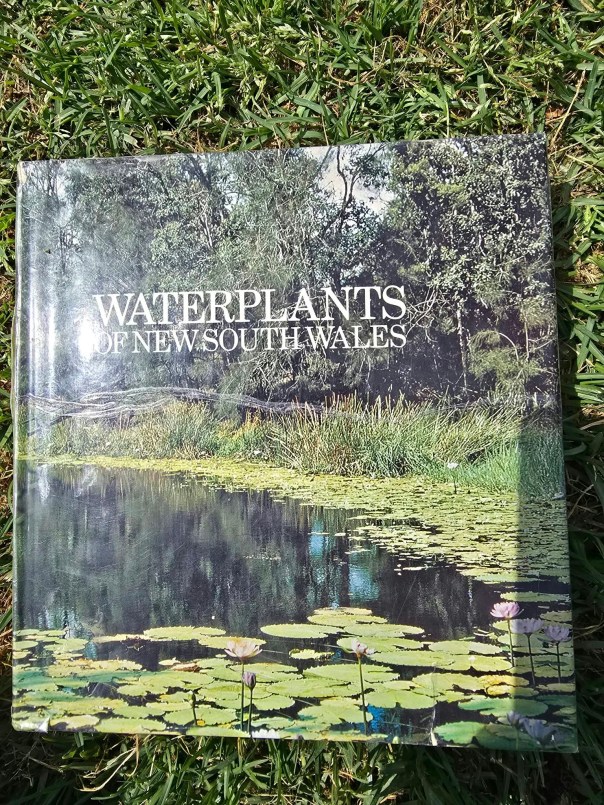
In addition to fishing Sean from Ozfish ran an extremely interesting and well-attended workshop on wetland plants for the crowd that gathered while the fishing was still underway. We were all surprised to hear just how many native aquatic plants exist in NSW and how much life a few of these plants can support in a farm dam, billabong or stream. Sean brought a selection of plants along with him and together we made water-plant torpedo’s out of hessian cloth and stones to help get our own wetlands established. You can read about the plants we discussed and download a handy planting guide here.
All good events need food and we enjoyed a free Sausage sizzle provided & Cooked by Central Tablelands Local Land Services
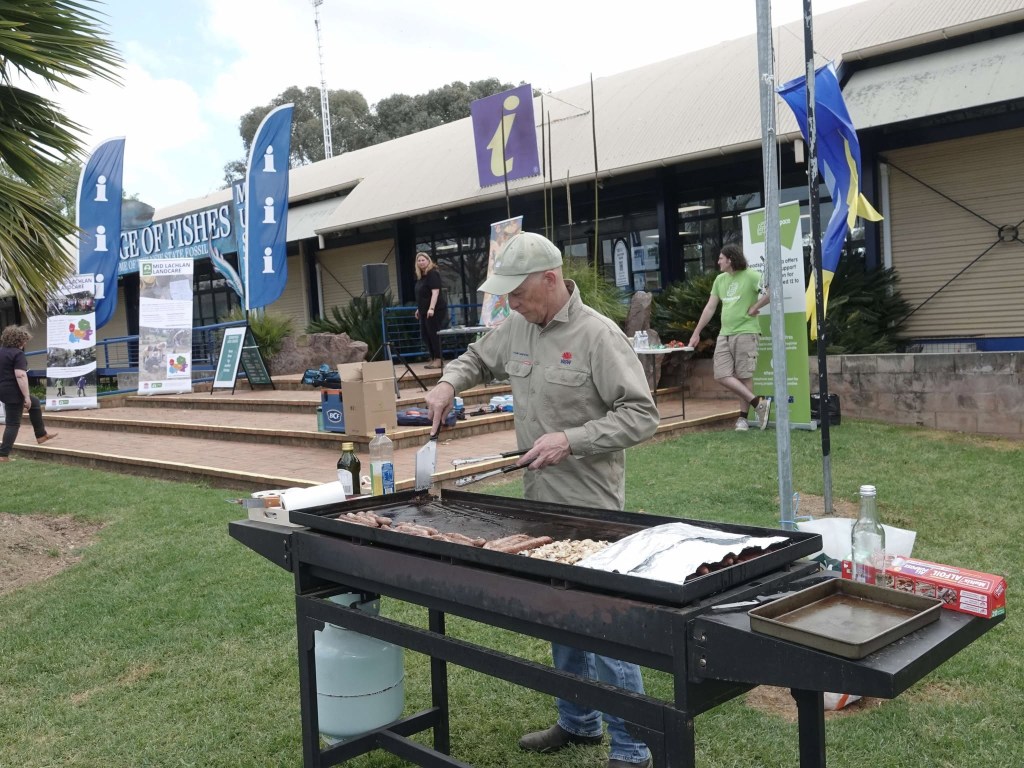
with a little help from our Landcare team (Thanks Tracee and Will).
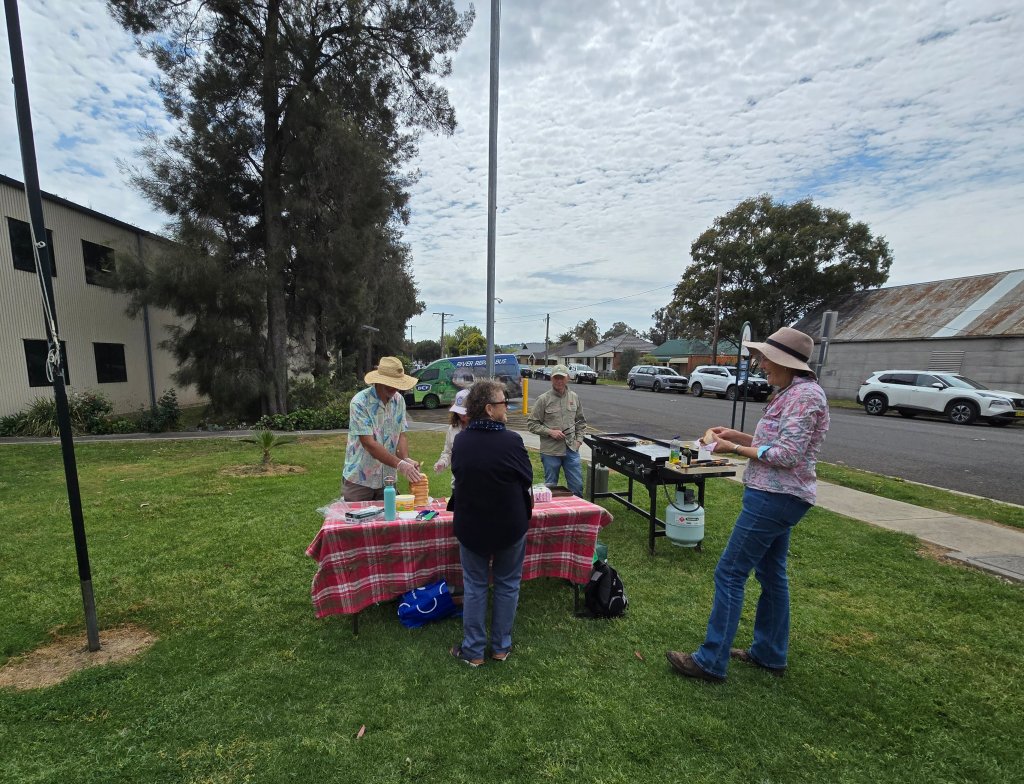
Early on in the day we had the Peel River Ramblers band drop by – well they were actually heading for the musem but we couldn’t resist a bit of a chat, finding out they were a blue grass inspired group from Tamworth who had played in the town the night before and were heading to Hill End for a gig that evening. We were also joined by three botanists who’d travelled from the Blue Mountains for a weekend away and by a group of five friends from Sydney who were interested in salt water ecology and habitat restoration. Plus we had some friends call in from neighbouring Little River Landcare and share stories of the planting they’ve been doing.
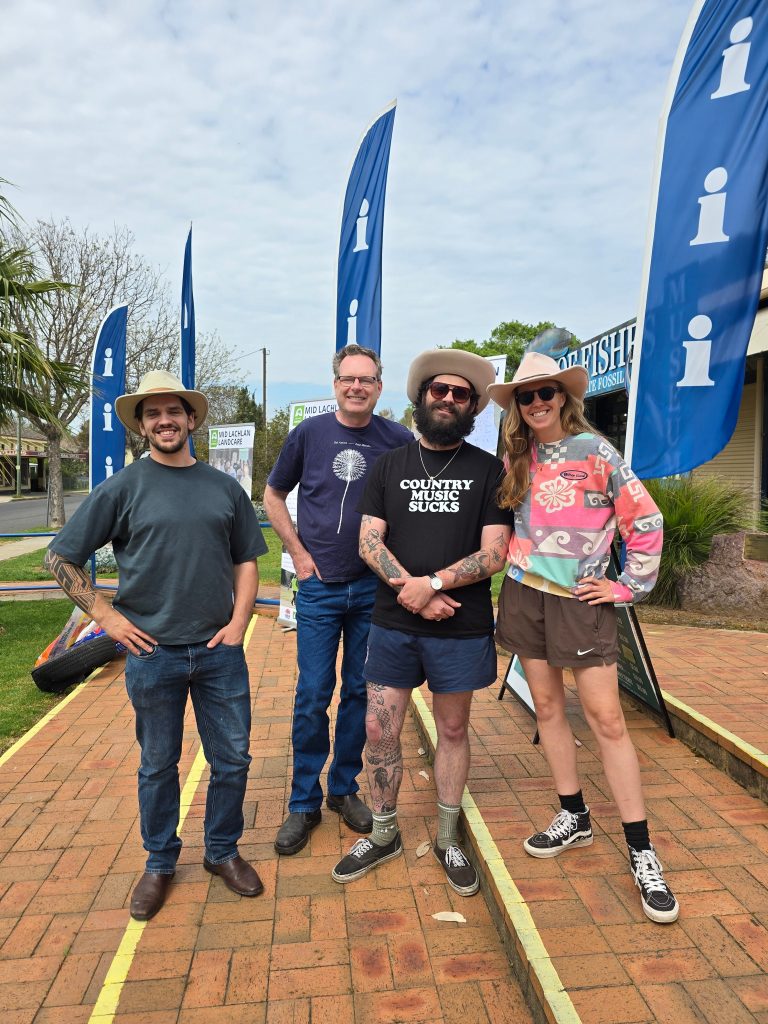
Local legend Richard Swansborough helped us out with some photography on the day, capturing the winners and grinners plus a few sneaky moments out by the river. It was great to have him join us again.
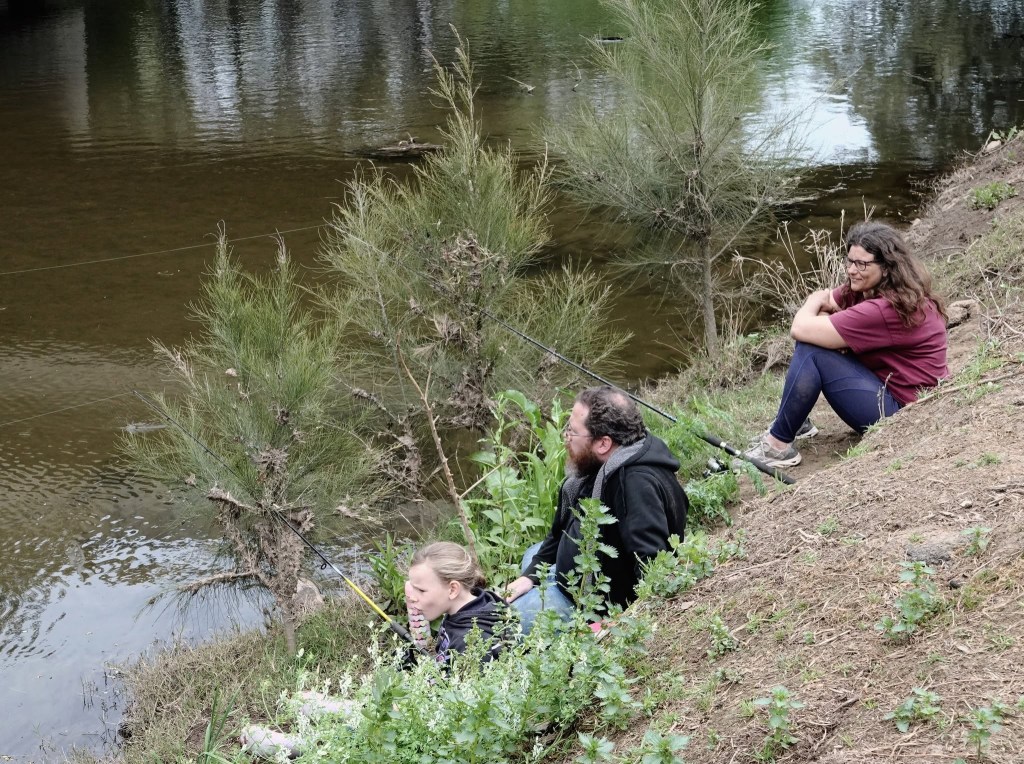
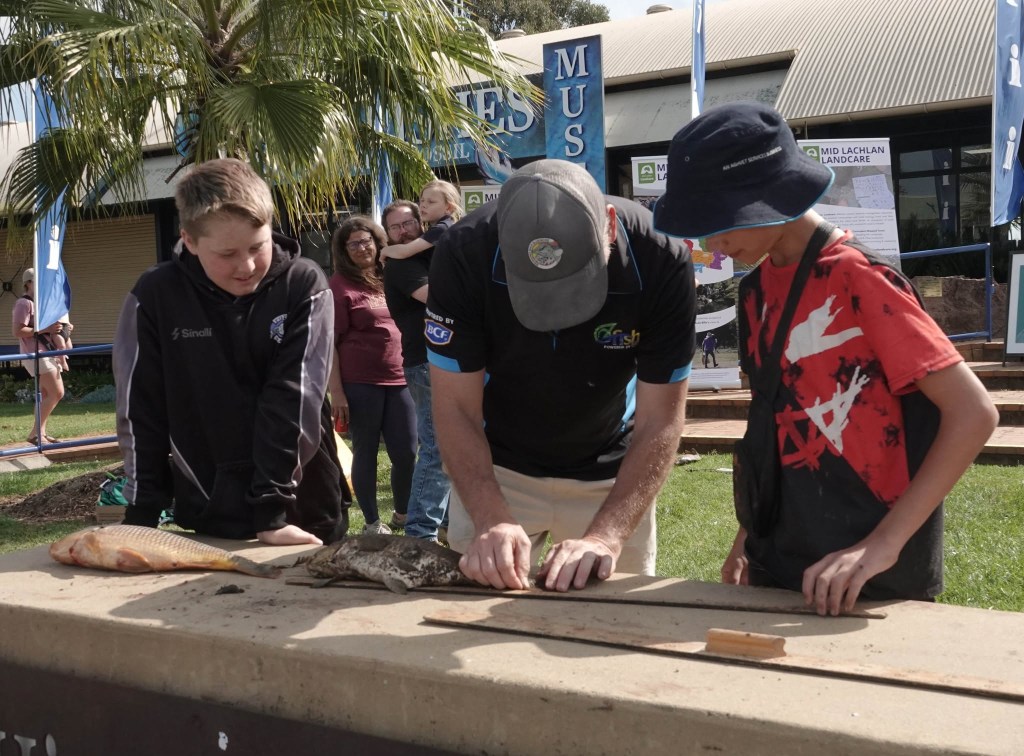
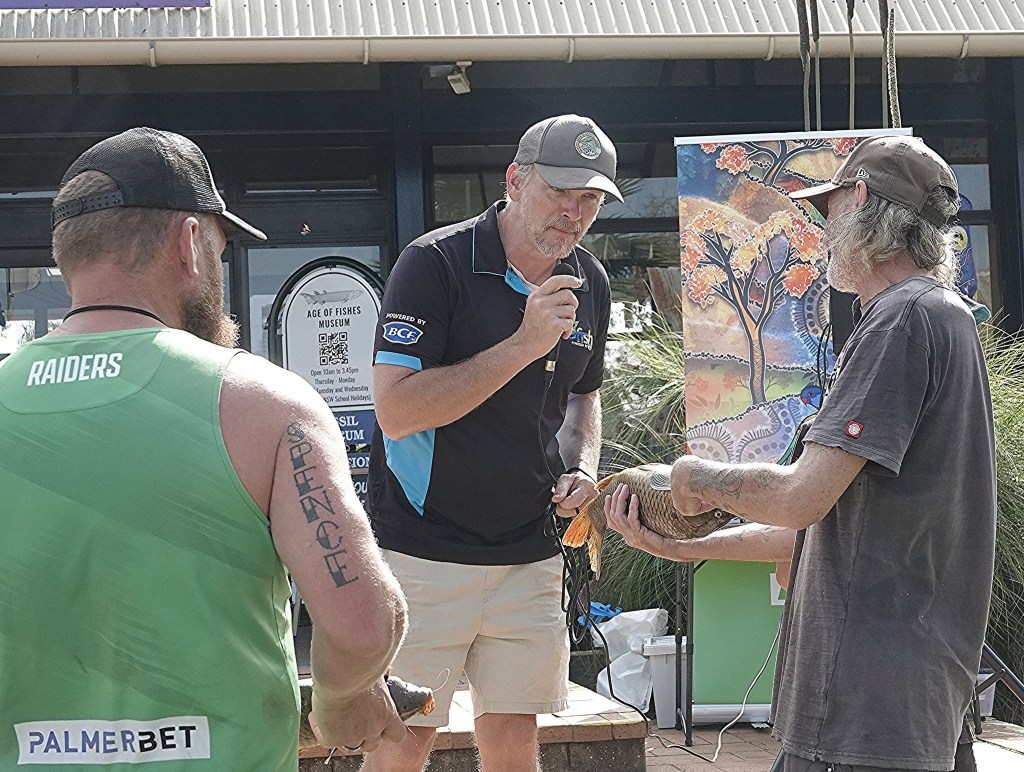
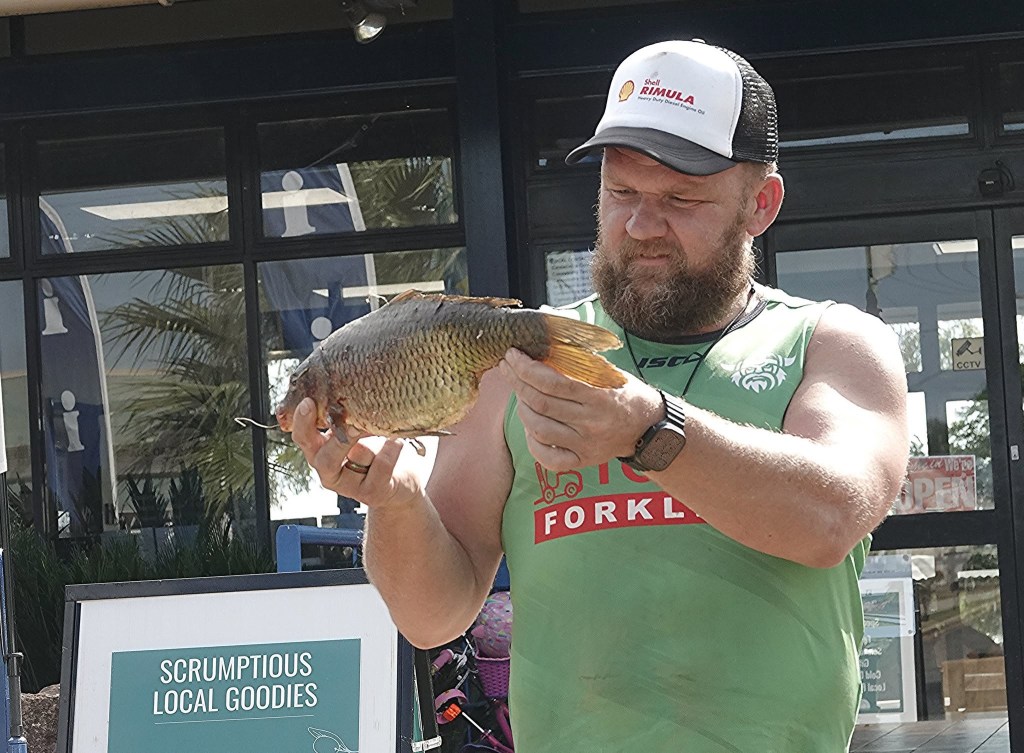
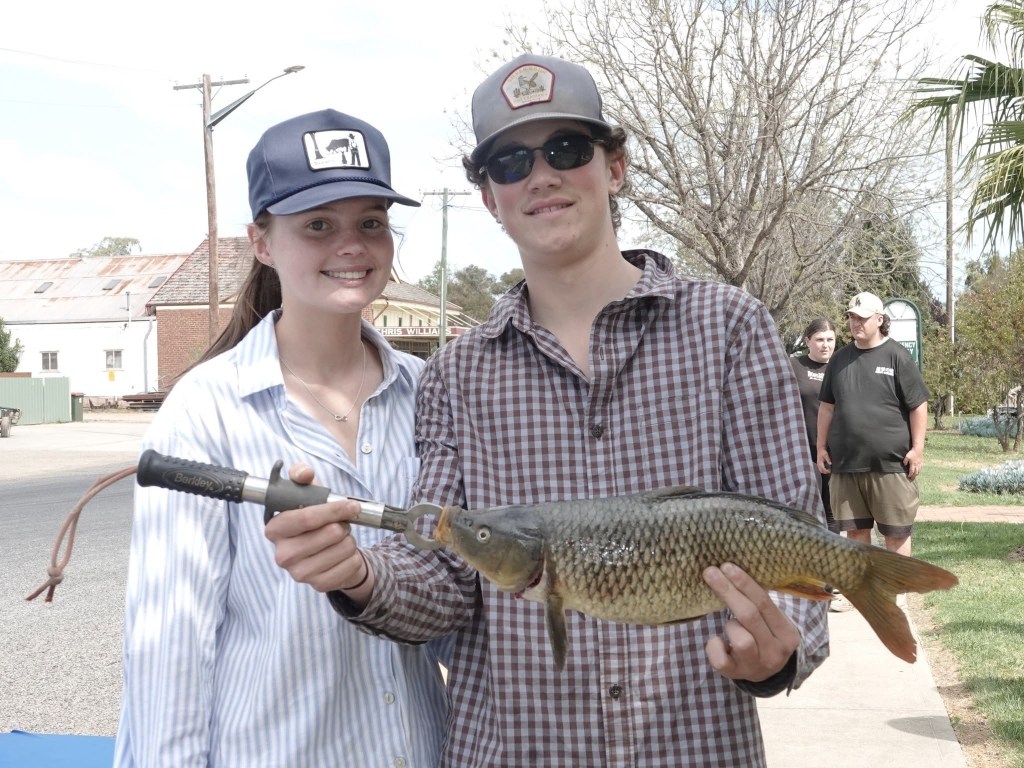
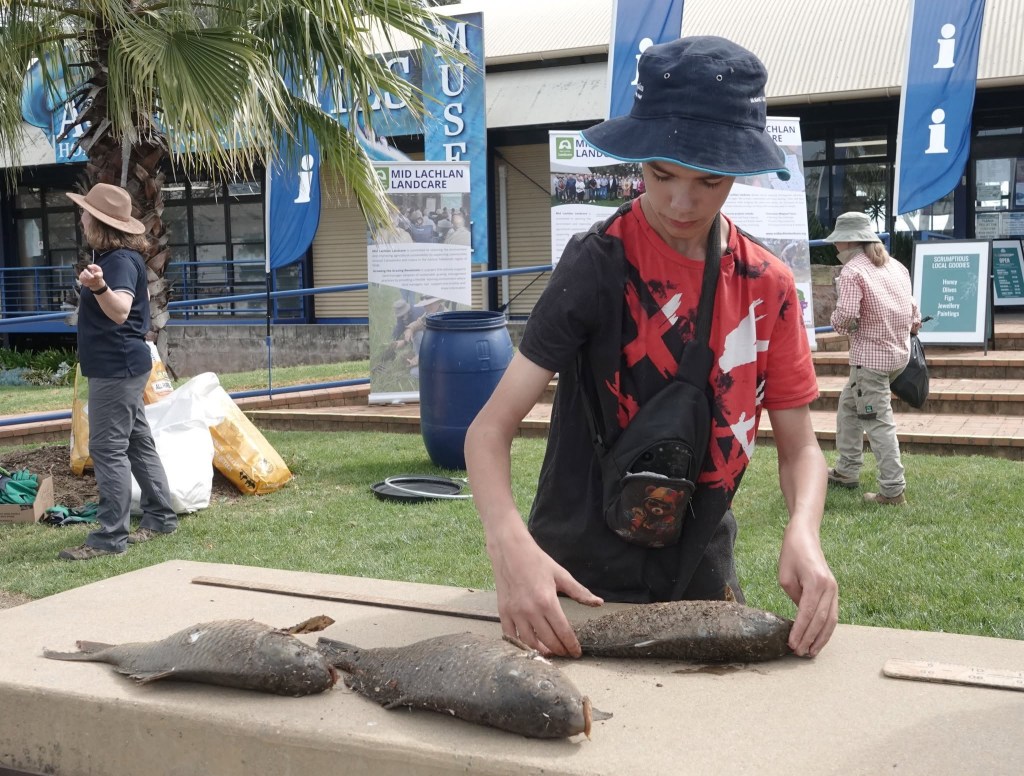
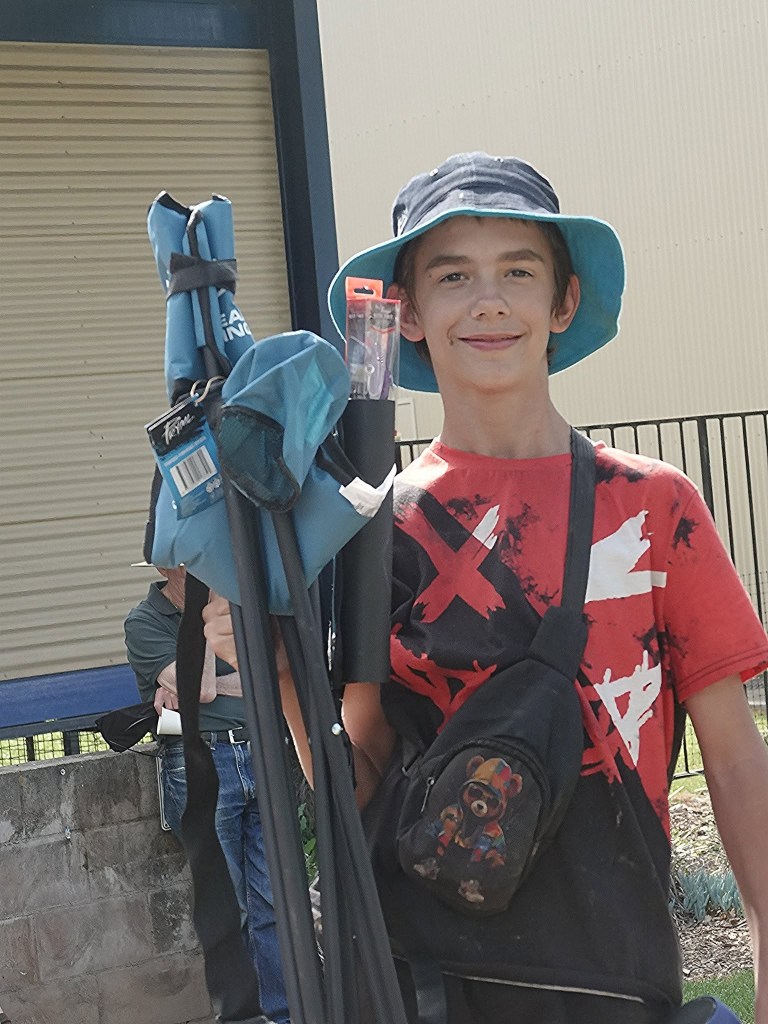
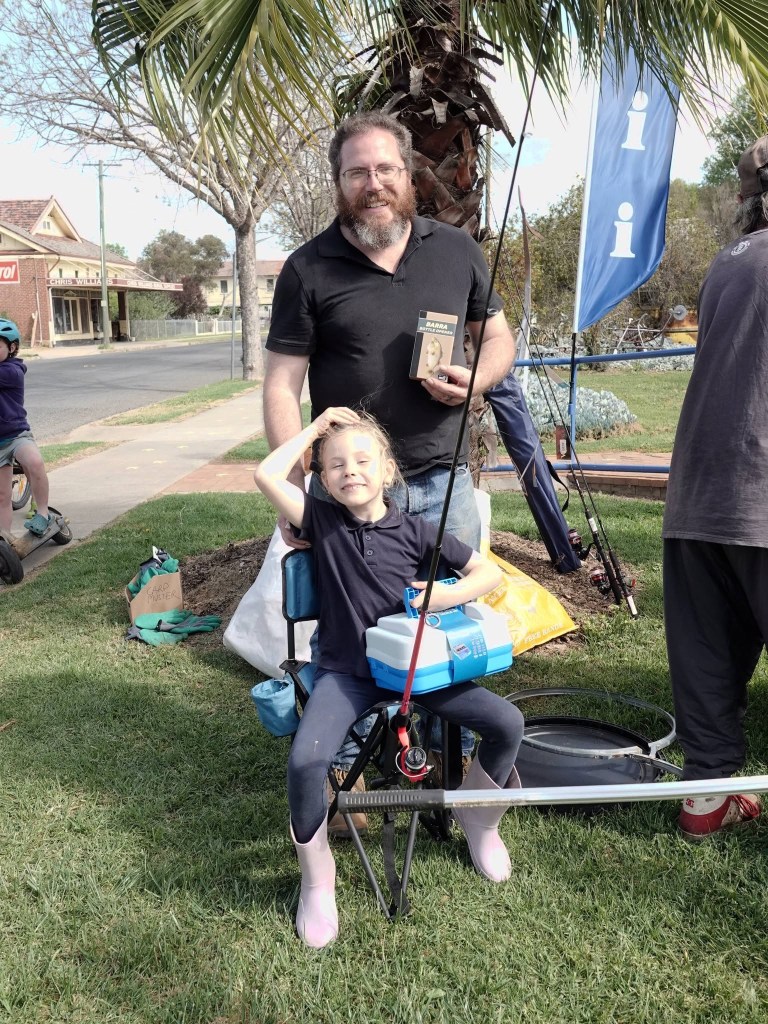
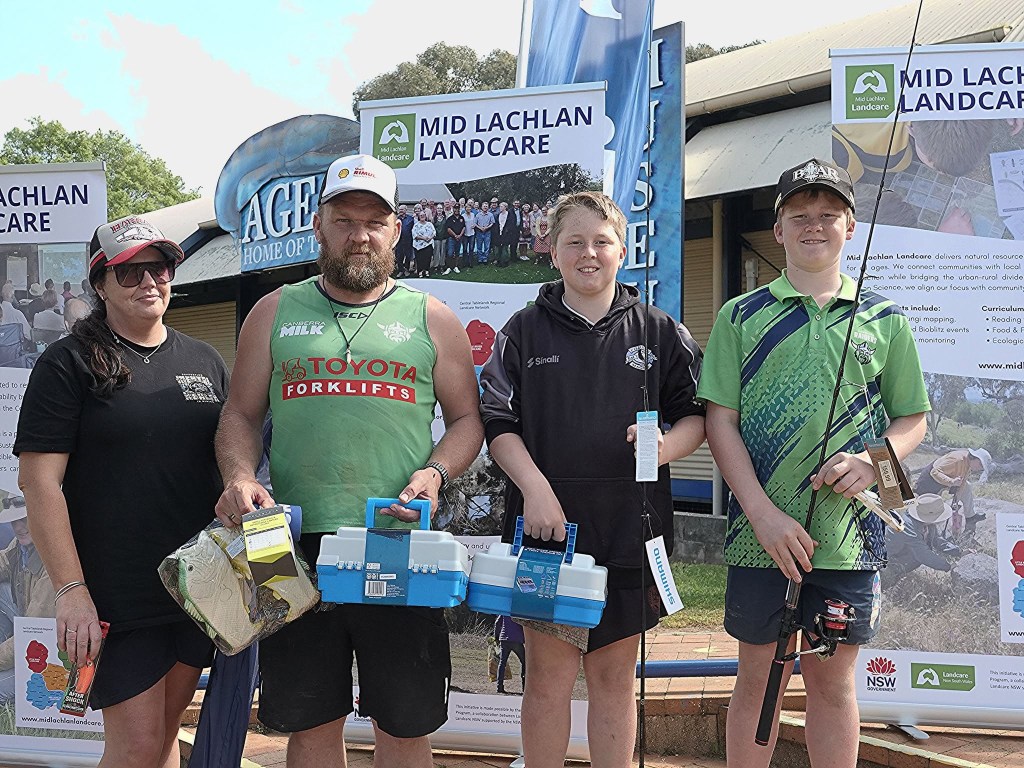
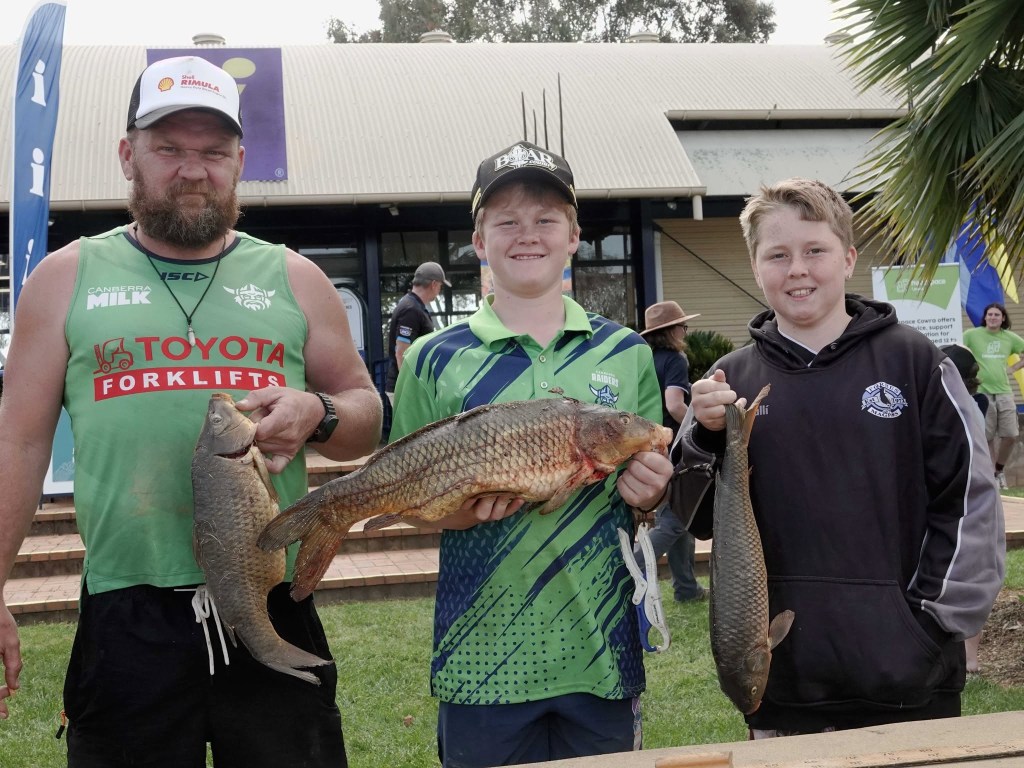
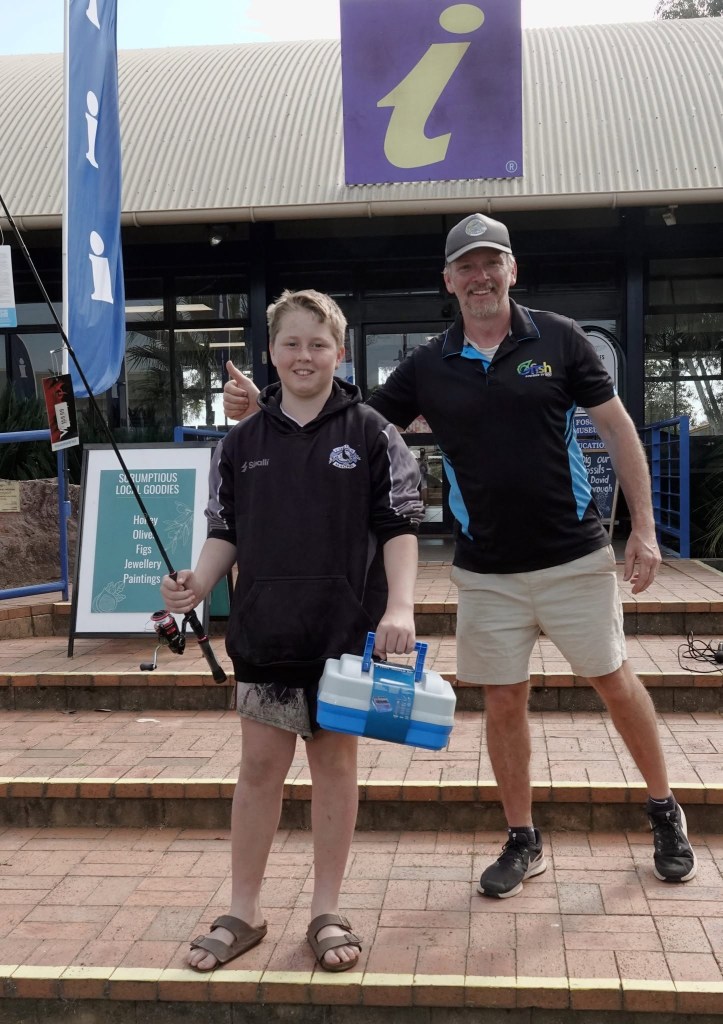
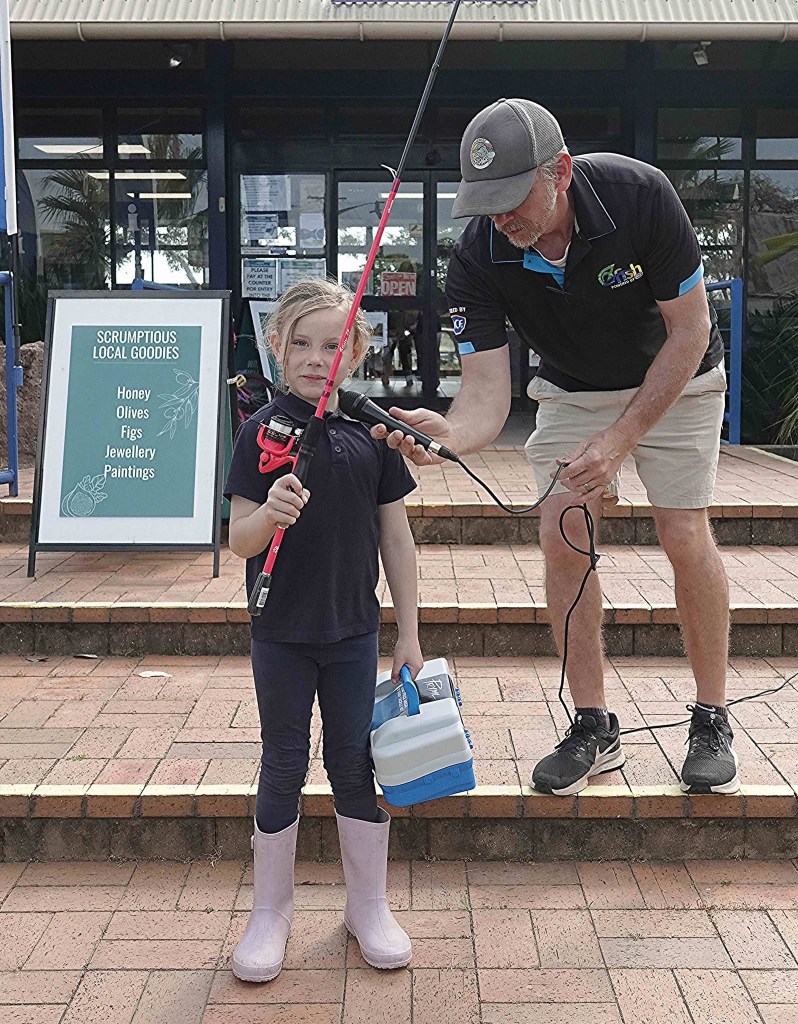
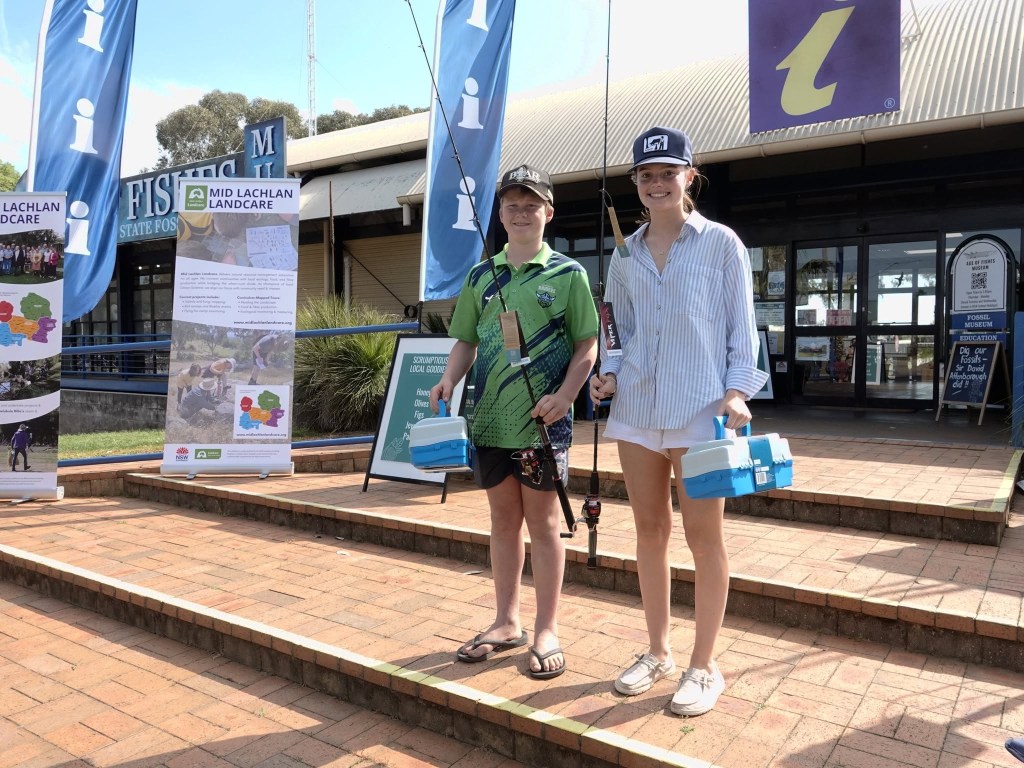
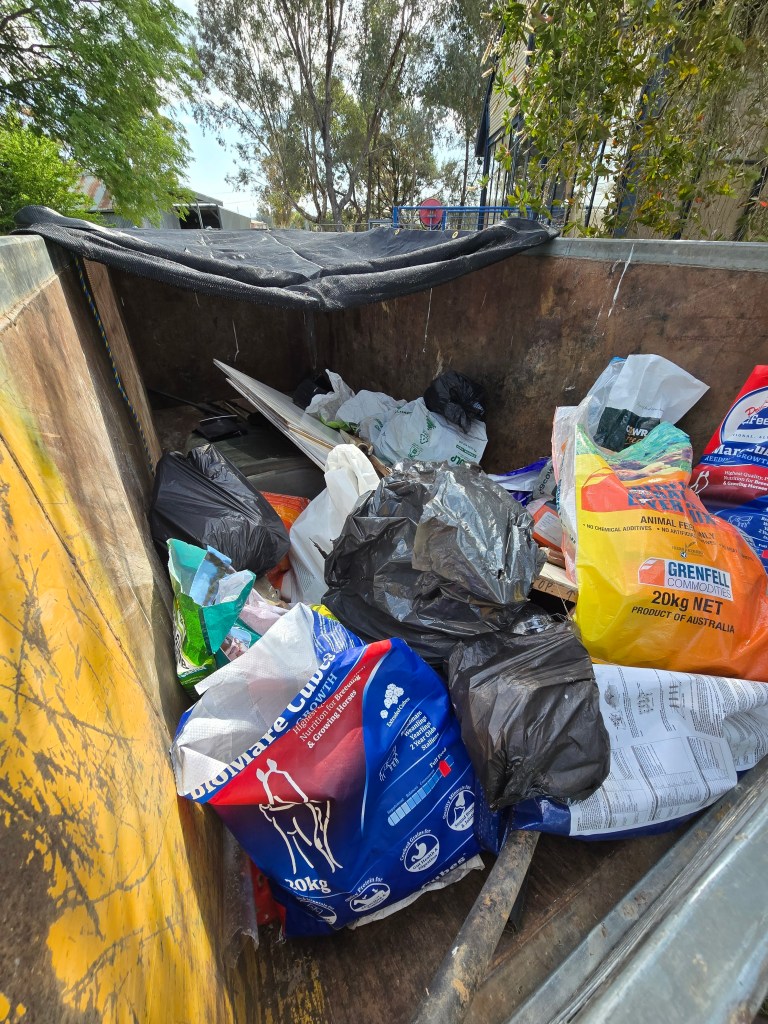
Carp muster is also a great time to clean up our riparian areas and surrounds and while we didn’t quite get the rubbish haul we did last year, we still managed to collect this lot of potential pollutants which included old tyres, broken glass and flourescent light bulbs. Thanks to community members who took part, for those who dropped empty feed bags into the Age of Fishes for us to fill – much appreciated and to Cabonne Council who provided the skip and some gloves to help with the clean up.
We’d like to thank Age Of Fishes Museum Canowindra, Canowindra Connections Centre, headspace Cowra, Cabonne Council and all our Landcare crew and members who made the day productive and fun. Also thanks to BCF Australia for donating the prizes. Finally, a special mention and thank you goes out to photographer Richard Swansborough who took pictures of all the winners.
Carp Muster happened during Biodiversity Month – a time when we raise awareness around the importance of protecting and conserving our unique and varied ecosystems. Water is life and it was great to spend time together, as a community, caring for our river and it’s surrounds.
Could a change in pesticide legislation be linked to this years Bogong Moths population explosion?
Bogong’s are a native and culturally significant species of Agrotis moth – Agrotis infusa. This family of moths also includes Agrotis munda, A.ipsilon and A.radians – Noctuidaein or night-feeding moths which can all be found in NSW and have lavae that are commonly referred to as cutworms.
Agrotis cutworms can become pests in a whole range of cropping systems, doing widespread damage by chewing down saplings as they emerge from the ground. Here’s an article about Canola crop damage from 2014 – a particularly bad year for southern NSW and Victoria thanks in part to optimal soil moisture conditions.
The Agrotis moth species are most likely to feed on dryland cropping paddocks during the cooler months when soil moisture levels are higher while crops under irrigation can be affected by moth lavae at any time.
Moth numbers can naturally fluctuate, rising in wetter years and fall during periods of drought. But can that fully explain population booms and busts?
Bogong Moth numbers made headlines at the 2000 Sydney Olympics for gate-crashing the closing ceremony in numbers so great, weather forecasters thought the shadow they could see was a rain storm. The moths were back in the news in 2017 for a dramatic decline that saw Pygmy Possums starve and fail to raise their young right across the snowy mountains. After a few more years of devastatingly low numbers the moth was listed as endangered in 2020.
While soil moisture levels have been proven to be a factor in the moth’s lifecycle, the general consensus for why Bogong moths declined so rapidly in 2017 was thought to be due to a combination of factors. Along with drought, the period saw increasingly more land turned over to cropping in their feeding/ breeding ground. With land use change comes a change in soil conditions and general site ecology. A decline in moth habitat is likely to have driven another nail in this iconic moth’s coffin.
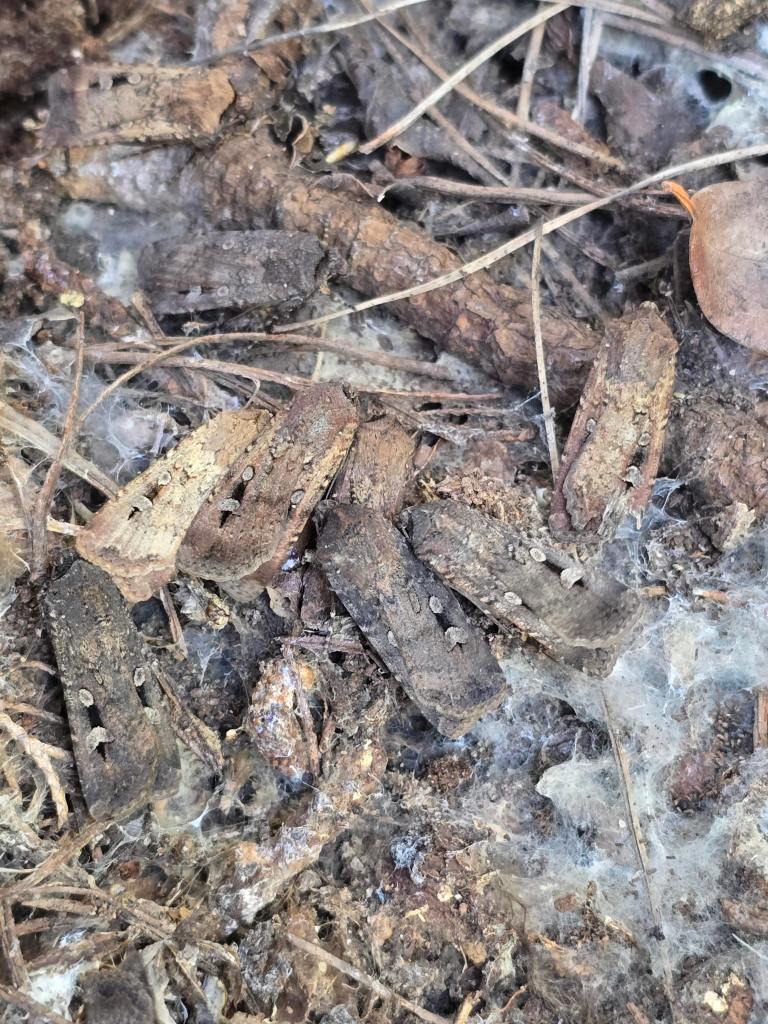
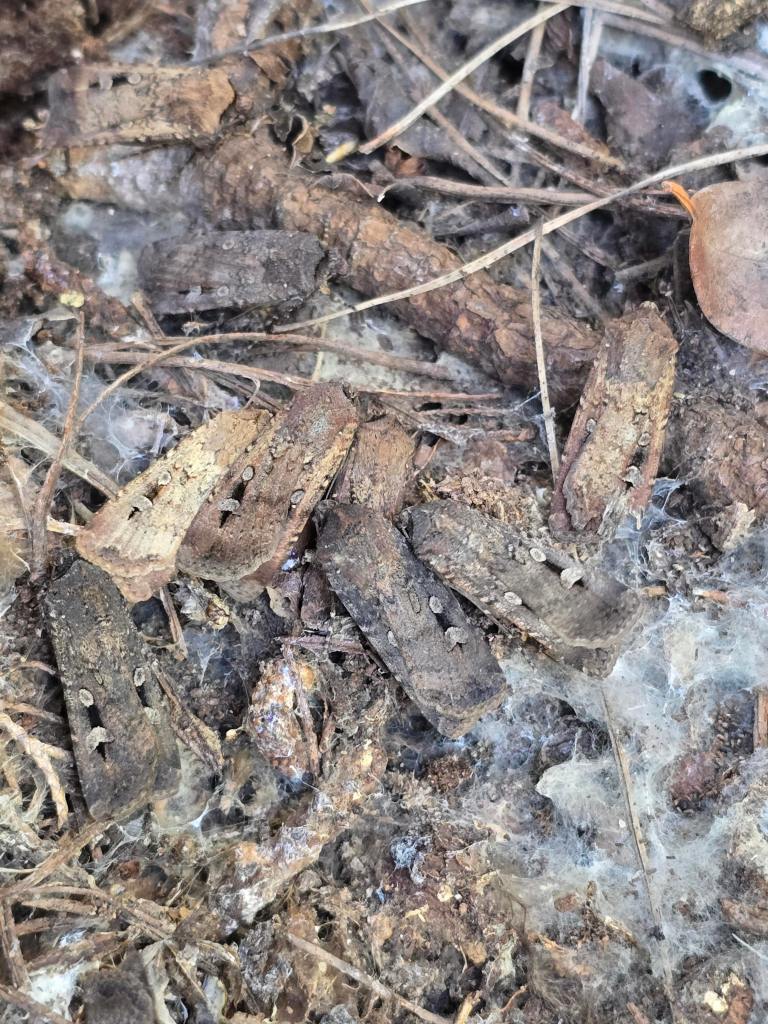
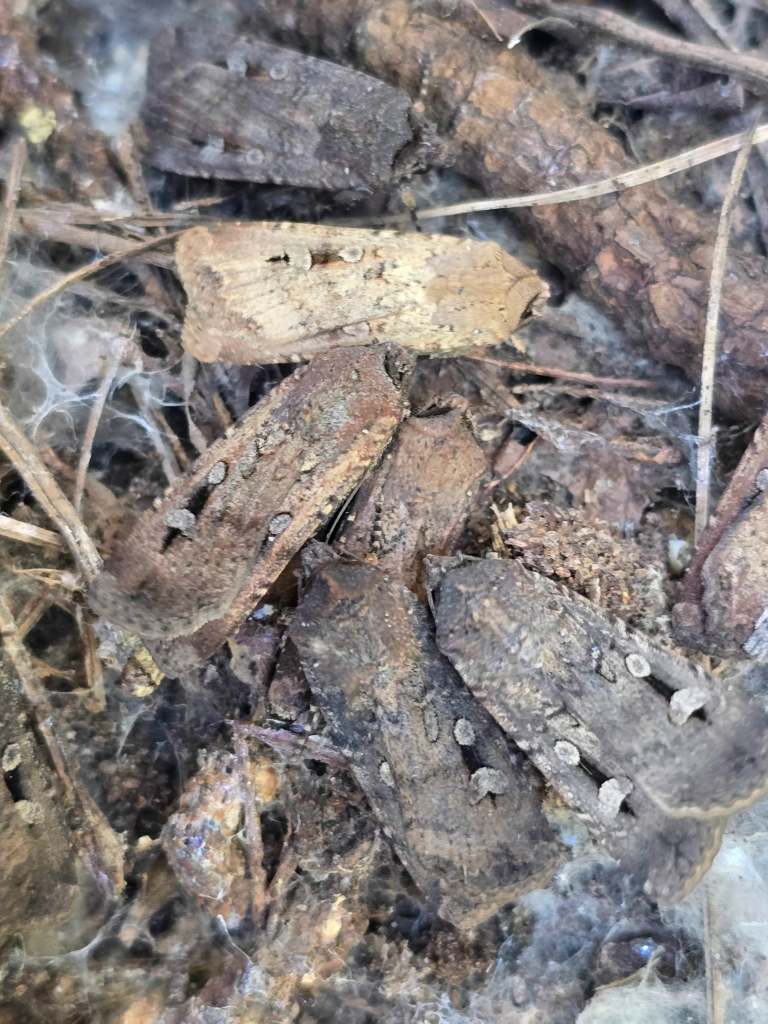
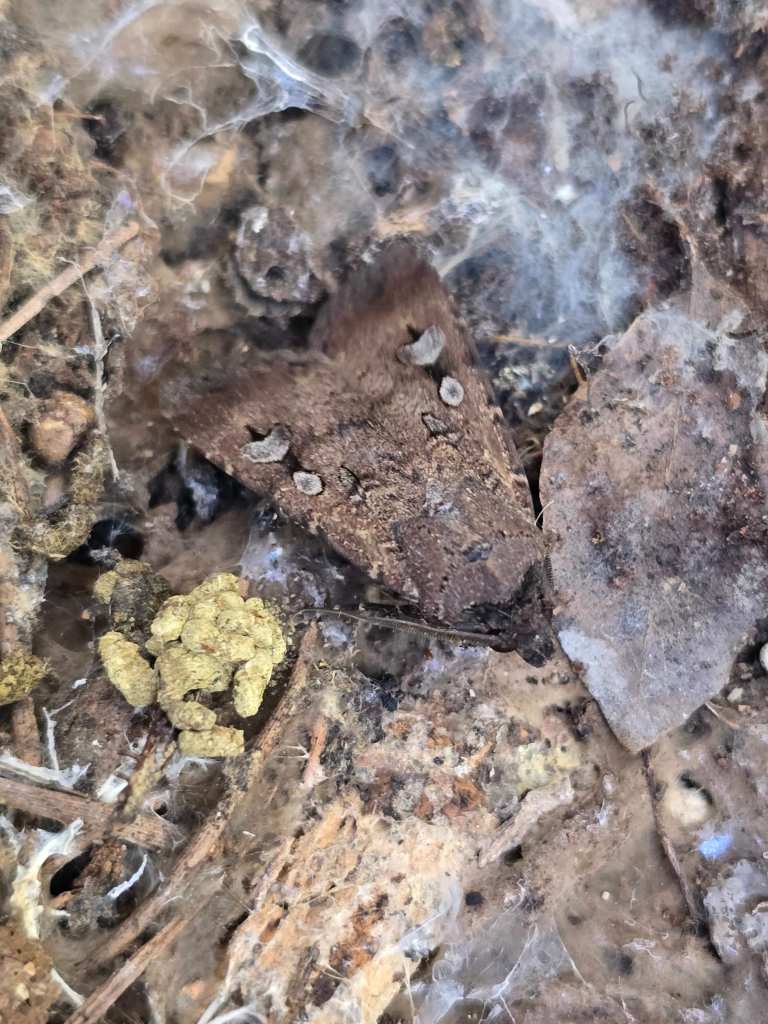
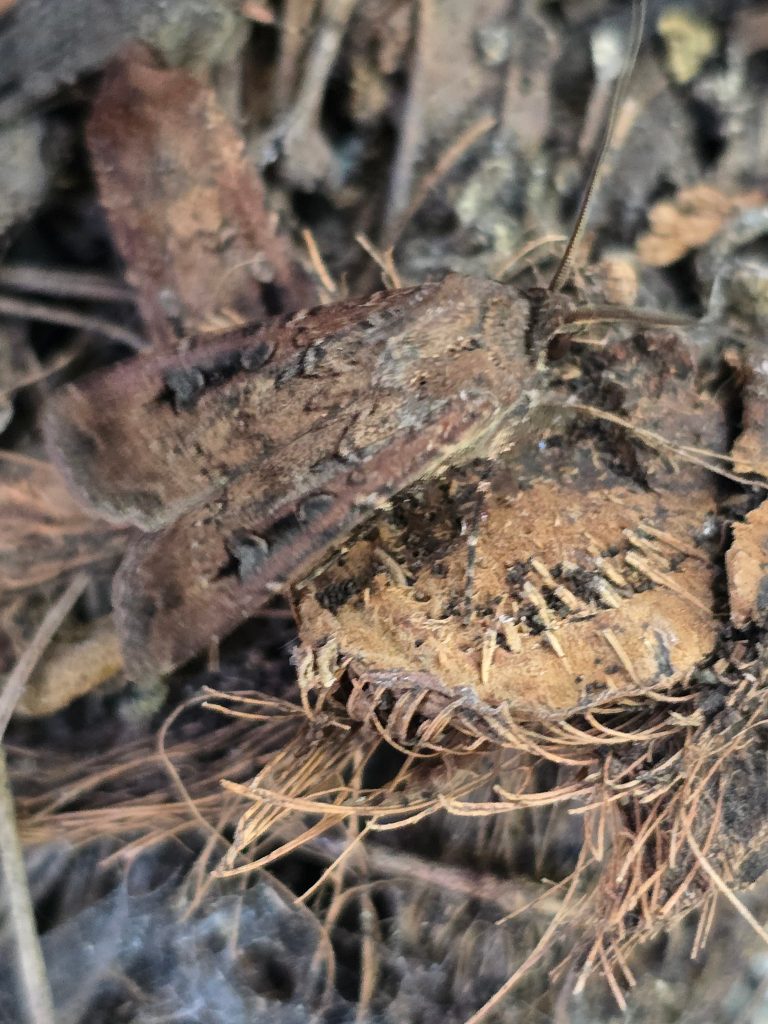
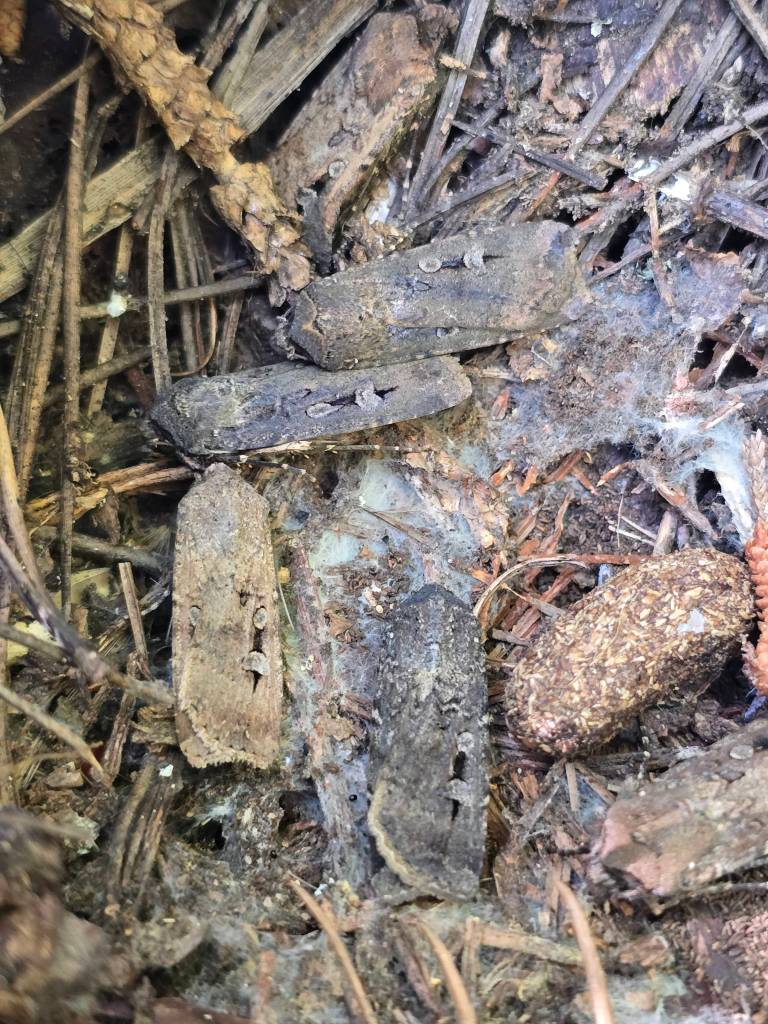
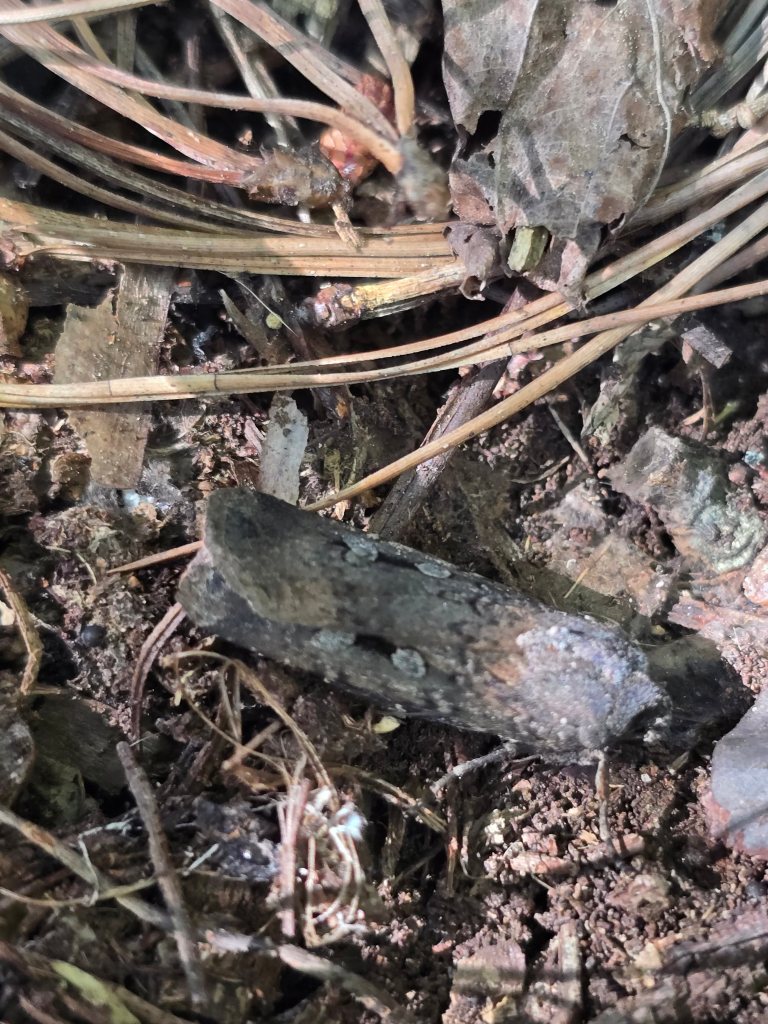
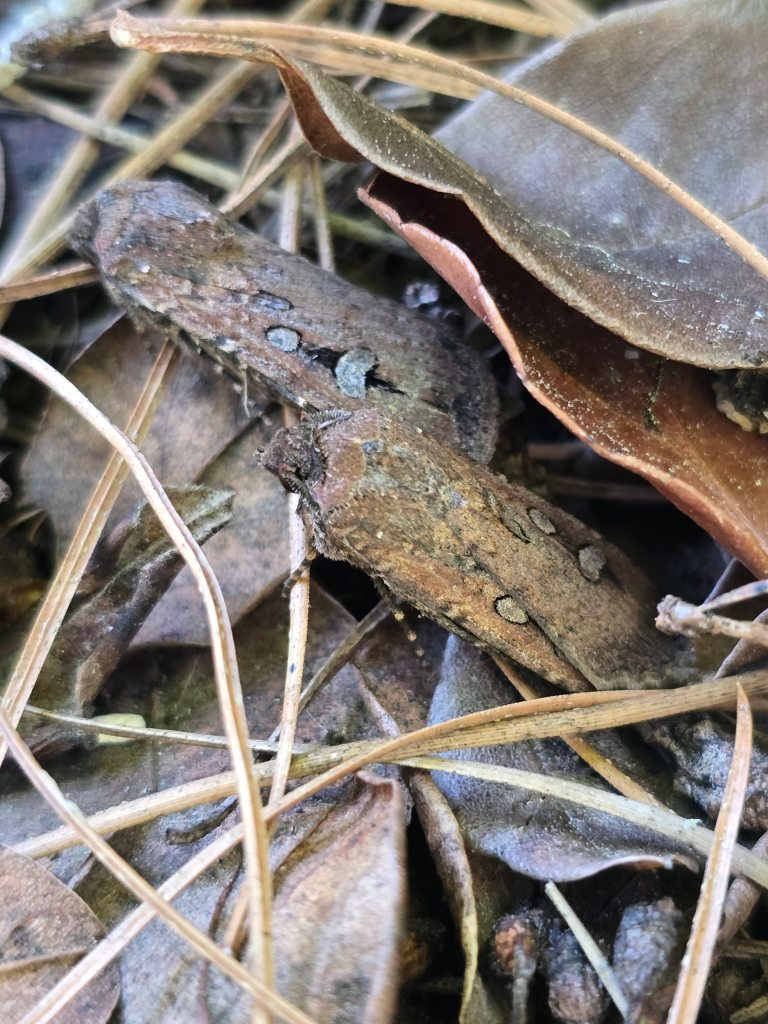
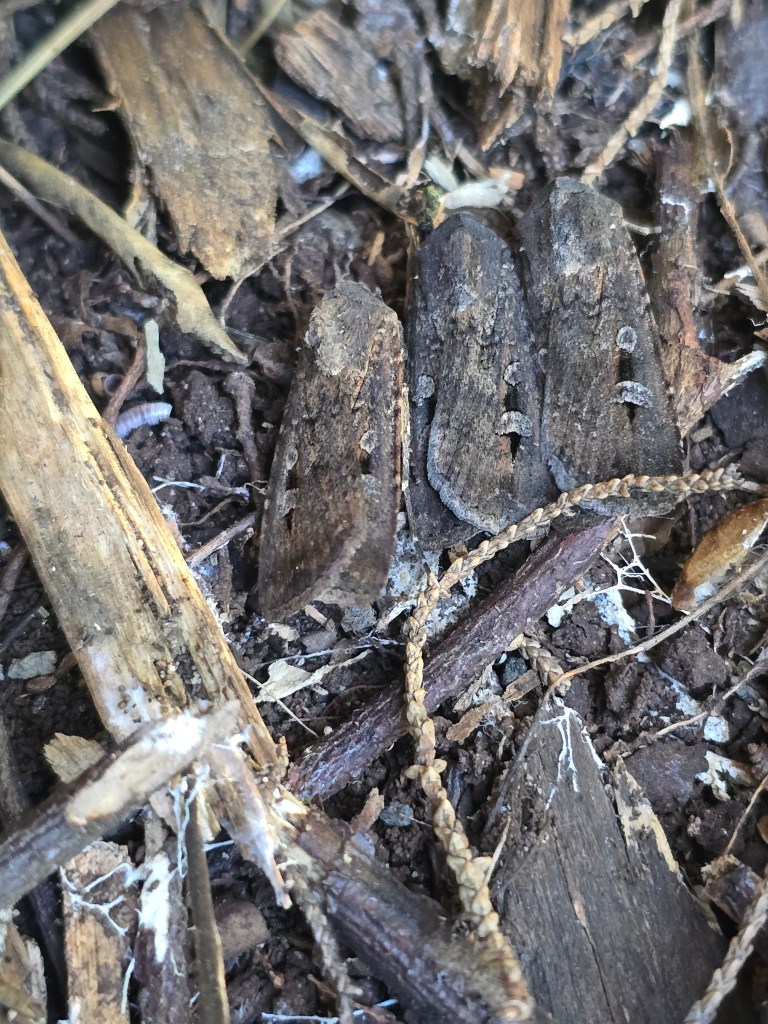
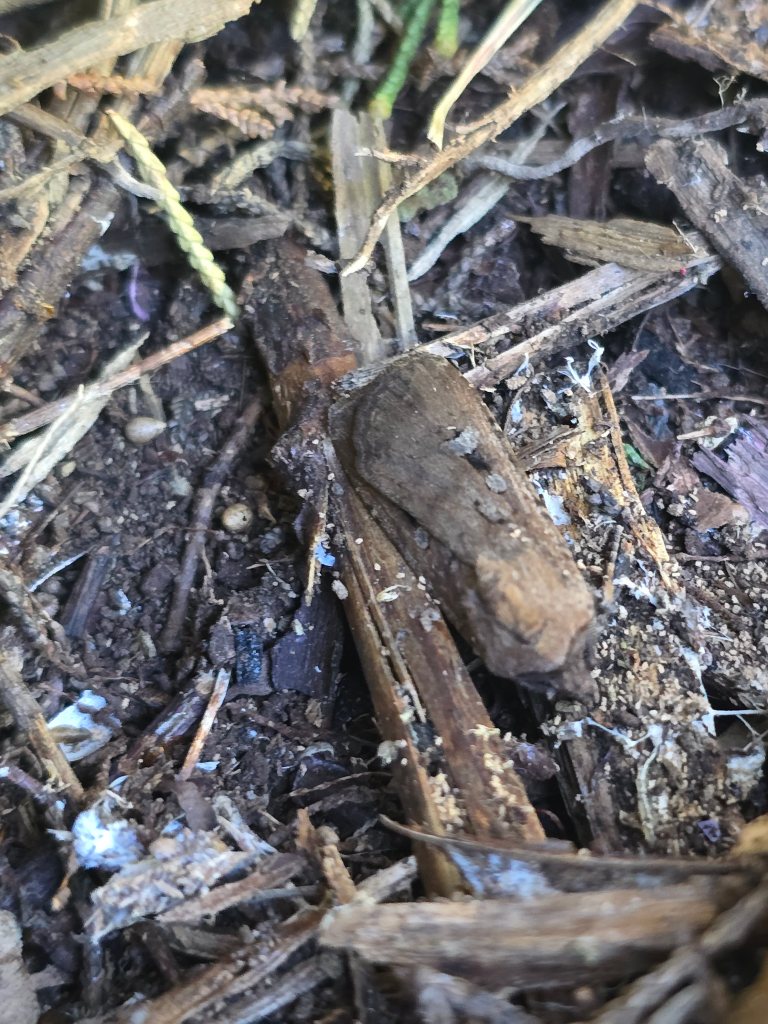
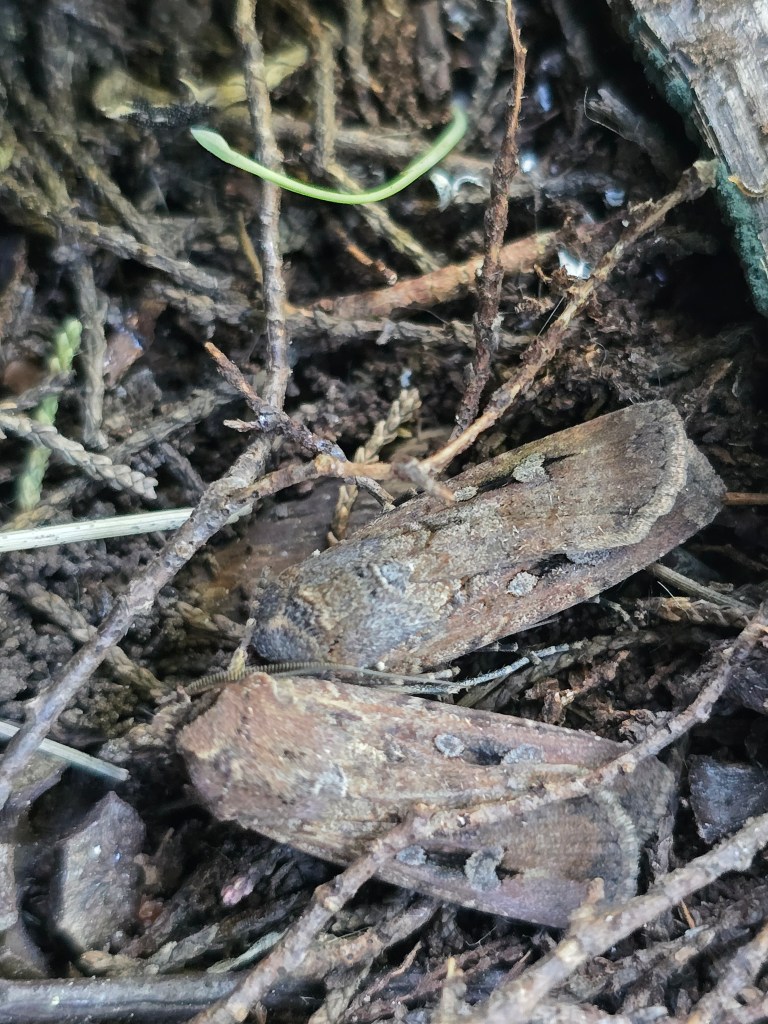
These Bogong Moths were found huddled up in leaf litter and under fallen timber in a wooded part of the landscape. As you can see the environment is cool, dark and fungally dominant – a combination not typical of cropping paddocks.
In addition to land use change, cropped land often requires spraying with pesticides to ensure a decent and high-quality harvest. Back in 2017 it was not unusual to target cutworms, when needed , with Cutmoth targeting pesticides. It’s definitely possible the Bogong moth was caught up in that in what became a deadly trifecta of circumstances for this iconic night-feeding pollinator.
Correlation does not prove Causation
Untangling the rate-determining steps in complex ecological systems is always difficult and it’s important to keep in mind that scientists are still working on the exact reasons for the Bogong moth decline, just like they’ll now be investigating the current boom to work out if it’s a blip or start of an upwards trend.
However, pesticide laws did change between 2017 – 2024 and that is an important talking point for our region.
After a period of consultation the APVMA phased out pesticide Chlorpyrifos starting in 2024. Other pesticides have been under review too but this one in particular targeted cutworms and is therefore worthy of mention.
This year is possibly the first full season that this Chlorpyrifos is out of the cropping system for the lifecycle of the moth and while that definitely DOESN’T automatically mean it caused or even contributed to the decline, it does represent a change in the right direction as far as threats to the Bogong moth goes. But yes, it will also mean the Bogong moths less welcome friends will also be having an easier time of it too…
The only real choice we have is how we respond.
As a moth enthusiast with a keen interest in ethnobiology (Ethnobiology is the scientific study of how human cultures interact with, manage, and understand the plants, animals, and ecosystems in their environments) I am beyond thrilled with all of the above and am delighting in spending time with the Bogong Moths that are currently making their way through these lands. However, I’m also acutely aware that there are others in and around our community that’ll be experiencing a more complex emotional reaction to these times.
Earlier this week I joined a webinar with the Soils for Life team and listened to Jake Ryan explain how he responds to the chemical signals his crops put out to ensure they grow as healthy and resilient as possible. His combination of scientific data, chemical relationality and timely biological imputs is paying dividens, not least because it’s reducing the need for pest-controlling inputs.
During this Webinar Jake talks us through Tissue Testing, BRIX measurements and SAP testing before explaining how he uses all three to inform his management decisions.
I’m excited by stories like this and while now is definitely not the time to say the type of monitoring Jack is talking about can save the world and all of our prefered moth species, it does raise the spirits. What Jake is talking about serves as a good example of smart systems thinking and in particular how turning our attention to the small details and nuances within our pastures and farming environmnent can lead us to smarter, ecologically sound and economically rational management outcomes. In the end it won’t really matter if chlopyrifos use in particular or pesticide use in general caused Bogong moths to decline or not, if you don’t need an input because your crop can handle itself you’re quids ahead.
Wetland plants & plant torpedo’s Workshop
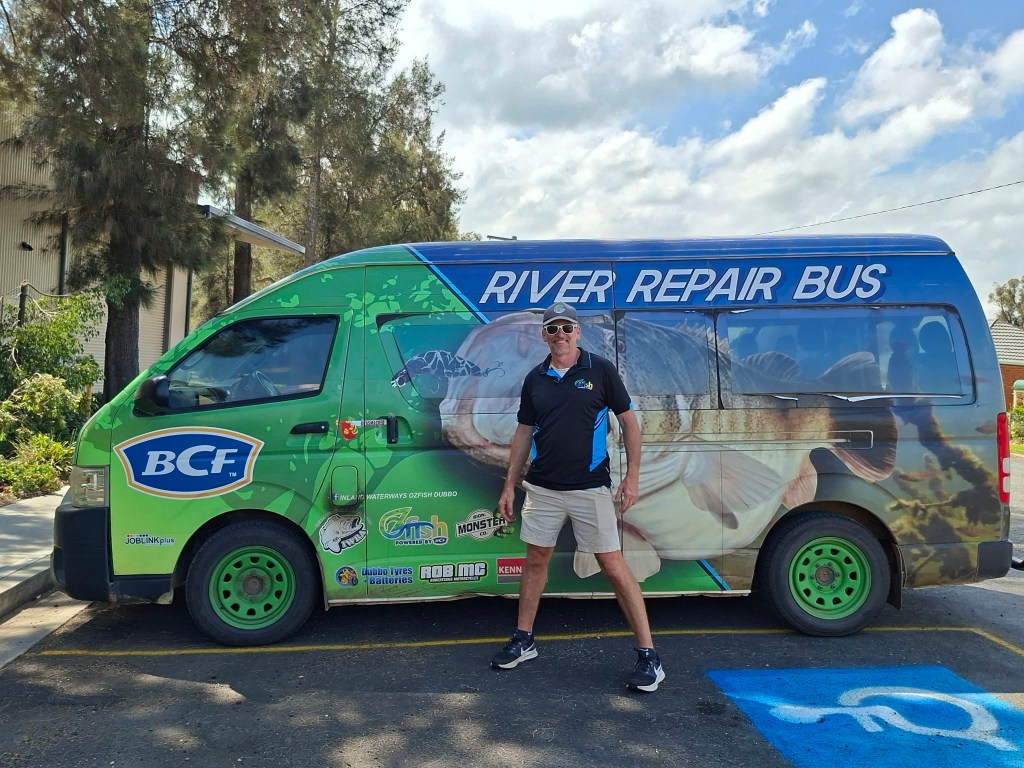
Our second ever carp muster was held earlier this month and this year it came with something a little extra. Sean from Oz Fish (pictured below) mentioned that he’d like to host a workshop on wetland plants during the time people were off fishing. We thought that sounded like a great idea so we set about spreading the word…
Pictured below Sean Graham, Oz Fish and River Repair Bus Dubbo.
One reason Carp can take over our waterways is because they are ecologically degraded, lacking plant diversity and often being eroded and polluted. Our native fish, frogs and beneficial insects need are struggling with a lack of suitable habitat for feeding, breeding and hiding from predators. That’s what this workshop aimed to address.
We were thrilled to see so many people join us for this fun and informative talk and interactive workshop and were even more excited to hear that some of our participants went straight home and planted their torpedo’s to get their wetlands up and growing!
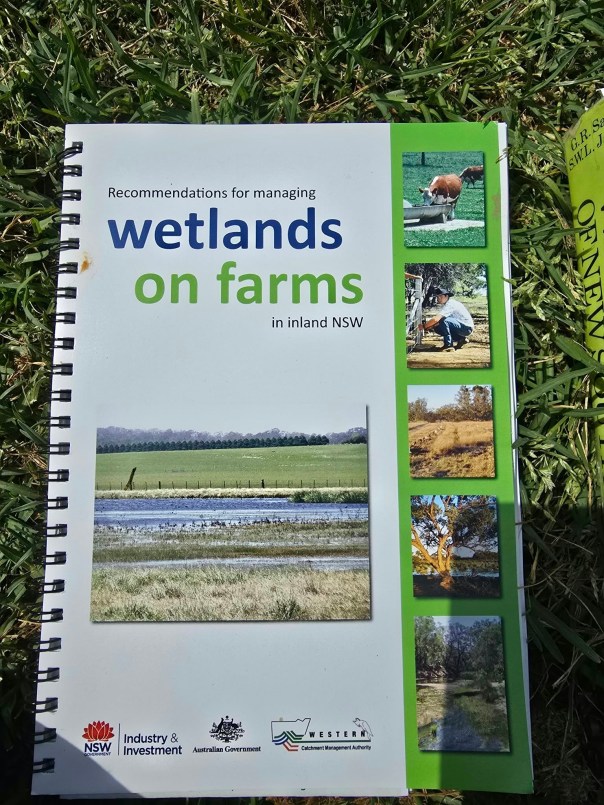
For those that couldn’t make it Sean has typed up some notes which I’ve shared below. You can also download this resource for a bit more instruction on where different plants like to sit.
Having c0nducted projects around farm dams around our region in the past, we’re super excited about this as we know there are quite a few of our members sitting on huge potential for little water oasis across our dryland agriculture landscape.
Investing in building vegetation around the wetter areas of your property has so many benefits, not least as part of your approach to natural capital investment. Earlier this year we got together with Tamara Harris from Local Land Services for a workshop at a farm in Woodstock where we talked about the research Sustainable Farms have just completed across the region. You can download that report here.
The plants we discussed at the event were:
Casuarina cunninghamiana (river she-oak) and Lomandra longifolia, preferred trees and sedge-like plants, respectively, for the water’s edge. Don’t mind having their roots wet and are aggressive growers with good root masses. No torpedos required.
Water primrose (Ludwigia) an emergent aquatic plant can tolerate water’s edge and depths up to 1m. Plant in water where there will be reasonably permanent inundation.
Myriophyllum (milfoil) an emergent aquatic plant that can tolerate water’s edge and depths of up to 3m. Plant in water where there will be reasonably permanent inundation.
Floating pondweed (Potamageton) an emergent aquatic plant with aquatic and floating leaves, must be rooted underwater. Plant in permanent water up to 1 m deep.
Triglochin (arrow grass) an emergent aquatic plant with thick roots and tubers that can adhere to rocks. Plant in up to 1m deep water, can tolerate high flows or still water habitat.
Vallisneria (eelweed or tapegrass) a fully submergent plant that can grow to depths of over 3m. Must be rooted in mud or will float away. Tolerates low light conditions and heavy siltation if protected. Best for use as a torpedo plant. Easiest way to protect is a small chicken wire cage, shaped into a cylinder and sunk into bottom of wetland (like a standard plant guard but perhaps 1.5 m tall and 50 cm across).
To make a torpedo:
Take a small square of hessian, place a rock inside with some potting soil. Wrap the plant’s roots in the soil and hessian, making sure the green parts are showing. Cut small holes to ensure roots can escape and gain oxygen. Tie off with twine and fire!
Resources:
Cowra Bird Walks – Birds in Backyards with Birdlife Australia
Meet the birdlife at Wattamondara TSR
Saturday 24th Oct0ber 2026 8:00
Do you love native birds? Would you like to learn more about your local birds? Join a free 90 minute walk led by a guide from BirdLife Australia Southern NSW Branch exploring the birdlife at Wattamondara TSR, just 15 mins from the Rose Garden. The TSR is relatively flat, and is bounded by Crowther Creek to the west. Scattered trees with a grassy understory support a range of woodland birds.
For those who would like to car-pool, meet at the Rose Garden at 7:35 am. Otherwise, meet at the track in the TSR at 08:00, see directions below. For those who would like, the walk will be followed by morning tea at the Rose Garden Café.
Attendees under the age of 18 must be accompanied by an adult.
For further information and booking (essential as places are limited) please contact Robyn on 0468 949 126.
What to bring:
Sun protection, water, enclosed shoes (essential) and binoculars if you have a pair (not essential).
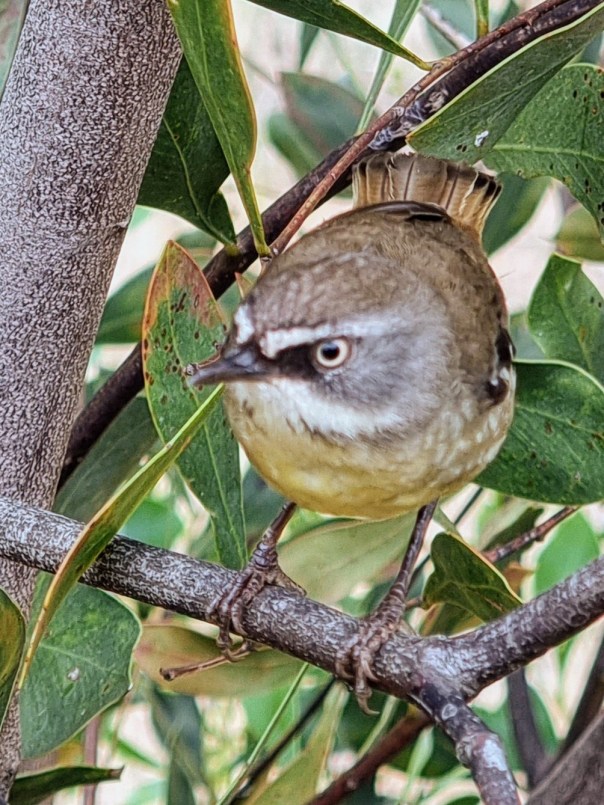
How to get to Wattamondara TSR
- From the Rose Garden carpark, drive west from the carpark, past McDonalds, and turn left onto the Olympic Hwy (A41) towards Young.
- Follow the Olympic Hwy for approx. 14.3km and turn right onto Warrangong Rd, signposted ‘Broula’.
- After 350m, the TSR (signposted ‘Wattamondara North’) is on the left approx. 50m before the
‘100 km/hr’ sign. Drive through the double gate and park just inside the entrance
Cultural Camp in the Capertee Valley
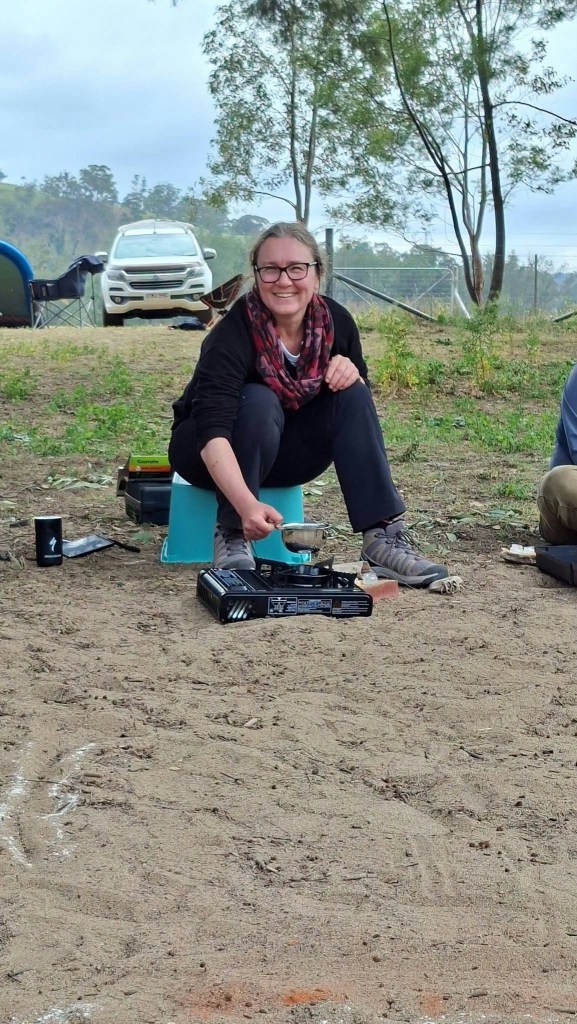
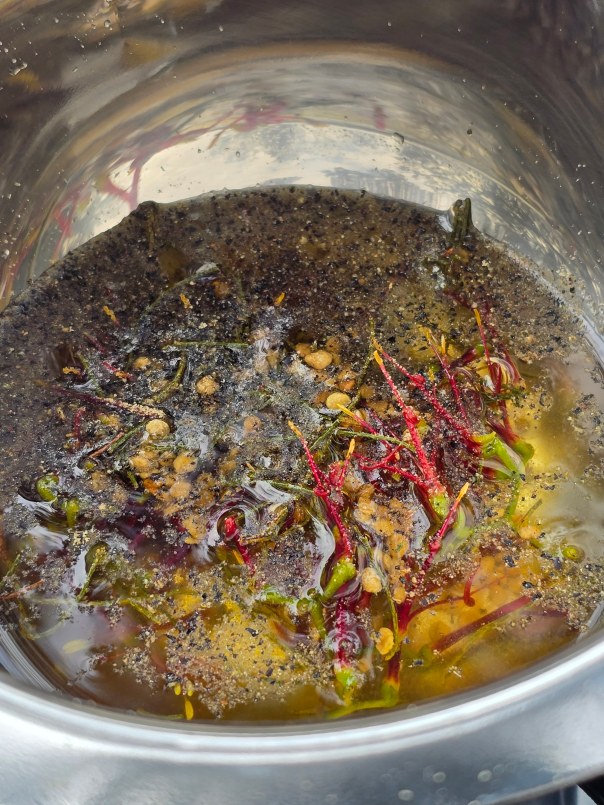
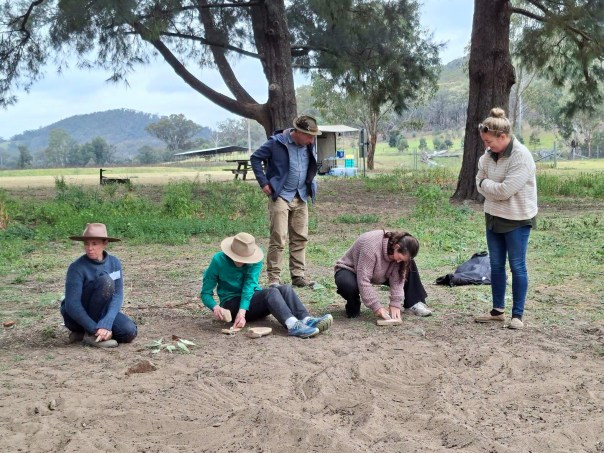
Tracee & I just returned from a two-day cultural immersion camp in the Capertee Valley with our Central Tablelands Regional Landcare Network team. As a group we’ve been building a collective Aboriginal Engagement Strategy and strengthening both our knowledge of and relationships with Aboriginal community members across the Landcare network. It was so interesting to learn a little more about the cultural practice of making medicine and skincare products, of caring for country and of making digging sticks and coolamons.
There’s so much to gain from working side- by- side & it’s been wonderful to have this opportunity to build trust and respect across cultures and it was wonderful to meet and spend time with some more like-minded people.
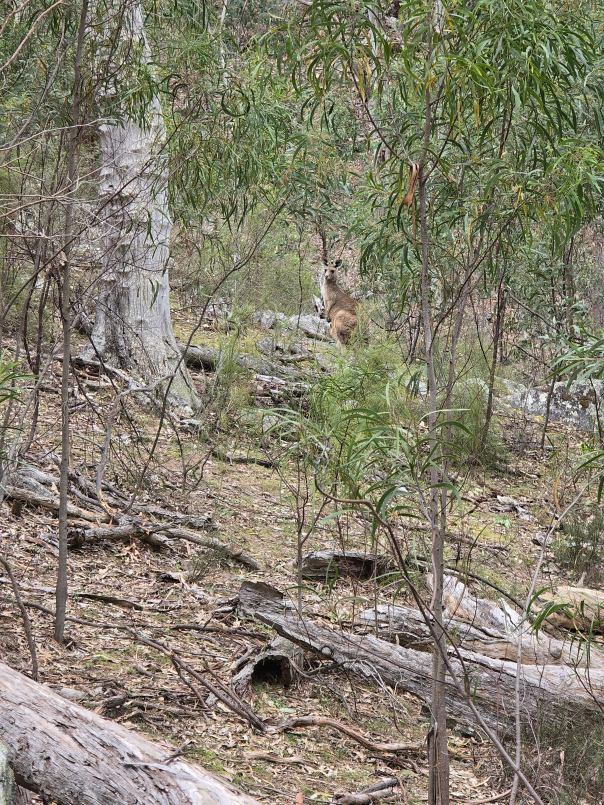
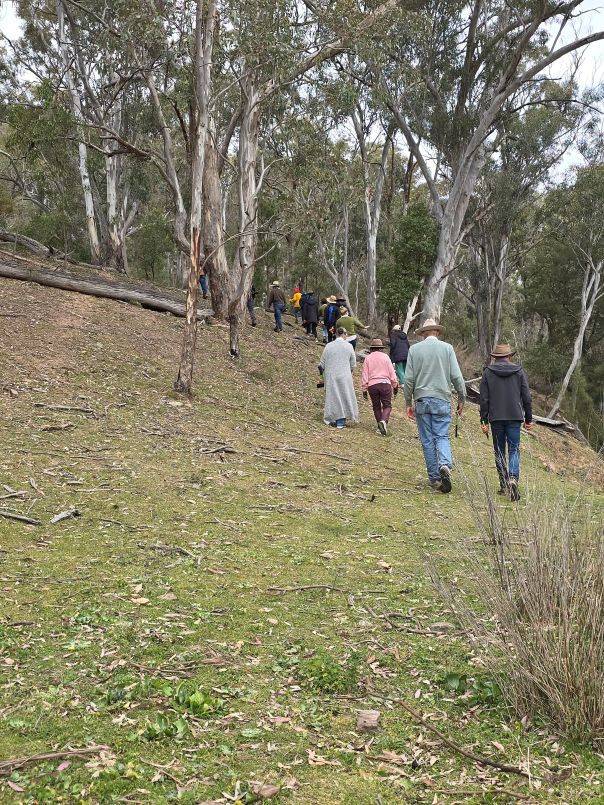
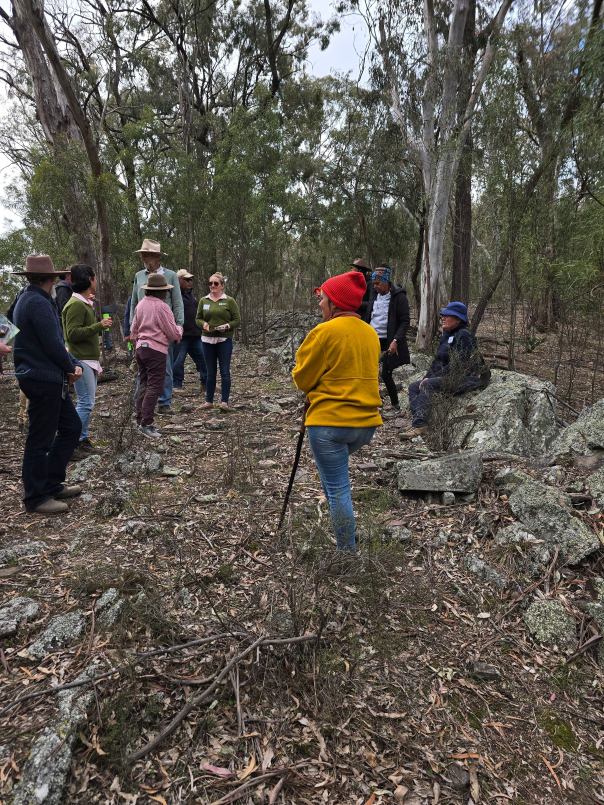
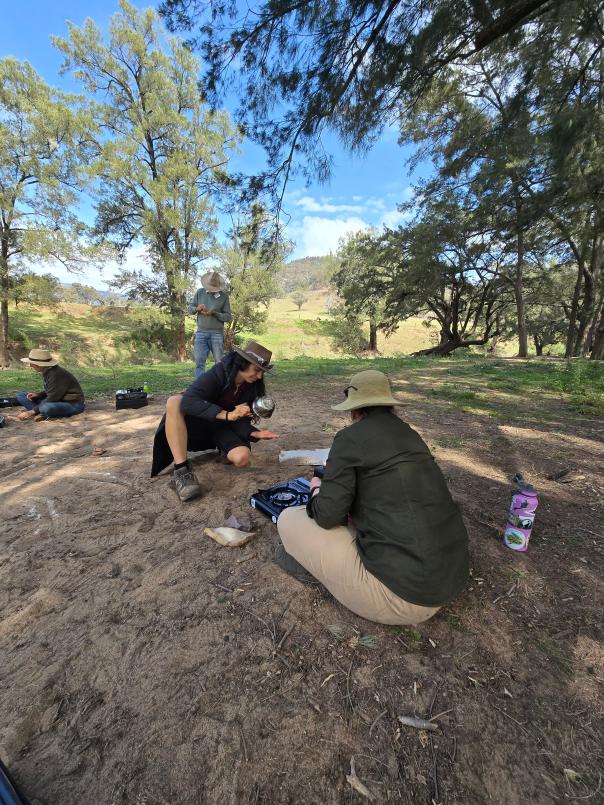
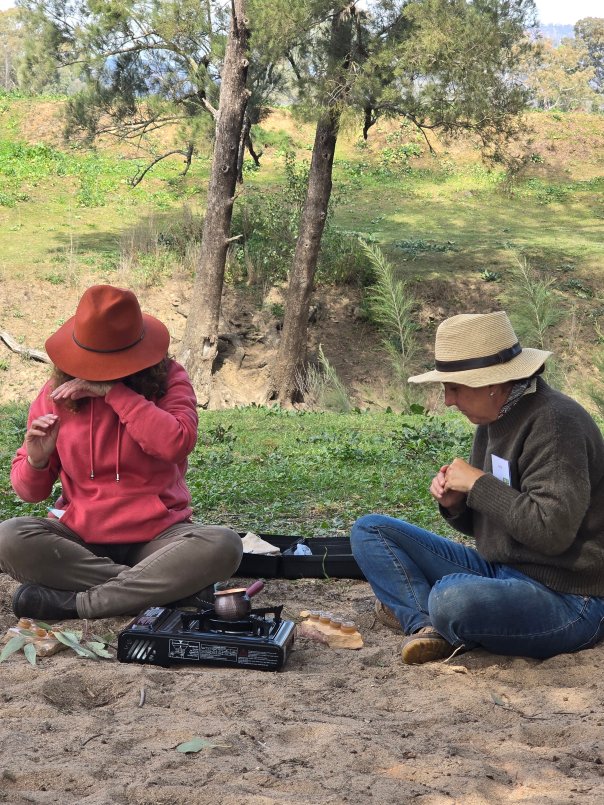
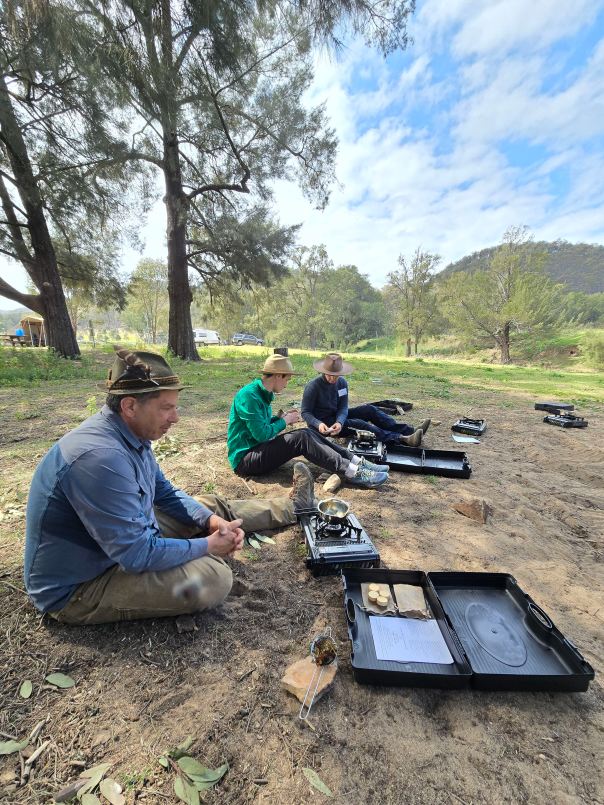
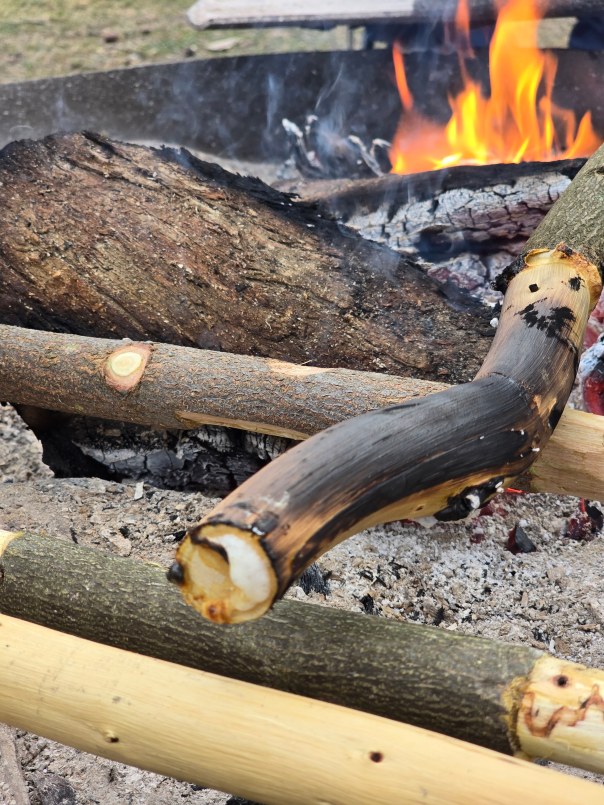
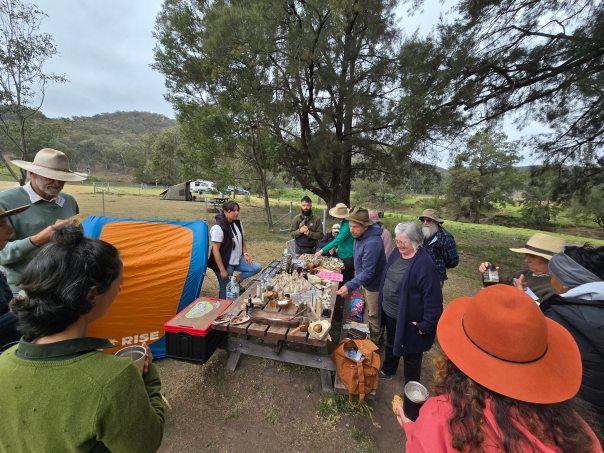
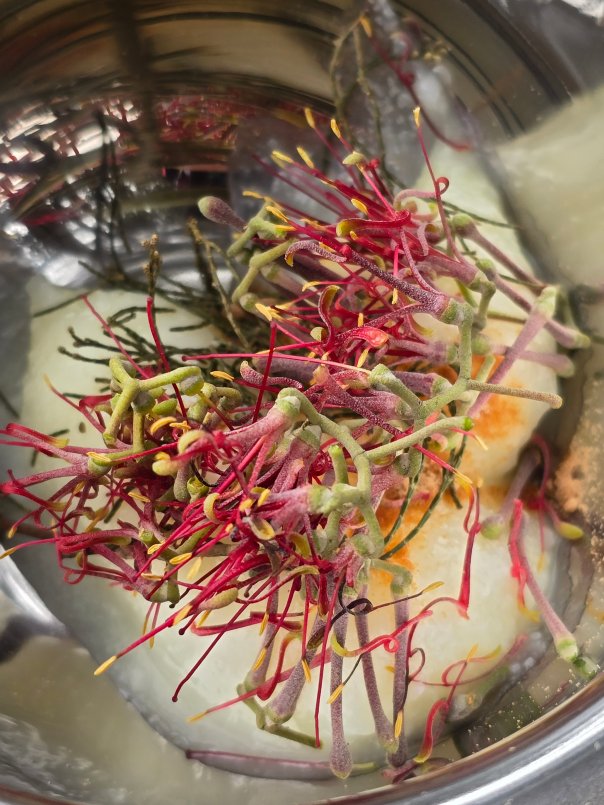
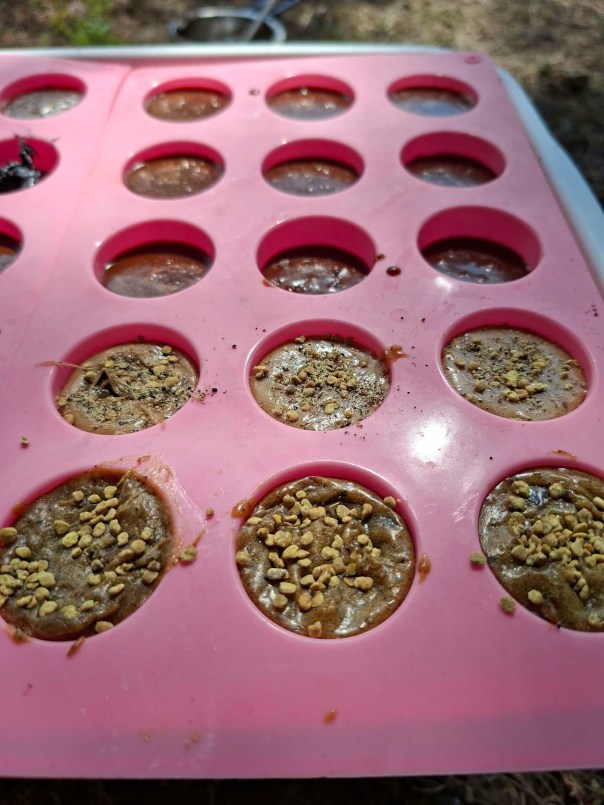
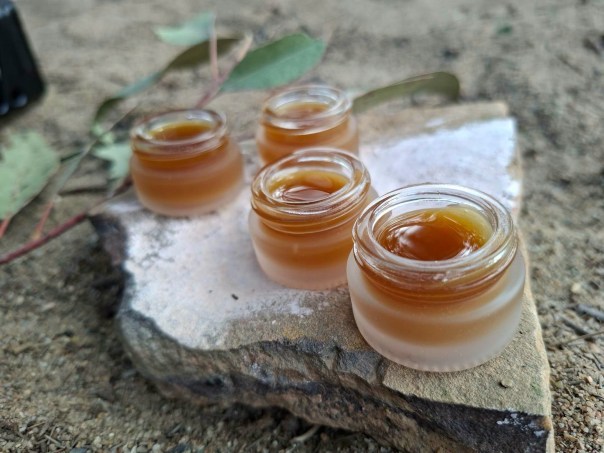
In terms of what this means specifically for Mid Lachlan Landcare, Cowra, Canowindra and surrounds we’ve partnered with Erambie Men’s Collective and are working on some exciting bush food and cultural burning initiatives. We’ll be sharing more updates on that in the coming months.
Regent Honey Eater
The Capertee valley has become synonymous with the Regent Honey Eater and the multi-stakeholder attempts to bring it back from the brink of extinction (It’s listed as critically endangered). While in the valley we caught up with Ross Crates from the Australian National University. He’s studying the bird for his PhD and talked us through some of the research he’s doing. We also heard from Central Tablelands Local Land Service’s Huw Evans who, among other things, has been coordinating revegetation work in the area for the bird.
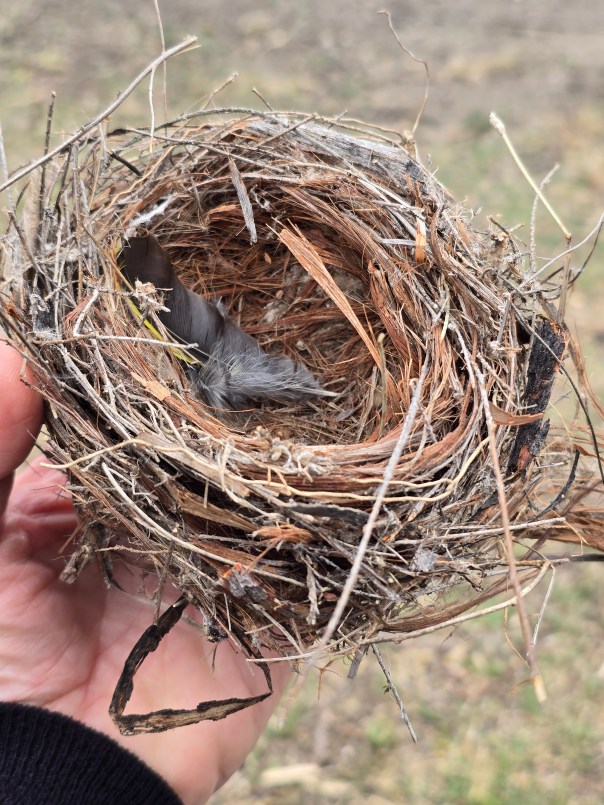
A Regent Honeyeater’s nest that Ross found while conducting his research.
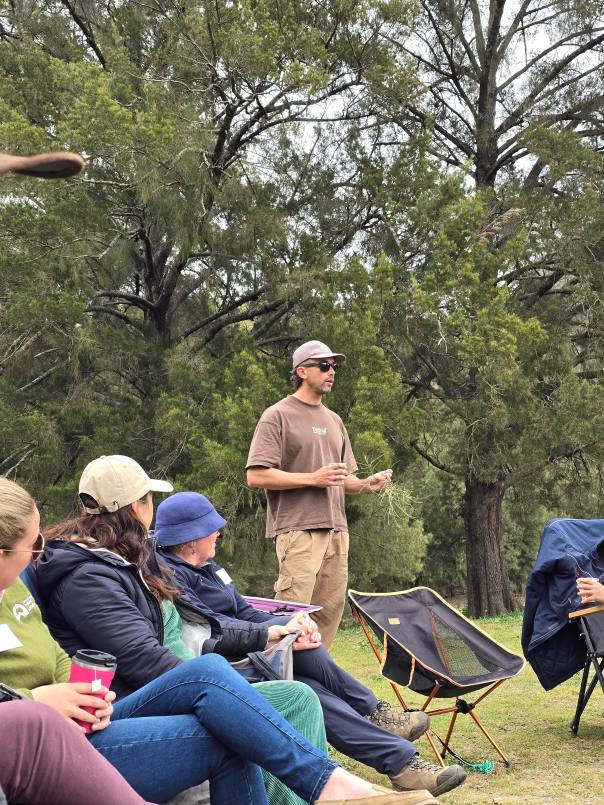
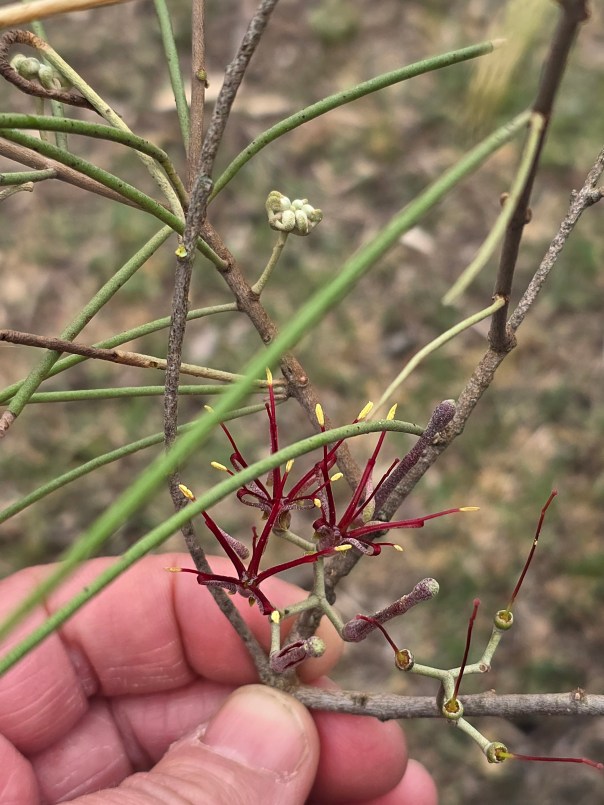
Talking about the mistletoe that the Regent Honeyeater likes to eat.
Citizen Science – Bogong Watch
It’s September and that means it’s time for the Bogong Moths to make their way back to the Snowy Mountains for their summer snooze or estivation
Estivation: A dormant state where the metabolism slows generally in response to hot and dry conditions.
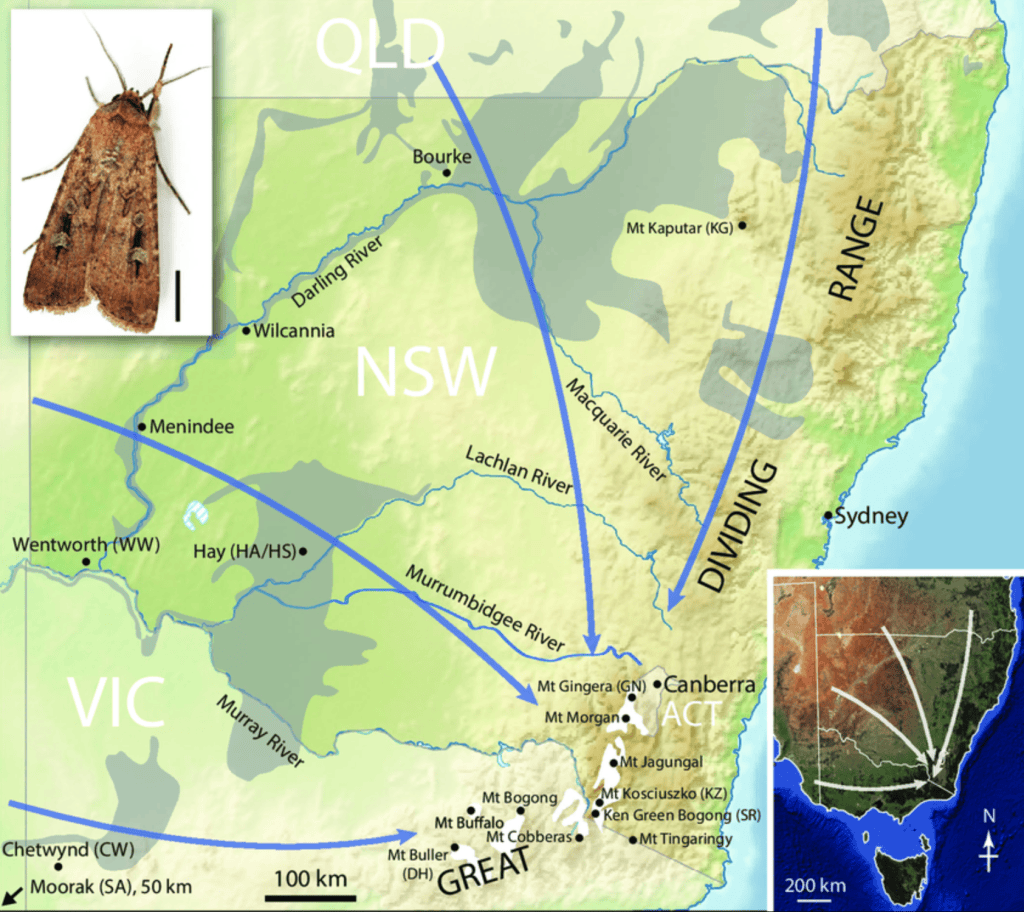
Their migration takes them through the Blue Mountains and down through the central west on a journey that’s being mapped and monitored by Zoo’s Victoria on their Moth Tracker Website. Moths are also being recorded by citizen scientists on iNaturalist as part of a wider science program to find out more about this endangered moth.
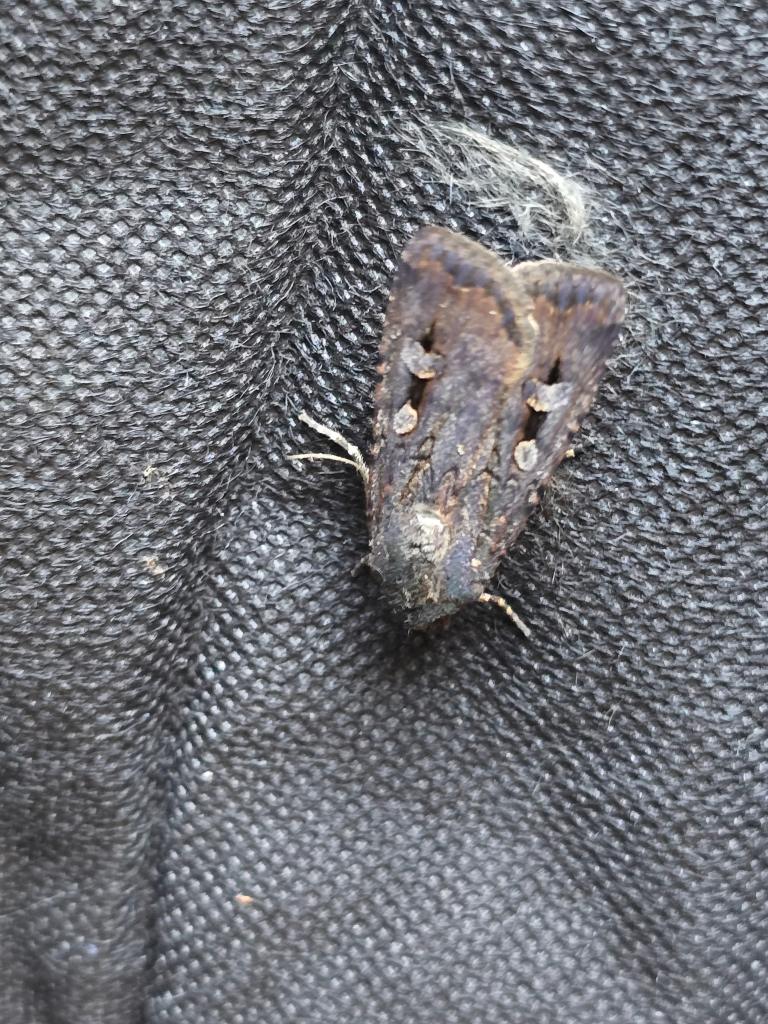
I had heard that the moths were on the way through the Blue Mountains after I found a couple of them hiding out in our garage. A quick check of our local invertebrates facebook page confirmed that they were on the wing so I decided to go out and do a bit more investigating.
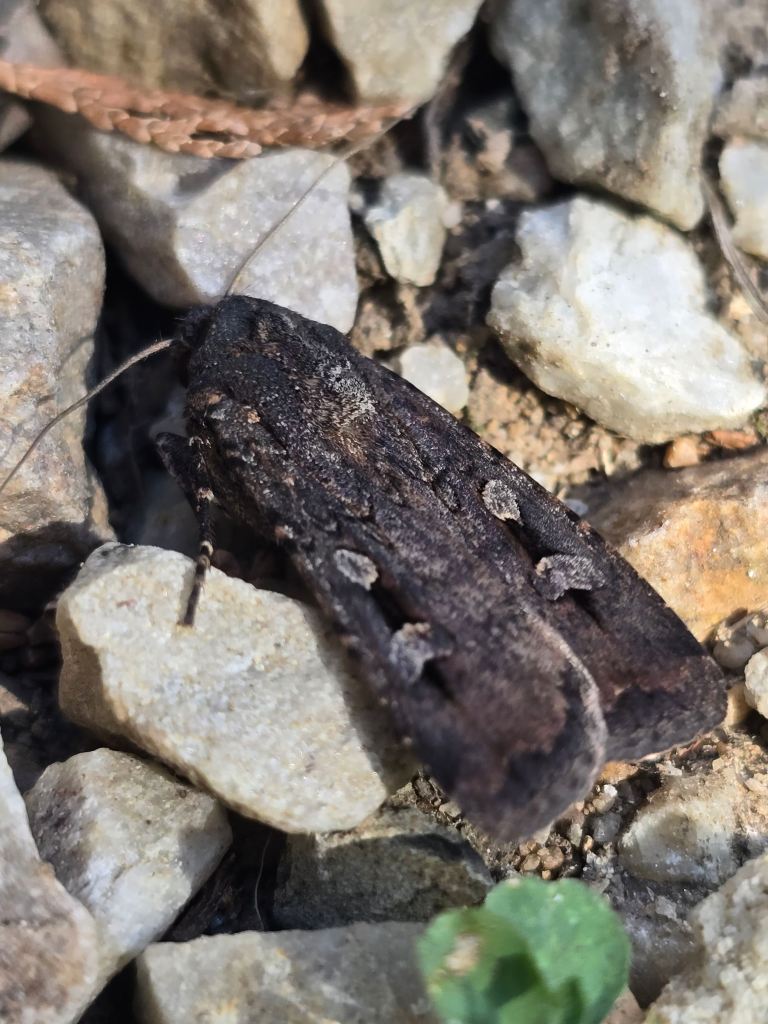
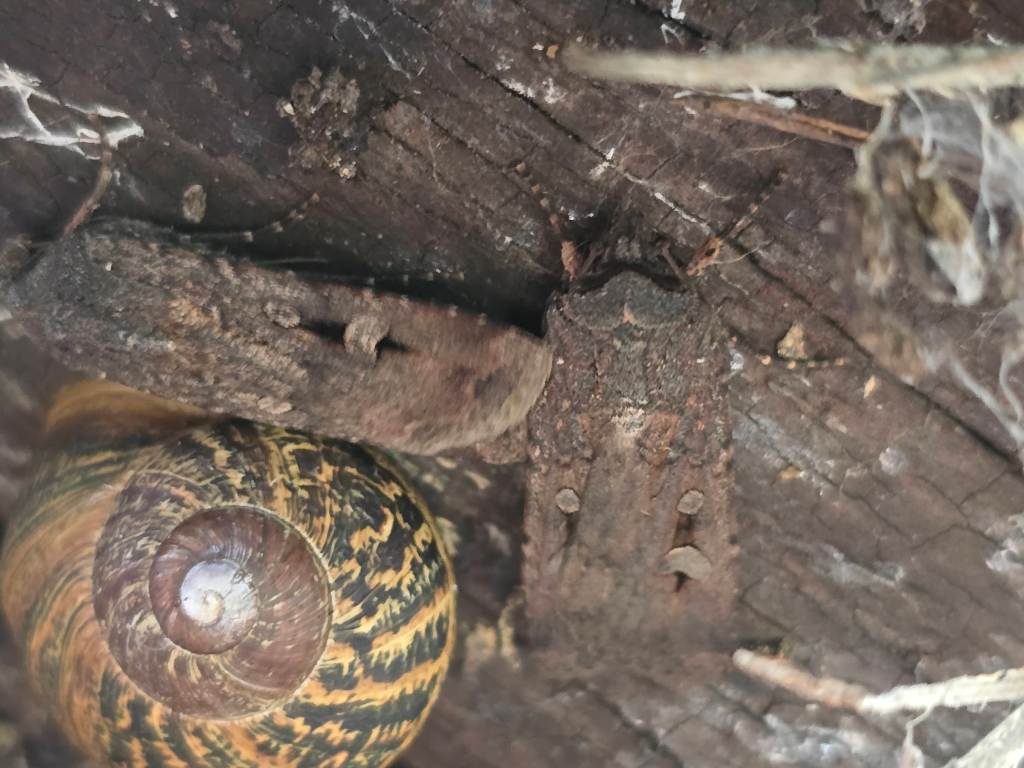
We’re preparing for bush fire season right now so rather than leaving fallen leaves to compost in-situ I’m sending them off in the green bin for bulk up-cycling and then planting some shrubs in the hope of harnessing the soils microbiology before everything dries out. While doing that I managed to disturb some of the moths who were hidden under fallen leaves and branches. Not exactly what I wanted but as there are still lots of places in my garden for them to hide out I carried on with the job, albeit a little more carefully and slowly to give them time to re-group. I found the mother load of moths under some large dead timbers, our rockery stones and pavers next to the pond – sites that were serving as mini caves for these cool-climate creatures! It’s hard to know exactly how many are resting in my garden at the moment but I estimated between 10-100 (one of the options on the tracker site) not that you’d know it unless you went searching – they are very well camouflaged.
The situation that’s unfolding in my backyard has got me thinking again about the juxtaposition we find ourselves in with the environment right now – there’s so much ecological value in fallen timber and leaf litter yet in the wrong place at the wrong time it can contribute to devastating fire conditions, not just for humans but for seed banks, invertebrates and everything that comes from them. Life is often a question of balance and timing. I can only hope I’m getting that right in my little piece of Bogong moth migrationary pathway.
Wallace, Jesse & Maleszka, Ryszard & Warrant, Eric. (2022). Large-scale whole-genome sequencing of migratory Bogong moths Agrotis infusa reveals genetic variants associated with migratory direction in a panmictic population. 10.1101/2022.05.27.493801.
Expanding & Improving our Salinity Monitoring Capacity
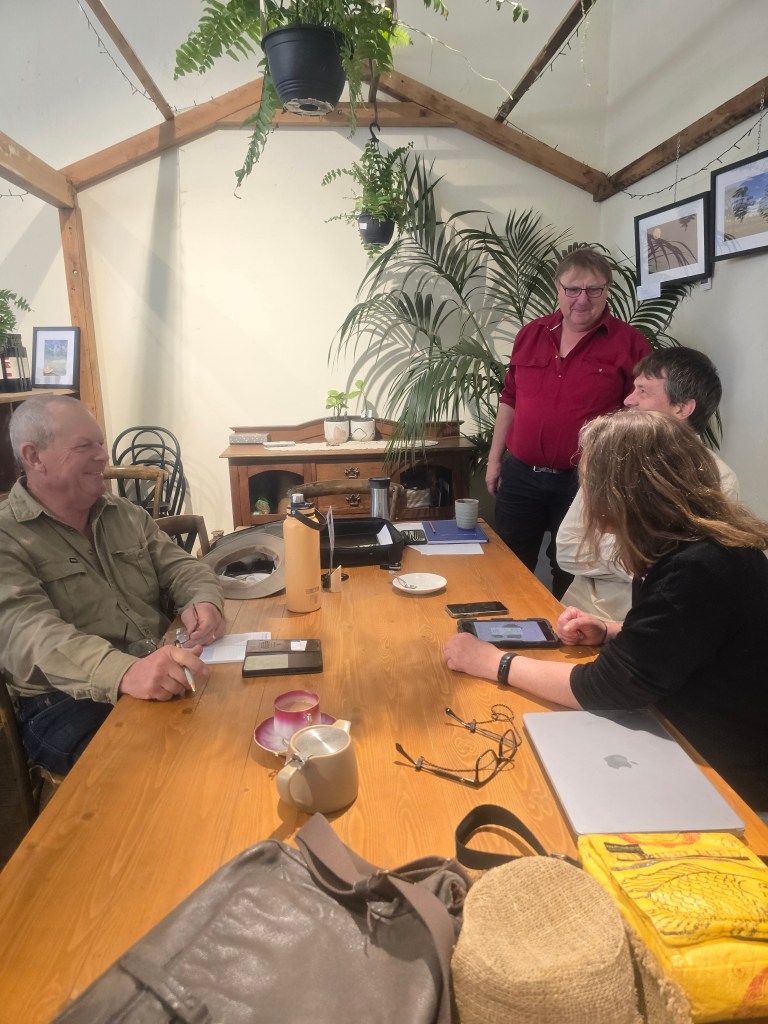
On Friday a group of us met at Perennialle Plants in Canowindra to be fitted out with two custom-made apps we can use for our salinity mapping and monitoring work.
Wooly who sits on the Mid Lachlan Landcare Committee and works as a Salinity Technical Officer- Basin Salinity Program for the NSW Government has been working with Cibo Labs to develop these apps and wanted to make sure we could all use them before leeting us lose around the countryside – fair enough!
Completing the practical part of our informal new-app assessment.
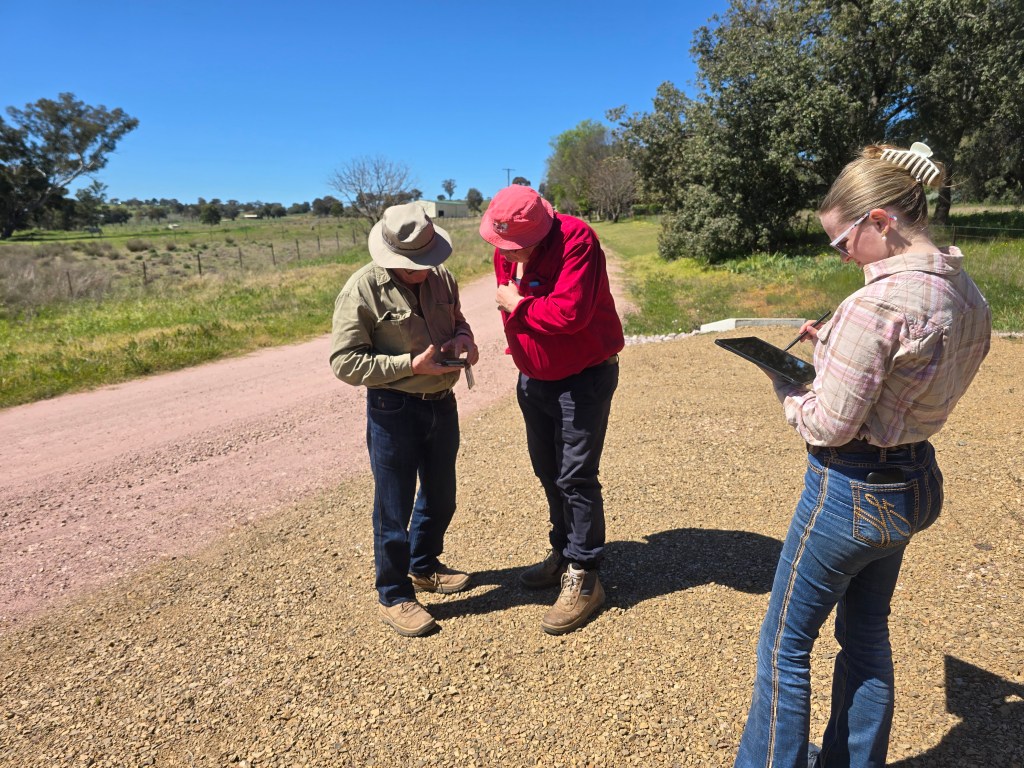
Orientating ourselves and picking out the landscape features we need to make notes on. David, Wooly and Isabelle (Work Placement Student)
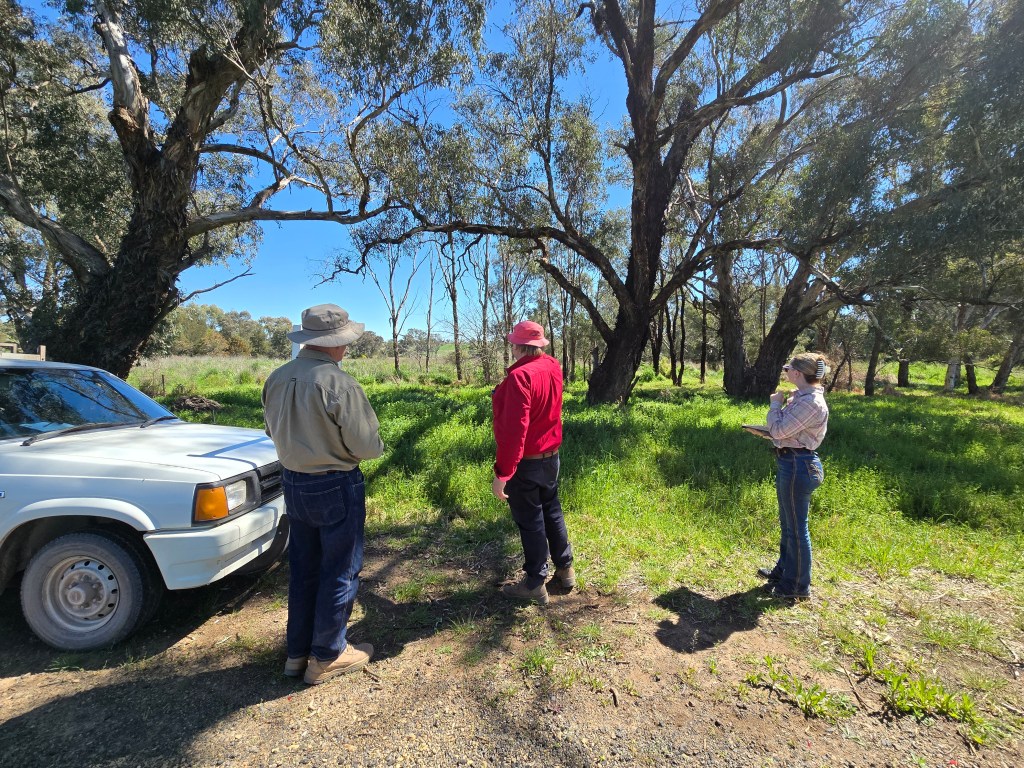
The week before Tracee, David and Wooly had been out on their first monitoring loop in the Eugowra catchment and as you can see from the picture below, they were still taking notes manually. That date will get uploaded to the digital record along with data from future loops and the incidental observations we make outside of EC testing.
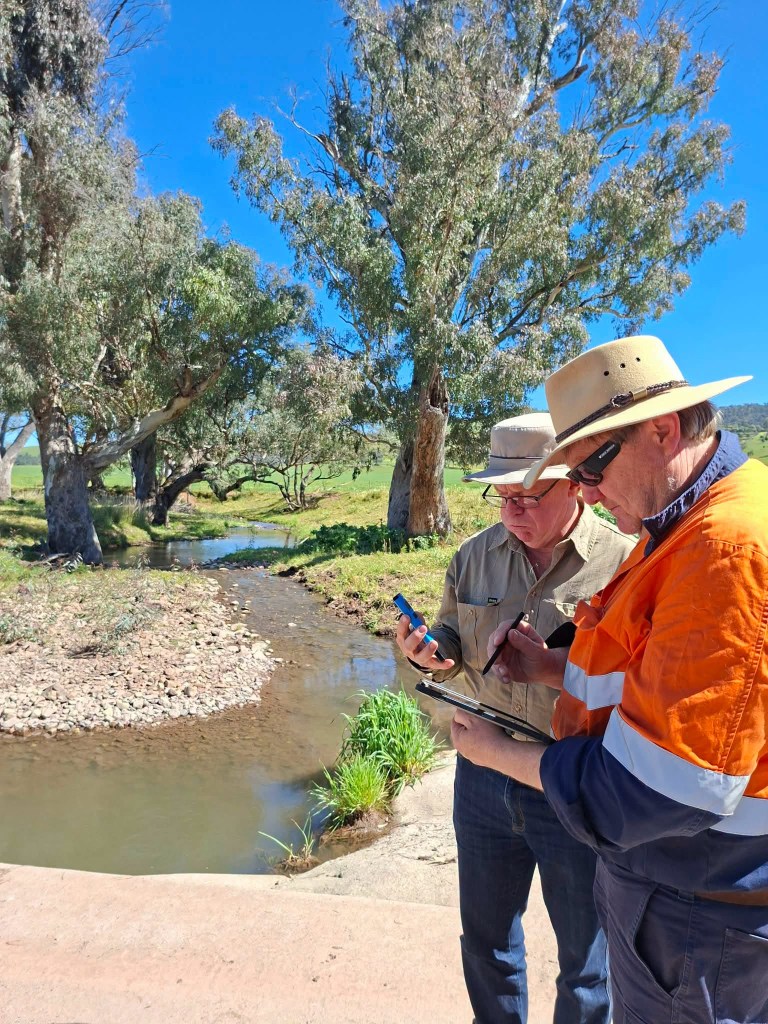
The Eugowra loop takes in waterways above Manildra and Cudal were tested before moving over to Toogong and finally at the bridge over the Mandagery in Eugowra.
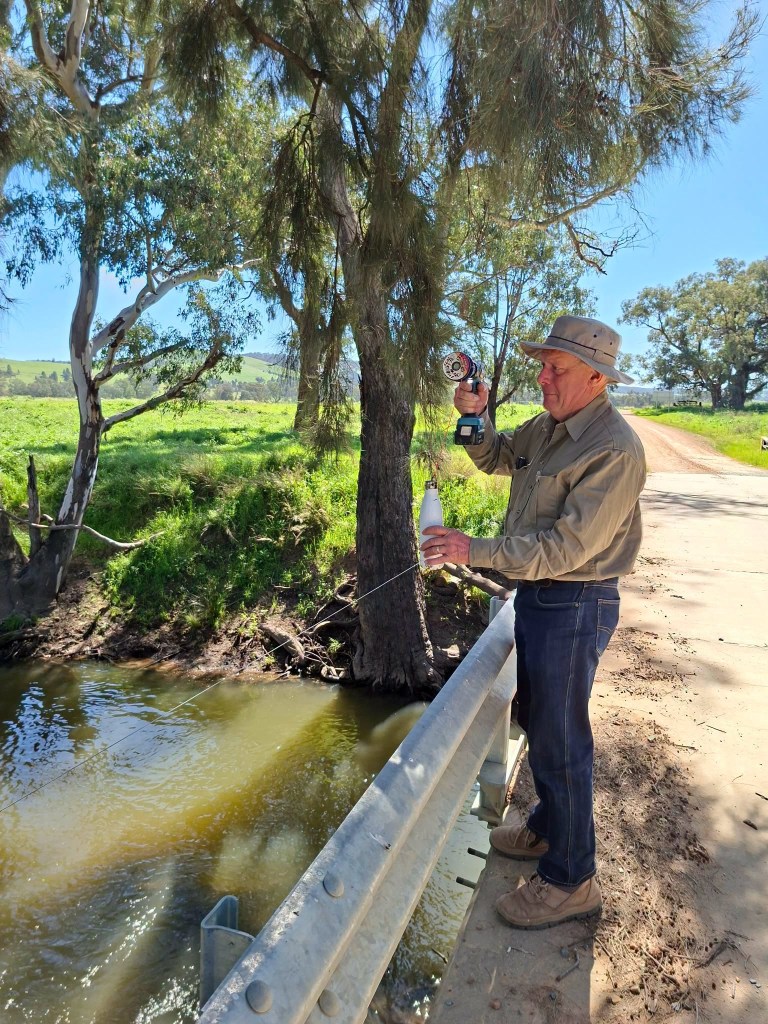
We still love David’s innovative use of a drill to take these samples – some string and a drink bottle that can be lowered and then raised using the drills mechanism. How very smart!
Why are we doing this?
This work extends onto the back of a Salinity monitoring and mapping project that Murrumbidgee Landcare report on here. Salinity mapping data across time is an incredibly important resource for helping us get ahead of and prevent future outbreaks and reduction in landscape function. Rising salinity puts pressure ecosystems, eventually changing the way they function to the point that we see tree dyeback and species change towards more salt tolerant species. Erosion frequently follows a rise in salinity with roads, farm tracks, gullies and creeks often ended up breaking apart and in doing so, washing off any remaining top soil. Remediation efforts can be extremely costly and take time to deliver results which is why we are so keen on producing a data set that can help us get ahead of the problem. We need as much time as we can get to allow any strategically planted trees and shrubs to grow and start reducing the speed and level of ground water before the problem gets out of hand and productive land is lost.
We’re measuring and monitoring both the waterways and landscape around the Mid Lachlan Landcare region with a view to creating a meaningful, local management tool that the whole community owns and has access to.
Biological Inputs for Soil Health
What better way to spend the first day of spring than with your hands in the soil at Carcoar!
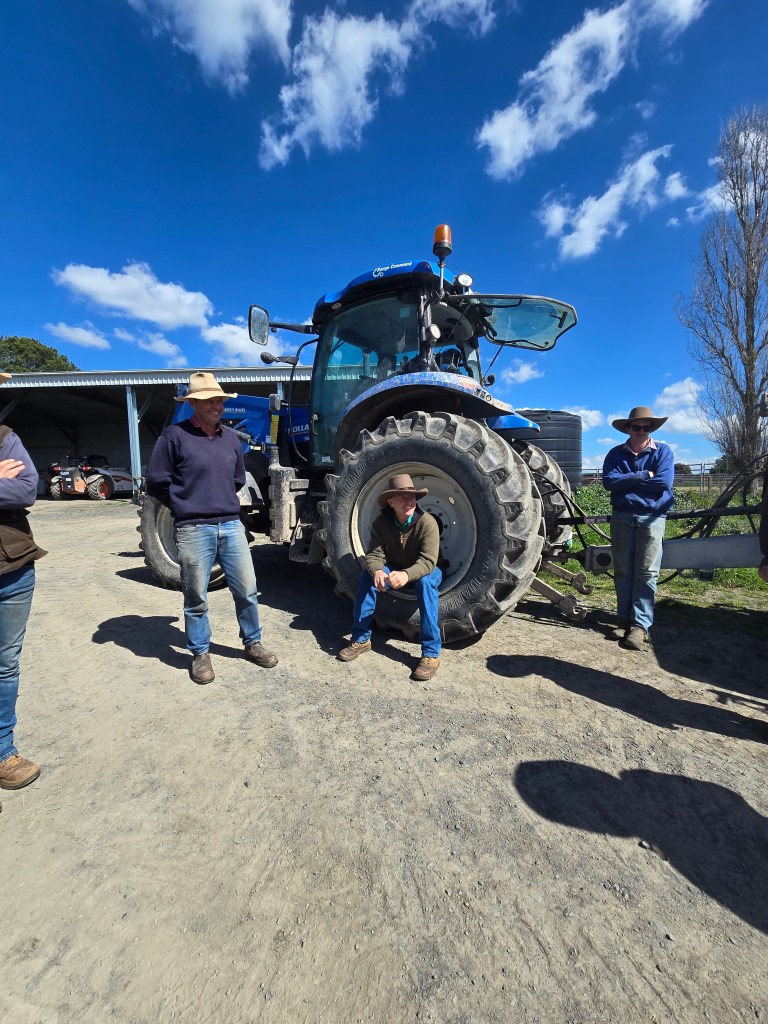
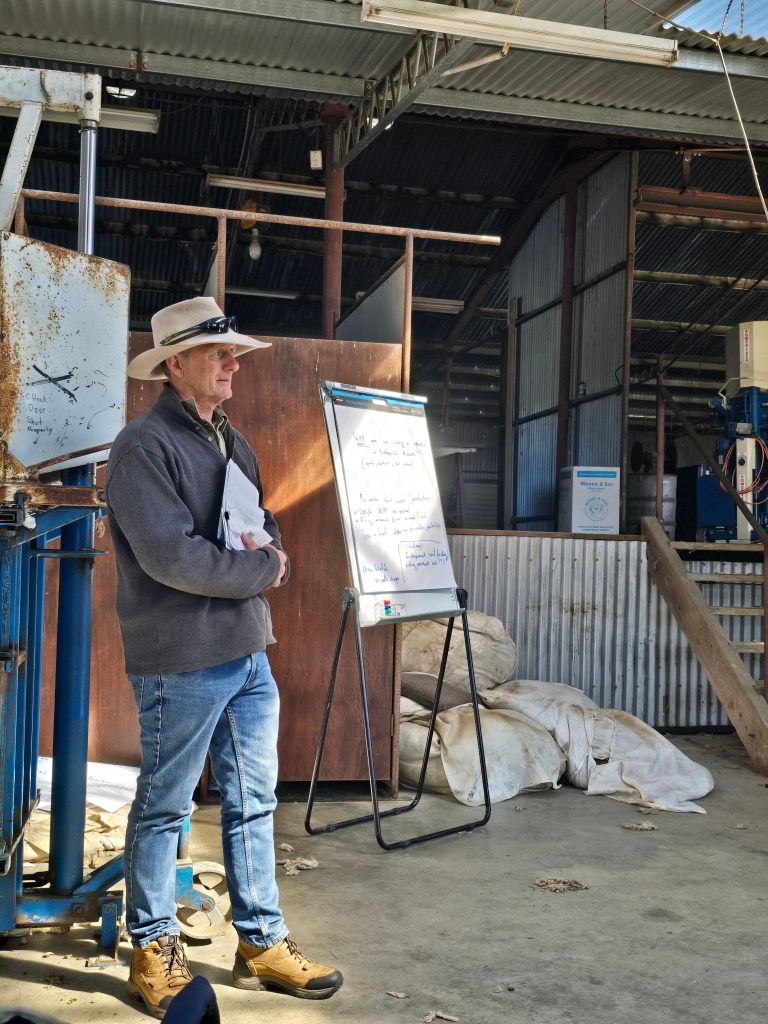
Scott Hickmnan invited a group of ‘Growing The Grazing Revolution’ members out to Sam Cook’s place for a morning discussing biological inputs for soil health in mixed farming systems.
Are main question for the day being ‘Why are we using or interested in biological products?”
That was followed by a discussion on the benefits we’ve seen and the challenges we experience in using biologicals in our farm management actions.
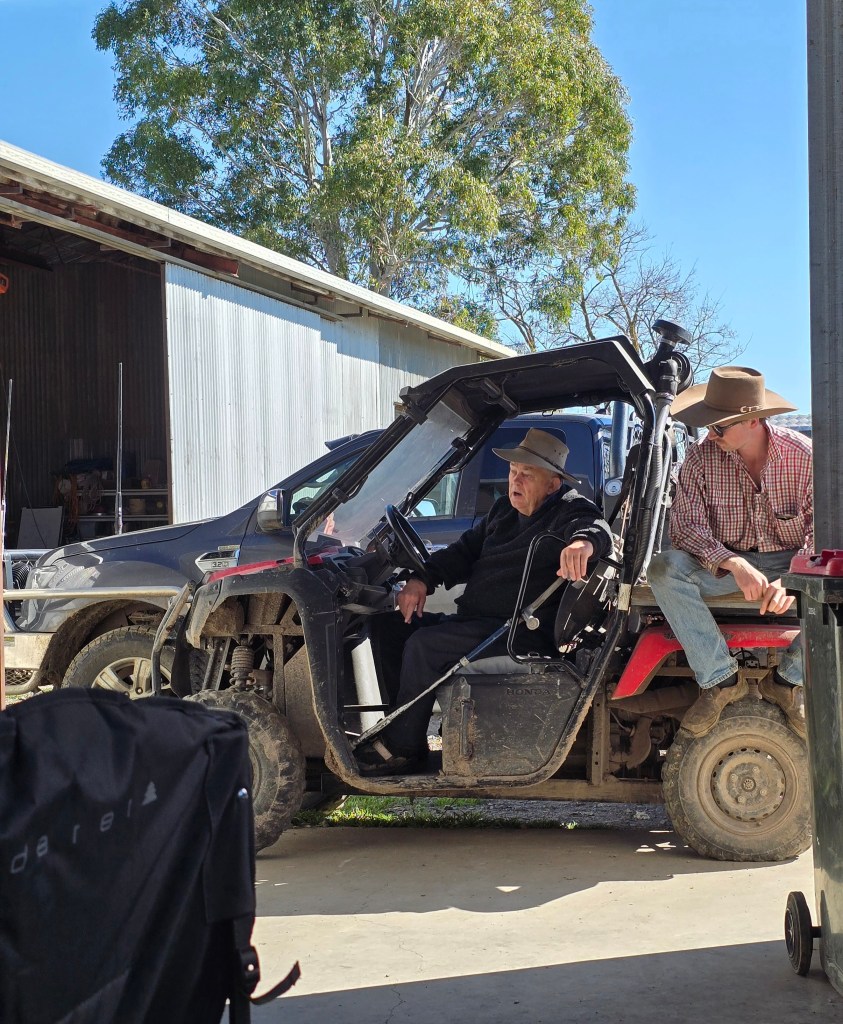
Sam has been exploring the world of worm wee, compost teas and fermented brews for some time and has seen it do wonders for stock health – the stock having access to better quality feed as a consequence.
Out in the paddocks, Andrew Wooldridge talked us through how the soils around here were formed and their general characteristics and vulnerabilities. Then Annie and Isabelle conducted a panel of soil tests including pH, dispersibility and composition (making a soil sausage or ribbon).
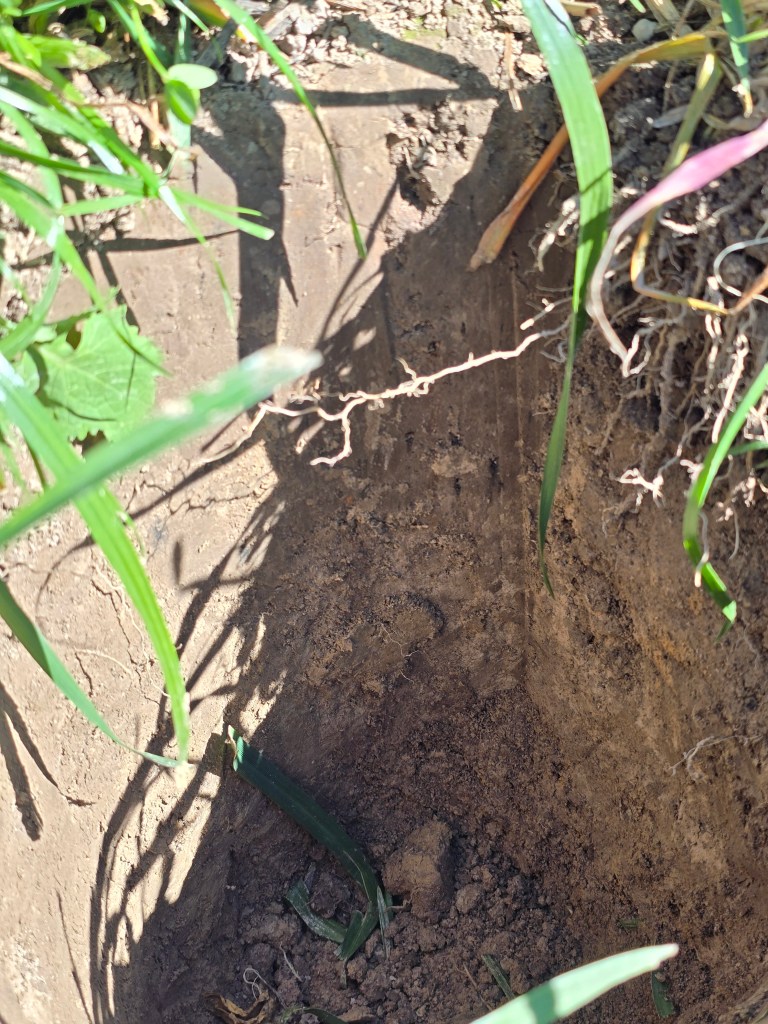
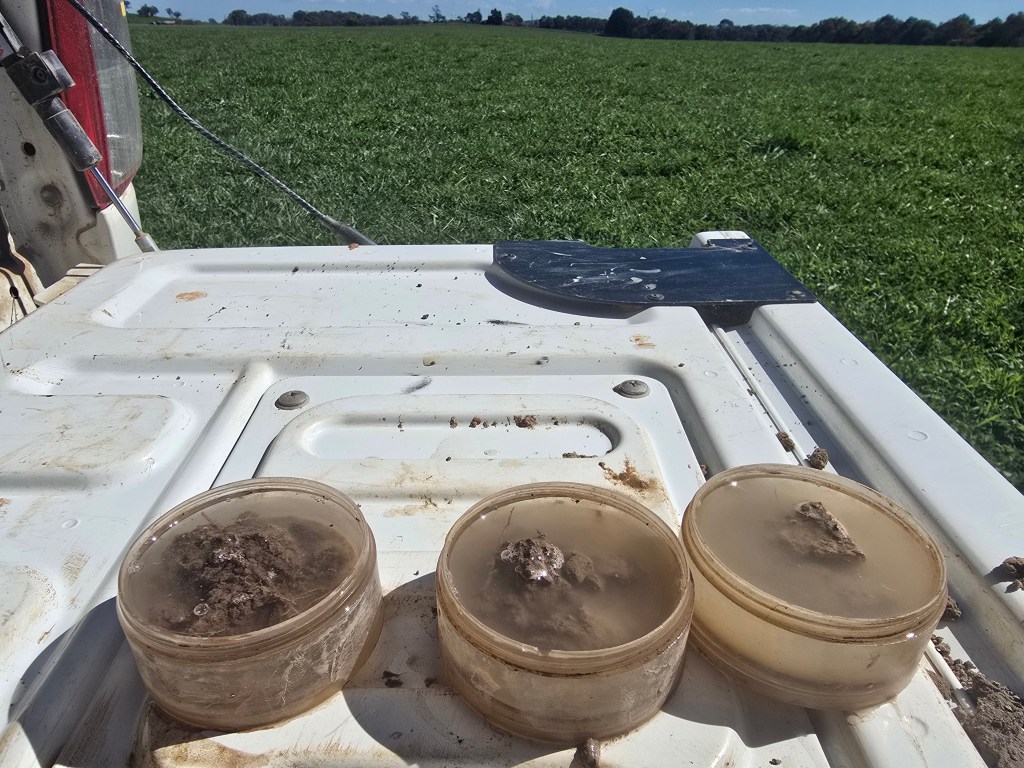
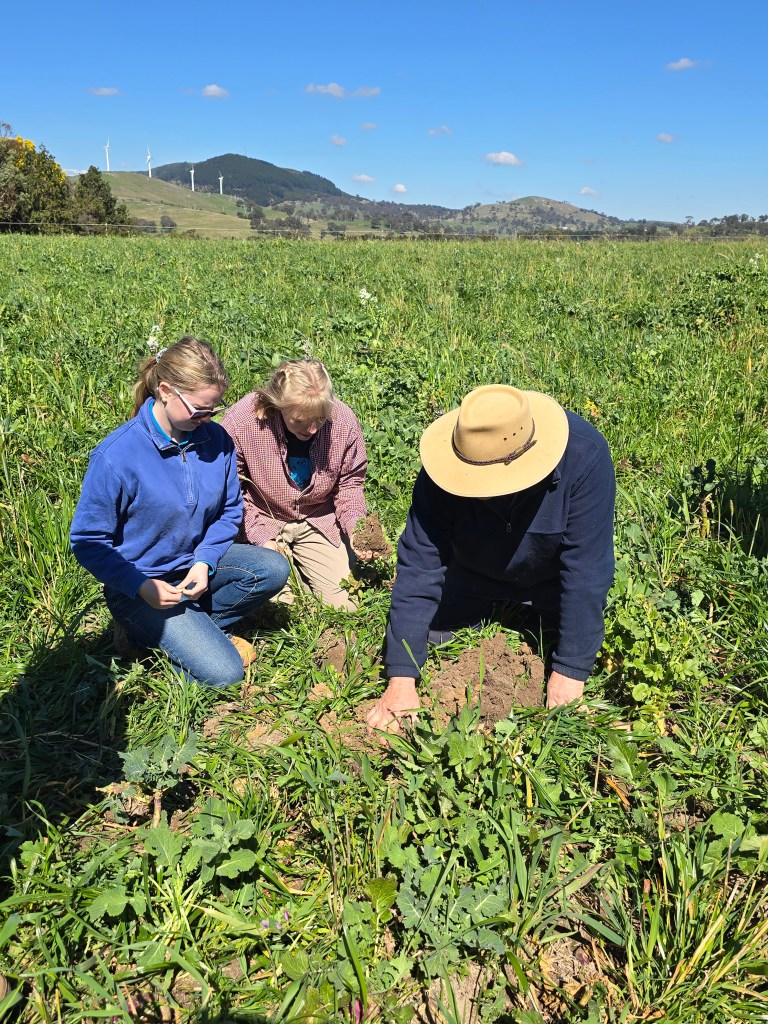
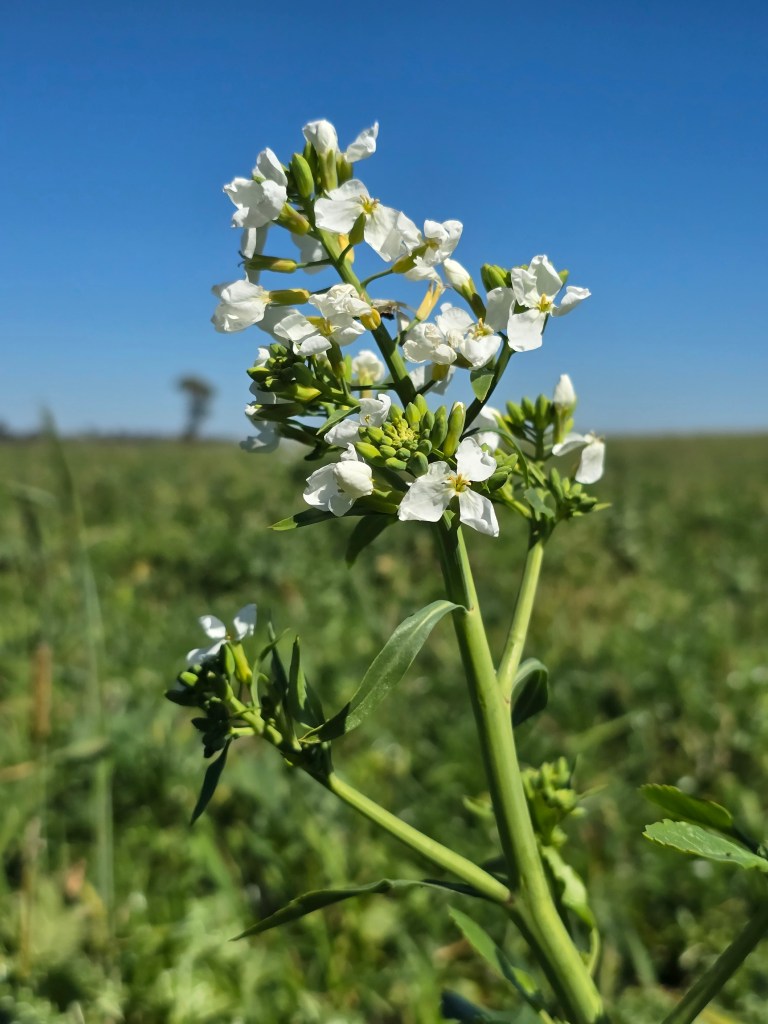
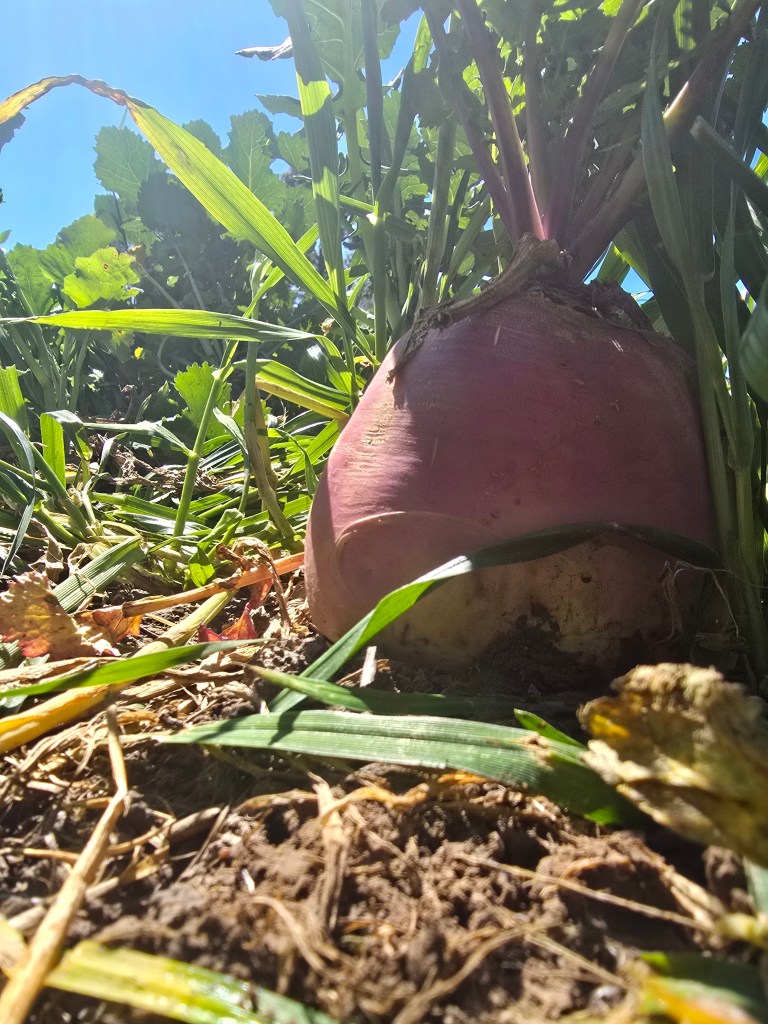
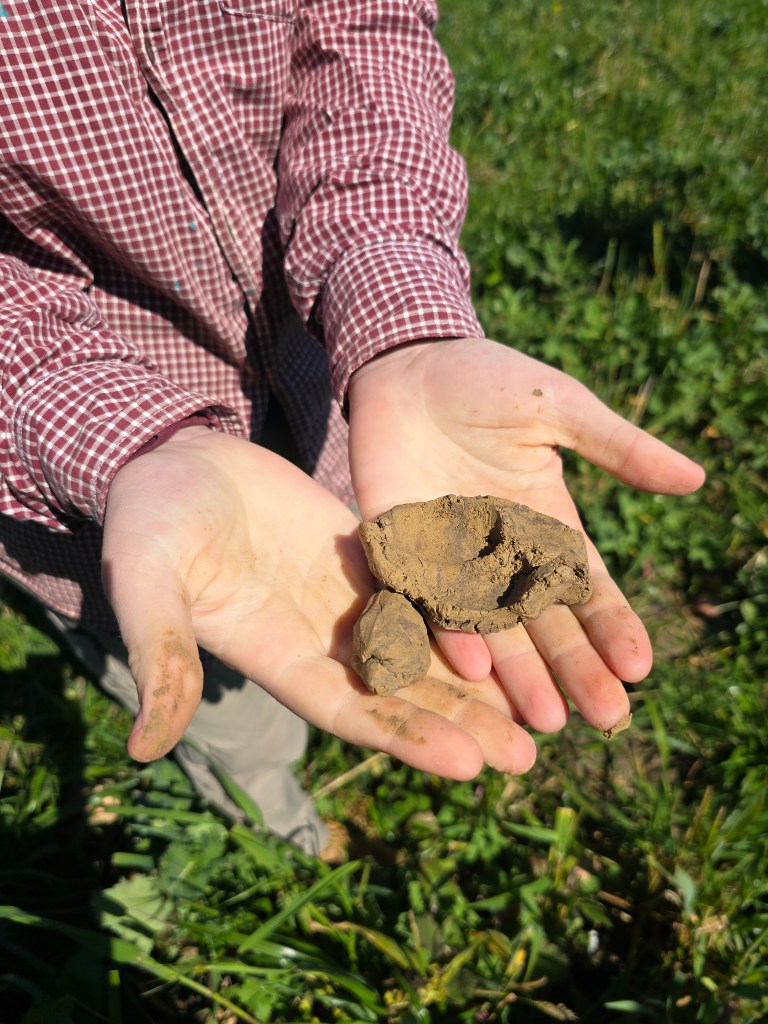
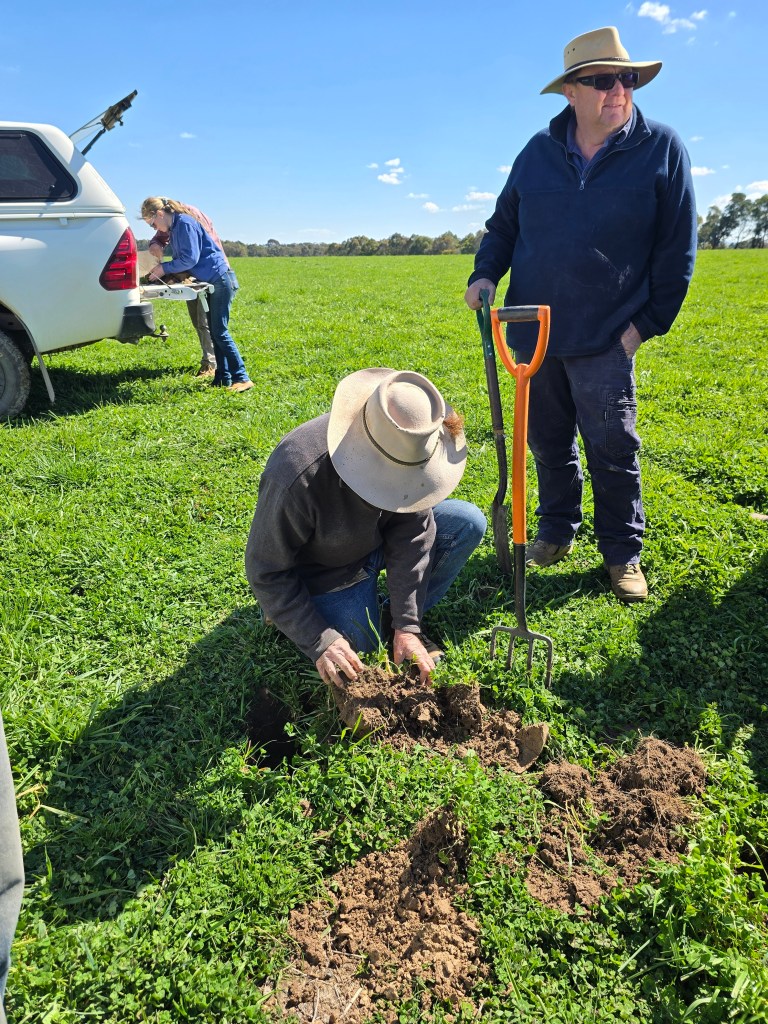
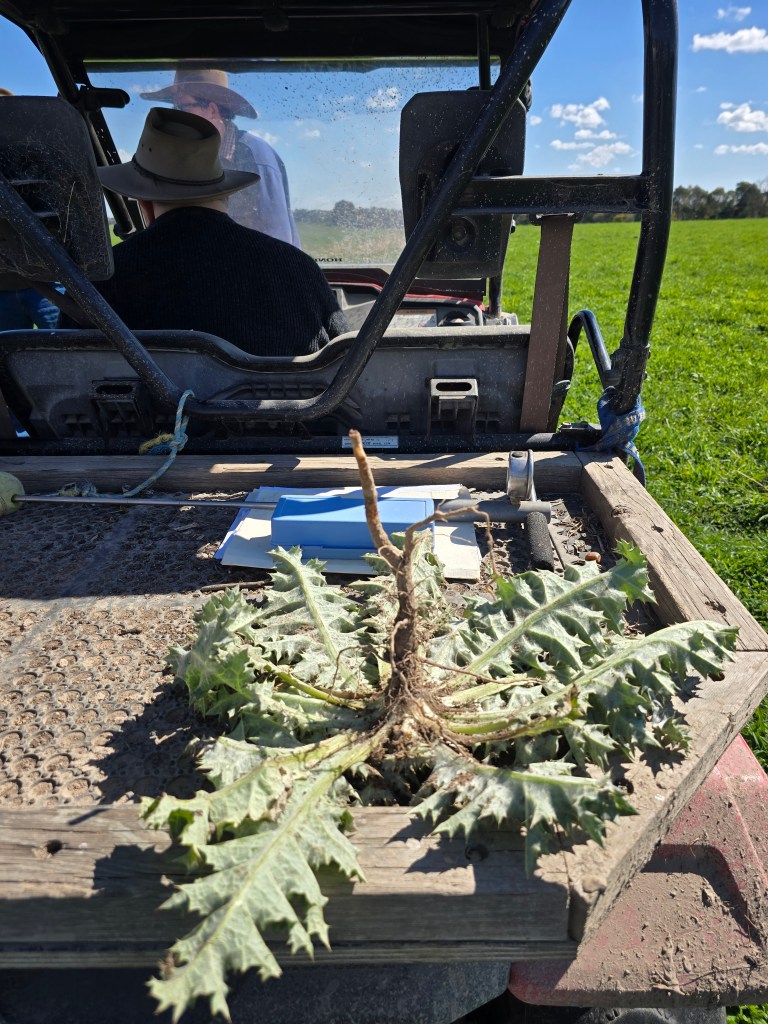
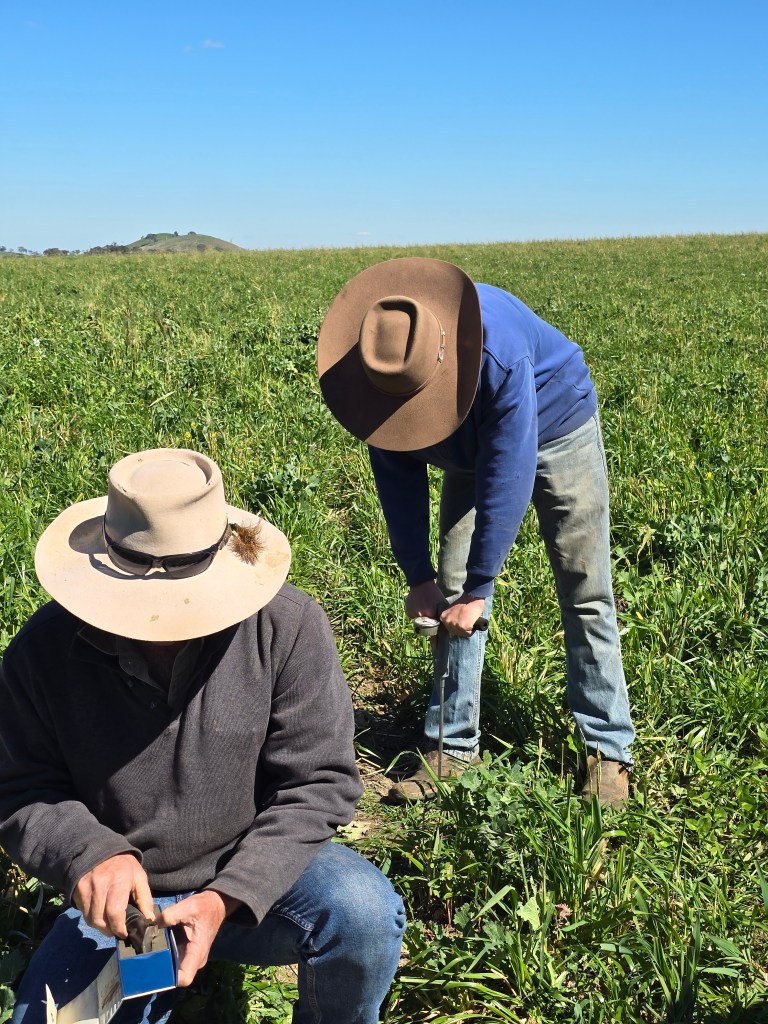
In addition, we measured soil compaction and plant BRIX levels, both of which helped us understand the current status of the paddock while gaining insights to its future potential.
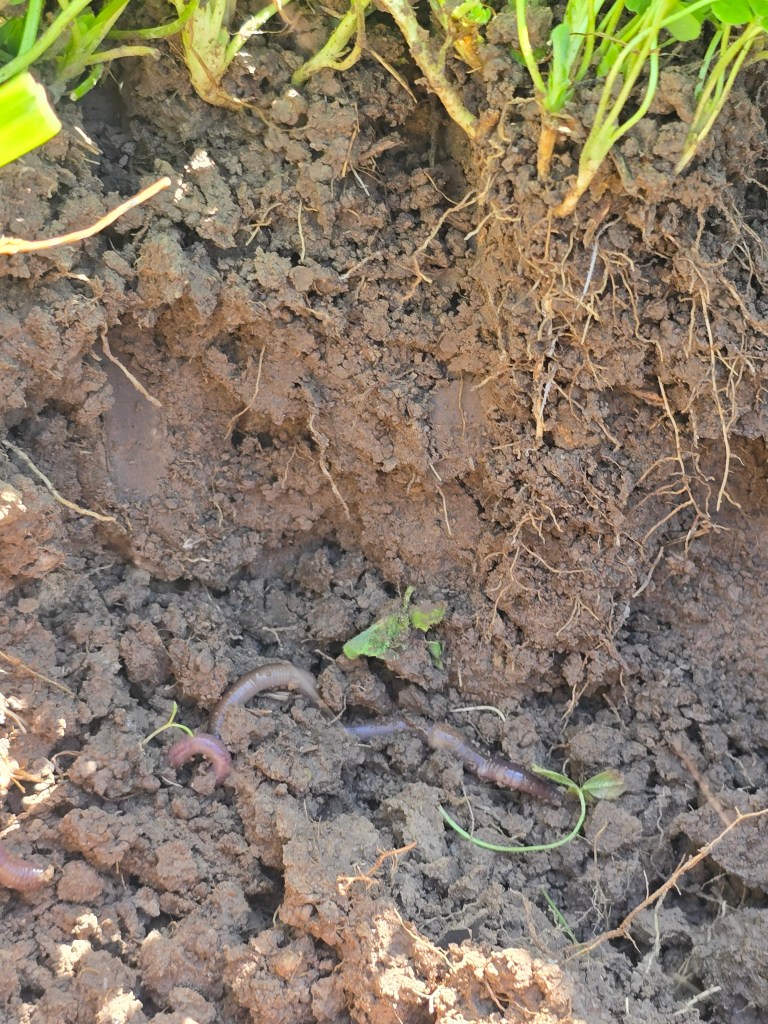
While digging holes we noted just how many earth worms were around – a great sign of health and likely a consequence of all the root veggies and perenial grasses
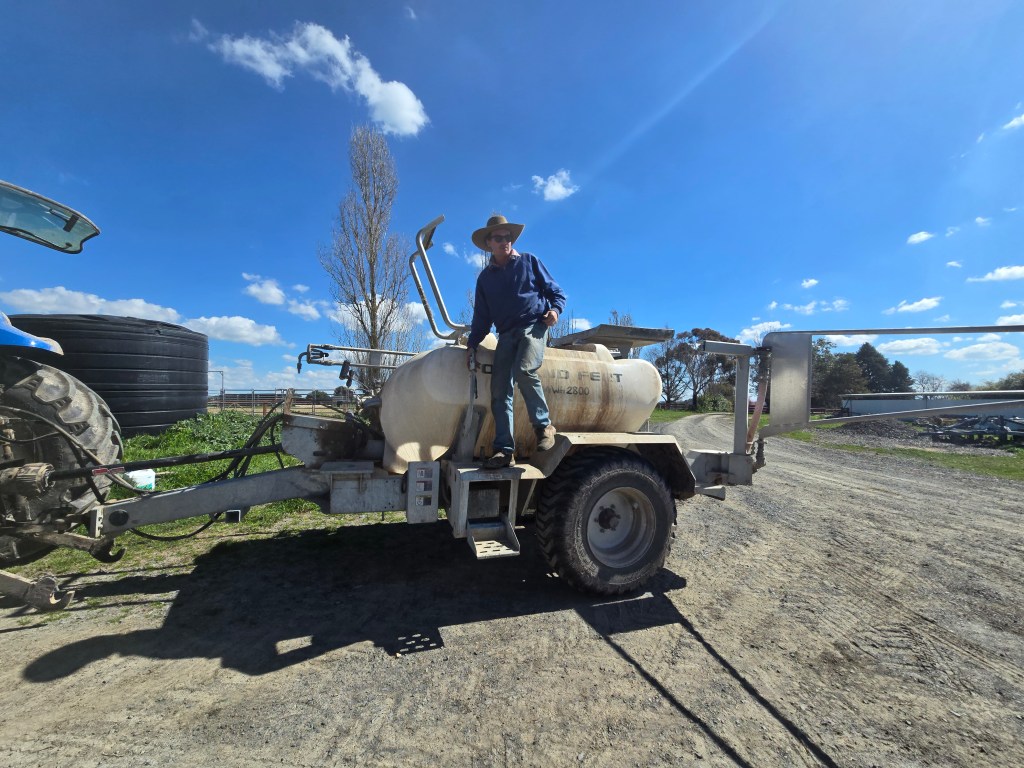
There was time to check out the spray equipment needed to dispense slurries and suspensions and of course it’s always interesting to see what other toys people have lying around!
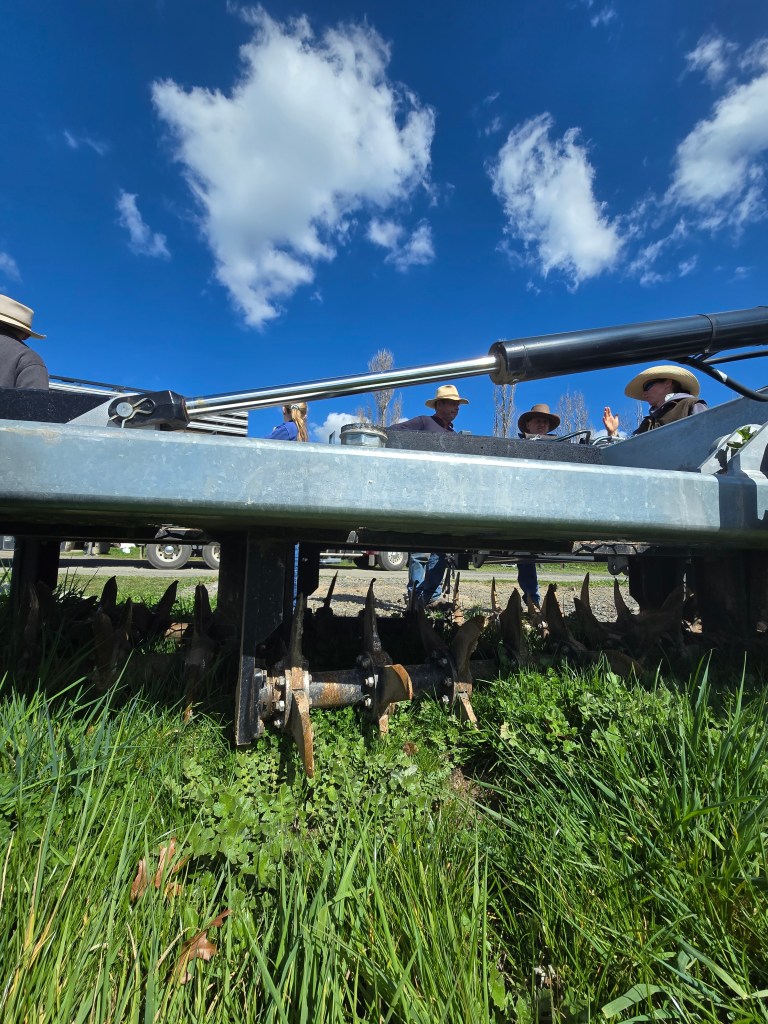
The soil aerator looked pretty interesting.
As usual, we finished with a bit of a book/ resource list:
For the love of Soil – Nicole Masters
Dirt to Soil – Gabe Brown
Soil – Matthew Evans
Growing a Revolution – David R Montgomery
Carbon, the book of life – Paul Hawken.
Plus we brainstormed what we’d like to do next, the result being have someone come in and help us understand how to interpret our soils tests a bit more thoroughly with a biological management perspective in mind.
There’s always something new to learn and it was great spending the morning comparing notes and working out where we’d like to focus our attention next.


