Mid Lachlan Landcare
supporting sustainable agriculture and restoring the environment
Bird Flu Updates – Crossing Species
We’re keeping a close eye on the Bird Flu situation and while we’re still seeing the biggest impacts along the coastline and in sea birds and mamals, there have been some worrying developments to note.
Foxes and other feral animals as vectors.
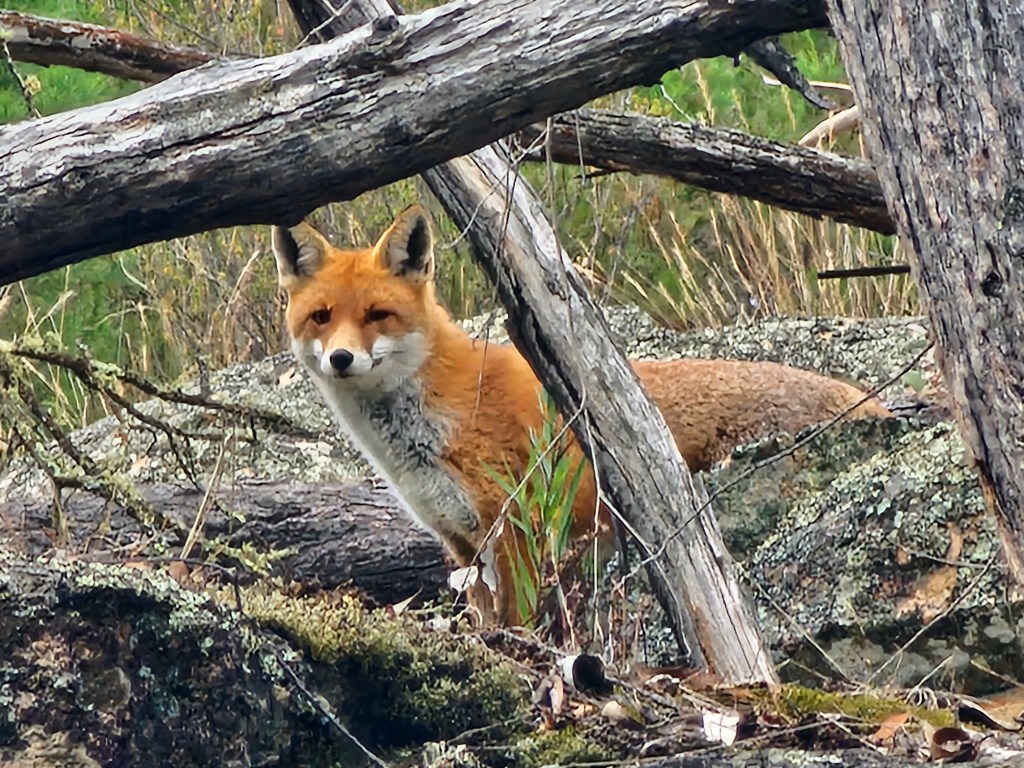
A red fox sampled on 26th August has tested positive for bird flu in a worrying turn of events for Australia. While this is our first case of a land mammal catching this strain of bird flu, it’s not unusual for scavenger species and cases of bird flu in foxes have previously been reported in other countries.
So what can we do?
It’s been a bumper couple of years for foxes in the Mid Lachlan Region and while I know many of us have live baiting, shooting and trapping programs this flu update serves as a prompt for us to ramp things up across our neighbourhoods.
We encourage people to work together as feral animals have no respect for fencing and property boundaries, plus it can be a thankless task to undertake on your own. Feral Scan has provision for you to set up a neighbourhood action group for whatever feral species you’re targeting and that data can be kept private so it’s only shared to members of your group.
Talk to your Local Land Services Biosecurity Officer about traps & baits – again working together can make these programs much more effective AND can ensure you keep non-target species such as domestic dogs safe from any poisons.
Train yourself online with these free resources from Tocal College.
Going all out to kill our foxes may not stop birdflu in its tracks but it can’t hurt to try.
Birdlife Australia Walk around Cowra Common
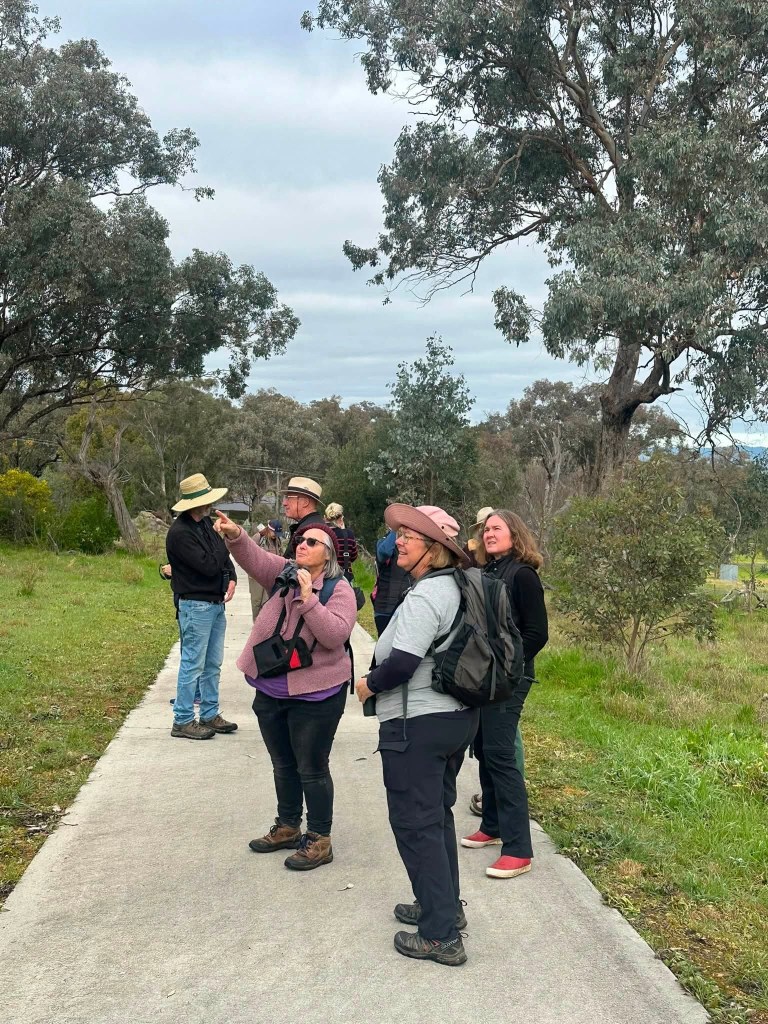
On Saturday 22nd August fourteen local bird enthusiasts joined a guide from Birdlife Australia on the first of many bird walks planned around Cowra. A total of 23 species were recorded on the morning including Spotted pardalotes, Red Rumped Parrots, Red Wattle Birds, Superb Fairy Wrens, Yellow Faced honeyeater and Crimson Rosellas.
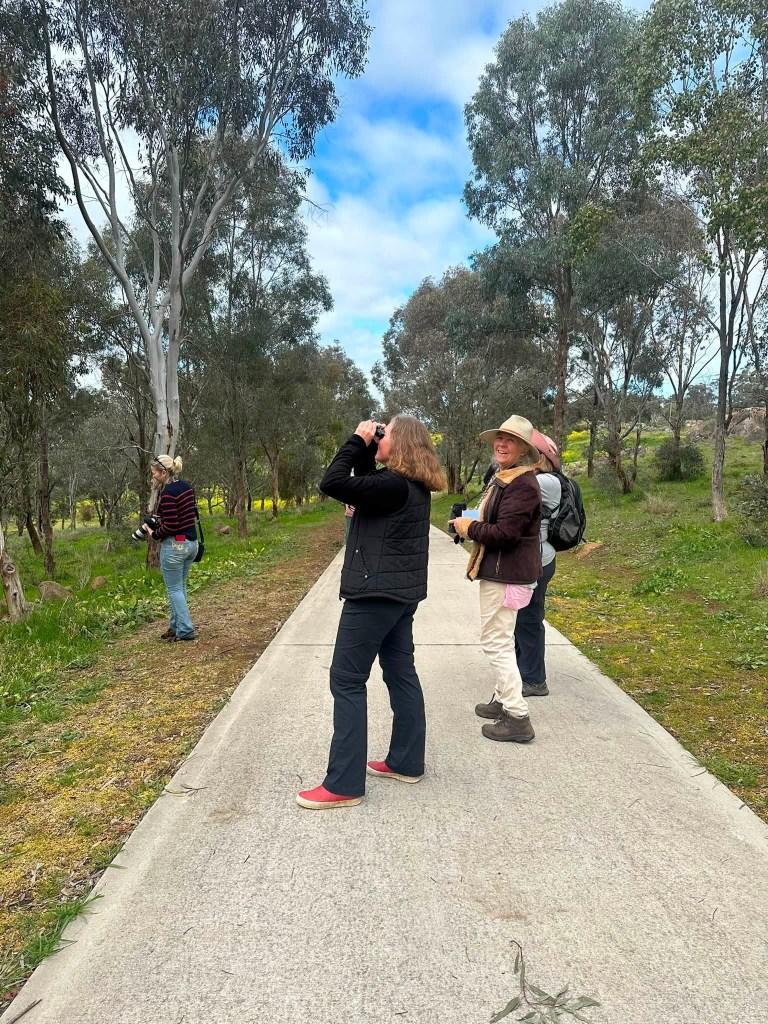
Guided bird walks like this are a great way to meet like-minded people and get to know your local birdlife. The walks are typically short with lots of time for everyone to catch up and look around.
It has been quite rainy and mild in Cowra this winter and as such everything was looking very lush and the wattles were out, including this amazing Acacia Vestita.
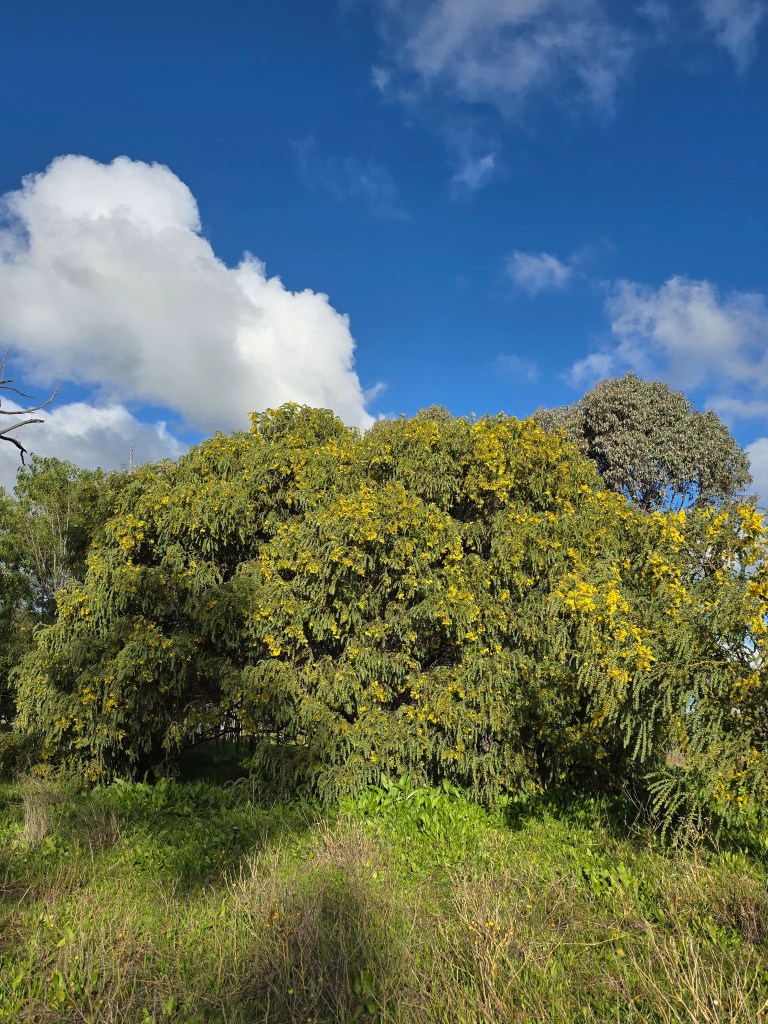
It’s quite likely that it’s one of a number of wattles planted by Cowra Woodland Bird Group back in 2005/2006 when they first got established. Back then they secured funding to improve bird habitat in this area so it’s great to see it thriving twenty years on!
All in all it was a fantastic morning and we thank Robyn (Cowra) and Ruth (Kangarooby Landcare) for organising such a lovely event.
Afterwards the walkers enjoyed some morning tea at Cowra’s Japanese Gardens.
Young Farmers Meet Up
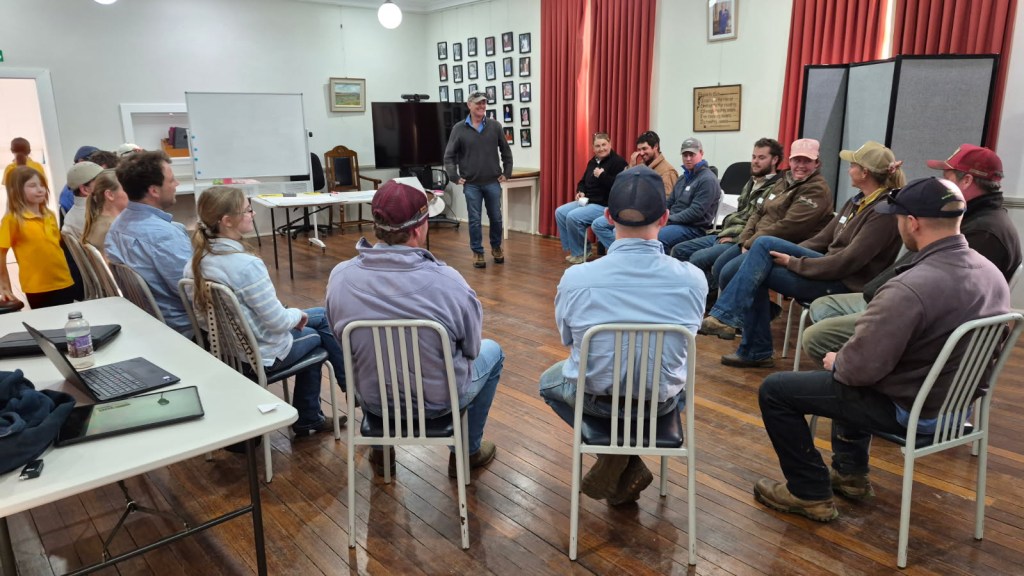
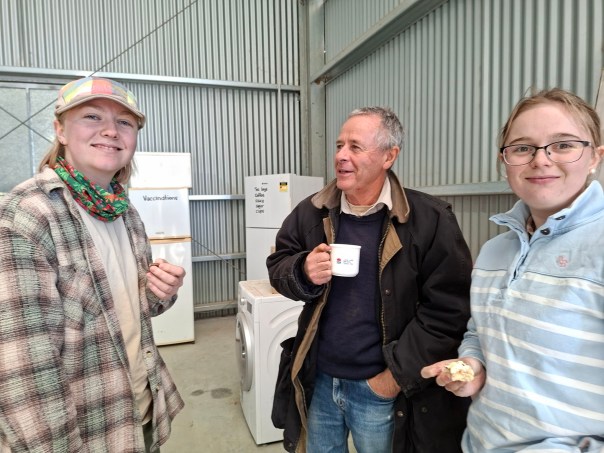
Our Growing the Grazing Revolution board hosted its first ever Young Farmers (Farmers under 40) meet-up in Canowindra last week. The meeting was attended by 20 young people from across the region all of whom have a shared interest in grazing management. Many ideas were shared within the group who are planning on having their first farm get together very soon.
If you are interested in being involved please contact Mid Lachlan Landcare.
Cultural Burning with Erambie Men’s Collective
2026 marked the start of on-ground works for phase 3 of the Landcare Enabling Program, a funding round with two core components – a) Aboriginal & b) Innovations Partnerships. The Aboriginal Partnerships Grant Program aims “to improve Aboriginal cultural knowledge and understanding of Landcare groups, foster sustainable partnerships with Aboriginal groups and facilitate employment of local Aboriginal Landcare Coordinators:” NSW Government. We’re planning to tackle that with Erambie Men’s Collective who are based in Cowra.
Mid Lachlan Landcare, spanning Cowra, Gooloogong, Canowindra, Woodstock and surrounds is country rich in history and strongly rooted in culture, practice, and values that breathe life into this special place to this day. This is Wiradjuri country, a land where the nigh skies stretch right the way around until you feel like the milky way begins at your head and ends at your feet. These are dark emu skies, skies that frame our three rivers (bilas): the Galari (Lachlan), Wambuul (Macquarie) and Marrambidya (the Murrumbidgee) Murrunbidgee.
Over the last two hundred years, these hills, paddocks, river flats and rocky ridges have served as both a fronteir and refuge. This is strong, fertile soil. This soil has nourished and been nourished by generations of leaders, do-ers and innovators and it was on this soil that we met to scope out our first round of cultural burning with George Coe from Erambie Cultural Collective and Greg Ingram from Central Tablelands Local Land Services.
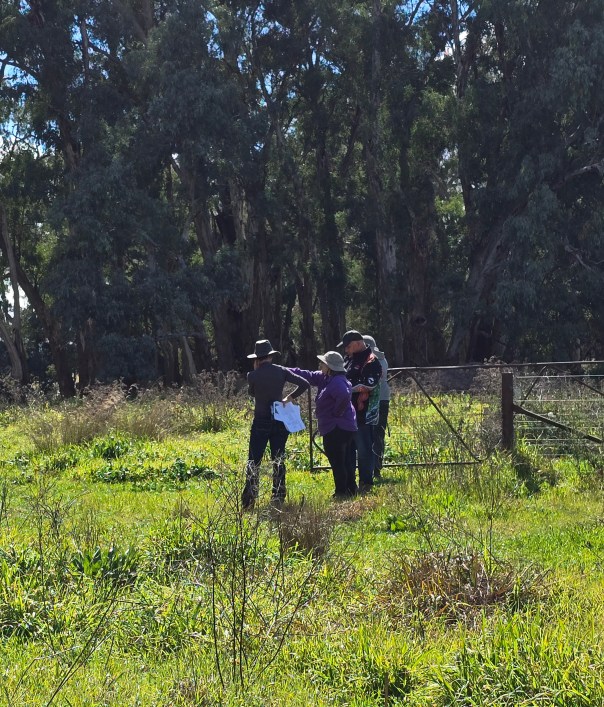
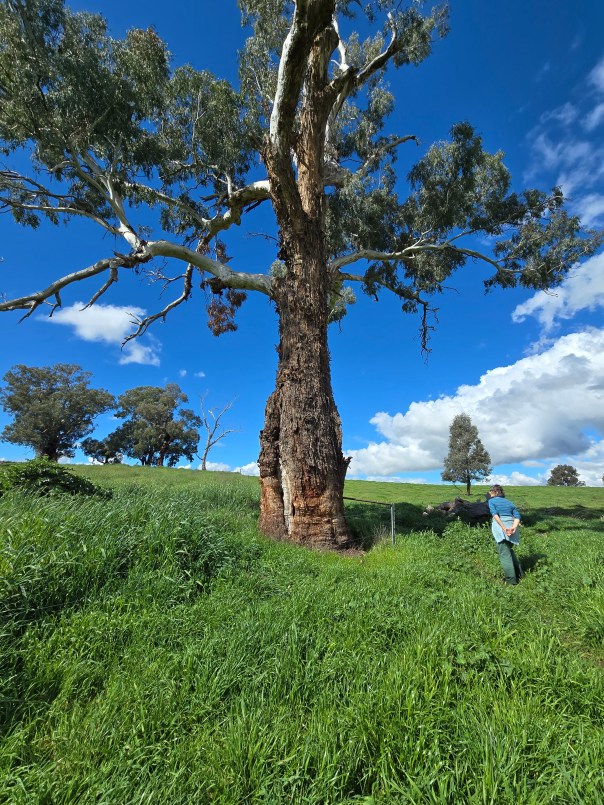
Our first stop was to Garralen on the banks of the Lachlan river where farmer and current custodian Marion Mitchell met us with her sister Beth, good friend Ken Hutchinson and Biodiversity Conservation Trust officer Sharon Cunial. I (Amanda) went along to represent Mid Lachlan Landcare as Coordinator leading the facilitation of this partnership.
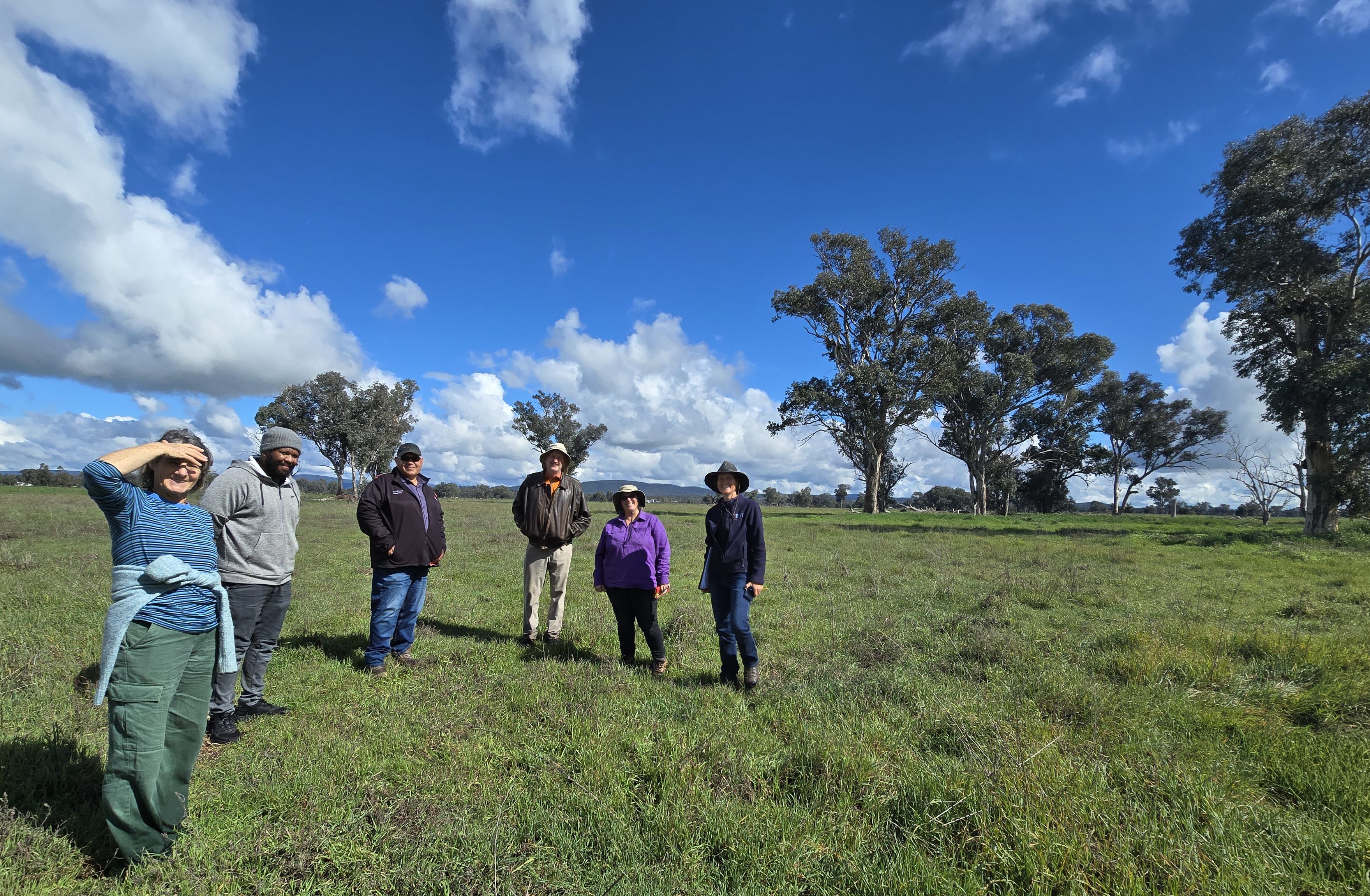
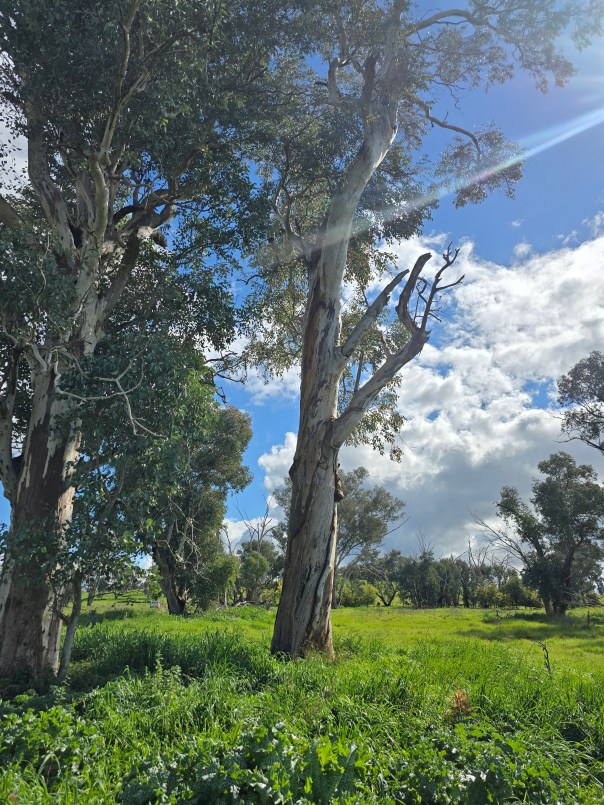
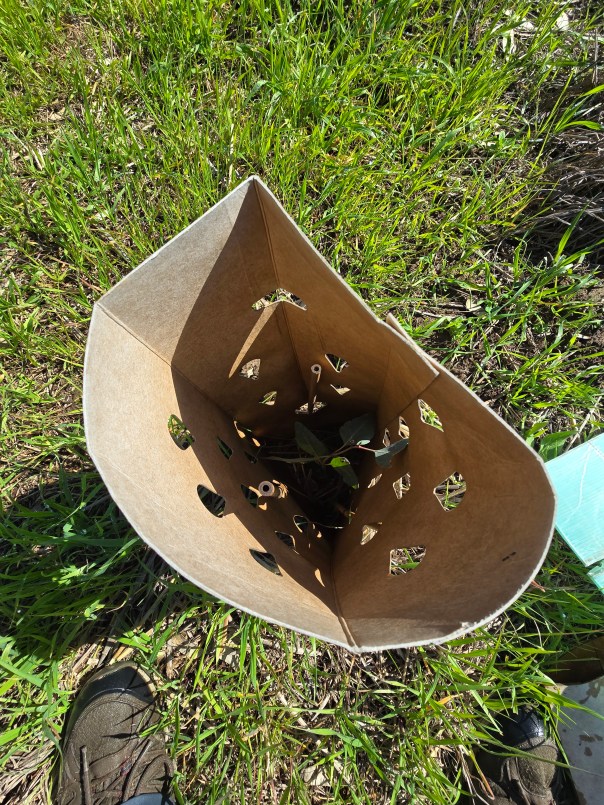
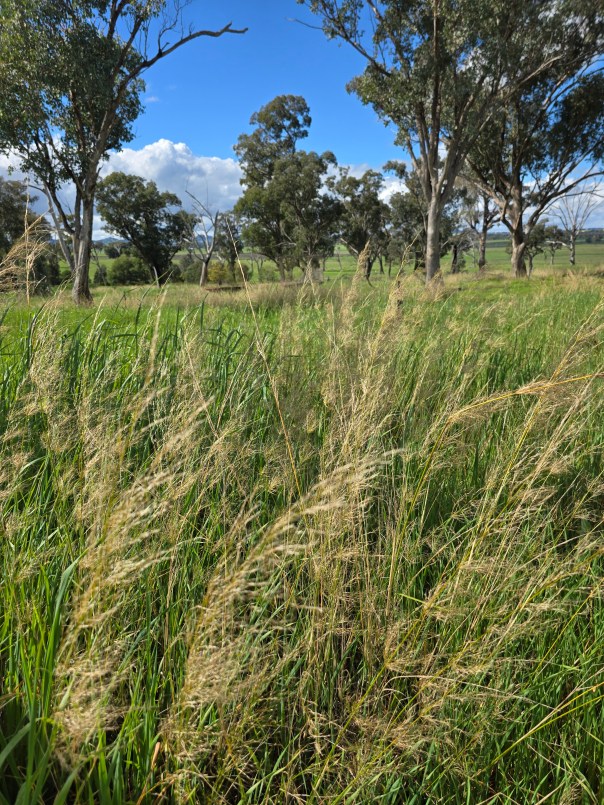
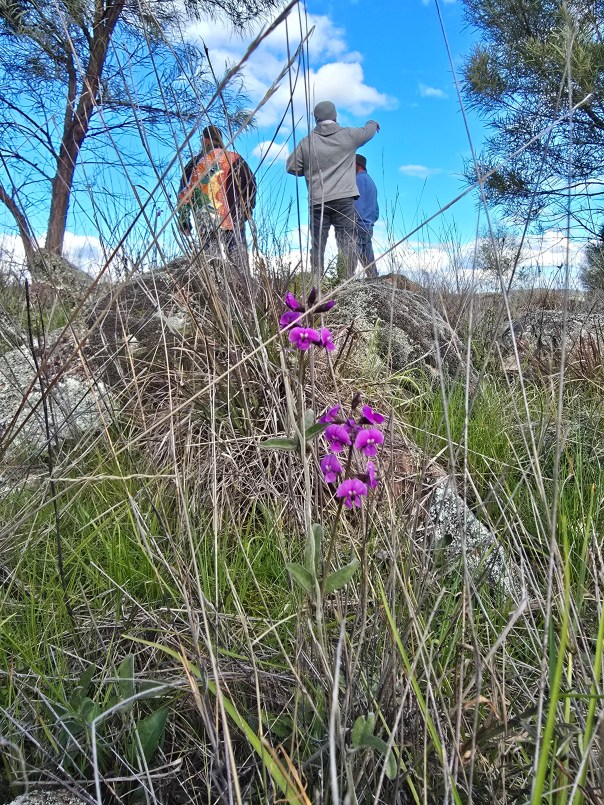
Marion presented her vision for the site that she’d nominated for burning and shared stories about her and sister Beth’s history with this property. Marion had also invited Sharon from the BCT along as this particular patch of Garrallan is managed for conservation. It quickly became clear that a cultural burn would both help Marion reach goals of reducing fire risk while improving pasture and mesh well with long-term conservation outcomes. Next up was for George and Greg to walk the site to get a better idea of the specific needs on this country and the best approach for the burn to take. Once that was done we headed down to the banks of the Galari Billa (Lachlan) to check out a scar tree and the re-vegetation plantings we’d helped Marion with earlier this year.
Site Two: Mount Belubula.
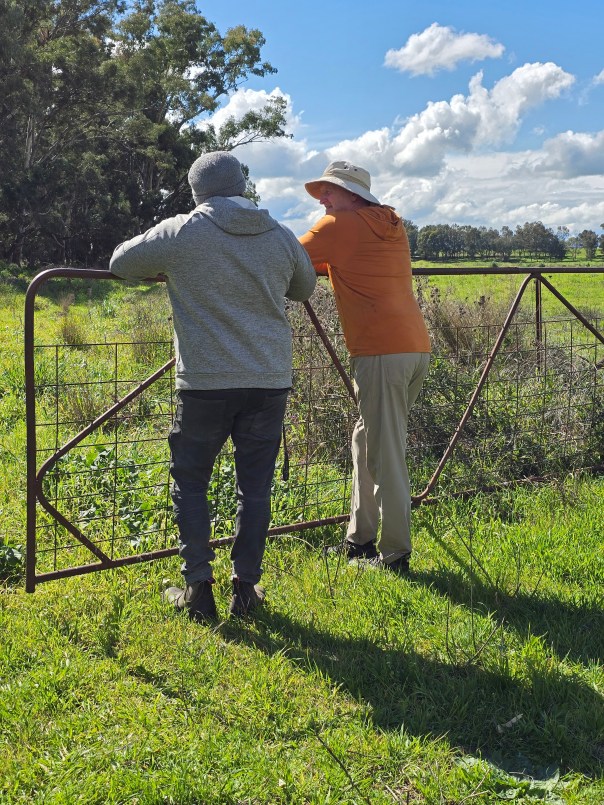
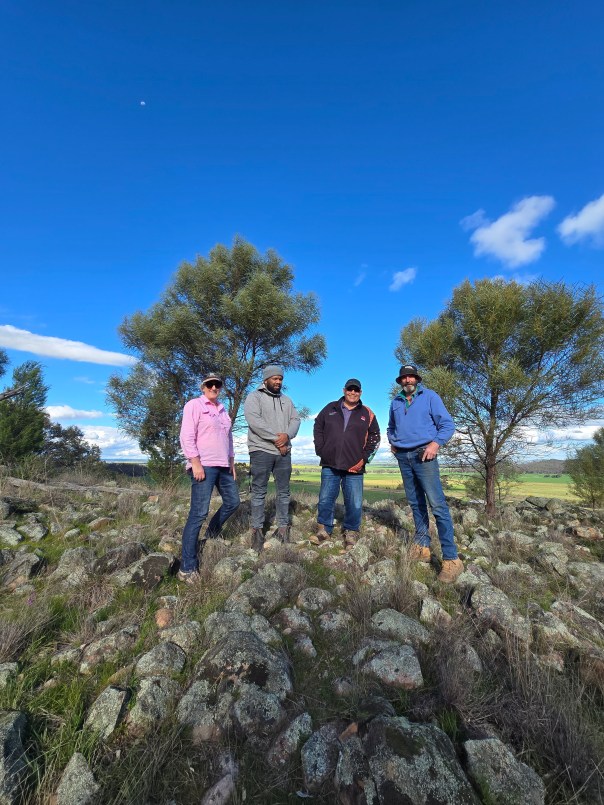
The second stop of the day was with Bron and Andrew at Mount Belubula, a fenced-off conservation patch with stunning views across the valley. This is important Glossy Black Cockatoo habitat and one which we’ve conducted a number of habitat plantings on previously.
Again Bron and Andrew filled us in on their management plans for this site and while surveying, we happened upon a couple of brown snakes sunning themselves on a rock just out from their burrow. Sadly I was too slow for a photo but it definitely reminded us that spring is just around the corner and it definitely is warm enough in the sun for snakes!
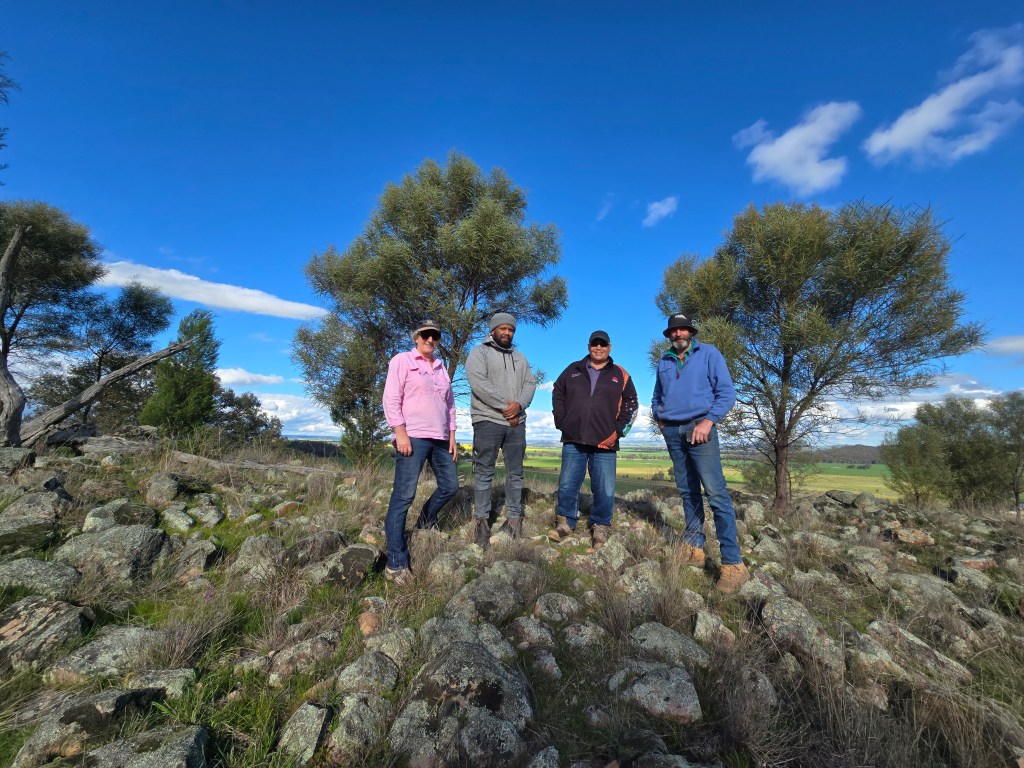
Again this site has a BCT covenant on it so Bron and Andrew will work the cultural burn into their conservation management plans to ensure the best outcomes.
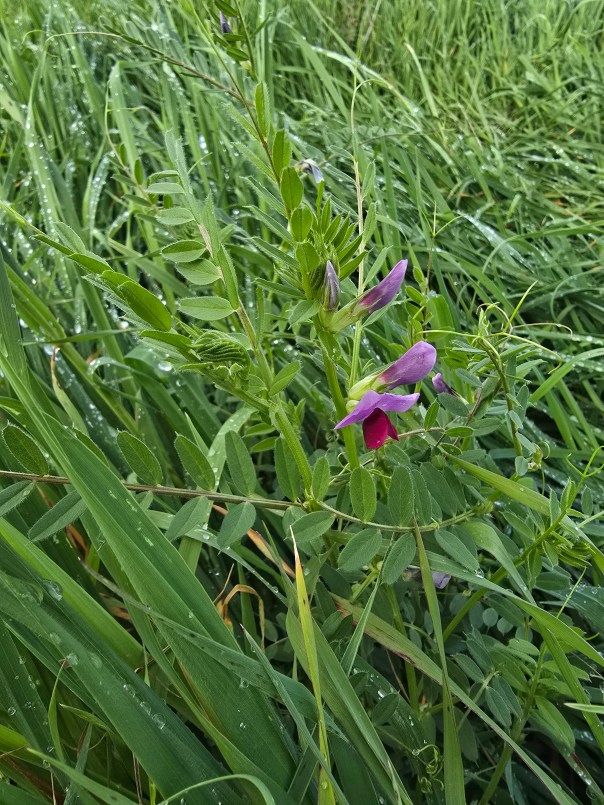
As you can see from the picture this site is completely different to Marion’s and judging by the conversations being had between George and Greg, that will mean a different approach to the burn will be taken.
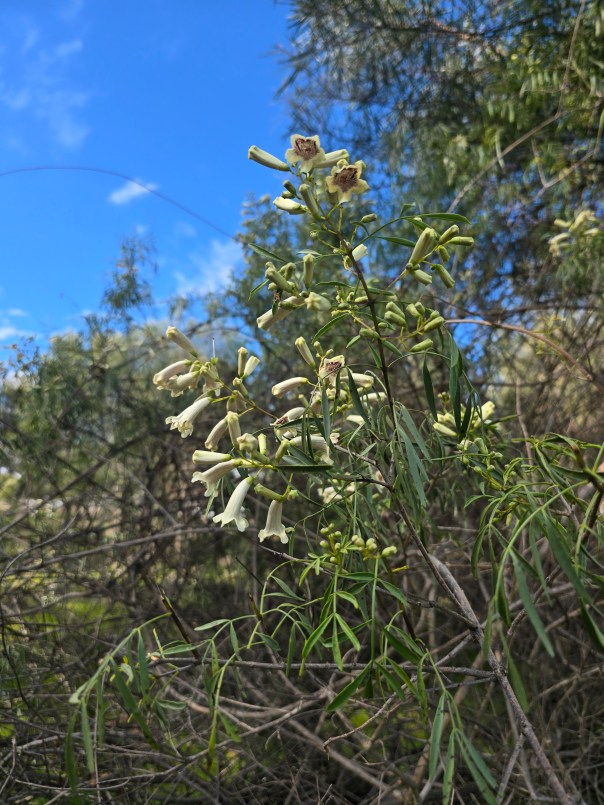
Some Background Into Cultural Burning.
Discussing burning for conservation with the BCT – different types of burning and how to apply for a permit.
The ‘One step at a time’ approach.
As with all new business ventures and partnerships, it’s best to start off slow then slowly and organically build momentum. As such, we are currently taking a measured, step-wise approach to cultural burning, an approach that we hope will see this and the second site we visited (at Mount Belubula in Canowindra) actioned before the window for burning closes in October. Following on from that we have a couple more sites on our ‘to-do’ list after which, all being well, we hope the Erambie team will be well on their way to running full-steam-ahead. But that doesn’t mean we aren’t interested in hearing from you. If you’d like to enquire about cultural burning please do drop us an email and when the Erambie Men’s Collective are ready with their systems, we’ll share their direct contact details.
A Bit More Information pasture improvement.
As shown in the video, Cultural burning can really help bring back grasses and other forbes where there were once weeds or lower-value fodder. Brackens and ferns are sometimes eaten by livestock, especially when there’s little else around to eat but they can be toxic. We’ve come across this in our grazing group so rock fern grazing is definitely something we should keep an eye out for the side effects of. Managing land by fire to improve the quality and quantity of feed is something that we, as Mid Lachlan Landcare are keen to explore more deeply with the help of Erambie Men’s Collective.
Is all of the LEP 3 Aboriginal Partnerships project focused on Cultural Burns?
No, this is just one part of our partnership project but it’s one that could definitely hit our collective long-term goals of bringing meaningful on-country employment opportunities for the Erambie community and surrounds. Other aspects to this partnership include re-invigoration of the bush food/ market garden at Erambie & building stronger relationships between community and our extended Landcare family. Networking local Aboriginal Partner groups and individuals with Mid Lachlan Landcare’s strategic project groups & activities such as Growing the Grazing Revolution, Soils for the future and Educational outreach is another area of focus. Together we believe that by exploring the diverse range of opportunities Landcare offers together, we’ll all get better, more meaningfully partnered outcomes for ourselves as individuals, our communities and the land we share.
The 2026 Canowindra Carp Muster is Coming!
Carp muster is coming to Canowindra again this year and we can’t wait to see you out there so let’s look into how you can be part of it all!

The Event – Family Friendly and Free
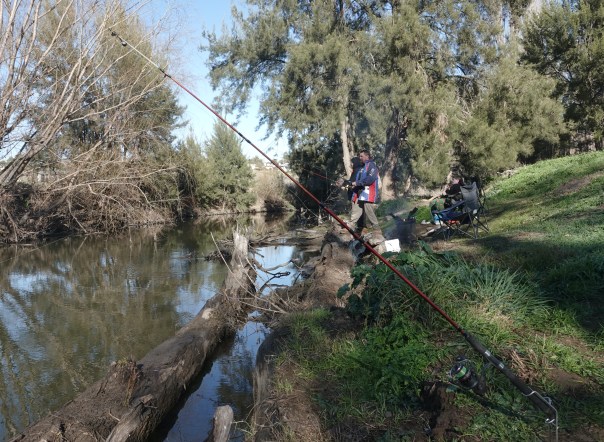
Our native fish are at risk from invasive European Carp, so it’s time to band together and remove these destructive bottom feeders from the Lachlan River and surrounding wetlands! While we’re at it, we’ll clean up some rubbish from around and in our waterways.
We’re hosting a Carp Muster to remove as many as we can, helping to improve the health of our local waterways.
It’s free to enter and there’s prizes for the biggest carp and most carp caught, with categories for kids, teens and adults. In order to enter your carp into the prize categories, you must also collect at least 50 items of rubbish from local waterways. A prize will also be given for most rubbish collected.
Sign Up: This is an Oz Fish event that our Landcare team are facilitating. As such, you’ll find the Carp Muster sign in sheet here. It’s really important that you register ahead of time so we know numbers AND you then show up on the day for a safety briefing at the venue below.
Help with Sign Up: Our partners at Canowindra Connections Centre are again able to help people sign up for this event. Spread the word among anyone who may need a hand with the online process and head down to the centre at 38 Blatchford Street, Canowindra. Alternatively give them a call on 0480 450 079. Their open hours vaary but are currently advertised as Wed, Thurs 9am – 3pm and Friday 9am – 5pm.
Date: Sunday 27th September
Time: from 7am – 3pm
Weigh in: 2:00pm to 2.30pm at the OzFish hub (Age of Fishes forecourt)
Where: Meet at the front of the Age of Fishes Museum, Canowindra for a safety briefing before going off and fishing on the Belubula & its tributories.
What to bring:
- Bring your fishing gear.
- Sun-safe clothing and enclosed shoes.
- Children must wear life vests and be supervised near water.
- Bring drinking water and snacks. A BBQ lunch will be provided.
- Empty feed bag for rubbish collection – we’d love you to bring any you can spare to help with our clean-up efforts.
- Gloves for rubbish picking.
What else is happening on the day:
- Headspace will be on hand to introduce you to their team and the services they offer.
- There will be a free barbeque sponsored by Local Land Services.
- Our Landcare team will be on-hand coordinating & participating in the Canowindra Carp Muster rubbish pick during the day.
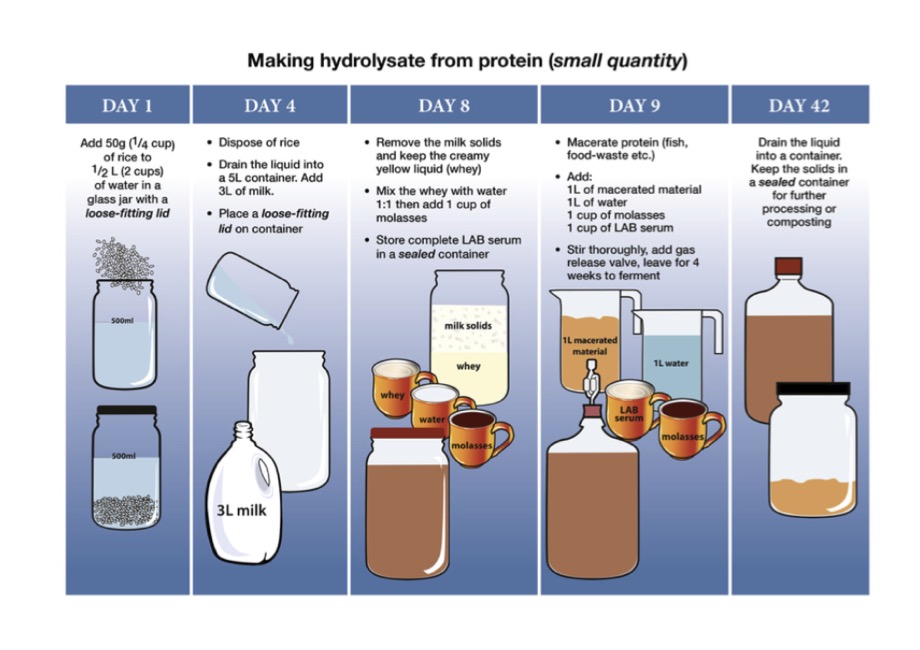
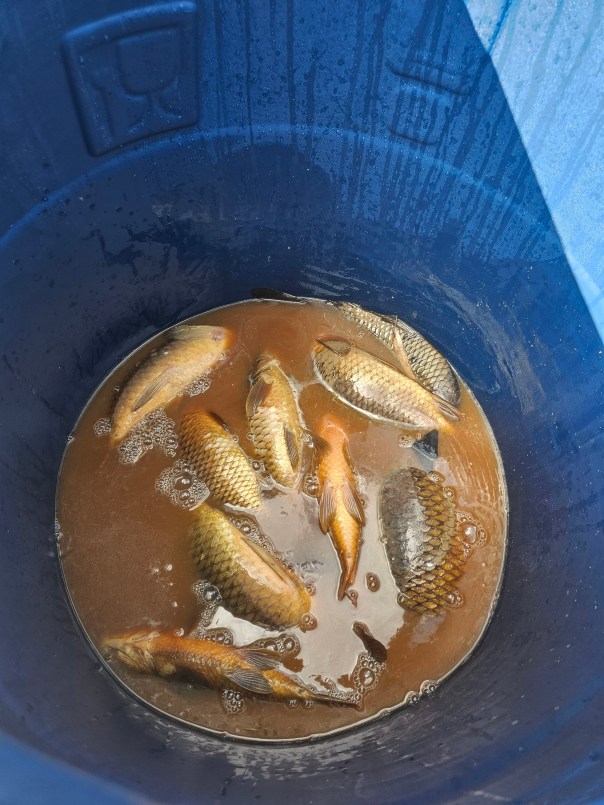
- Our Landcare Coordinators will be on hand to show you how to digest carp and turn it into fertiliser for your garden or farm.
Feral to Fertiliser Carp Digester
Last year we trialled the following recipe with great success and plan to do the same again this year. This recipe was forwarded to me by Cheryl Nielsen from Watershed Landcare, Mudgee who in turn had learned the method in a workshop with Gerry Gillespie. We’ll have a bucket of fermented solution ready to go for anyone who wants to donate the carp they’ve fished to our composting cause. For those interested, we had our final mixture chemically analysed once it had cooked and found it to be on a par with commercially available Charlie Carp which was quite reassuring. Here’s a link to the post with our test results.
Grazing Meet Up at Malongulli
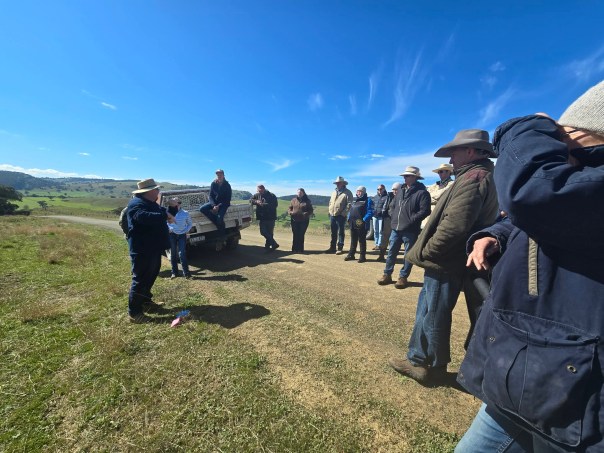
‘Malongulli’ is a large family-owned business running a sheep breeding and cattle operation. The property consists of a large range of soil and landscape types with we explored with our grazing group earlier this week declaring ‘this is our time to grow grass!’
Each season brings with it questions to answer and during this grazing meet-up we discussed:
* Stock moves – fast or slow?
Why ask this? Well it’s a quesiton that encourages us to interrogate our peceptions against our reality. For example, we may expect our grass to stop growing in winter and as such, plan to move our stock slowly when in fact, the milder winter, our grass mix or stocking rate has meant grass has continued to grow.
* Recovery Period (how is your place recovering/ what are you planning going forward)
Again this may seem like a no-brainer and indeed it might be if we’ve been walking our paddocks and are used to what ‘recovery’ looks and measures like but so often that’s not the case. Time, resources, weather, other life happenings and previous decisions we’ve made can impact this and again lead to our reality being somewhat at odds with our perception or ‘best laid plans’.
* How much grass do you have?
One of the core skills our grazing group teaches is grass budgeting. Again a seemingly simple task of going out and measuring your grass but again a task where the devil is in the detail. How much grass do you have/ do you need/ would be enough is akin to asking “How long is a piece of string’ without context.
* Animal health?
Some seasons throw up more problems than others and this winter has been relatively warm and wet for many of our graziers. As such some reported a few issues over the winter months with prolapse (Sheep) and foot issues. LLS have a seasonal update on foot health that can be accessed here.
Some farms have reported big issues with feral pigs. We are all reminded to report sightings to Feral Scan and to join together with neighbours in our baiting, trapping and shooting efforts wherever possible.
We had a cracking day with the Malongulli team and must also thank them for putting on such an outstanding morning tea (which we didn’t actually get a picture of – too busy eating!).
Our Growing the Grazing Revolution team will be putting on more events like this throughout the year so do come along and get amongst it as you’ll be most welcome.
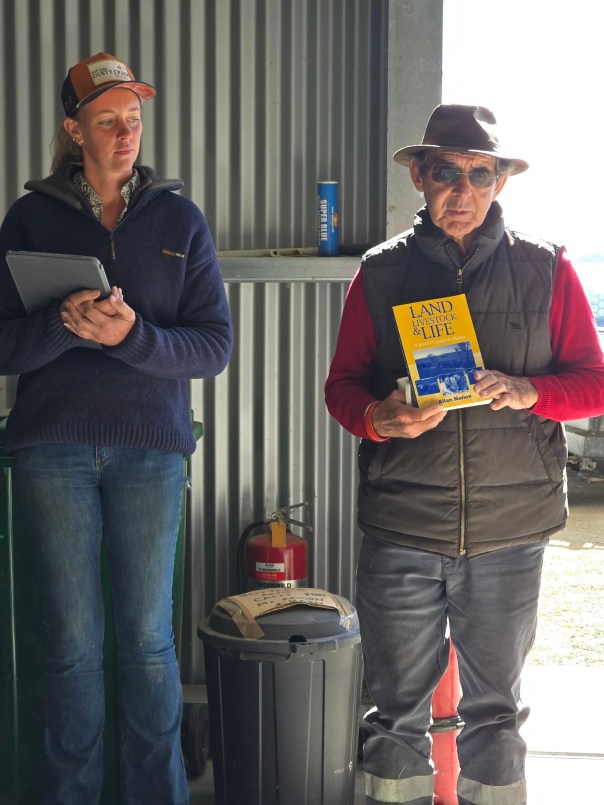
This month’s book club recommendation was ‘Land, Livestock and Life‘ by Allan Nation, recommended by David Marsh.
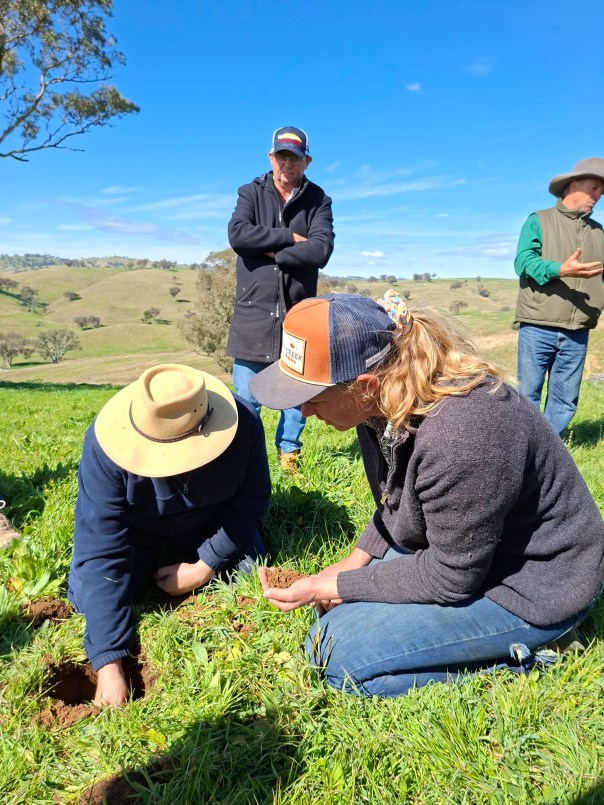
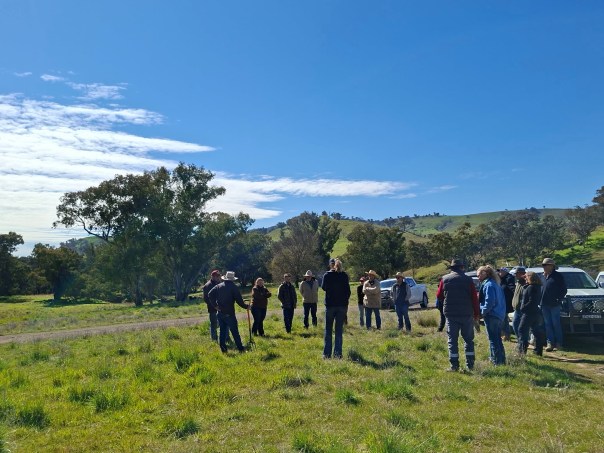
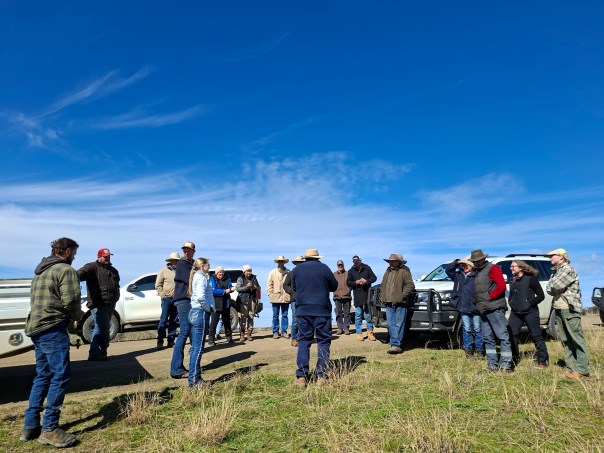
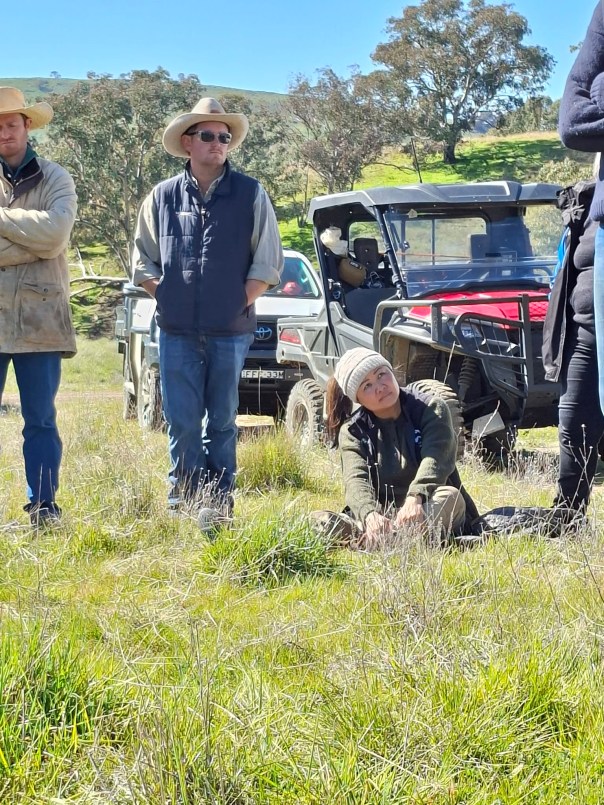
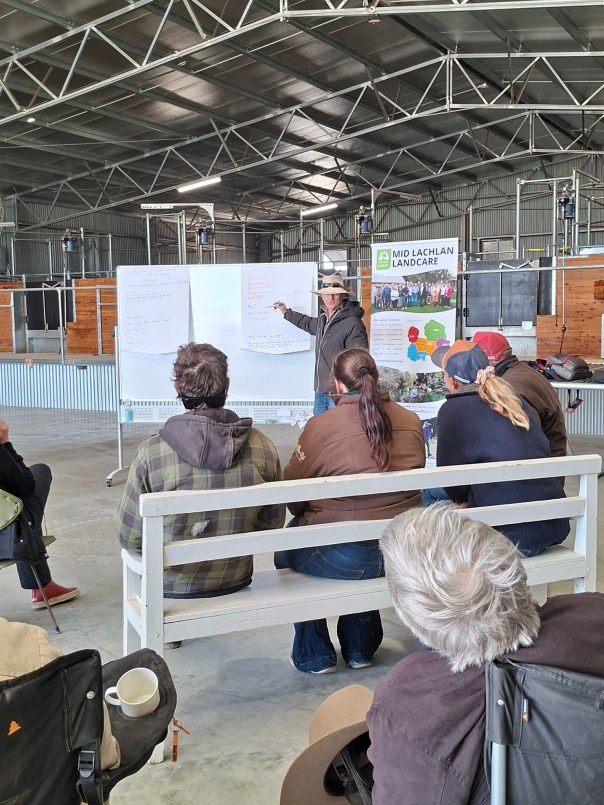
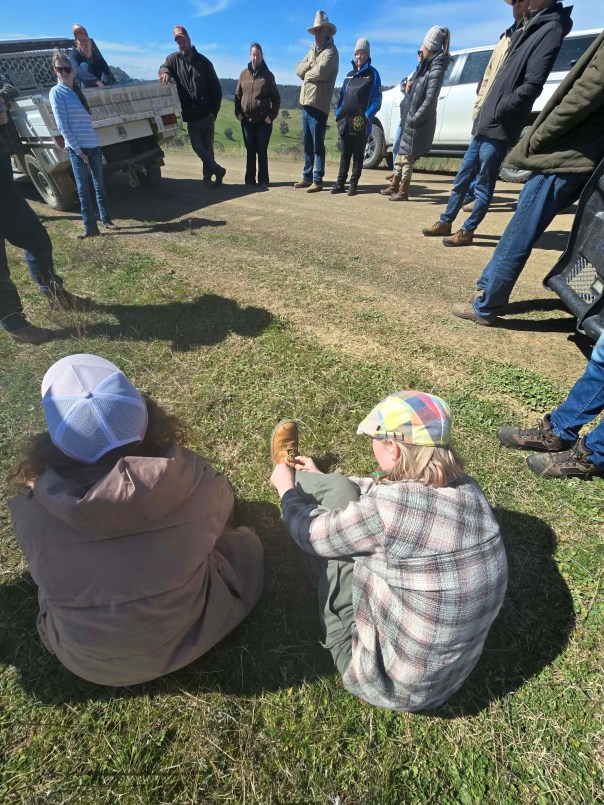
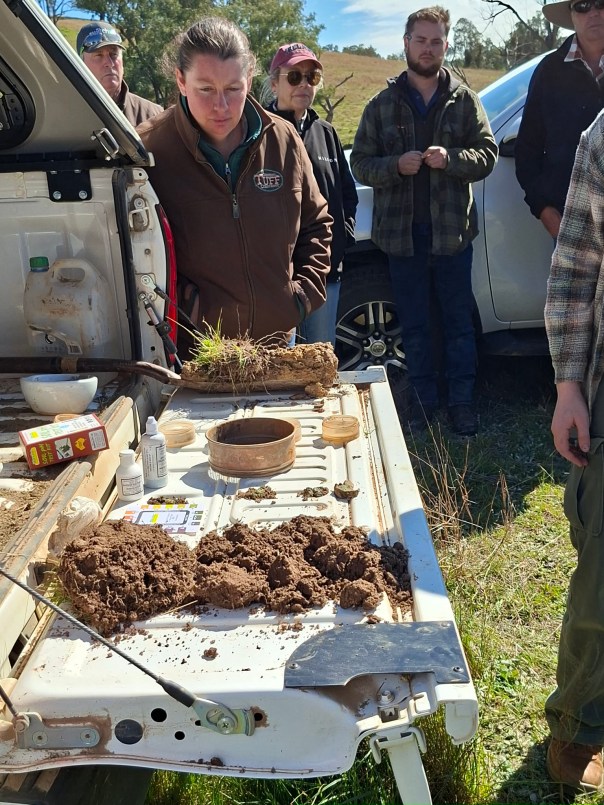
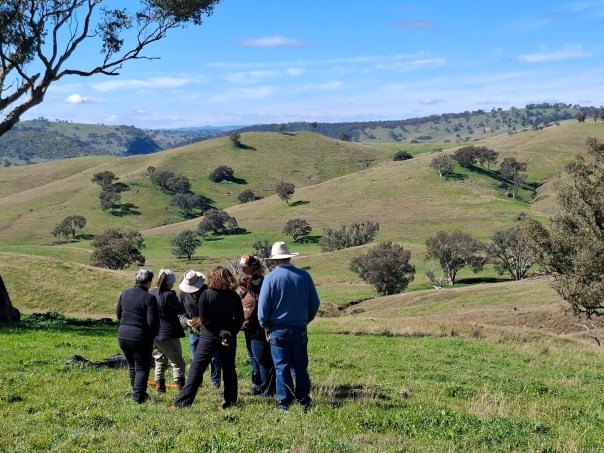
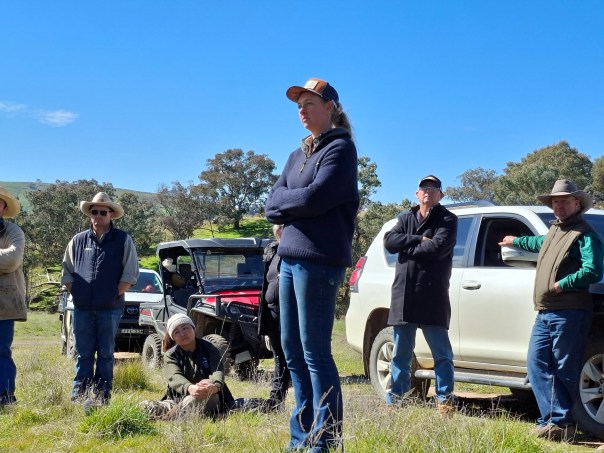
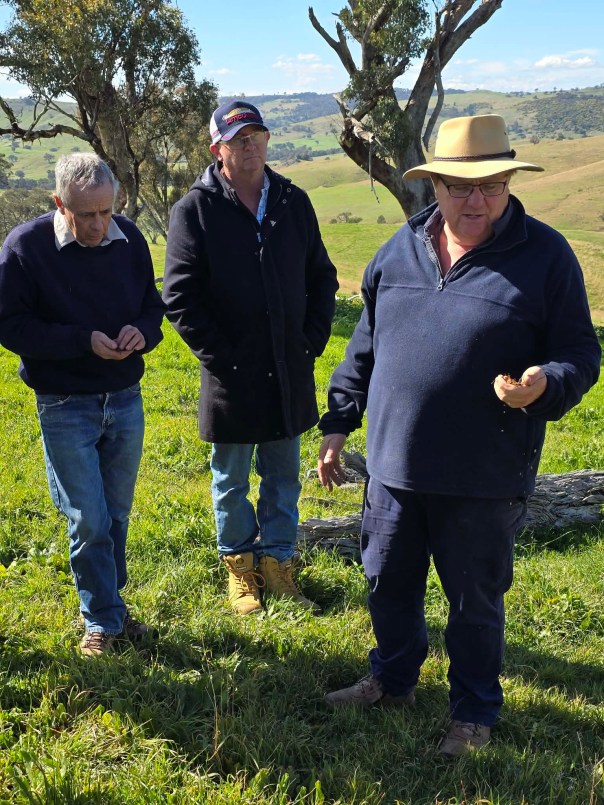
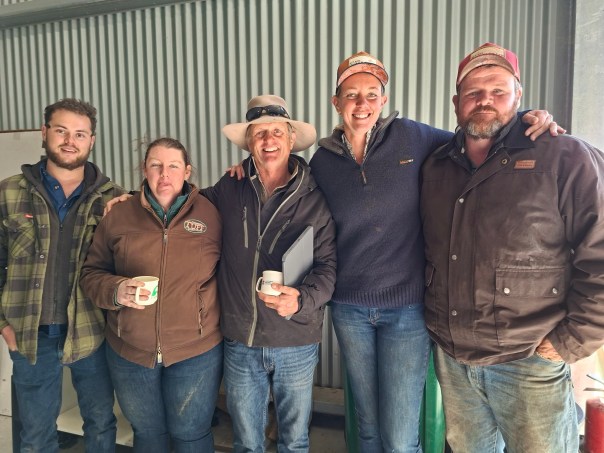
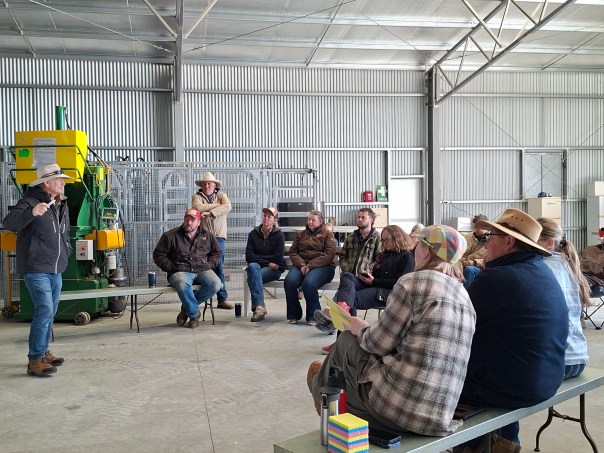
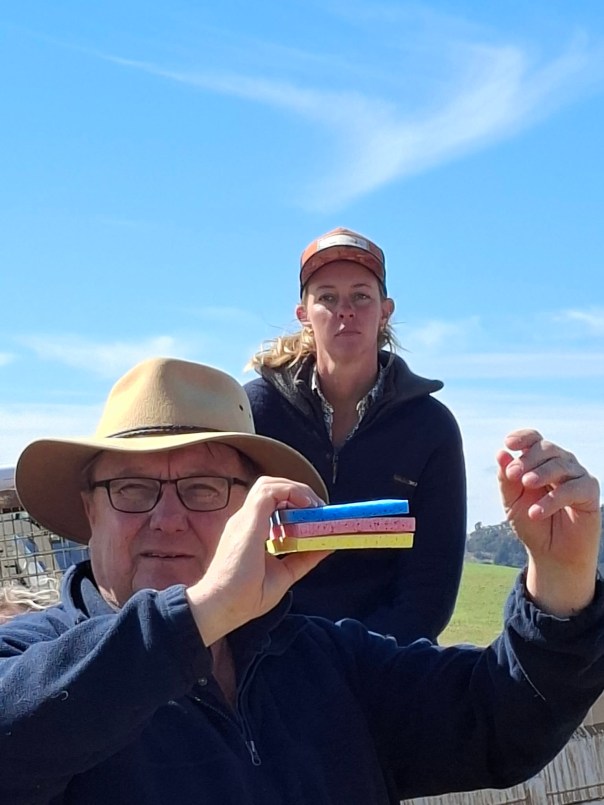
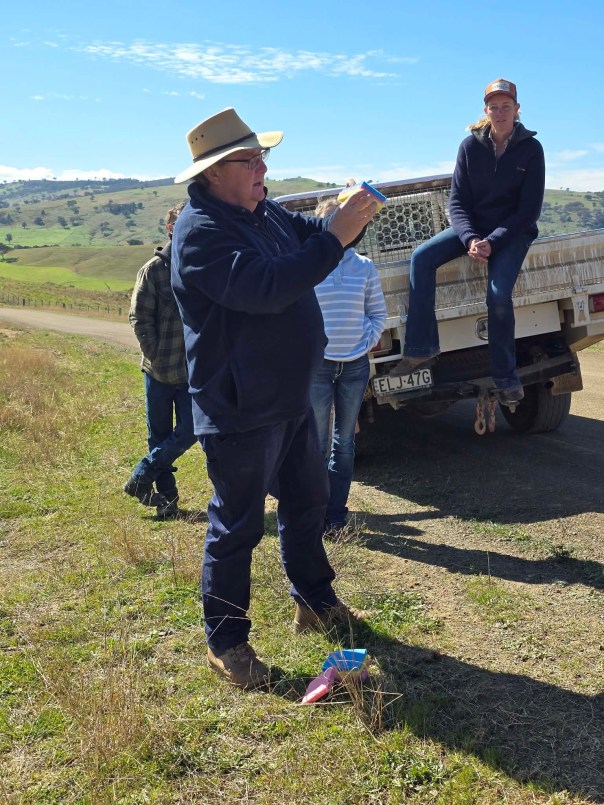
Mid Lachlan’s Complex Soil Geology
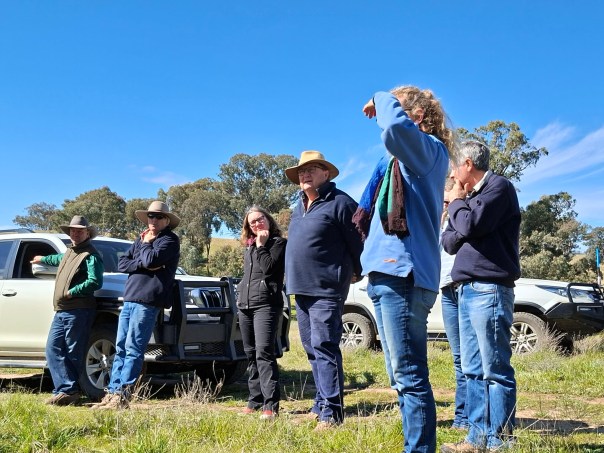
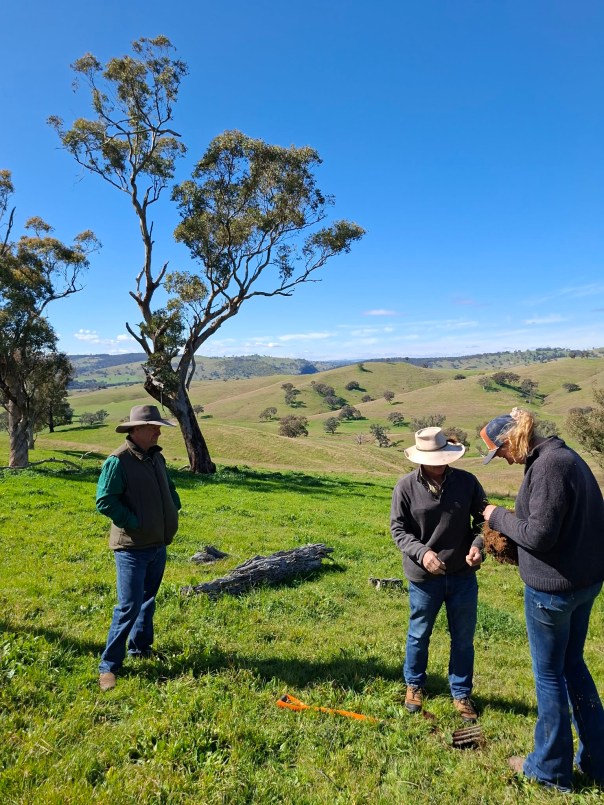
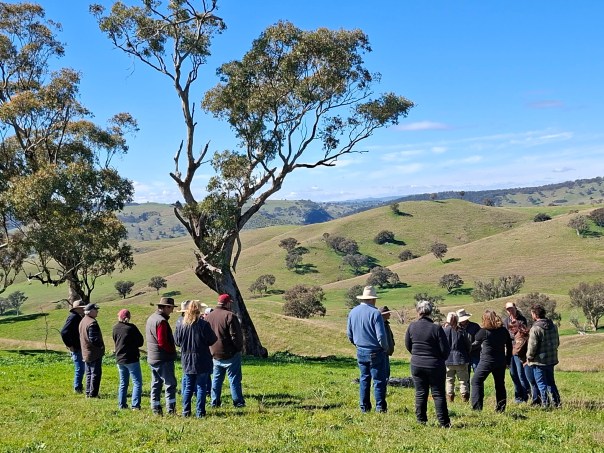
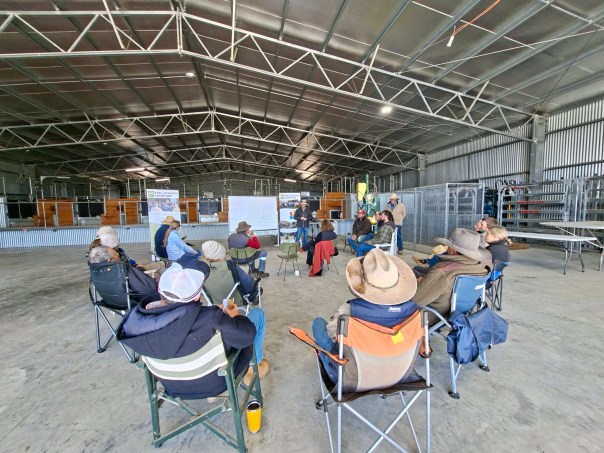
It’s not unusual around these parts for properties to be straddling several different geologies. We recommend checking out your place on the minview website to gain more insight into what’s under the soil across your farm.
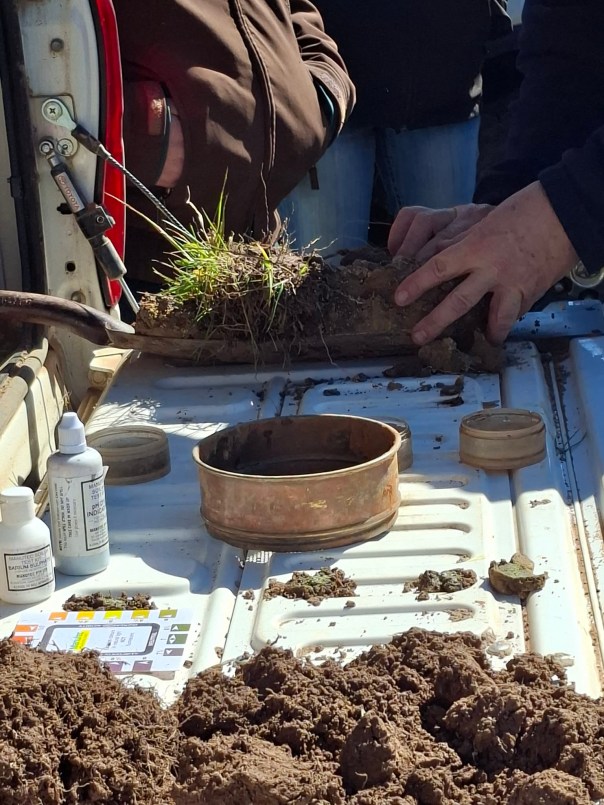
What Soil Tests did we do.
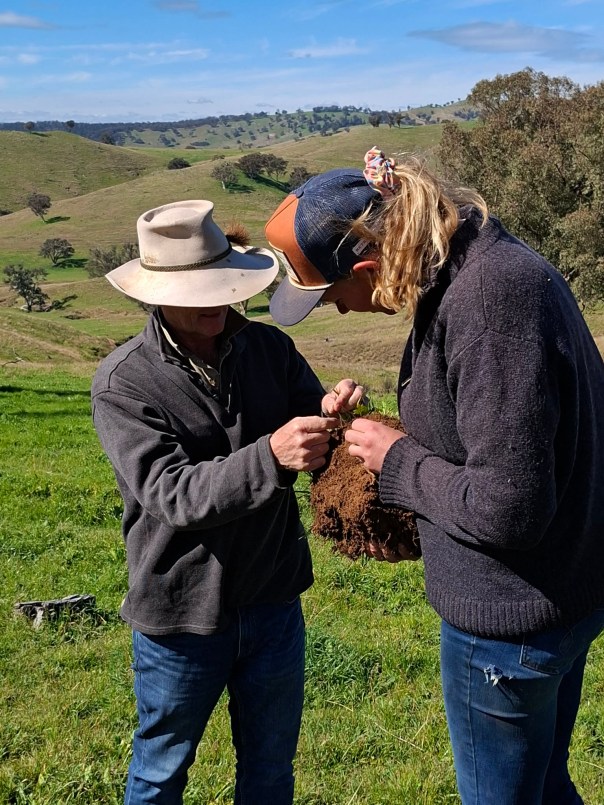
- Put a fork in it. How your fork moves through the soil profile tells you a lot about soil health. A fork that smoothly cuts through the layers means plant roots will do likewise. That’s what we are looking for and this test is free and easy.
- Turn a bit over. Have a look at where the roots are going, the soil colour and texture, how much life is in there, how the soil smells. All of this is valuable information about how a particular part of a paddock is tracking. Don’t know where to dig? Well you can start anywhere until you get confident with recognising what’s under your grass in different areas but after a while you may want to refer to your farm management plans and maps, choosing places strategically to help inform your next moves.
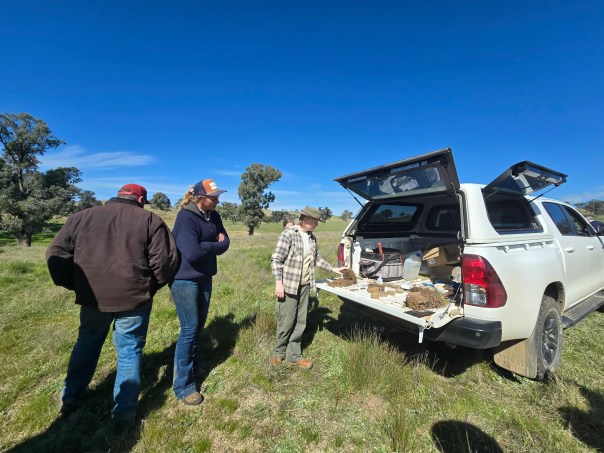
- Dispersion test. This is one of the tests we did on the back of the ute to see how water moves through the soil profile.
- pH. This is a measure of acidity in the soil with results ranging from very acidic through neutral and then to alkali. Knowing your soil pH is essential when planting crops or re-seeding paddocks for grazing.
We may well have carried out a few more tests too but those are enough to get most projects started.
Landcare at the Library
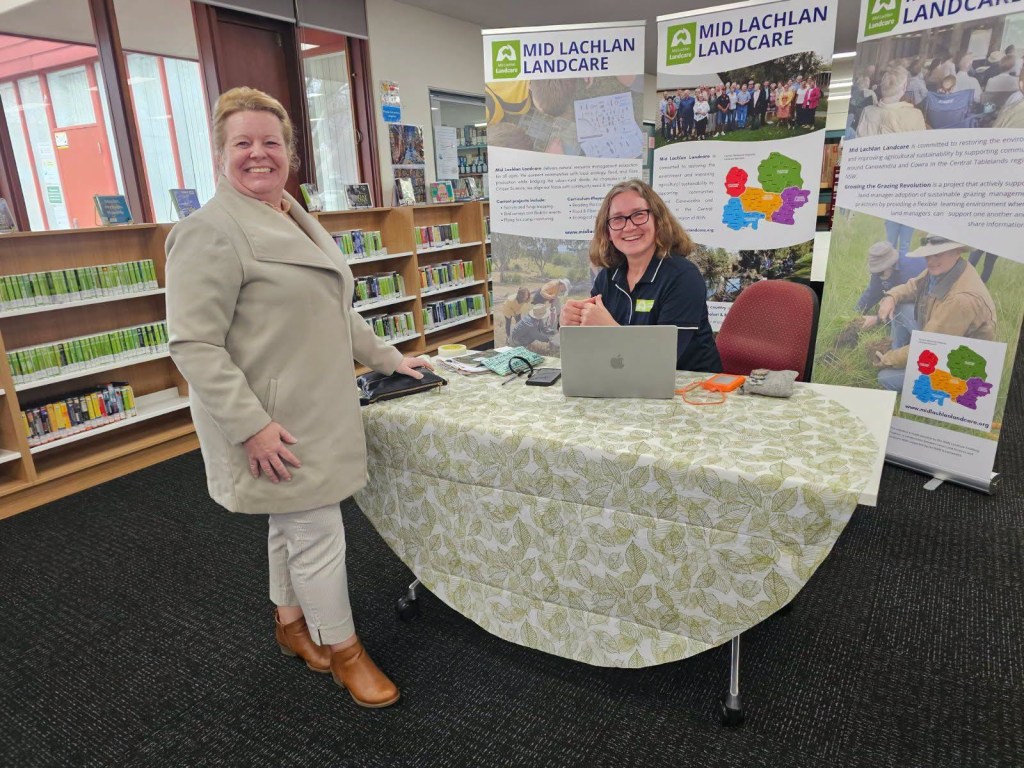
August starts with Landcare week and this year we opted to spend some time at both the Cowra and Canowindra Libraries in the hope that some of our lovely members would pop by for a natter – and they did!
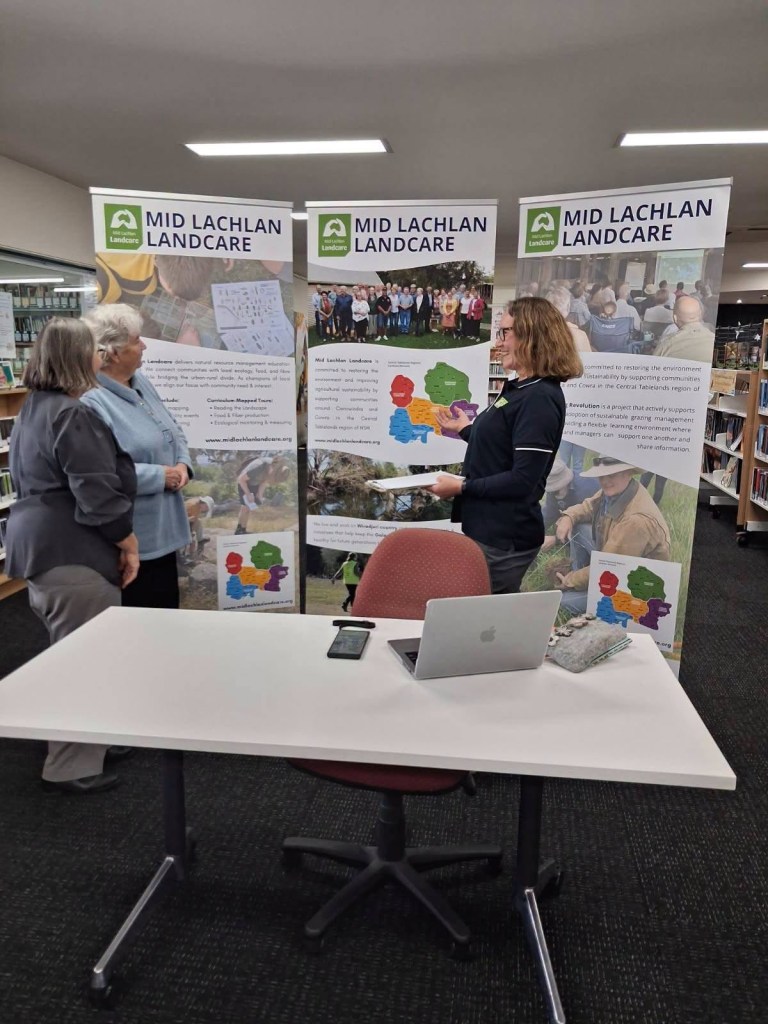
As a consequence of that we’re aiming to work from both the Canowindra and Cowra libraries once a month in a bid to be more accessible to you, our members so please do come and find us – we’ll pop the times when we’re around up on our Facebook page.
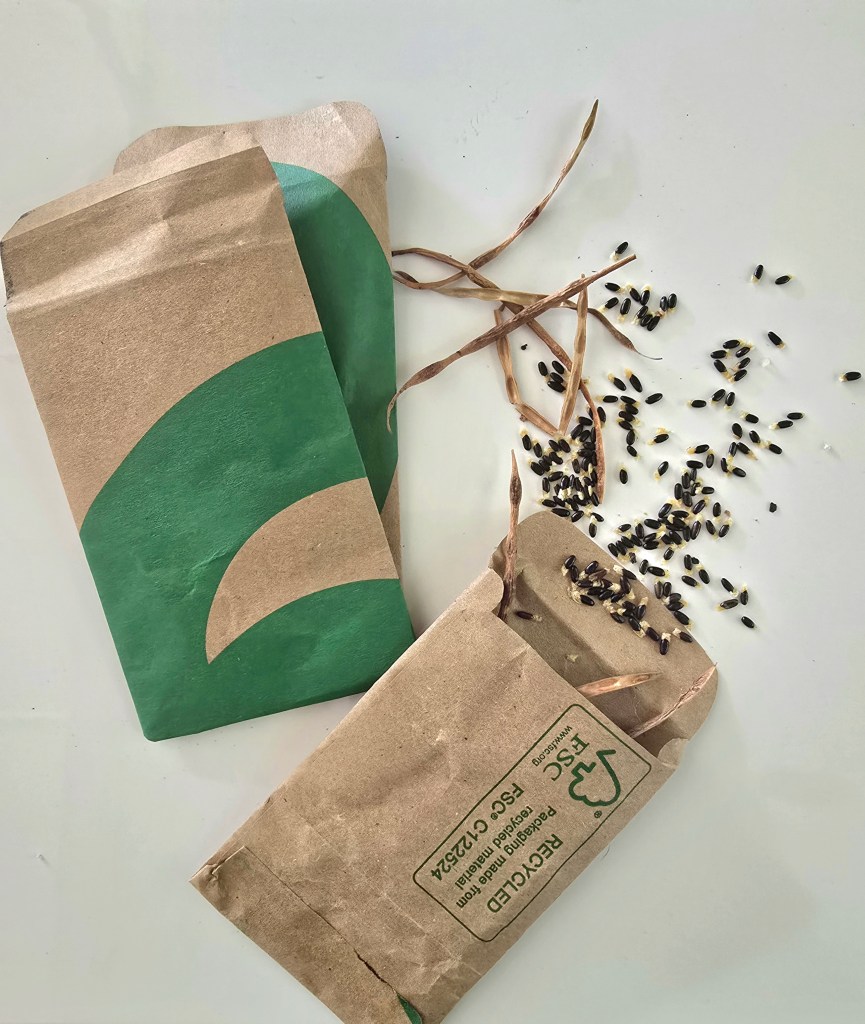
We’ve also been thinking about activities we could get you involved in as we work at the library and one fun little job that could fit the bill is creating seed packets for all the seed we produce and collect on our travels.
I’ve been having a play around with some templates I’ve found online and using paper grocery bags for my material. So far, so good I think – so if you feel like giving making some of these a go, either for your own seeds or for our Landcare stock, come and see us at the library next time we’re in town.
While we’ll try to build a regular schedule, that won’t always be possible given the nature of our jobs so do call us ahead of time if you are planning on making a special effort to pop by.
On a separate note I hadn’t actually had a library card with Central West Libraries before this month so I quickly remedied that and immediately got stuck into enjoying the vast array of content on offer. One of my favourite tools to date is Borrowbox – I’ve already downloaded and listened to several audiobooks while driving around our beautiful countryside. I’d forgotten how great libraries are and was blown away by how everything is free – the space, the magazines, books and films! There’s really is so much to love about our local libraries!
H5N1 Bird Flu Webinar update from the Biodiversity Council
On Thursday 9th July we joined around 1100 other people on the Biodiversity Council‘s H5N1 Bird Flu webinar.
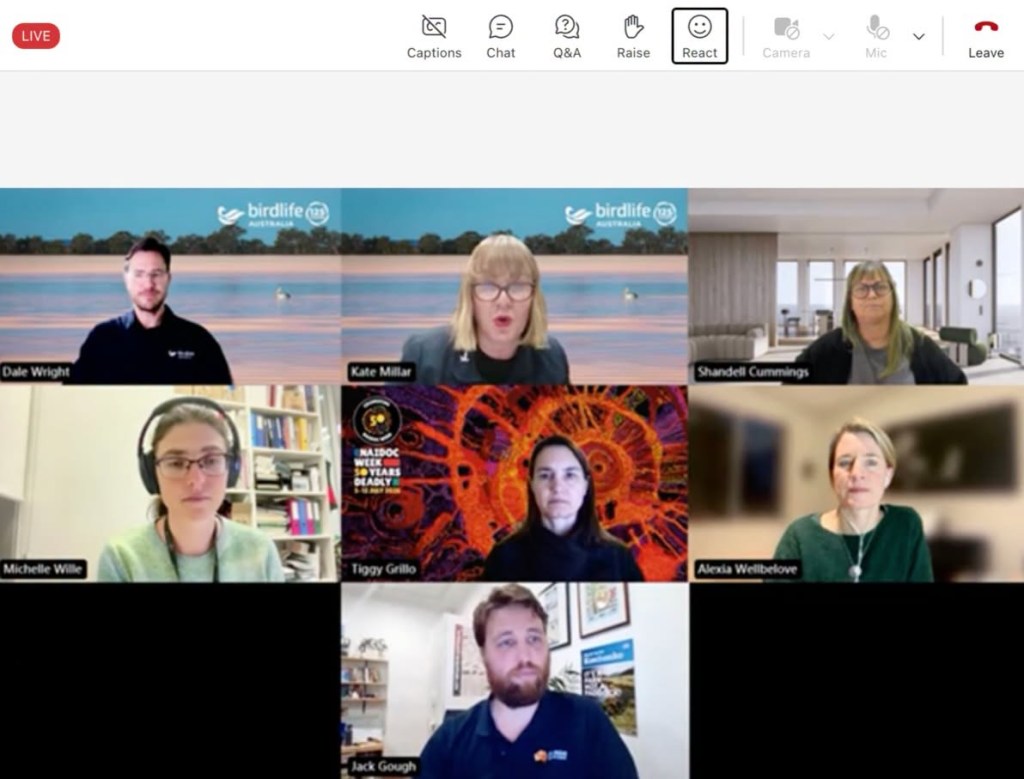
Lots of great information was shared on how the risk this virus poses is being assessed, how our wildlife is being monitored and what we can do to help. The webinar has now been released on Youtube and can be viewed below:
Being inland, the Mid Lachlan Region is not likely to be at the coal-face (so to speak) of the H5N1 threat but that doesn’t mean there’s no risk or that there’s nothing for us to do.
A key call-to-action which we’ll definitely take heed of was:
Healthier landscapes = better outcomes.
This means investing in as much meaningful on-ground work as we can to boost habitat & manage threats to our birds and other wildlife.
Of course, on-ground work needs money and on that front the Invasive Species Council urged us to all talk to our politicians to get behind their call for an additional $200 million of funding to help us achieve the level of preparedness needed. CEO jack Gough also mentioned to specify to our politicians that this $200 million should be on top of the biosecurity funding.
Watch this space for more information and if you are starting to feel gloomy about this issue, do come and have a chat to us. There’s always something we can do when we work together.
Birds on Farms – How Good is this Farm Dam
Earlier in the month Tracee took a small group out to Robbie Watt’s place in Canowindra to look at his farm dam. This is a storm dam designed to slow the water down when big rain events happen. These days it’s also bird heaven, surrounded by a beautiful array of shrubs, grasses and trees. Our team are just about to start our ‘better bush for birds’ project, a project that spans the central tablelands and will see us working across the landscape to design and plant habitat with birds at front-of-mind.


We had our first training session at Charles Sturt University in June where we learned something that Robbie has clearly known for a long time – birds need landscape architecture! We’ll definitely be making sure our plantings have low, medium and high level coverage provided by a variety of plants so there’s always somewhere to hide, somewhere to call home and somewhere to eat.
But Robbies dam is also a great example of how improving natural capital on farm also pays off for your livestock – it’s not just nice to have, it adds value. Here’s some happy campers to prove the point at this prime lamb and merino enterprise.

Trying out the Merling song I.D app for birding.
Over the last couple of weeks I’ve been trying out a mobile phone app called ‘Merlin’ from Cornell Labs. This app helps you identify birds by their call – something that appealed to me as I can often hear birds calling but have a hard time identifying them until I see them (which doesn’t always happen).
I’ve shared my main reflections from this exercise below and would sum up by saying this is a fun app to use and probably a great engagement tool for people who a) are enthusiastic but not confident birders, b) who have been waiting for a non-sight dominant way to identify birds and c) for those who just like to try something new.
I found the accuracy and sensitivity of this app somewhat frustrating when out in more wild environments but responsive and fun when in more urban settings – so maybe this would be perfect for our ‘birds-in-backyards’ fans and for those who love a good meander up in the hills of Cowra’s Japanese gardens and surrounds – it worked pretty well up there!

The Merlin app picks up calls from ebird – another Citizen Science led initiative that allows users to upload their data and contribute to a wider data-set of knowledge. It’s likely experienced birders will get more out of recording sound and uploading to ebird than they will out of Merlin at this moment in time. It’s a case of ‘choose your own adventure’ at this point.
1 hour walk around Mulyan (Belleview or Billy Goats Hill), Cowra.
Picked up the following: Magpie, Eastern Yellow Robin, Rainbow Lorikeet, European Starling, Noisy Miner, Pide Currawong, Superb Fairywren, Brown Treecreeper, Golden-headed cisticola (???), Striated pardalote, red wattlebird, willie-wagtail, yellow-faced honeyeater.

Generally pretty good. I saw & heard all of the above except the cisticola which I suspect is a bum steer and the pardalote which I suspect was there as it picked up the call in a fairly well covered area.

The app didn’t pick up a couple of birds that I could clearly see but that didn’t call out while I was there. I think one was an eagle of some sort, another was a crimson rosella.

Didn’t identify the thornbills that I could see but not clearly and could hear.
Definitely felt responsive and fun to do in this area although still not great on the little birds that chatter over the top of each other.
20 minute survey around private property in Woodstock.
Golden whistler, Gang Gang Cockatoos, Galah, Pied Currawong, White Throated Treecreeper, Sulphur-Crested Cockatoo, Eastern Spinebill (?), Australian Raven, Australian Magpie.
Not sure about the Eastern Spinebill but everything else adds up. Again was unable to pick out the yellow rumped thon bills & Striated thornbills which I saw.
20 minute survey in Blackheath, Popes Glen Walk.
Less responsive around here. Couldn’t recognise a rock warbler even though it was clearly visible and audible to me. Was constantly picking up New Holland Honeyeaters which were all around and dominating sound scape. Then it moved to the Red Wattle bird which was also loudest bird calling.
Eastern whipbird was picked up quickly. Also pied burrawong and king-parrots but not crimson rosellas which were feeding near by but not calling out. Also didn’t identify the Lewin’s Honeyeater that was calling out nearby and that I saw.
Failed to pick out any of the smaller wren & thornbill mix that were in shrub near track. Didn’t ID any even though the app was ‘listening’.
Overall less successful at identifying the birds here than at other sites I’ve visited.
General Feedback.
* Easy to use and good fun but a companion tool rather than substitute for human data collection.
* App seems to struggle when multiple birds are calling.
* App seems to focus on loudest call so if there’s a dominant call in area, other birds don’t stand a chance (cockatoo, wattle bird etc)
* App can’t ’see’ birds not making calls which is quite obvious but a bit frustrating when you want them to appear on your list and they don’t.
* I’m not sure if having a plug-in microphone that can be directed at birds would help but sometimes the app did seem at times to struggle to register bird call in complex noisescapes (running water, traffic, aeroplanes, people chatting etc).
* Some possible bum-steers with app i.e misidentifying a rock warbler as a New Holland Honeyeater (may have been one in vicinity but I didn’t hear it call and could clearly hear and see the rock warbler).
Here’s a link to the app. Merlin bird app.


