This week we participated in The Great Southern Bioblitz, a citizen science driven ecological survey that runs for four days each spring.
Citizen Science: the collection and analysis of data relating to the natural world by members of the general public, typically as part of a collaborative project with professional scientists. Dictionary.com
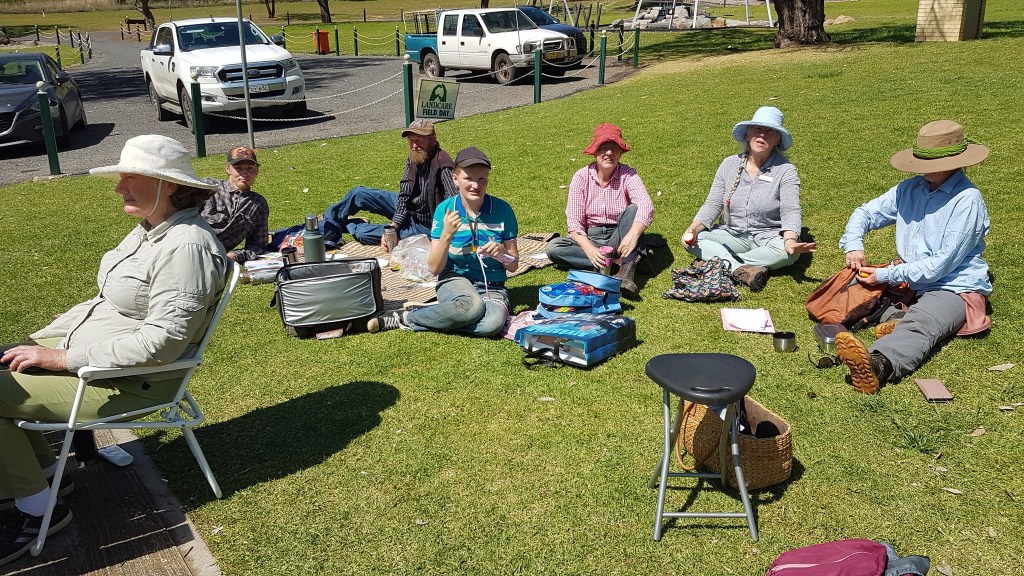
A team of fifteen nature-loving individuals joined our Mid Lachlan Landcare event in Box Gum Grassy Woodland at Cowra’s Billy Goat Hill. Spending the morning photographing, audio recording and then uploading our findings to the Central Tablelands project site.
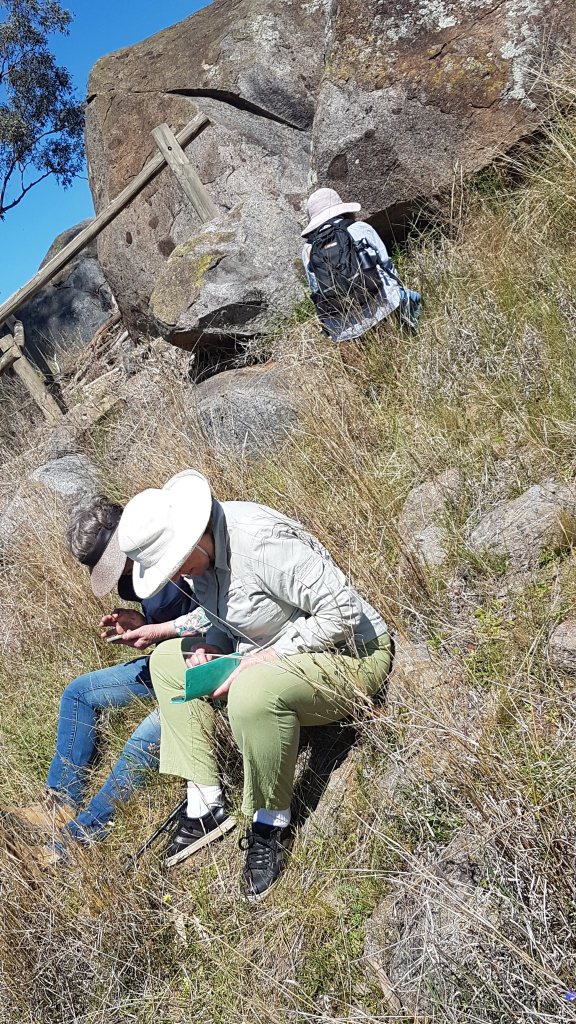
By the end of the session, our Central Tablelands group project had 65 active participants who’d together recorded 901 observations across 436 species – an amazing effort!

The Great Southern Bioblitz would not be as effective without the fabulous ‘iNaturalist’ app, an app that’s free to download and can be accessed at any time.
Tracee and I use the iNaturalist app throughout the year to record the plants, animals and fungi we come across when we are out and about in nature. We have our own project site ‘building connections for Biodiversity which currently has over 11,000 observations and close to 2000 species recorded by 33 people, most of which are located in the Mid Lachlan Region. Feel free to join us and add to our dataset!
In Australia, iNaturalist data feeds into the Atlas of Living Australia database, a data-set that’s helping inform and direct our policy makers, scientists and thought leaders. It’s also providing citizens like you and I with a high quality, community-built educational asset through which we are able to understand and appreciate the nature we find ourselves surrounded by.
It is a great tool to use to record all you find on your farm and surrounds and it’s especially great if we can record species found in Box Gum Grassy Woodlands to improve knowledge of these special woodlands.
You can find more information about iNaturalist in our video below.


The program is being funded by the NSW Government
through a partnership between the Saving our Species program
and the Environmental Trust.


 Mid Lachlan Landcare