Being English, the only dragons I grew up around were mythical, the villains in our ancient ledgends…
I was 20 before I saw my first real dragon, possibly a Frill-necked Lizard – Chlamydosaurus kingii, while backpacking through Australia’s Northern Territory. I spotted it while exploring Alice Springs as I killed time, waiting for the Greyhound bus to roll back through. I still remember the awe that rose within me as I watched it frill-up before scampering off into a tree*. I’d only landed in Australia that month and was already experiencing this vast, dusty and deep orange landscape as other-worldly. After this encounter, I felt like I’d time-travelled to the land of the dinosaurs and it felt awesome!
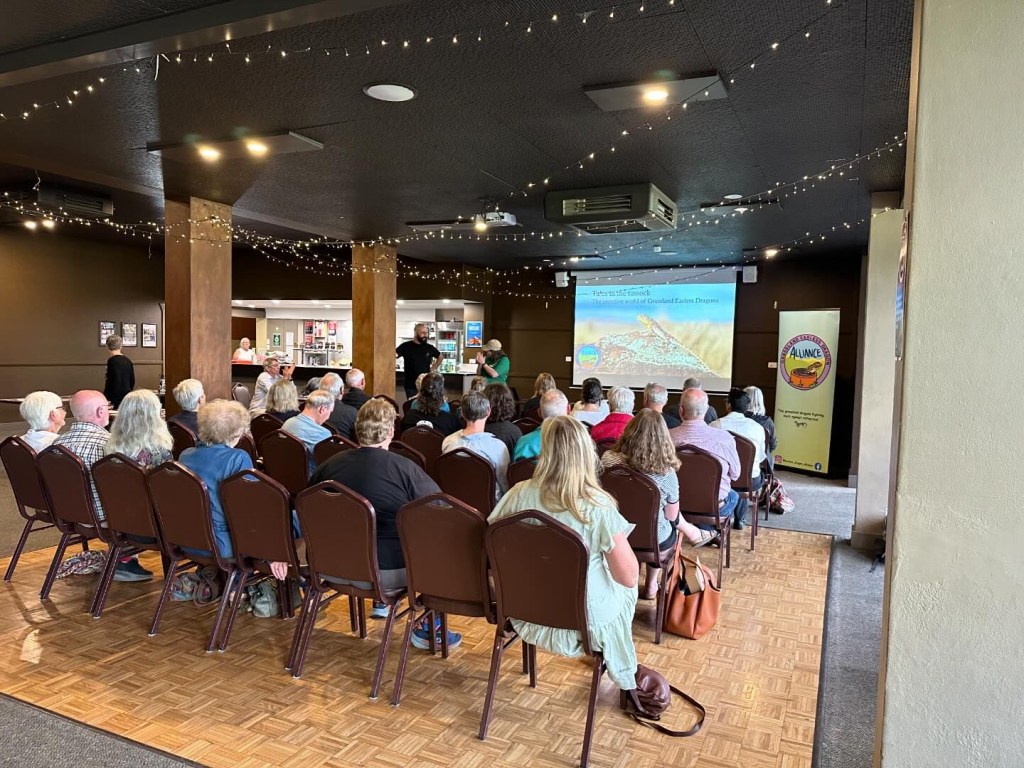
Thirty years later and I find myself in the back room of a bowling club in Bathurst, waiting to be introduced to the Grassland Earless Dragon and I can’t contain my excitement!
————————-
The Earless Dragon we’re discussing (Tympanocryptis mccartneyi) is tiny with a maximum body length of 16cm. It’s also critically endangered and very tricky to spot given its preference for burrowing down with Wolf spiders and hiding out under rocks – not that any of that dented the spirits of the Grassland Earless Dragon Alliance!
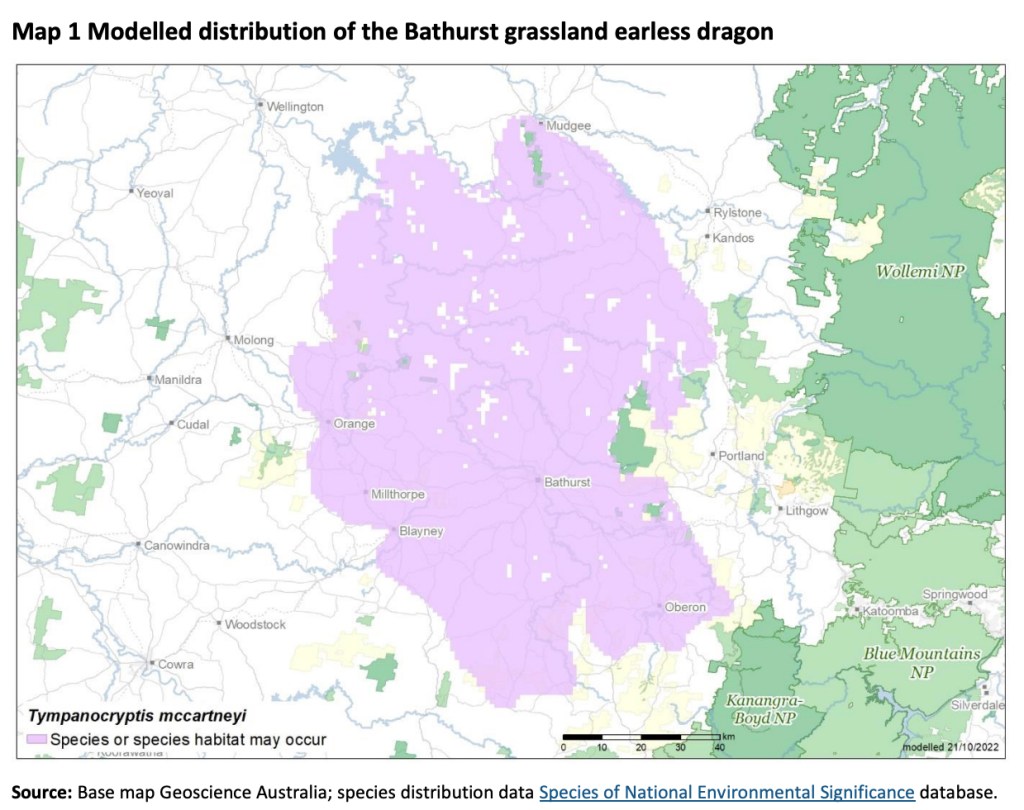
One of the key reasons these dragons are so vulnerable is habitat fragmentation. They exist over very small home ranges which typically extend to a few hundred meters per dragon and make their homes in rocky, tussucked grasslands located on alluvial plains (the pink area below). The presence of surface rocks are critical, serving as refugee from predators and trampling hooves, breeding spots and basking spaces.
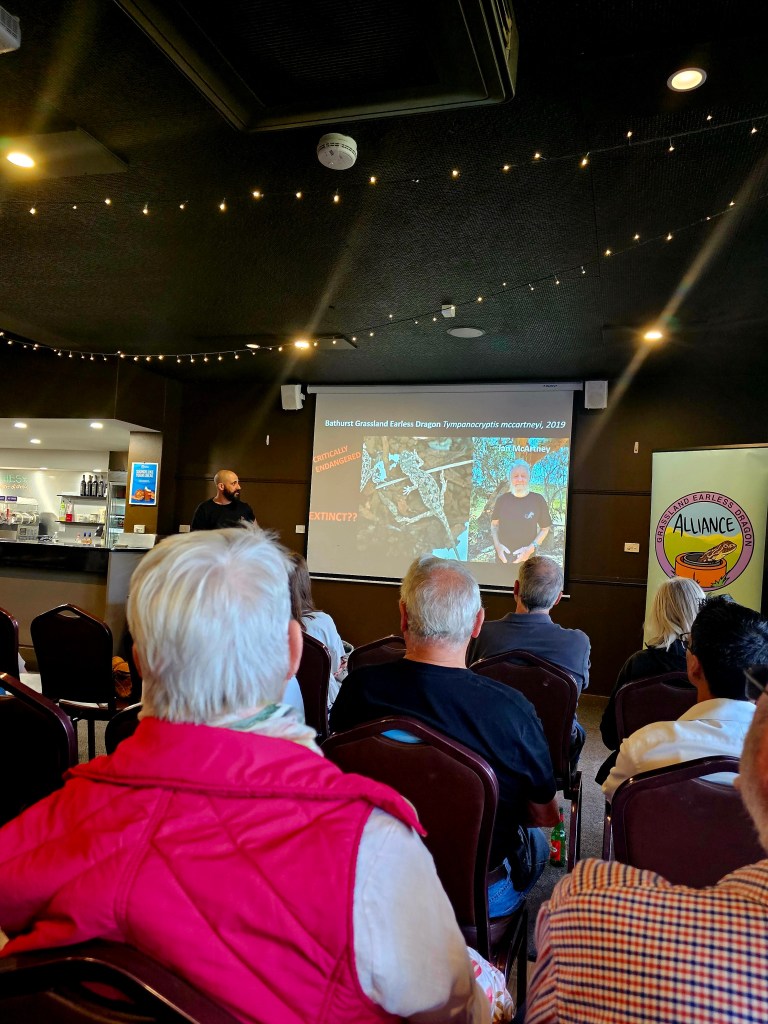
Ecologist George Madani from the Grassland Earless Dragon Alliance presented what I can only describe as the best Citizen Science-led research I’ve ever seen. The team applied an ingenous, low-stress (for the Dragons at least) method of tracking these creatures by utilising fake spider holes in the form of little tubes that they place in the landscape, quadrant style, and monitor from season to season. We were shown data supporting how these man-made burrows have increased the chances of locating the dragons and how this system has enabled the team to prove the life-span of this species is closer to 5 years rather than the 1-3 quoted in earlier literature. All in all it was a thoroughly enjoyable presentation and one that presented opportunities for both farmers and Landcarers in our region to get involved in.
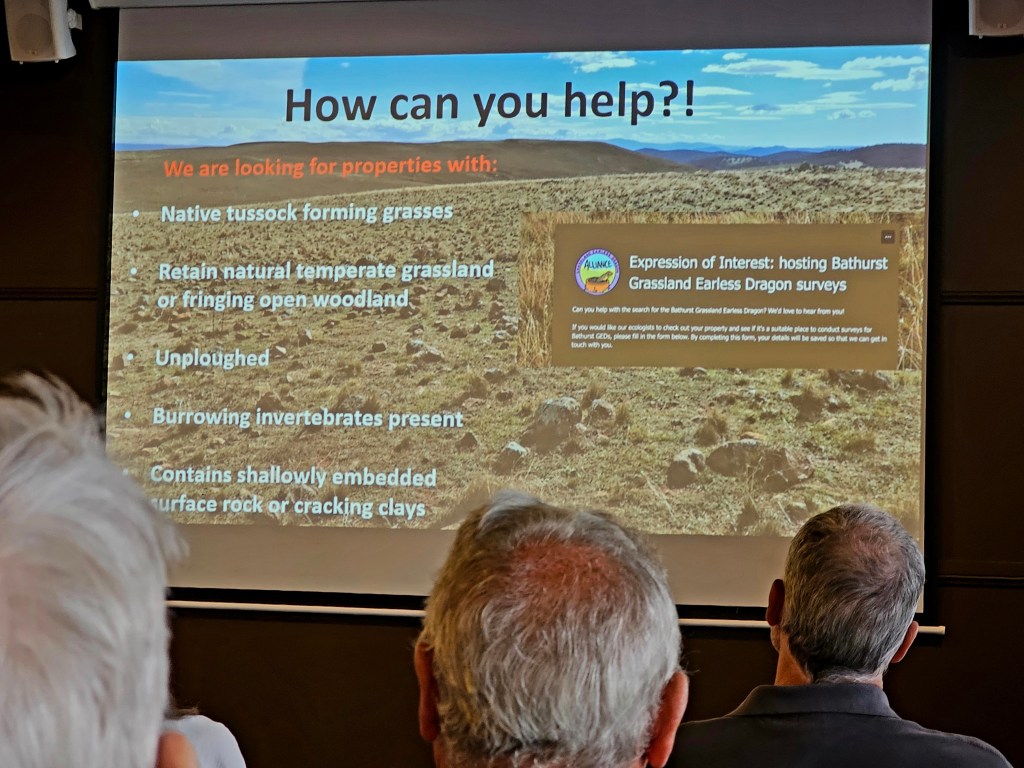
Want to be involved in this Dragon Quest?
Evidence is pointing towards a positive relationship between sheep grazed grasslands and the dragons. Both sheep and dragons thrive in these rockier, tussuck-like areas and the dragons prefer their grasslands to be grazed down rather than over-grown as this makes it easier for them to move through the landscape.

If you are located in the pink area (for Mid Lachlan Landcarers that’s the Millthorpe, Blayney, Neville, Barry, Newbridge, Lyndhurst) and have rocky, tussuck paddocks at yours, give some thought to whether you could host a dragon survey at your place. You can contact the Alliance directly or drop us a line and we’ll put you in touch.
Keep In Touch
You can follow the Grassland Earless Dragon Alliance on Social Media via their Instragram and Facebook accounts.
You can read some of George Madani’s research here.
This talk was organised by Greening Bathurst as part of their ‘Green Drinks’ series of events. It was hosted by Central Tablelands Regional Landcare on Wiradjuri land, Bathurst
*Apparently it’s unlikely my first dragon spot was the frill neck lizard in Alice as they don’t travel down that far. It’s likely I saw that further north but in any case, Australias reptiles certainly captured my imagination!


 Mid Lachlan Landcare