We’ve started this week with a little Beetle Mania after being informed that swarms of St John’s wort beetles had been spotted at a property just outside Canowindra!
St John’s wort was introduced into Australia in the late 1800’s primarily for use as a medicinal plant. Like many other early imports, this sunshine yellow botanical escaped its original confines to become naturalised. It now featured on the NSW WeedWise list and is a relatively common weed in paddocks and public sites across large swathes of southern and eastern Australia.

One of the most immediately impactful consequences of this weed is felt in the way its chemistry affects livestock, in particular cattle and horses. The plant contains two key ‘medicinal’ actives – hypericin produced in the flower stems as they grow in spring, and hyperforin which is concentrated in new stem growth.
Both Hypericin and Hyperforin impact the brain by changing the way it takes up signalling chemicals (dopamine, seratonin etc) and their presence is why the plant has a traditional use as an anti-depressant. These chemicals impact stock behaviour too as well as causing their skin to become more sun-sensitive (photosensitive) and prone to heat stress which in turn reduces vigor. Finally, there’s also a serious risk of long-term liver damage with prolonged grazing, especially when the plant is grazed during its growth phase. Here’s some more information from Meat & Livestock Australia and a more in-depth report into the impacts on animal health of St John’s Wort here.
So what about these beetles?
From 1928 15 biocontrol agents were studied with a view to bringing this weed back under control. Of those, the following have stood the test of time as effective biological control agents:
Lesser St John’s wort Beetle (Chrysolina hyperici) – Native to Europe and West Asia.
Greater St John’s wort beetle (C.quadrigemina) native to parts of Europe and Africa.
- Both imported by DSIR in 1943 and 1965.
- Both can be found in infestations in most places & they are very hard to distinguish between.
Eriophyd mite (Aculus hyperici)
Root feeding beetle (Agrilus hyperici)
phloem feeding aphid (Aphis chloris)
and a gall forming fly (Zeuxidiplosis Giardia)
One of our Landcare members was lucky enough to find themselves hosting a St John’s wort beetle party last week and took some photos to show us:
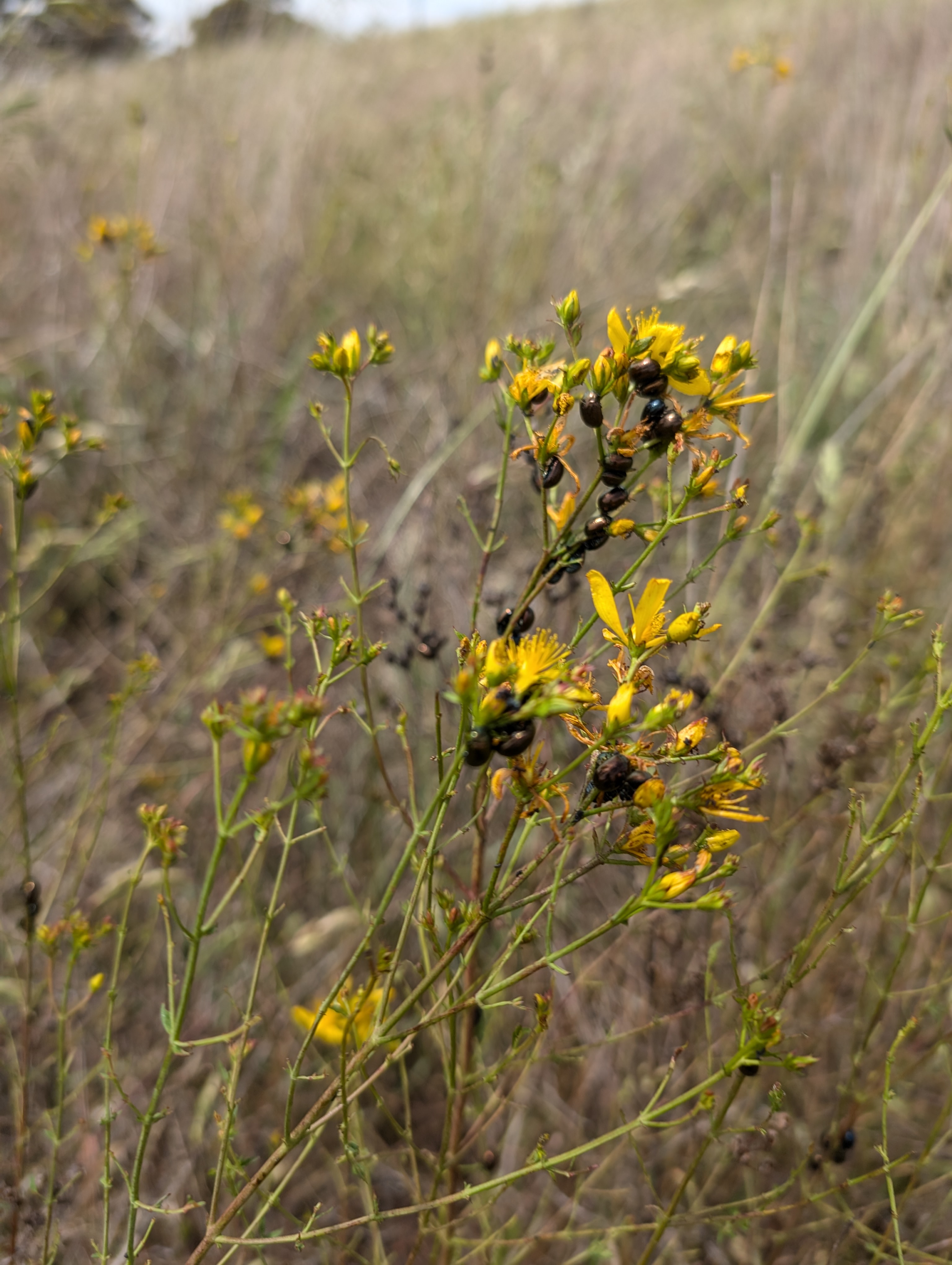
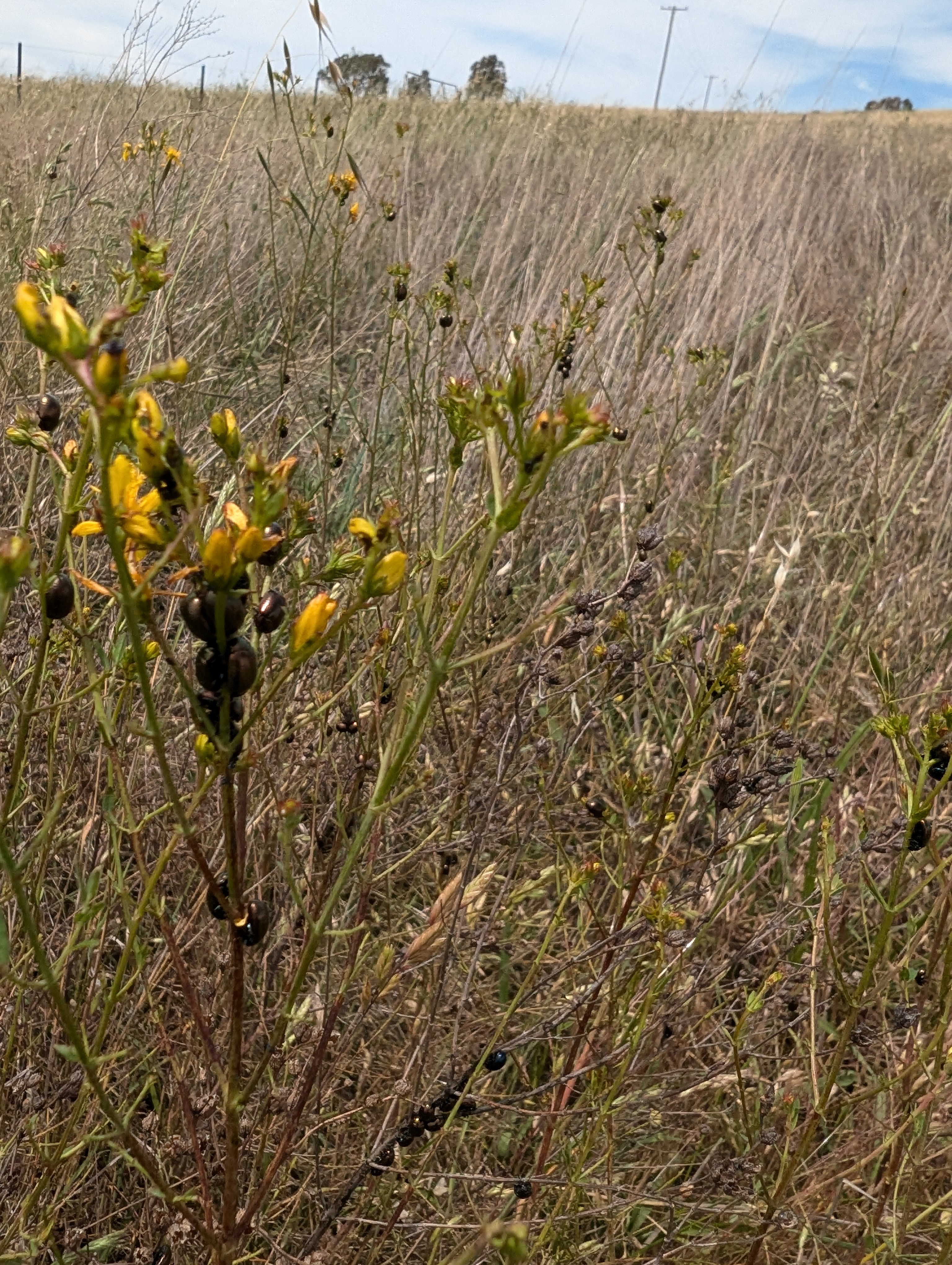
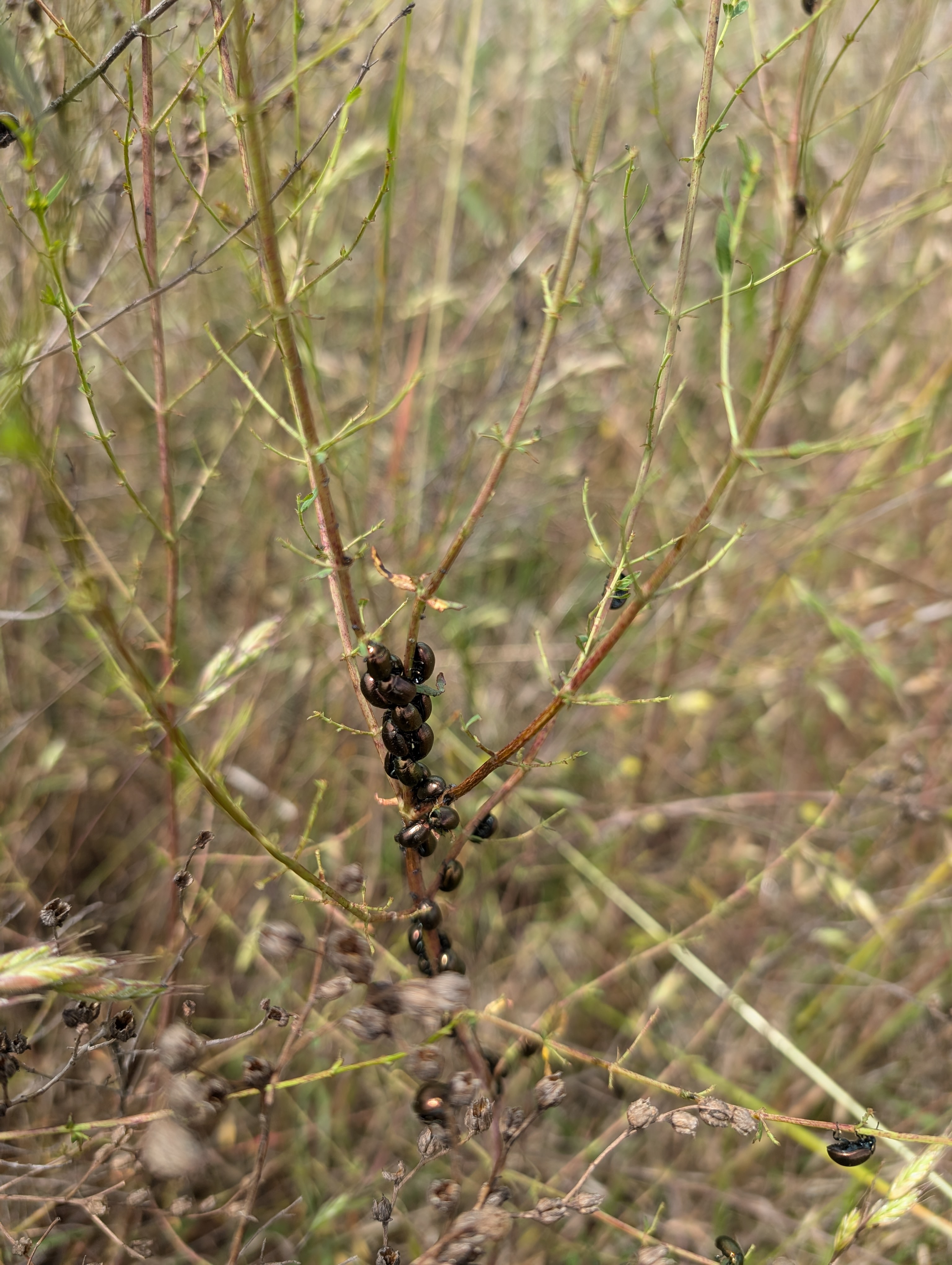
Adults and larvae totally defoliate the plants, suppressing flowering and seed production. This dramatically reduces the plants chance of survival. With enough beetles, the weed can be managed entirely this way but that often does not happen as beetles come and go as they please!
Citizen Science – get involved!
Whether you’ve got these beetles at your place or are longing for some, there’s a citizen science project that might be of help!
Atlas of Living Australia has an ongoing project capturing data on St John’s wort beetle sightings and activity. While it might sometimes seem like one sighting won’t make any difference to these country-wide projects, that’s not true. It would be great to see all biological control beetle sightings listed so we can track their movements and plan our management strategies in advance, potentially helping reduce insecticide use and subsequent cost.
If you’d like to upload your data but are not sure how to/ need help then get in touch with us and we’ll help you work through it all.
Here’s the link to the St John’s wort biocontrol hub.

Sharing beetles.
Find yourself with a visit from these beetles and want to help out a neighbour or friend? That’s entirely possible!
We found some great information and tips on this Landcare NZ site: https://www.landcareresearch.co.nz/discover-our-research/biodiversity-biosecurity/weed-biocontrol/projects-agents/biocontrol-agents/st-johns-wort-beetle/
- Move beetles around in Autumn after their summer hibernation – March for greater and April to late may for lesser.
- The best time to find them is around dusk.
- Collect stems and beetles in a box and place them at new site.
- At least 100 are needed for new colony.
- Release on a paddock that’s not heavily grazed.


 Mid Lachlan Landcare