On Wednesday morning eight of our Mid Lachlan Landcare members met at Wyangala Dam for our first event of the 2025 season. We opted for an on-water catch up for a number of reasons, not least being that January can be an extremely hot and bothersome month filled with unrelenting mozzies and those ‘there’s always something’ jobs such as weed spraying and fence repairs (especially as it’s also storm season). Yes, a holiday-at-home was just what we all needed and luckily for us, Wyangala is right on our doorstep in all its glory!
Wyangala Dam, or Wyangala Waters as it’s also known, sits at the merge point (confluence) of the Lachlan (Kalari/ Galari) and Abercrombie rivers. Abercrombie is a tributary of the Lachlan, along with the Belubula which also runs through our district. All up the Wyangala Dam holds 1,217 gigalitres of their water in a lake whose diameter spans some 54Km – and no, we didn’t even attempt to kayak it all this time!
Underpinning our decision to meet here was the fact that since 2022 our Landcare group, on behalf of the Department of Department of Climate Change Energy Environment and Water, has been conducting snapshot salinity water testing along tributaries that flow into the Lachlan & Belubula Rivers. Our ongoing salinity project covers over fifty sites spread across a 700km loop, centred around Cowra and while Wyangala dam is not one of our regular testing sites, it made for a good symbolic starting point for kicking off this year’s testing.
David Wrenford heads up our Salinity testing and brought his testing device along so we could see the process in action, chat about the results and discuss how we’re using the data we collect. Water Salinity (it’s mineral content) is measured as electrical conductivity (EC) which is established by dipping a probe into the water. This quick and non-invasive test produces data that when viewed naratively -taking into account recent weather events, the lie of the land and its ecology along with land-use and management at and around the sample site -gives us a picture of where salts are coming from and what, if any action could be taken to mediate any negative impacts that may arise as a consequence.
Testing the waters
On the day of our visit, Wyangala was sitting at around 320 EC compared to a norm of around 700-800 around the centre of Cowra. While there is some additional chemistry involved in working out what constitutes enough vs too much, the upper limit for drinking water is 700EC and 1500EC for ecological decline.
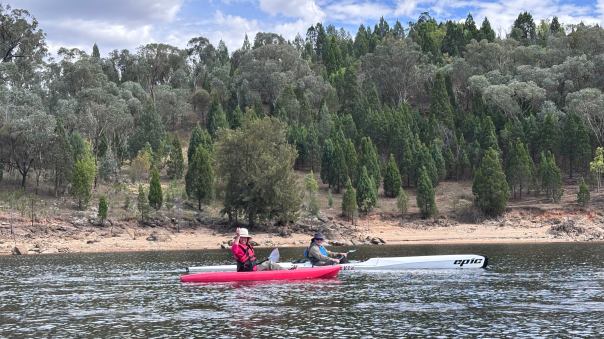
Time for a Paddle – Setting off from the Triple Box Area
The weather was hot and slightly windy so we opted to go against the breeze on the way out so our return journey would be a little easier on the muscles. We also stayed close to the shore line and kept an eye out for reptiles and birds out on the rocks or in the trees. Wyangala is in granite country and features many boldered areas with rocky outcrops in between gum, kurrajong and she-oak trees. While it’s clear there’s some erosion and degradation of the Box Gum Grassy Woodland naturally present, it’s still a beautiful place to be and a one that attracts a diverse array of bird life, some of which we encountered on our paddle.
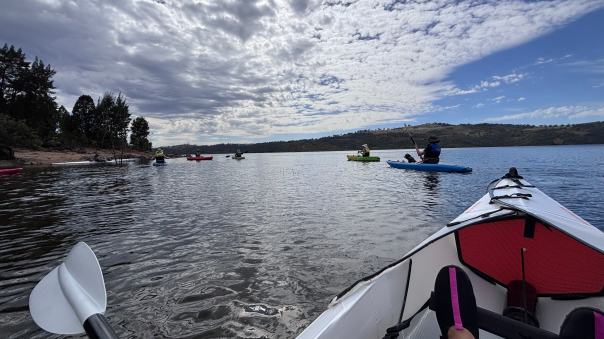
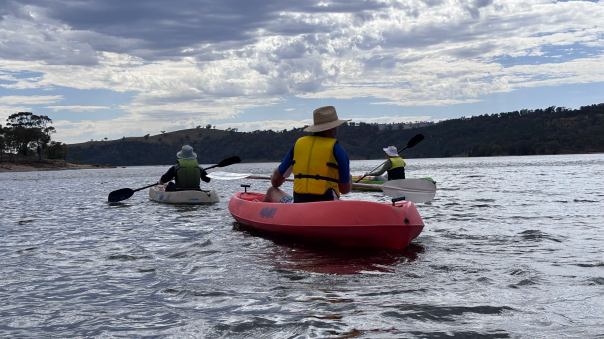
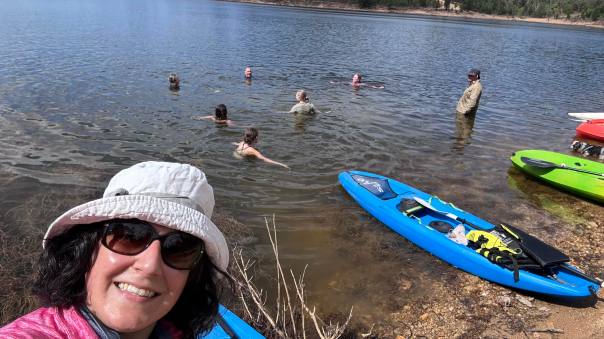

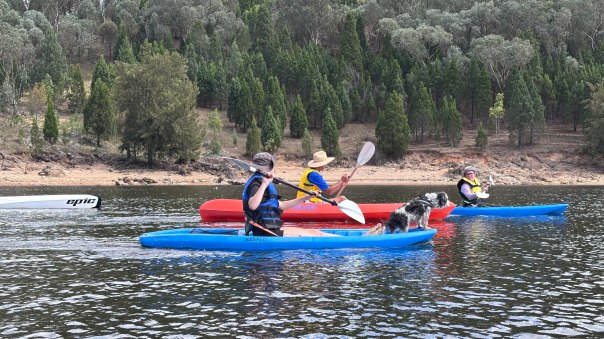
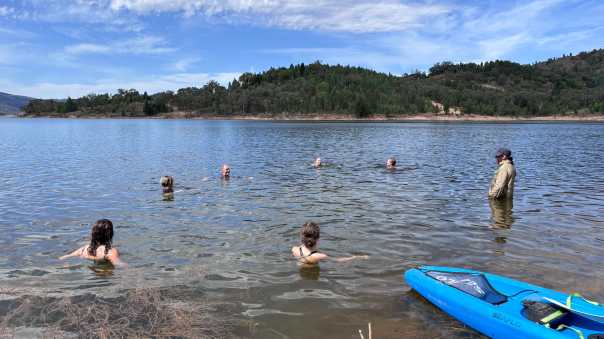



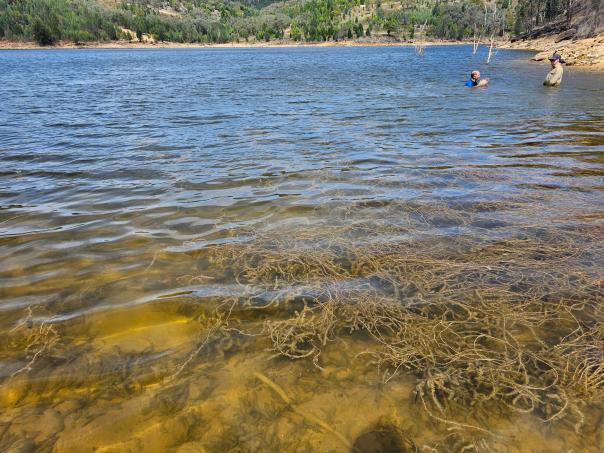

Our half-way point was chosen for its fish habitat potential – a spot comprising of a small, shallow sandy bay flanked by deeper pond-like areas which were embelished with aquatic plants all feathery and trailing. We parked up and dived in for a swim, most of us tackling this fully clothed in an attempt to avoid the worst of the mid-day sun.
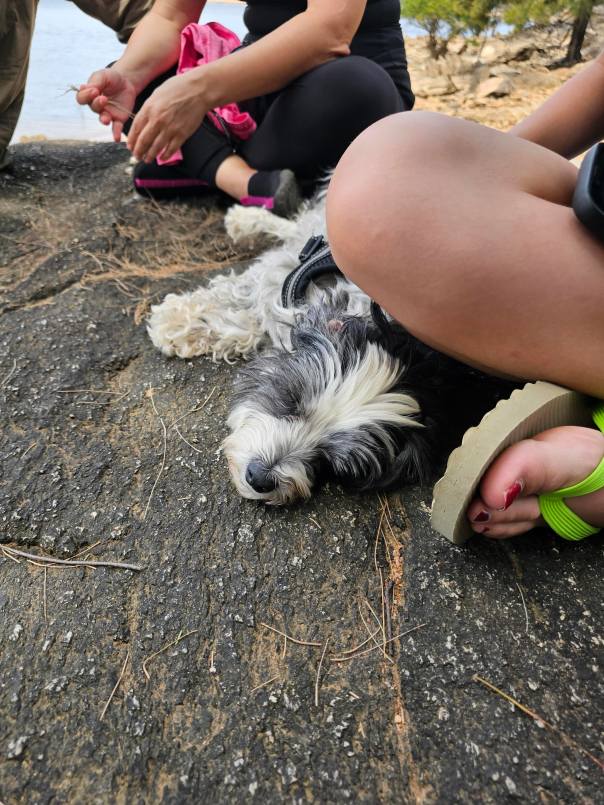
With floating over it was time to head back for some home-baked muffins, apple cake and wattle-seed cookies which we ate under the shade of the She-oak tree. We were joined in our chatter by fairy wrens, a brown tree-creeper and a rufous fantail, all of which seemed completely non-plussed by our intrusion into their little world. What better way to end a Landcare adventure!
With our cups filling and re-filling and our minds whirring, we took it all in, each of us feeling so lucky and priviledged to be living a life where we can not only stop and ‘smell the roses’ but that we can also plant them together.
Here’s to another year of working together in Landcare.
Amanda
Note: We are planning to hold a community event to discuss the data collected during our salinity testing work later this year. We will also be explaining more about how this data can be used to inform your Land caring work be that on farm, in your backyard, community group or conservation project. If you want to know more right now, do contact us and we’ll happily bring you up to speed sooner!


 Mid Lachlan Landcare