Welcome to our Mycology May event at Raintree Marra farm in Cowra!

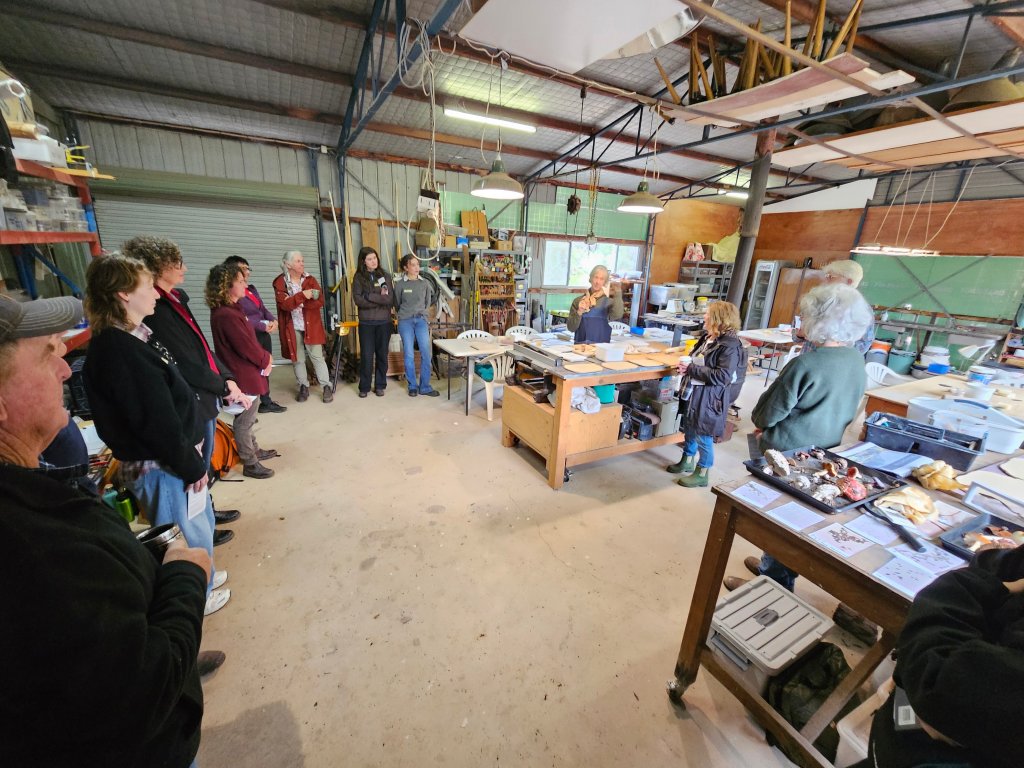
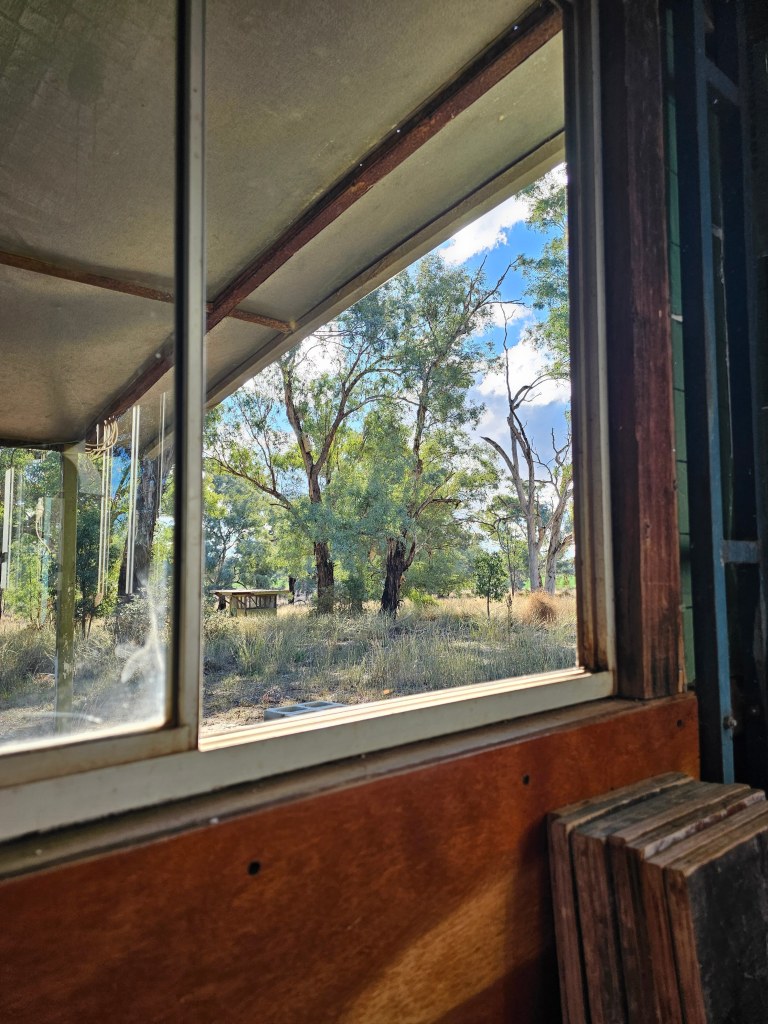
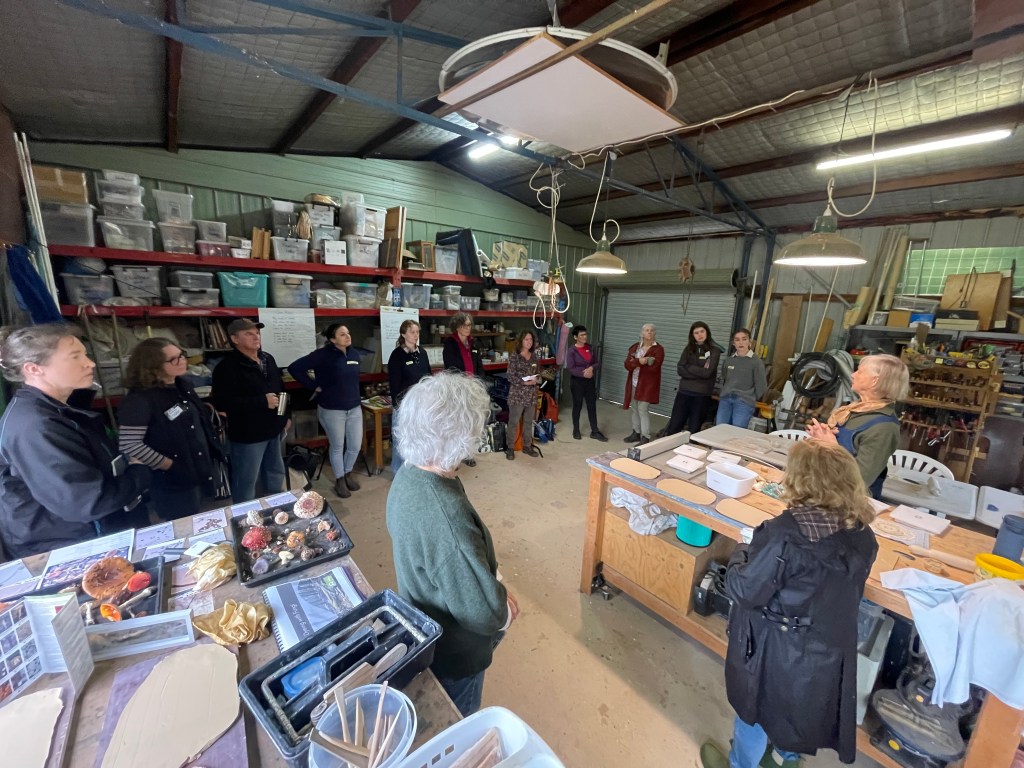
The day started with an introduction to both the farm & Catherine’s pottery barn where the magic would be happening after lunch.
Fungi surveys have previously been conducted at Raintree Marra, including one hosted by the amazing Alison Pouliot who, during her time here saw evidence of fungi succession in action thanks to the conservation work carried out within Box Gum Grassy Woodland on this farm.
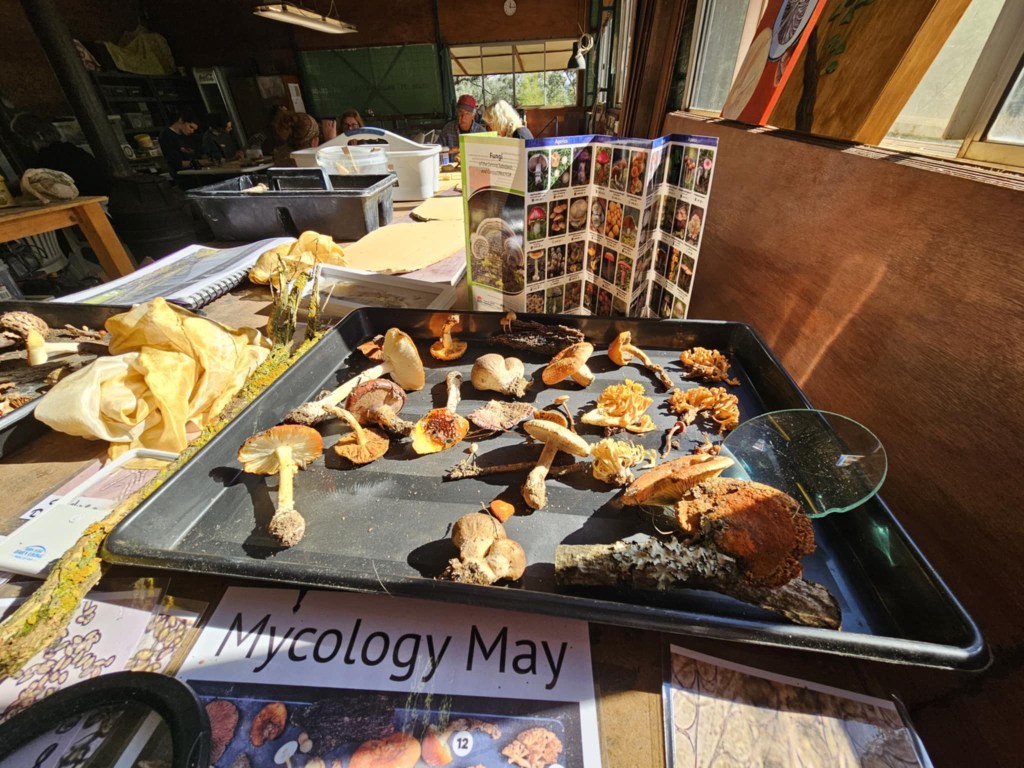
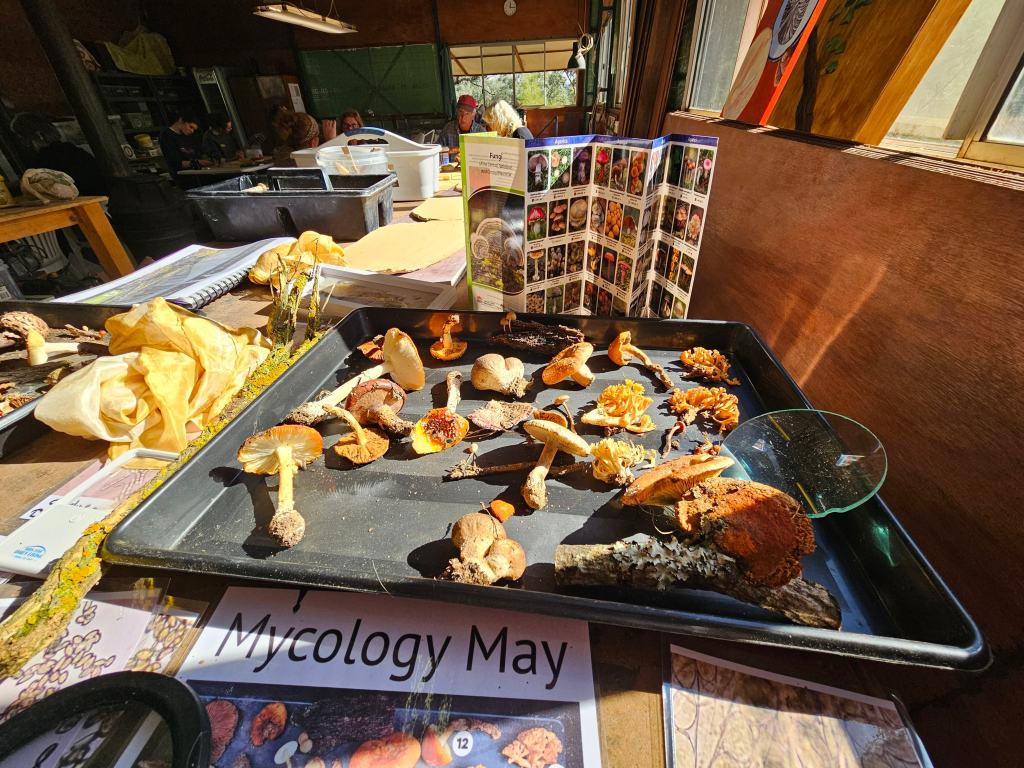
A timely drop of rain brought out a few fungi which we hunted down with great enthusiasm. We uploaded some of our findings to iNaturalist to help build on what we know of this site. Then, once our foray time was up, we shared our discoveries with the rest of the group.

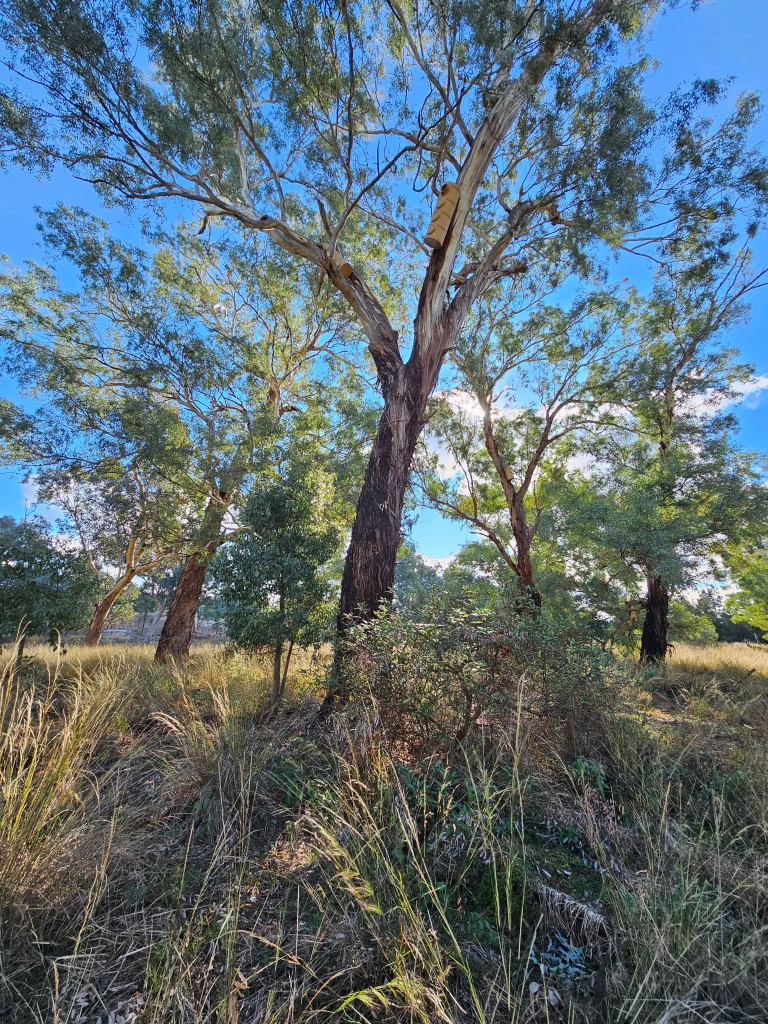
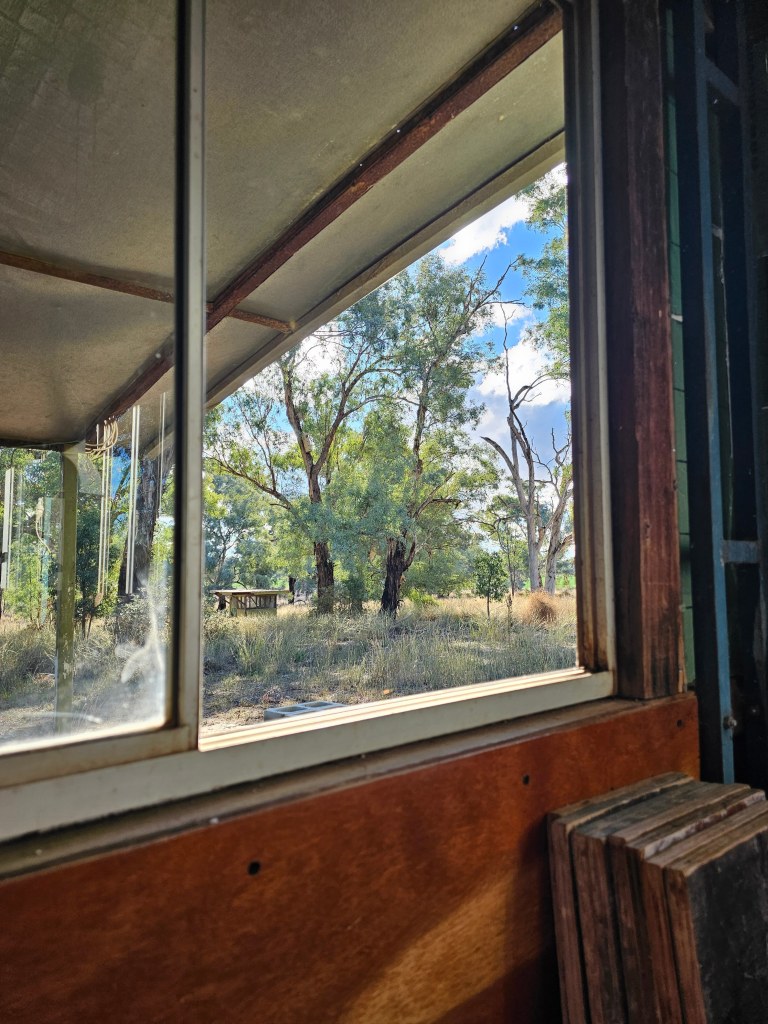
This site is on a working farm and we were searching around the highly trafficked areas and partially cleared areas. That said, this part of the farm remains Box Gum Grassy Woodland and there were plenty of fallen tree limbs, tussucks of native grasses & understory wattles around to provide homes to a range of fungi.

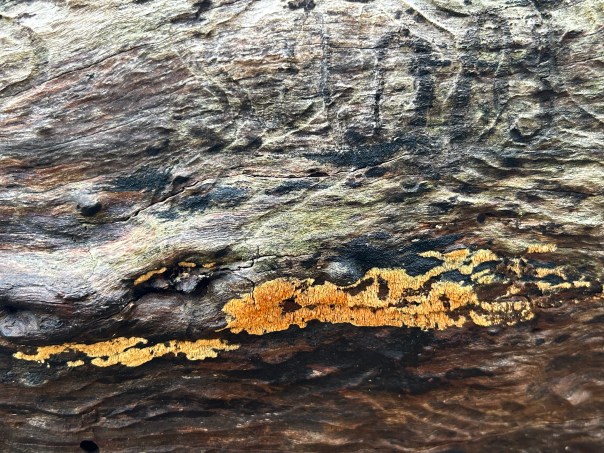

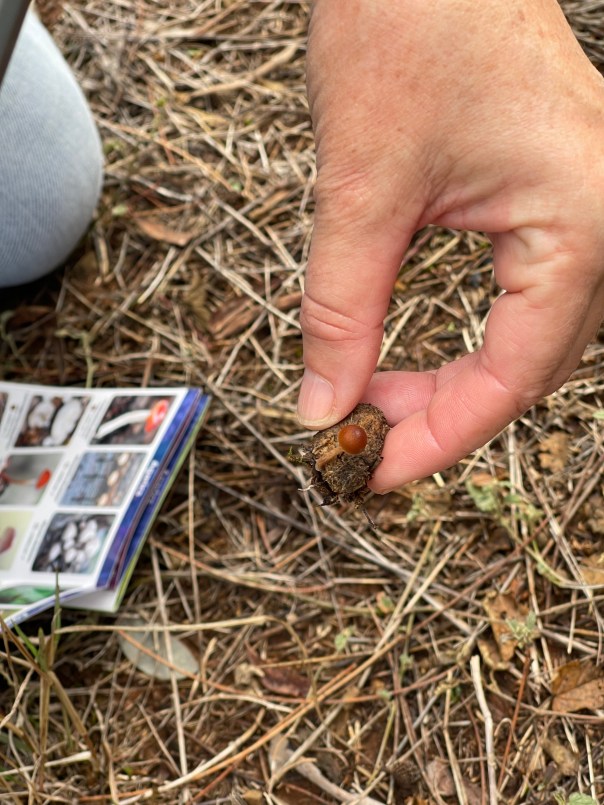
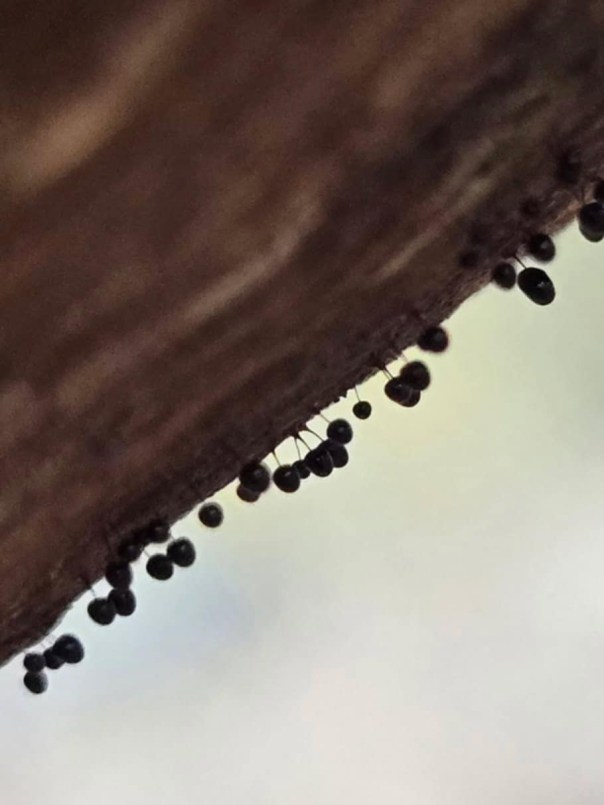


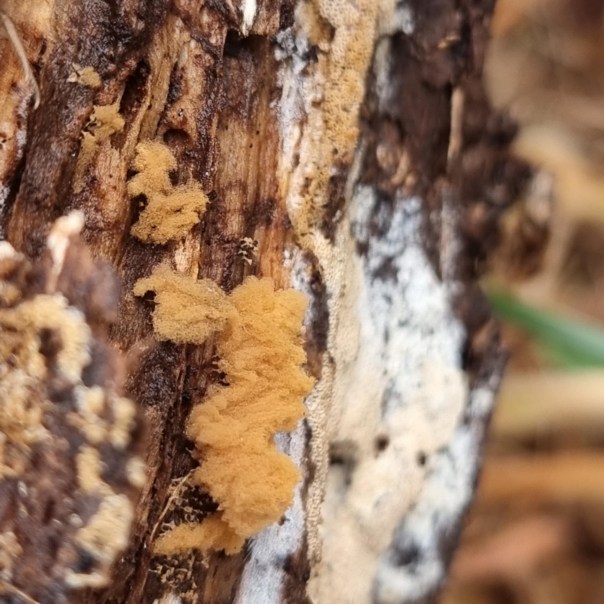


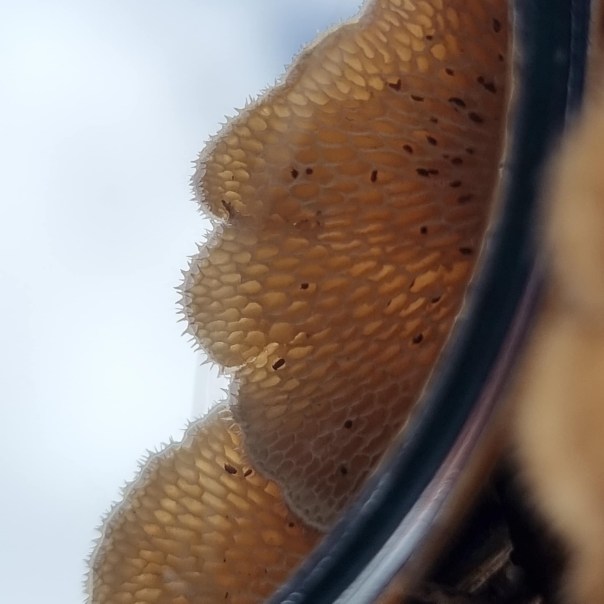
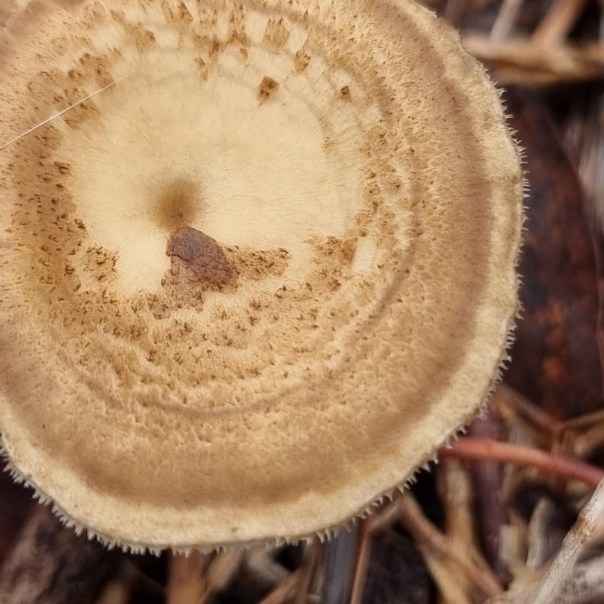
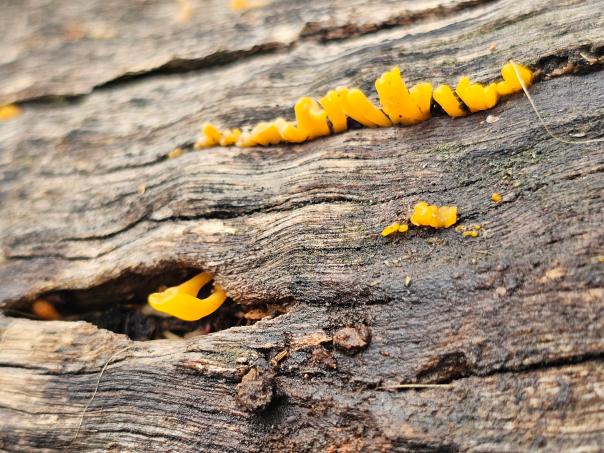

While it had rained just before our foray, it had been bone dry for the previous three months, a factor that definitely influenced our finds.
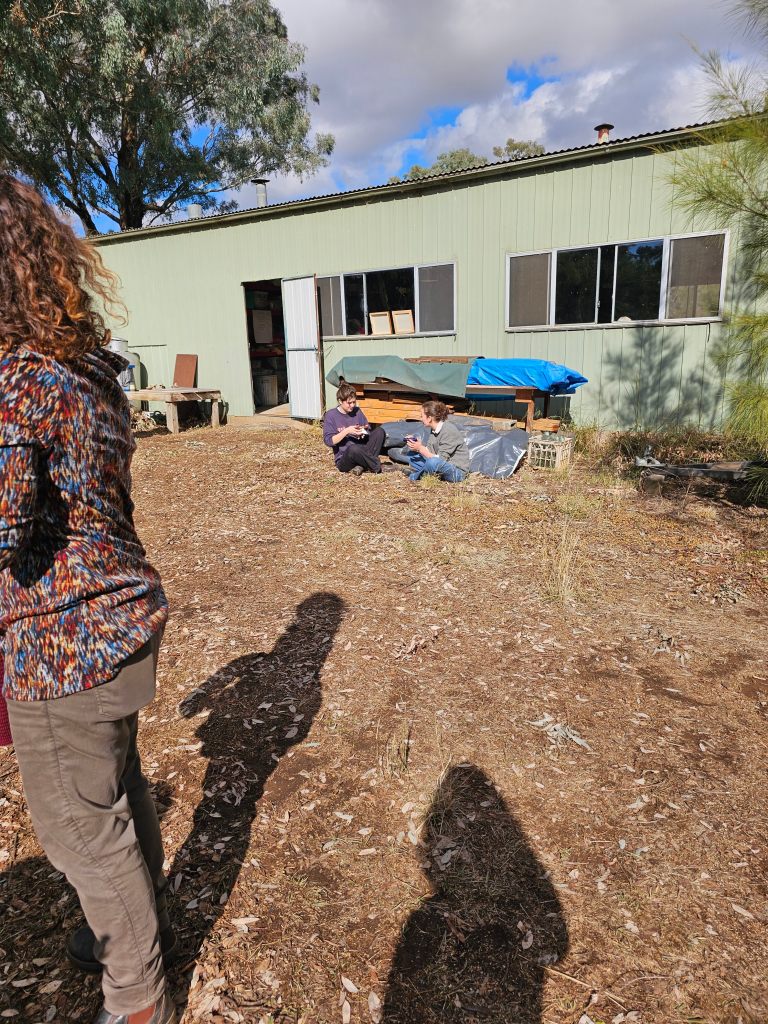
Here’s Leslie checking out the lichen with the help of a small magnifying glass.

While some puff balls and horse dung fungi had managed to pop out just in time for us to see them, we were mostly finding fungi on rotting wood and under the canopy of the she oaks.

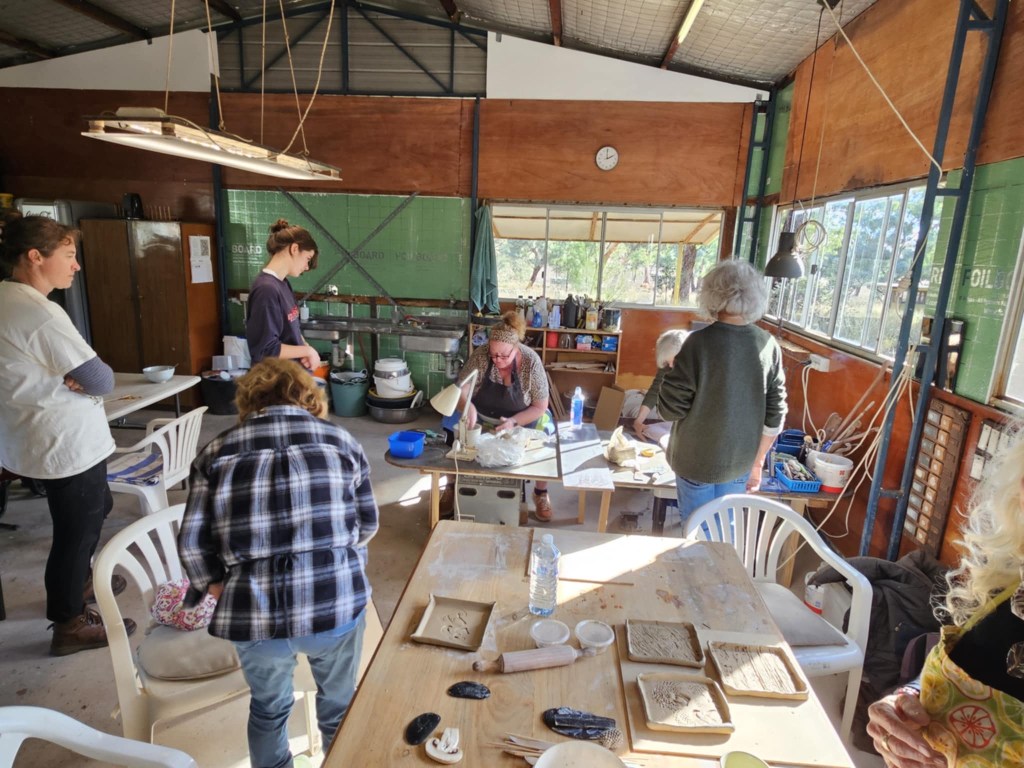
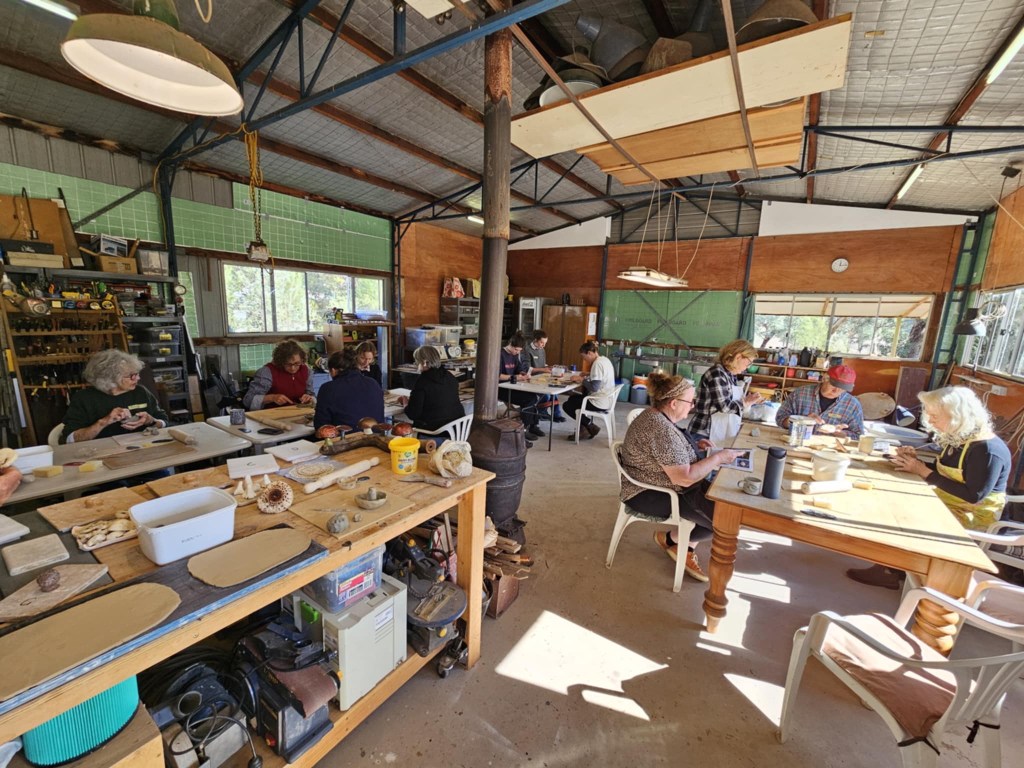
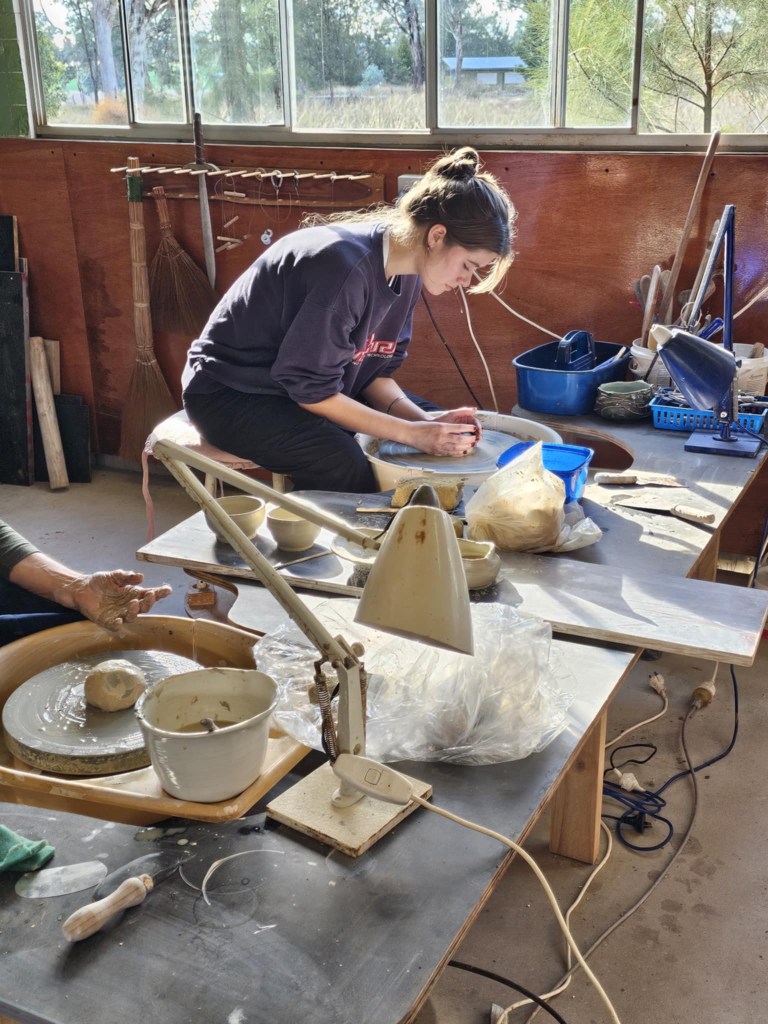
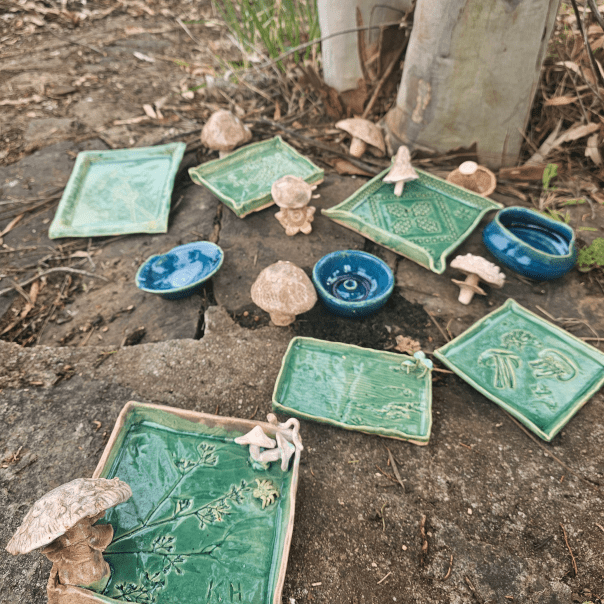
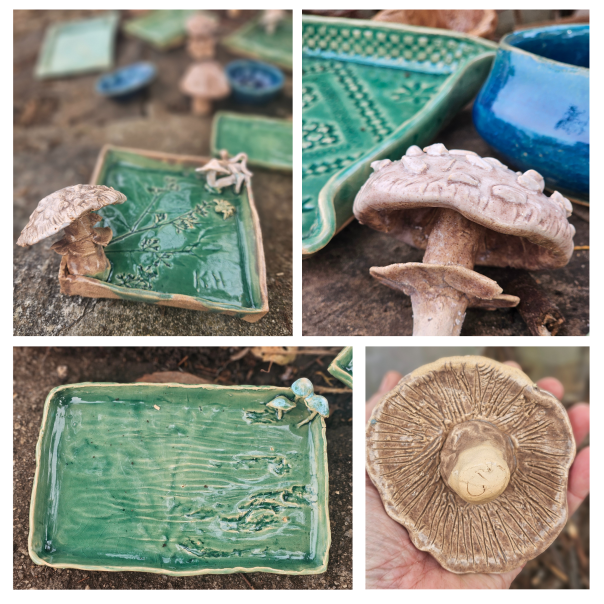
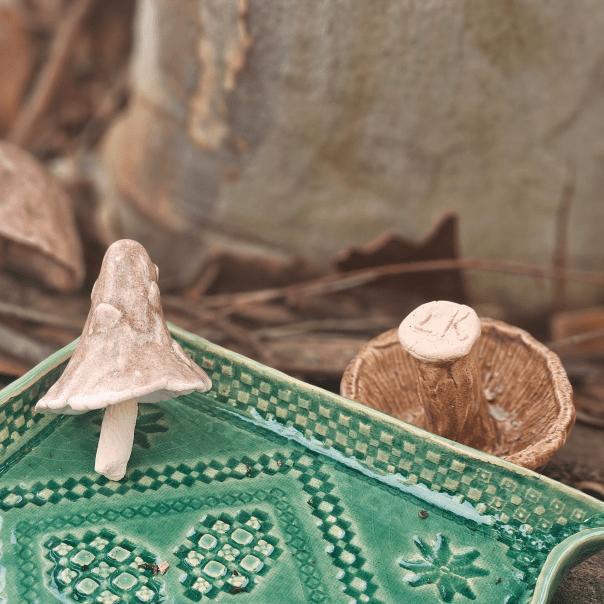
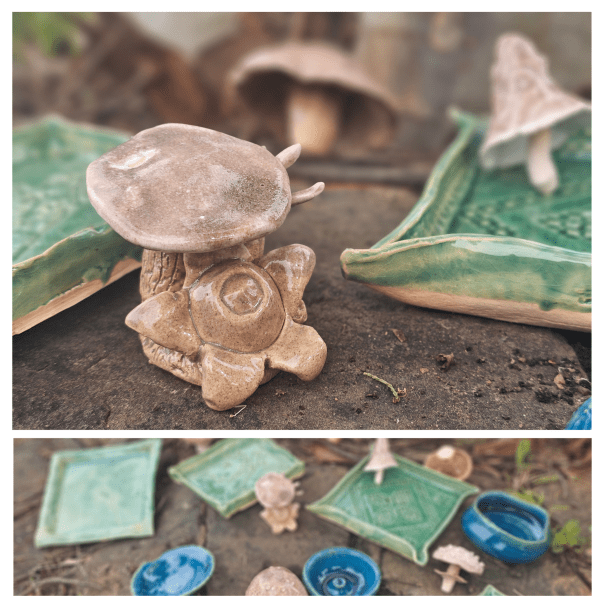
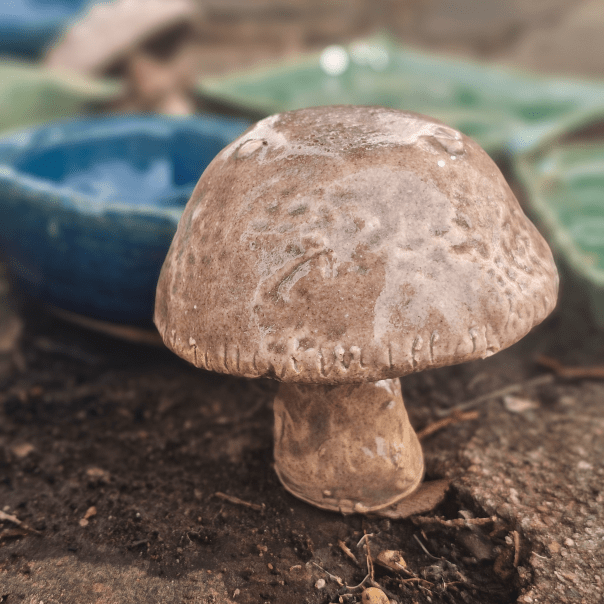
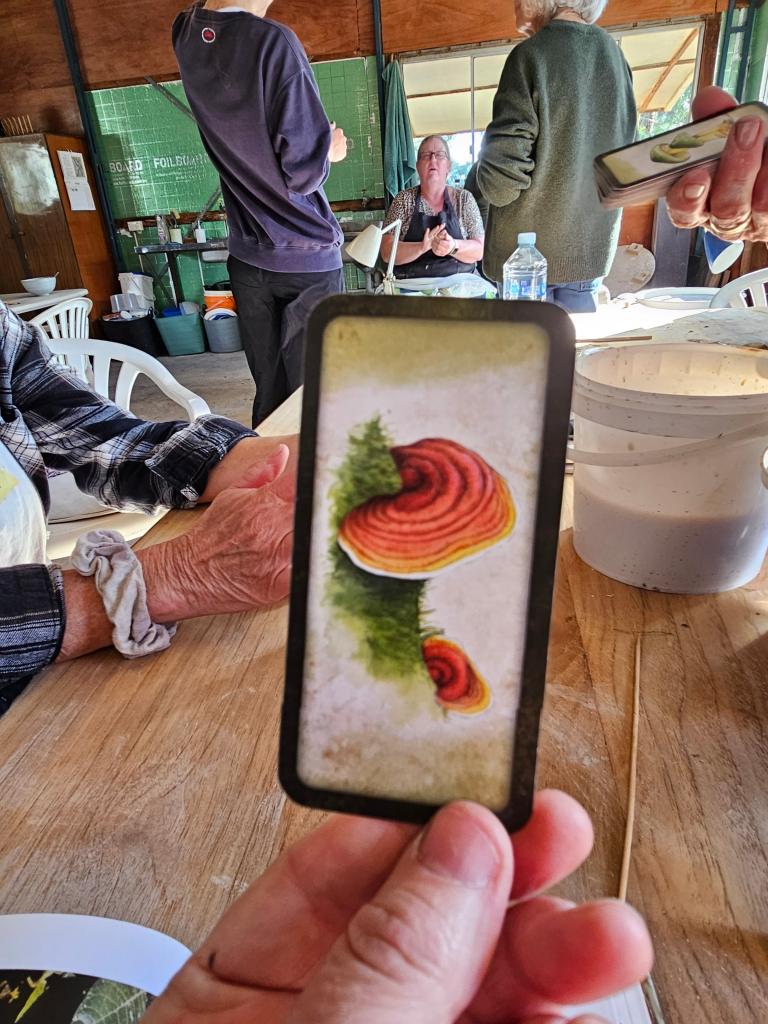
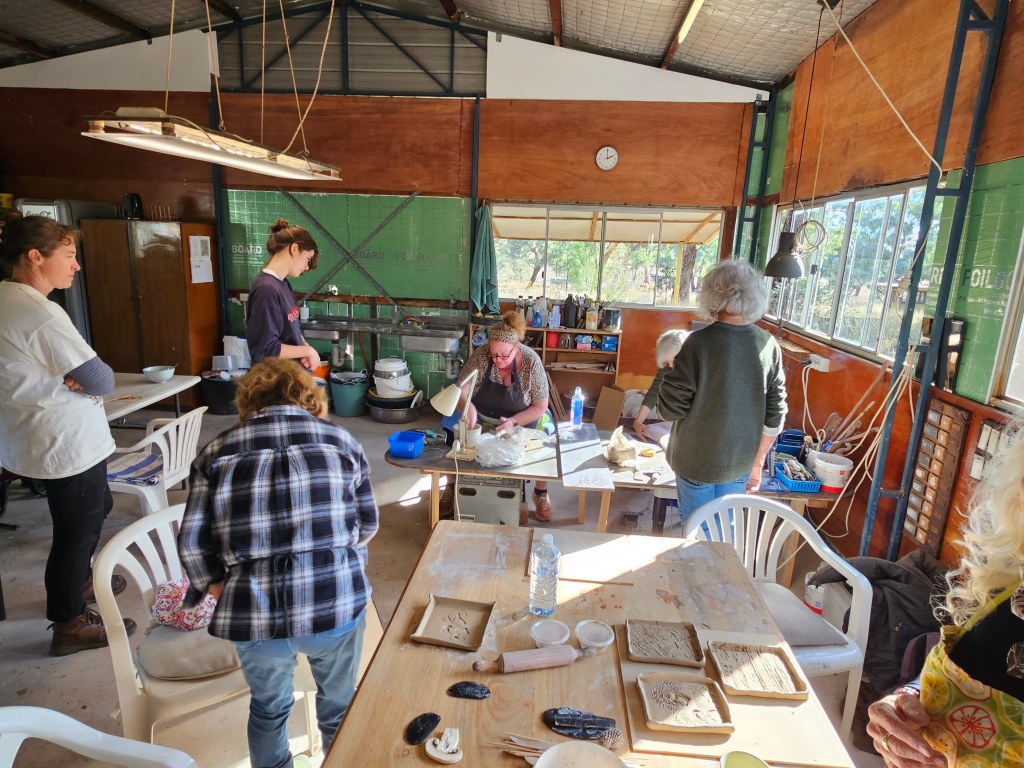
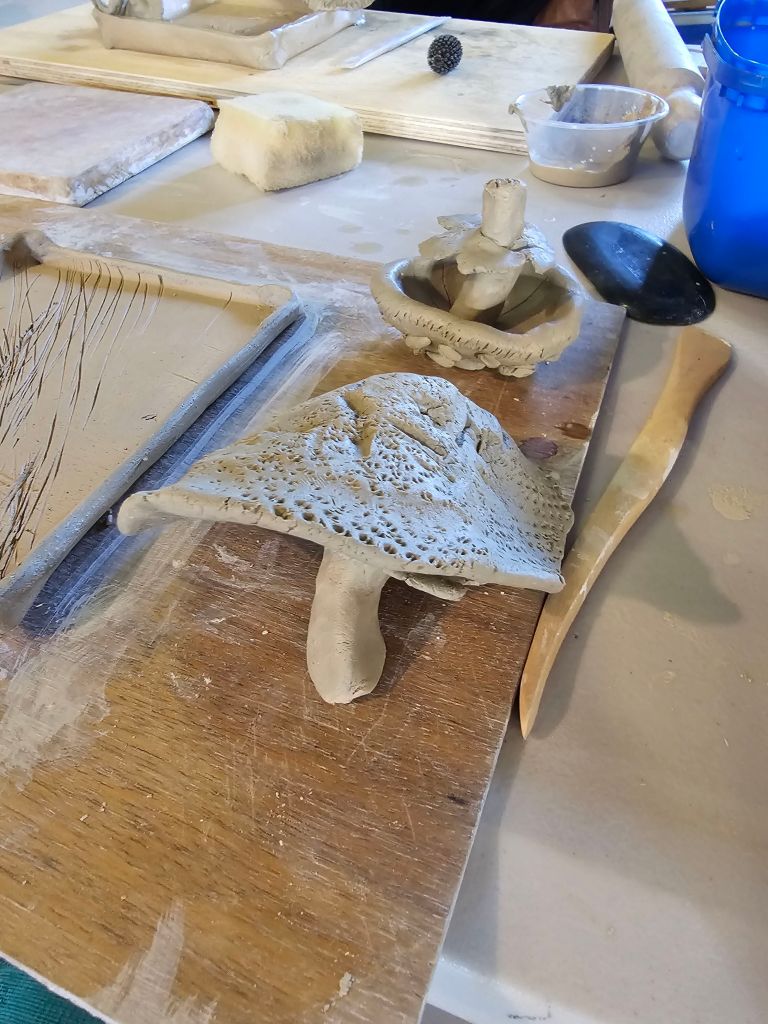
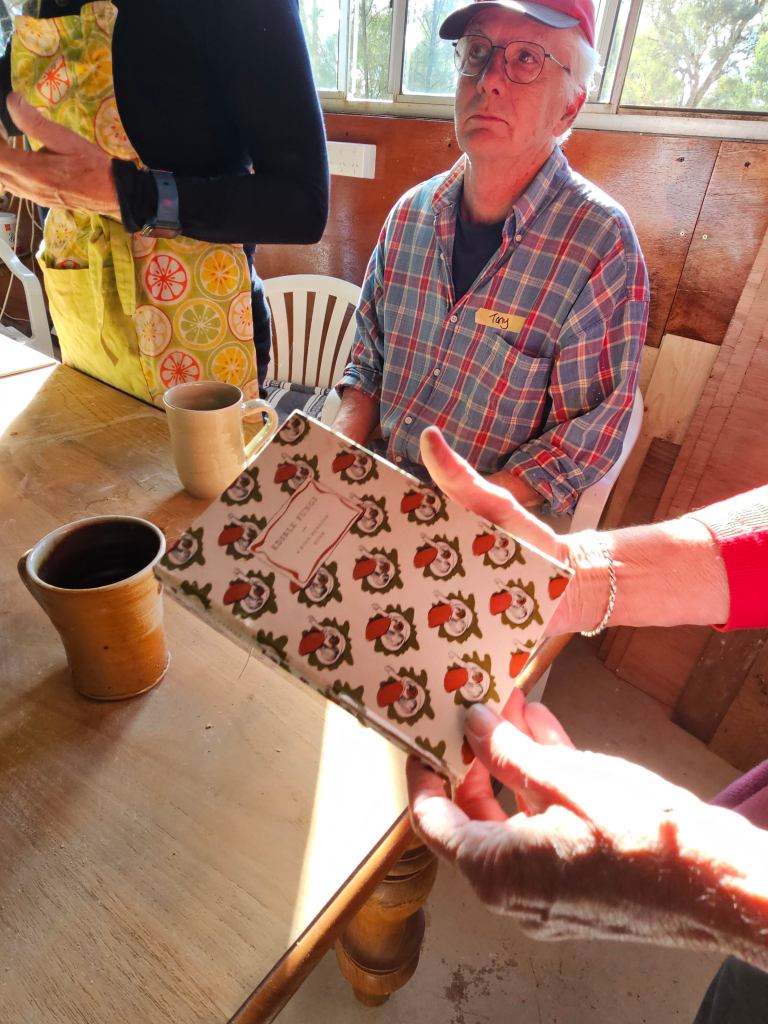
After our foray we came inside to the pottery barn to make our fungi-inspired platters & sculptures. Some of us even tried out the potter’s wheel while the rest of us looked on while sharing around a deck of fungi-inspired affirmation cards & flicking through a beautiful vintage fungi guide found for $1 in an op shop!

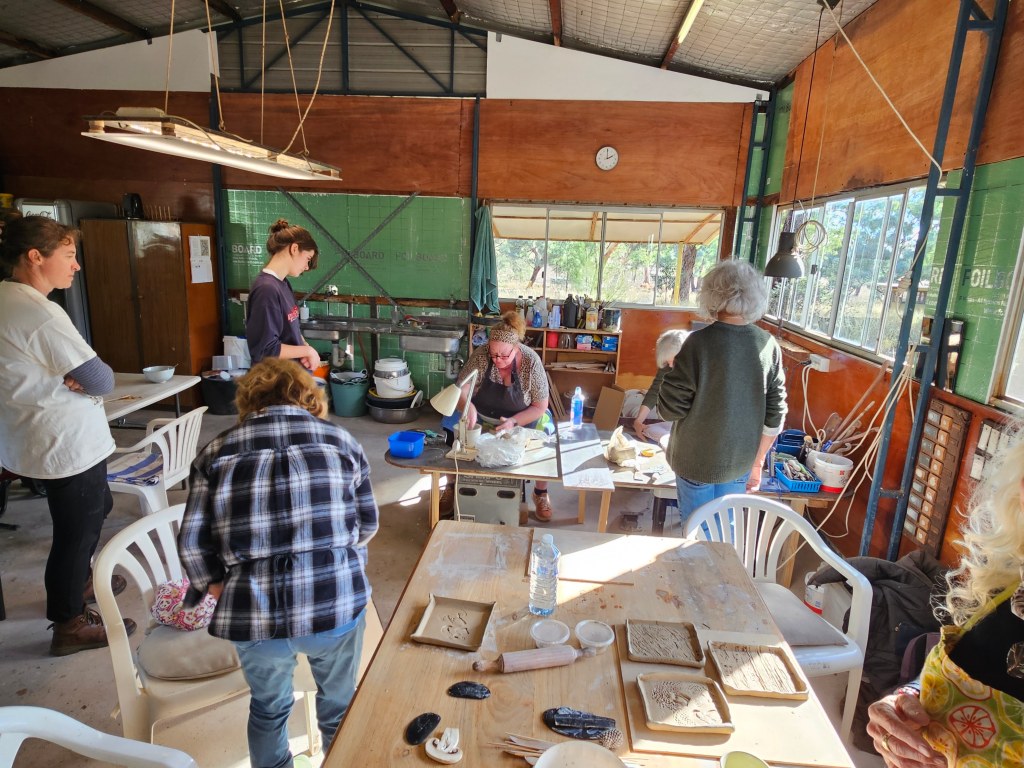
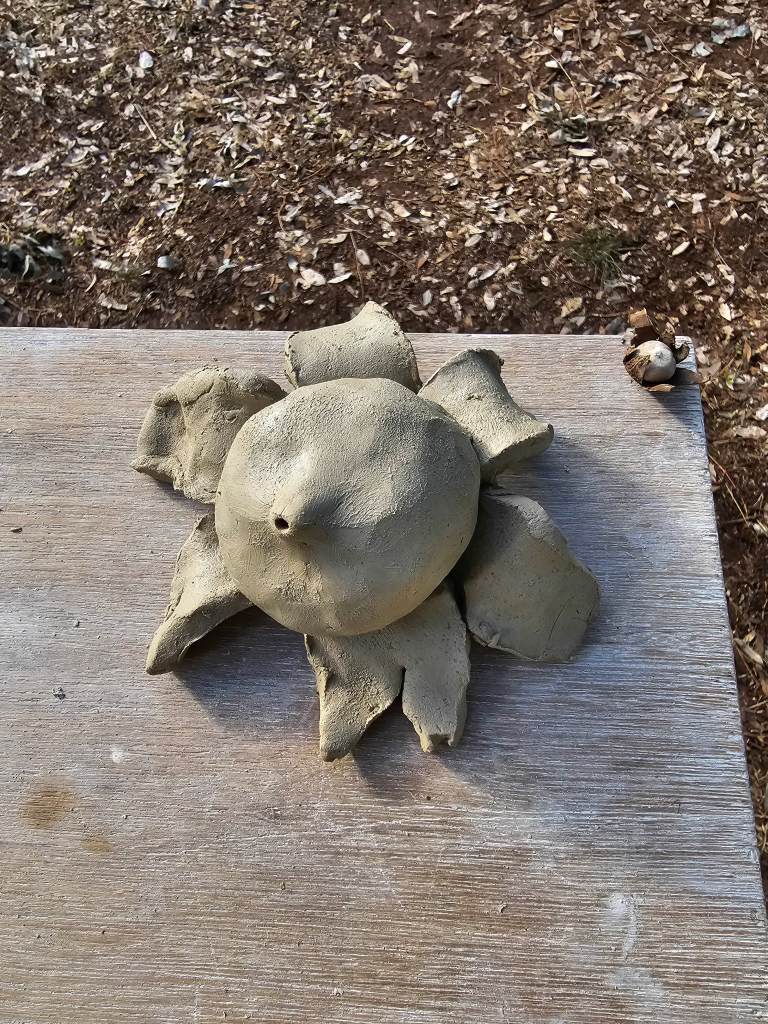
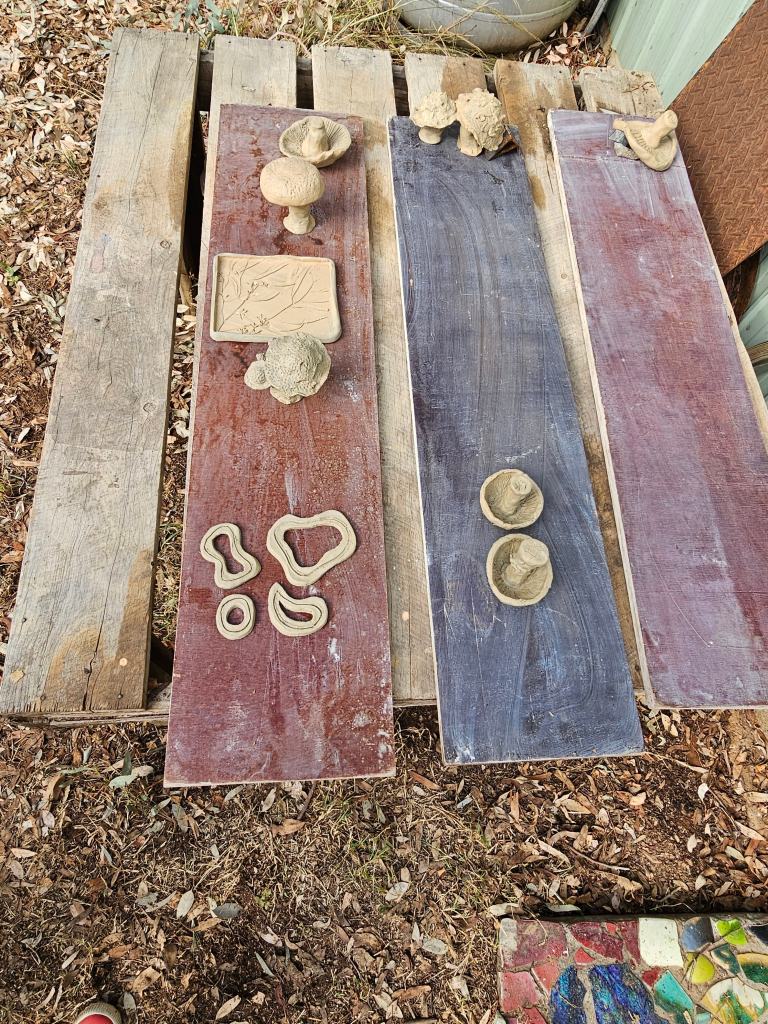

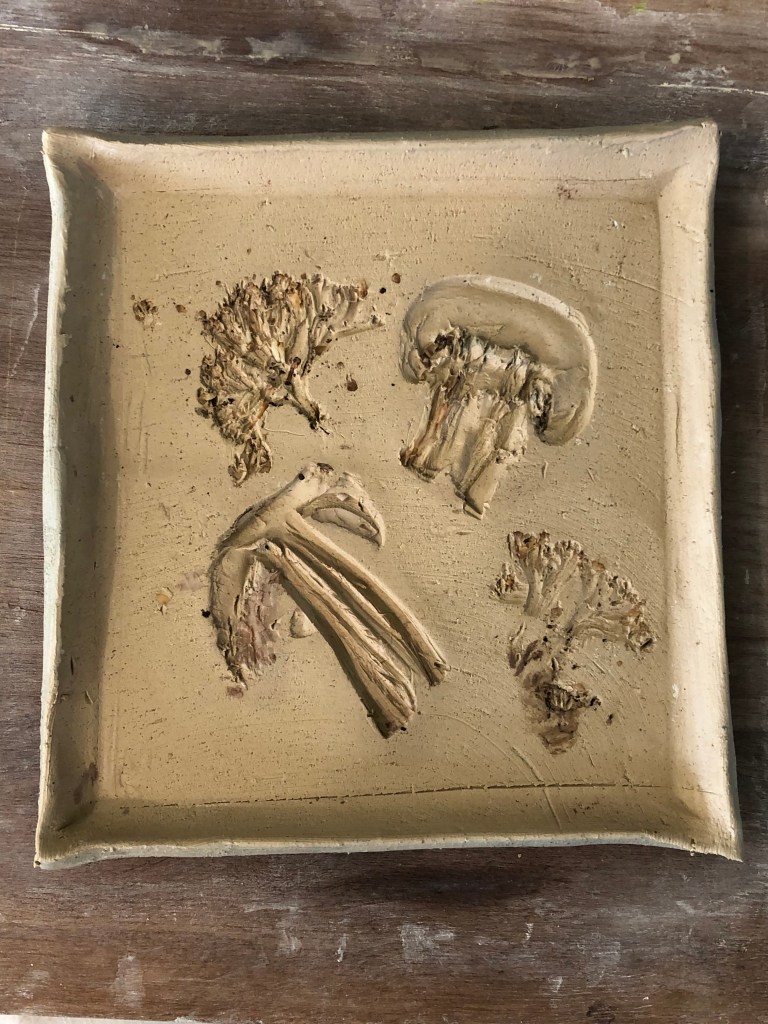



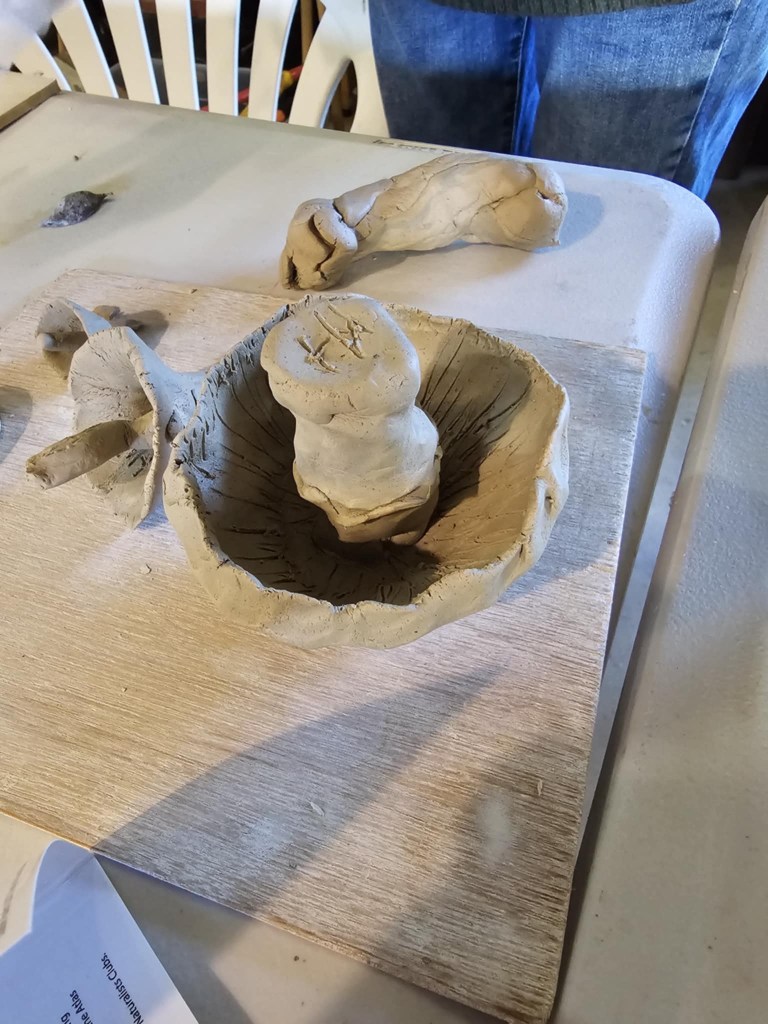

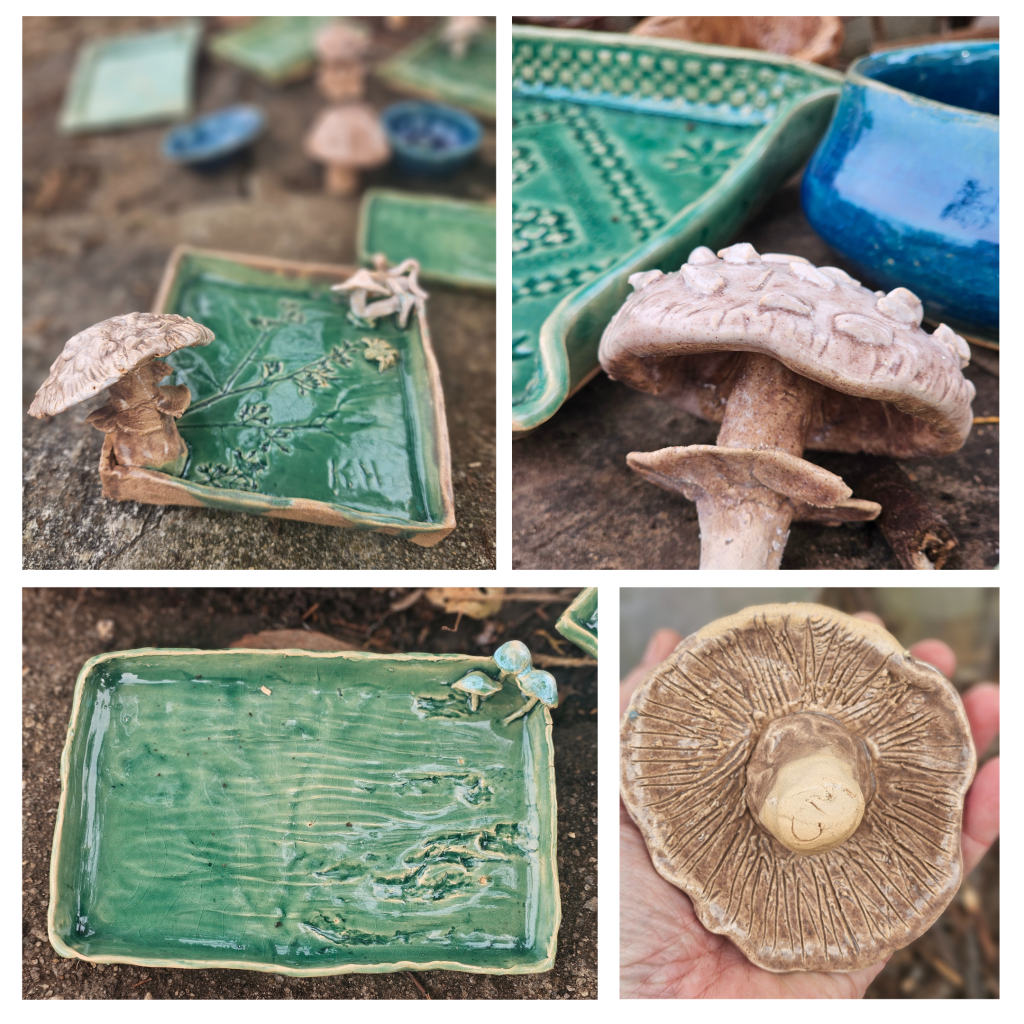


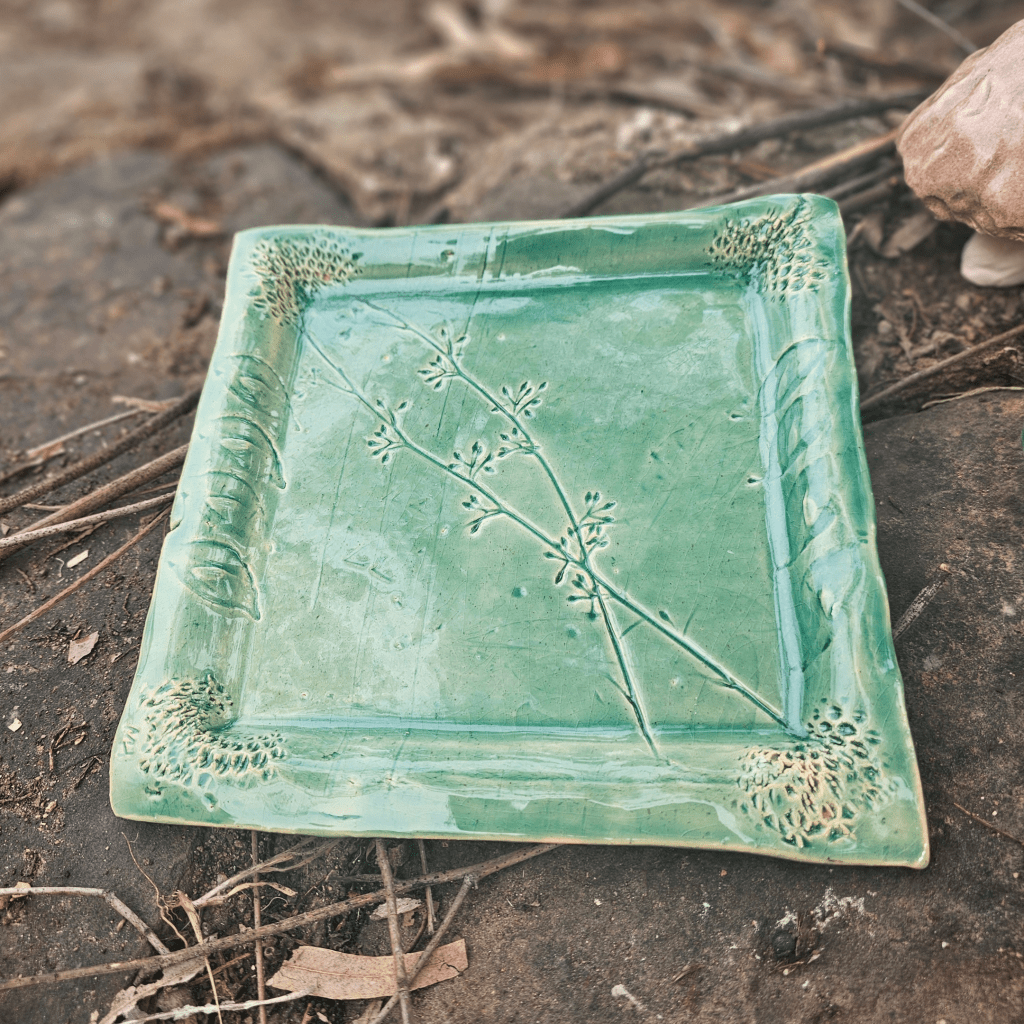
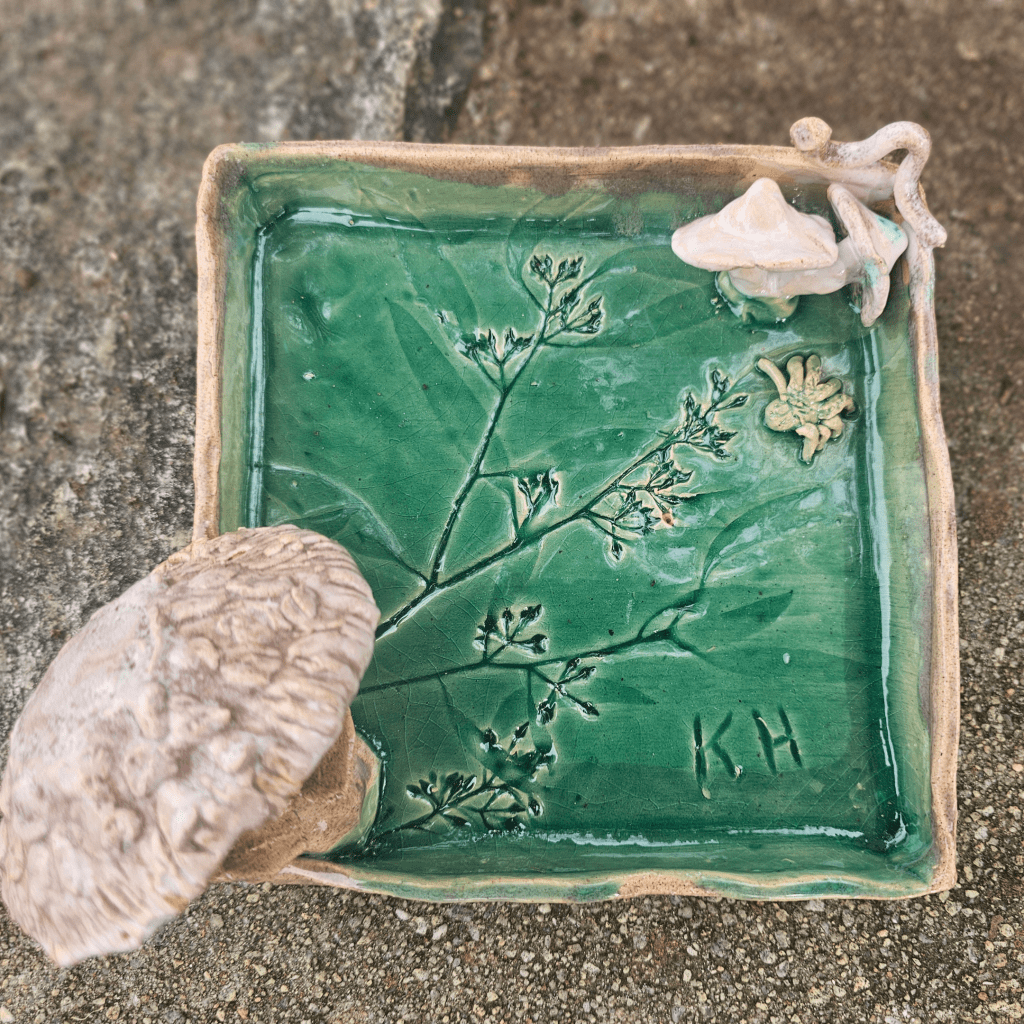
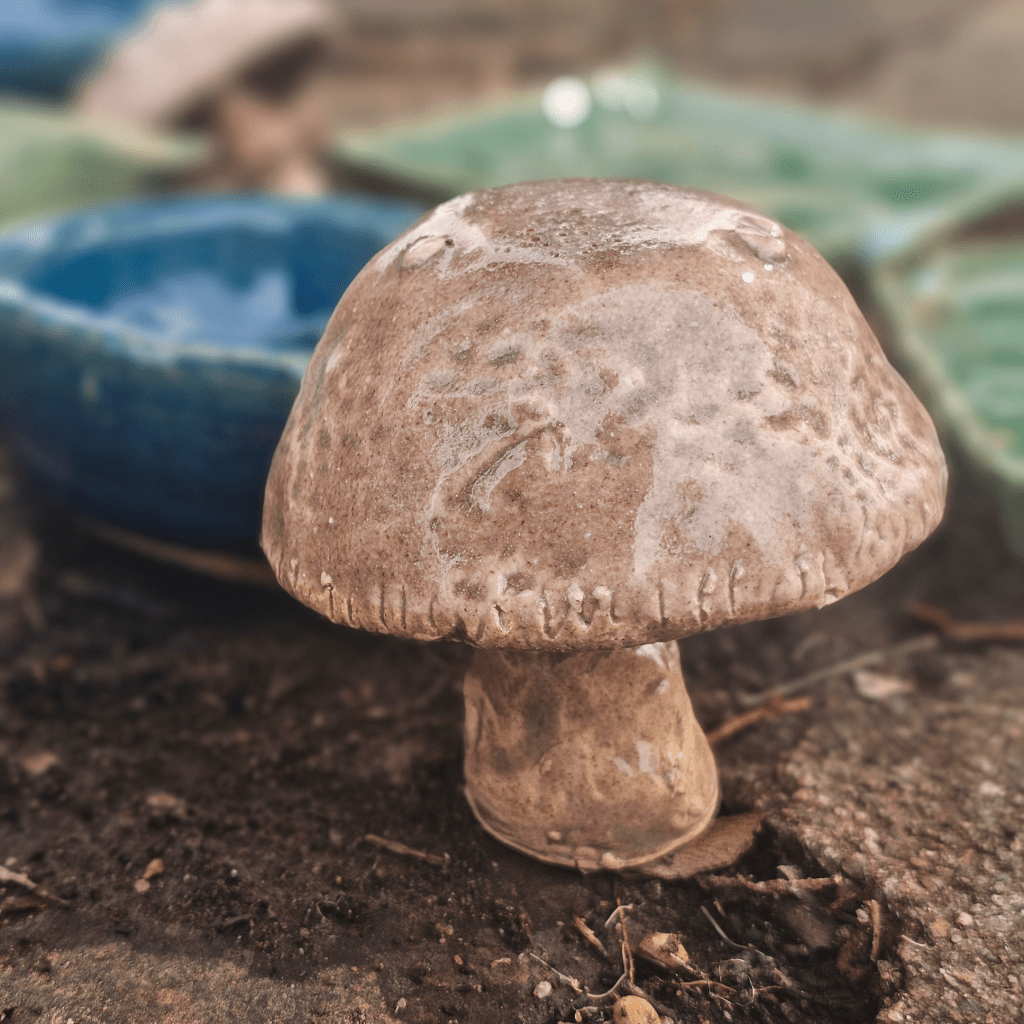
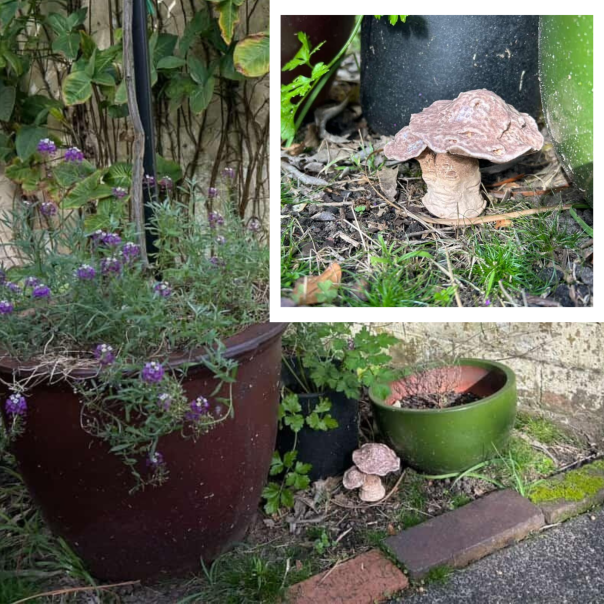
Here’s how some of our pottery turned out after firing and glazing.





Finally we had time to conduct three microbiometer soil sample tests. One on the driveway, one in long grass and one under a mature gum tree. All samples returned high total microbe counts which was to be expected given the recent rain, but it was the fungi:bacteria ratio that was most interesting sitting at approx. 0%, 25% and 55% respectively & neatly demonstrating how fungi thrives where soil is least disturbed.
Site 1: Grassy area near to pottery Studio.
Total Microbes: 1026 ug C/g, F:B ratio: 0.4:1. Fungi: 26% Bacteria: 74%

Site 2: Driveway. Highly trafficked, very little growing. Water sitting on surface.
Total Microbes: 930 ug C/g, F:B ratio: -0.1:1. Fungi: 0% Bacteria: 100%

Sample 3: At the root zone of a mature Eucalupt.
Total Microbes: 1087 ug C/g, F:B ratio: 1.3:1. Fungi: 57% Bacteria: 43%
Discussing the soil test results
I used a test kit called the Microbiometer to run these soil tests. The tests were repeated to rule out anomalies in the results and the average result is given.
The microbiometer works by analysing the colour emitted from a sample of the soil microbes. A small sample of top soil (0-10cm) is taken and sieved. 1cm2 of the sieved sample is then placed in a test tube filled with water and a salt solution. The salts precipitate out the microbes from the soil particulates after stirring and then sitting for 20 minutes. At the 20 minute mark, 6 drops of the suspension are placed on a test strip in the same way you’d have carried out a Covid test. After another minute, the strip is scanned by an app on your mobile phone and the above figures are given.
Soil microbiology changes quickly in response to environmental conditions. Most often there is a spike in activity when it is wet and warm. Wet and cold will also give higher numbers than dry weather but to a lesser degree as some microbes slow down their reproductive rates when it gets frosty (and who can blame them!). Bacteria are first to respond to weather events and as such, its common for much of the boost in microbes to be bacterial. Fungi populations tend to be slower to change and therefore are more stable to count. Both fungi and bacteria are typically more abundant when there is a variety of plants growing so we’d expect higher numbers in grassland than on the drive – and that’s what this test showed us. Fungi is more vulnerable to disturbance which is one explanation as to why no fungi was counted on the driveway. Like many trees, Eucalypts have Mycorrhizal relationships with fungi in their root zone so, all things being well, we’d expect a higher fungi ratio around a tree and that’s what we got.
Knowing a soils microbiological profile can be very helpful when trying to understand a sites soil health, it’s potential for growing plants and its vulnerabilities.
These results were typical of what I’d have expected given the location the samples were taken from. They also correlate well with samples taken from this site at this time last year.
Of course we had to continue the fungi theme over lunch with a delicious cream of mushroom soup served up by the team at the Breakout Brasserie in Cowra.




Many thanks to Catherine Bennett for suggesting and organising the pottery aspect of the day and for providing such a wonderful venue for our fungi adventure. And thanks to everyone who participated so enthusiastically & who air dropped their photo’s for us to share. They are all wonderful!


The program is being funded by the NSW Government
through a partnership between the Saving our Species program
and the Environmental Trust.


 Mid Lachlan Landcare