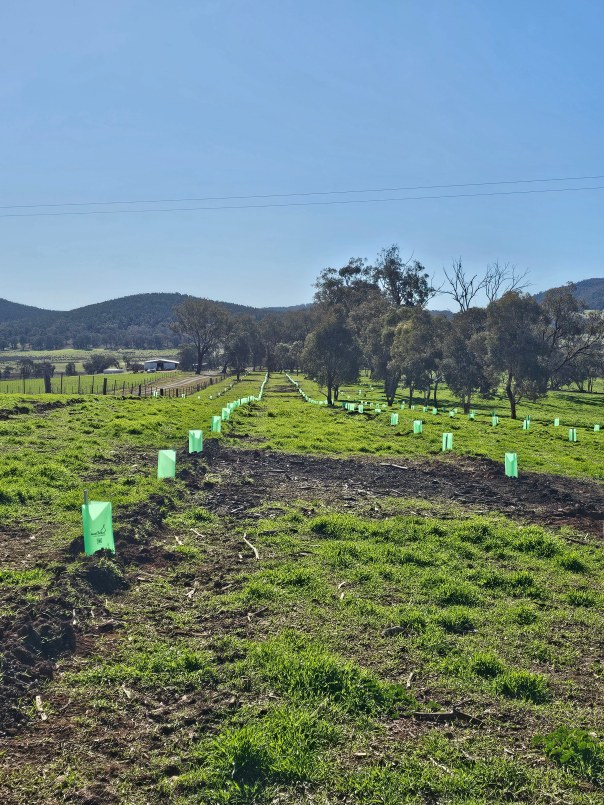
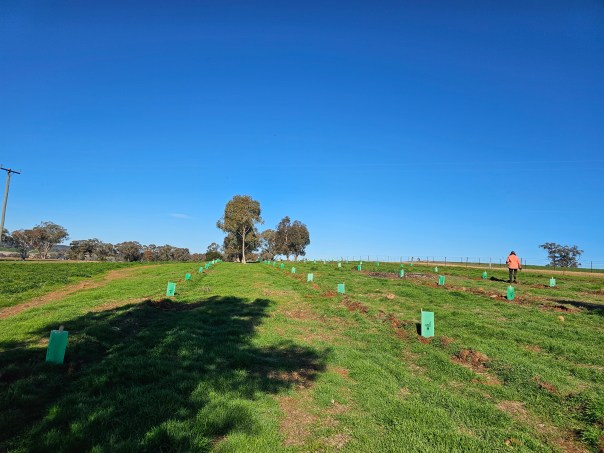
Our third planting day for the Glossy Black Cockatoo with Eugowra Catchment Landcare out at Mandagery was a great success. The light morning frost quickly thawed thanks to the gentle warmth of the winter sun, making for perfect planting conditions.
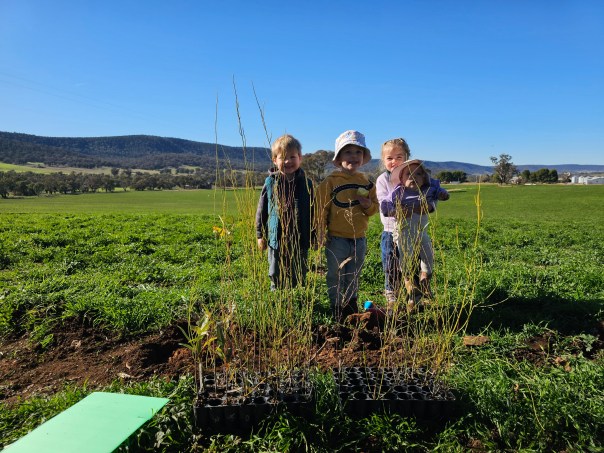
The day had a lovely family feel thanks to our willing little workers who impressed us with the care and attention they lavished on both the trees and creepy crawlies they found along the way. It was particularly heart melting to hear one of our younger helpers exclaim to their parent ‘I’m so proud of myself. I’ve made great choices all day!’. Just delightful.


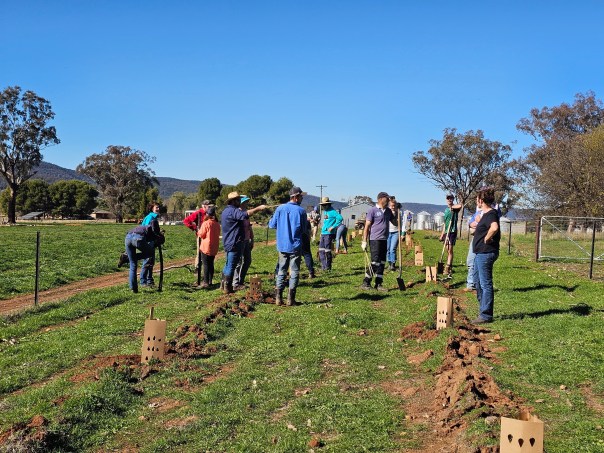


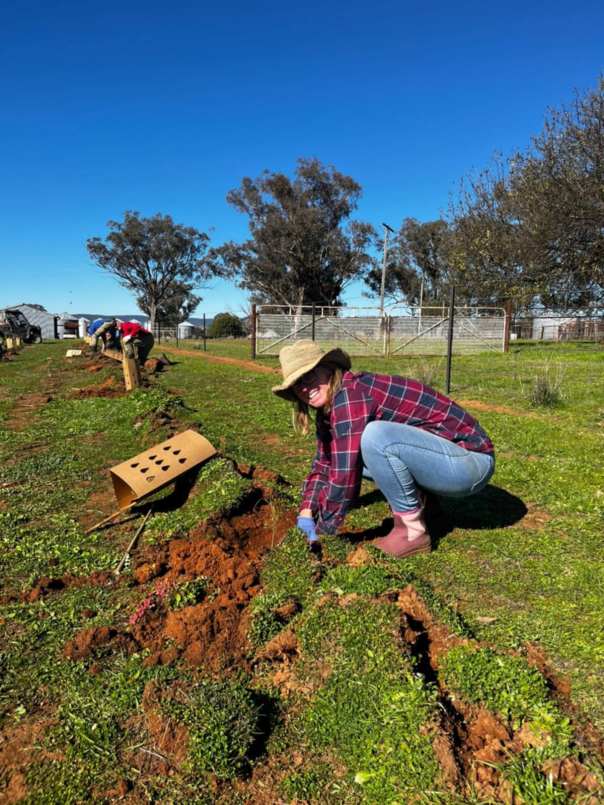
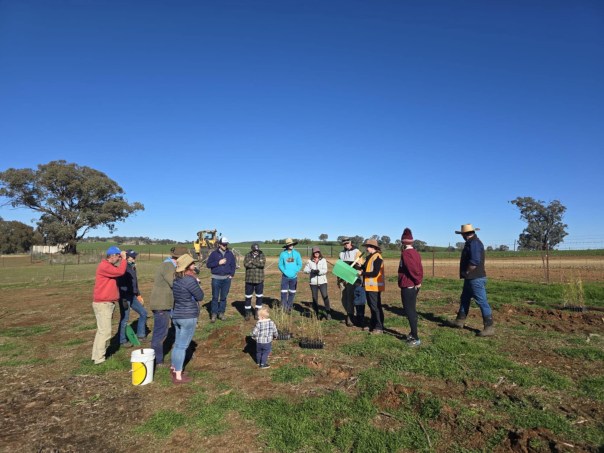
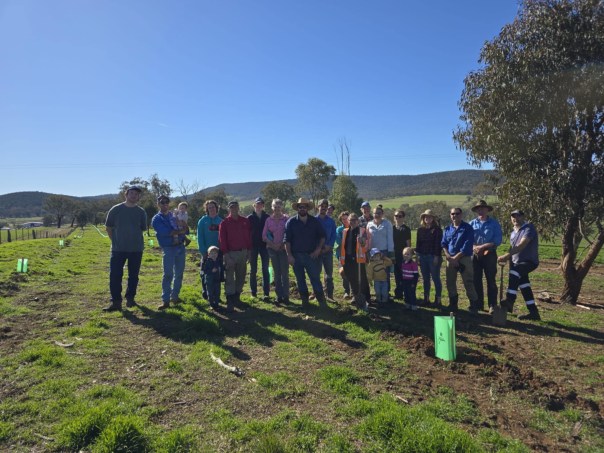

Soil samples were taking during the day and analyzed with our Microbiometer & a simple pH kit. The site had been prepared by ripping rows where the trees were to be placed, that plus recent rain helped make planting relatively easy going. Temperatures on the day were fresh with a light morning frost.
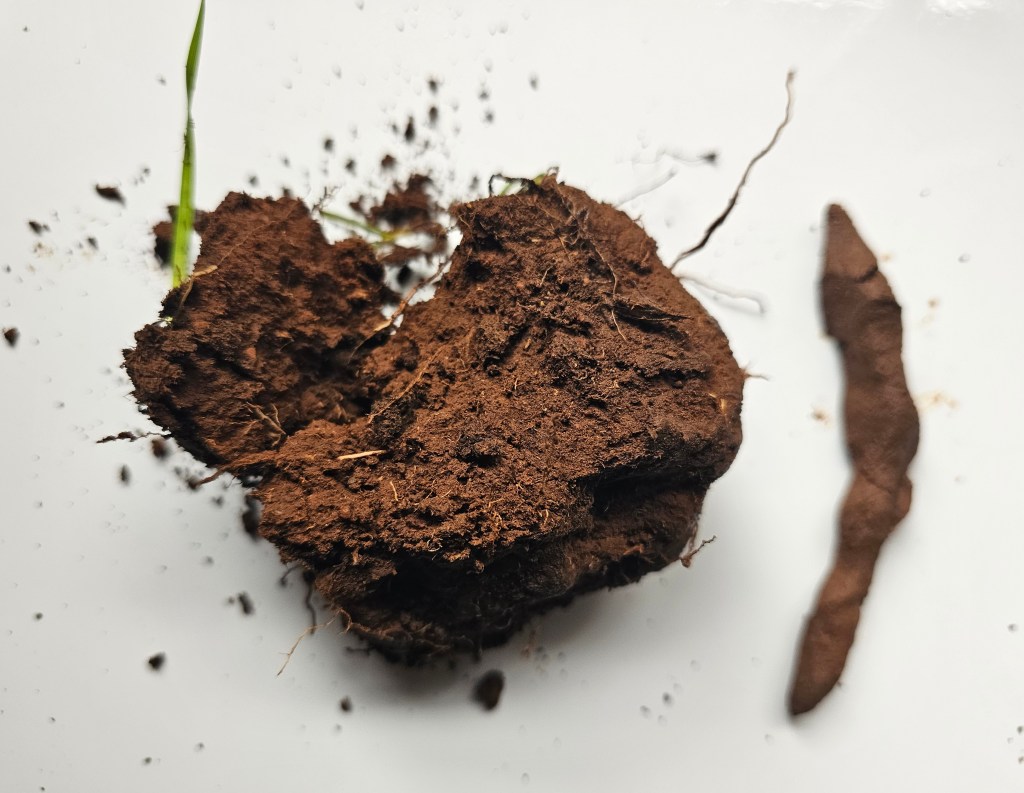
We deterimined soil texture using the ribboning technique which you can review here and found it to be a loamy sand. Loamy Sand and Sandy Loam soils are common to our area. They typically hold less water than heavier, clay-rich soils and as such are fast draining – a feature that many native species like. One issue with soils like this is nutrient availability – popping in some acacias can help boost that by pulling nitrogen out of the air and fixing it into the soil.
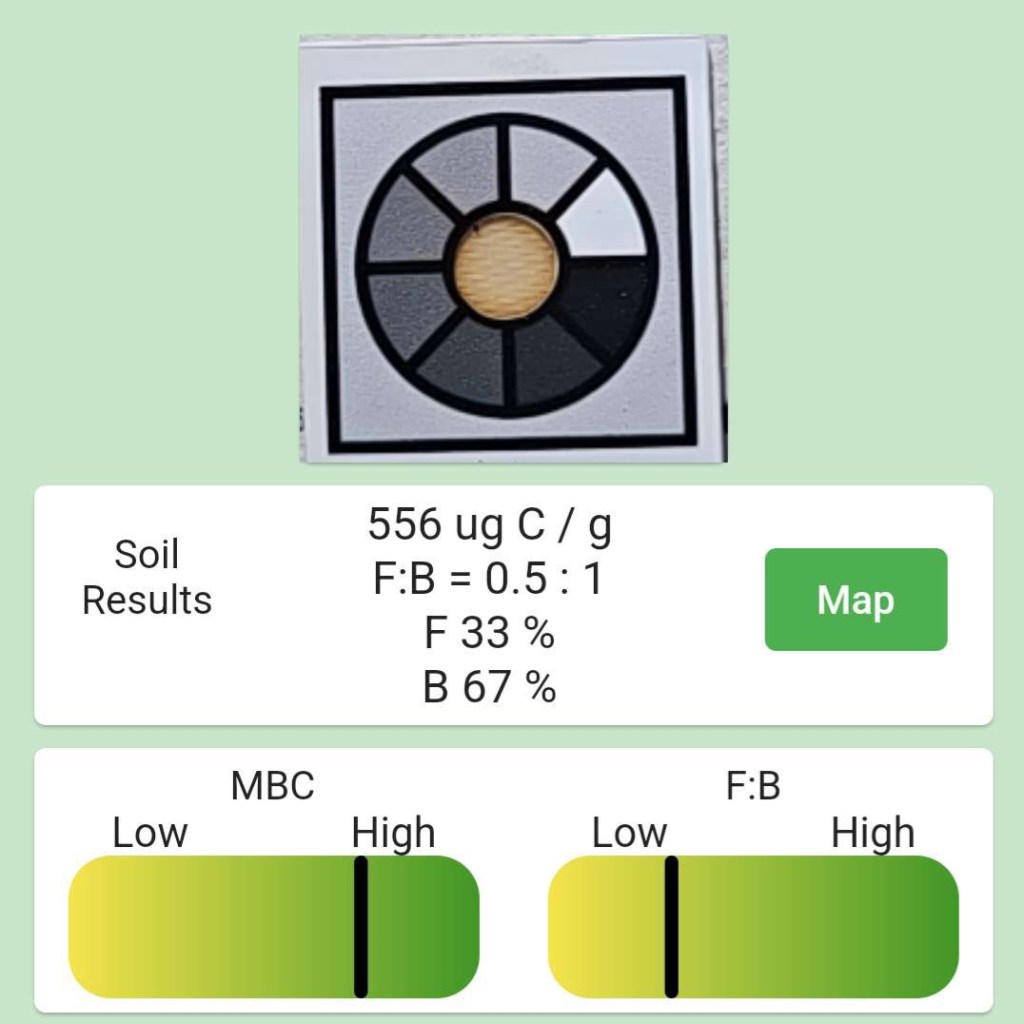
The are we were planted was mostly covered by short grass with not much species diversity at this stage and we recorded a total microbe count of approx 500 ug C/g with a Fungi: Bacteria ratio of 33:67. These results are pretty encouraging – it’s hard to give an exact benchmark for what constitutes a good vs bad site as factors such as the weather, ground cover, soil type, site geology and site management history all play a role but as a very general rule of thumb, a ratio like this is indicative of early succession grasslands. So we’re well above a ‘degraded’ or disturbed level where weeds dominate but are yet to fully reach the level of a complex, natural grassland with clover and other forbs.
The site pH sits around 5.5-6 which means its slightly acidic – a situation prefered by many Australian native plants so all good there!
While we planted we were serenaded by the sweet sounds of a butcher bird before being joined by a boystrous group of Superb Parrot! We captured some of their chatter & Shenanigans to share with you all. I’d like to think they’d flown across to encourage us on our planting & to sing up the soil microbes, water and sun so that these trees will grow tall and strong. Whatever they were thinking we were thrilled to have them grace us with their company as we worked this beautiful patch of Wiradjuri land for them.
Many hands made light work and in what seemed like no time at all we were back in the shearing shed for our sausage sizzle. Yum!


We ended up planting over 300 trees which was a great effort and one which we hope our little helpers will continue to care for as they and the trees grow into something maginficent.

This project is possible thanks to funding from Bupa Australia & Landcare Australia. It’s part of the planting of 80,000 trees, shrubs & grasses across the country, linking environmental health with community well- being.


 Mid Lachlan Landcare