Wendy Bowman is the chair of Mid Lachlan Landcare and a Beef producer from Canowindra. Here’s what she presented in her 5 minute ‘Lightning Talk’ at last week’s Central Tablelands Landcare Muster.
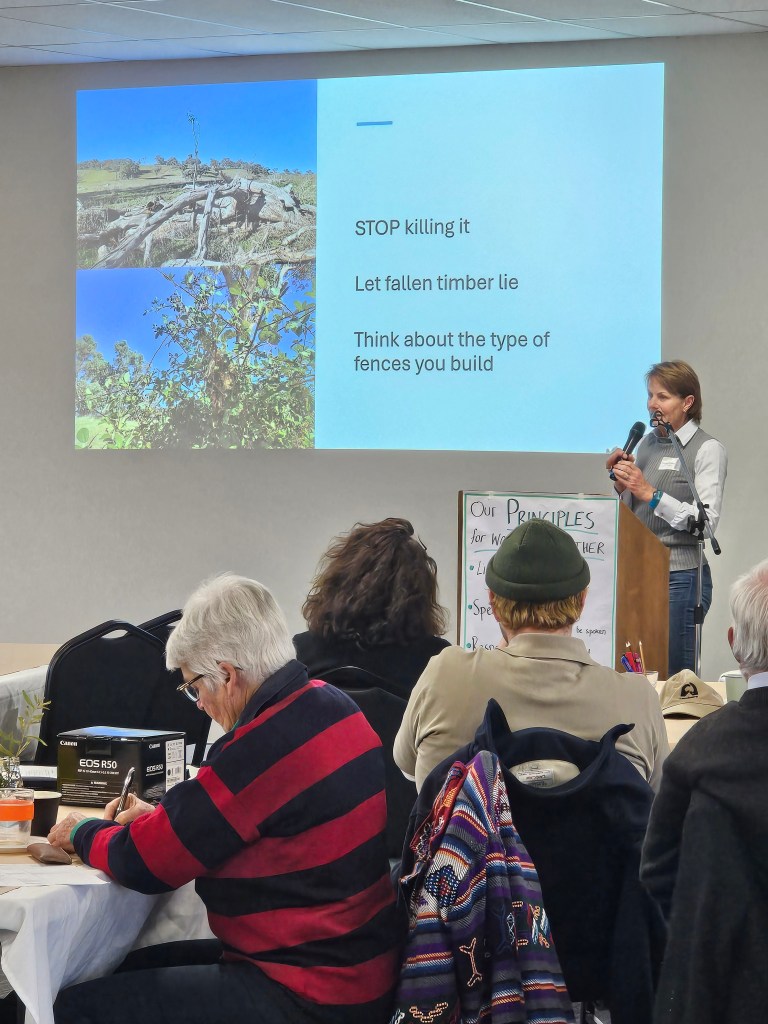
Use farm mapping to identify and highlight your quick win and biggest threat areas are.
- STOP killing it.
- Let fallen timber lie.
- Think about the type of fences you build.
- Protect what you have.
- Plant (or import) what you don ’t have.
- Connect it.
Make increasing farm diversity part of your overall farm management plan.
- Think about the type of grazing management you use.
- Everything needs water.
- If you manage livestock, sometimes you must manage dead stock.
- Take the time to look, listen, and learn.
Examples of on-farm biodiversity
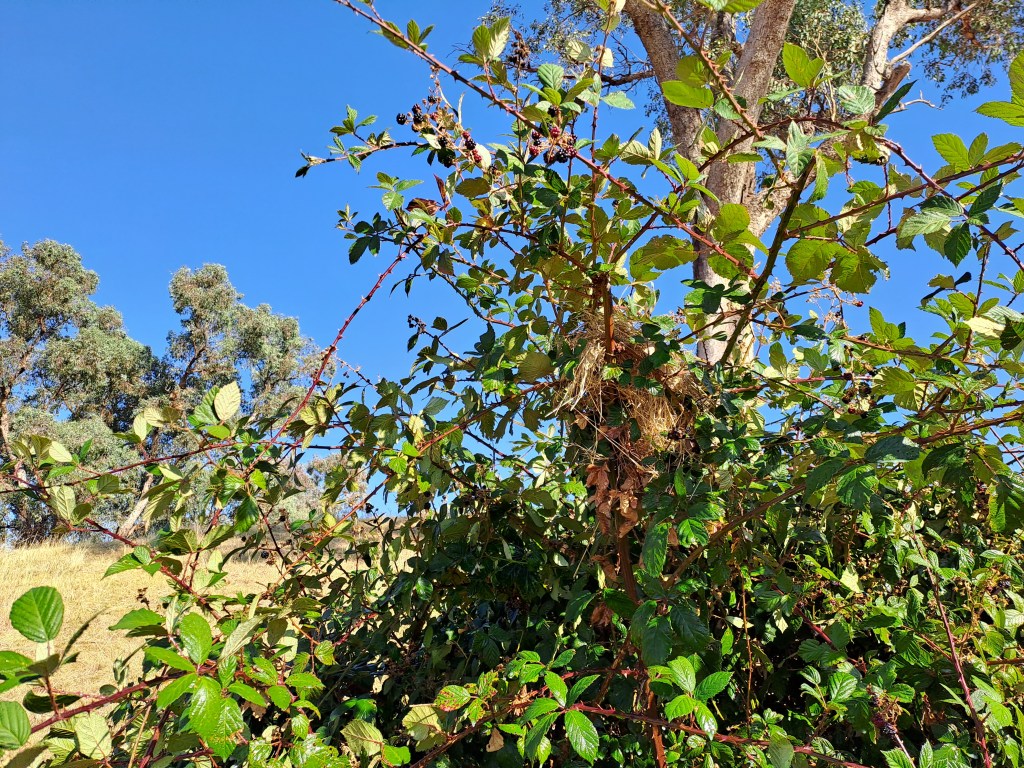
Bird’s nest in a black berry bush
Woody weeds such as blackberry provide small birds with an ideal habitat for foraging and nesting.
Replace woody weeds with woody native shrubs such as prickly acacias, local varieties of hop bush, prickly heath species or indigo bush to maintain bird habitat and take advantage of good soil nutrition. Small birds help keep insect numbers down while adding to the overall fertility & beauty of the landscape.
Young Tree Growing Through Fallen Timber
Fallen timber makes a great nursery for young saplings as it provides protection from both harsh weather conditions and predators. Saplings also avoid getting trampled and can take advantage of the support the fallen timber offers as they grow.

Protecting self-seeded trees
Reduced grazing pressure creates opportunities for self seeding of Eucalypts and other species. This natural succession can be protected by tree guards which, if the land is to be re-grazed, need to be fairly sturdy to withstand interest from inquisitive stock.

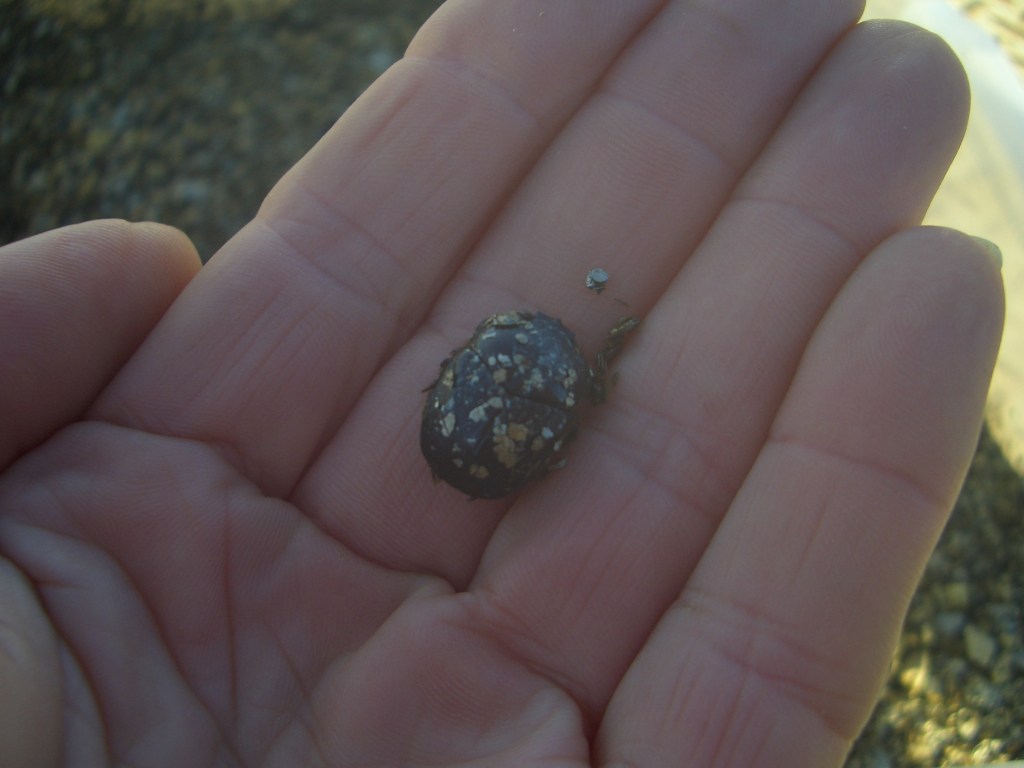
Dung beetles
Dung beetles are all part of the natural nutrient cycling process but we can’t take their presence for granted. Beetle numbers will fall when the environment becomes too challenging for them such as during floods or under some chemical use regimens.

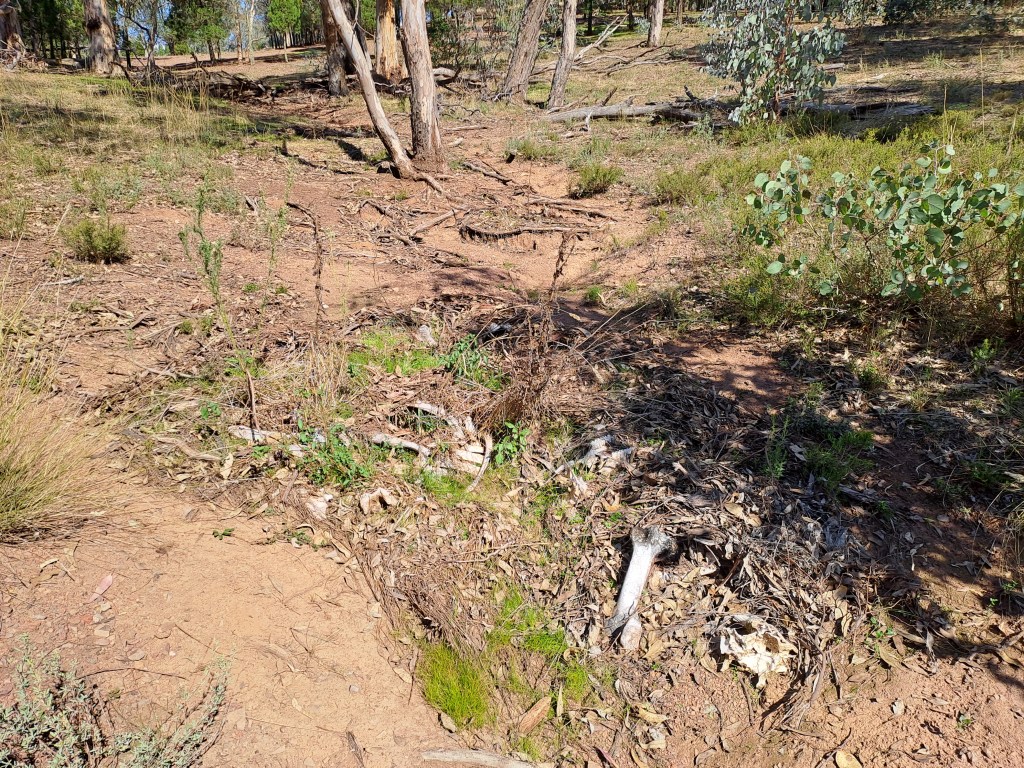
When live stock expire
If you are in the business of live stock, you’ll also have to manage dead stock. Dead stock will return nutrients to the soil as they decompose. Strategically placed carcuses can also be used to slow water flow across a landscape and in doing so, reduce erosion threats. Dead stock can be left to break down in their own time or the process can be expedited by creating a compost pile around the body and by the use of microbiological digesters such as those being trialled with the Carp from our recent Carp Muster.
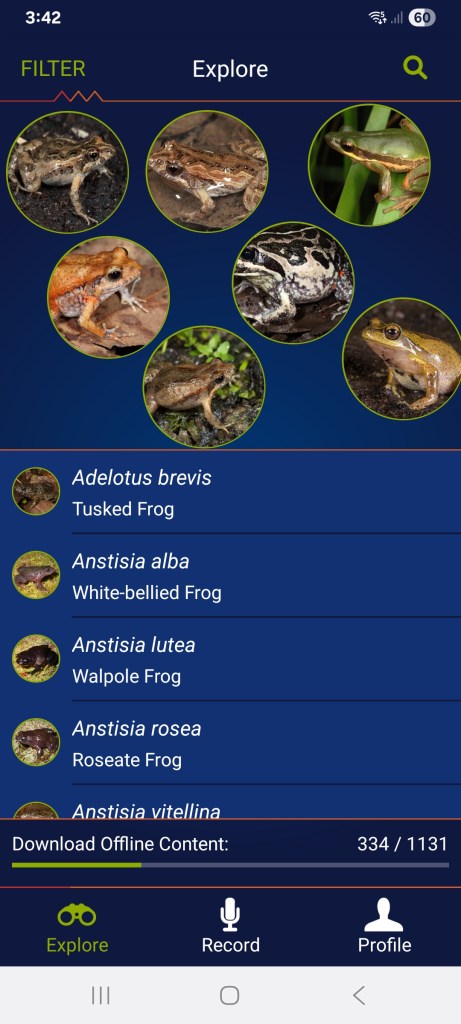
Cirtizen Science: Frog ID.
Familiarising yourself with all the different apps and online tools available to help identify the flora, fauna and fungi you encounter on your farm rounds. The knowledge gleaned from these apps can help inform management decisions by bringing a deeper level of understanding about the micro and macro habitats that exist.


 Mid Lachlan Landcare