I turned my Laptop on and ‘Zoomed’ into the last Carp Muster planning meeting a few weeks before the big event only to find that I’d (and my that I mean us at Mid Lachlan Landcare) had been deligated the job of managing the dead Carp. What a great opportunity!

Having never participated in such an event before we were a little unsure of what to expect – how many Carp do you reckon we’ll get? Approximately how much will that weigh? How likely is it that we’ll get any at all?
As it turned out we got enough to make what I’m about to discuss happen but not too much that we were overwhelmed. Nice one!
From Feral to Fertiliser
Back in June this year, Watershed Landcare hosted a fantastic workshop with Gerry Gillespie doccumenting how to Transform Feral Animals into a Resource: Composting for Healthy Land. I’d wanted to attend but couldn’t quite stretch myself to swinging past Mudgee that day so instead, I caught up with project leader Cheryl Nielsen over the phone for a one-on-one briefing.
Cheryl was immensely helpful and has remained a great support, sharing resources and assuring us that the process would be simple, scalaeable and (my biggest fear) not smelly! So with that we started to prepare what I’m now lovingly referring to as our Carp digester serum. Yum!
So this is the recipe we settled on : a brew made from rice water, milk and molasses.
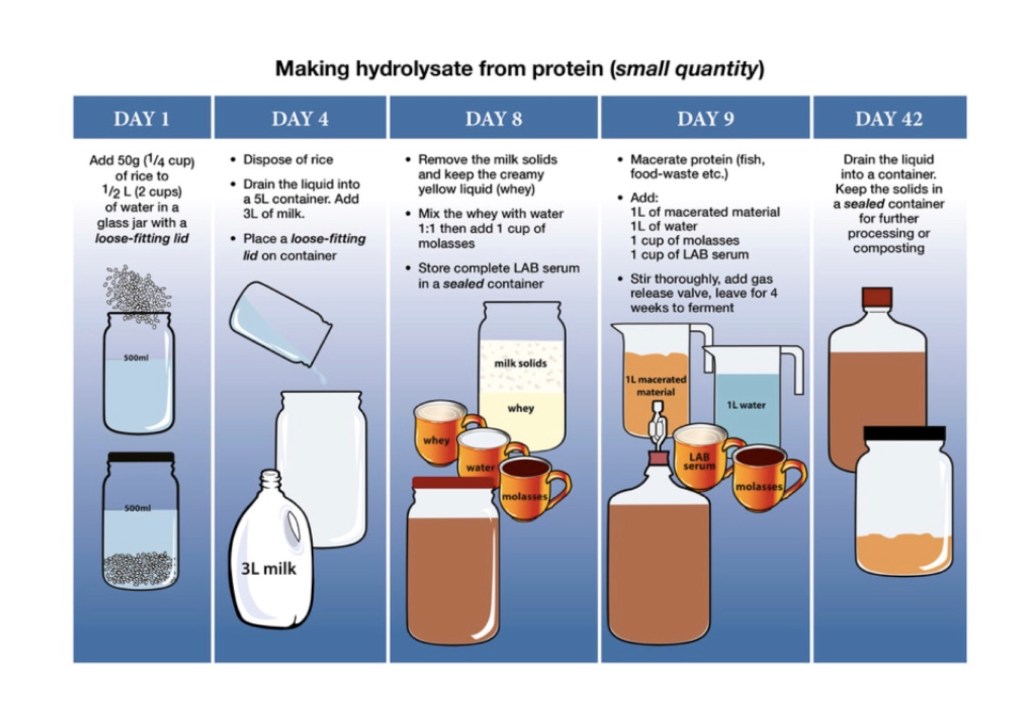
Tracee & I started a small batch each at the same time so we could compare notes on how things were progressing:
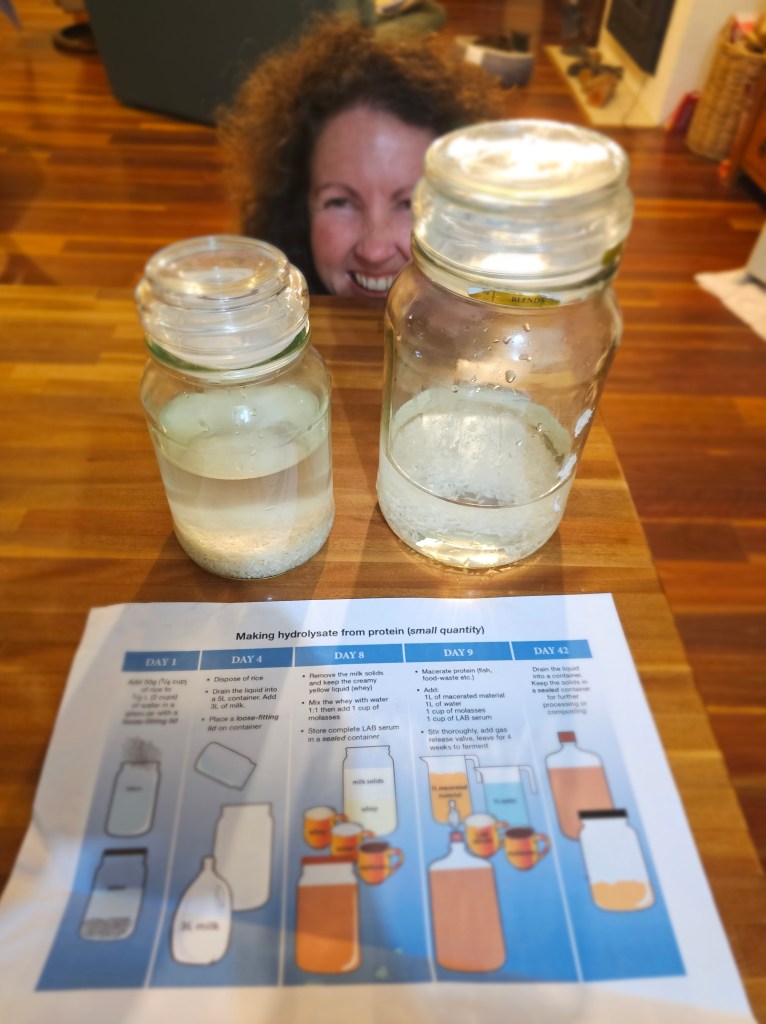
After about a week, I started on a second, larger batch to ensure we had enough should Carpmageddon hit on muster day.
You’ll see from the notes above that on day 8 you are supposed to separate the milk solids from the Whey. Well, it turns out I didn’t do that so well and as such, my bucket ended up with a frothy fatty head on it which, as it turns out, isn’t such a big deal after all. The brew will still deliver!
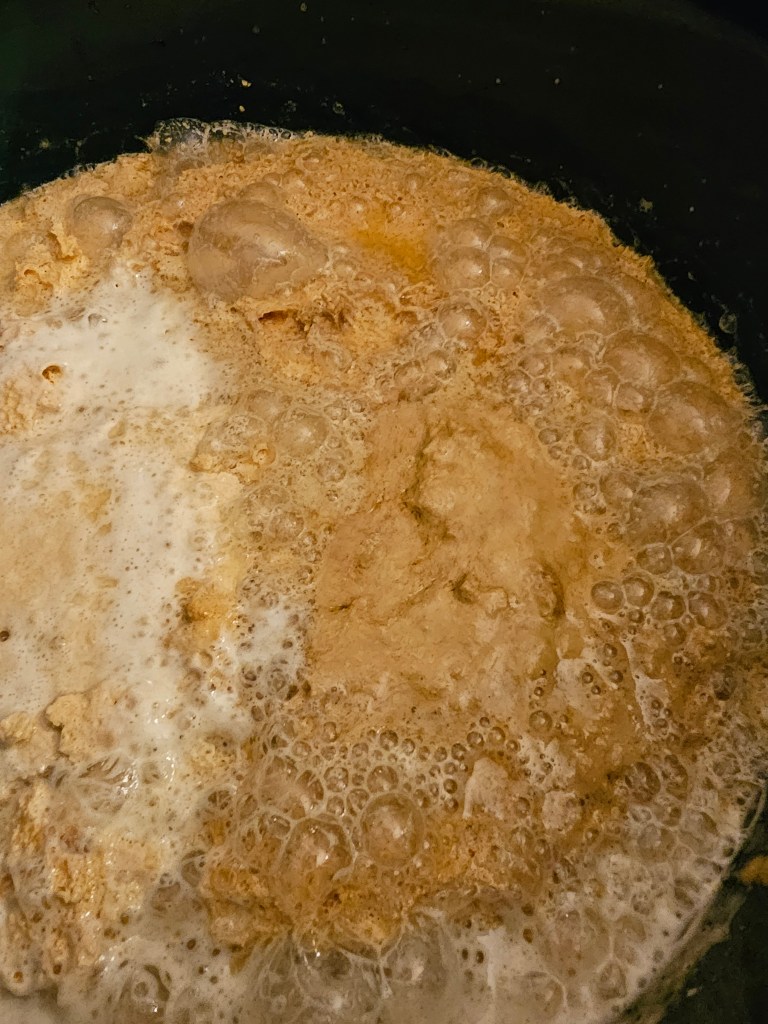
This is what the brew is supposed to look like just before the protein goes in. Well, this minus those little white flecks- they are left over bits of fat.
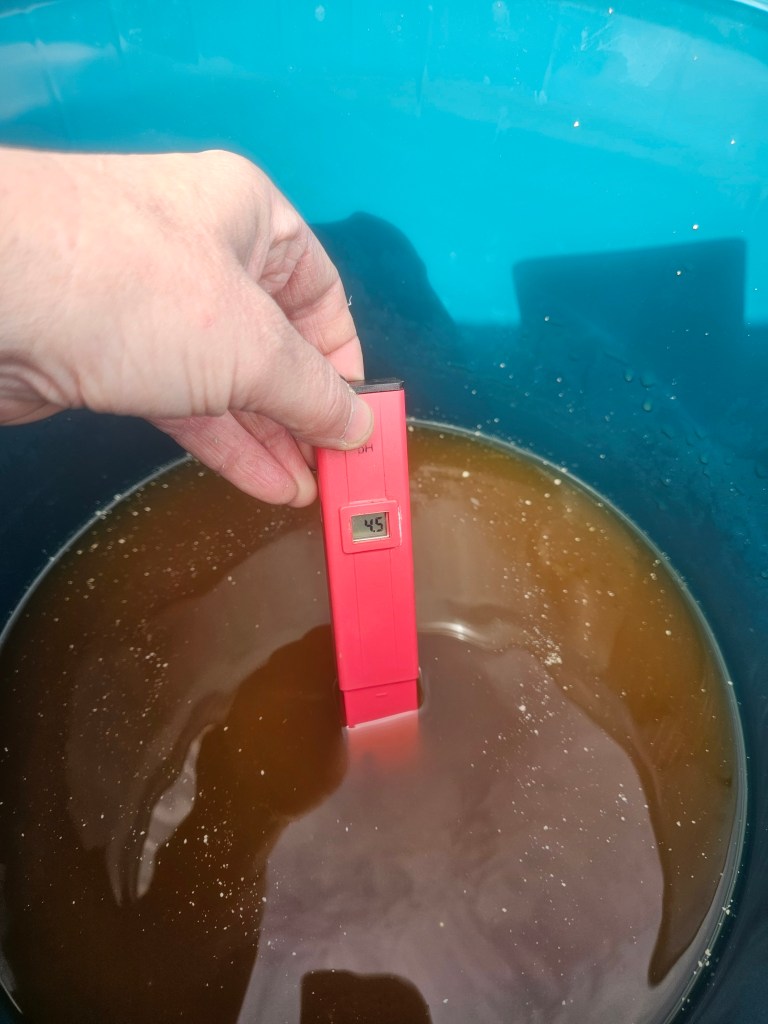
Our mixture was sitting at pH 4.5 which is spot on for the type of microbes we were ‘cooking’.
Our protein source, Carp, was popped into a sealable food-grade blue drum where it would ferment and break down over the coming weeks – the recipe says leave it 4 weeks but as with all things microbe, the exact time will very much depend on the exact ratios you’ve got in the mix plus the temperature conditions. This being winter – and a fairly cold one at that – it may take a little longer.
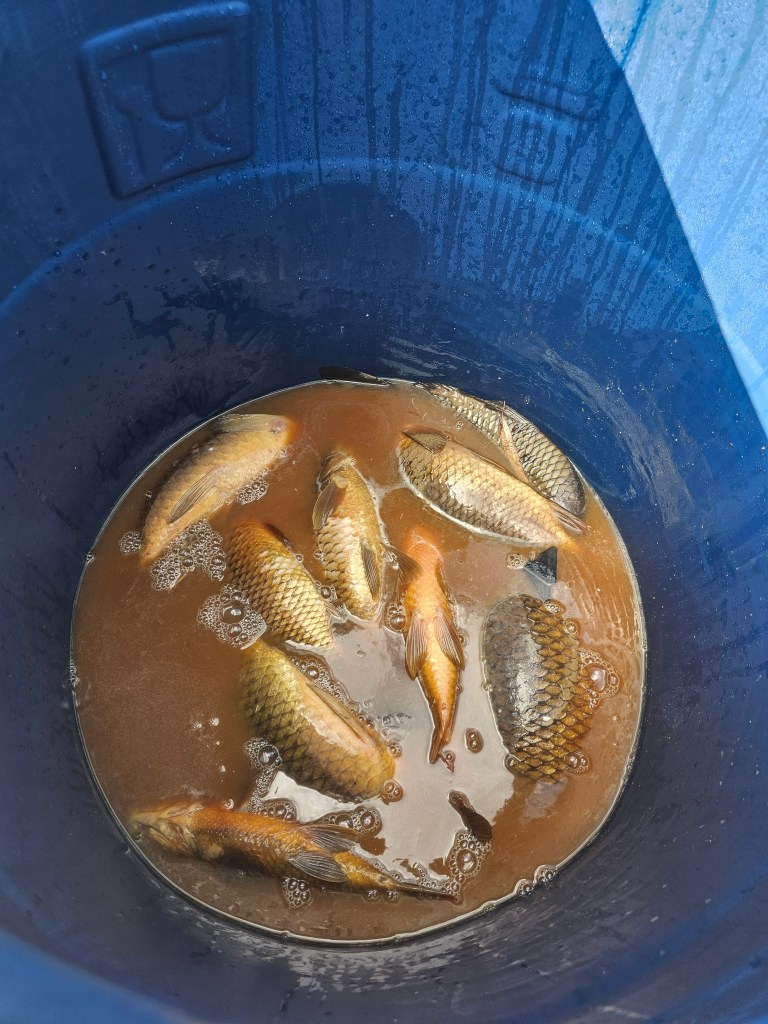
The other thing to note from the picture above is that we didn’t macerate the protein for a start as per the recipe instructions. The reason for this is me wanting to experiment with whole or chunky pieces of protein first, thinking that if this were to be used with say feral pigs or deer, it would be a bit of an ask and potentially dangerous (more so with the pigs) to have to mash all that up in the field. Let’s start from simple and add extra steps if needed…
So it’s coming up to three weeks now and the fish is still looking pretty together but has softened somewhat, making maceration a little easier. The smell coming off this barrel of carp is actually quite pleasant thanks to the microbes and molasses. It’s definitely not what I was expecting. We’ll check it again in a week or so and keep on like that until the fish have broken right down. After that, we plan to sieve out any solids then take samples of the liquid for chemical analysis (N, P, K and heavy metals probably) before spraying it out on a patch in one of the paddocks.
So what have we made?
According to those in the know, we’ve created a lactobacillus-dominant hydrolysate. This type of bacteria possess enzymes capable of breaking down proteins into smaller peptides and eventually into free amino acids. So in a way, we’re using microbes like a pair of biological scissors to chop up and break down this big chunk of protein! How awesome.
I’ve been personally fascinated by soil microbiology since starting work at Landcare and am especially interested in how solutions such as this can be used on farms & small blocks where feral animals may be a problem. The slighly gruesome aspect of all this is probably why I like it so much – it’s really pushing the limits of my curiosity and sensory tolerance while aligning with my conservation values.
Stay tuned for more adventures in microbe-land and an update on how our brew turned out.


 Mid Lachlan Landcare
Pingback: Muster Moments – Reflecting on the Canowindra Carp Muster | Mid Lachlan Landcare
Pingback: Carp Compost Tea Results Are In | Mid Lachlan Landcare
Pingback: Carp Compost Tea Results Are In – LOCCAL