Back in May we set out to plant 1000 trees and understory species on private land in an area between Conimbla and Nangar National Parks, the idea being that eventually this landscape will re-connect, strengthening both local and regional connectivity across the Western Woodland Way. By the end of July we’d completed our mission and everything was looking great! Our final plants-in-the-ground tally being substantially increased thanks to many of our project participants supplying specimens from Greening Australia, local nurseries and even stock they’d grown themselves.
The furure for our Glossy Black Cockatoos is looking brighter!
Planting Site 4: Mt Belubula, Canowindra.
This planting complements an earlier direct seeding project of this landway and will provide cover for birds as they move between the higher, rugged, she-oak forests of Mt Belubula and down to the Nyrang creek below. This was definitely our coldest planting day and the one most impacted by seasonal flu with many of our Blue Mountains bird lovers having to call off their trip out to join us. That said, we were lucky enough to be joined by Katoomba locals plus another visiting volunteer who’d joined us from Parkes for a morning of planting followed by an afternoon spent up amongst a forest filled with mature She-Oaks, Wattles & Gums – a known Glossy Black Cockatoo haunt!
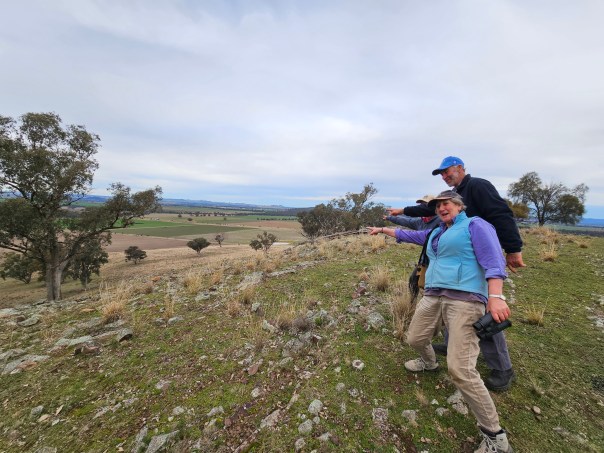
While we didn’t see any glossies, it was great to get a birds-eye view of the area we’d just planted and see how these new focus areas would grow and start connecting up the patches of remnant woodland. Beautiful!

Soil Science at Mt Belubula Site
As usual for this project, soil samples were taken and analysed for their pH and microbiology. We also noted the underlying geology of the area, outdoor temperature during planting and weather leading up to our day. For this site two samples were taken, one at the highest point of the strip we planted and the other at a low point. This laneway sits between two paddocks on each side, the top two being different soil conditions to the bottom – the bottom showing evidence of being generally wetter.
pH was around 6-6.4 for the bottom of the hill sample and 5.9-6 for the sample took from the top.
Microbe Count and characterisation using a Microbiometer.
Top of planting total microbes 1030 ug C/g of which around 63% was fungi, 37% bacteria.
The high microbe numbers are very encouraging showing lots of potential for the soil microbes to support the growth of these trees & shrubs. Fungi dominance is generally a good thing showing the soil is less disturbed that typical agricultural soils so that’s also good. It’s likely the fungi numbers were a bit higher than they normally would be due to the composting effect of the cut grass and the low level of grass growth typical of this time of the year. But that’s all good.
Bottom of planting total microbes 1160 ug C/g of which around 63% is fungi, 37% bacteria so I’d not say these are significantly different to the top of the slope.
Before planting the area was slashed a little and the slashed grasses used as mulch around the planting. The day hovered around 8C and the site had seen recent rainfall. While there were some shrubs growing in the area, these had mostly taken in the bottom half of the planting rather than the top.
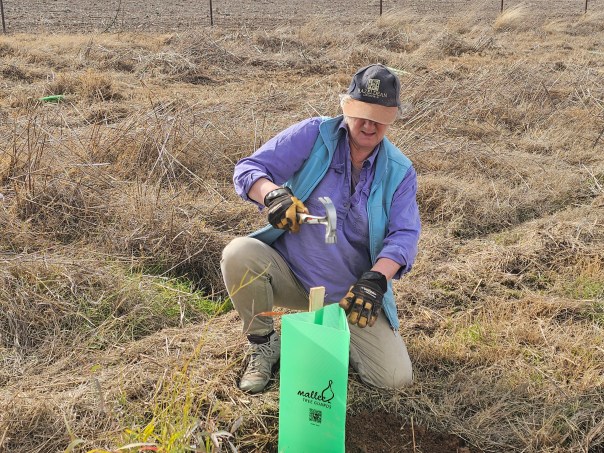
Bron hammering in the stakes 
Ruth getting her hands dirty 
Tracee standing out in her pink shirt 
The Mt Belubula Team 
Lunch at the shearing shed 
Mt Belubula planting 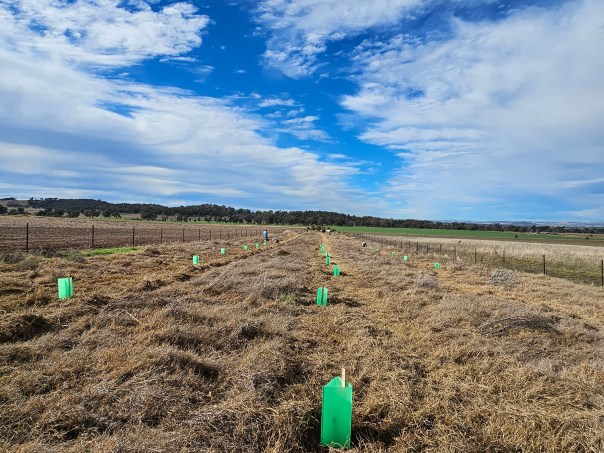
Our tree rows are in! 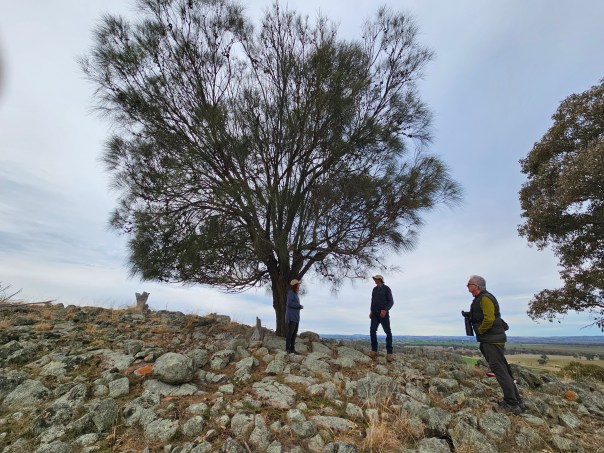
Checking out the mature She Oaks on the hill overlooking our planting Bird walk crew 
A view from the She Oak 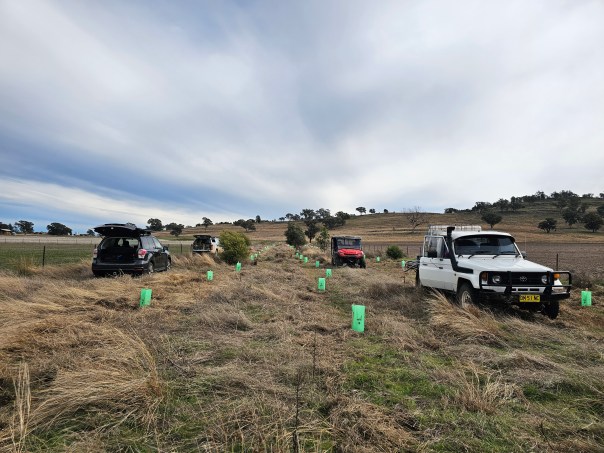
Work site 
A little bush cockroach 
There were plenty of worms at this planting site 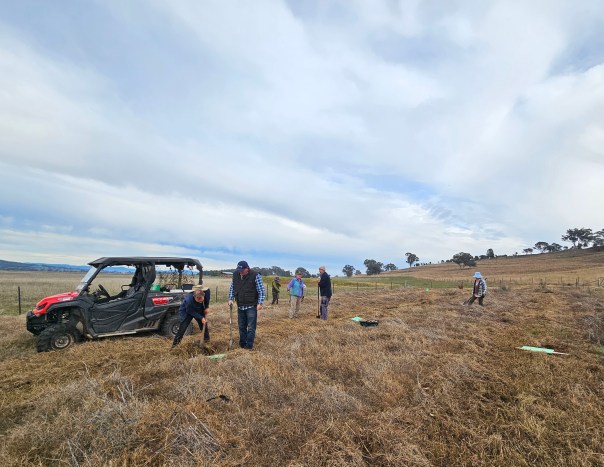
Working hard Look, that’s where we were planting!
Planting site 5: Nyrang Creek riparian area, Canowindra.
Our last community planting events for this project was carried out at the property neighbouring site 4 along the upper banks of Nyrang creek. Our target species – Allocasuarina Vertillilata (drooping she oak) prefers it ‘feet’ to stay on the dry site, so it was important for us to be more strategic with our placement of them. We ended up scattering the She Oaks at the top of the gully, a little away from where the creek usually spills when it’s flowing fast. Along the bottom we planted our other understory species which included a large range of locally growing Acacia (Wattles) plus some Kunzea, Kurrajong and Melaleuca. This planting also included Eucalyptus microcarpa and melliodora to help create a strong and diverse habitat for years to come.
Soil Microbiology
Two soil samples were taken at this site, one at the lower end of the planting, where the creek would typically reach during large flows and one from on the higher areas, away from the main water chanel.
Sample 1: Low in landscape.
Total soil microbes here averaged 242 ug C/ g which is a little on the low side, likely due to previous erosion and increased by the seasonal growing conditions. Fungi levels were also very low at an average of only 10% or 1:10 ratio. Ideally we like our fungi levels to be a minimum of 25% in a conservation area as that shows the soil is recovering its functionality and experiencing less disturbance either from human or natural causes.
Sample 2: Higher on the banks & away from the frequent flood zone
Total soil microbes here averaged 600 ug C/g – that’s significantly higher than the numbers we saw just meters below, highlighting how frequent disturbance impacts microbiology.
Fungi levels in this sample came in at an average of 27% or approx 0.3:1 ratio which is what I’d be expecting for an early recovery site like this. What I mean by that is this site has been fenced off from stock for a while giving the slower growing fungi a chance to settle in and start spreading.
pH for both sites sat at around 6.5
This being the first remediation at this, a clear erosion site, the lower numbers serve more as a starting point than destination. The range of acacias we’ve planted here should definitely help microbial activity pick up. As a pioneer plant that can fix its own nitrogen, the lower microbial levels shouldn’t be too much of a bother. This site could also be supplemented by planting a few native grasses and forbes such as sedges & lomandra’s to help protect the site further and slow down any excess of water that flows through before the understory has had a chance to grow a bit. This would also serve to boost habitat for smaller birds such as shrub wrens and thornbills. That said, there’s plenty of grasses and sedges about plus some lovely Cotton Bush (Maireana aphylla) amongst the mix of young, mature and older existing trees. Overall, a beautiful spot and one we’re sure will become a favourite drinking spot for the Glossy black cockatoos!
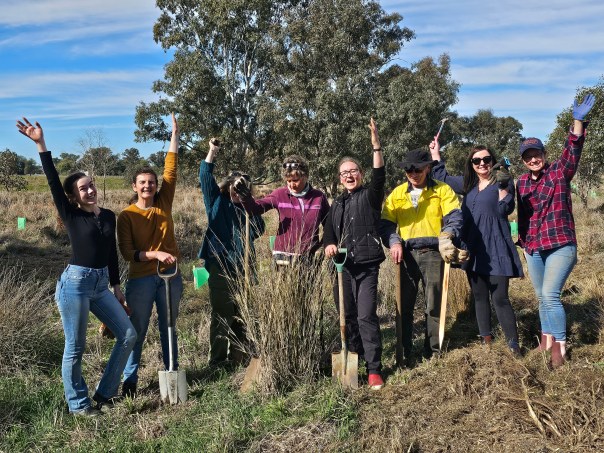
Hooray, we did it! 
Enjoying a light lunch of home-made soup together 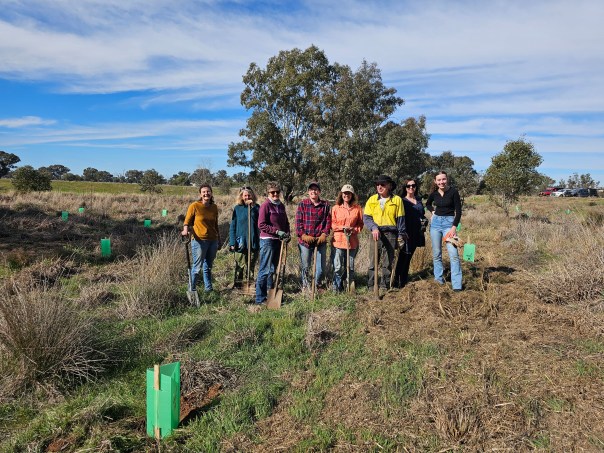
Admiring our work 
Sally planting some undersstory acacias 
Our planting area 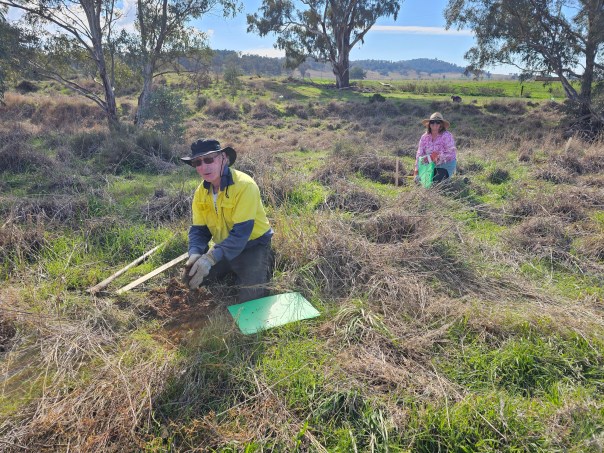
Working away in the sunshine 
Our lead digger! 
Plant delivery 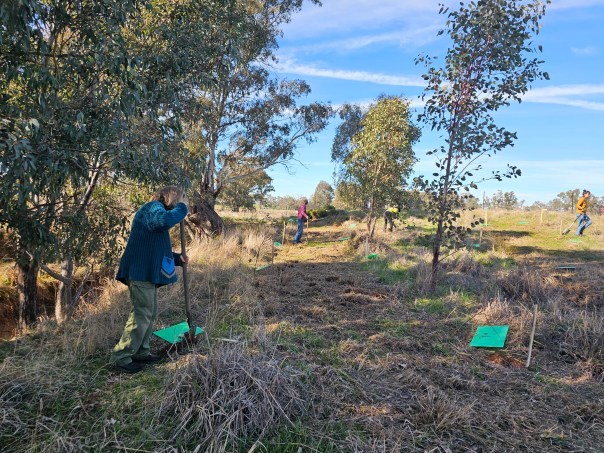
Cutting through the long graasses to the soil beneath 
Creating habitat 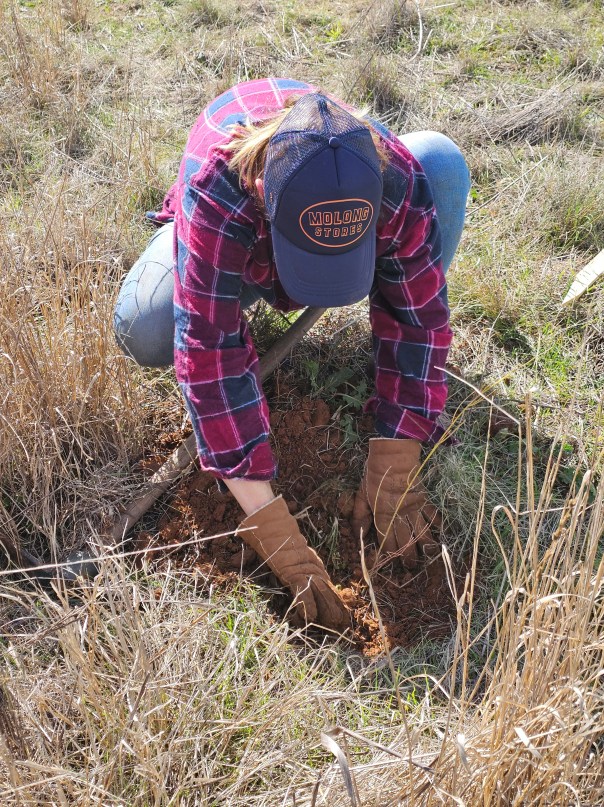
Tending to our baby plants 
Cotton Bush – great bird habitat 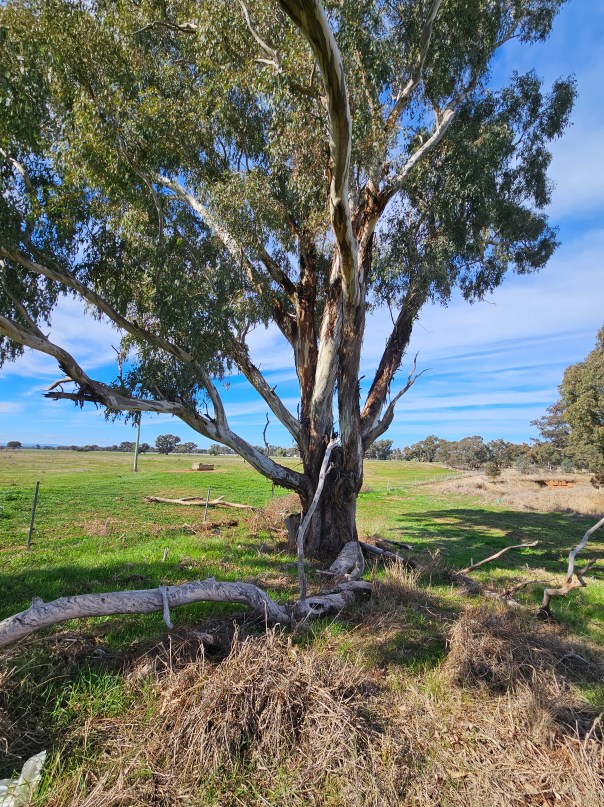
One of the mature trees along the riparian area 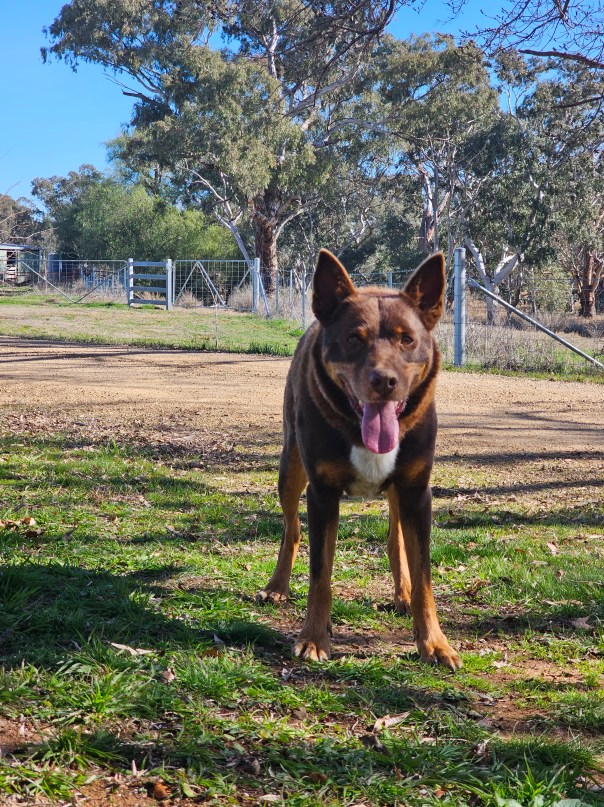
Red Dog getting in on the action 
These tree guards are essential for protecting the plants from trampling 
Those white bits are from the fungi! 
Little wren stopped by to say hello! 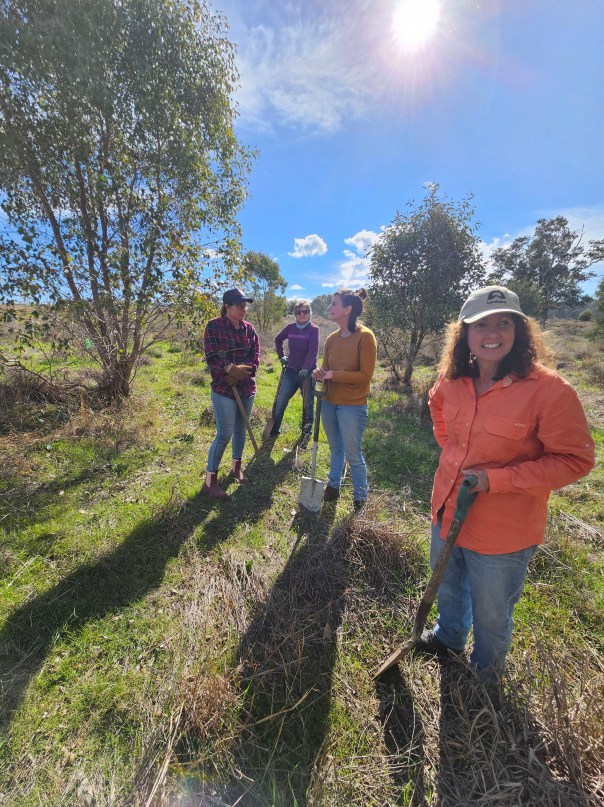
Taking stock 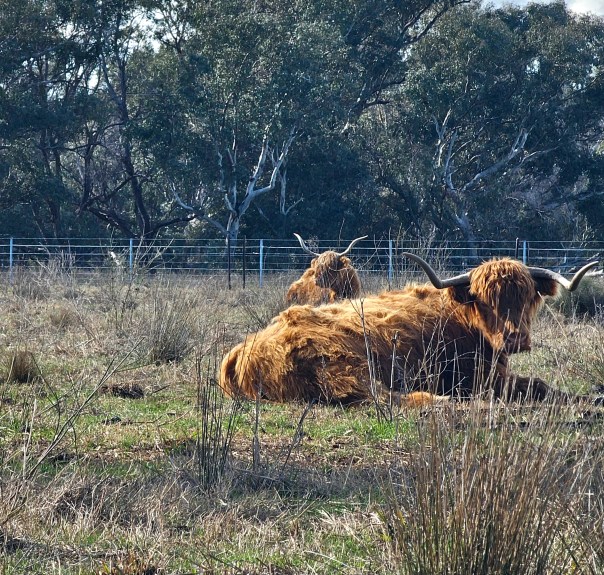
Beautiful old Highland Cows!
In between these two community events, we also met up with two smaller block property owners who’d expressed interest in the Glossy’s project. We were able to grant them 25 trees and shrubs to plant out thus taking our total of private plantings to 7 across the corridoor.

A picture from one of our micro planting sites out in the Eugowra catchment.
This project was made possible with funding from Bupa Australia and Landcare Australia.
- We ended up planting approximately 2200 trees & shrubs planted between Conimbla & Nangar National Parks
- Planting happened across 7 private land holdings
- Engaging 70 volunteers
- A total of 310 planting hours


 Mid Lachlan Landcare
Pingback: Connecting to Country, Reviving our Rivers. | Mid Lachlan Landcare