Last Thursday we were joined by Sandra Guy from the Australasian Bat Society for an evening learning about the Grey Headed & Little Red Flying Foxes that frequent our town – sometimes in huge numbers.
Cowra’s experience and relationship with these fascinating mamals has not always been easy or pleasant. In August 2018, a tree many bats were camped in over at the golf course was damaged in a windstorm leading to the deaths of over 300 bats:
Mass mortalities of grey-headed flying foxes (preropus poliocephalus) from tree collapses as investigated in the above CSIRO report
“Both mortality events were observed in a flying-fox roost situated within a 37-ha golf course in the western portion of the township of Cowra, NSW, Australia (33.8408°S, 148.6806°E). The eastern perimeter of the golf course runs parallel to the Lachlan River, with a separation of 140–240 m at different points. Roost vegetation provided by the golf course comprises sparsely scattered trees. The roost is seasonally occupied, with a colony typically present during the warmer months of the year and vacating during the cooler months”
There’ve also been times when bat numbers have swelled so dramatically that the public has sought to have the bats moved on due to their noise, their droppings and fears over community health and safety.
I first started looking into Cowra’s relationship with these fascinating and misunderstood creatures back in January after reading about flying foxes abandoning their regular roosts. I personally didn’t know much about bats and had never personally been bothered by them (I live a way out of town). Nonetheless, I could empathise with the plight of both the bats and humans, especially once I learned just how big and how noisy the camps could become.
I sat on my own research for a few months, opting to schedule a ‘bat night’ for spring – a time when the bats that gather in great numbers around the town come in to have their babies. This also happens to be around Halloween – a fitting time to go out and spot these spooky night flyers! So, that’s what we did…
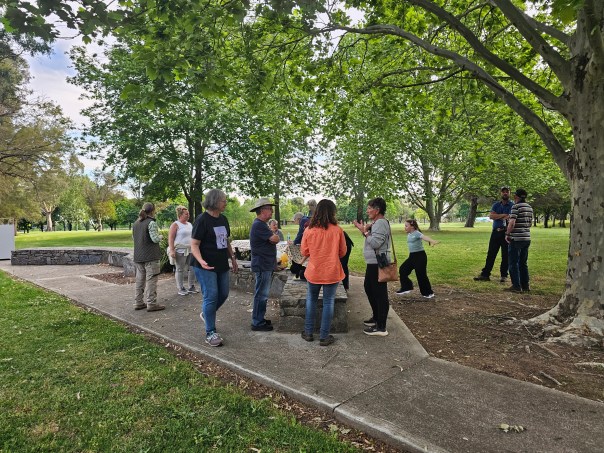


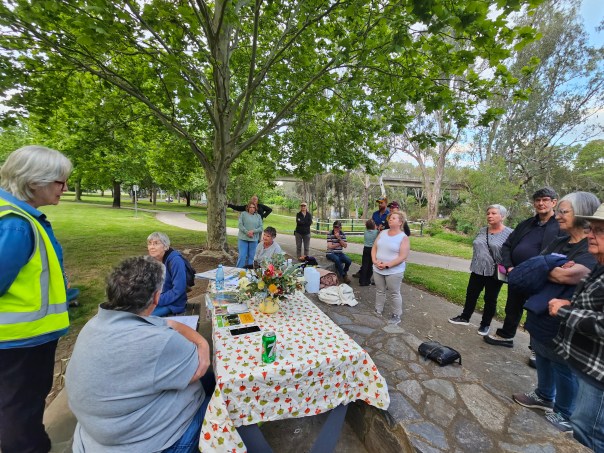

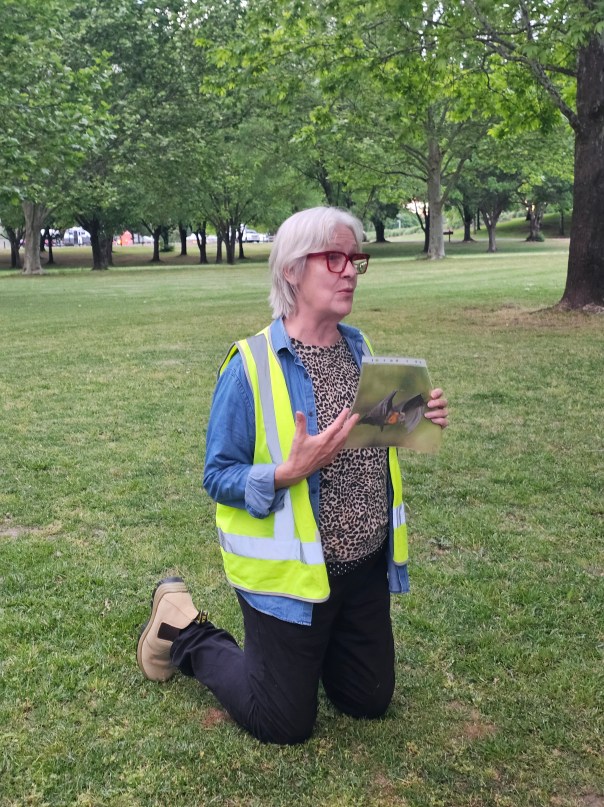
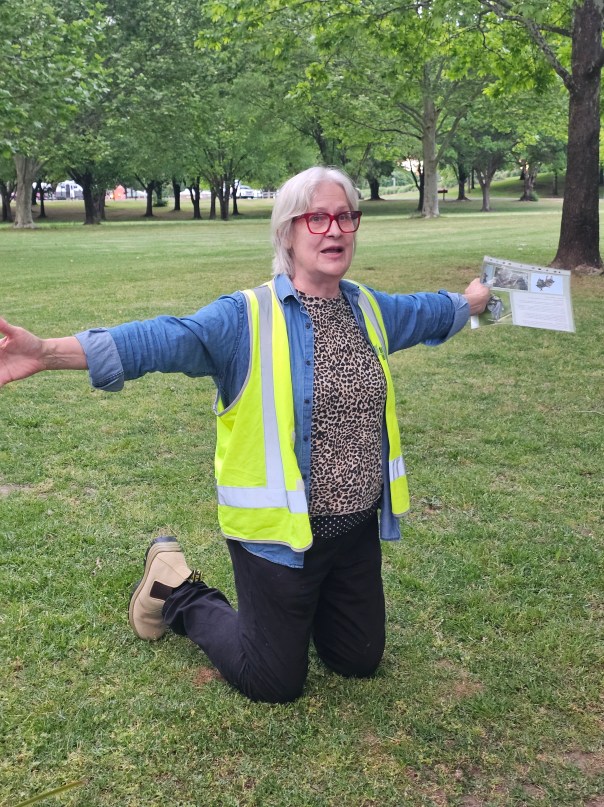
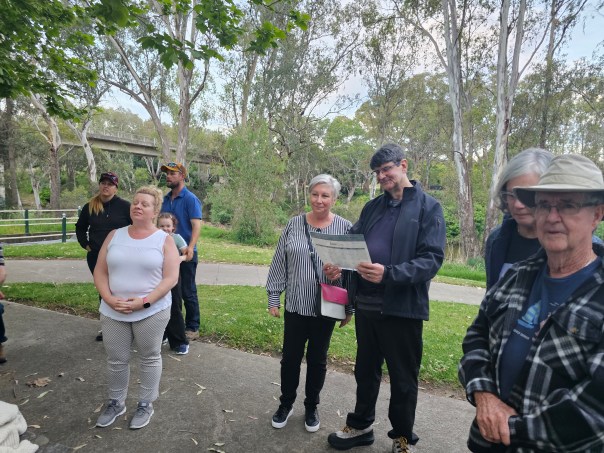


I was introduced to Sandra through the Australasian Bat Society’s Bat Night Coordinator Maree. Sandra lives hear a large bat camp in Sydney and, having family in Cowra was happy to make the drive. On meeting Sandra, I realised we’d struck gold – she was a wealth of knowledge and enthusiasm, keeping us enthralled for a good two hours while we waited for and then watched the flying foxes leave their roosts.
Sandra explained how bats grow forests while we sleep by carrying seeds far and wide before pooping them out where some germinate and become new forests. She explained her work as a bat carer, talked about bat biology, habits and their personalities, dispelling all prior notions we held of these being dirty, evil creatures – they are actually very cute, intelligent and personable! All this as we walked along the banks of the Kalari Bila (Lachlan River) here in Cowra.
I suspected I’d like bats a little more after this encounter but I didn’t think I’d fall in love with them. They really are incredible creatures and not at all like the spooky horrors you see in the movies!
FAST FACTS
Behaviour (Ecosystem services)
- Long distance seed dispersers and pollinators 10’s of km per night
- Travel up to 400km between roosts
- Disperse up to 600 seeds a night
- Responsible for the propagation of at least 289 plant species across their distribution
- Grey-headed (p.poliocephalus) babies are typically born between October and November.
- Prefer complex vegetation upper, mid and understory layers
- Prefer dense vegetation and dense understory with closed-canopy 3-5m high
- Prefer level site over hills
- Midstory habitat crucial as this maintains a good climate for roost
- Bats drink by skimming their bodies over large waterways (rivers) then sucking the water from their bodies
Threats
- Human persecution – Urban roosts cause conflicts.
- Habitat loss – Fragmentation or fissioning of roost populations attributed to environmental change – land clearing of winter flowering native species & increase in availability of exotic winter food in urban areas.
- Gaps in our ecological knowledge of species – Roosting requirements are not well understood
Misconceptions
- Bats are dirty – they are actually very clean and produce high value poop – it contains the seeds that become our forests.
- Bats carry diseases – they do and some can be passed onto humans BUT the risks of catching diseases from bats is zero if you don’t touch bats. You can’t get sick from their poop. Bat carers are vaccinated.
- Bats kill horses (Hendra virus) – this can happen but there’s an effective vaccine that should be given to horses to keep both them and the vets and humans looking after the horses safe.
Things we can do to help Flying Foxes
- Spread the word about the great work Flying Foxes do to spread seeds and grow our forests.
- Plant a bat-friendly garden with lots of pollen-rich native species
- Use wildlife friendly netting on fruit trees to avoid bat entanglement.
- Replace barbed wire with smooth wire OR cover barbs with tape around areas you see bats feeding.
- Report sightings of bats caught on powerlines – they may have babies on board that can be saved
- Keep cats locked up at night
- Support your local wildlife carers
We all came away with a lot of love in our hearts for these cute pollen spreaders.
Further Resources & Reading.
The Pollinators of the Night– A great webinar by the People & Pollinators Action Network based in the USA.
Flying Farmers: a 6 minute information-packed snippet from ABC Australia
Flying Fox Facts – from the NSW Government.
The Australasian Bat Society who can be contacted for help in organising a bat night & for other resources & research.
Diet of the Little Red Flying Fox.
Management & Restoration of Flying Fox Camps
Camp Site Preferences of the Flying Fox.
Flying Fox information from WIRES


 Mid Lachlan Landcare