Last month I travelled down to Melbourne to spend two days at the Citizen Science Conference. Being a first-timer at this event, I wasn’t sure quite what to expect so… I dragged my husband along too! As it turned out, I needn’t have worried as the whole thing was well organised, not too overwhelming & very interesting.
Highlights, insights & updates: #CitSciOz25 – A Catalyst for Change
Keynote Speaker Dr Amanda Caples – Victoria’s Lead Scientist.
- When polled, most Australian Citizens think our environment is in good shape. This is an issue because reality is not matching public perception.
- Citizen Science engagement is growing.
- Artificial Intelligence is a powerful tool that’s playing a vital role in sorting the data citizen science projects generate. While important, it pays to remember that it doesn’t replace expert insight & application.
- Data storage does have an environmental impact cost as data storage centres require a lot of water to keep them cool, plus the space and materials to build them. Quantum computing R&D is happening here in Australia and this transformative technology will change the game in this regard, making data storage much more economical & processing speeds faster.
Keynote Speaker Gregory Andrews – Lyrebird Dreaming.
Gregory has a background as an Ambassador in the Climate, Environment, Governence and Cross-Cultural space. He was also Australia’s first Threatened Species Commissioner. Greg talked about the link between culture & species, stating that you can’t lose one without impacting on the other. He advocates for Active Hope “Hope is not about pretending things will be fine. It is about facing reality as it is, with open eyes and hearts, and then stepping into meaningful action” read more about how caring for country helps here.
Greg mentioned a survey that showed 95% of Australians feel we should be doing more to protect the environment and cited that figure as a mandate for us to go out and get recruiting volunteers for our projects! He also mentioned that he see’s that rural and regional Australia are really leading the way in promoting unity and cohesion in community via citizen science based projects & actions. He also talked on how we can tap into our National Pride in a good way to motivate people to care for country:
What defines us Aussies:
- Magpie swooping
- The smell of Eucalyptus
- Bird Song
- Azure blue skies
- Kangaroos and our other unique animals
- The vastness of it all.
Greg puts his whole being into his work and has a strong emotional attachment to it and the people he works with. I found him to be both big-picture inspiring AND an organised do-er. You can follow him on his blog
I then joined a forum on Youth Engagement in Citizen Science

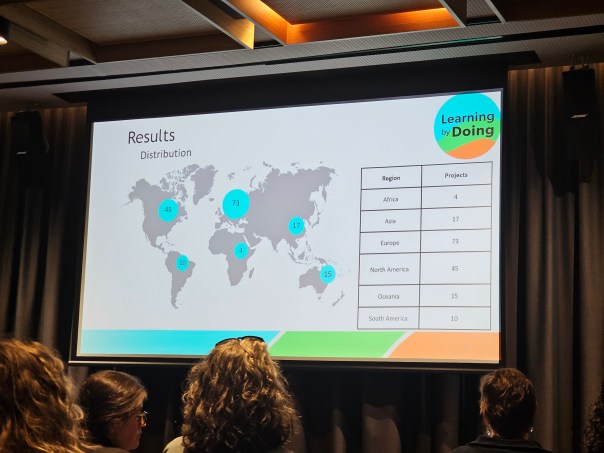

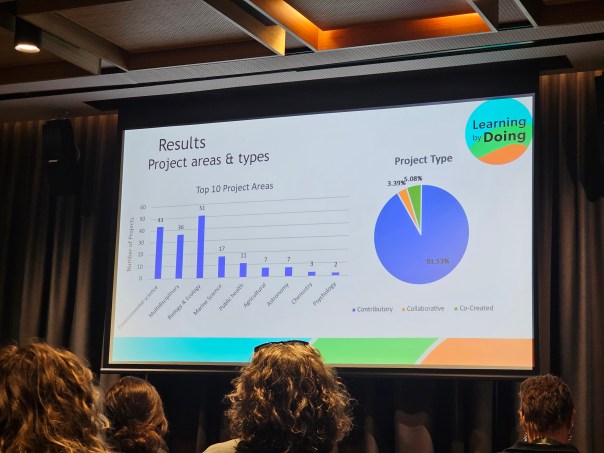
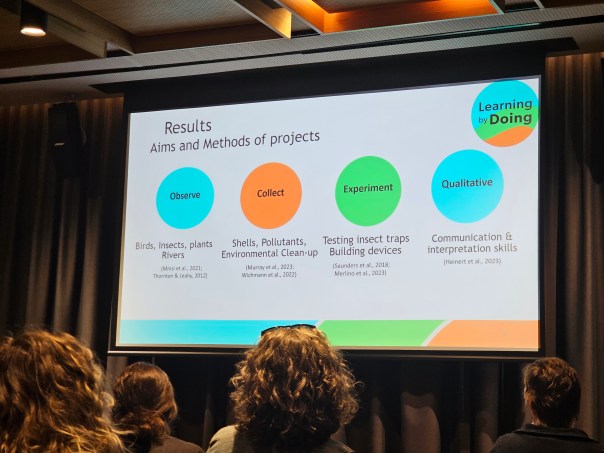
- Victoria Zhang from the University of Sydney presented results of a literature review on citizen science in schools and found that Earth and Environment Science had the most engagement and in that syllabus it was projects around microbiology that were most commonly undertaken followed by bird observations.
- Naomi Lambie from Earthwatch Australia, an ex-classroom teacher explained how citizen science is a powerful pedagogical bridge combining expertise, lived experience and practical, direct engagement in a way that nurtures critical thinking. She was particularly keen to mention the value students found in their project being part of a ‘bigger picture’ project that connected them to ‘real’ scientists and that their data had ‘real world’ value.
- The team from River Detectives explained their program and the role it plays in taking students from citizen scientists to active citizens (citizenship). They also drove home the idea that the product of citizen science research is not always as important as the process – process is key.
- Finally David Mabb, a 12 year old scout from the Melbourne area talked about what he’d learned from 6 years of Bioblitzing:
- Feels great to contribute
- Every observation counts
- It teaches patience
- He was able to serve as informal tech support to older members of their group which also felt good.
- Realising why each little part of the ecosystem matters.
- Enjoyed the gaming element of Bioblitz, e.g: how many species can you capture in 10 mins
The next session I joined was a workshop: Citizen Science in Schools
- Those wishing to get into schools with their projects need to make sure they are aligned to the curriculum and have clear assesment opportunities mapped to them.
- Building programs and relationships with schools takes time
- Make sure projects are differentiated so all ages, stages and abilities can participate.
- Barriers include managing risks & putting together risk assessments, costs and time.
Day 2
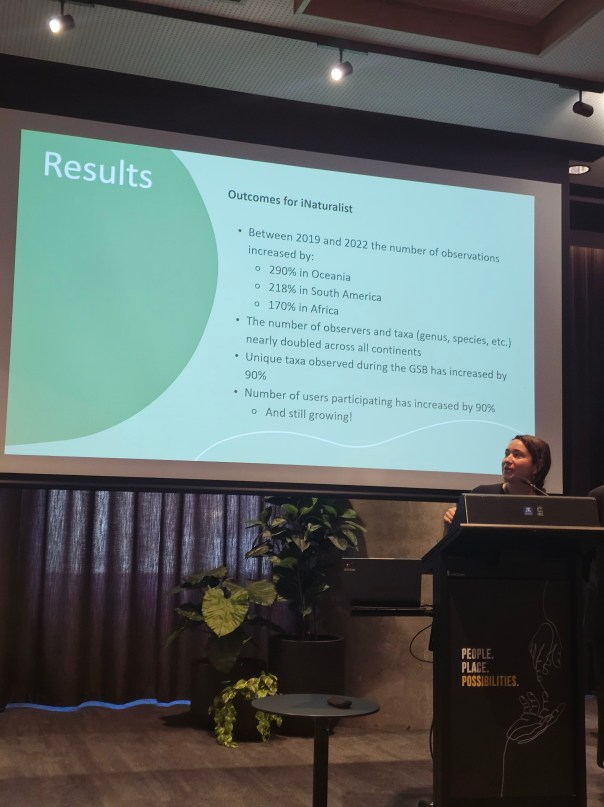
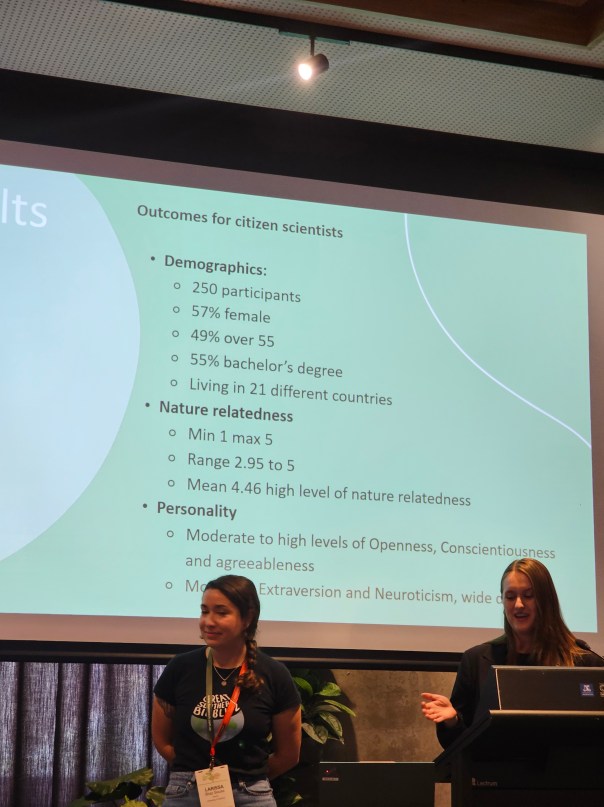
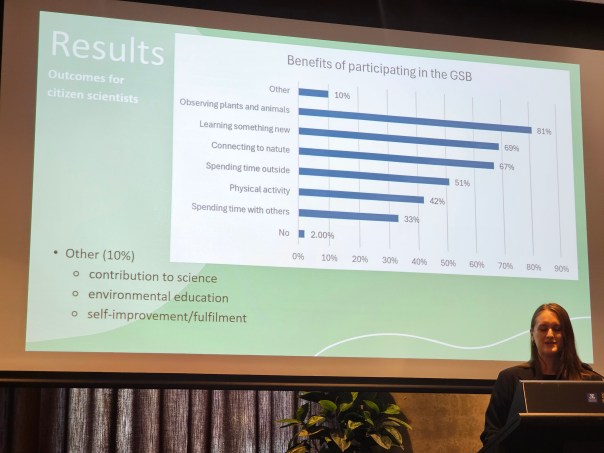
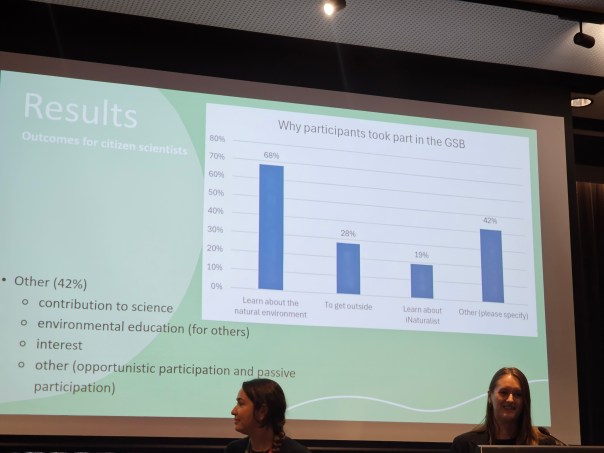
The second day included a range of talks that I’d chosen to help me develop programs for our local area. I attended a talk on Giant Eucalypts with Dr Dean Nicolle; a talk on the history of the Great Southern Bioblitz which included statistics of how the blitz is going and growing & Emma Corro talking on her project ‘poop for fungi, for plants’ which gave me ideas of how to combine soil science with seed collecting & microbiometer.

I also listened to a very interesting 35 year look at dryland salinity at John Ive’s place in Yass which fits in very well with what we’re doing here at Mid Lachlan Landcare.
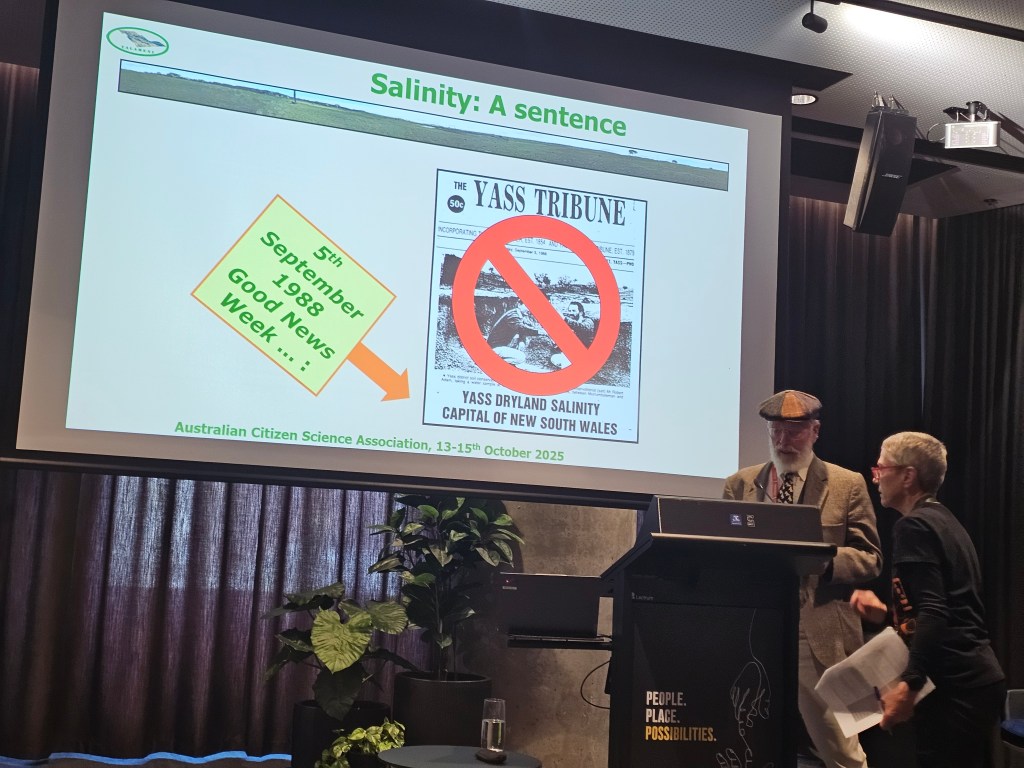

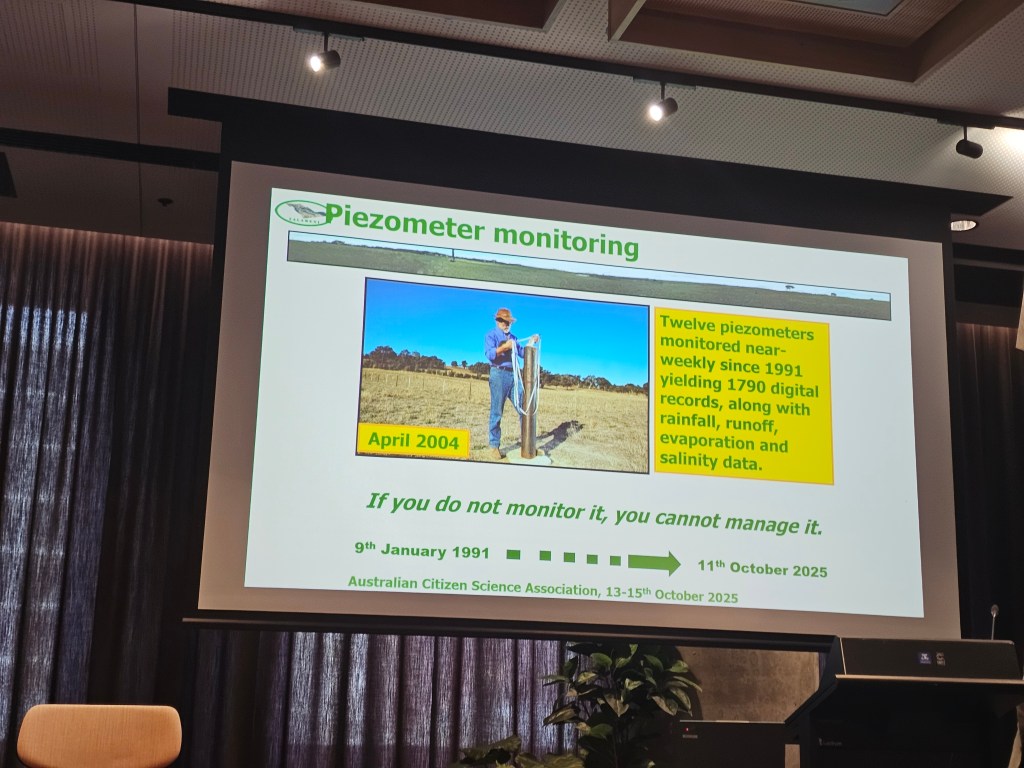
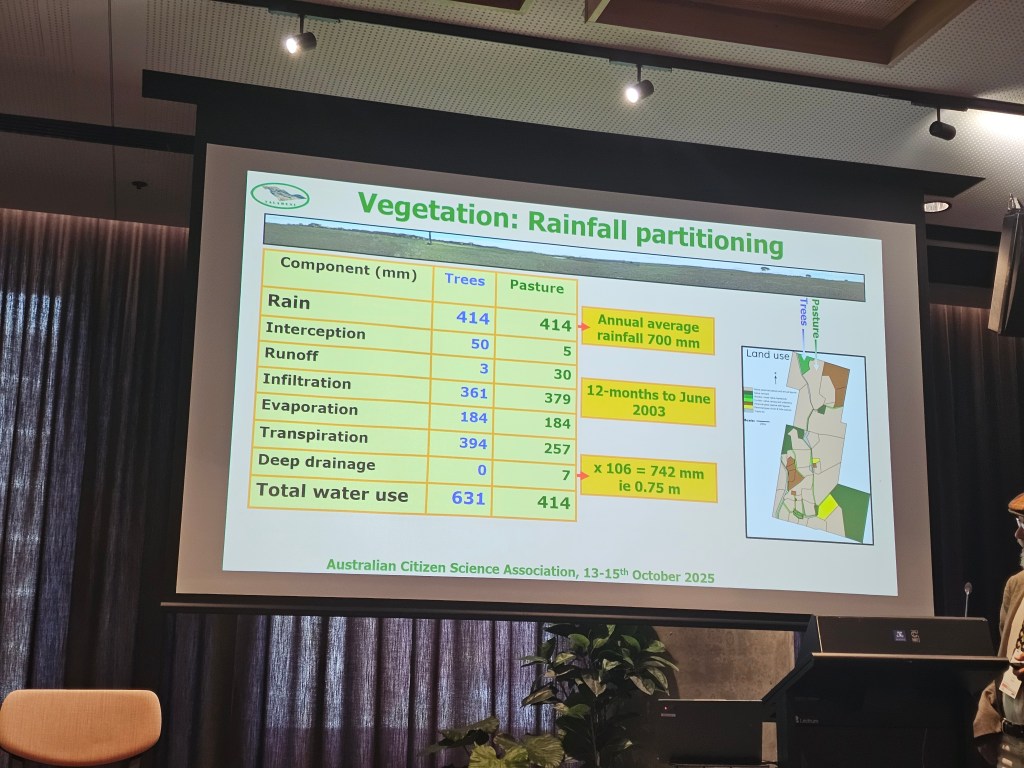
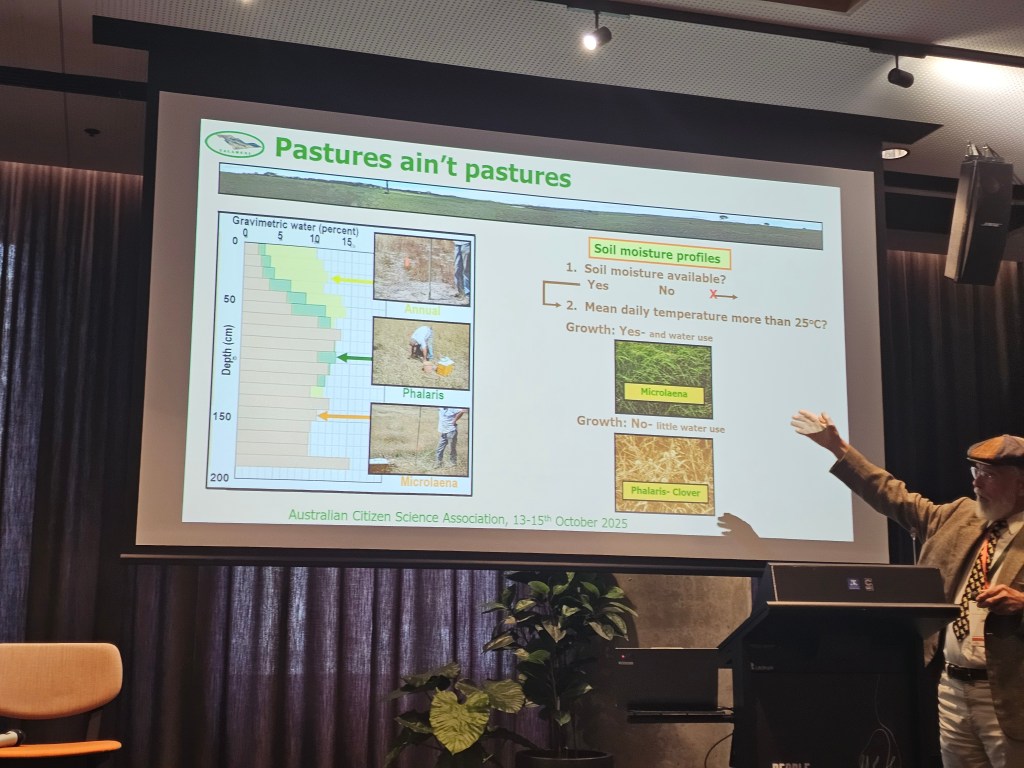
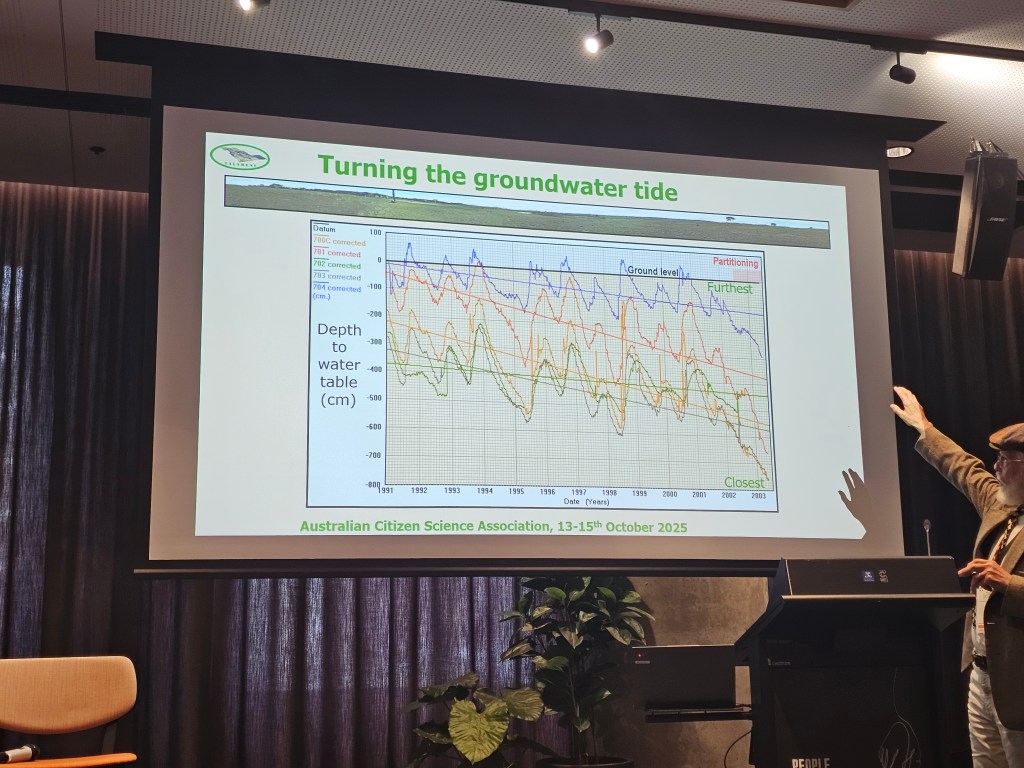
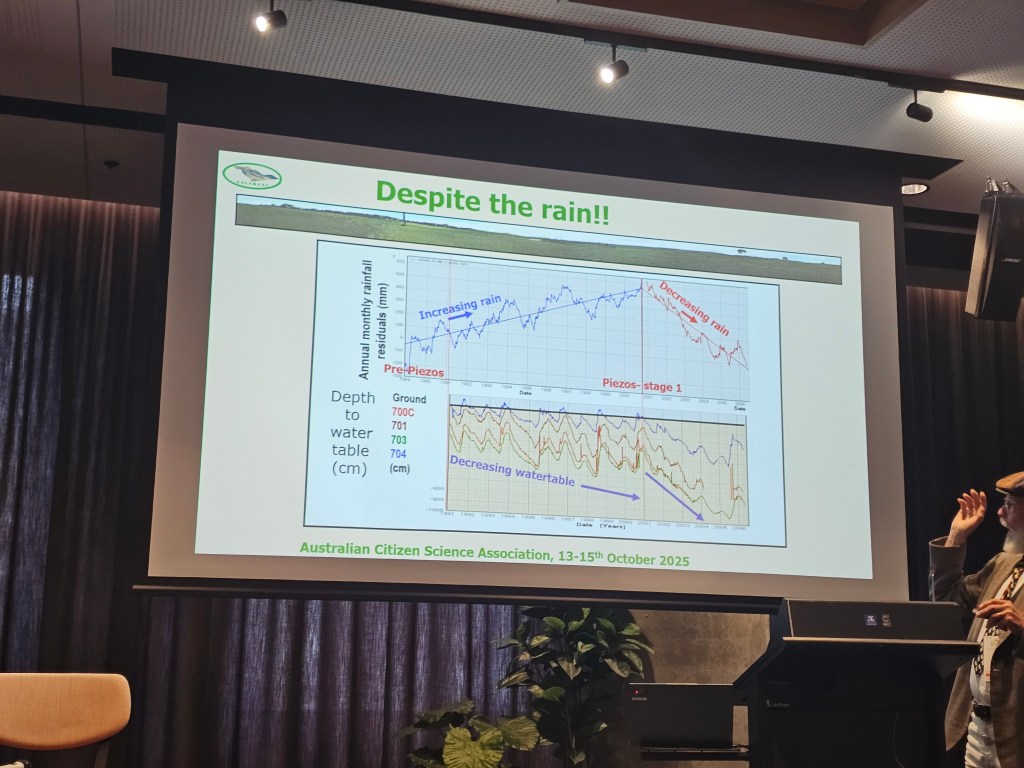
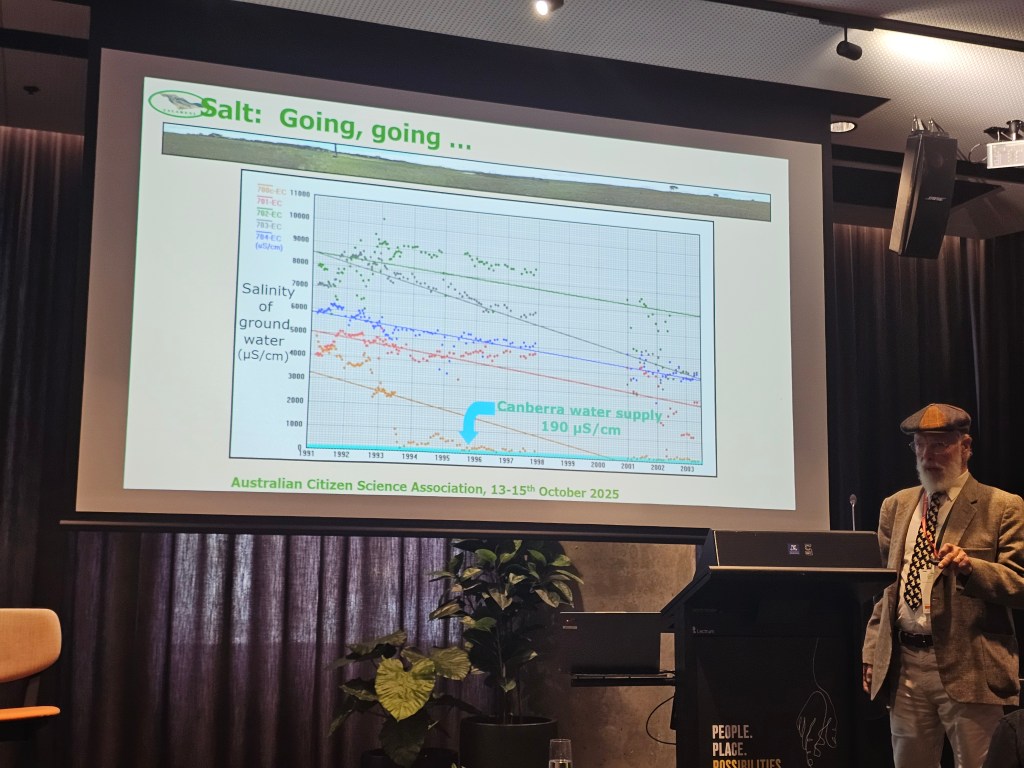
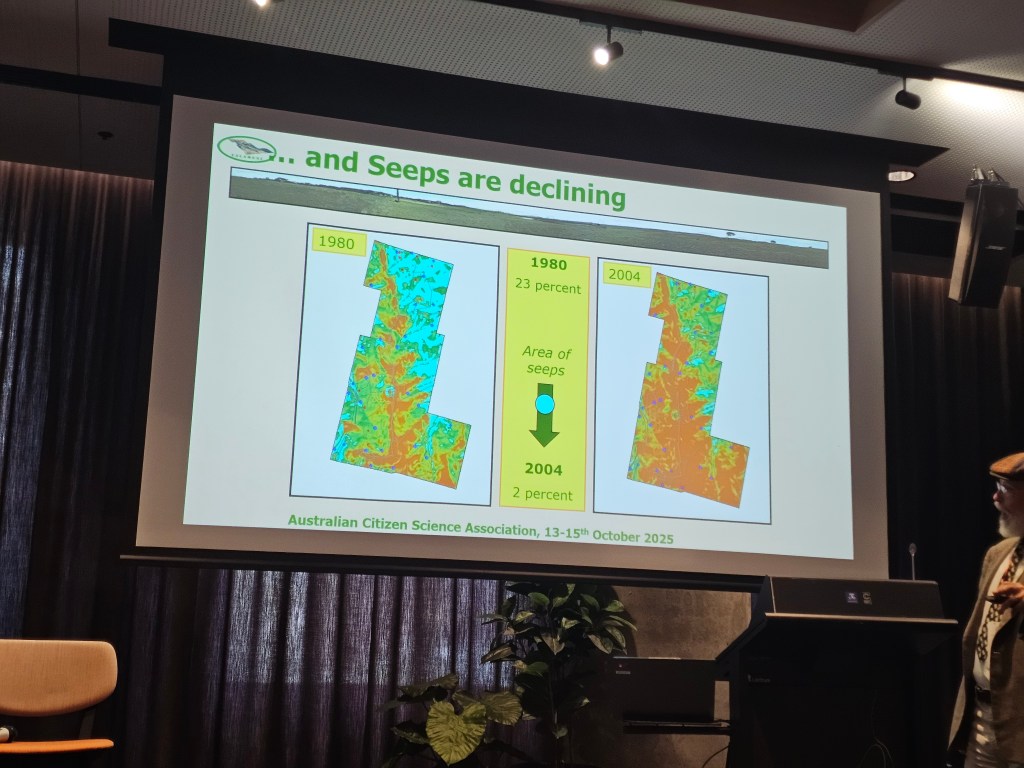
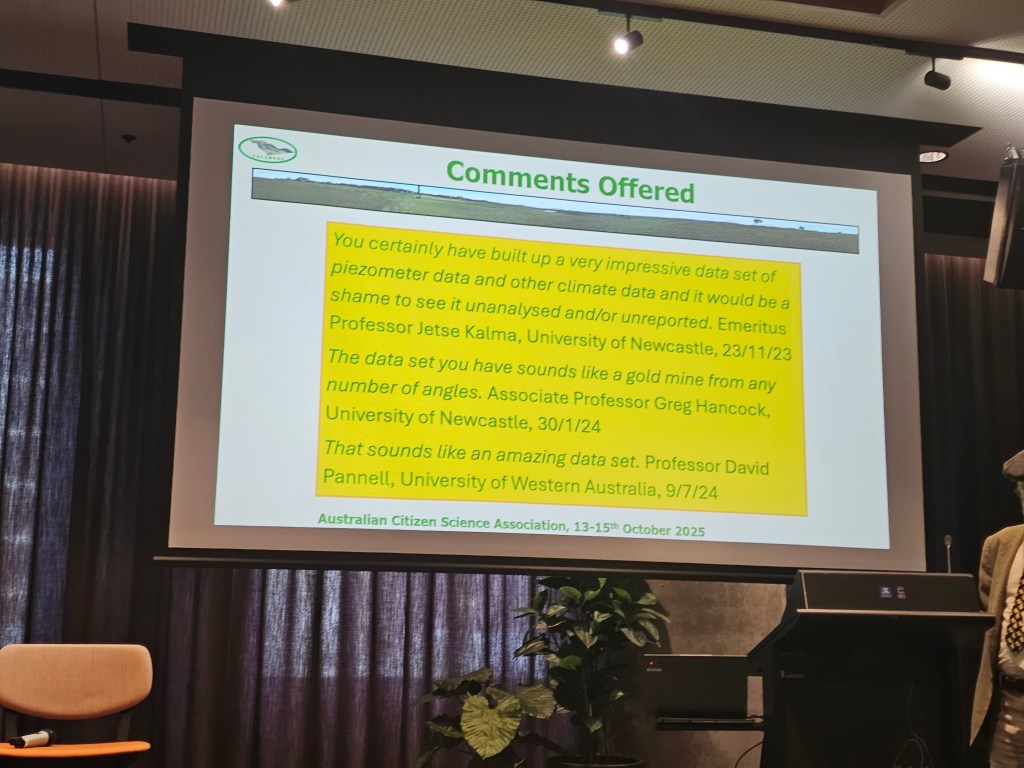
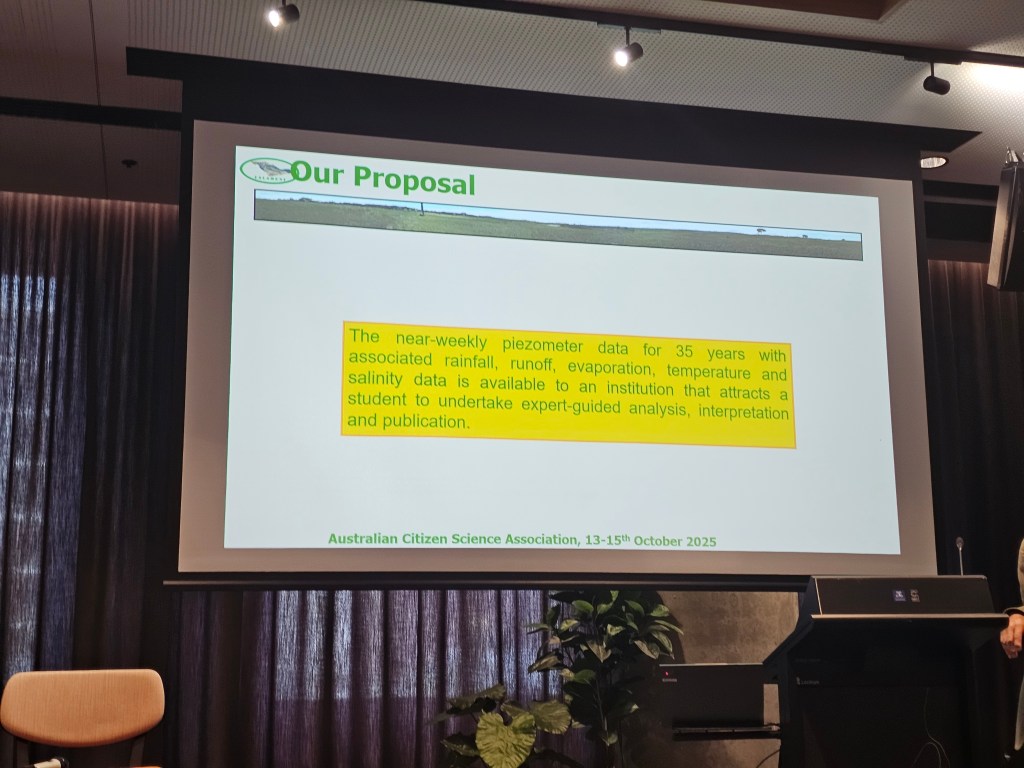
In addition, I got some tips on how to run successful Bat and Moth nights, plus an update on the Bogong moth tracker app which I’ve been keen to promote more in our region given we on the moth’s flight path.
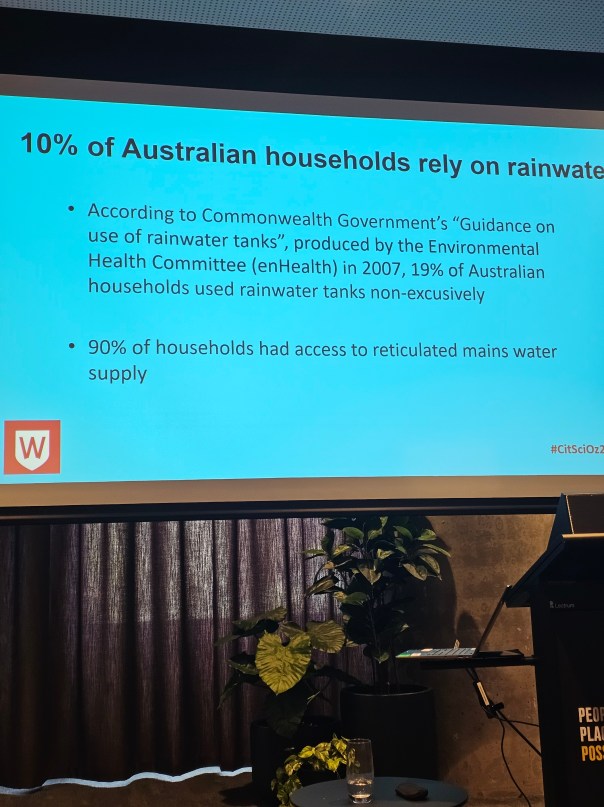
During lunchtime on day two I attended a very interesting symposium entitled “We Are the Monitors Now”: How Rural Communities Are Initiating Pollution Monitoring and Using Citizen Science for Environmental Outcomes by Anna Christie and Ian Wright. Ian has been out to our region to talk on the PFAS levels in the Belubula river so it was great to catch up with him. This talk focused on water quality in rural communities, more specifically around how airborn dust and roof-contaminants impact tank water quality. This talk was a real eye opener and brought home the impact invisible pollutants have on both ourselves and our ecosystem.

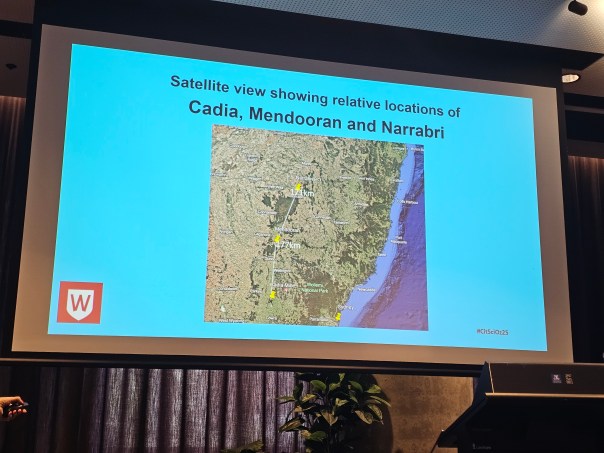
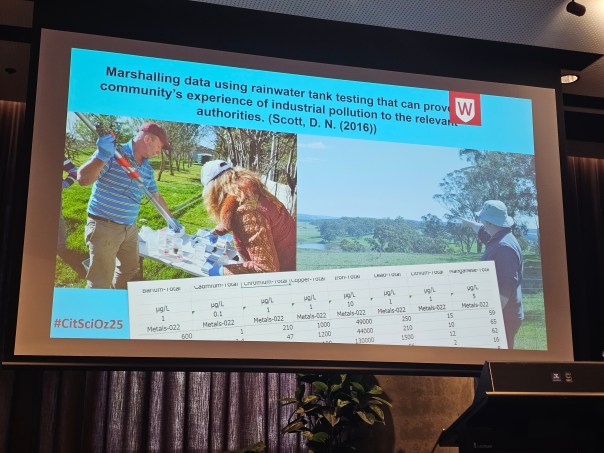

The rest of my time consisted of hearing more from those taking citizen science into schools and community groups and hearing what worked and what didn’t – always helpful and in case you were wondering, apparently taking donuts into schools helps!
Overall I was impressed by the conference and came back advocating for Mid Lachlan Landcare to join the Australian Citizen Science Association as a way of us staying at the cutting edge of this powerful & engaging tool for good! Oh, and I also bought myself a t-shirt 🙂
P.S: The NSW Government has a magazine called the SCAN Journal that’s great for those wanting to get citizen science projects up in schools.


 Mid Lachlan Landcare