A new Citizen Science project led by the Invastive Species Council & Invertebrates Australia launched on iNaturalist this year. Bugs in My Backyard Week ran from 17 – 23 November 2025 creating the first springtime snapshot of bugs across Australia. I joined the project as an individual this year to get a feel for the nuances and challenges around recording bug life. My big-picture goal was to be able to promote this as an initiative across our community next time the count runs and integrate it into our community engagement/ empowerment program for 2026 and beyond.
Before I dive into my experience I’m sharing a link to the project introduction webinar. This gives a thorough overview of the aims of the project, how to take part and some tips on how best to record sightings.
How my week counting bugs went.
My first thought was ‘boy, that was a little trickier than recording plants but it was also a whole lot of fun!’
I live with a sensory processing disorder which means I experience a lag-like delay in brain-body information gathering. My delay is sometimes so slight, I don’t really notice but at other times is quite pronounced, leading me to be noticably clumsy, clunky and otherwise uncoordinated. Bug hunting, at least the way I was doing it, brought out this vulnerability & made it all feel a little difficult for a while. For example, I’d spot a bug, get my phone on camera setting then be too slow to get the thing focused before the bug flew off. Or I’d spot something, focus on it then be so focused that I’d lose my balance and get all wobbly or start to feel sick (vestibular issues feel like sea sickness). There were the times when everything was going well but then my hair or a bug would land on my face – immediately discombobulating. Finally there when I knew there was something there but I just couldn’t get my eyes to focus enough to find it in my viewfinder. Eugh!
While some of the practical issues I experienced are exacerbated by me being me, most could be experienced by anyone and everyone while doing this type of activity and because of this, I wanted to find a way for bug hunting to be a little more comfortable in general. More on that later…
Pressing On
Despite my difficulties I kept doing the same thing each day, namely, going out in my ‘backyard’ and staring intensely at every bush, bloom and branchlet I came across. Doing that got me a total of 81 observations of 61 species across the week which put me into the top 100 observers (I’m quite competitive with these things – if you’re going to do something, you may as well give it your all) which, given there was 38,707 observers across the project was, I felt, impressive!
Making Bug Hunting Easier & More Accessible
During the week my daughter ran a bug observation activity with her primary school students. She opted for the sheet-collection method where you pop a light coloured piece of fabric under your target shrub before giving it a bit of a shake. The fabric collects the bugs which can then be further ‘caught’ if needs be, using a bug-friendly magnifying device or clear sample box that gives you more time to make your observation. I tried this after my week of doing-it-tough as, while it sounds like an obvious no-brainer way to proceed, one never really appreciates either the impact of making something easier or the consequences of making something hard until you’ve experienced it and this sure did make things a bit easier, especially for spiders, ladybeetles & the other little bugs that don’t tend to fly away quickly.
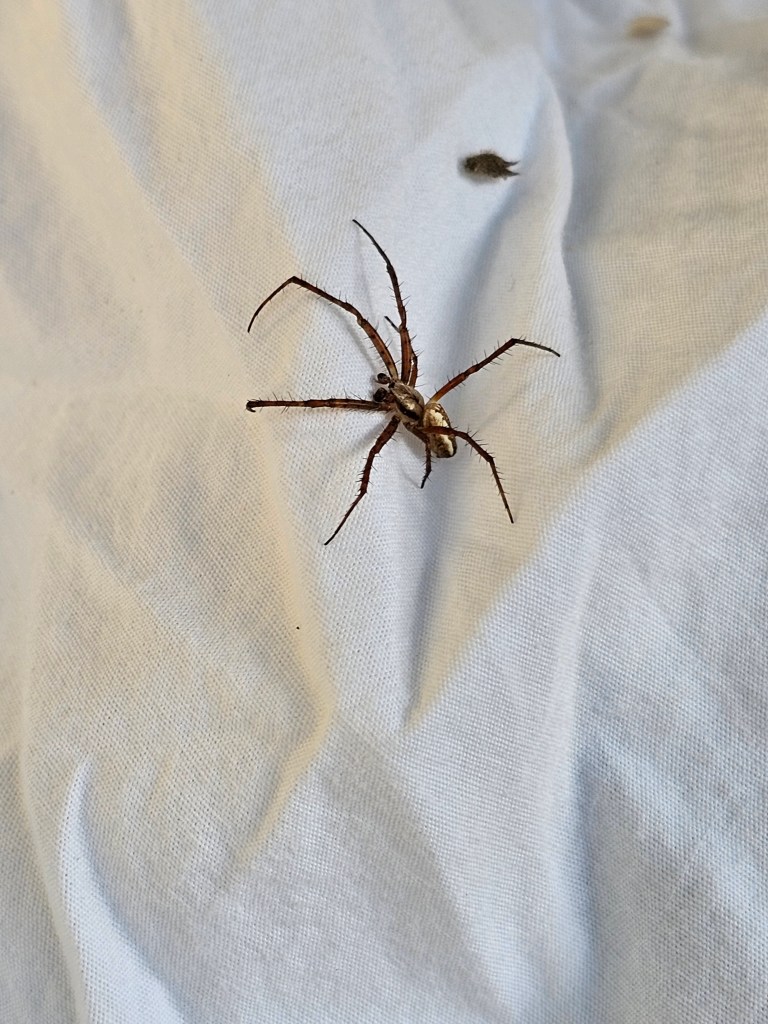
Capturing the more flighty bugs – especially while pollinating flowers
One trick mentioned in the Bug Week introduction video I’ve linked to that I tried out was to video, rather than take a photo of the bugs. I found my phone camera remained focused on the bugs for longer while in video mode, allowing me to re-wind at a later date and capture still images for uploading.
Videoing bugs can be quite rewarding in its own right. Here are two nectar scarabs that I came across this morning. They made me smile at just how much they were throwing their whole selves into the task of nectar hunting.
Other things I noted while bug hunting were as follows. I plan to use these observations to inform how I organise any Bug Hunting we do as a Landcare group in future.
- Have a spotter with you – it’s easy to get carried away bug hunting and wander into bushes where there may be snakes or prickles!
- With the above in mind, always bug hunt in sensible, outdoor shoes & preferably long trousers & sleaves.
- Set a timer for close-up work to give your eyes a break and reduce the chance of eye strain-induced headaches.
- Take water and wear a hat – bug photography can mean you are in one spot for a while trying to get the perfect picture.
- You don’t need to get a perfect picture – the project stipulated this isn’t a bug photography activity but it’s hard not to try and get a detailed, in-focused shot to be proud of…
- Don’t forget you can record sound also – some bugs can be identified by their chirps and buzzing so capturing audio can be very helpful.
- Try hunting in lots of different places. Different bugs hide out in different locations with some of the slower, easier-to-photograph ones hiding under fallen logs & in darker corners. Oh and also check your compost heap! That can be a great place to find worms, slugs and beetles.
- Don’t forget that many bugs come out at night! A balcony or porch light can be rich pickings for photography.
- Wear gloves when handling material that could contain spiders & other bugs. I say this because I picked up something that looked interesting only to realise mid photo-snapping that it was a red back nest with the spider still in it. So glad it didn’t get me.
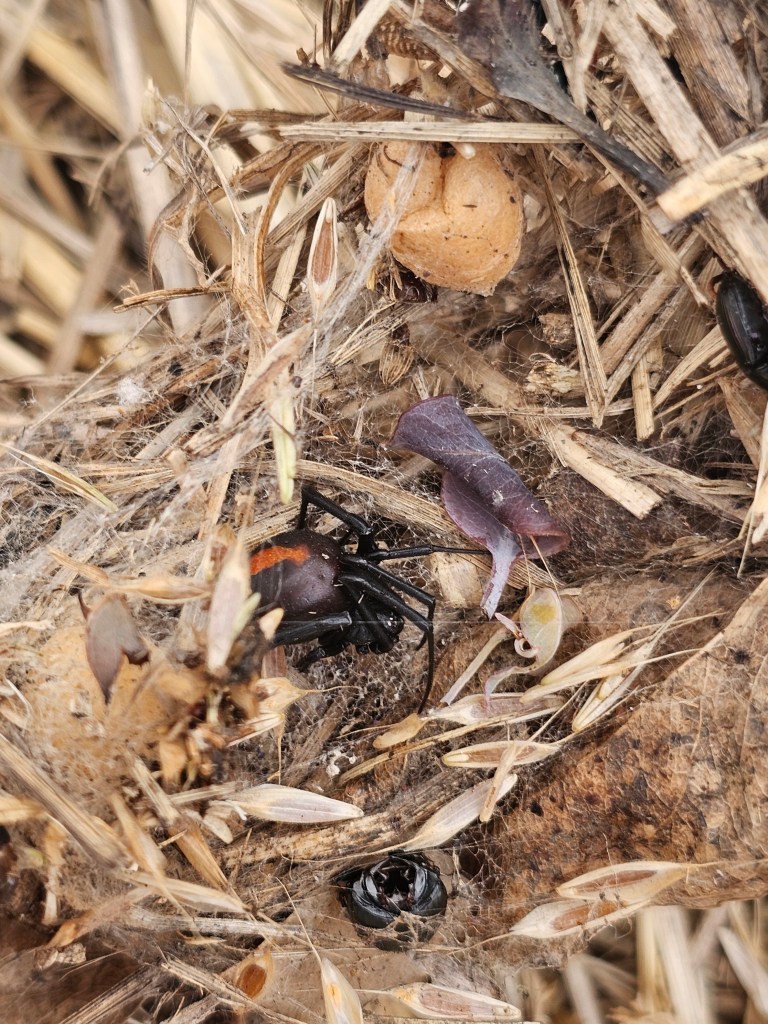
Here’s some of what I captured during my week of bug-hunting.
A final note on bugs and safety
Mozzies are both part of the rich and varied tapestry of bug like and also a potential problem while bug hunting. Our local council area (Cowra) is listed as being a high risk for Japanese Encephalitis, a disease carried by Mosquitoes and as such, a vaccine, which is heavily subsidised, is recommended for outdoor workers. I got mine the week after the Bug hunt which, while not ideal was, I suppose, better than nothing given my new hobby. Oh and it didn’t sting nearly as much as the assassin fly that landed on me during Bug hunt week!

Take care out there and keep your eyes peeled for a Mid Lachlan Bug Hunt Extravaganza in 2026.


 Mid Lachlan Landcare