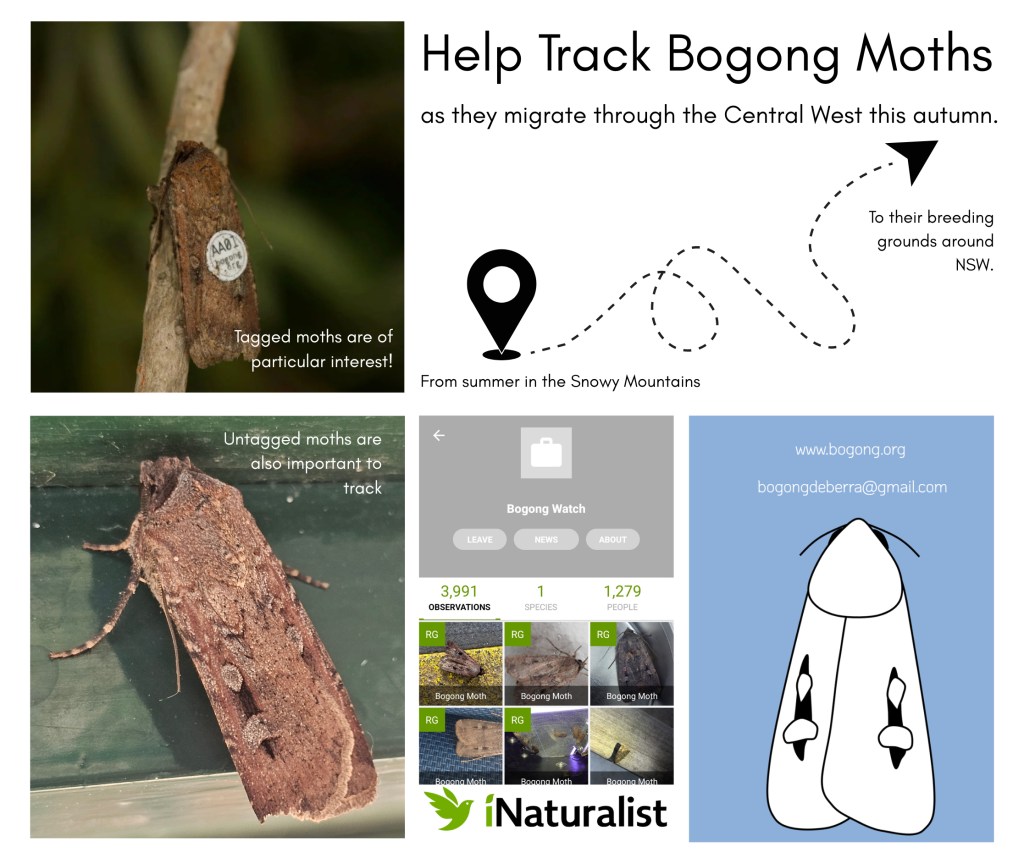
Bogongs are part of the cutworm family of moths. There are a few in the family that look similar but Bogongs are the only ones with stripes and a kidney beans pattern.
The Bogong Moth Tagging project aimed to tag 10,000 moths over summer as the moths rested up in the cool caves of the Snowy Mountains National Park. I’m not sure how many they’ve ended up tagging but at the time of their live webinar update on 3rd March, they were well on track to exceed that number – a herculean feat if you ask me!
So why are they tagging moths?
We know that the moths arive in the caves of the snowy mountains in December in what’s called a Maelstrom. The team assured us listening that this Maelstrom is one of the seven wonders of the natural world – an event that fills you with a sense of awe!
Outside of this mass migratory event, entomologists have gaps in their undertanding around where the moths are travelling from and going back to once the weather cools down again. Tagging and (hopefully) spotting moths as they move through the country will provide some much needed insights into their lives.
Tagging so many moths is necessary for a statistical chance to see a tagged insect.
How do they tag them?
During the time of tagging, the moths were hiding out in the caves and resting. These moths are caught & popped little tubes. If that sounds a bit cruel it’s not, they get into the tubes them themselves as they like squishy little places.
The tubes get stored on ice to slow the moths down a bit. Then the moths are knocked out with CO2 from a modified soda stream & marked with either a little round piece of paper covered in beeswax to make it waterproof, or with an insect-friendly posca marker. Then they are released back into the cave.
How soon we we see tagged moths around the Central Tablelands?
While the team are not entirely sure, it’s likely they’ll start moving once the weather starts cooling down – so around now (March through to May)
What should we do to help?
Like all Citizen Science projects, it needs eyes on the ground (or in the sky, or by our porch lights) during the evenings to search for the moths! Invertabrates Australia have all the information you need to participate in the Bogong Search project on their website.
For those within our Mid Lachlan Landcare region looking for more tips or help with organising or participating in moth hunts, do get in touch because this can be a fun and low-cost activity for school and community groups wanting to know more about the insects that we share space with.


 Mid Lachlan Landcare