Mid Lachlan Landcare
supporting sustainable agriculture and restoring the environment
Rodenticides under review – an update
In September we worked with the Cowra Woodland Birds Program on an evening event for the Bird Interest Group Network (BIGnet) annual gathering occuring in Cowra. Titled ‘Caring for nature’s pest controllers’ the event featured a short film followed by panel discussion around second generation rodenticides (SGARs).
At that time we were all nervously awaiting a decision from the Australian government’s pesticide and veterinary medicines authority (APVMA) as to whether regulations around this family of rat and mice poisons would be tightened.
SGARs can have devastating impacts on non-target species such as owls, eagles and magpies due to the poison remaining active in the rodents body after death & accumulating in their natural predators. Not all rodenticides behave this way or pose these risks.
A decision, which was due any day, was finally published this week (December). The APVMA press release is available here.
The APVMA process includes a consultation period which is now open for your input. Submissions can be made until 16th March 2026.

Resources
A PDF of the APVMA’s latest review can be downloaded from here.
Night Calling Short Film available to view for free on Youtube.
Birdlife Australia on Rat Poison.
A news article by the ABC covering response to the review can be found here.
Some councils around the world have developed ‘Owl Friendly’ policies. Margaret River Council is an example of that.
Learning on country – Green Fields, Good Food & Great Communities
It’s been over a decade that we’ve been welcoming Brigidine College students from Randwick in Sydney to our region for their HSC field trips. Each year, in the words of the Pretenders, some things change, some stay the same.
This year’s students are here to enhance their Food Nutrition & Hospitality syllabi with a stay that spans three days out exploring our Mid Lachlan region.
Our theme for this year’s Hospitality students was ‘Food Builds Community‘ and included a trip to Montrose House in Canowindra, a shift at Canowindra Connections Food Basket & Community Kitchen plus a chance for students to cook for the group on one of our local organic farms.
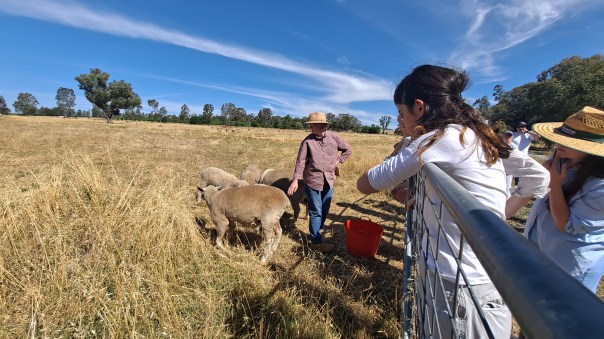
The Food Technology students theme was ‘Good Soil, Good Food’ focusing on how our grain, beef, lamb, olive, fig and grape producers care for the soil and how their management decisions shape their foods nutritional content, taste and smell.
We started with a greeting from Cowra Deputy Mayor Nikki Kiss before going on to visit seven farm-based enterprises & four local food & community focused businesses before waving our goodbyes.
We’ve so many interesting and diverse farms out here in the Central West, it’s a great place to bring the syllabus to life.
Good luck with your HSC class of 2025/26 & hope to see some more students from Brigidine next year!
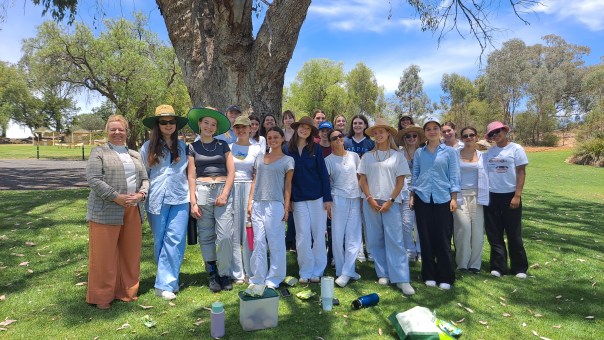
Welcome to Cowra with Deputy Mayor Nikki Kiss 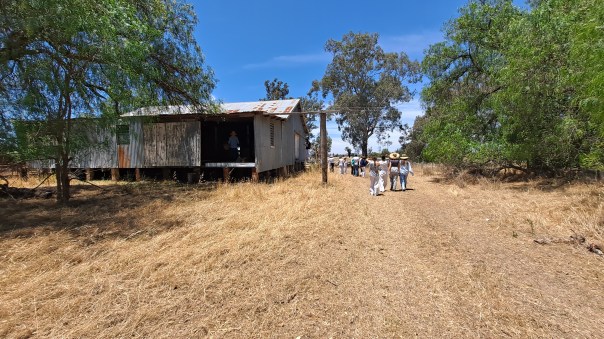
Raintree Mara 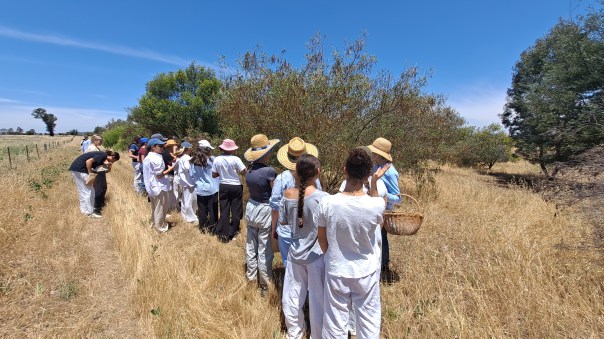
Wattle Collecting 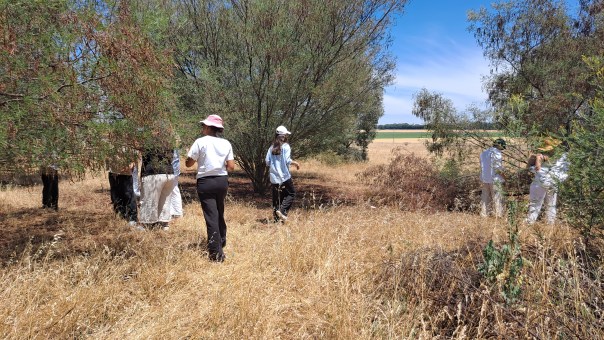
Wattle Seed Harvest 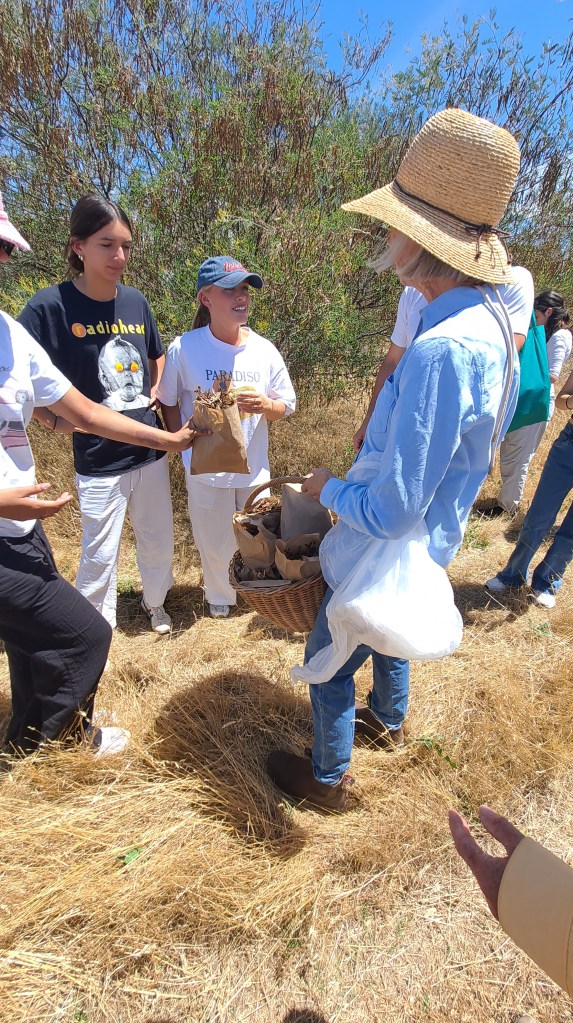
Catheryn explains the seed collecting process 
Wild Asparagus 
Our Asparagus Haul 
Organic Farming 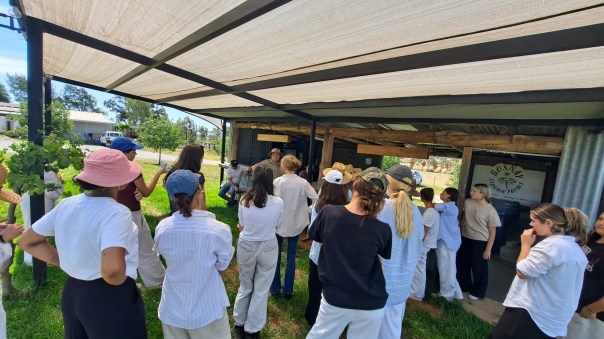
Farm irrigation 
Figs, Olives & Grapes 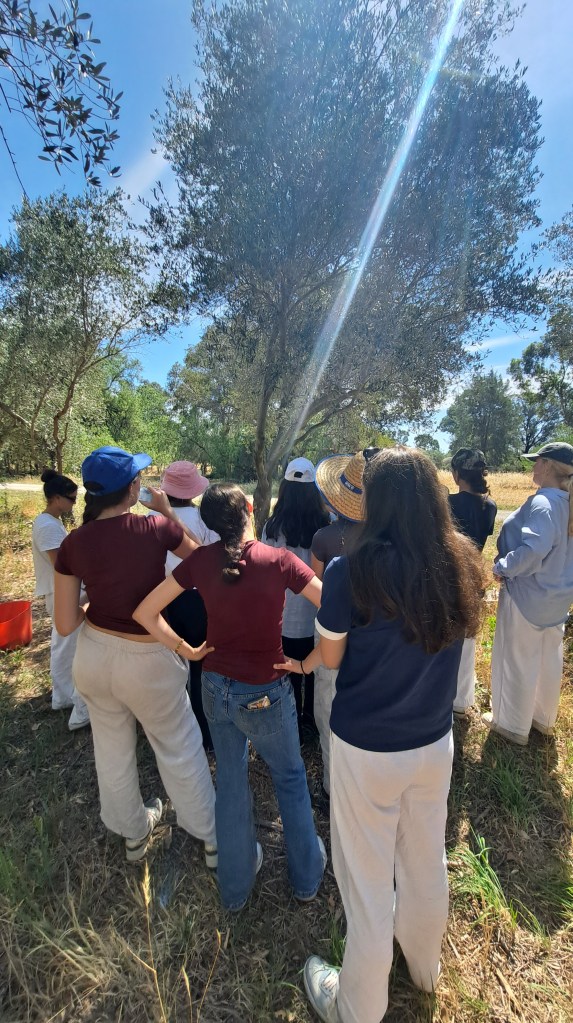
Figs, Olives and Grapes 
The Olive Trees 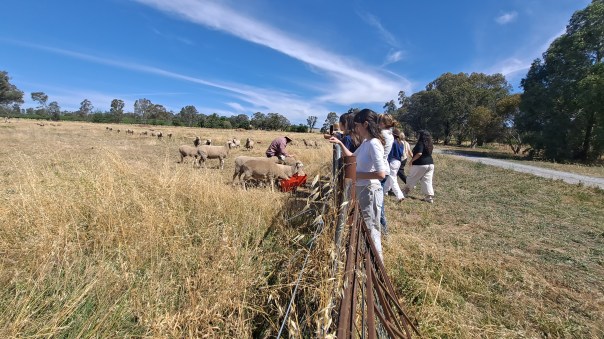
Raising Organic Lamb 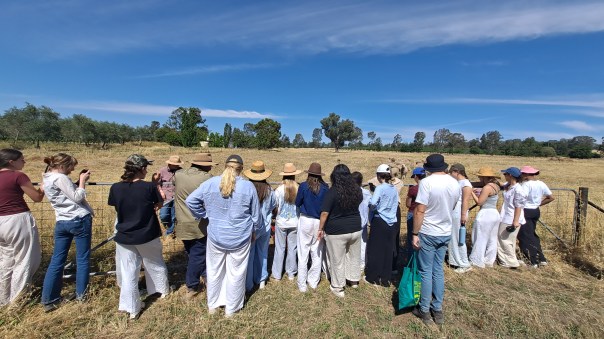
Organic Lamb Management 

Figs 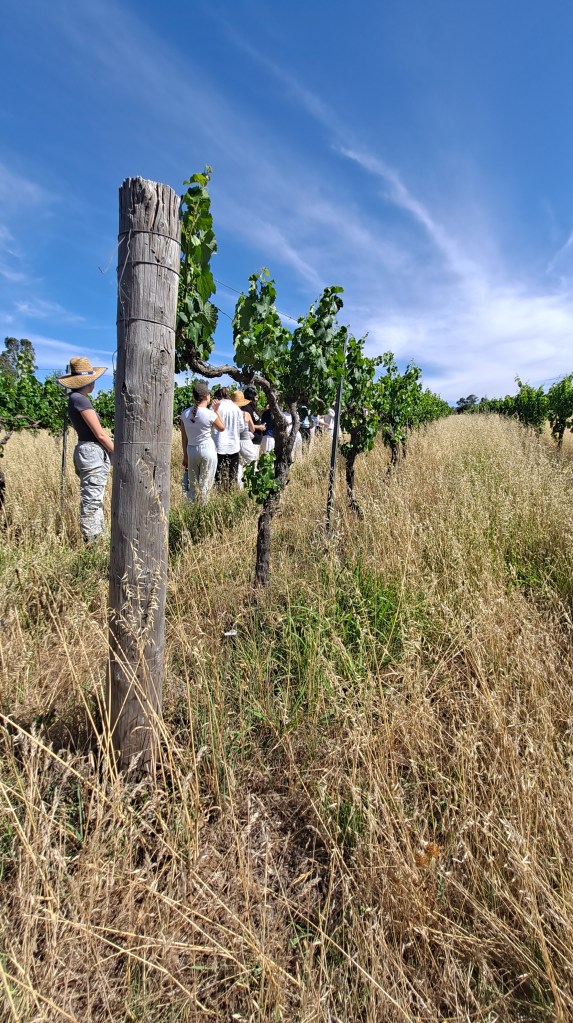
Grapes 
Shelter Belts & Natural Capital 
Grains for Livestock farming 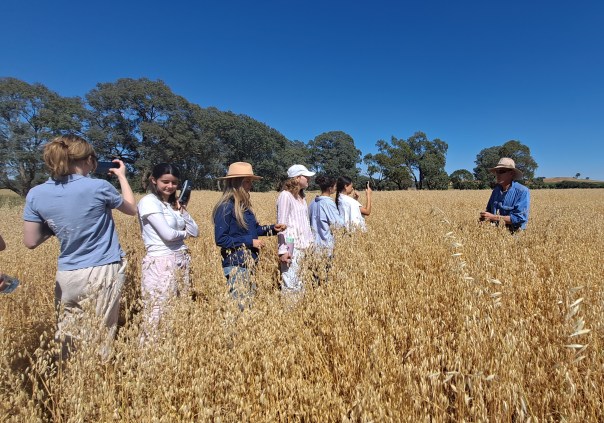
oats nearly ready to harvest 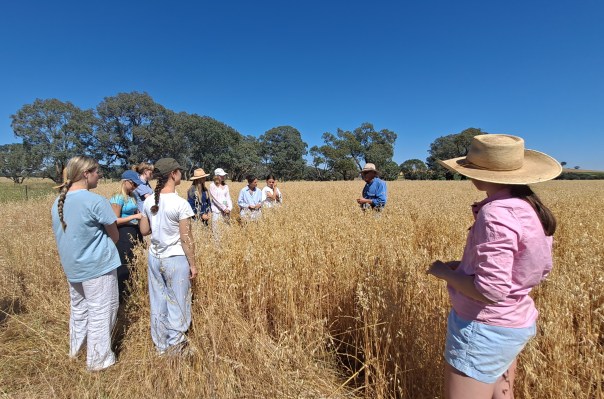
Grain Production 
Grain Production with the Rutledge’s in Woodstock 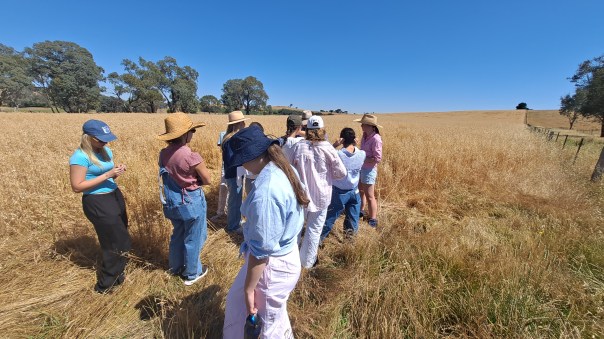

Woodstock Post Office 
Post Office Dog 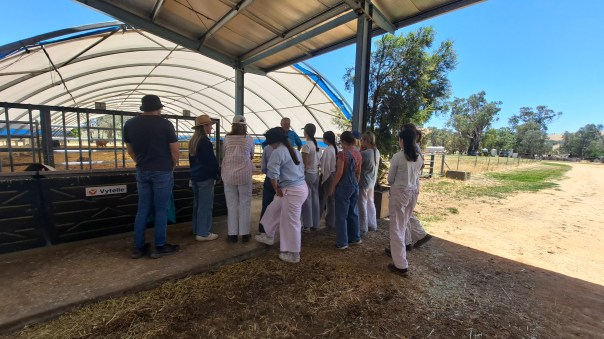
Genetics & Climate Smart Agriculture 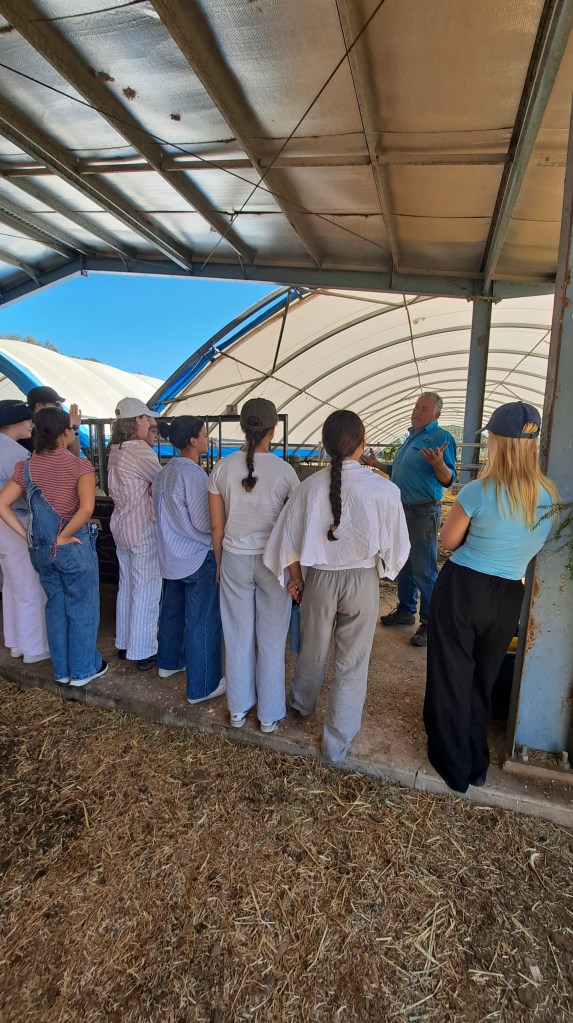
Genetics and Feed Efficiency 

Soil health 
Monitoring our soil 

Soil Sampling 
Meeting the Heard 
Food prep on the farm 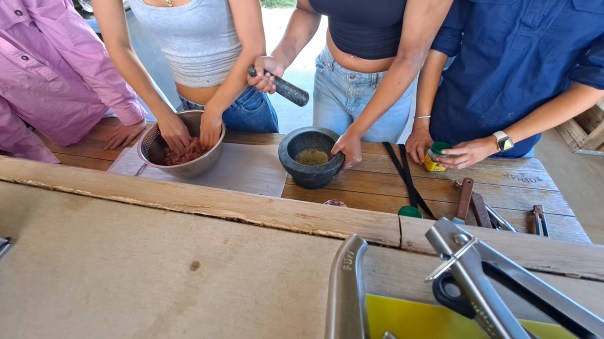
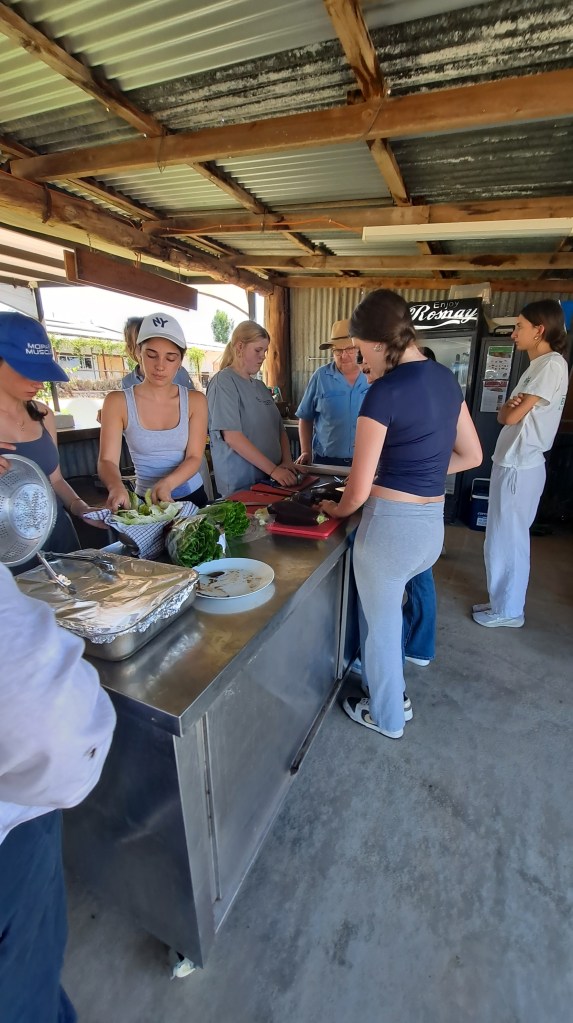
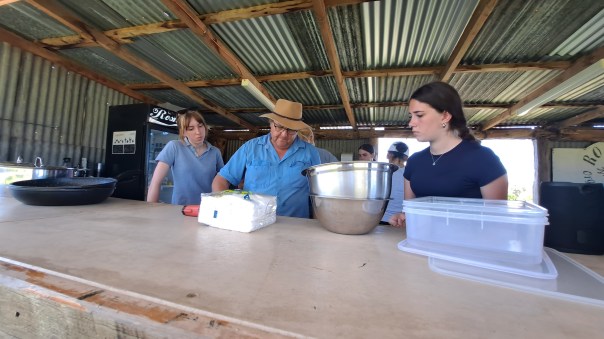

Organic Wine & Grape Juice Production 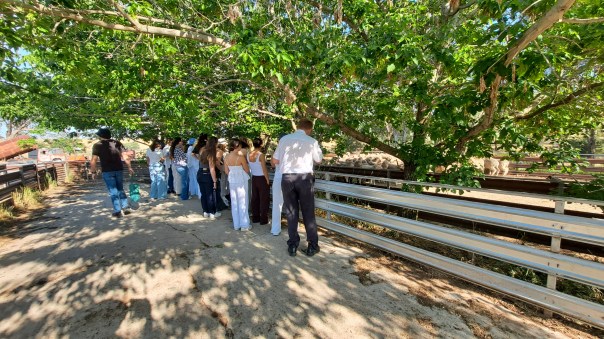
Merino Wool Production 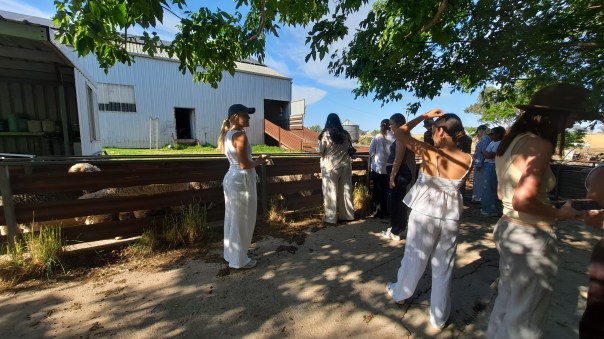
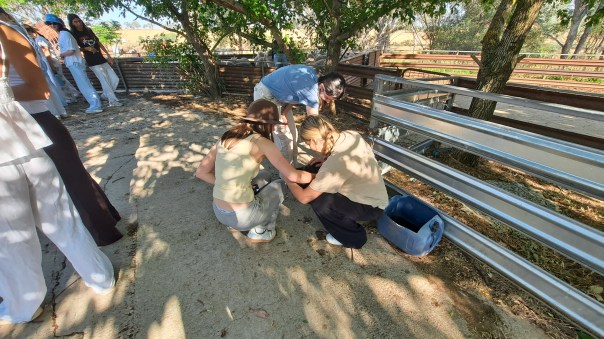
Working Dogs 
Examining the Fleece 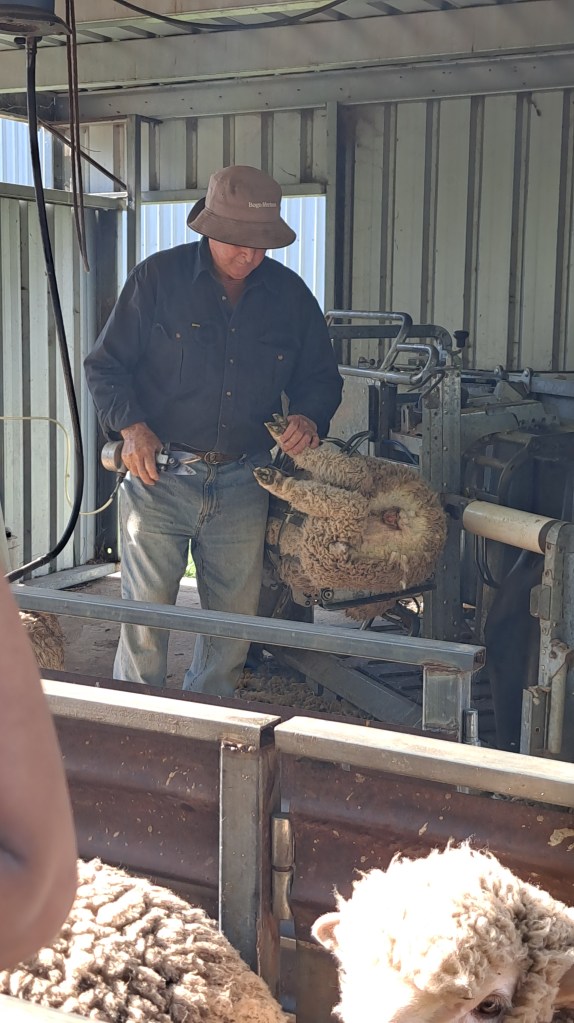
Sheep-scaping! 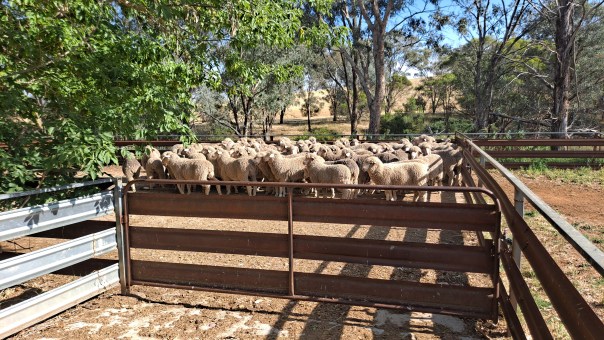
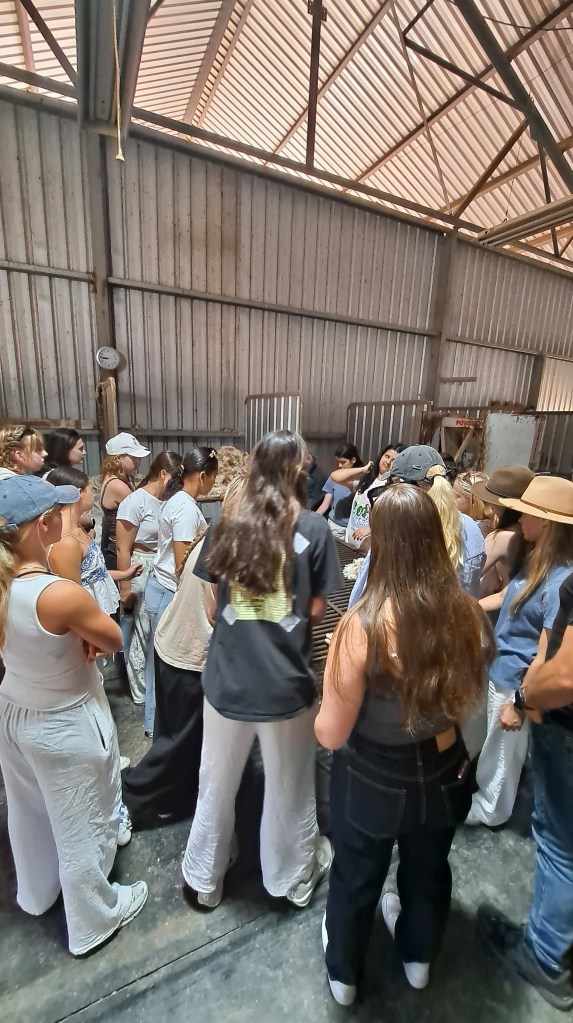

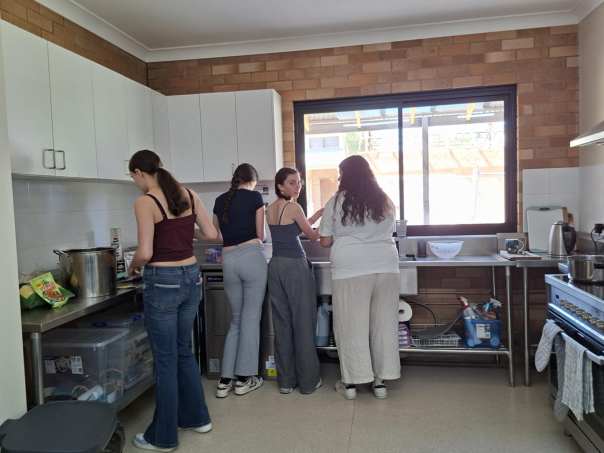
Cooking up some meals for the community 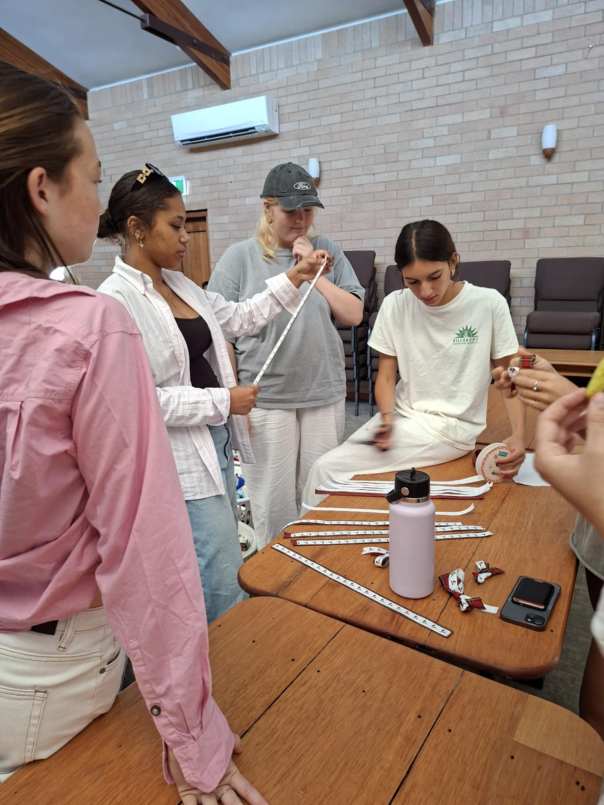
Canowindra Connections Food Basket 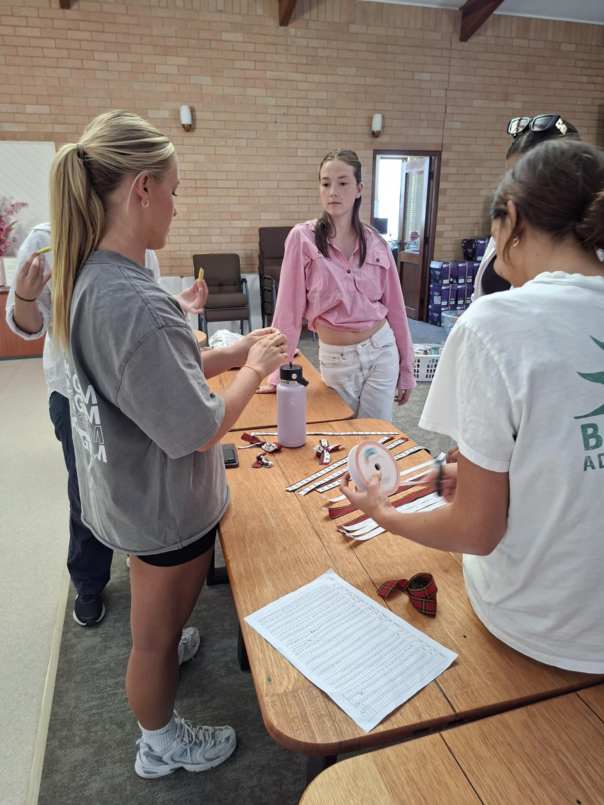

Montrose House, Canowindra 
Montrose House in Canowindra with Tommy 
Canowindra Connections Food Baskets 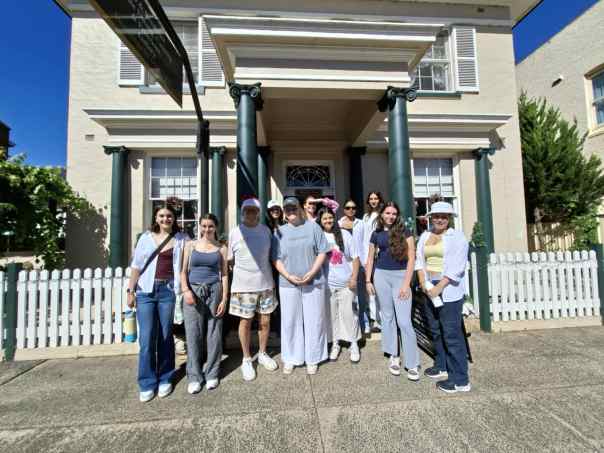
Hospitality Canowindra Style with Tommy
Will’s Working Bee
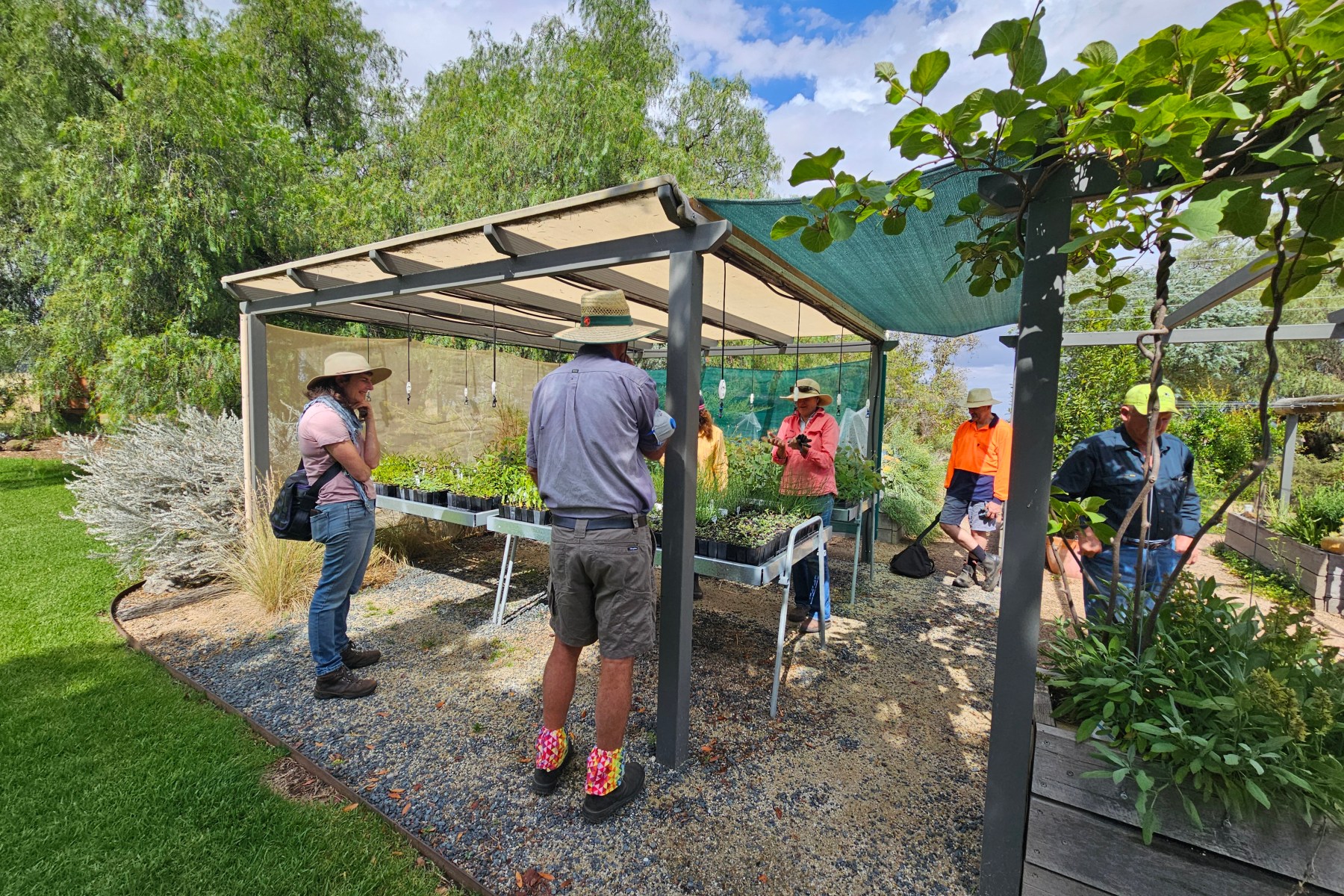
2025 has been a great year for on-ground working bee’s which, thanks to our Glossy Black Cockatoo planting project resulted in 60 volunteers (approximately 240 volunteer hours) across 6 planting events! Brilliant stuff, but that wasn’t enough for you apparently and we’ve been asked to provide MORE working bee’s which is totally amazing. So, we put on one last event for the year and that was at Will’s farm in Cudal – partly to thank Will for his work in looking after our tube-stock in between plantings but also because his place is just so beautiful & worthy of a helping hand.
Will runs a sheep agistment enterprise on part of his 274 hectare farm Lowanna with the rest comprising of paddocks, corridoors and other biodiversity plantings. Will & his wife Sue who sadly passed away last year, have been on a tree-growing mission since moving to the property in 2002, so much so that Will’s lost count of just how many have been planted and you can tell – the whole place is just beautiful.
Today our team of willing workers turned up to help Will straighten up some old tree guards that were still required while removing and collecting guards that had served their purpose & weeding around the edges. Before doing that we took a look at Will’s substantial veggie garden and got a tour of his growing native plant nursery – a labour of love and necessity – reducing both the costs and stock availability issues that can occur in large-scale revegetation initiatives like the one Will has taken on.
Our team of 10 made light work of the tree guard’s before downing tools and walking up to the farm’s high point where we could really appreciate the beauty that brought Will & Sue here. Sue wasn’t left behind, we paid our respects to her as we passed where her ashes were scattered and thanked her for leaving such a beautiful green-thumbed mark on this lucky piece of the world.
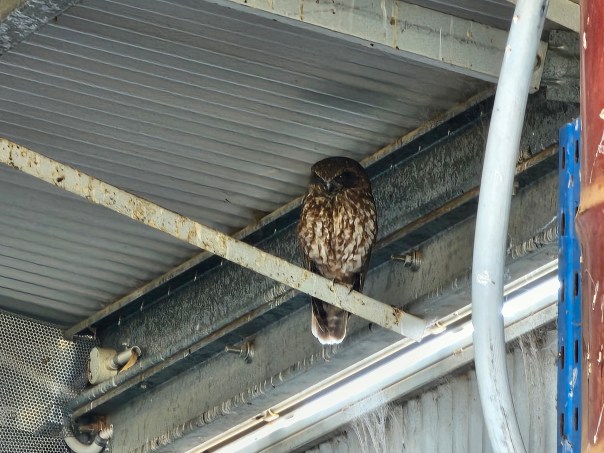
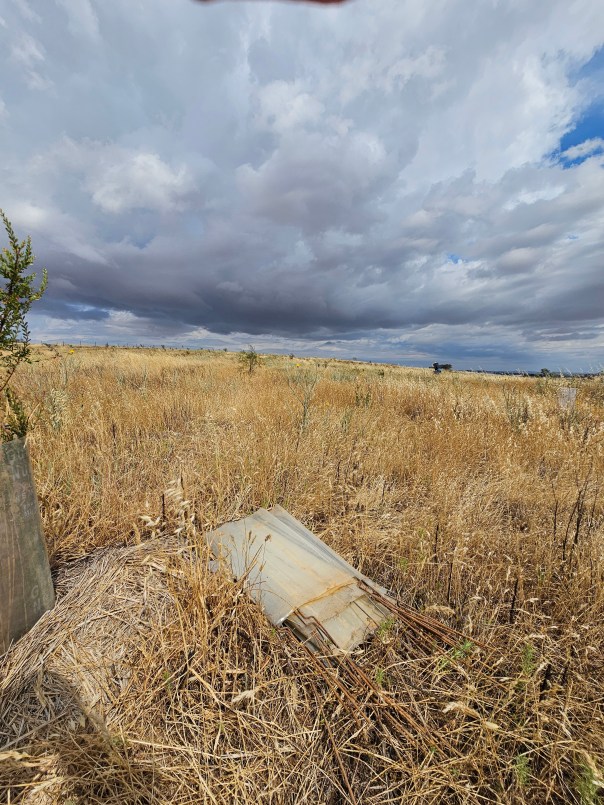
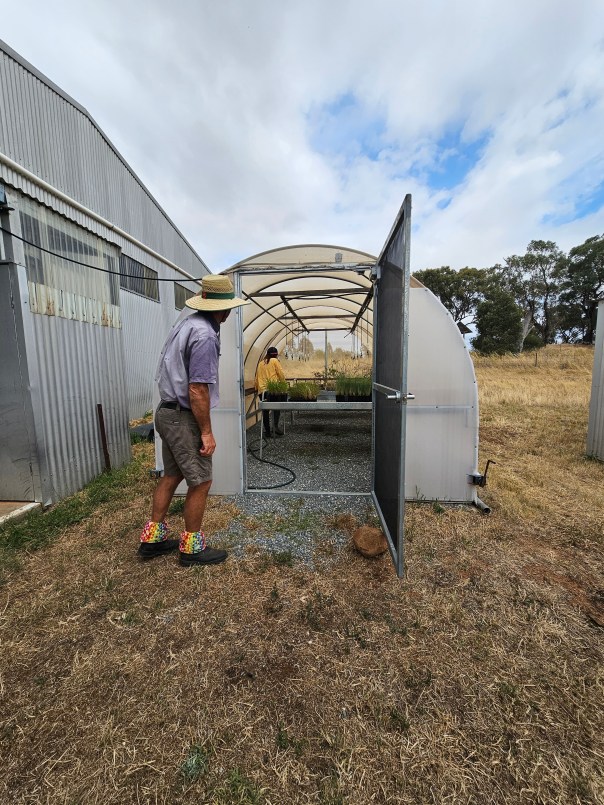


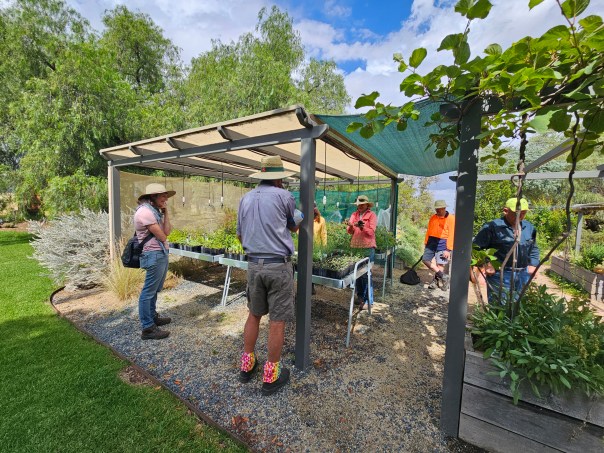
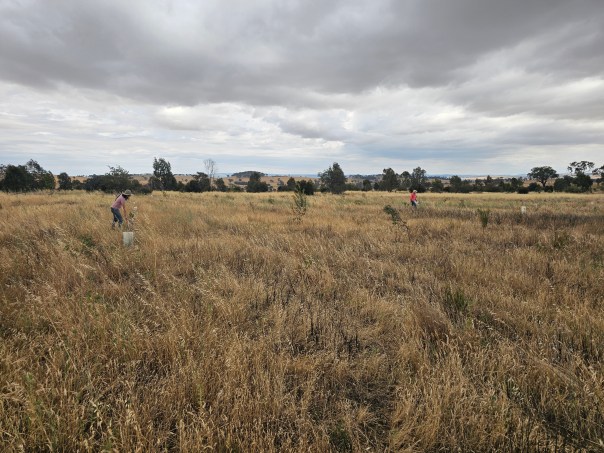
N.B: When we arrived, we were introduced to the resident Boobook owl (See slide show). This is what the owl would sound like should they call.
We’re always happy to have more volunteers on board for our Working Bee & project planting events so if this looks like something you’d like to participate in, do drop us an email or give us a call. We publish coming events in our monthly newsletter which is free to sign up to and also contains details of grants you can apply for plus other events in our region that we feel may be of interest.
Soil Microbiology on Farms
Last year we received funding from the Biodiversity Conservation Trust to run a project looking at soil microbiology across our region. As lead of that project for Mid Lachlan Landcare, I chose to trial the Microbiometer, an in-paddock soil microbiology test that allows farmers and land managers to measure their total soil microbes and the soil fungi:bacteria ratio both quickly and cost effectively. While that project finished up in August 2024, I still had test strips remaining which, during the course of this year I’ve used while going about my general farm site visits & school excursious. By late November, with around 10 test strips left I headed out with Grazing Group leader Scott Hickman to a farm in Carcoar and to a farmer who’se been doing quite a bit of experimenting of his own in the soil biology space…
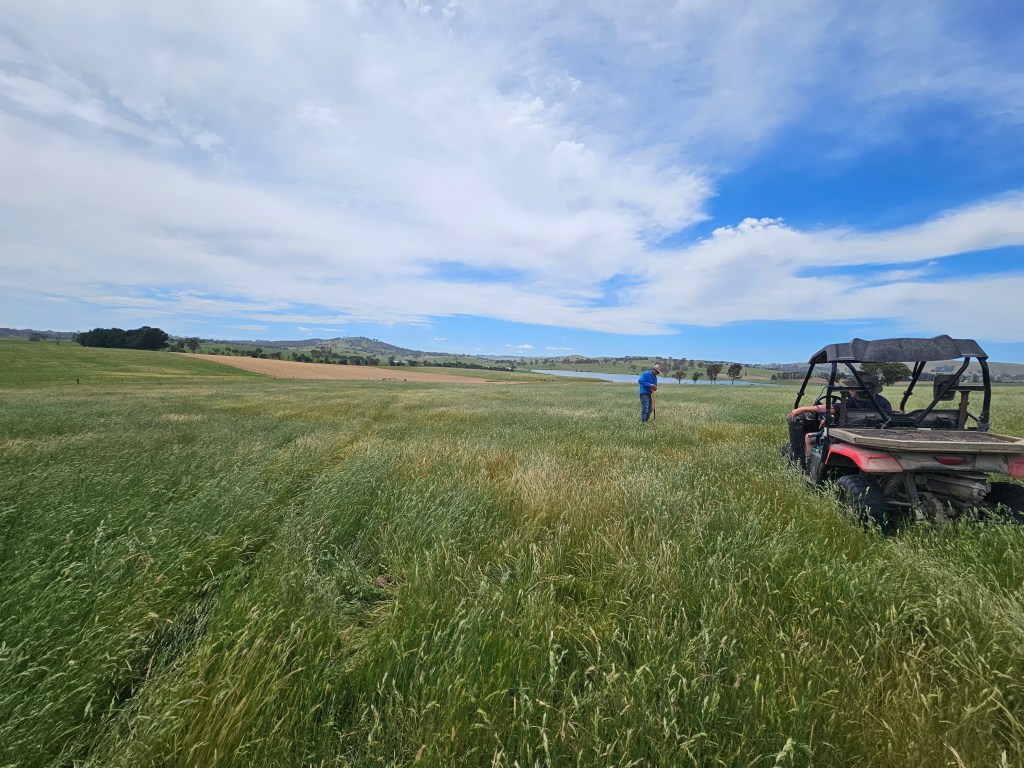
Sam has been on this farm since 1983 and has been taking a soil-biology first approach since 1991. Prioritising soil biology has taken many forms including how livestock are managed, what crops are sown, how paddocks are treated & what & when any adjuvants are added. A common narrative that exists around farmers is that they are a conservative, risk-averse bunch who tend to stick to their own tried-and-tested ways of doing things. While that can be true and, given the mental, physical and even spiritual costs associated with getting things wrong in farm-world, understandable, I’d say most farmers I meet are deeply curious, experimental & up for a challenge. You could definitely say that about Sam.
I won’t share the soil microbiology results we collected here as I’ve not yet had a chance to discuss them with Sam but suffice to say his microbes seem happy and in good balance. What I will do though is explain a little more about what we did, just in case you were wanting to do the same at your place.
Soil Microbiology & General Health Check List.
- Stick a fork in it.

One of the cheapest, fastest and most rewarding things you can do with soil is prod it! Just noticing how easy it is to get a fork in the ground tells you so much about compaction layering & soil composition.
2. Count the critters you can see.
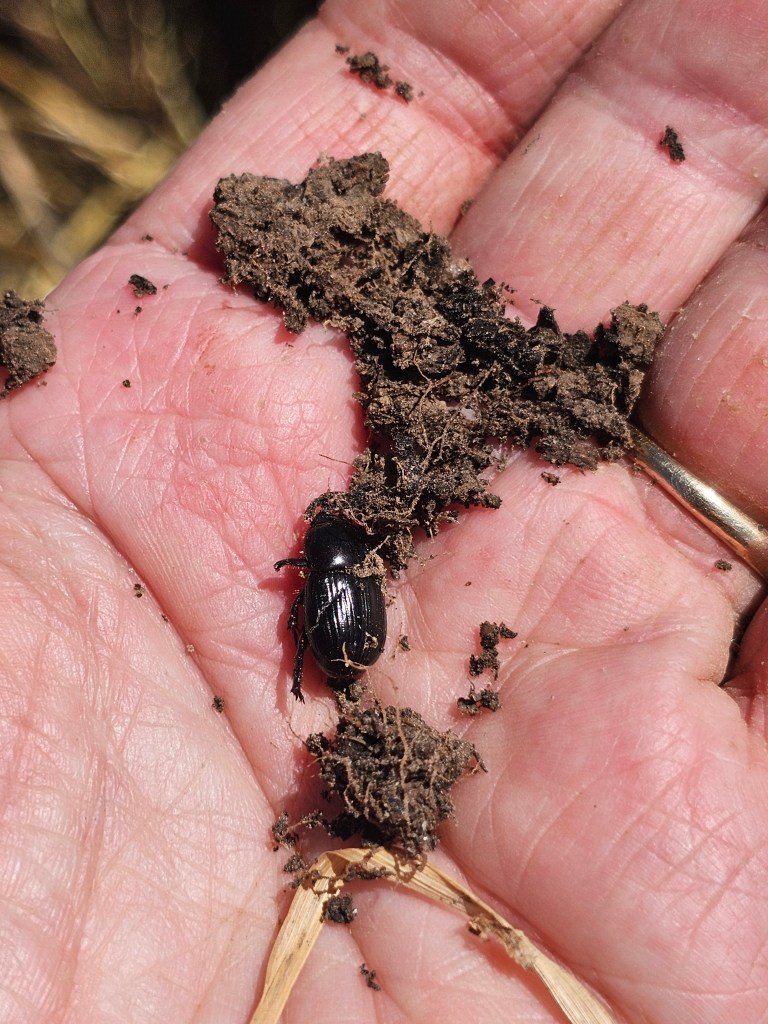
I always conduct an informal count & characterisation of what we find in a clod of soil. Soil macrofauna includes worms, beetles, ants, termites and grubs. These play a vital role in cycling nutrients – the general rule-of-thumb being ‘the more (diversity & total number) the merrier’!
3. Soil structure
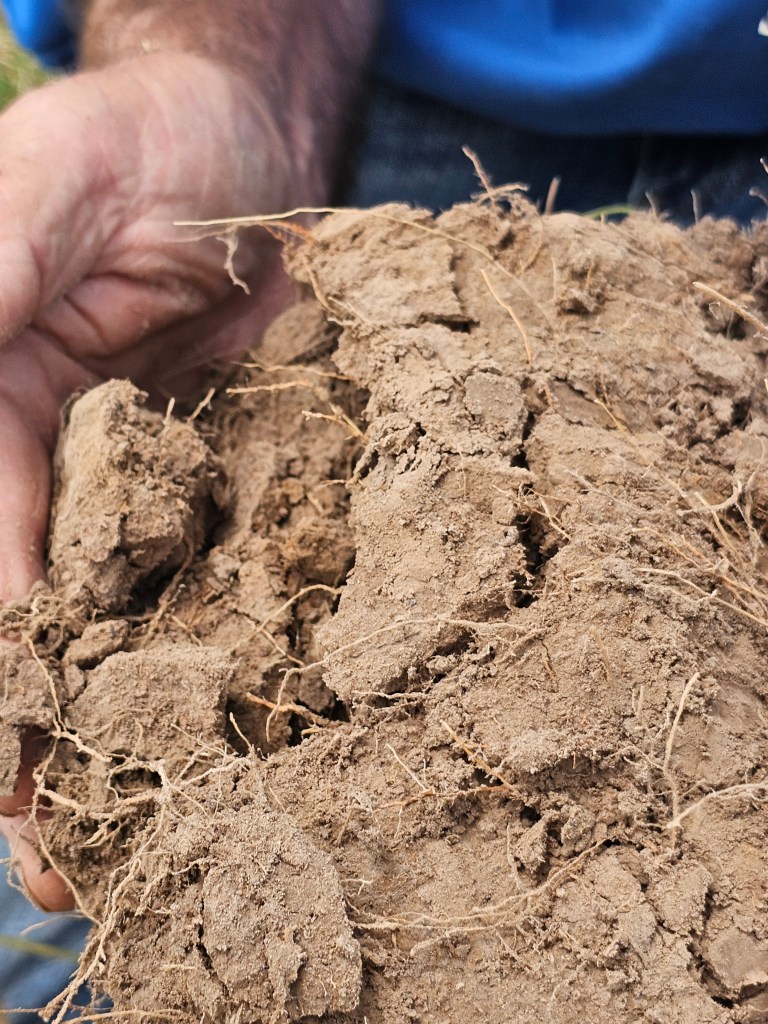
We note the colour & smell of the soil (you can smell life in the soil & get an idea if you’ve got a more bacteria or fungi dominant sample). Get a feel for soil texture (sant, silt, organic matter, clay & sand) & evaluate soil compaction.
4. Root depth & soil aggregates around plant roots

We have a look at how deep roots penetrate, how the soil adheres and aggregates around plant roots, whether the soil contains pores and other air spaces, how well it holds together & how heavy it feels.
5. Biodiversity.
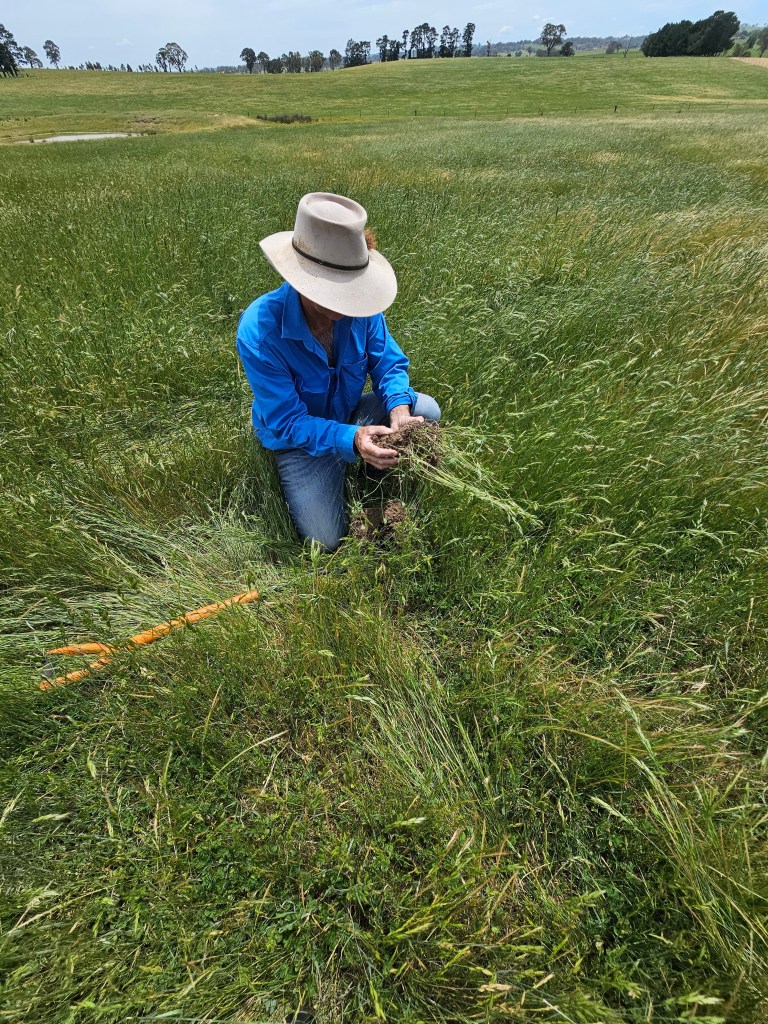
We look at what species are growing, the variety of species and the condition of the paddocks – bare ground vs green growth vs brown material.
6. Site History
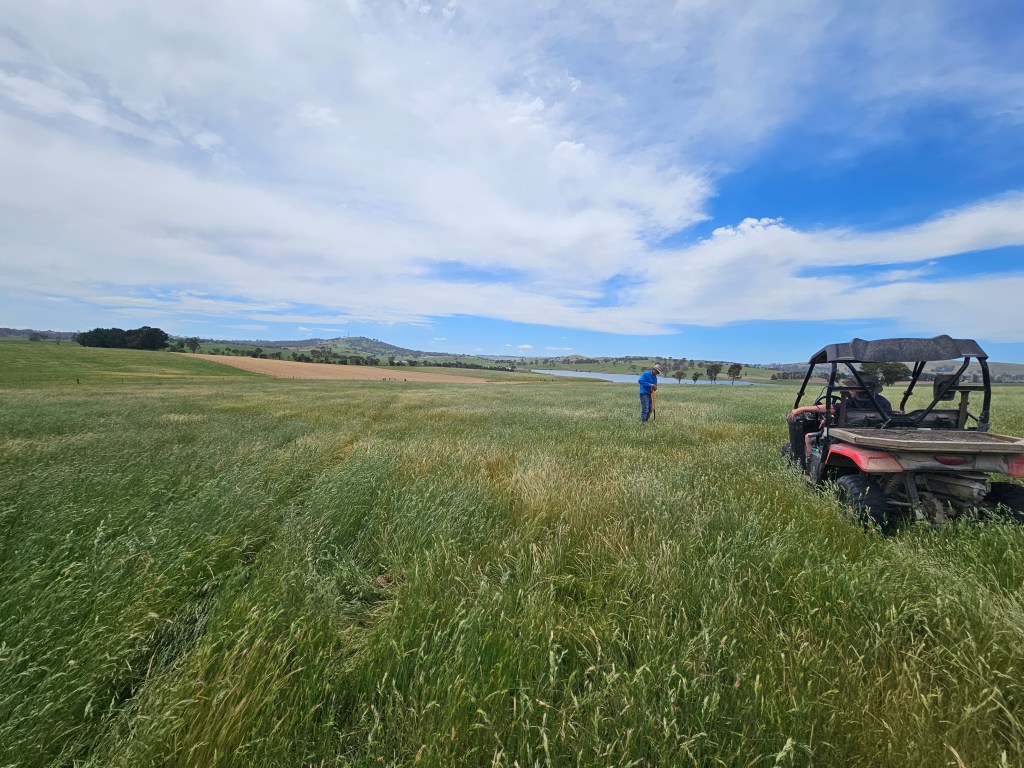
We get a thorough history of each paddock including when it was last grazed (if relevant), any spraying that’s occured and crop rotations.
Testing Soil Microbiology
I then took samples from the top 5cm of soil and evaluated them using the Microbiometer. Soil microbiology generally follows a couple of general patterns with soils more likely to be fungi dominant in woody, undisturbed areas and more likely bacteria dominant in cropping systems when new crops are emerging and in boggier areas – fungi preferring slow systems and bacteria preferring fast. The total number of microbes present vary based on how much action there is at the site and the sites underlying potential (which is related to the underlying geology).
I also measure soil pH and do a rough soil moisture reading as moisture levels do affect total microbe numbers.
All of this data, plus consideration of the site geography (weather impacts, slope, wind speeds etc) helps us come up with a narrative description explaining the farms current soil health.
Soil health in a farming system is largely subjective and relative in as much as the aim is to get as much productivity out of the soil as possible while maintaining system health. Farming soils are not ‘natural’ in the sense that an undisturbed Box Gum Grassy Woodland may be thought of as natural but that doesn’t mean they are inferior – it means they are different. For example, a healthy and productive farmed soil in a Box Gum Grassy Woodland area will likely support a diverse range of grasses, sedges and forbes while lacking orchid diversity. This being because many orchids prefer the soil types found on unimproved pastures – free draining, more sandy surface with light to no grazing pressure. So, improving pasture for grazing can create soil conditions over time that disadvantage orchids or advantage grasses and/or improving pasture so you can graze more results in more chance any orchids that grow will be preferentially grazed out. It’s likely all manageable but it’s definitely not simple and involves the land manager being clear-eyed on what success will look like for them so they can manage for that.
Scott and I had a great day out at Sam’s place and while we’ve now run out of test strips, let us know if this is something you’d be interested in and we’ll see if we can get funding for some more on-ground activity. Also keep your eyes out for a Soil-Microbiology-On-Farms event with our Grazing Group in 2026.
A Closer Look at the Bugs in Our Backyards. A Citizen Science Project
A new Citizen Science project led by the Invastive Species Council & Invertebrates Australia launched on iNaturalist this year. Bugs in My Backyard Week ran from 17 – 23 November 2025 creating the first springtime snapshot of bugs across Australia. I joined the project as an individual this year to get a feel for the nuances and challenges around recording bug life. My big-picture goal was to be able to promote this as an initiative across our community next time the count runs and integrate it into our community engagement/ empowerment program for 2026 and beyond.
Before I dive into my experience I’m sharing a link to the project introduction webinar. This gives a thorough overview of the aims of the project, how to take part and some tips on how best to record sightings.
How my week counting bugs went.
My first thought was ‘boy, that was a little trickier than recording plants but it was also a whole lot of fun!’
I live with a sensory processing disorder which means I experience a lag-like delay in brain-body information gathering. My delay is sometimes so slight, I don’t really notice but at other times is quite pronounced, leading me to be noticably clumsy, clunky and otherwise uncoordinated. Bug hunting, at least the way I was doing it, brought out this vulnerability & made it all feel a little difficult for a while. For example, I’d spot a bug, get my phone on camera setting then be too slow to get the thing focused before the bug flew off. Or I’d spot something, focus on it then be so focused that I’d lose my balance and get all wobbly or start to feel sick (vestibular issues feel like sea sickness). There were the times when everything was going well but then my hair or a bug would land on my face – immediately discombobulating. Finally there when I knew there was something there but I just couldn’t get my eyes to focus enough to find it in my viewfinder. Eugh!
While some of the practical issues I experienced are exacerbated by me being me, most could be experienced by anyone and everyone while doing this type of activity and because of this, I wanted to find a way for bug hunting to be a little more comfortable in general. More on that later…
Pressing On
Despite my difficulties I kept doing the same thing each day, namely, going out in my ‘backyard’ and staring intensely at every bush, bloom and branchlet I came across. Doing that got me a total of 81 observations of 61 species across the week which put me into the top 100 observers (I’m quite competitive with these things – if you’re going to do something, you may as well give it your all) which, given there was 38,707 observers across the project was, I felt, impressive!
Making Bug Hunting Easier & More Accessible
During the week my daughter ran a bug observation activity with her primary school students. She opted for the sheet-collection method where you pop a light coloured piece of fabric under your target shrub before giving it a bit of a shake. The fabric collects the bugs which can then be further ‘caught’ if needs be, using a bug-friendly magnifying device or clear sample box that gives you more time to make your observation. I tried this after my week of doing-it-tough as, while it sounds like an obvious no-brainer way to proceed, one never really appreciates either the impact of making something easier or the consequences of making something hard until you’ve experienced it and this sure did make things a bit easier, especially for spiders, ladybeetles & the other little bugs that don’t tend to fly away quickly.
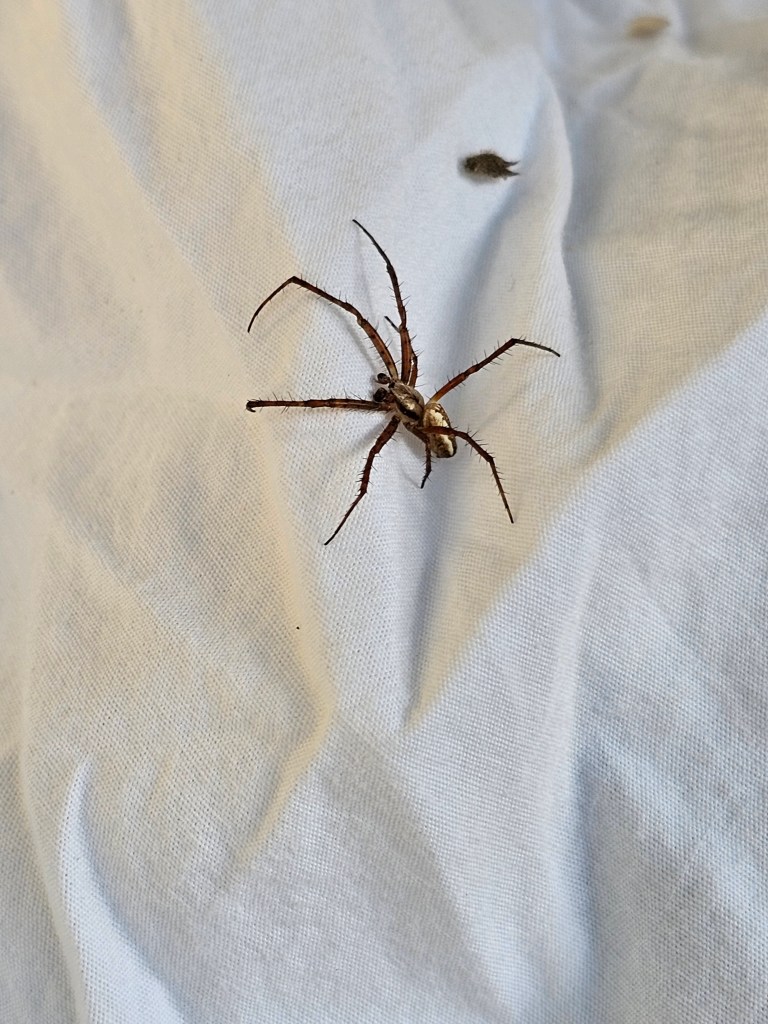
Capturing the more flighty bugs – especially while pollinating flowers
One trick mentioned in the Bug Week introduction video I’ve linked to that I tried out was to video, rather than take a photo of the bugs. I found my phone camera remained focused on the bugs for longer while in video mode, allowing me to re-wind at a later date and capture still images for uploading.
Videoing bugs can be quite rewarding in its own right. Here are two nectar scarabs that I came across this morning. They made me smile at just how much they were throwing their whole selves into the task of nectar hunting.
Other things I noted while bug hunting were as follows. I plan to use these observations to inform how I organise any Bug Hunting we do as a Landcare group in future.
- Have a spotter with you – it’s easy to get carried away bug hunting and wander into bushes where there may be snakes or prickles!
- With the above in mind, always bug hunt in sensible, outdoor shoes & preferably long trousers & sleaves.
- Set a timer for close-up work to give your eyes a break and reduce the chance of eye strain-induced headaches.
- Take water and wear a hat – bug photography can mean you are in one spot for a while trying to get the perfect picture.
- You don’t need to get a perfect picture – the project stipulated this isn’t a bug photography activity but it’s hard not to try and get a detailed, in-focused shot to be proud of…
- Don’t forget you can record sound also – some bugs can be identified by their chirps and buzzing so capturing audio can be very helpful.
- Try hunting in lots of different places. Different bugs hide out in different locations with some of the slower, easier-to-photograph ones hiding under fallen logs & in darker corners. Oh and also check your compost heap! That can be a great place to find worms, slugs and beetles.
- Don’t forget that many bugs come out at night! A balcony or porch light can be rich pickings for photography.
- Wear gloves when handling material that could contain spiders & other bugs. I say this because I picked up something that looked interesting only to realise mid photo-snapping that it was a red back nest with the spider still in it. So glad it didn’t get me.
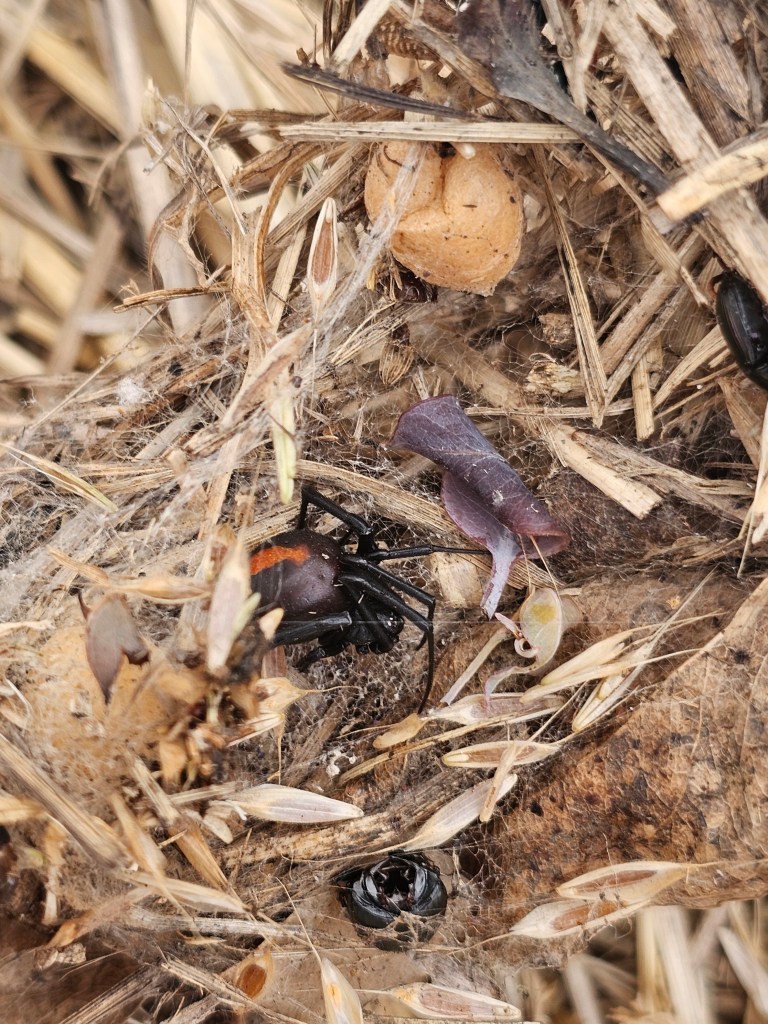
Here’s some of what I captured during my week of bug-hunting.
A final note on bugs and safety
Mozzies are both part of the rich and varied tapestry of bug like and also a potential problem while bug hunting. Our local council area (Cowra) is listed as being a high risk for Japanese Encephalitis, a disease carried by Mosquitoes and as such, a vaccine, which is heavily subsidised, is recommended for outdoor workers. I got mine the week after the Bug hunt which, while not ideal was, I suppose, better than nothing given my new hobby. Oh and it didn’t sting nearly as much as the assassin fly that landed on me during Bug hunt week!

Take care out there and keep your eyes peeled for a Mid Lachlan Bug Hunt Extravaganza in 2026.
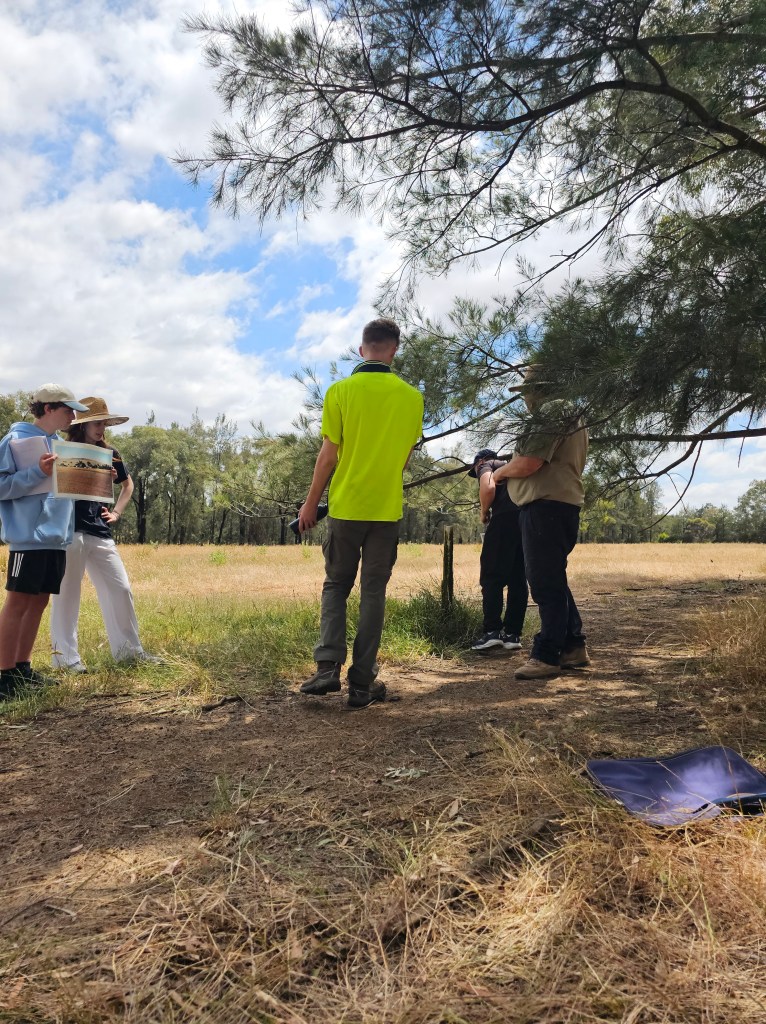
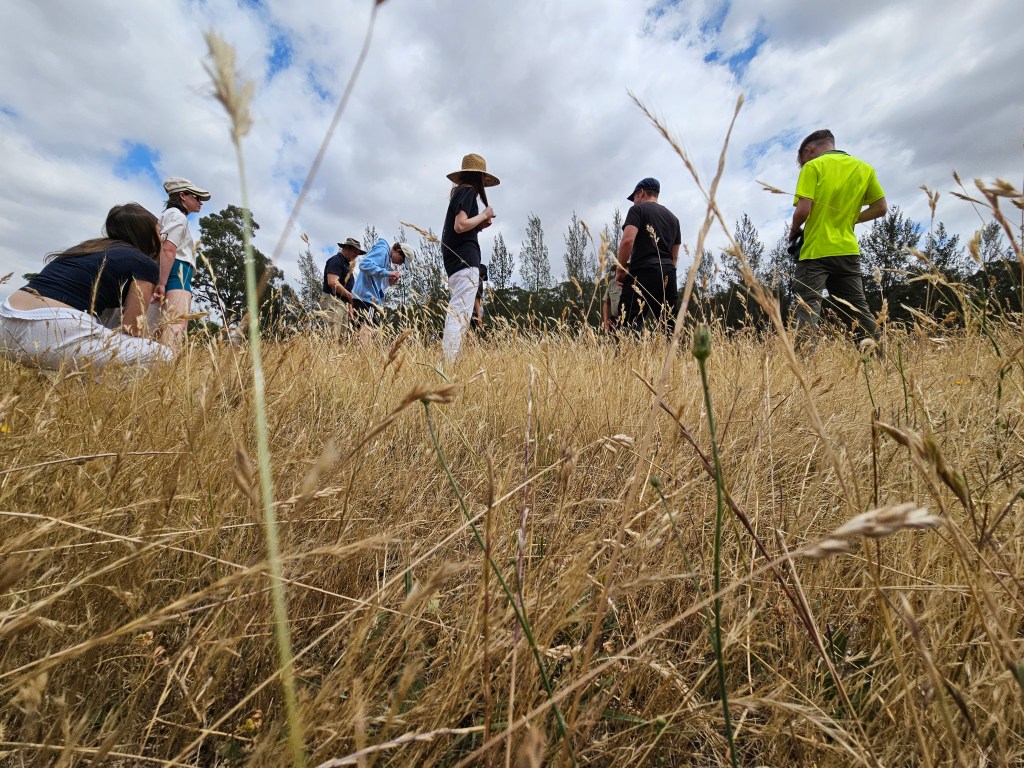
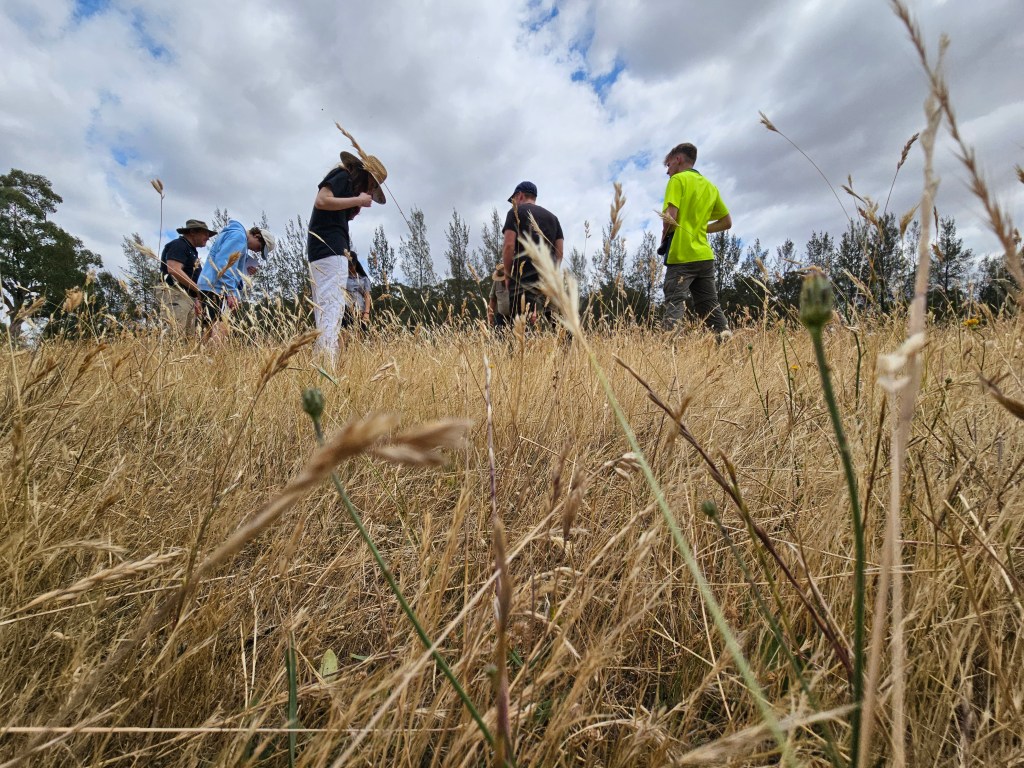
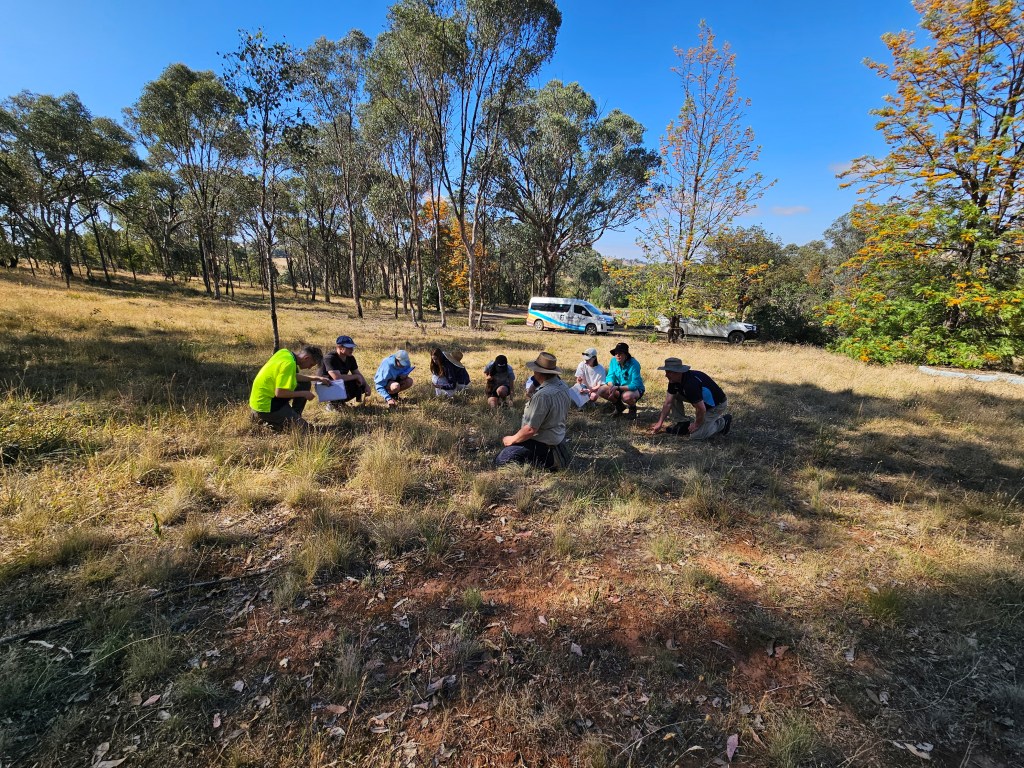
SHOALHAVEN HIGH SCHOOL’S EARTH & ENVIRONMENT SCIENCE FIELD TRIP.
Cowra and Cabbonne Shire Councils sit on top of some of the most fascinating geology in the Central West. Pair that with our rich and diverse farmland & ancient Box Gum Grassy Woodlands and you’ve a recipe for an interesting & engaging field trip.
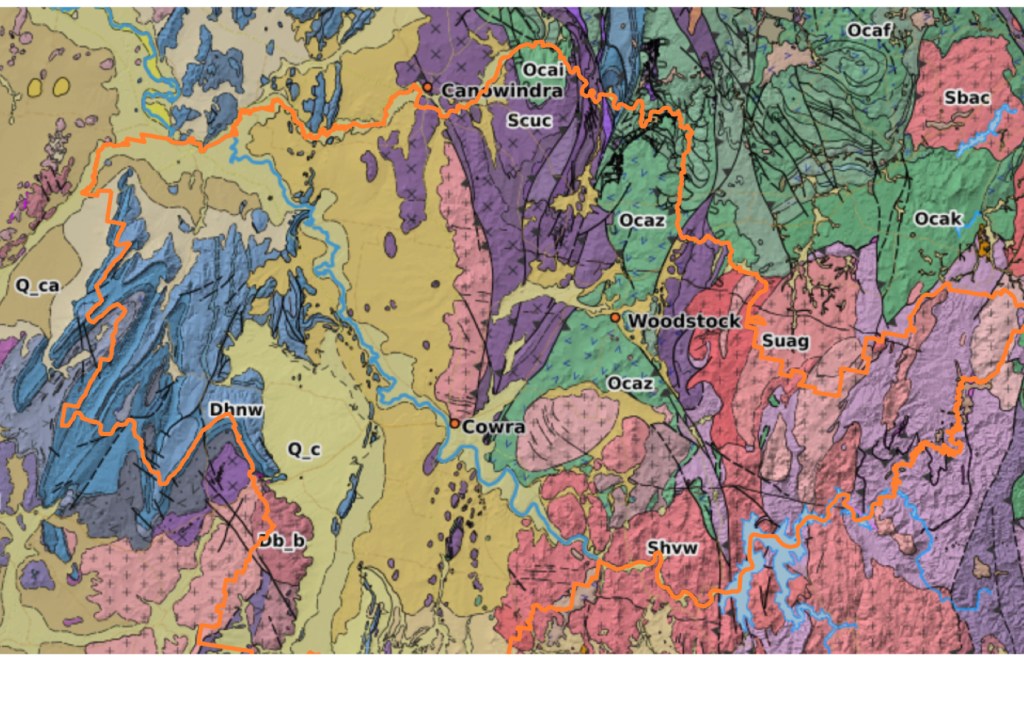
This month we welcomed Shoalhaven High School’s Earth & Environmental Science Students for an immersive day of observing, testing & experiencing how the earth’s cycles happen and, more importantly, how human management decisions impact them.
Topics covered on the day included: Salinity, Dryland Farming, Erosion, Site hydrology, Land Use Change & Reading the Landscape. Drop us an email if you’d like your students to have this experience.


An Evening with the Australasian Bat Society
Last Thursday we were joined by Sandra Guy from the Australasian Bat Society for an evening learning about the Grey Headed & Little Red Flying Foxes that frequent our town – sometimes in huge numbers.
Cowra’s experience and relationship with these fascinating mamals has not always been easy or pleasant. In August 2018, a tree many bats were camped in over at the golf course was damaged in a windstorm leading to the deaths of over 300 bats:
Mass mortalities of grey-headed flying foxes (preropus poliocephalus) from tree collapses as investigated in the above CSIRO report
“Both mortality events were observed in a flying-fox roost situated within a 37-ha golf course in the western portion of the township of Cowra, NSW, Australia (33.8408°S, 148.6806°E). The eastern perimeter of the golf course runs parallel to the Lachlan River, with a separation of 140–240 m at different points. Roost vegetation provided by the golf course comprises sparsely scattered trees. The roost is seasonally occupied, with a colony typically present during the warmer months of the year and vacating during the cooler months”
There’ve also been times when bat numbers have swelled so dramatically that the public has sought to have the bats moved on due to their noise, their droppings and fears over community health and safety.
I first started looking into Cowra’s relationship with these fascinating and misunderstood creatures back in January after reading about flying foxes abandoning their regular roosts. I personally didn’t know much about bats and had never personally been bothered by them (I live a way out of town). Nonetheless, I could empathise with the plight of both the bats and humans, especially once I learned just how big and how noisy the camps could become.
I sat on my own research for a few months, opting to schedule a ‘bat night’ for spring – a time when the bats that gather in great numbers around the town come in to have their babies. This also happens to be around Halloween – a fitting time to go out and spot these spooky night flyers! So, that’s what we did…
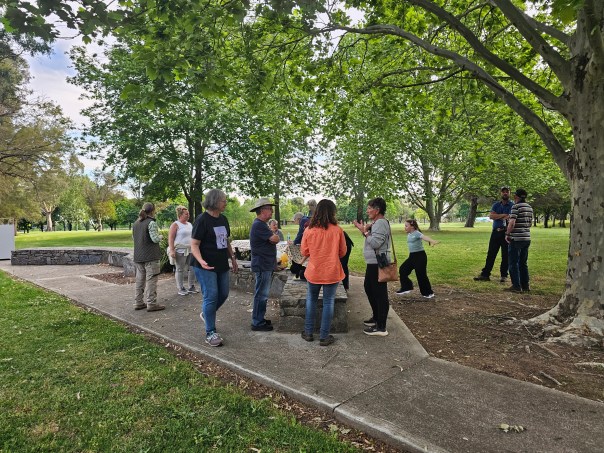


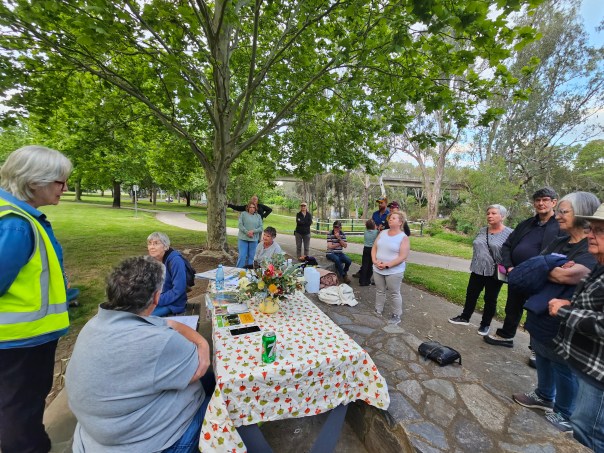

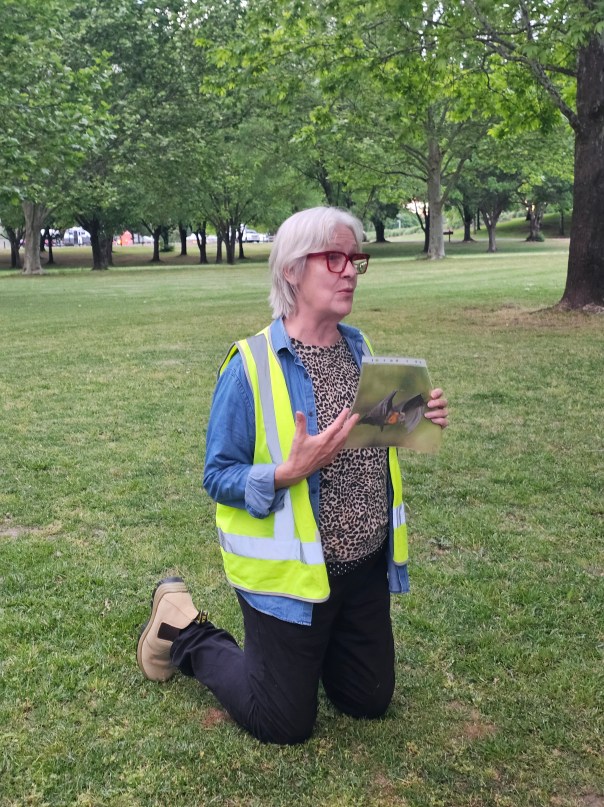
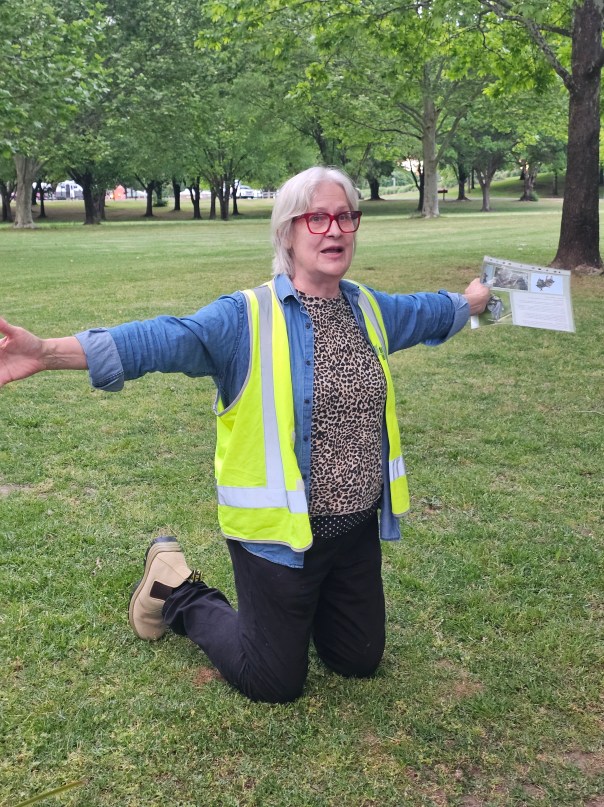
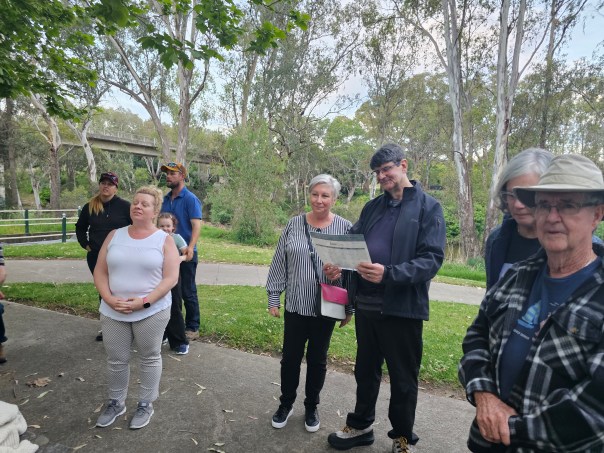


I was introduced to Sandra through the Australasian Bat Society’s Bat Night Coordinator Maree. Sandra lives hear a large bat camp in Sydney and, having family in Cowra was happy to make the drive. On meeting Sandra, I realised we’d struck gold – she was a wealth of knowledge and enthusiasm, keeping us enthralled for a good two hours while we waited for and then watched the flying foxes leave their roosts.
Sandra explained how bats grow forests while we sleep by carrying seeds far and wide before pooping them out where some germinate and become new forests. She explained her work as a bat carer, talked about bat biology, habits and their personalities, dispelling all prior notions we held of these being dirty, evil creatures – they are actually very cute, intelligent and personable! All this as we walked along the banks of the Kalari Bila (Lachlan River) here in Cowra.
I suspected I’d like bats a little more after this encounter but I didn’t think I’d fall in love with them. They really are incredible creatures and not at all like the spooky horrors you see in the movies!
FAST FACTS
Behaviour (Ecosystem services)
- Long distance seed dispersers and pollinators 10’s of km per night
- Travel up to 400km between roosts
- Disperse up to 600 seeds a night
- Responsible for the propagation of at least 289 plant species across their distribution
- Grey-headed (p.poliocephalus) babies are typically born between October and November.
- Prefer complex vegetation upper, mid and understory layers
- Prefer dense vegetation and dense understory with closed-canopy 3-5m high
- Prefer level site over hills
- Midstory habitat crucial as this maintains a good climate for roost
- Bats drink by skimming their bodies over large waterways (rivers) then sucking the water from their bodies
Threats
- Human persecution – Urban roosts cause conflicts.
- Habitat loss – Fragmentation or fissioning of roost populations attributed to environmental change – land clearing of winter flowering native species & increase in availability of exotic winter food in urban areas.
- Gaps in our ecological knowledge of species – Roosting requirements are not well understood
Misconceptions
- Bats are dirty – they are actually very clean and produce high value poop – it contains the seeds that become our forests.
- Bats carry diseases – they do and some can be passed onto humans BUT the risks of catching diseases from bats is zero if you don’t touch bats. You can’t get sick from their poop. Bat carers are vaccinated.
- Bats kill horses (Hendra virus) – this can happen but there’s an effective vaccine that should be given to horses to keep both them and the vets and humans looking after the horses safe.
Things we can do to help Flying Foxes
- Spread the word about the great work Flying Foxes do to spread seeds and grow our forests.
- Plant a bat-friendly garden with lots of pollen-rich native species
- Use wildlife friendly netting on fruit trees to avoid bat entanglement.
- Replace barbed wire with smooth wire OR cover barbs with tape around areas you see bats feeding.
- Report sightings of bats caught on powerlines – they may have babies on board that can be saved
- Keep cats locked up at night
- Support your local wildlife carers
We all came away with a lot of love in our hearts for these cute pollen spreaders.
Further Resources & Reading.
The Pollinators of the Night– A great webinar by the People & Pollinators Action Network based in the USA.
Flying Farmers: a 6 minute information-packed snippet from ABC Australia
Flying Fox Facts – from the NSW Government.
The Australasian Bat Society who can be contacted for help in organising a bat night & for other resources & research.
Diet of the Little Red Flying Fox.
Management & Restoration of Flying Fox Camps
Camp Site Preferences of the Flying Fox.
Flying Fox information from WIRES
Talking Pollinators at Cowra’s Little Magpie Gallery
We were thrilled to be invited to open the Birds, Bees & Blooms exhibition at the Little Magpie Gallery here in Cowra last week. My mind went immediately to the subject of pollination and how I could bring such a broad and vital topic to life in no more than 15 minutes for this art-loving crowd.

It turns out that the best way to get peoples attention is to make sure you focus on the fact that we’re talking about reproduction!
Here are my notes from the speech I gave to promote Landcare & the projects we do:
Pollination
Reproduction. The transfer of genetic material from anther (male) to stigma (female)
Sexual reproduction is Expensive! It consumes a lot of resources – time and energy.
But one reason so many species favour it over cloning themselves because it creates variety and that diversity of expression, sometimes tiny sometimes dramatic, always interesting is what makes us who we are. And it’s that same blending of energy, ideas and cultures that makes art both so exciting and so necessary to us to thrive!
I sometimes think of Landcare as a hive and Tracee and I as pollinators within our community.
We buzz around, collecting & making sense of new ideas, research & ventures.
We meet new people & spend time listening as they open up about their hopes, dreams & plans for the little piece of the planet they call home.
We then use our resources to help create the conditions for those ideas to come to life.
Speaking of ideas coming to life, we’ve a number of live projects at the moment that I’ll mention.
* Cowra is a great place for birdwatching & we design a lot of our projects to build on what’s already here, including to support the work of the Cowra Woodland Birds group who have been conducting thorough bird surveys here since 2001
* Saving our Species initiative – Superb Parrot project which both helps land holders protect paddock trees & supports the establishment of tree lanes and coridoors.
* Glossy Black Cockatoo plantings which this year were funded by BUPA Australia & Landcare Australia.
* Birds in the Club events jointly funded with Local Land Services.
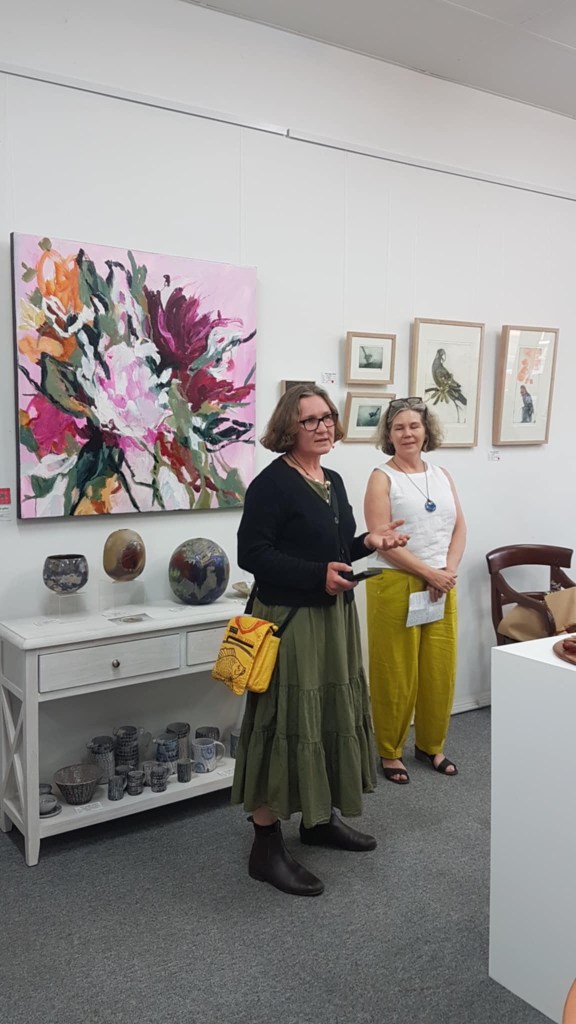
While I did feel like it went Ok, I’ll leave it to Tracee to give the final review:
“Amanda did a fantastic job with her tales of pollination. The art in this gallery is exquisite and well worth a visit if you are in Cowra. It was so lovely to be invited to be a part if this.”
If you’re ever in Cowra do pop in and see Inel at the Little Magpie Gallery. There’s so many nice things, we’re thinking of getting our salary’s direct deposited into there to save time 🙂
Sailing into Summer with our Grazing Group
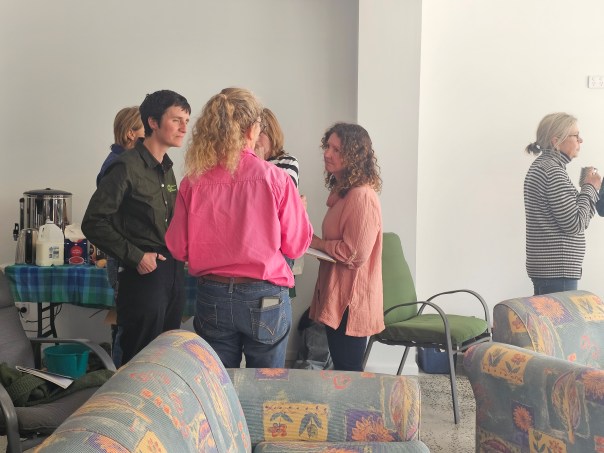
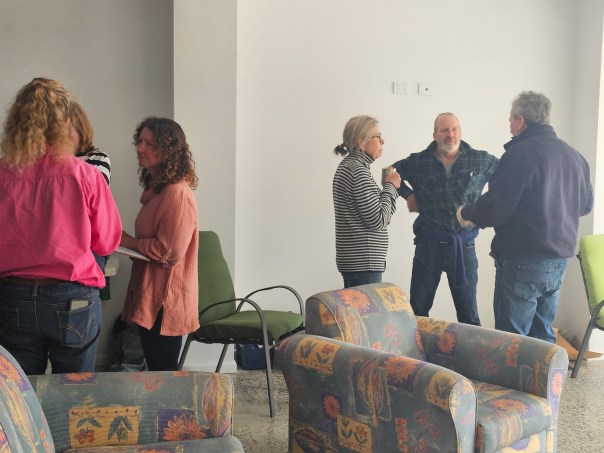
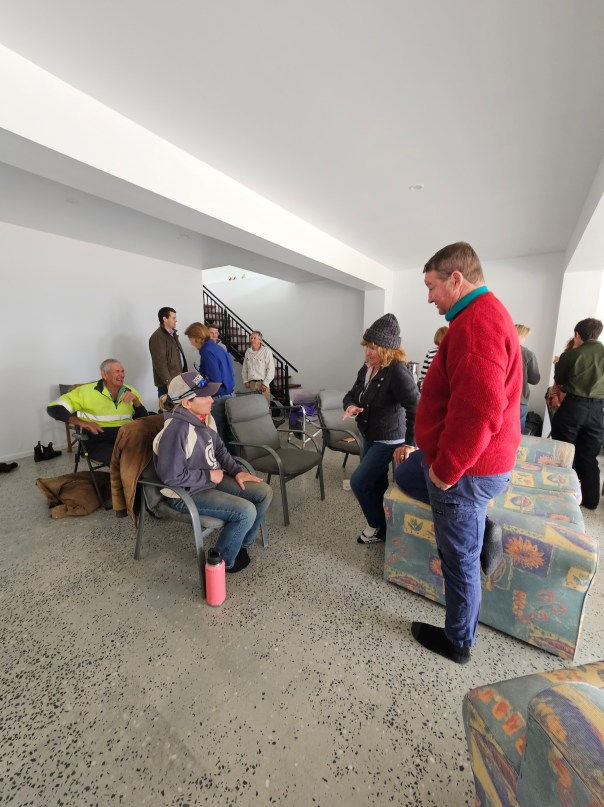
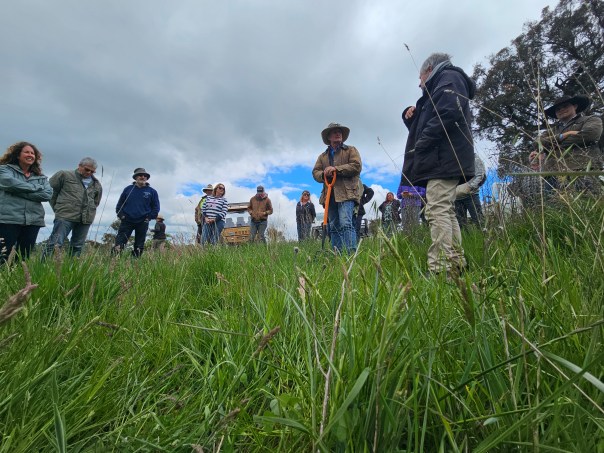
While it certainly didn’t feel very summery outside, inside the mood was a lot warmer as we got together over a cuppa and a yarn to swap notes & strategies on how to tackle the warmer months ahead & our closed season plans.
Notes & main themes from our muster.
- Many of us experienced a short spring growing season. Barley and oat grass is now seeding off across the region with those to the west (Eugowra) significantly further along than those of us further east (Woodstock & Mandurama).
- Summer rain is not a waste in diverse paddocks. Many native grasses are summer active including Kangaroo & Wallaby grass, microlaena and red grass.
- Plan stocking rates & movements based on soil moisture levels
Dairy Park
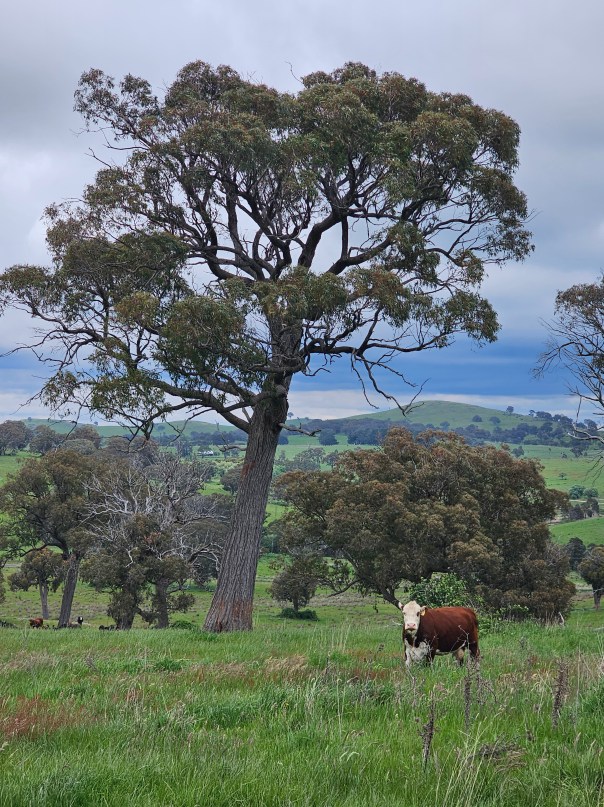
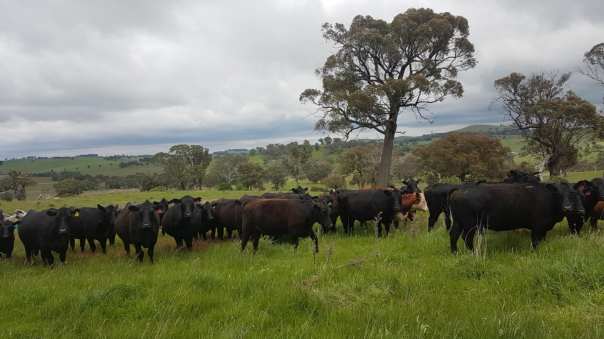
Grant & Lizzy Molloy’s ‘Dairy Park’ is a 700Ha mixed grazing business which consists of cattle breeding, cattle trading, Merino sheep and backgrounding. Their property is in Mandurama, Central Tablelands of NSW.
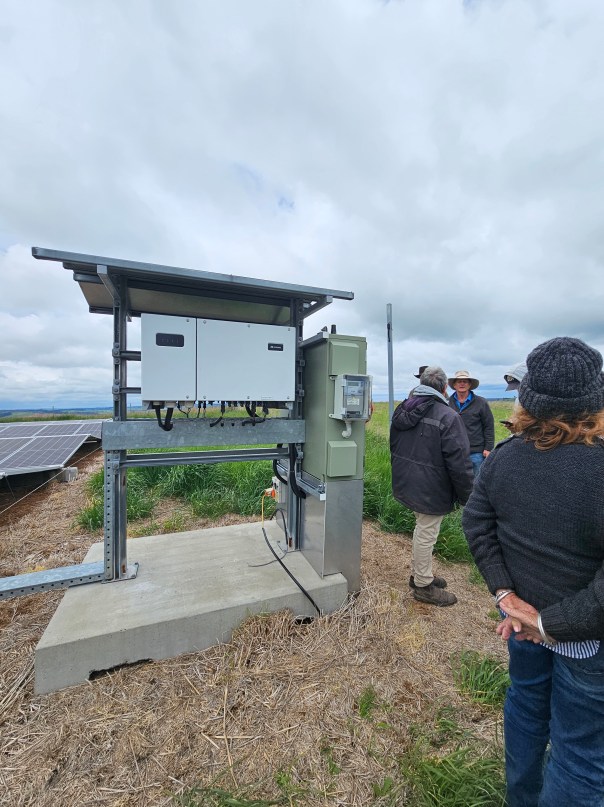
Grant and Lizzie have diversified their income stream through ecotourism and spot trading their solar energy. They are also currently using and trialling technology from ‘Sense My Farm Pty Ltd’ Lucknow which are helping with monitoring livestock and water on Dairy Park.
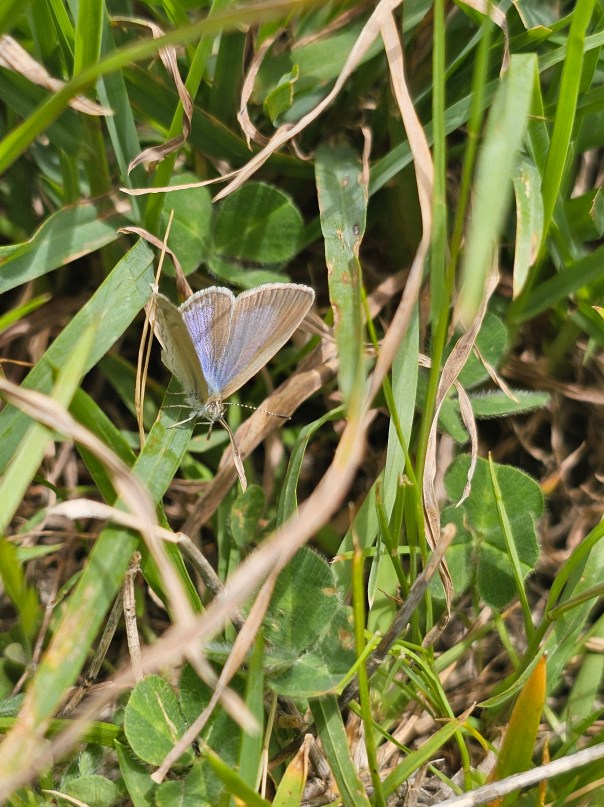
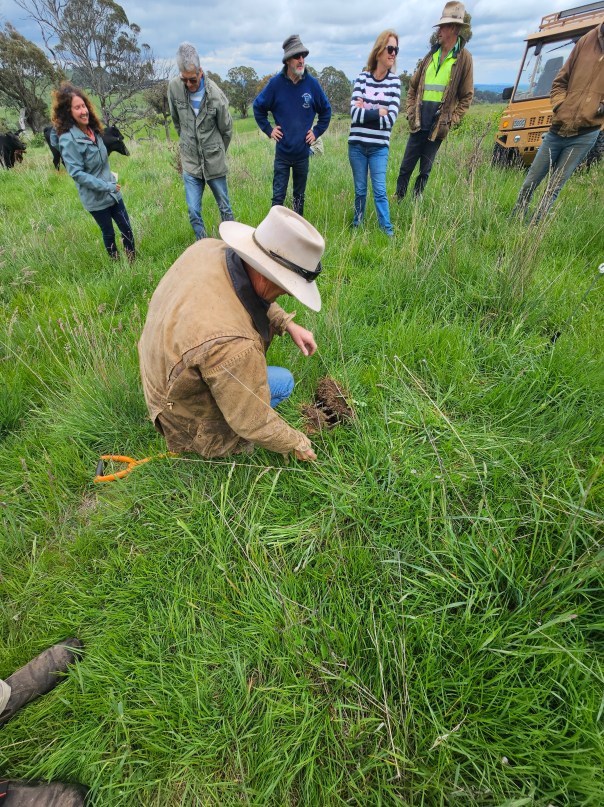
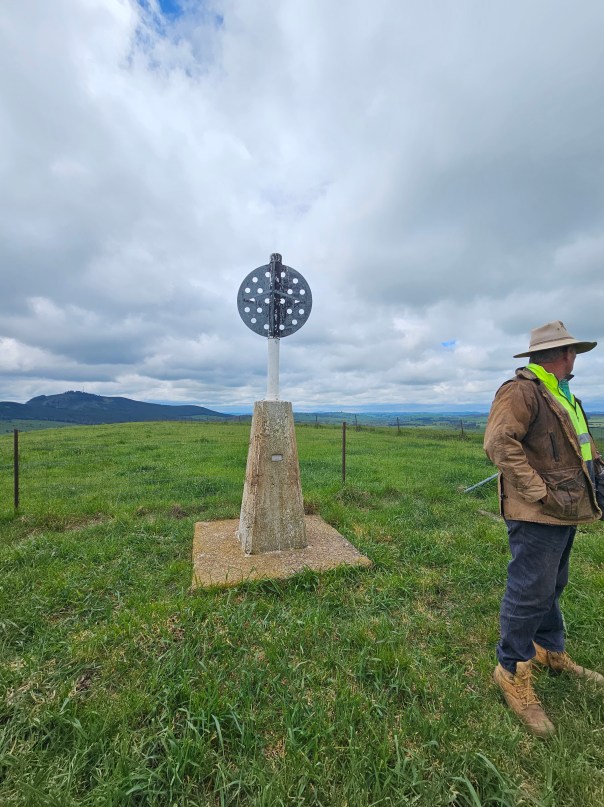
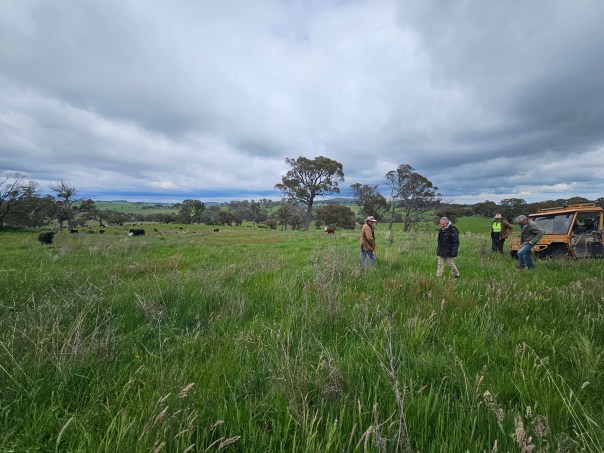
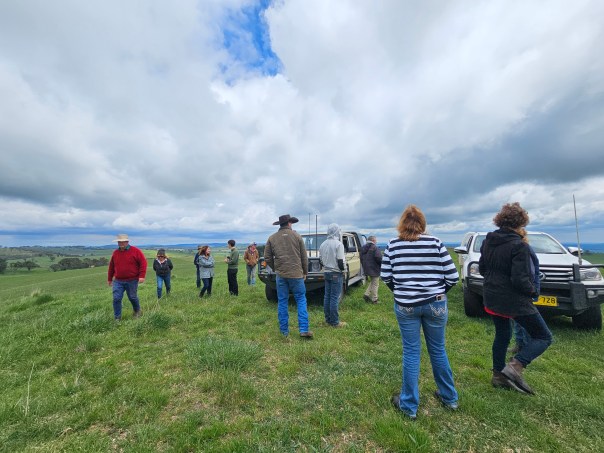
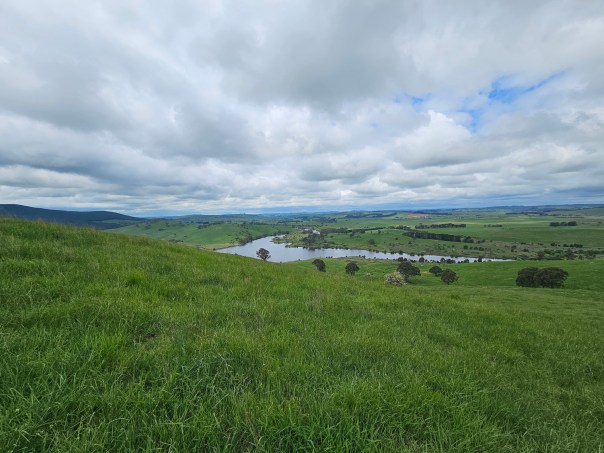
We took a drive around to see the stock, paddocks, dung beetles & solar systems were fairing.












Bioblitz 2025 – Surveying Cowra
The ‘Great Southern BioBlitz‘, or ‘GSB’ for short, is an international period of intense biological surveying in an attempt to record all the living species within several designated areas across the Southern Hemisphere in Spring.
We had a lovely & productive time in Cowra at our Bioblitz event on Monday 27 October.
Alice joined us from Bathurst – she’s one of our regional co-ordinators & along with Tracee, helped local student Patrick with some plant I.D’s for his TAFE assignment. Meanwhile Margie, Karen & myself (Amanda) focused on recording the different insects we’d found under some rotting wood. Up on the hill Annie spent her time focusing on the birdlife, capturing both their calls & photo’s before uploading that data to the iNaturalist app.
On the day we were also joined by Central Tablelands Local Land Services & their guests from the local Aboriginal Land Council, plus we had Suzie & her film crew (Nviro media) who joined us to capture the day’s action as part of their Landcare story-telling contract.
Find of the day was a chocolate lily which Tracee made sure we all sniffed! I also found a Bogong moth hiding in the crack of our office door so that was also exciting – the moth has now been uploaded to the Swift mothtracker webpage that tracks the migration of Bogong moths each year. Finally, we spotted a Christmas beetle that was either very early for this Christmas or extremely late for last! In either case, it’s been a bumper year for these glistening bugs and we were happy to pop it into our count.

Looking out towards Woodstock from Cowra Adventure Playground’s highest point 
Looking for reptiles around the rocks 
Our Christmas beetle find 
Calling the film crew over so they can smell the chocolate lily 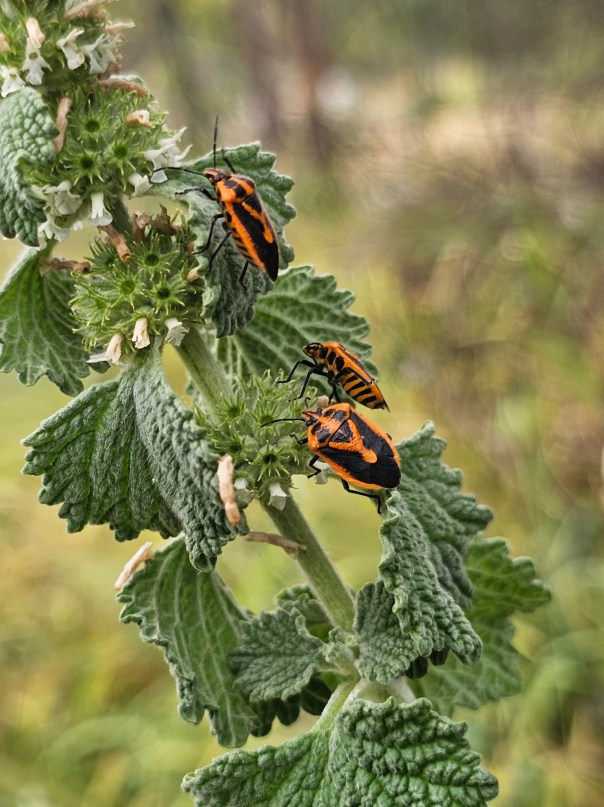
Horehound weed & bugs 
rock ferns & twining glycine 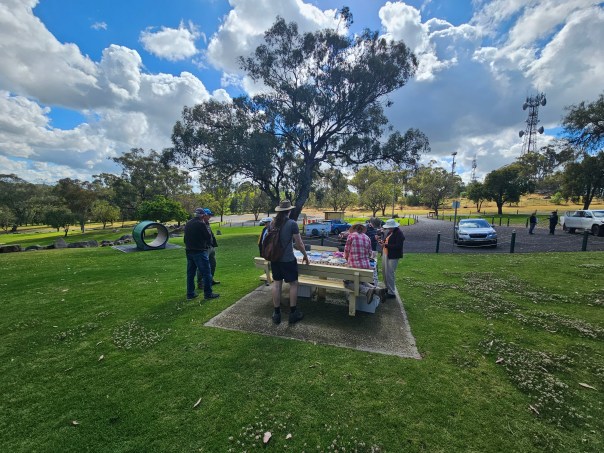
Waiting for everyone to join us 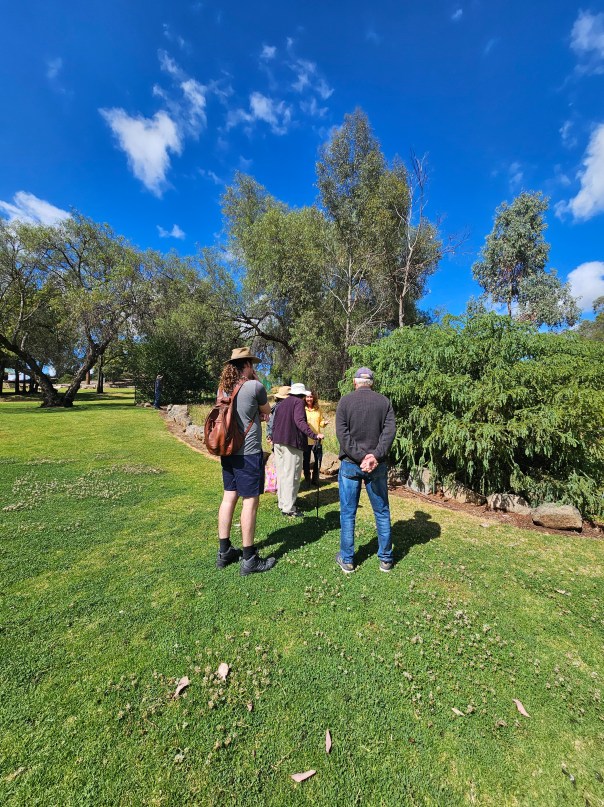
Getting started with a quick iNaturalist lesson 
Tafe assignment in progress 
Sharing tips on how to photograph tiny plants 
Chocolate lily 
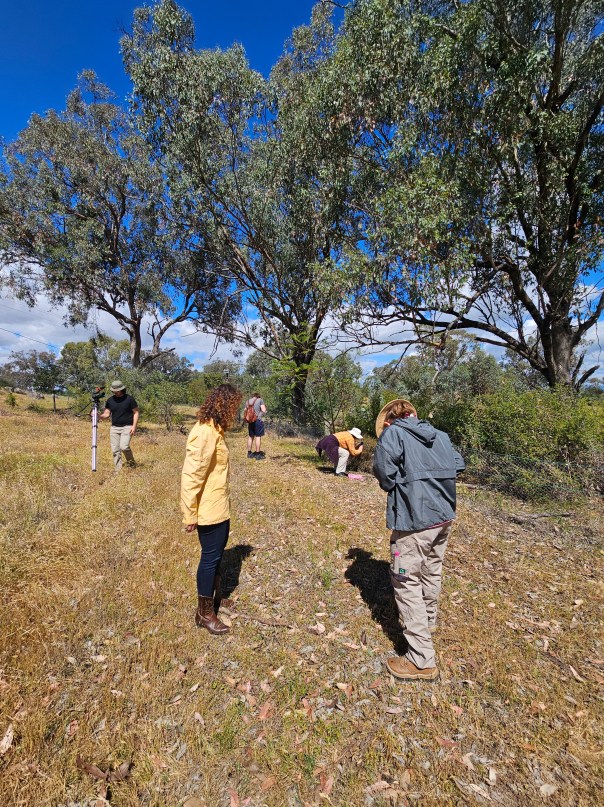
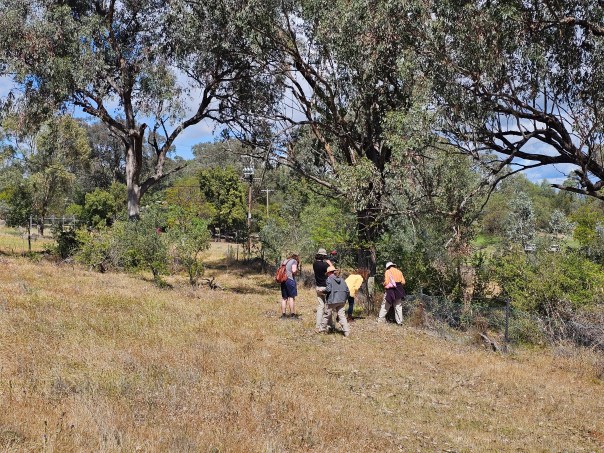
Capturing bird calls & checking tree hollows 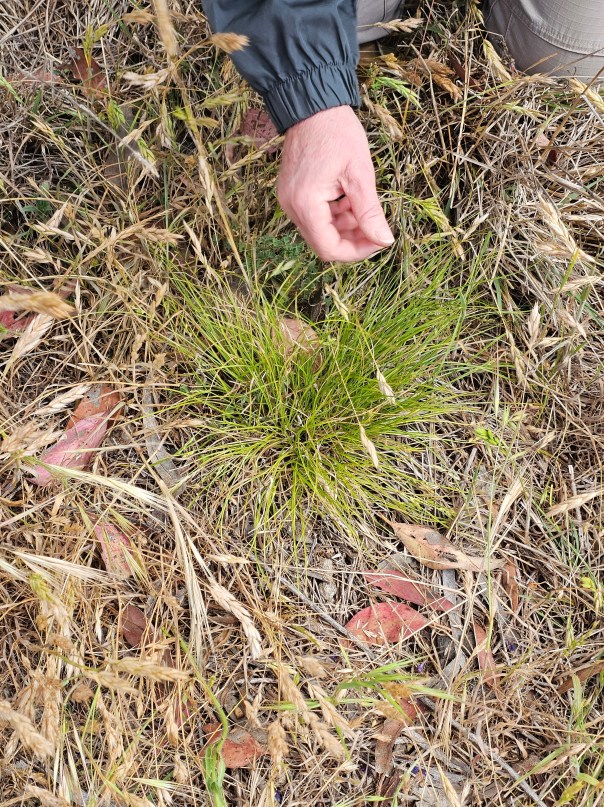
Identifying the grasses & Sedges of the area 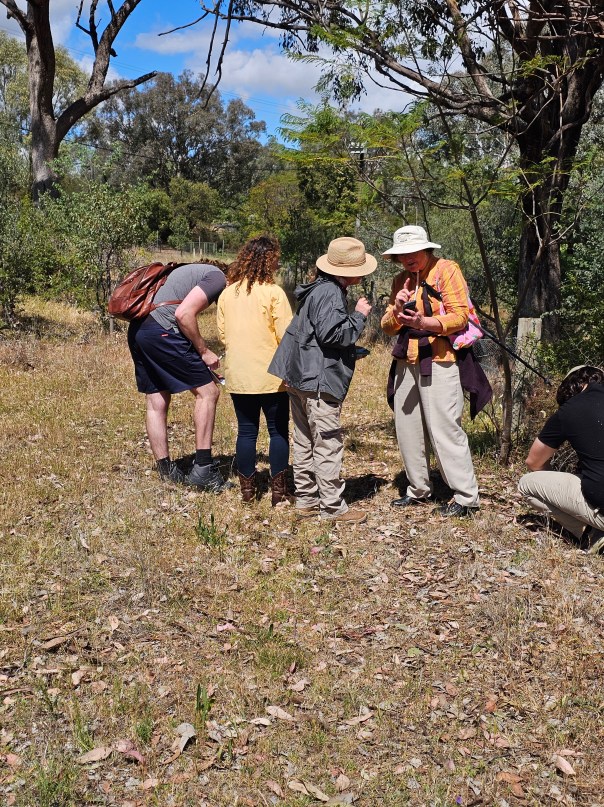

working together to get the data uploaded 


Getting down low to get the best shot 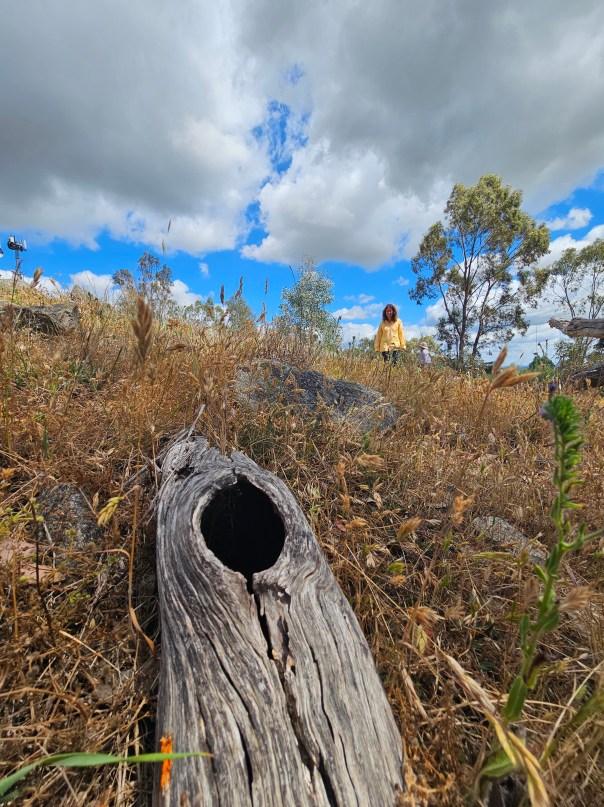
There was some fungi growing out of this fallen log
So how did we do this year?
For the last three years we’ve added our Bioblitz data to the Central Tablelands Regional project and this year was no different. Overall we had 12 Mid Lachlan Folks making 141 recordings across the Bioblitz long weekend which equates to 20% of the people across our Central Tablelands Project collecting 27.5% of the total readings. Not a bad efford all up.
How does that stack up against last year?
Last year’s Central Tablelands project was significantly larger than this year. I’m not sure why but my top guess would be around the timing of the event. This year’s Bioblitz clashed with the Backyard Bird Count & school holidays when many people go away – indeed many of our regulars who would ordinarily take part were away. Our Mid Lachlan figures for 2024 were 11 people taking part and making 300 records across the weekend. The lower record numbers were definitely due to key personel being away or tied up in other things.
While Bioblitz remains quite a small event for us, it’s definitely an event that packs a lot of value for those that take part. I’m going to be putting a bit of time and energy into promoting Citizen Science more generally and the Bioblitz specifically across our area over the next ten months or so in the hope we can make 2026’s survey bigger and better than ever. Let me know if you want to help out!
We’re big fans of Citizen Science here at Mid Lachlan Landcare so if this looks, sounds & smells like your kind of fun, get in touch as there’s always something to get involved in.


 Mid Lachlan Landcare