Mid Lachlan Landcare
supporting sustainable agriculture and restoring the environment
Volunteering with Mid Lachlan Landcare
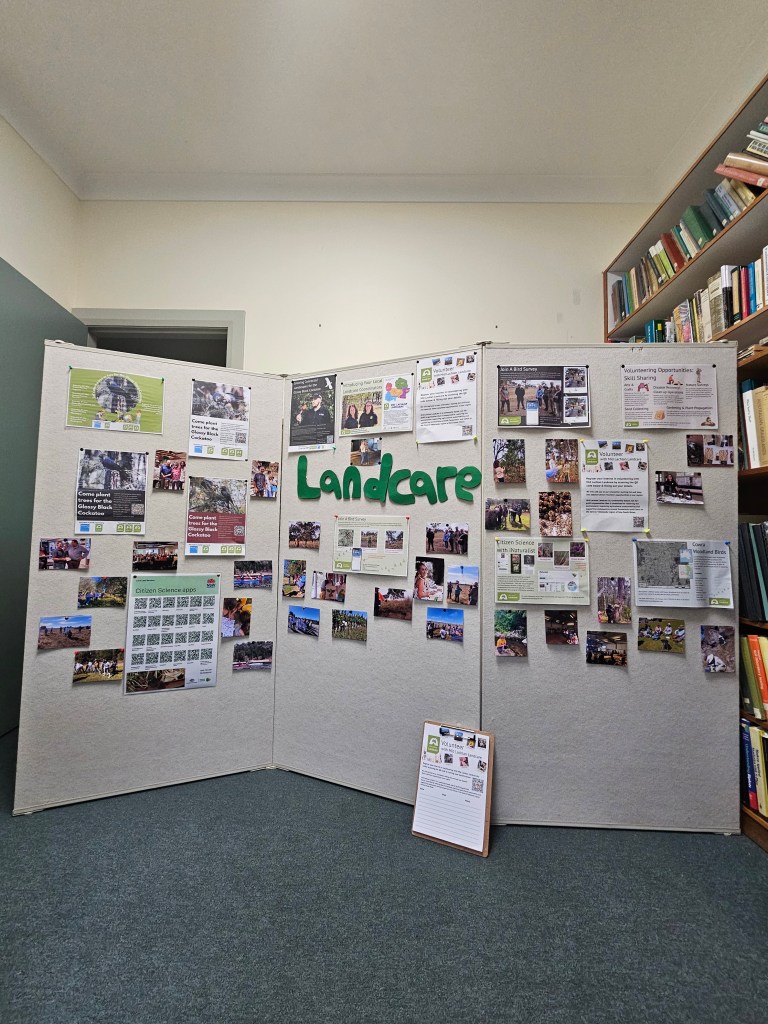
19th – 25th May is National Volunteers week & we celebrated by participating in the Canowindra communities volunteer expo at the Canowindra Serves Club.
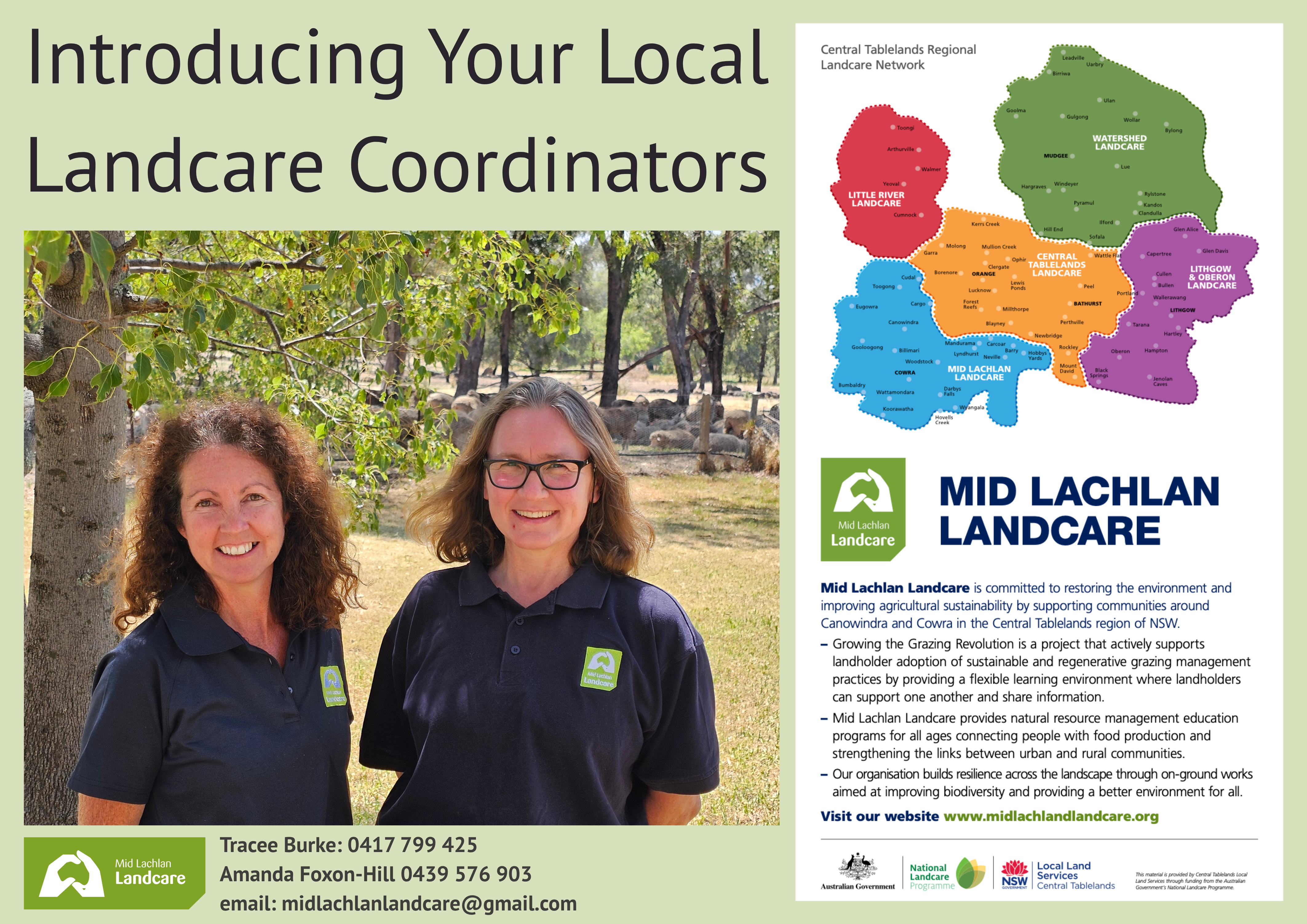
As Tracee & I were running our Mycology May event that day, our stand was being looked after by Mid Lachlan Landcare volunteers – President Wendy Bowman & our Treasurer Marion Mitchell.
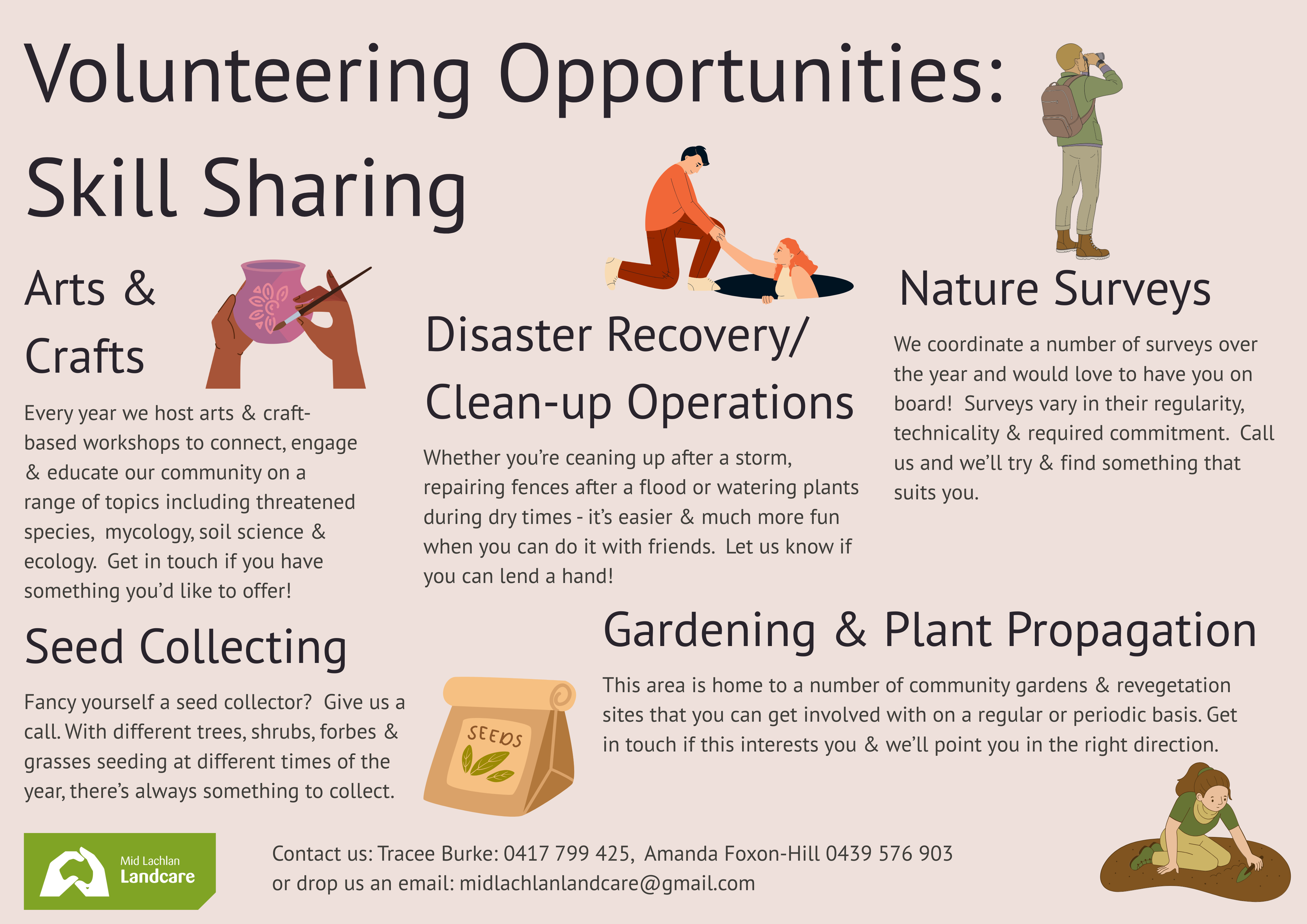
Puttig this display together was a great way for us to think about the many ways people can get involved in Landcare with us. Volunteering is a great way to feel connected to community, to share your skills & passions and even to help us facilitate events that will educate and inspire you!
Our volunteers include crafters, artists, technology experts, data collectors, bird surveyors, disaster repairers, bakers, farmers, teachers, local businesses & community organisations. Together we’re working to create a community that’s resilient, connected & full of life. How good is that!
Thanks to each and everyone involved in making Mid Lachlan Landcare what it is today. Here’s to tomorrow.
Habitat Connectivity. A collaborative approach for the Glossy Black Cockatoo
There’s a lot of time to think while completing my weekly migration between the Blue Mountains & the Mid Lachlan region & most recently I’ve been thinking about bird habitat & in particular connectivity.
I’ve been a Blue Mountains resident since moving to Australia in 2004, adding our little piece of heaven at Woodstock, ten years later as a rest-of-life conservation project. Both the contrast and similarities in environment fascinate me, as does the fact that the route I take in my car is a migrationary route for many species of bird, some of which, including the Noisy Friar Birds & Gang Gang Cockatoos, drop in to our piece of woodland from time to time.
In April this year it was confirmed that Mid Lachlan Landcare had been awarded a grant for a Glossy Black Cockatoo habitat boosting project. I’m co-ordinating that project and when it became clear that there was an opportunity for me to bring both of my beloved ‘homes’ together under this banner, I reached out to the Blue Mountains Planetary health team and went for it.
The Glossy Black Cockatoo can be found throughout the Blue Mountains, sightings of which always draw interest & creates a buzz. This iconic bird has inspired school projects & conservation works in the recent past and it’s also about to become the subject of a monitoring program under the Saving our Species initiative which is exciting & also great timing for us!
Out west, we find the Glossy’s out in the region that we’re conducting planting across – the Conimbla to Nangar National Parks & surrounding farm land. We have booked to talk about our project in the Blue Mountains on Saturday 7th June from 4pm-6pm at the Planetary Health Centre in Katoomba where we’ll focus on explaining the habits & preferences of our local population of Glossies, how & why farmers are playing an important role in boosting connectivity & what large-scale connectivity could look like for this and other species. The goal is for us to work together across this broader landscape to broaden & deepen our knowledge of this iconic species & inspire both big-picture and local on-ground actions. We’ll be inviting Blue Mountains residents to come and get a taste of what the Mid Lachlan Region has to offer for birding enthusiasts as well as inviting them to join us in some habitat planting. How very exciting!
You can read the article written about Blue Mountains Planetary Health conducted with me here and watch a video of our discussions
To book into the Katoomba Glossy Black Cockatoo event on Saturday 7th June click here.
To volunteer for tree planting duties on Saturday 5th July click here.
We’ll also be planting on Saturday 21st June which you can volunteer for here.
Here’s to Growing Connected Landscapes together!
Amanda Foxon-Hill, Mid Lachlan Landcare Coordinator & Blue Mountains resident.
Getting Trees in the Ground for the Glossy’s
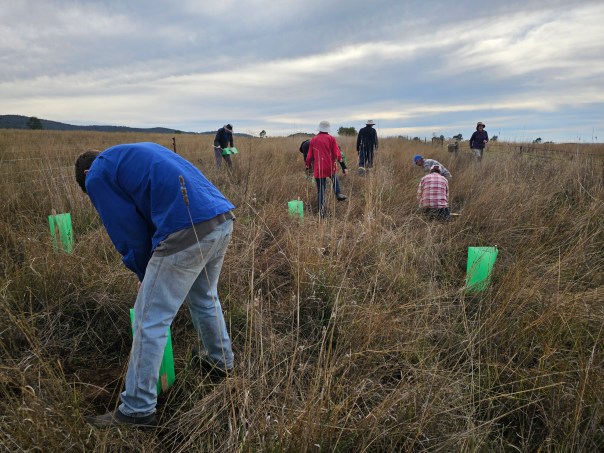
Hooray, we have some trees in the ground for our Glossy Black Cockatoo project!
This project involves us planting a minimum of 1000 trees & shrubs to connect the Western Woodland Way between Conimbla & Nangar national parks, centred around Gooloogong. We’ve been planting She Oaks (Allocasuarina verticillata), Eucalypts and some complimentary understory species with the She Oak being key given it’s a prefered feed tree of the Glossy Black Cockatoo – our target species. We’ve got a total of six planting sites in this project, the first two having been planted out over this last week. Here’s how that went…
A fabulous crew of volunteers attended our tree planting extravaganza on Saturday morning with Eugowra Catchment Landcare. This included a team of young folks from Sydney who’d previously been involved in The Big Lift and are now, post university, continuing their rural volunteering on their own terms. They were a very interesting & highly skilled bunch and it was great to get to know them a little more in between digging, planting and watering.
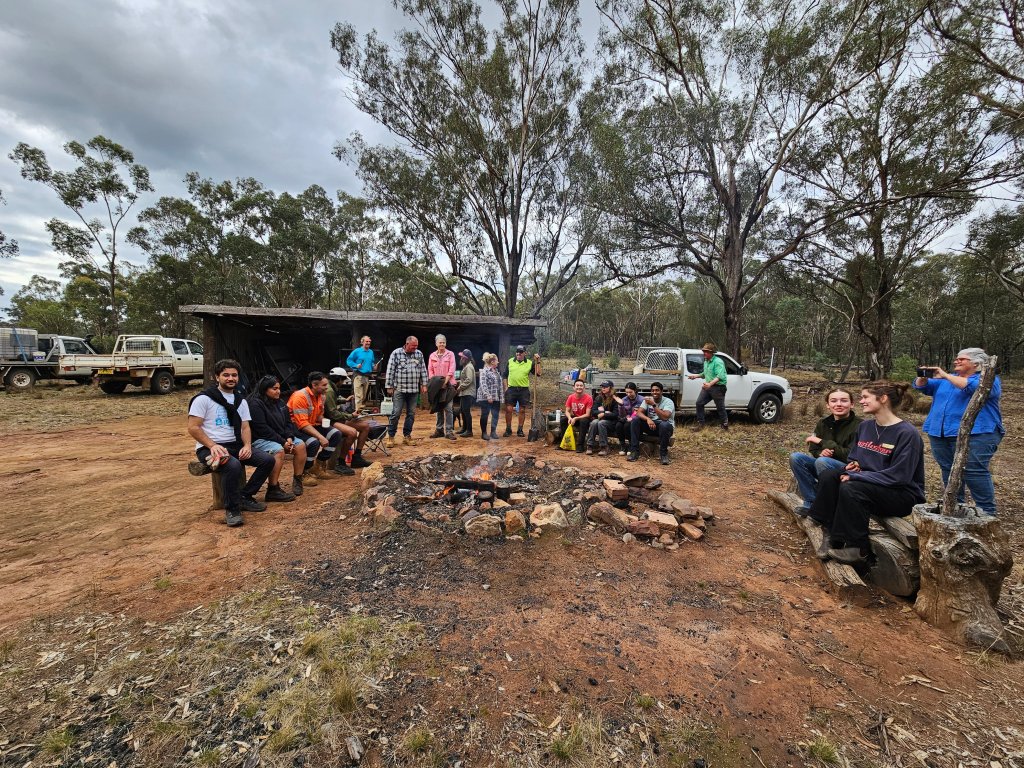
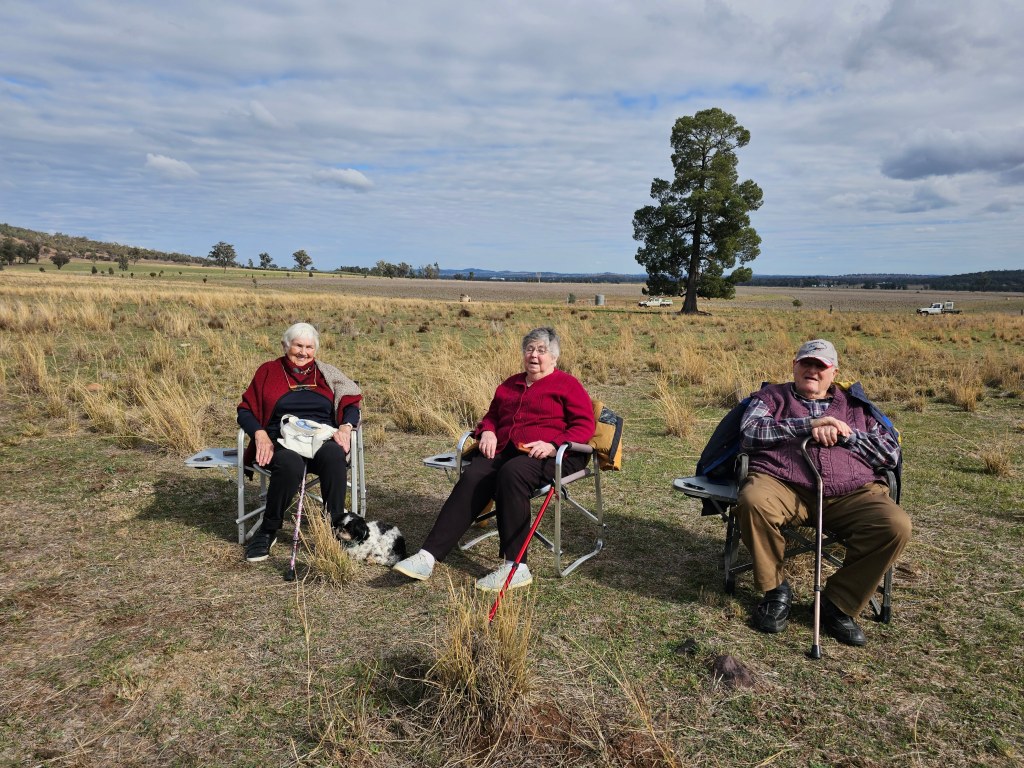
It was lovely to be joined by Tim & Ash’s parents who came armed with home-baked scones and treats. They were able to tell us a little more about their connection to this country and to some of the triumphs and disasters that had occured over the years leading up to today.
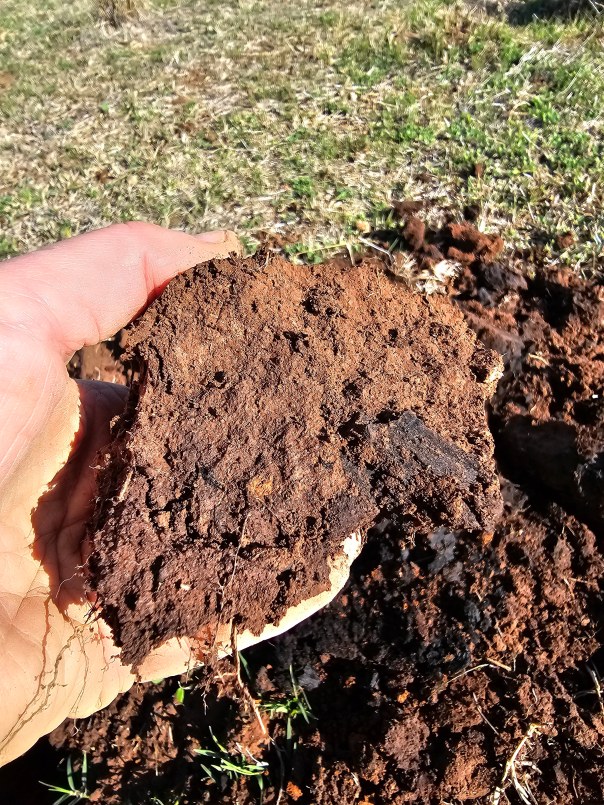
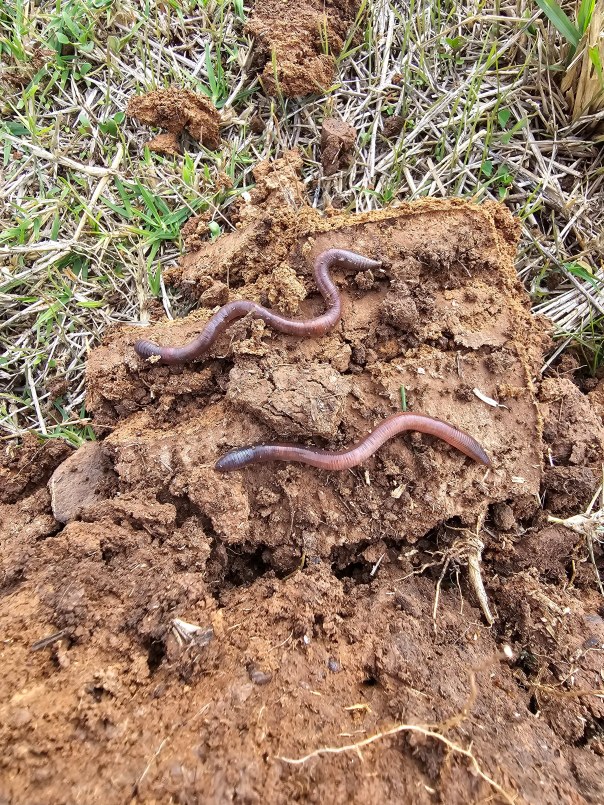
Soil tests were conducted during both planting days to give us an idea of what conditions were going to be like underground for these baby trees. Both pH and soil microbiology measurements (using a microBIOMETER®) were taken as well as an unofficial worm & critter count – the macrobiology is as important as the soils microbiology in creating & maintaining optimal growing conditions.

Results for the first site were pH 6.5-7. Total microbe count 670 ug C/g. Fungi to Bacteria balance: 0.9:1 (47% fungi to 53% bacteria). These are great results given that this is a grazed paddock as often in farmed systems, the fungi numbers are down at under 25%. To put these results into context, a dry paddock with patchy grass will often return figures of between 300-400 total microbe count and a fungi:bacteria ratio of between 0.1-0.2:1 . Fungi is slow growing compared to bacteria so we generally see higher fungi levels in land that’s not been disturbed and especially under woody growth such as trees and shrubs. Total microbe levels generally increase quickly after rain with most of that increase being bacteria. Plants use soil microbes to help them access nutrients from the soil so a healthy, functioning soil microbiology is definitely going to give these plants a good start & I am convinced we have that here.
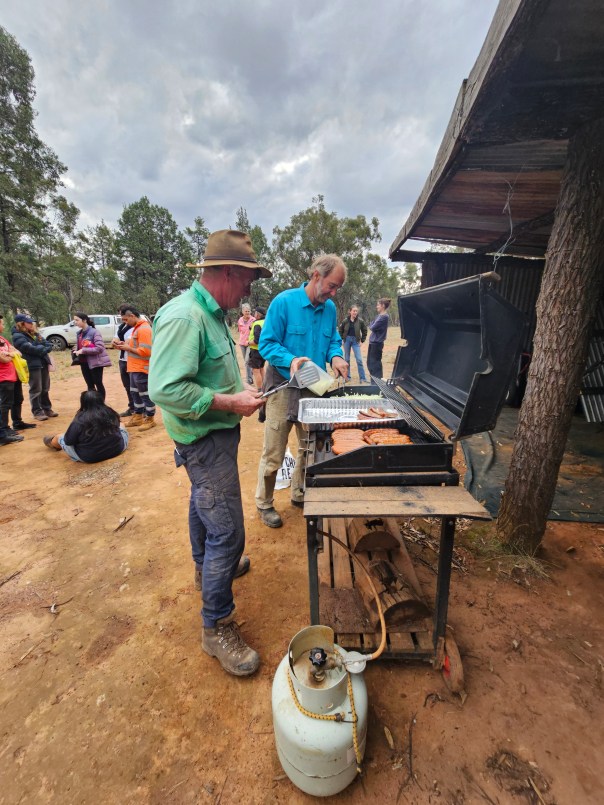
The first planting for this project wrapped up with a shared barbeque meal at the ‘Bush Hilton’ out on Tim & Ash’s block. Well, that’s where it ended for me at least as I had the Woodstock Soldiers Memorial Hall Ball to get to, I have it on good authority that many of the other’s carried on until dark. Now that’s dedication to the cause!
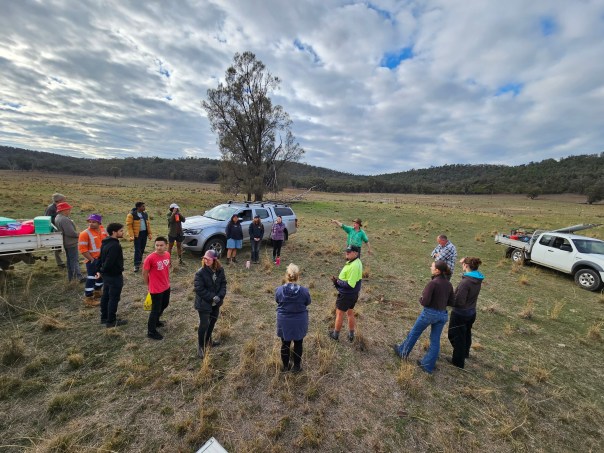


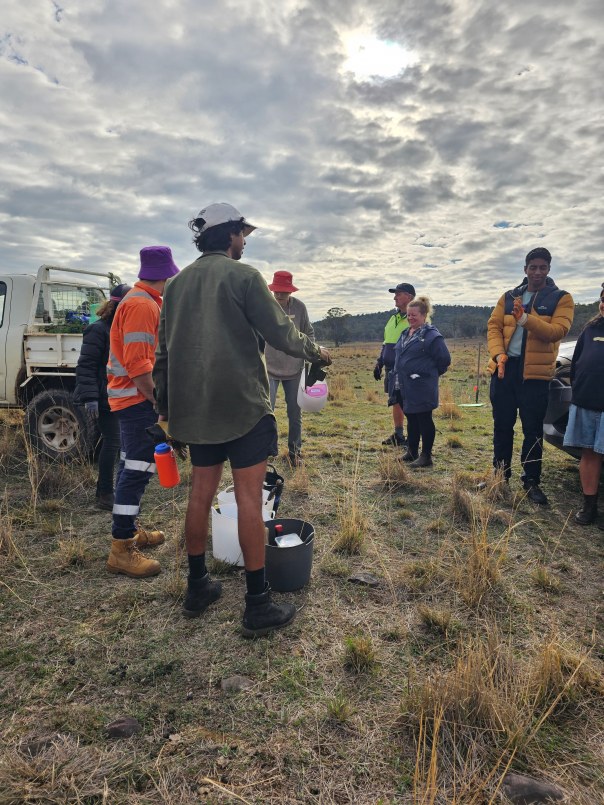
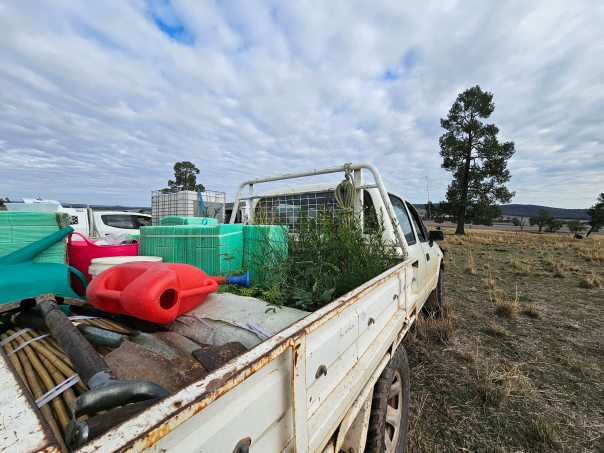


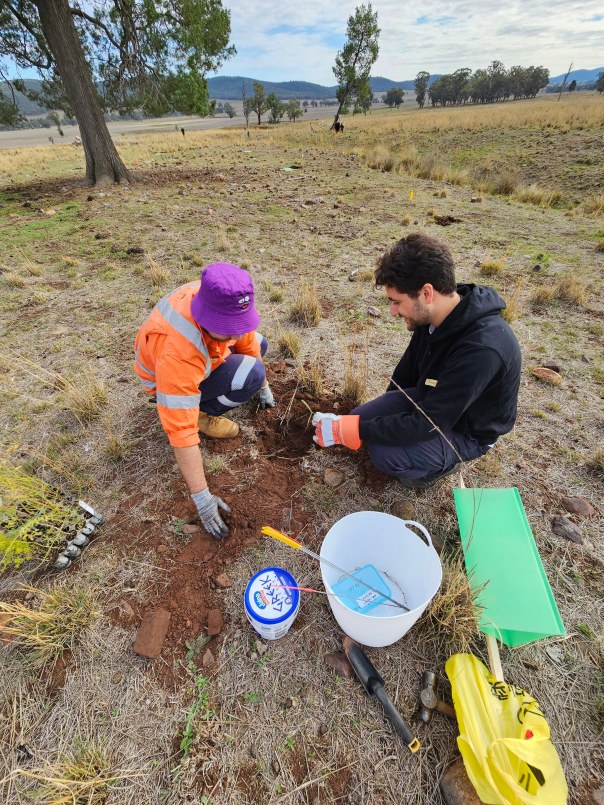

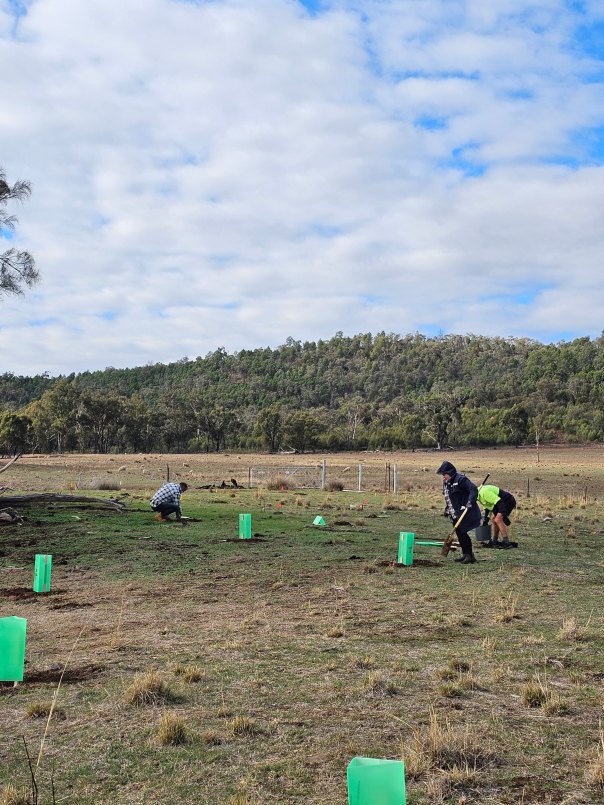



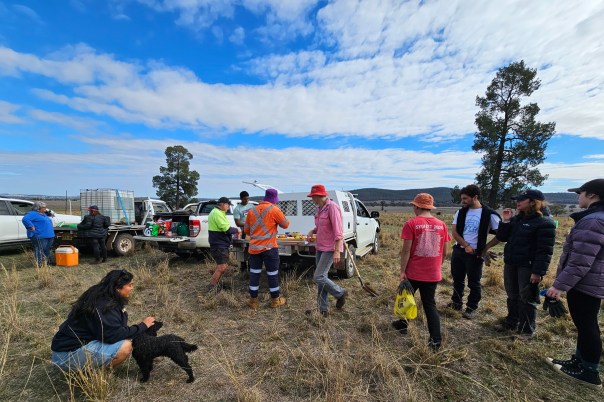
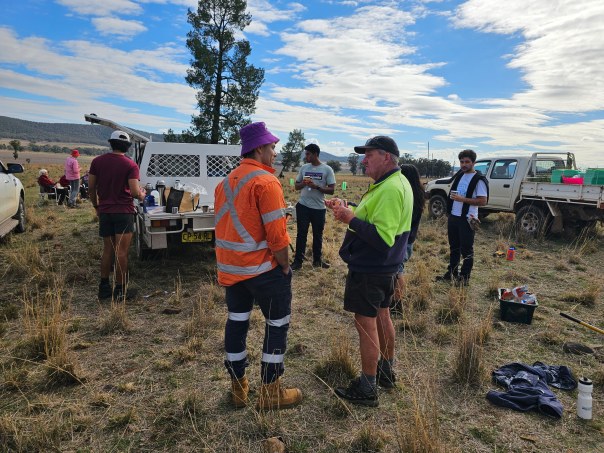


Our second planting event was held yesterday (Thursday 29th May) at Yackerboon, a sheep & conservation enterprise near to Cudal & Manildra. Both the proximity of Mandagery creek & the South West Woodland nature reserve- Mandagery made this a great site for habitat planting.
Our goal for the day was to get 150 trees in the ground, by lunch time we’d planted over 250 which was a fabulous effort!
As with Tim and Ash’s planting, I got some soil testing carried out here too so I could get a feel for the conditions our plants were being introduced to. pH was again good at approx 6.5 and soil microbe levels were very high with lots of fungi indicating a site that’s experienced a low level of disturbance in the recent past. Total microbes were 1082 ug C/g, Fungi:Bacteria ratio of 1.5:1 (60% fungi).
I have been taking soil microbiology measurements using a microBIOMETER®. This is a low cost, 20-minute on-site soil test for microbial biomass and fungal to bacterial ratio that allows you to quickly determine the health of the soil. It’s important to remember that this is a formative rather than summative test which means it’s useful for providing insights that inform ongoing actions rather than being seen as ‘if you get this result, do that to fix or change it’.
The microBIOMETER can be part of a summative site assessment (reviewing what’s been achieved) when readings are evaluated as part of a wider site assessment. I also refer to this as a narrative test meaning you need to consider the results you get from the test along with other factors at the site – what’s growing and how much, what’s the weather doing now/ recently, how has the site been managed, what’s the underlying geology of the site, what about site topography. Keeping all that in mind, both of our sites were in very good shape from a microbial perspective. Very encouraging!

Sharing a cuppa at the end of the day 
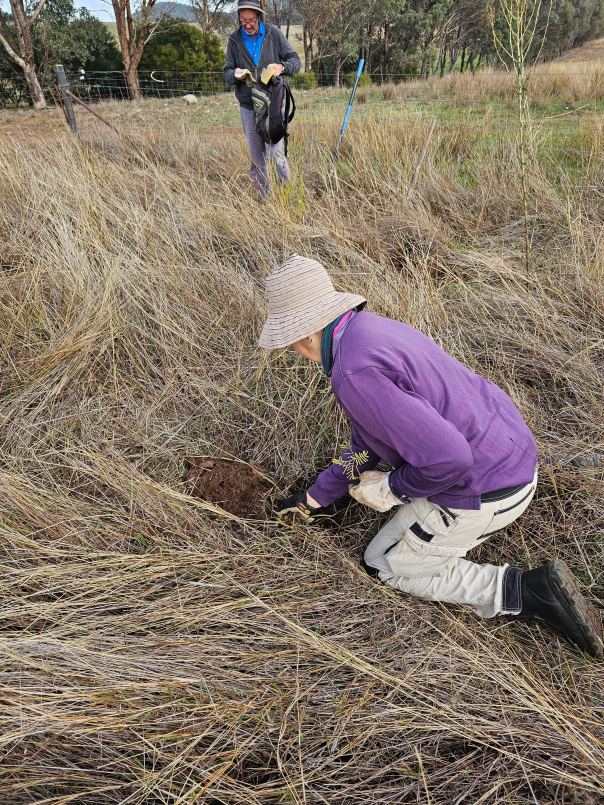
Tree planting this way! 
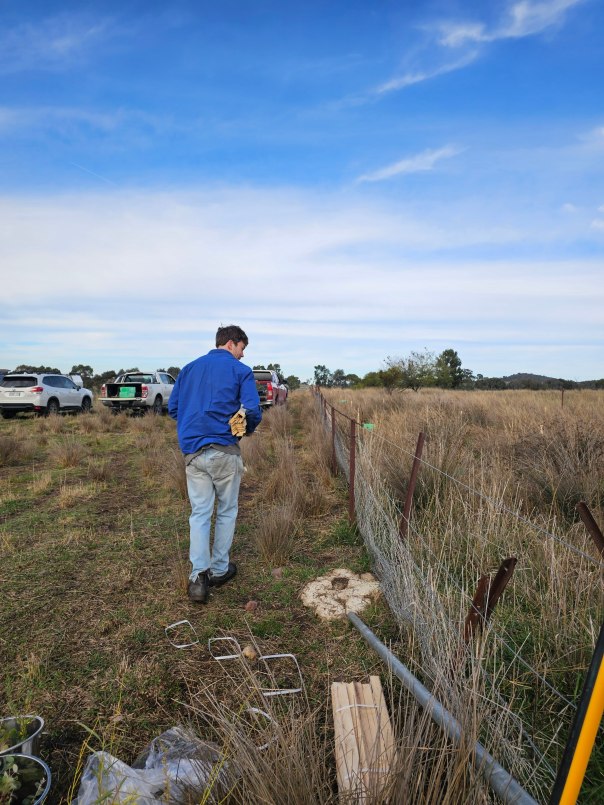

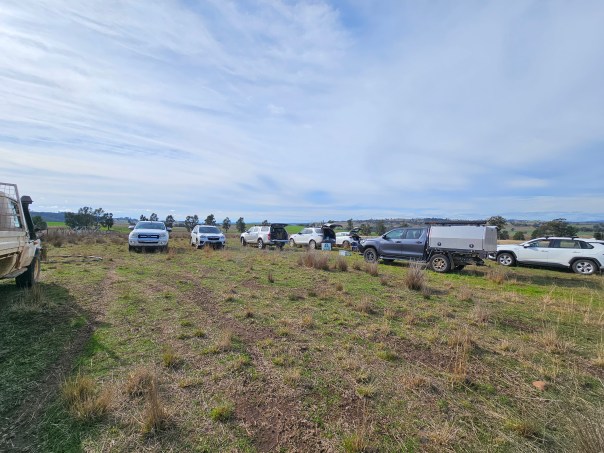

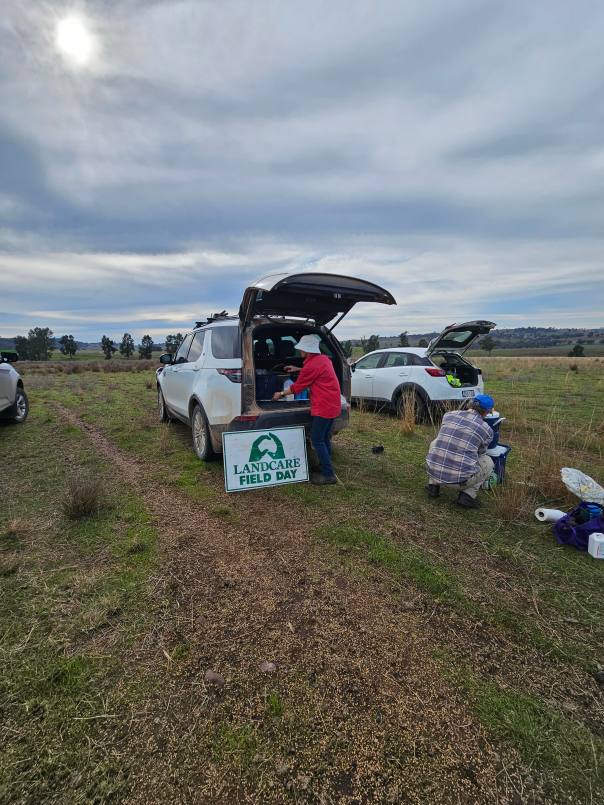
morning tea station 

Sally giving us a little gift to show her appreciation for our help 
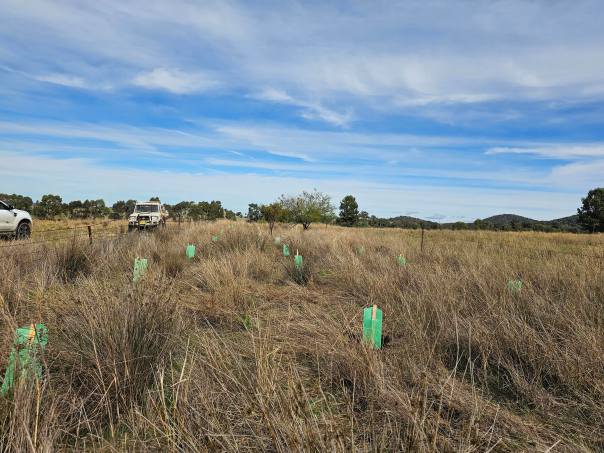

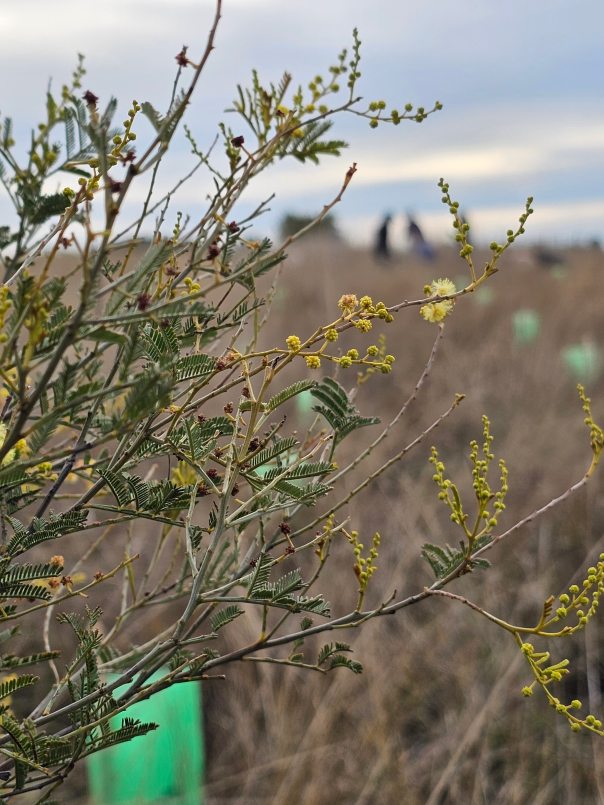
The tree lane we’re creating was direct seeded a while back & already contains a few wattles 
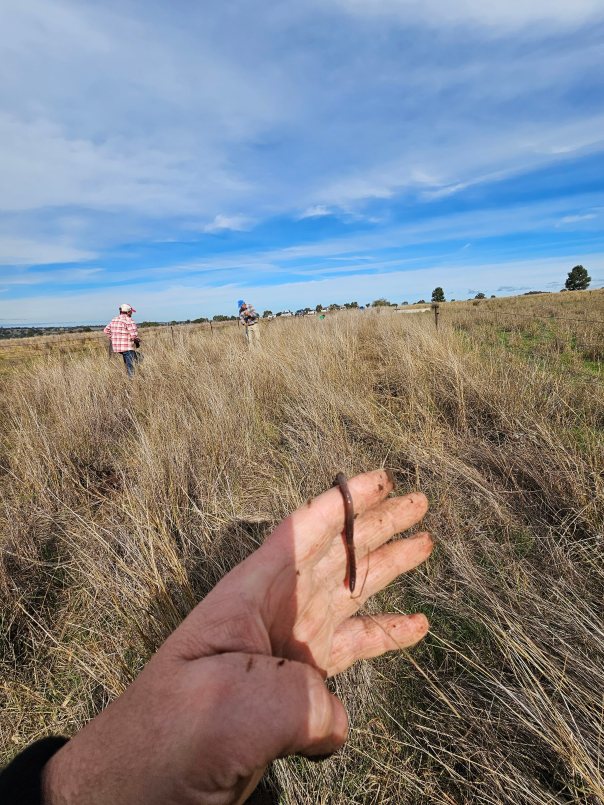
No worms were hurt but some were moved out of the way a little 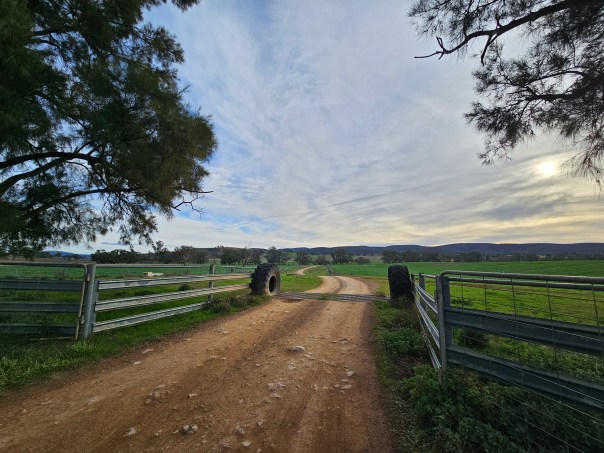
See you sooon baby trees
If you’re wondering why people volunteer their time to labour away in a field here’s some insights from our planting extravaganza.
- Across the two days, it was agreed that what we most love about a tree planting day is the opportunity to make new friends & strengthen existing friendships. Collegiality is highly prized.
- For this particular project, many people were motivated by the direct bird connection & the opportunity help build a better birding future for both themselves, others and the birds of course!
- A desire to feel useful & to work towards a common goal was another big pull factor with many expressing pride and a sense of fulfilment after the opportunity to put their skills and knowledge to use in a meaningful way.
- Then there was appreciation for that wonderfully grounded & connected feeling you get when doing physical work & getting ones hands in the soil.
- Finally we all enjoyed the opportunity to come out and spend time in another little corner of this beautiful country we call home.
This event concluded with property owner Sally sending us home with a tub of home grown tomatoes & some chocolates as thanks for our efforts. How sweet!
This project was made possible thanks to funding from Bupa Australia & Landcare Australia. It is part of the planting of 80,000 trees, shrubs & grasses across the country, linking environmental health with community well-being.
Mid Lachlan Landcare’s Grazing Group is back!
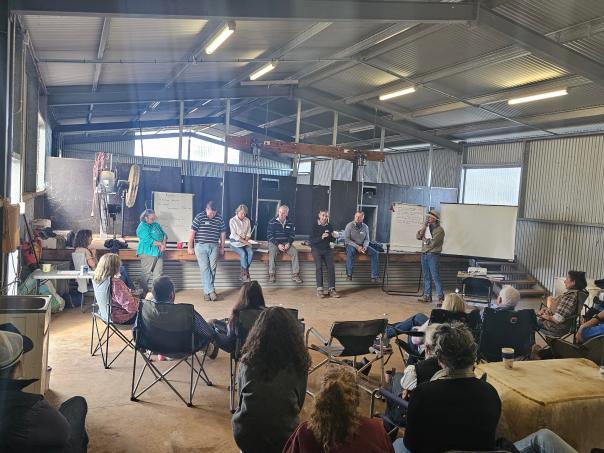
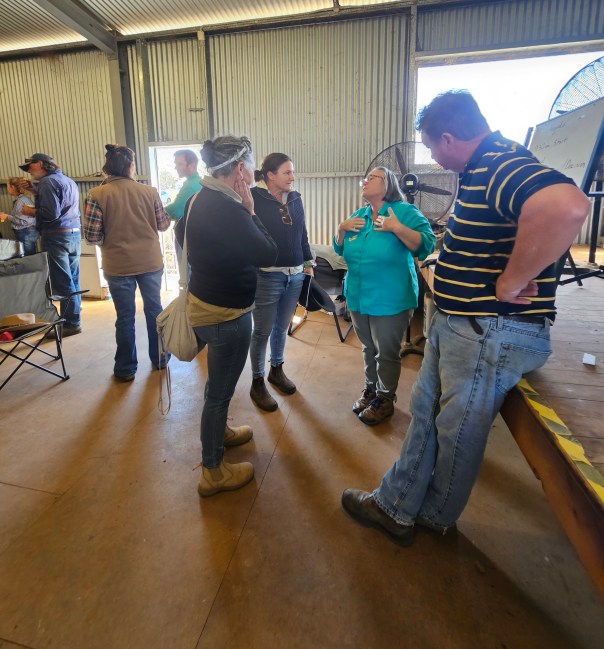
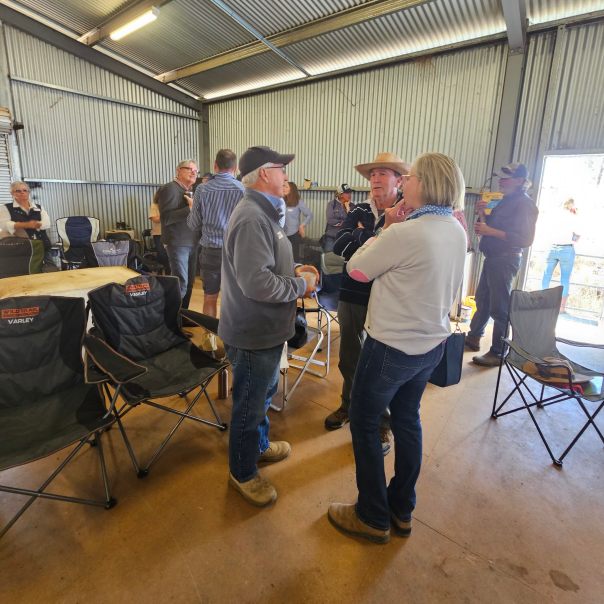
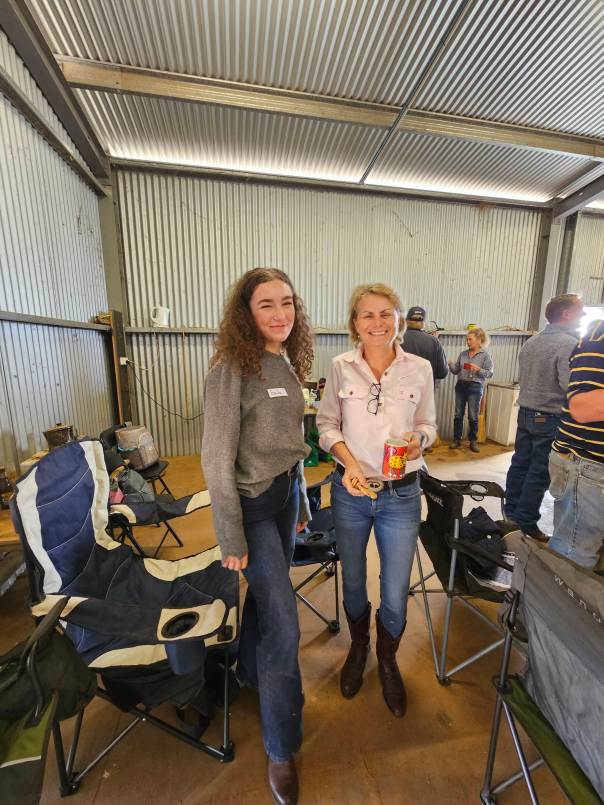
There was a buzz in the air as we pulled up at Garallan’s shearing shed just outside of Cowra earlier this month. It had been a while since the last grazing group meet up and with dry times biting, it definitely felt like the right time to re-ignite the conversation.
Mid Lachlan Landcare’s ‘Growing the Grazing Revolution’ program has been actively supporting graziers wishing to maintain & grow healthy landscapes, stock and business enterprises since 2010. This long-standing project was built on the philosophy that there’s power in getting people together and there’s inherent value within community.
With that in mind we settled in for a morning of conversations on the topic of “confident decision making”. Addressing this were a panel of local graziers, each with their own diverse enterprises, personalities, priorities & business structures. We were also joined by Mel Kiel from KRL marketing, a company with tools & courses that help graziers understand when to buy, sell and hold stock.
After seven lively, heartfelt & insight-rich reflections we broke for morning tea and a chance to discuss the key points raised:
Of key Importance is that landscape health is maintained & damage to ground cover is minimised.
Maintaining the health of stock is a priority for all graziers
Clear planning leads to better decision making
Have a plan for making decisions and stick to it. The plan is typically informed by an individuals vision, values & goals
Know your trigger points for making decisions before you have to make them!
Next we headed out to the paddock where Andrew’s Optiweigh scales were waiting for us. Wendy & Scott demonstrating two ways of undertaking a grass budget & we learned a little about how soil health is evaluated.
All in all the event felt like a great re-start to our grazing program and a timely reminder that the only stupid question is the one you don’t ask and with that in mind, we’ve got another event being scheduled for August so watch this space.
Re-activating our Growing the Grazing revolution network has also reminded us just how many amazing mentors we have in our midst. If you’re looking for a mentor, mateship or just a little timely support to help you reach your livestock management goals, this is the group for you.
As Scotty says ‘We’re just here supporting people to be out there doing what they do best’
The future looks bright!

Time to get started 
The ute parade outside 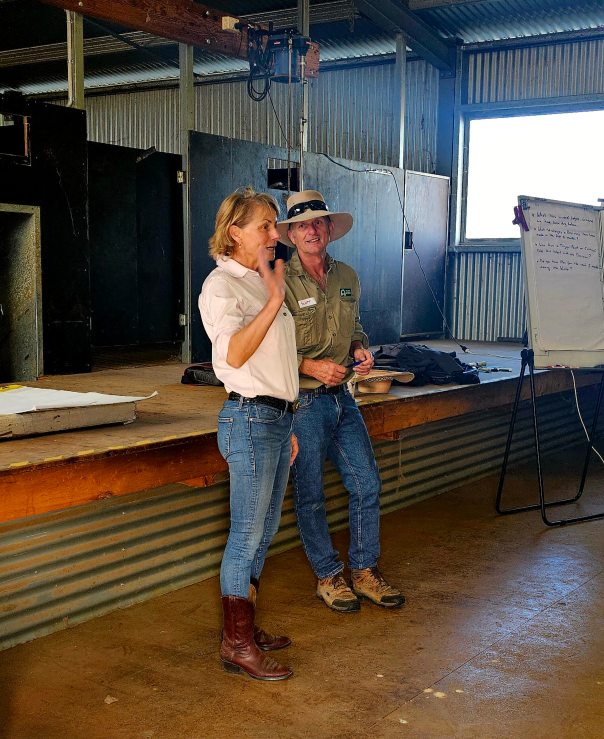
Mid Lachlan Landcare President Wendy Bowman & Grazing Group leader Scott Hickman kicking off the day 
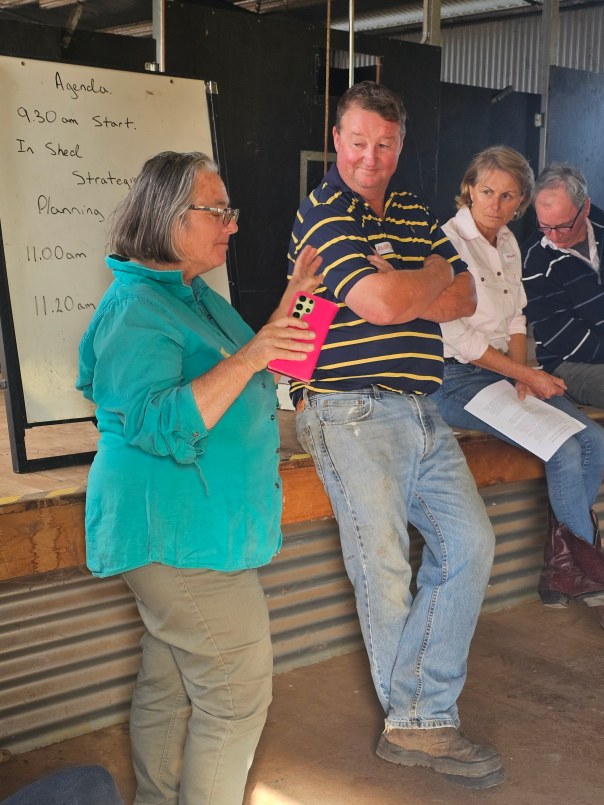
Scott laying out the agenda 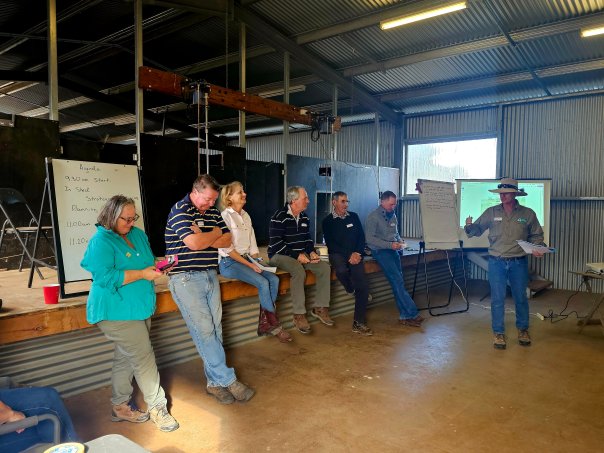
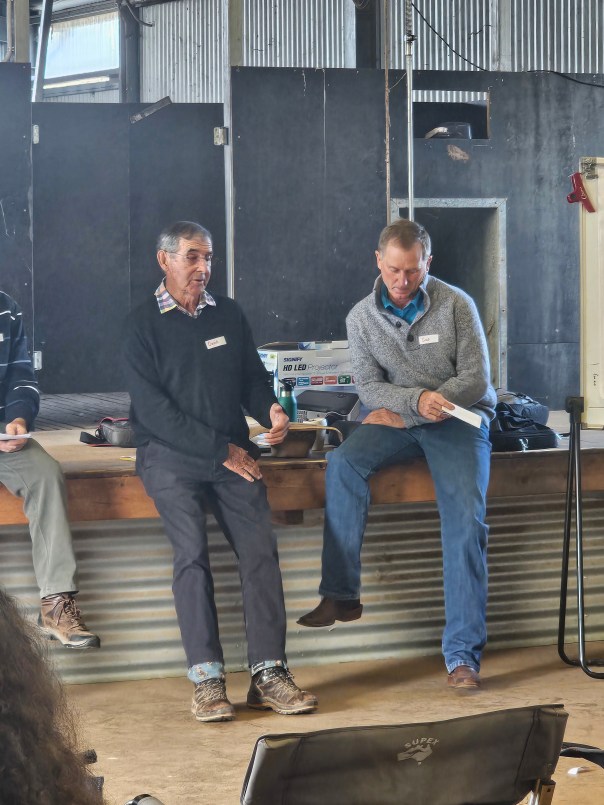
Panel L to R: Marion Mitchell, Andrew Dowd, Wendy Bowman, John Rowlands, David Marsh, Gus Hickman, Scott Hickman 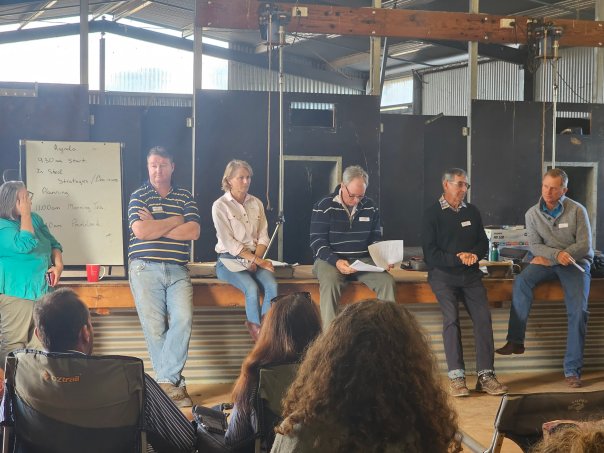



Mel Kiel from KRL marketing 
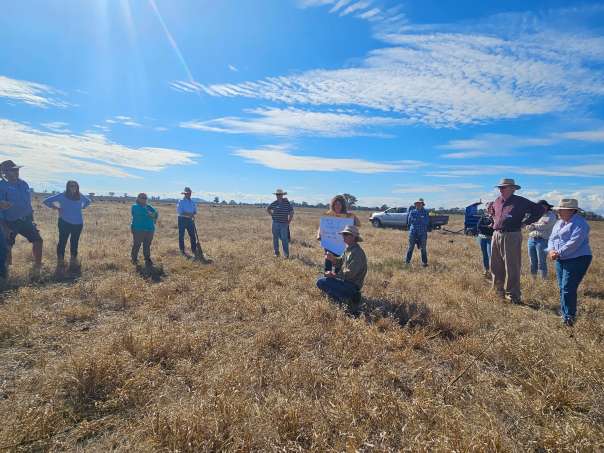
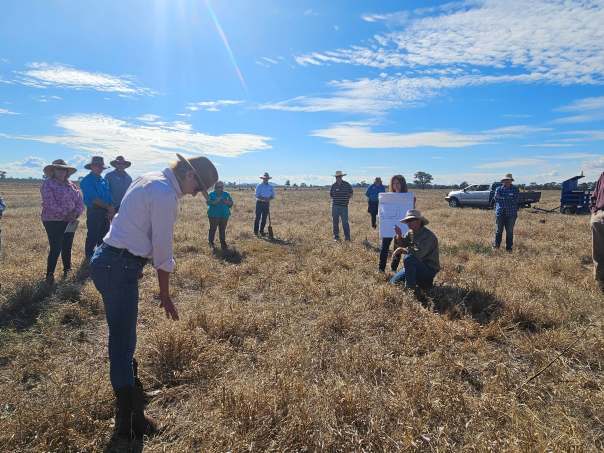
Grass budgeting demo with Wendy 

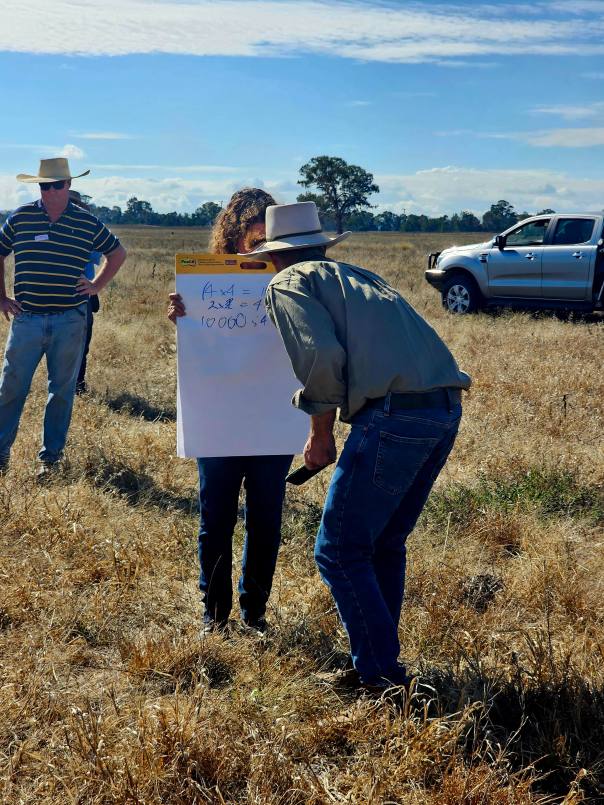
Scott explains how a grass budget is calculated. Tracee Burke lending a hand 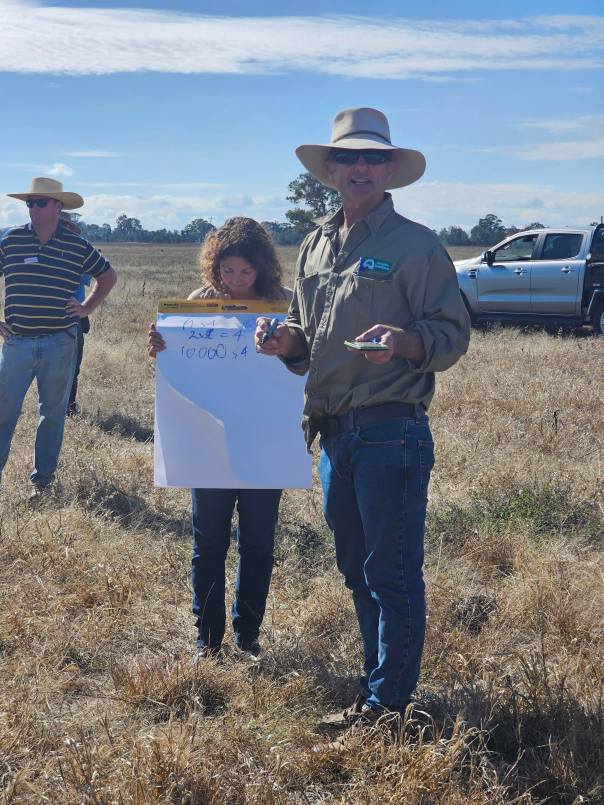

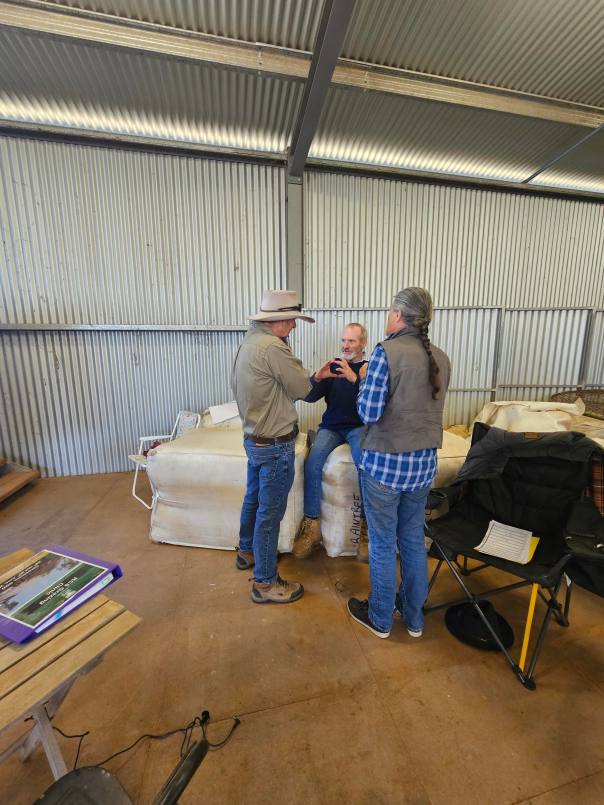


Explaining the Optiweigh technology 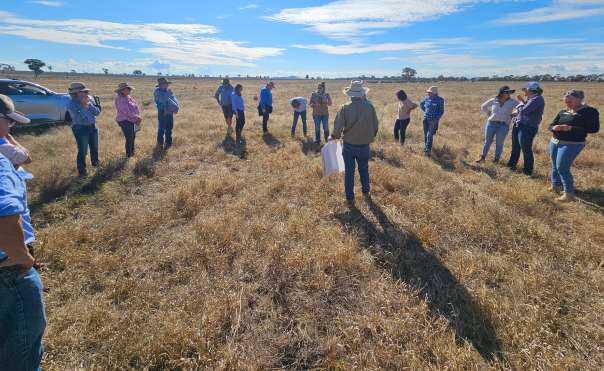

Ian Packer, Andrew Wooldridge & Robbie Watt assessing the soil 
Mycology May – Pottery & Fungi Foray
Welcome to our Mycology May event at Raintree Marra farm in Cowra!

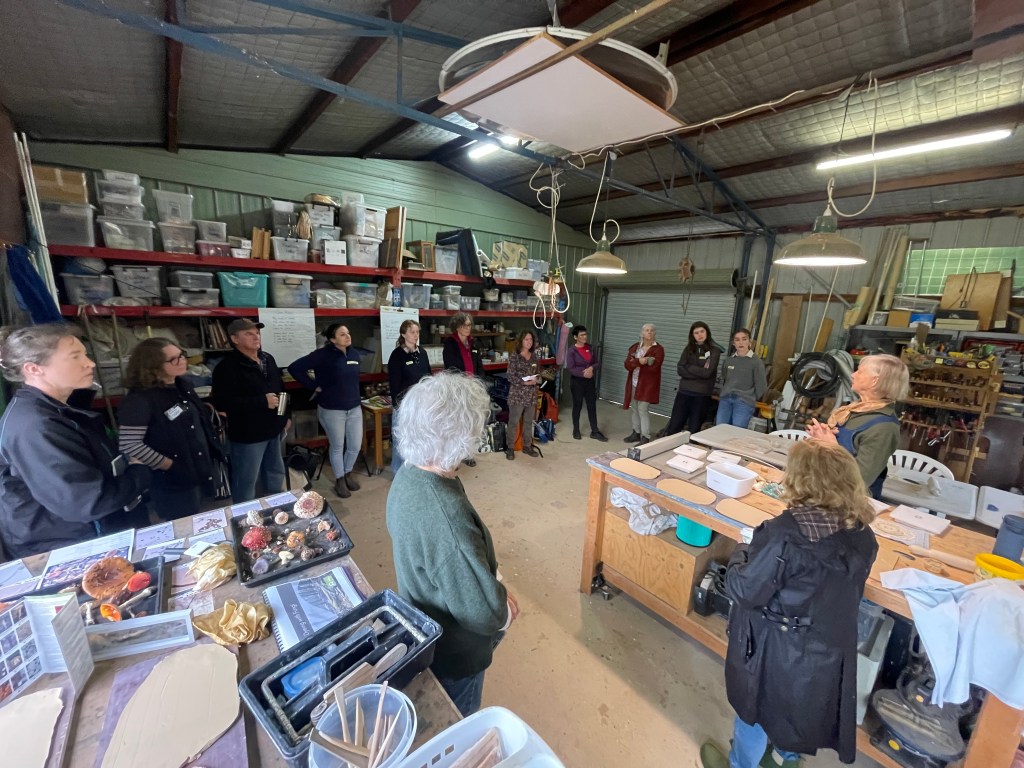
The day started with an introduction to both the farm & Catherine’s pottery barn where the magic would be happening after lunch.
Fungi surveys have previously been conducted at Raintree Marra, including one hosted by the amazing Alison Pouliot who, during her time here saw evidence of fungi succession in action thanks to the conservation work carried out within Box Gum Grassy Woodland on this farm.
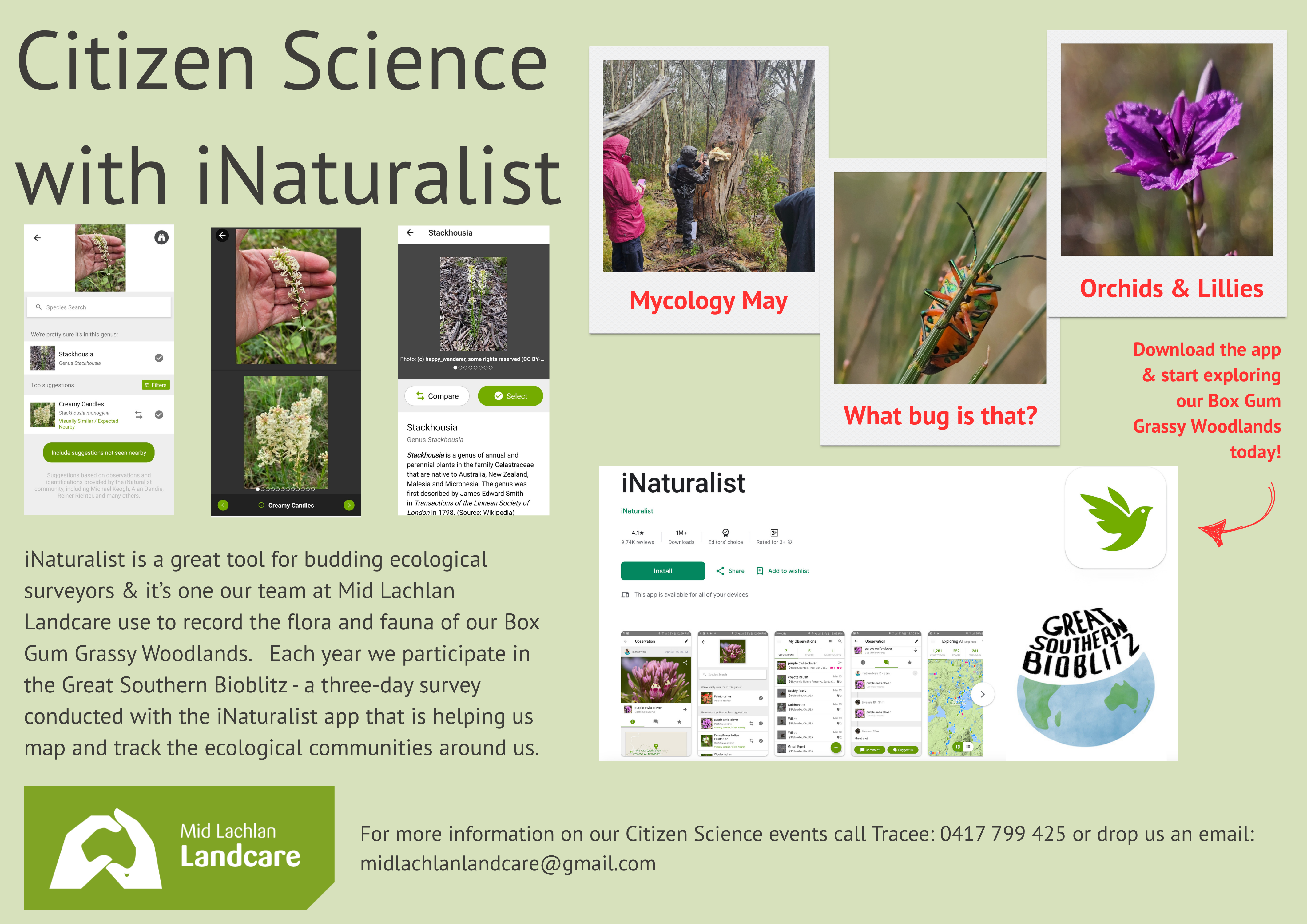
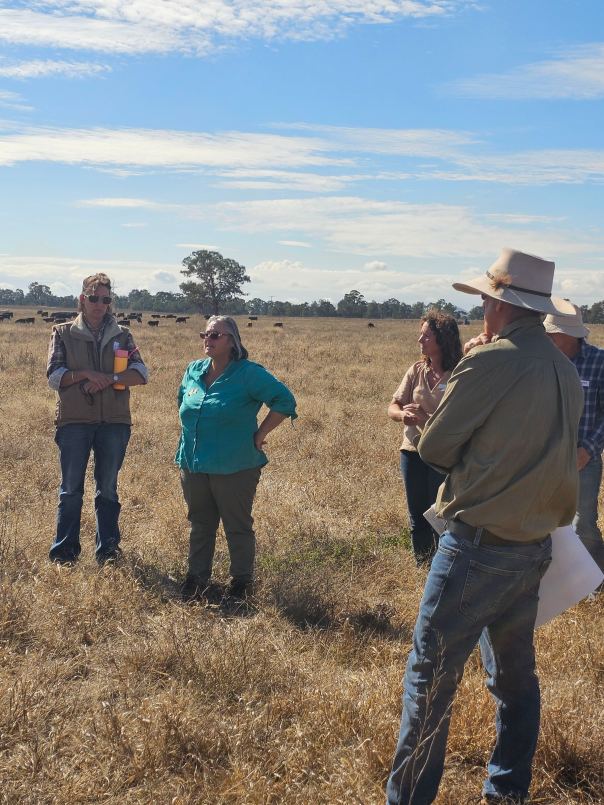
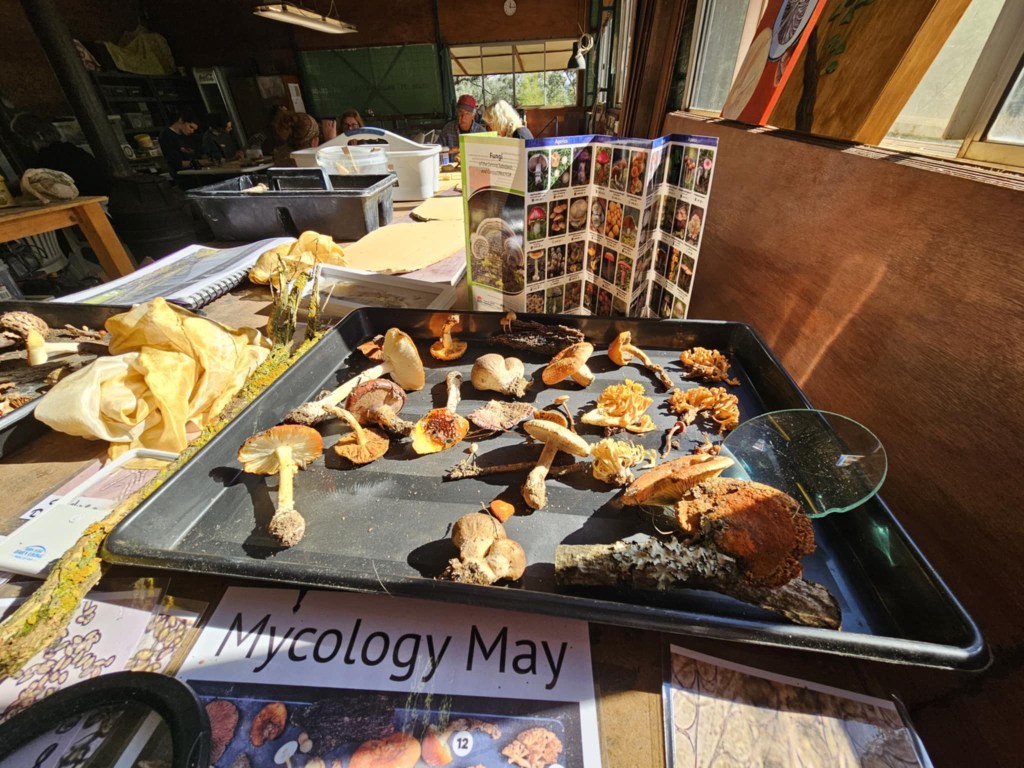
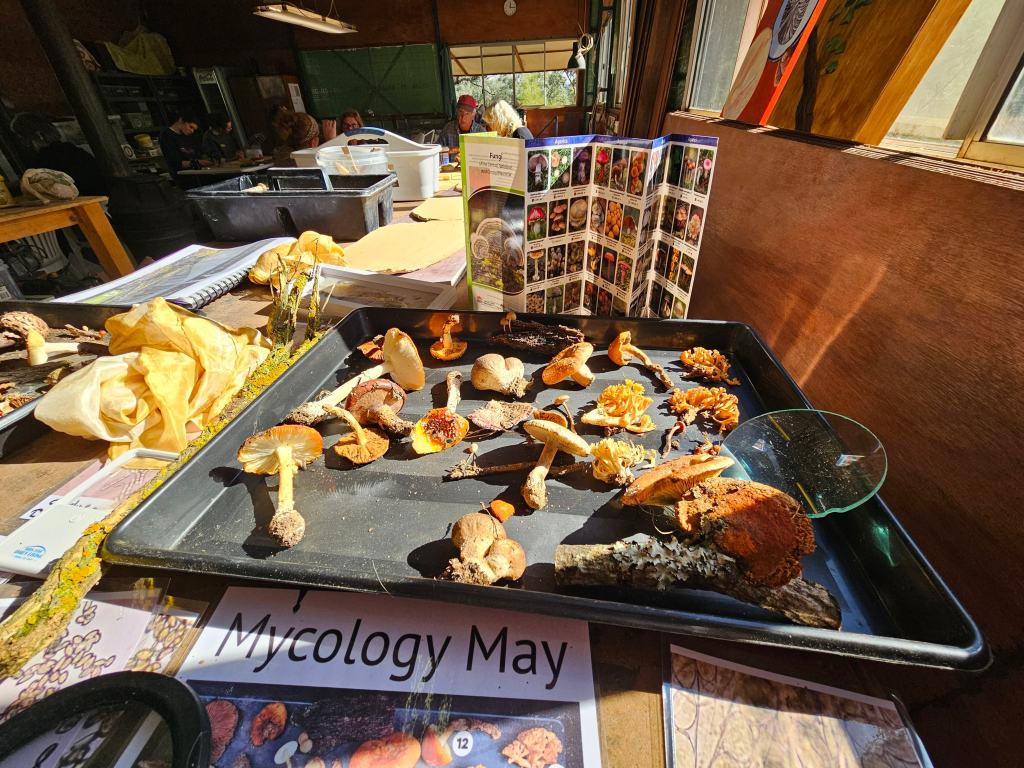
A timely drop of rain brought out a few fungi which we hunted down with great enthusiasm. We uploaded some of our findings to iNaturalist to help build on what we know of this site. Then, once our foray time was up, we shared our discoveries with the rest of the group.

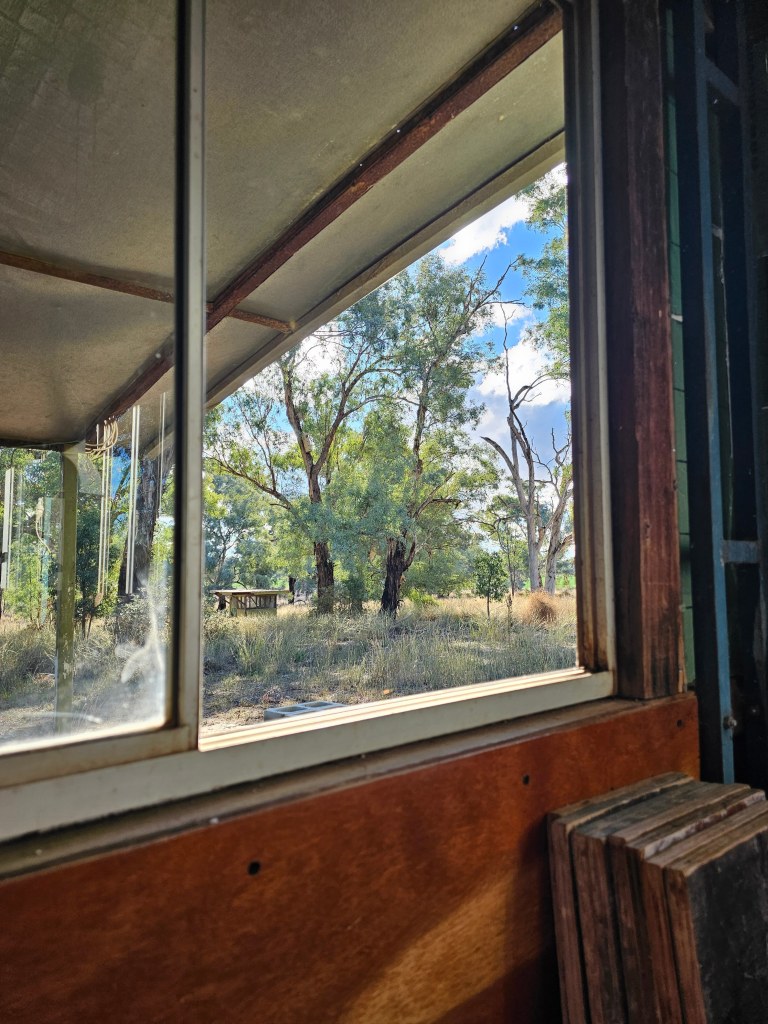
This site is on a working farm and we were searching around the highly trafficked areas and partially cleared areas. That said, this part of the farm remains Box Gum Grassy Woodland and there were plenty of fallen tree limbs, tussucks of native grasses & understory wattles around to provide homes to a range of fungi.

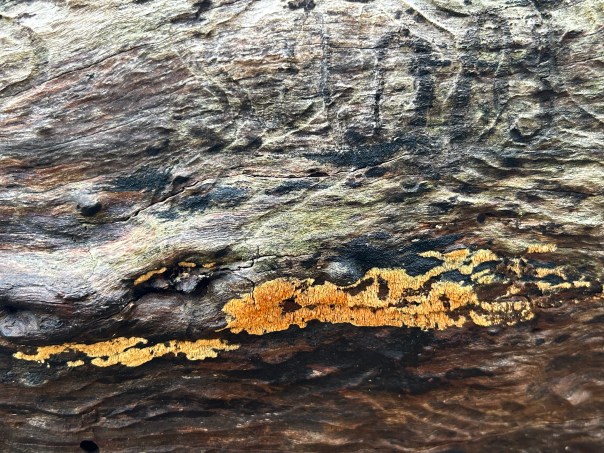

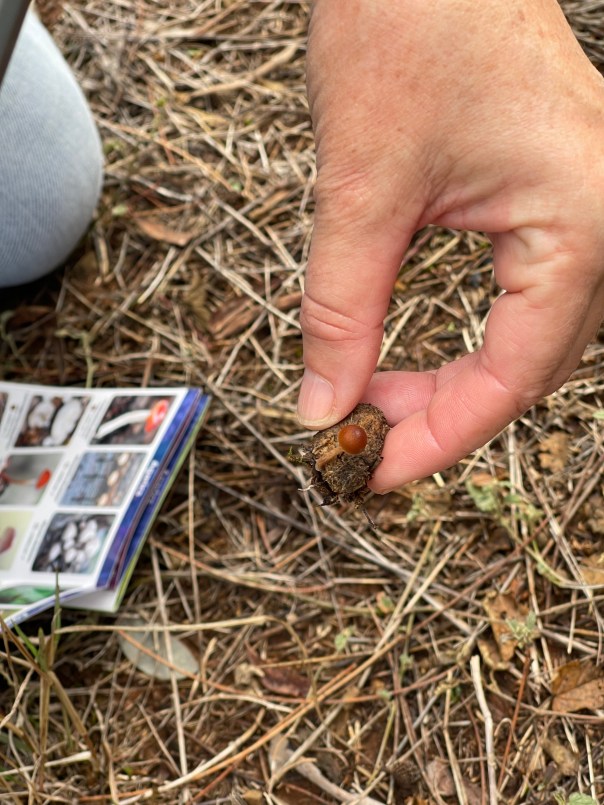
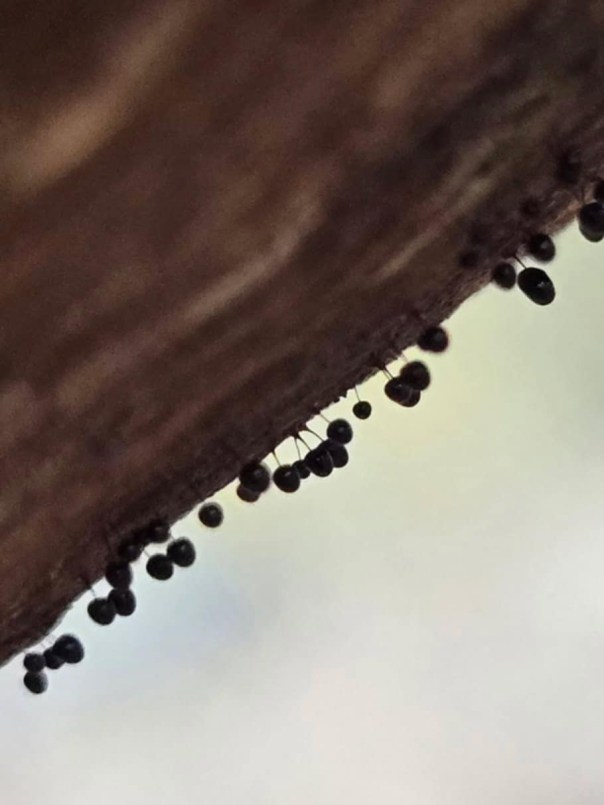


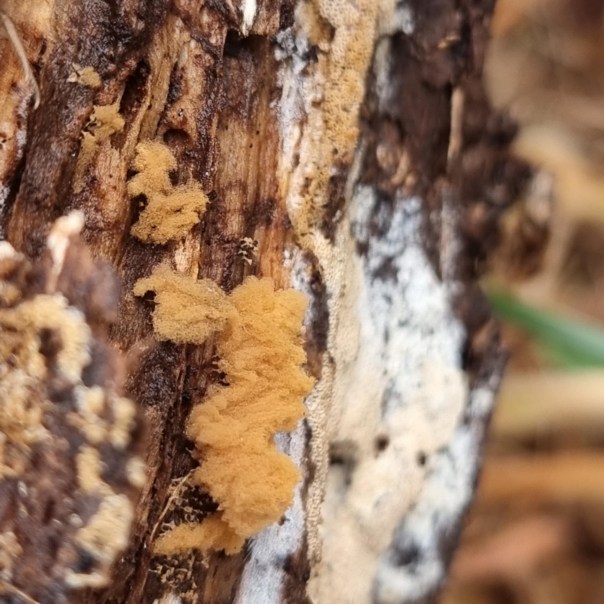


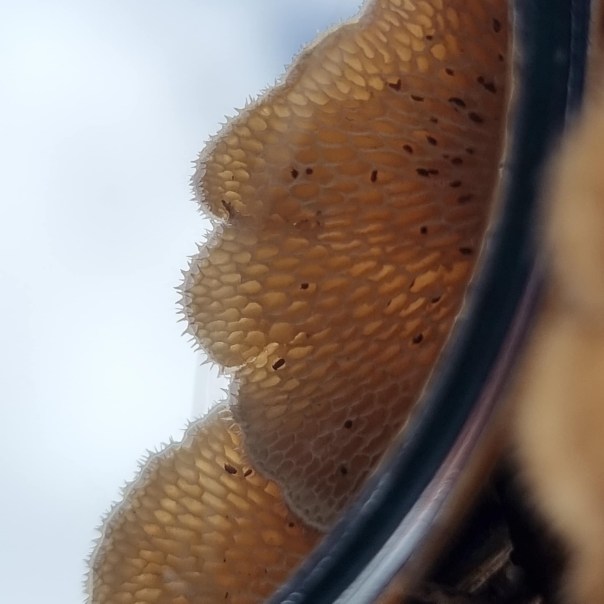
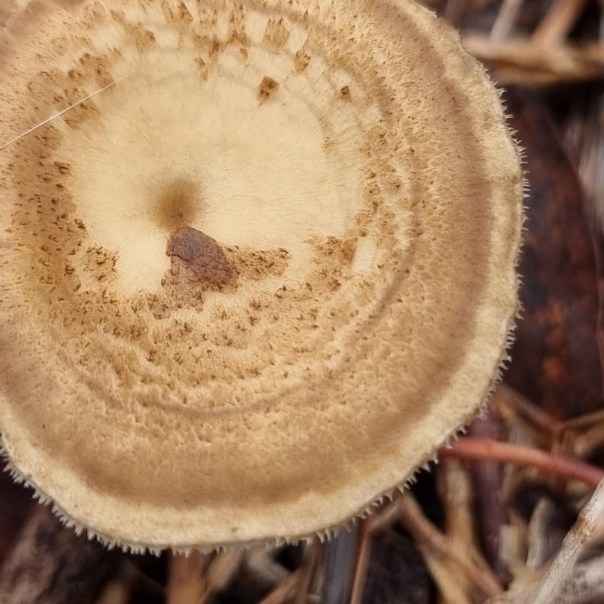
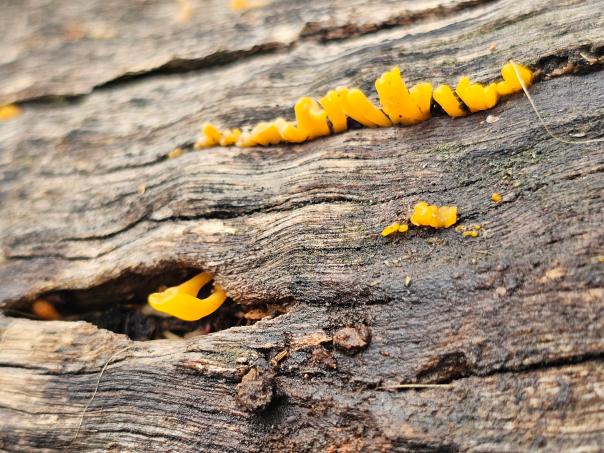

While it had rained just before our foray, it had been bone dry for the previous three months, a factor that definitely influenced our finds.
Here’s Leslie checking out the lichen with the help of a small magnifying glass.

While some puff balls and horse dung fungi had managed to pop out just in time for us to see them, we were mostly finding fungi on rotting wood and under the canopy of the she oaks.

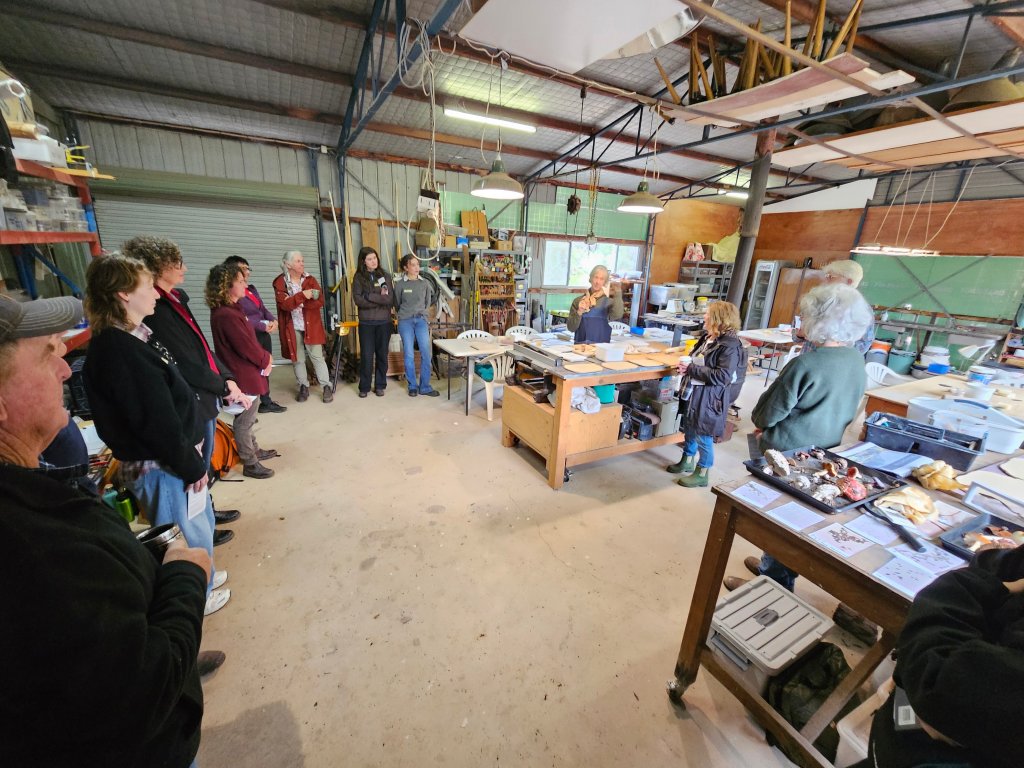
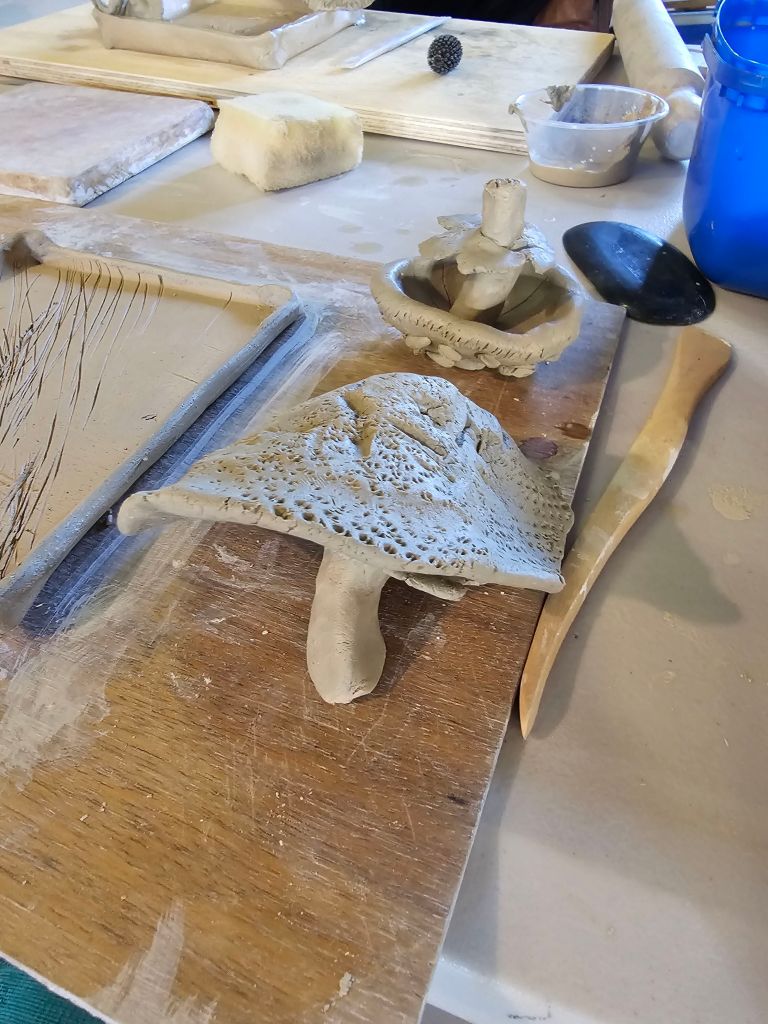
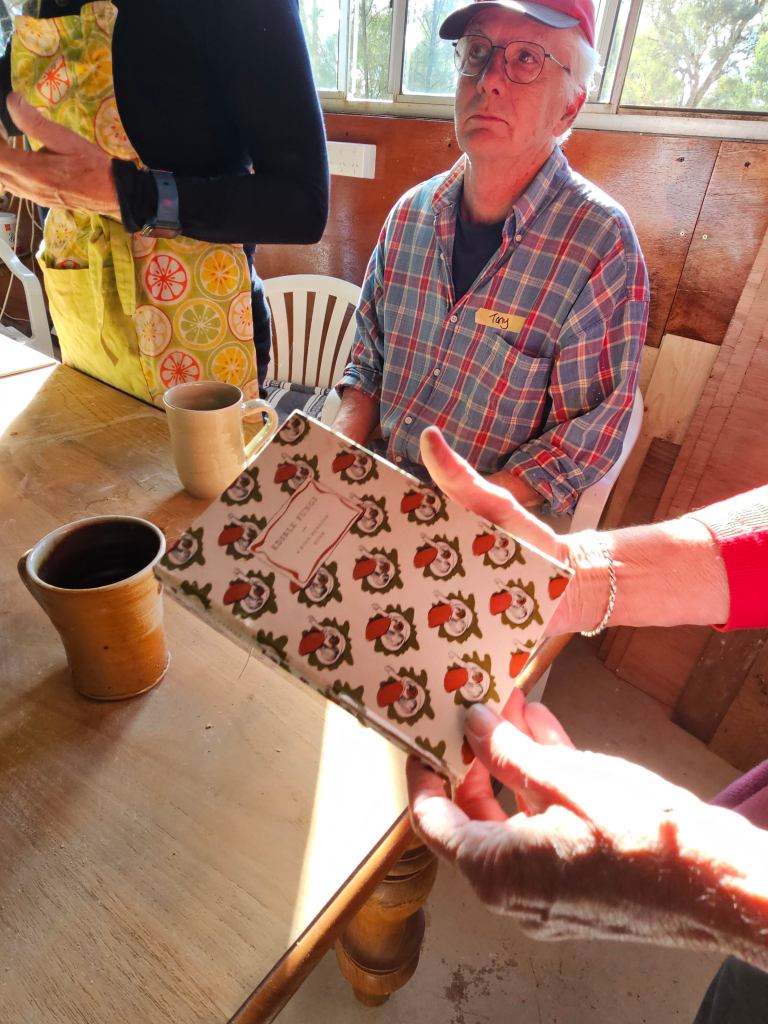
After our foray we came inside to the pottery barn to make our fungi-inspired platters & sculptures. Some of us even tried out the potter’s wheel while the rest of us looked on while sharing around a deck of fungi-inspired affirmation cards & flicking through a beautiful vintage fungi guide found for $1 in an op shop!

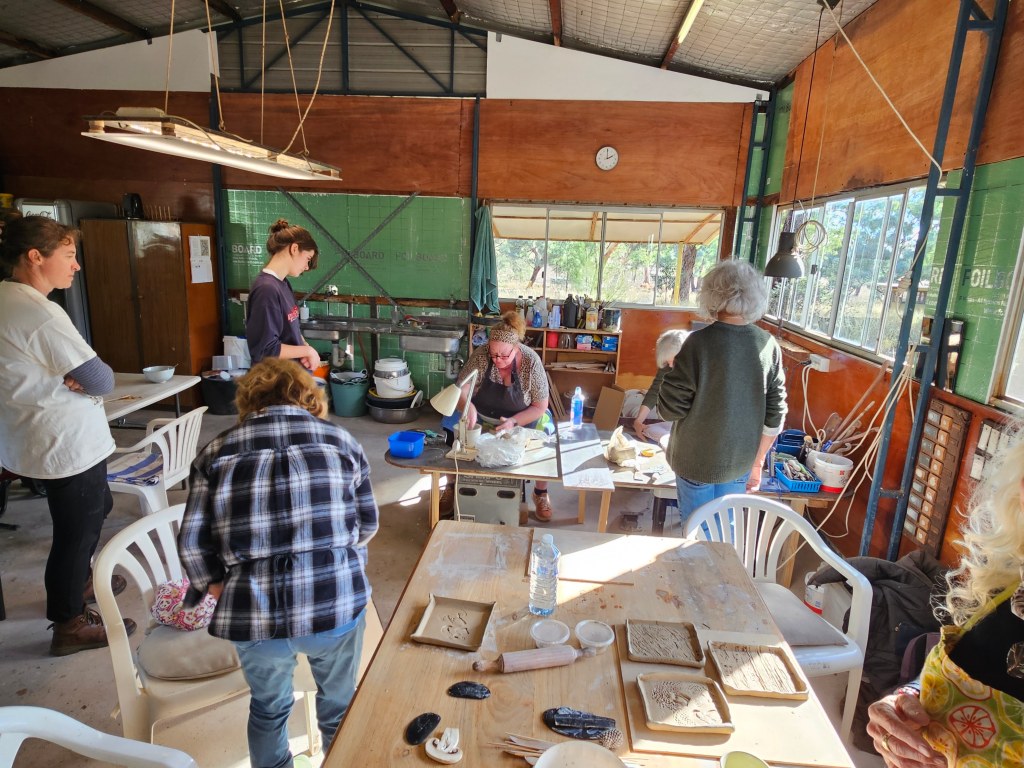
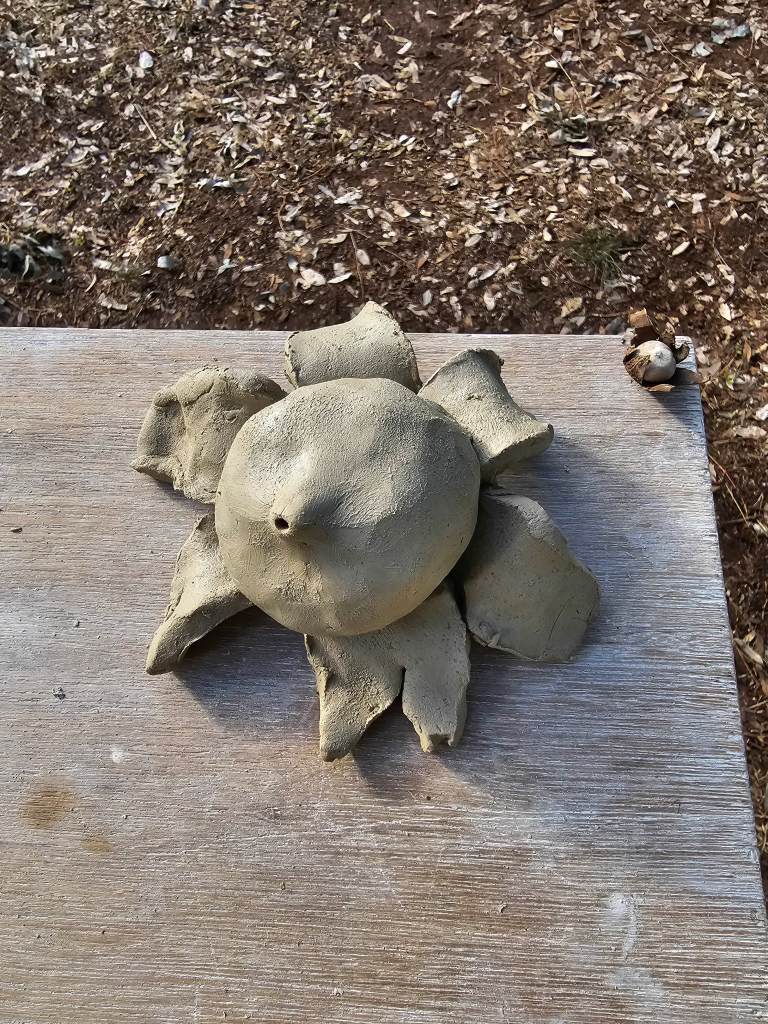
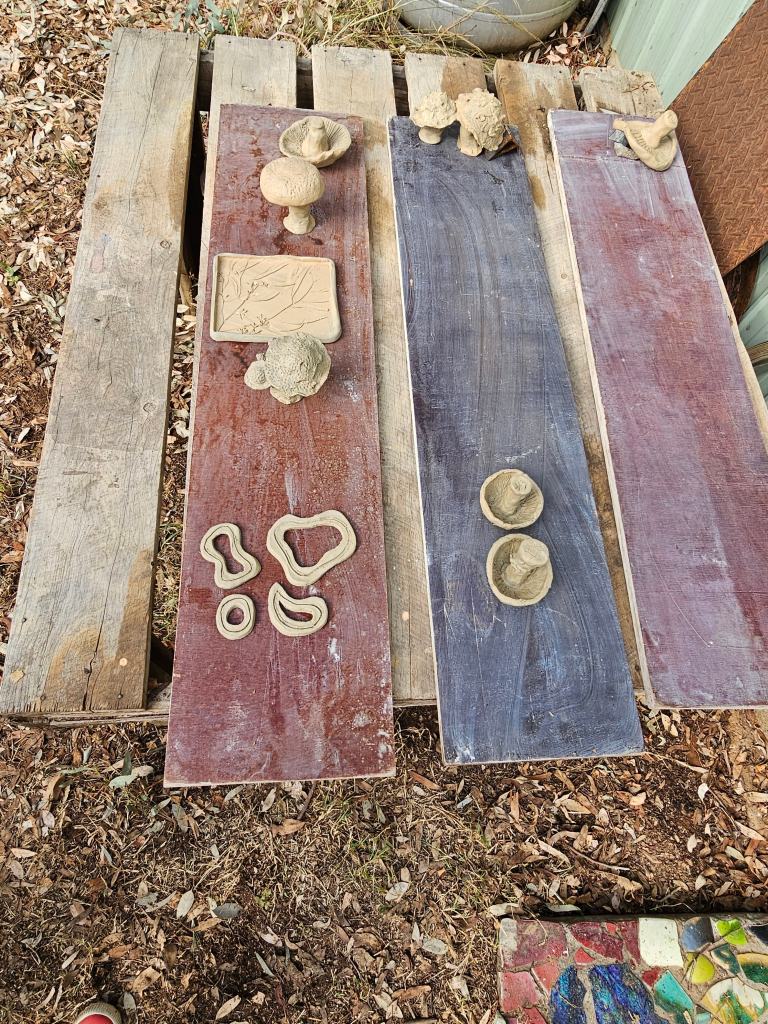

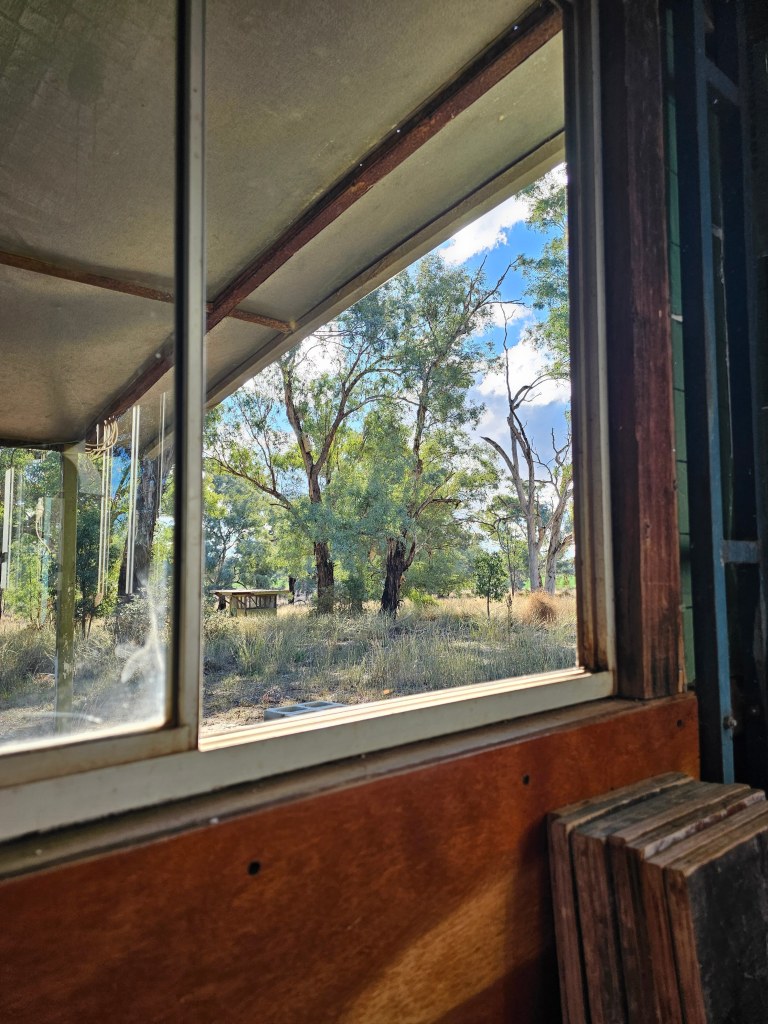
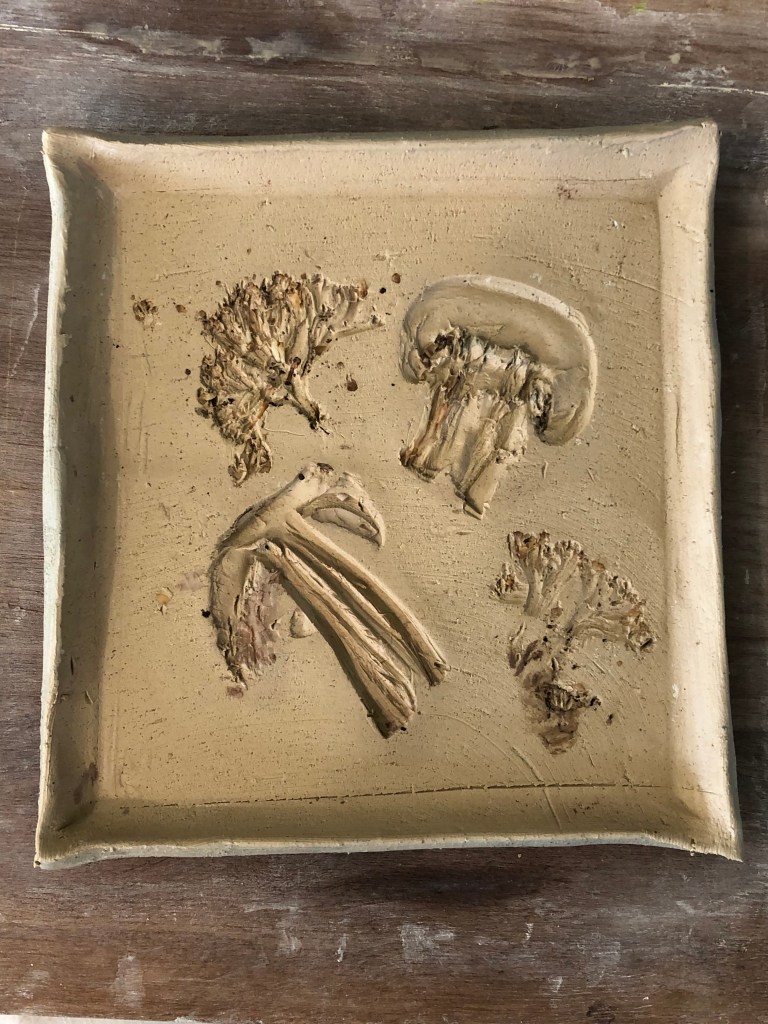
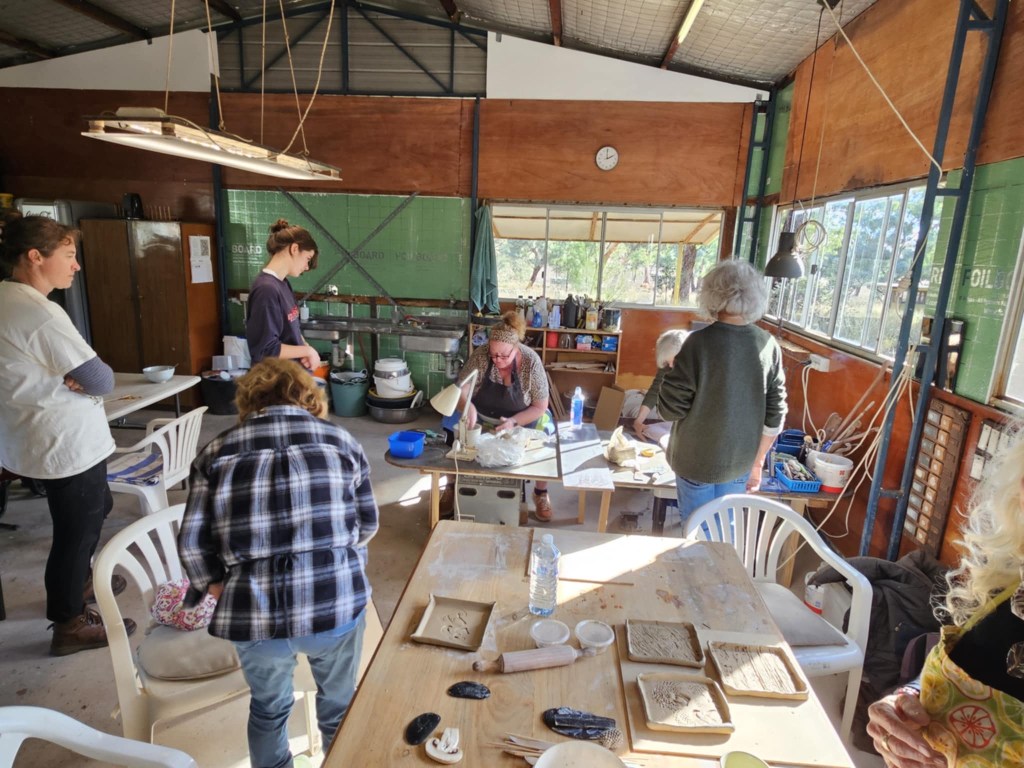

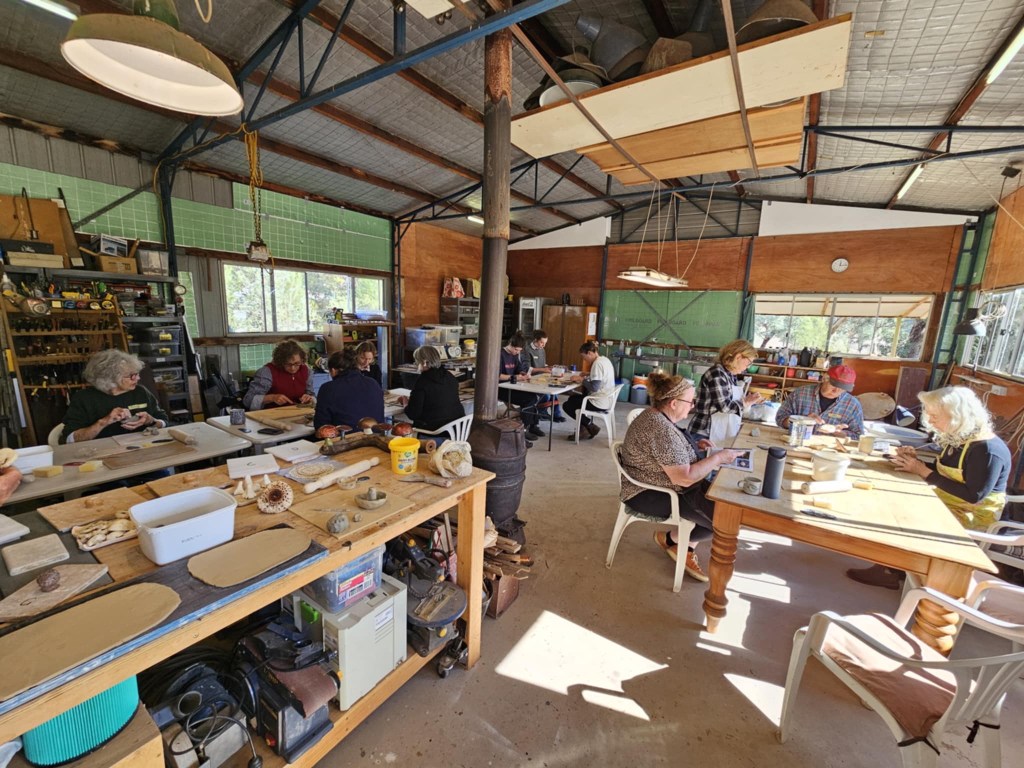

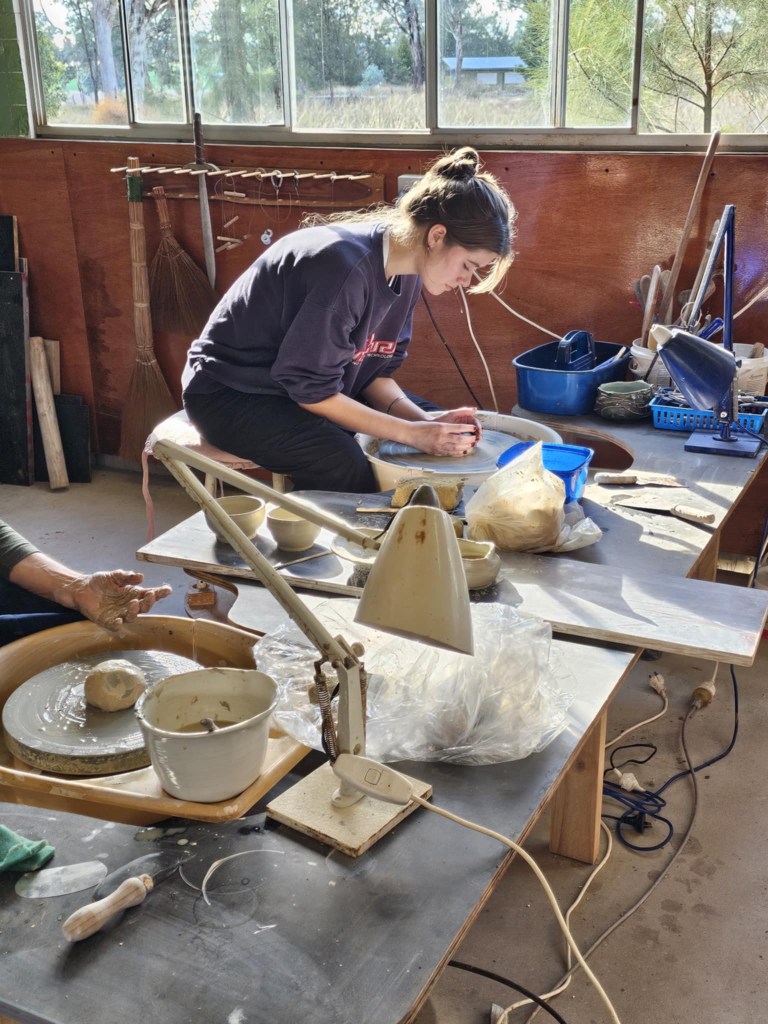

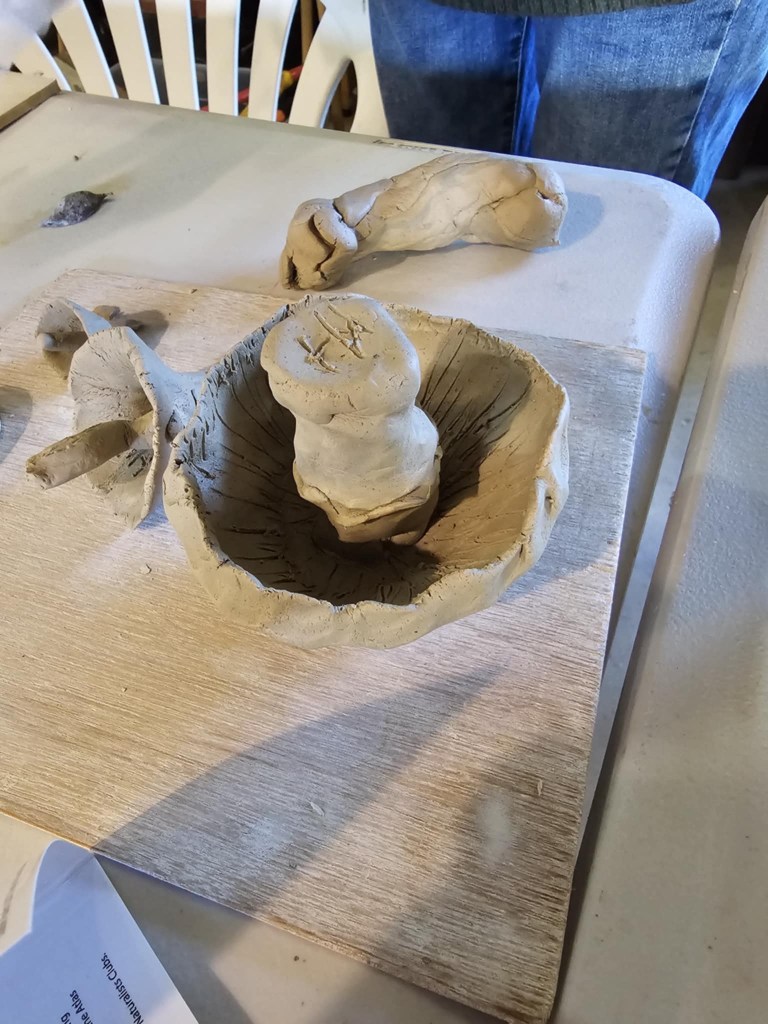

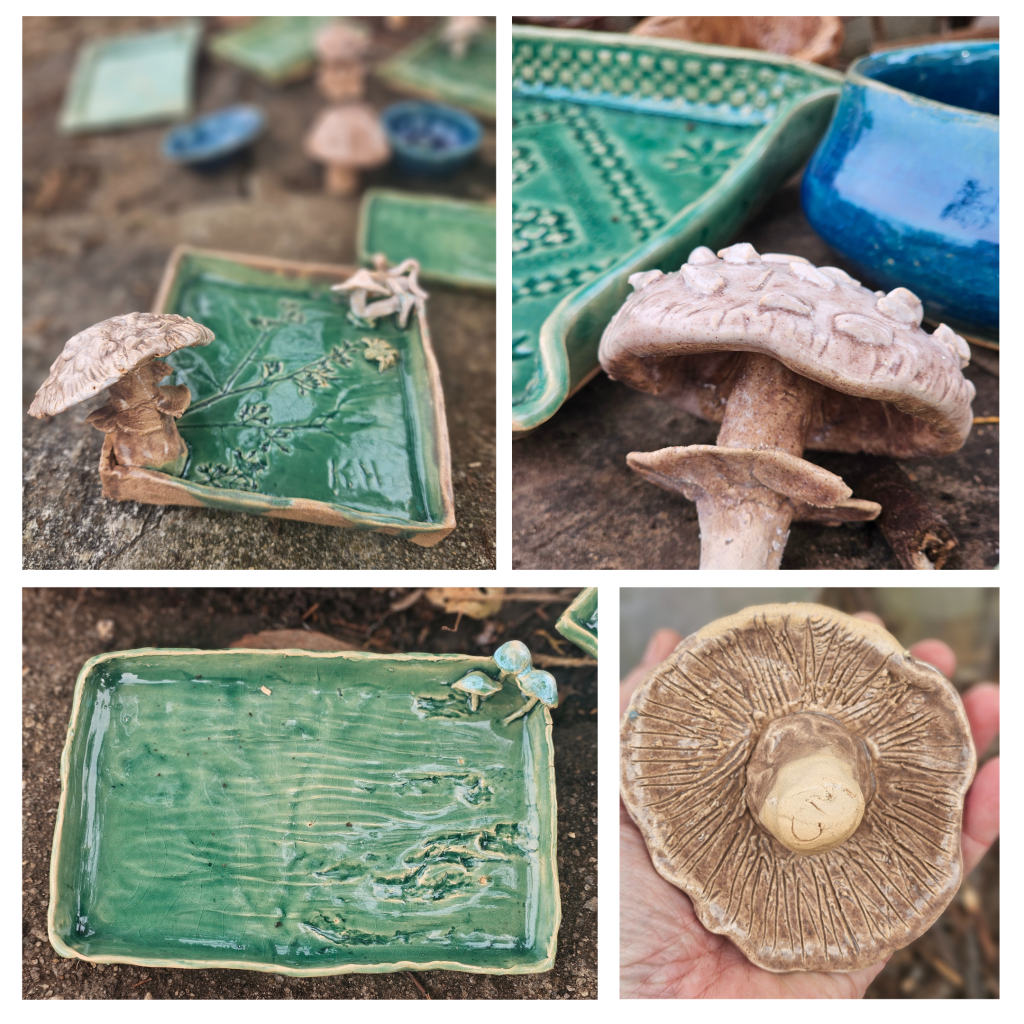


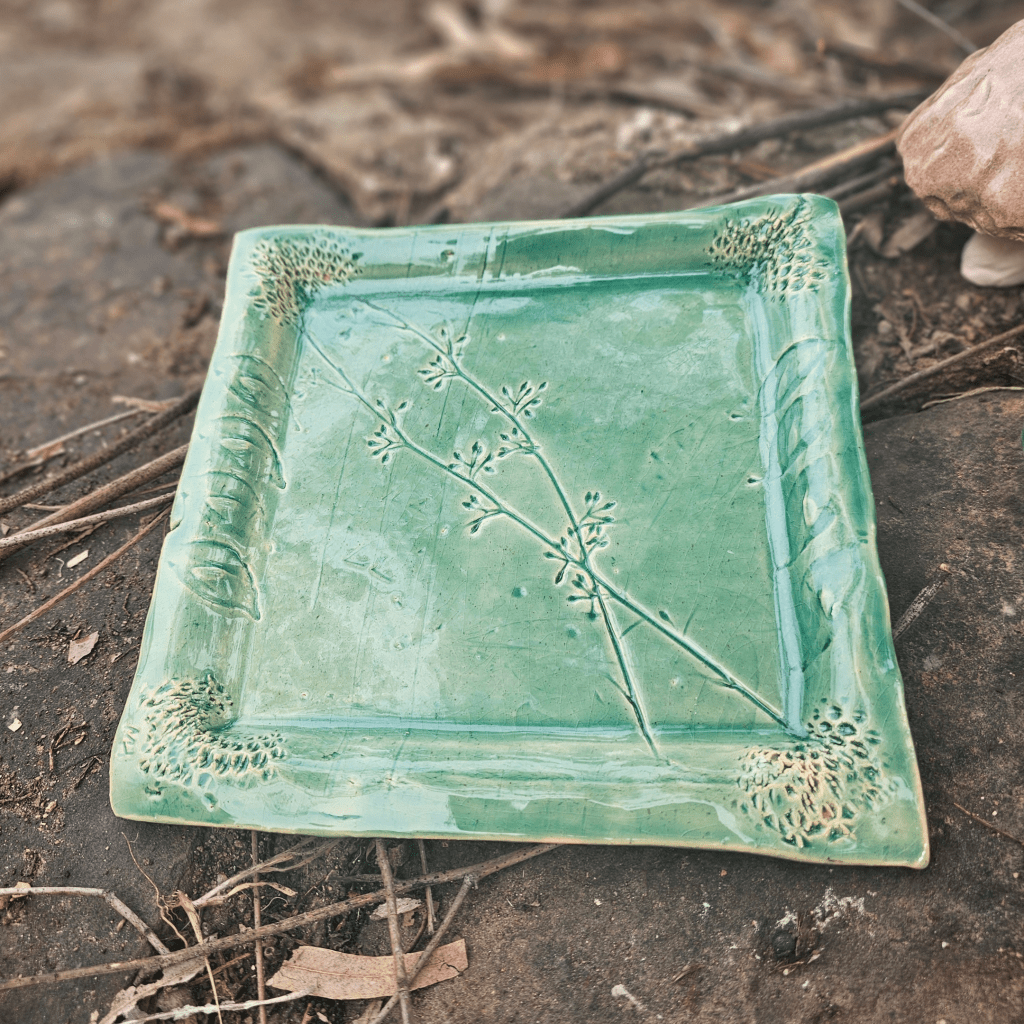
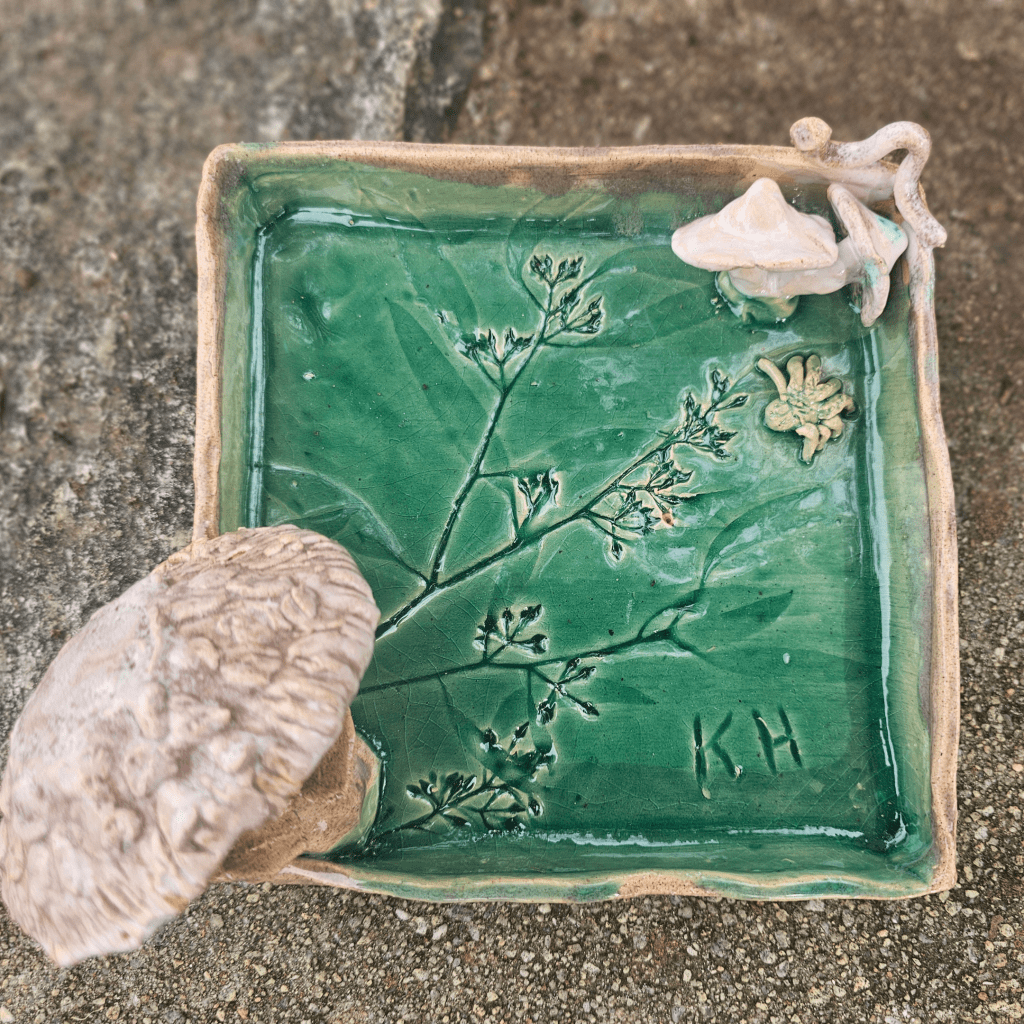
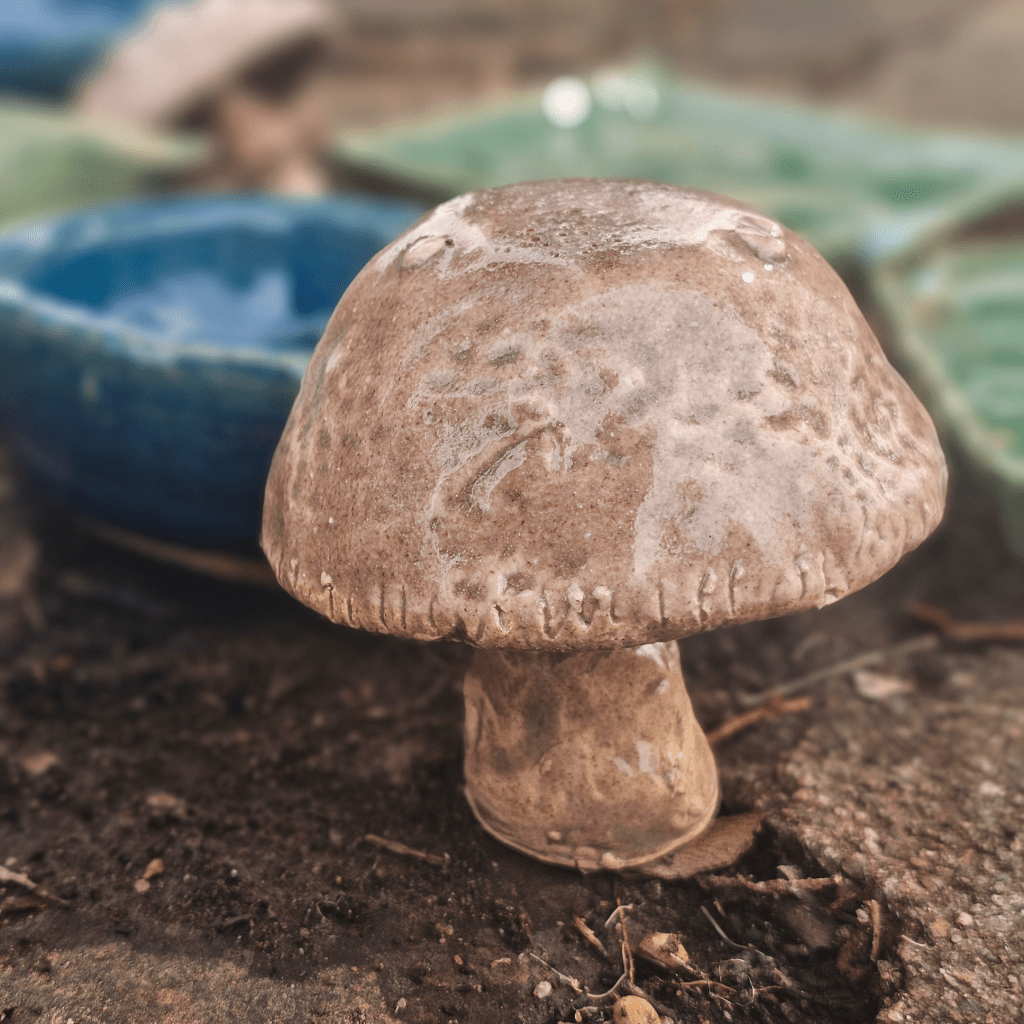
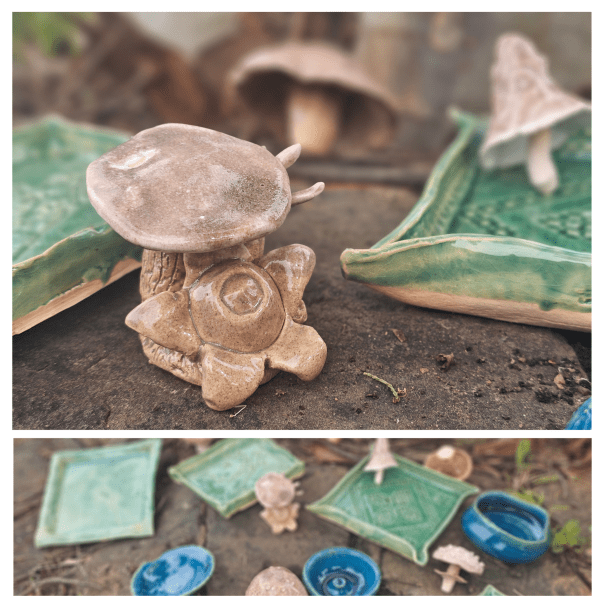
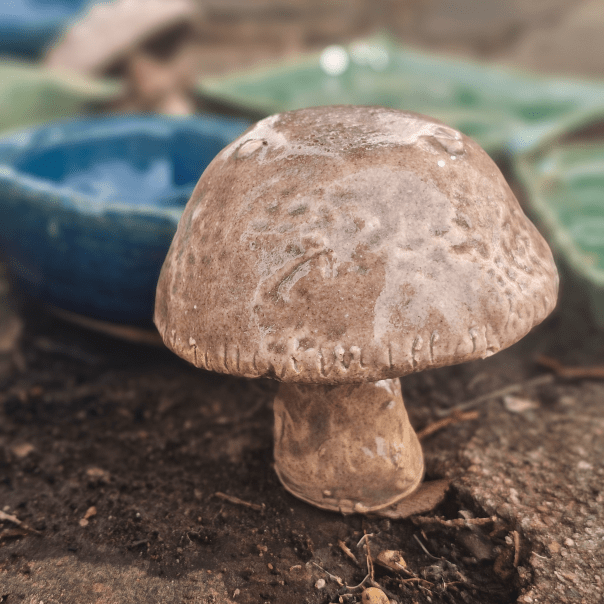
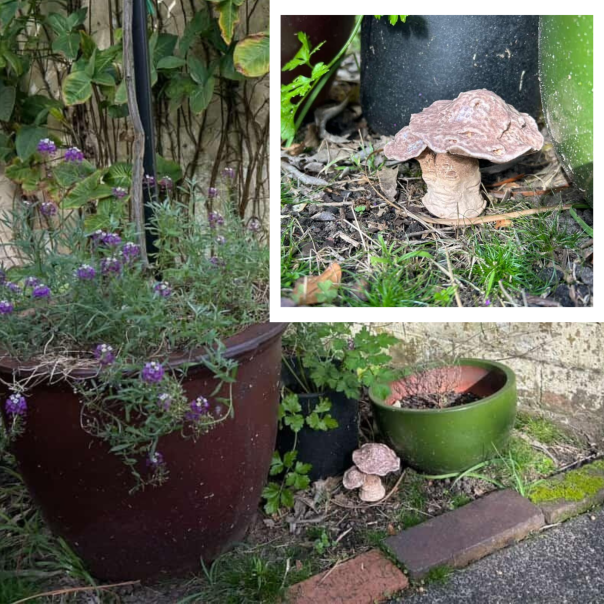
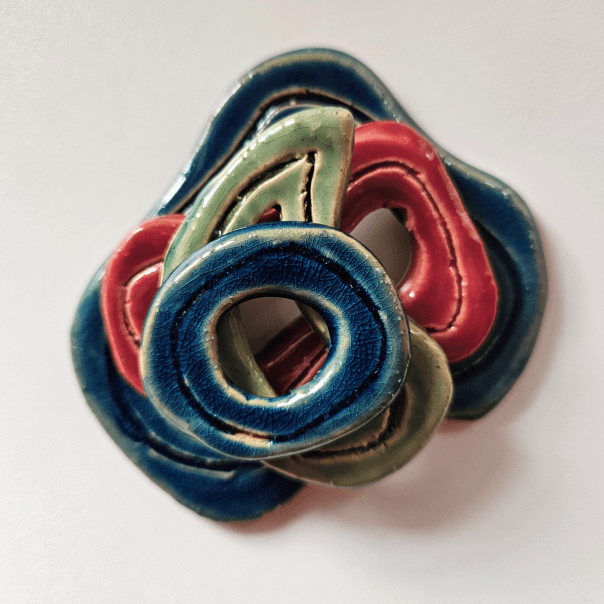
Here’s how some of our pottery turned out after firing and glazing.
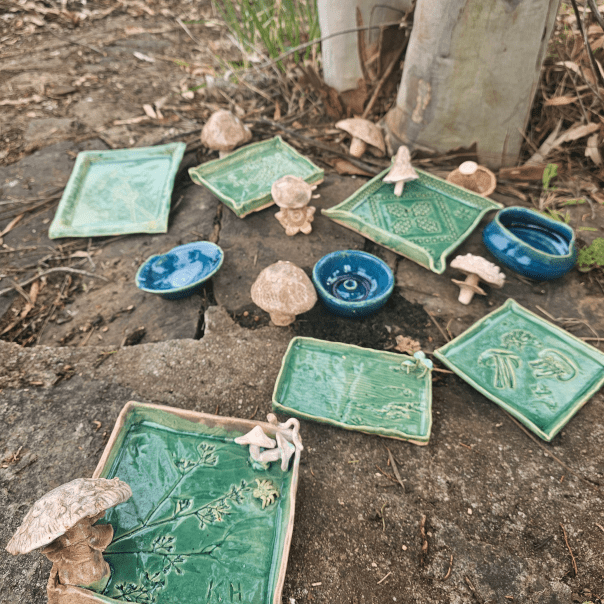
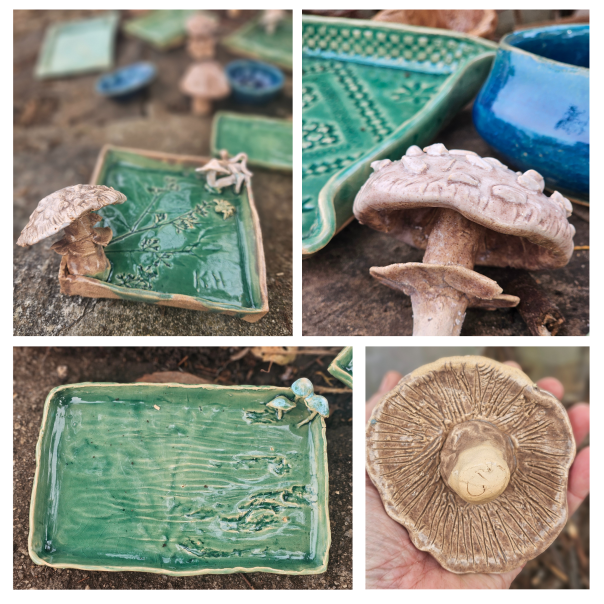
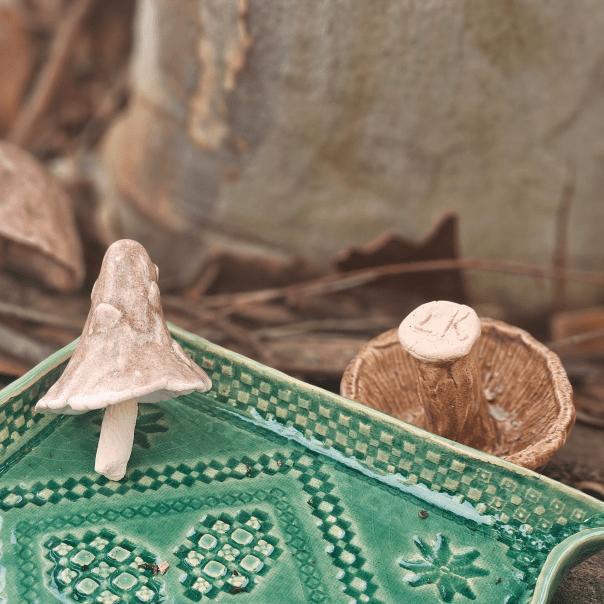




Finally we had time to conduct three microbiometer soil sample tests. One on the driveway, one in long grass and one under a mature gum tree. All samples returned high total microbe counts which was to be expected given the recent rain, but it was the fungi:bacteria ratio that was most interesting sitting at approx. 0%, 25% and 55% respectively & neatly demonstrating how fungi thrives where soil is least disturbed.
Site 1: Grassy area near to pottery Studio.
Total Microbes: 1026 ug C/g, F:B ratio: 0.4:1. Fungi: 26% Bacteria: 74%

Site 2: Driveway. Highly trafficked, very little growing. Water sitting on surface.
Total Microbes: 930 ug C/g, F:B ratio: -0.1:1. Fungi: 0% Bacteria: 100%

Sample 3: At the root zone of a mature Eucalupt.
Total Microbes: 1087 ug C/g, F:B ratio: 1.3:1. Fungi: 57% Bacteria: 43%
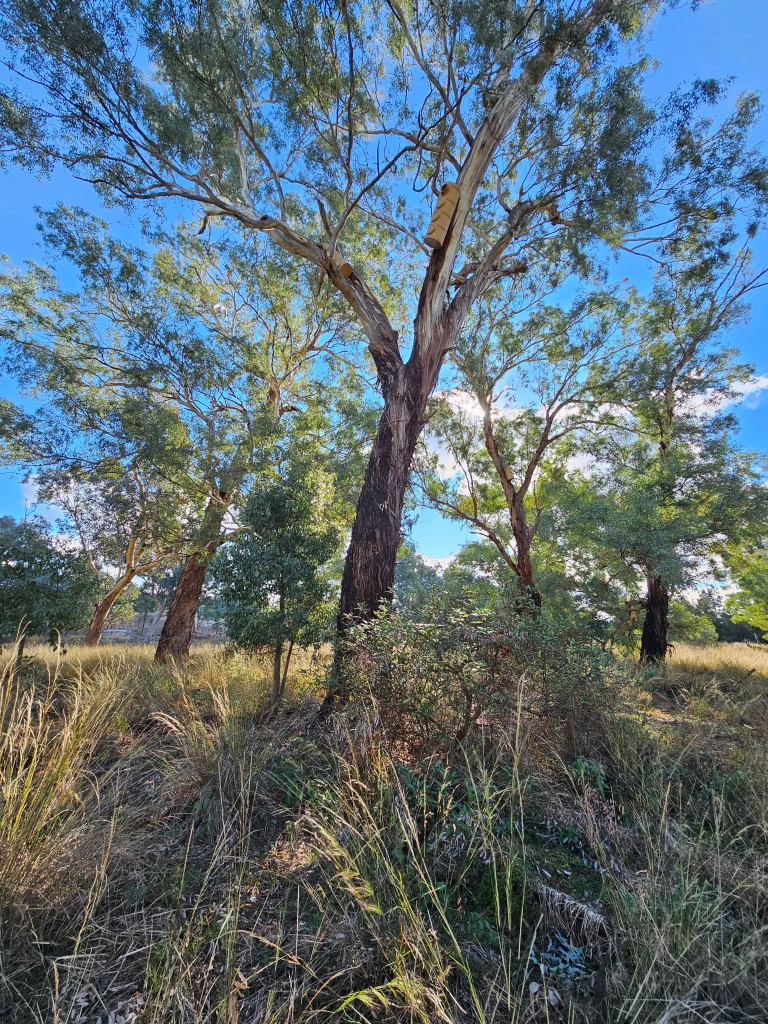
Discussing the soil test results
I used a test kit called the Microbiometer to run these soil tests. The tests were repeated to rule out anomalies in the results and the average result is given.
The microbiometer works by analysing the colour emitted from a sample of the soil microbes. A small sample of top soil (0-10cm) is taken and sieved. 1cm2 of the sieved sample is then placed in a test tube filled with water and a salt solution. The salts precipitate out the microbes from the soil particulates after stirring and then sitting for 20 minutes. At the 20 minute mark, 6 drops of the suspension are placed on a test strip in the same way you’d have carried out a Covid test. After another minute, the strip is scanned by an app on your mobile phone and the above figures are given.
Soil microbiology changes quickly in response to environmental conditions. Most often there is a spike in activity when it is wet and warm. Wet and cold will also give higher numbers than dry weather but to a lesser degree as some microbes slow down their reproductive rates when it gets frosty (and who can blame them!). Bacteria are first to respond to weather events and as such, its common for much of the boost in microbes to be bacterial. Fungi populations tend to be slower to change and therefore are more stable to count. Both fungi and bacteria are typically more abundant when there is a variety of plants growing so we’d expect higher numbers in grassland than on the drive – and that’s what this test showed us. Fungi is more vulnerable to disturbance which is one explanation as to why no fungi was counted on the driveway. Like many trees, Eucalypts have Mycorrhizal relationships with fungi in their root zone so, all things being well, we’d expect a higher fungi ratio around a tree and that’s what we got.
Knowing a soils microbiological profile can be very helpful when trying to understand a sites soil health, it’s potential for growing plants and its vulnerabilities.
These results were typical of what I’d have expected given the location the samples were taken from. They also correlate well with samples taken from this site at this time last year.
Of course we had to continue the fungi theme over lunch with a delicious cream of mushroom soup served up by the team at the Breakout Brasserie in Cowra.
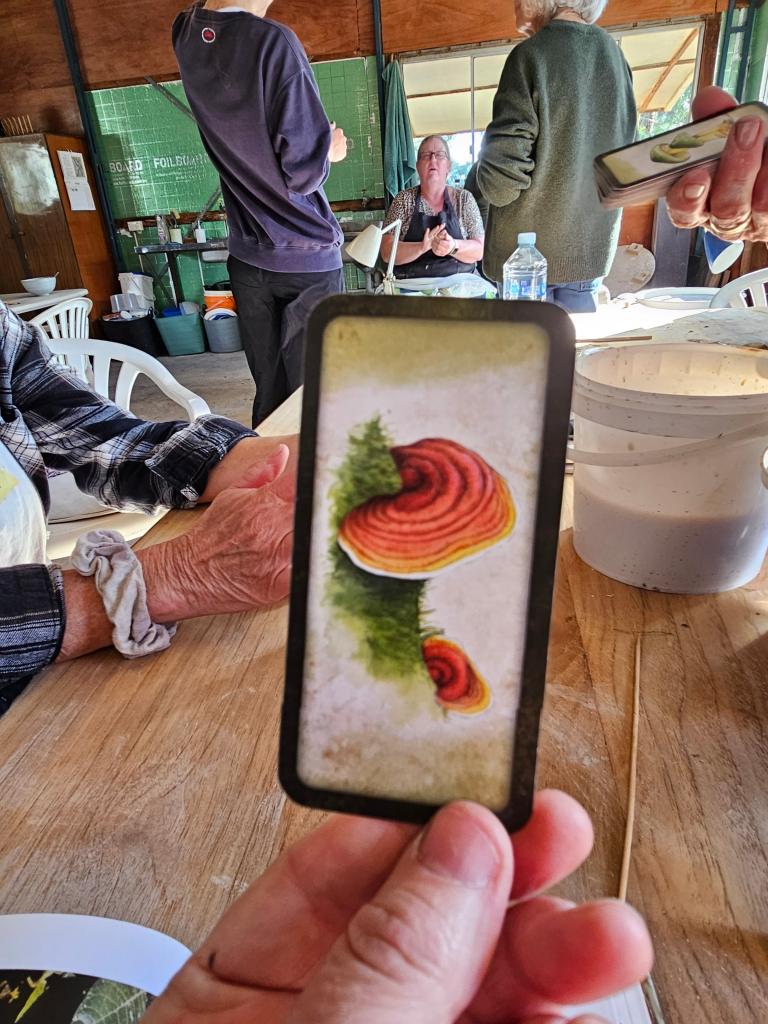


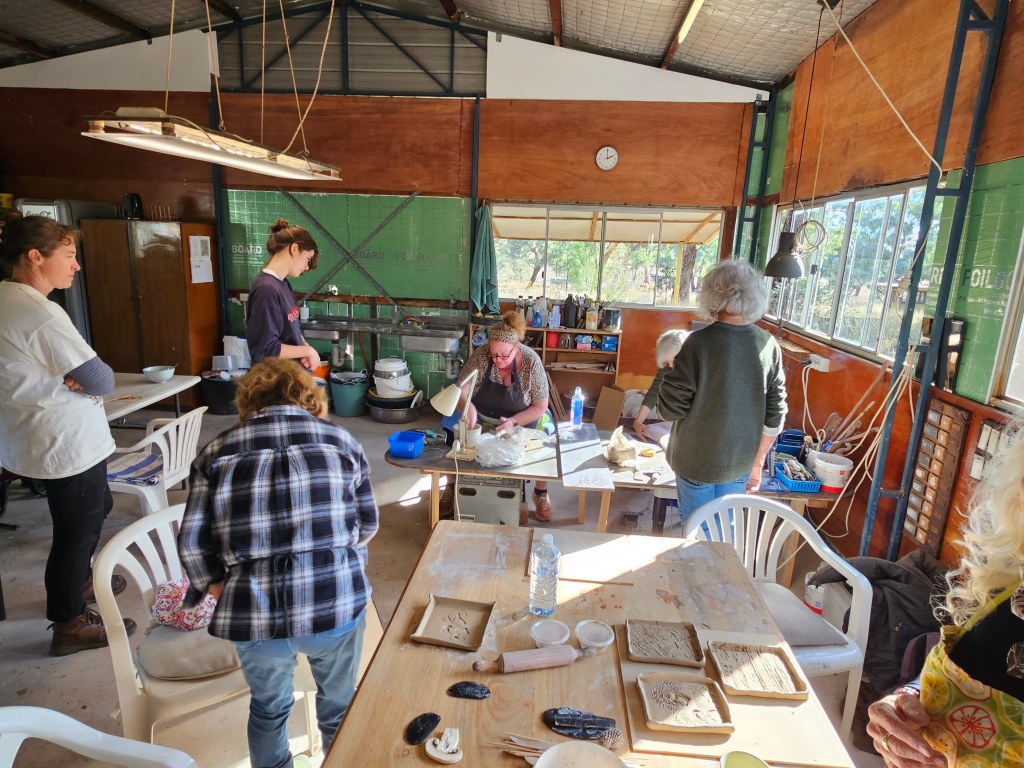
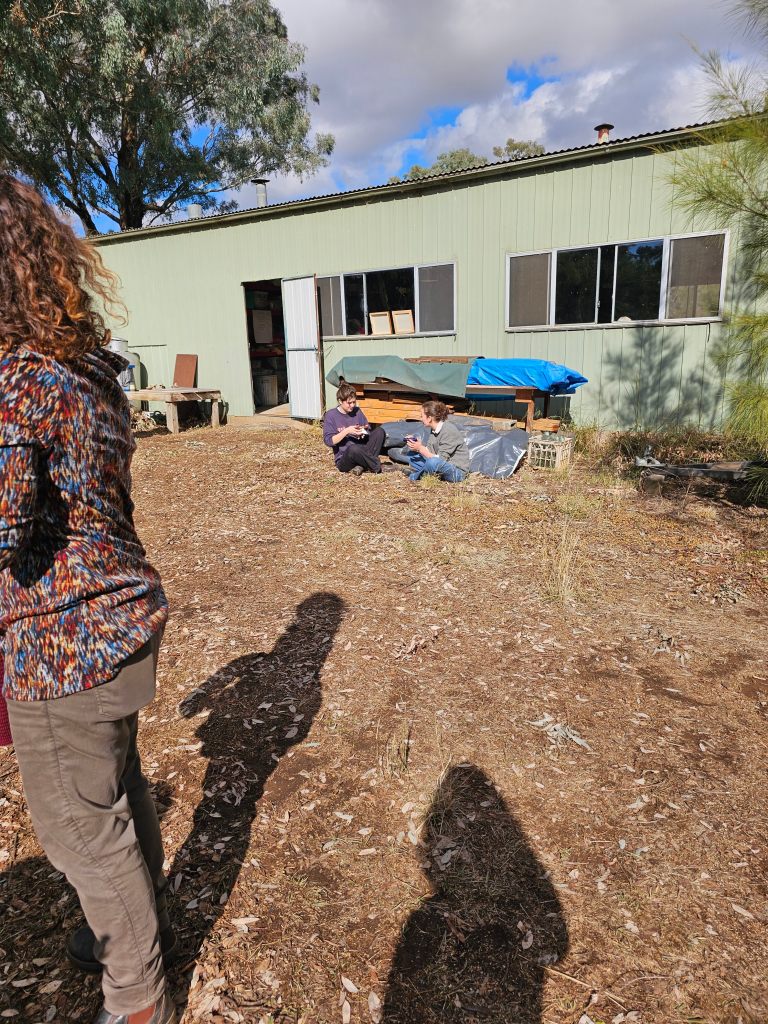


Many thanks to Catherine Bennett for suggesting and organising the pottery aspect of the day and for providing such a wonderful venue for our fungi adventure. And thanks to everyone who participated so enthusiastically & who air dropped their photo’s for us to share. They are all wonderful!


The program is being funded by the NSW Government
through a partnership between the Saving our Species program
and the Environmental Trust.
Planting a Tree or Two for the Glossy Black Cockatoo.
The team here at Mid Lachlan Landcare are excited to have received the Bupa Landcare Grant for our Glossy Black Cockatoo habitat connectivity project. Our project will be part of the planting of over 80,000 trees and plants across Australia, linking environmental health with community wellbeing. Our project will enhance the Western Woodland Way, an area that begins in the north on Queensland’s border at Dthinna Dthinnawan National Park and ends in the south at Weddin Mountains National Park. Within that corridoor, we’ll be planting to connect habitat between the Conimbla and Nangar National Parks, a rural area with Gooloogong at its centre.
The funds we’ve received via this project have enabled us to finance several community tree planting events in conjunction with Kangarooby Catchment Landcare and Eugowra Catchment Landcare groups with whom we are partnered. This area is well known for Glossy Black Cockatoos who favour She Oaks (Allocasuarina sp) as feed trees and these enjoy the climate and conditions in this part of the world.
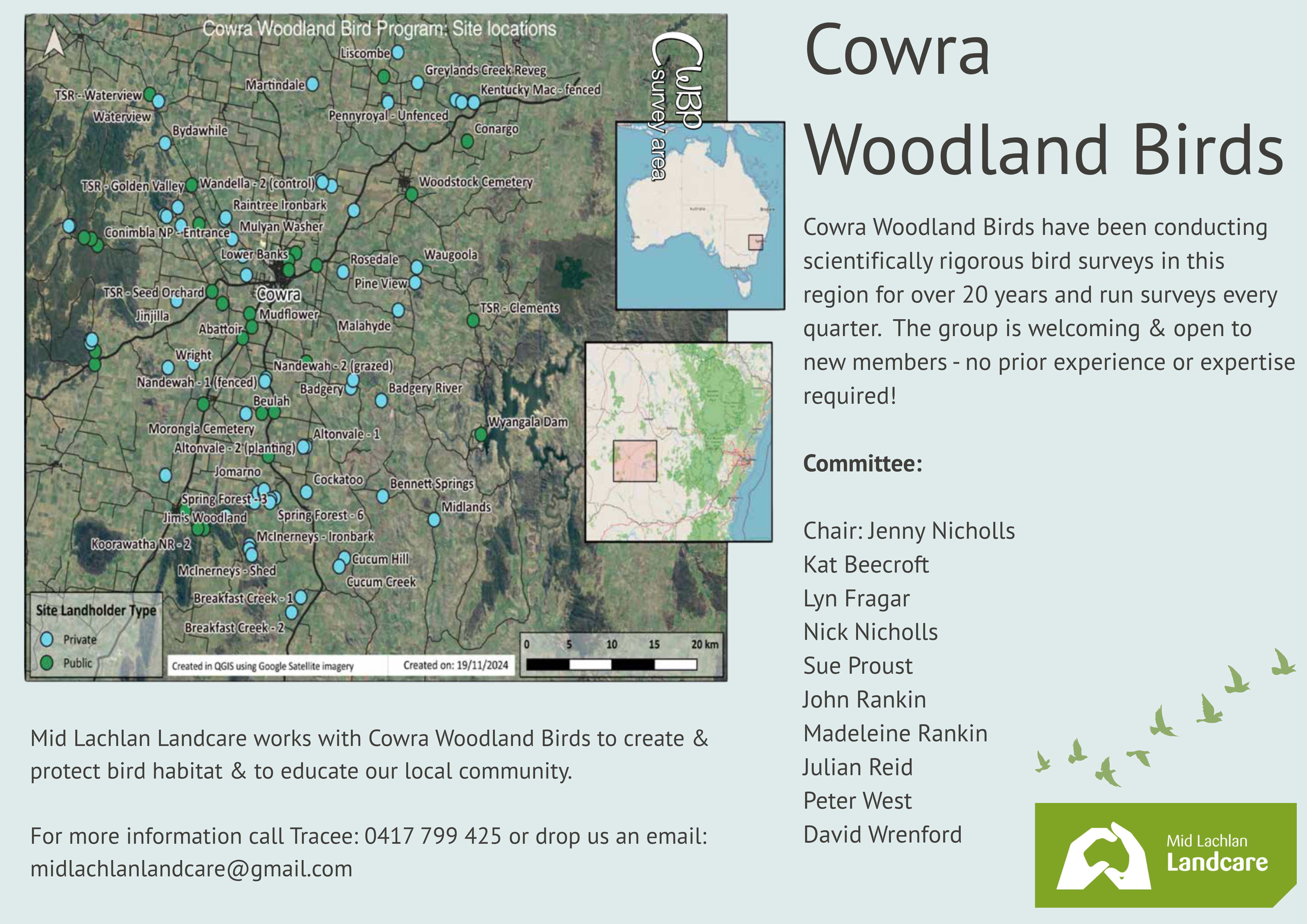
Our planting area takes in Cowrashire, an area with an excellent reputation for birdwatching thanks in no small part, due to the work of our Cowra Woodland Birds group who’ve been conducting bird surveys in this region for 23 years. See this blog for more information about the birds of the Cowra region. In addition to improving bird habitat, we are aiming for this project and these plantings to further enhance the birdwatching opportunities in this and neighbouring Cabonne Shire.
Landscape connectivity is essential for maintaining ecosystem and species health, boosting long-term survival by enabling populations to diversity and adapt to an ever-changing climate. While we are primarily focused on birds, these principles also hold true for human populations and as such, we’ll be encouraging our friends, neighbours and countrymen to get out amongst it as we plant our way to a greener and healthier tomorrow.
Our events will run from May 23rd to the end of July. Contact us for more information on how you can get inovlved or scan the QR codes below to register for the event:


This project has been made possible due to generous funding from Bupa and Landcare Australia.
Searching for Swift Parrots
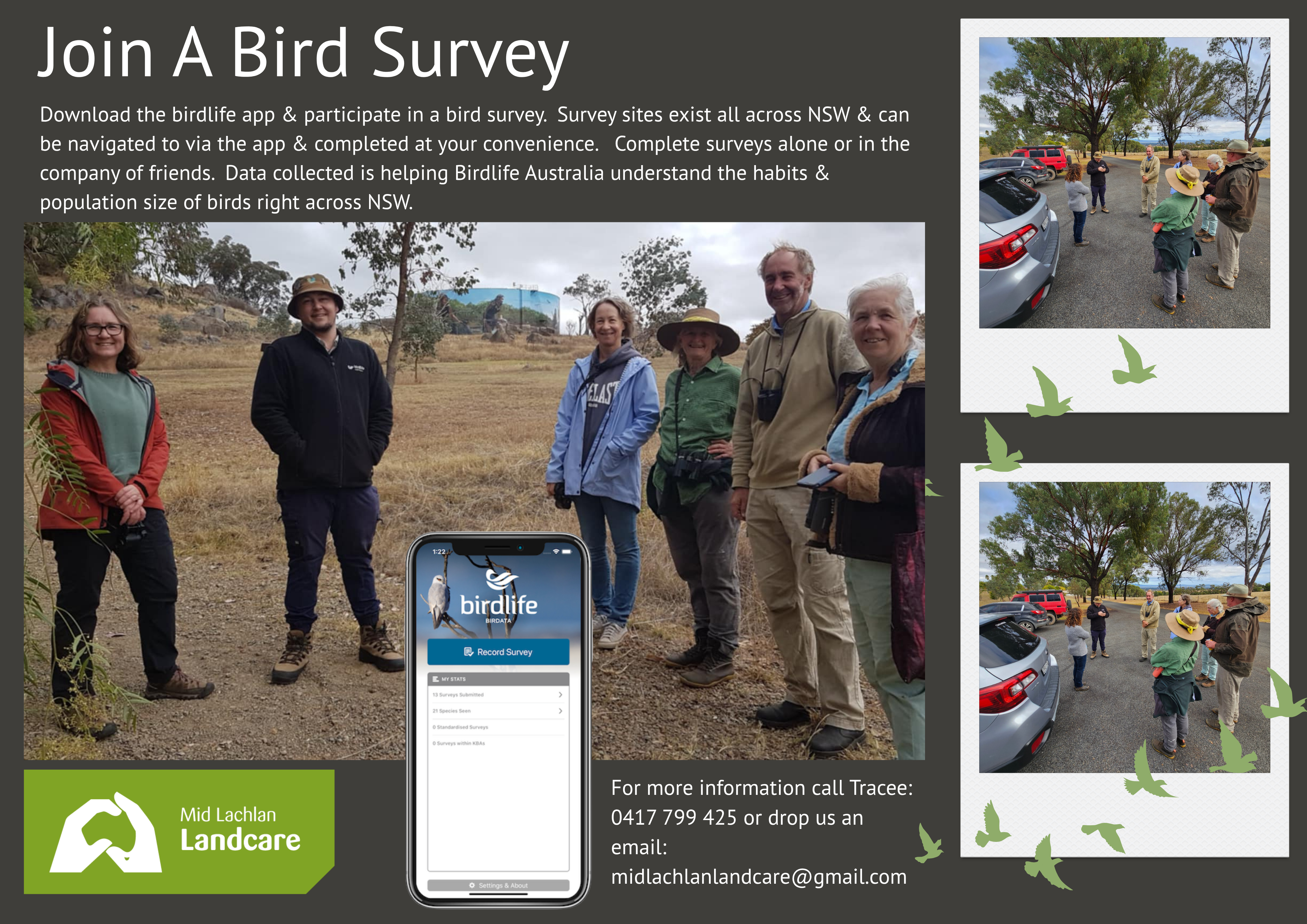
This morning a small group of us met at the Cowra Council Peace Precinct on a search for the critically endangered Swift parrot (Lathamus discolor). It’s estimated there are only 1000 left in the wild so we all knew we’d be lucky to see one today.

Swift Parrots migrate across the Bass Strait to the south-east of Australia to overwinter, feeding on nectar and lerp in our Box Gum woodlands. Cowra is definitely on their migration route with the best time to spot them being between March and June.
BirdLife Australia have a number of survey sites identified in and around Cowra including those we visited today.
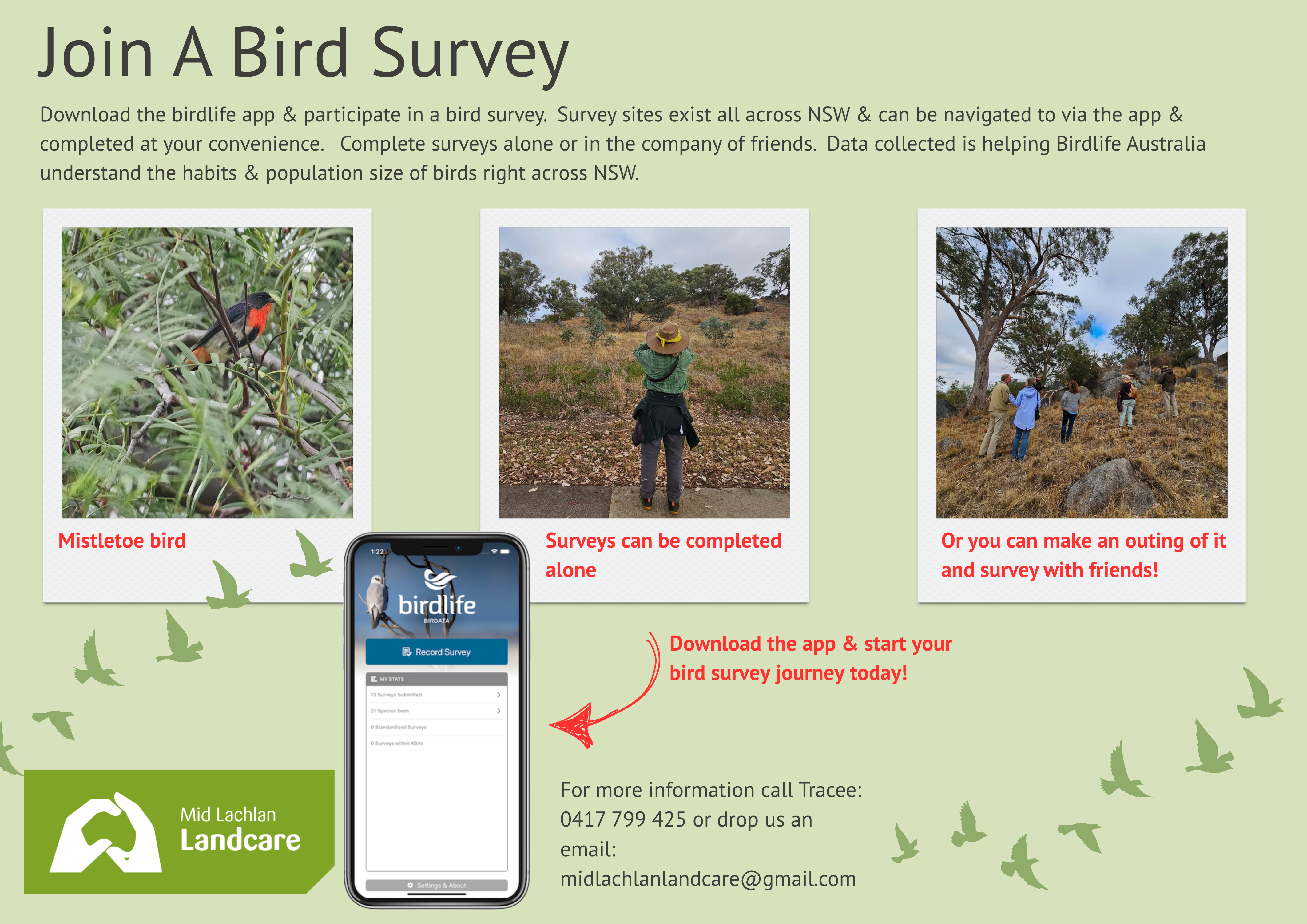
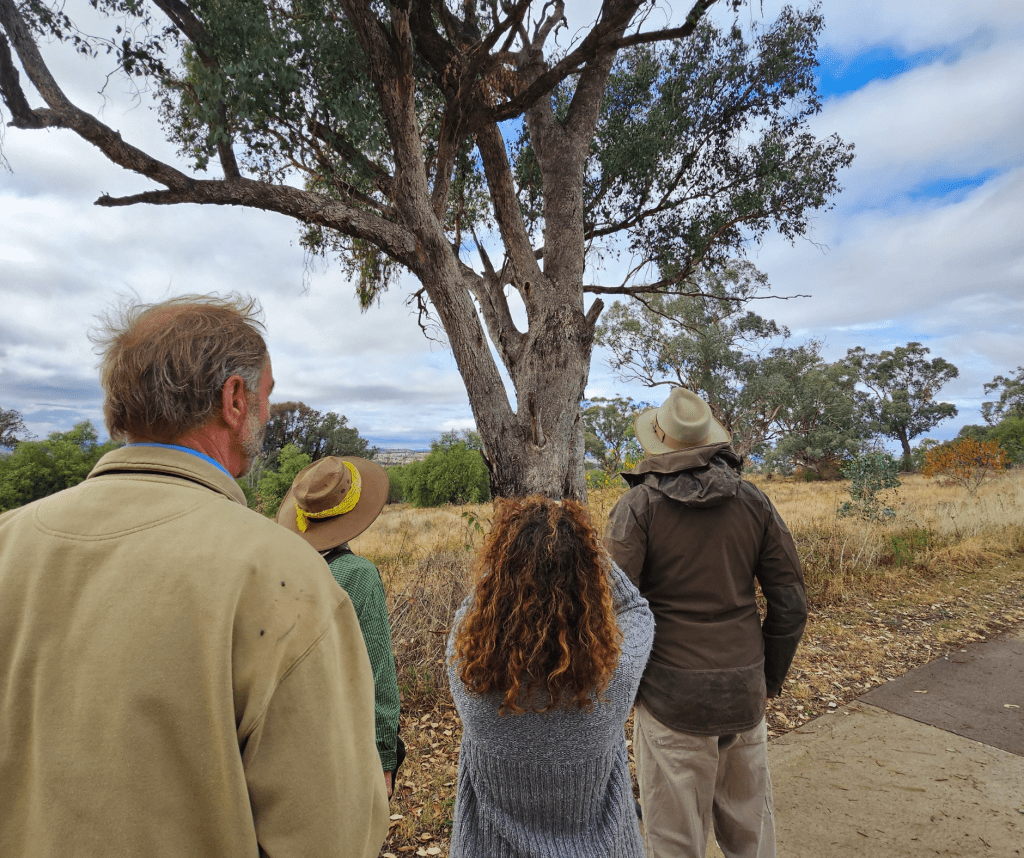
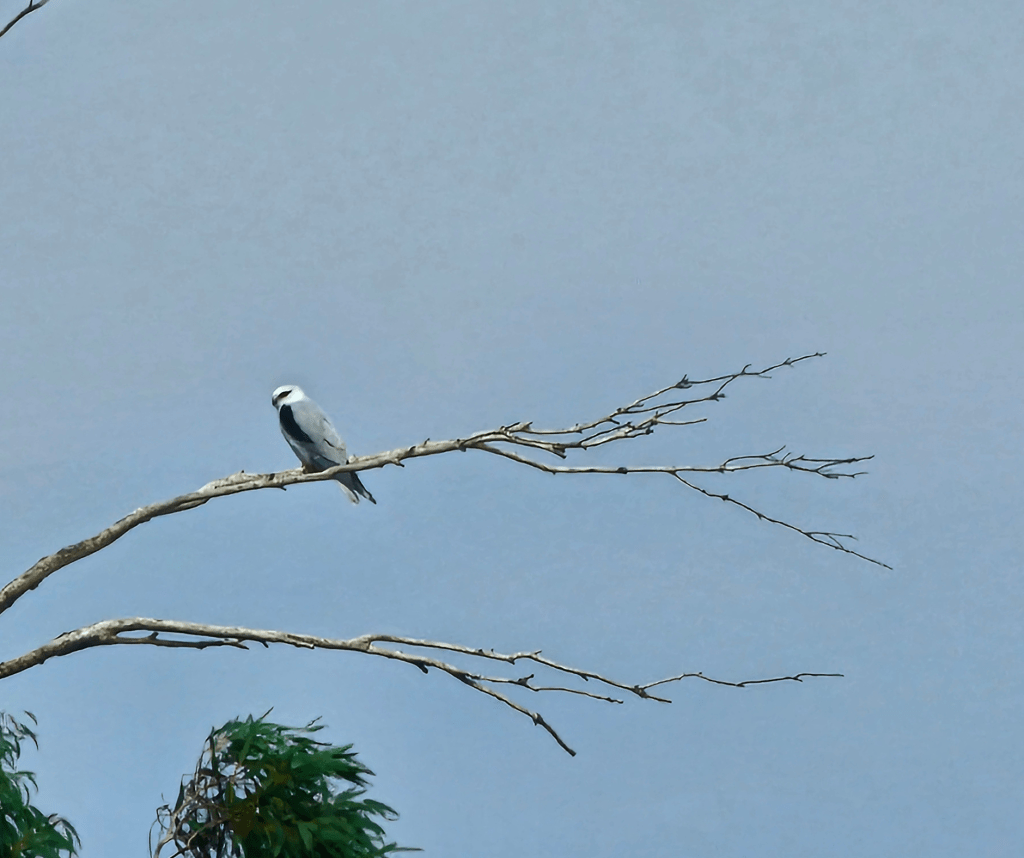
While it wasn’t the best conditions for spotting Swifties (the birds, not the music fans), we did see lots of other wonderful birds including this very chatty Mistletoe bird.




How to join this Citizen Science survey & complete your own 5 minute Swift parrot search

- Download the birdata app – this app is available for both Apple & Android devices.
- Create yourself an account – you’ll need to be in wifi range and have an email address for this bit. You also need to set up a password.
- Familiarise yourself with the app before setting out. If you’re here for the Swift Parrot search:
- click on ‘Record Survey’ and scroll down to the Swift Parrot Search line. Click there and this will bring up a map.
- Zoom into your map and look around. Designated Swift Parrot survey sites near you will become visible as purple circles.
- If you want to carry out your survey now, move yourself into one of the survey circle zones.
- Once in the zone, double tap your screen to confirm your position and start the survey. The survey won’t start until you are in position and have done this.
- Fill in as much data as you can about the trees, lerp and blossom. If you are unsure, leave this blank.
- Complete your 5 minute survey then confirm your data and submit it to Birdlife Australia.
We didn’t spot any Swift parrots today but will keep on looking & completing these surveys over the season as the more we get out there and look, the more likely we are to spot them.
Swift parrots are critically endangered due largely to habitat loss and fragmentation, a situation that’s putting a number of our native species in peril.
May the force (of Fungi) be with you!
Have you seen what mushrooms are doing to our pavements lately?

These little guys just couldn’t wait for the curtain to lift on Mycology May, in fact nothing can keep them down and prevent them living their best lives! These are horse dung fungi or Pisolithus arhizus, an earth ball native to these shores that forms a mycorrhizal relationship with Eucalyptus trees. It’s also one of my preferred fungi species for dye extraction. These fruiting bodies are currently pushing their way through the driveway at our Cowra office.
I’ve become a little obsessed with fungi over the last few years – something that’s easy to do given that our region is the perfect place for mushroom hunting. But it’s also thanks to the work that the Central Tablelands Region Landcare and Local Land Services networks put in to making Mycology May happen and this includes providing financial support for a wide range of fungi-themed events and activities. Mid Lachlan’s Mycology May event booking information is here. Follow this link for more event information.
Back to the pavement vandals…
What you can see below are the fruiting bodies of this fungi. This part of the fungi erupts from the ground in such a spectacular way thanks to hydrostatics – a type of hydraulic Pressure.
Fungi cells swell and collapse in line with their water content. Fungi cells work in the same way as bike tyres – just as tyres get harder and more ridgid when you pump them with air, mushroom cells get harder and more ridged when they are pumped with water. A force we call turgidity. Accurate figures on just how much pressure is involved in this change is hard to find, as to date, there’s no standard way to measure it. However, data on yeasts which are single celled organisms have calculated the pressure to be around 58 PSI or 0.4 mega pascale per cell. Times that by the hundreds or even thousands of cells per fungi fruiting body and it’s easy to see how they make light work of our roads and pavements!
We do hope you enjoy the upcoming Mycology May and look forward to hearing about your discoveries.

An Autumn Among the Trees – National Eucalyptus Day + Daydreaming in She Oaks.
March has ended in a flurry of tree-themed activities and it’s all been rather lovely. Last weekend we celebrated Eucalyptus day with our neighbours Weddin Landcare & team at their community nursery with a bit of essential oil distillation. I’ve been researching plant chemistry (phytochemistry) for the last 15 years of so and have a particular interest in plant aromatics (essential oils, resins and balsams) – in particular how plants use aroma chemistry to both communicate & stay well. It was great to be able to share a little of this with the good people of Grenfell, many of whom I’m sure will be rushing off to buy themselves an air still so they can create aromatic potions of their own!
I’ll share more detail on eucalyptus oil distillation in a later blog so stay posted – and for those of you who attended the talk and want to get cooking, I had a chat to the good people at Fork in the River, Cowra and they can supply you with this very same air still so go look them up.
Thanks to Clare from Weddin Landcare for this photograph.

Other than Eucalyptus, I’ve fallen down a She-Oak shaped rabbit hole and it’s all been rather lovely. Before you start wondering ‘why are we paying someone just to daydream about trees?’ I can confirm that my research has been transformed into content for a high school seed collecting / tree propagation series of activities – activities that just kicked off this week!

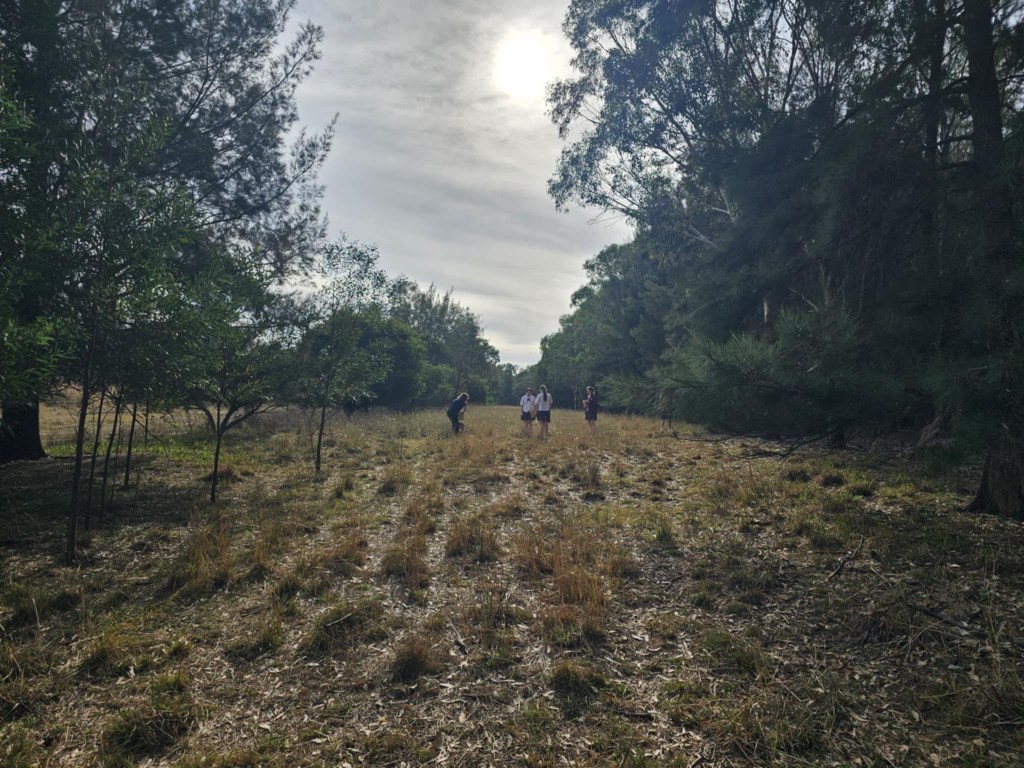
While I’ve always found the She Oaks beautiful and elegant looking, I’ve actually never really thought that deeply about their biology until recently. I knew these trees are wind pollenated, but it didn’t register before now that this meant some trees are boys and some are girls (I’m sure you all knew already so bare with me while I catch up). With that knowledge at the forefront of my mind I stepped into a dense patch of She-Oak woodland with fresh eyes today. It was interesting to see how the trees had orientated themselves – the number of males to females, how many trees were still keeping their gender a secret and where the most prolific seed producing trees were located. Being in a position where I could test out the little knowledge I’ve acquired on the She Oaks left me feeling a bit like a tourist delighting in how assymylated they felt after saying ‘please, thank you and hello’ in the local lingo. I both acknowledged that I still know next to nothing while also feeling so very connected and at-one with the ‘locals’. Amazing!
Once I’d got to grips with the basics, I delved a bit further in my research and found this beautiful doccumentary showcasing how the She Oak transformed a seemingly barron piece of reclaimed land just off Singapore (Coney Island) into a thriving woodland! What’s even more amazing is the time frame in which these trees brought the landscape to life! Anyway, I won’t spoil it as you can watch it for free by clicking below:
I’ve really enjoyed my conversations among trees and tree-loving folks this month and look forwad to many more to come.
Do share your tree-talking adventures with us, it’s always encouraging to know we are not alone in being head over heels in love with our native flora!
Birds & The Brush

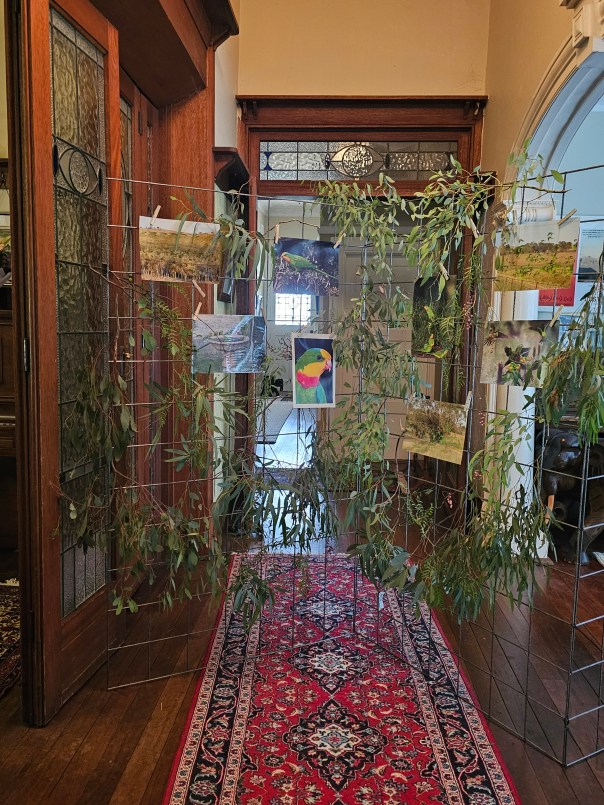
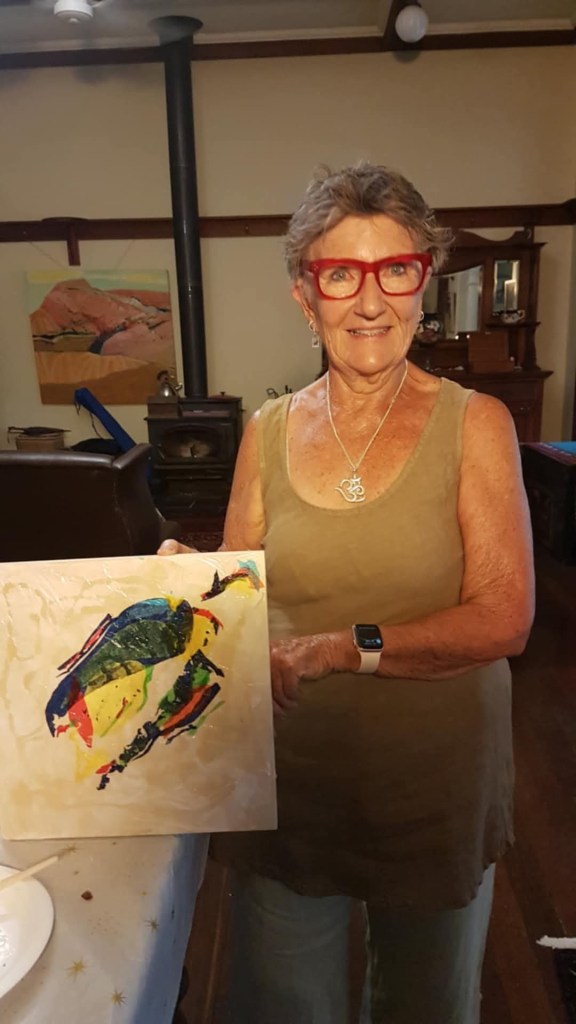

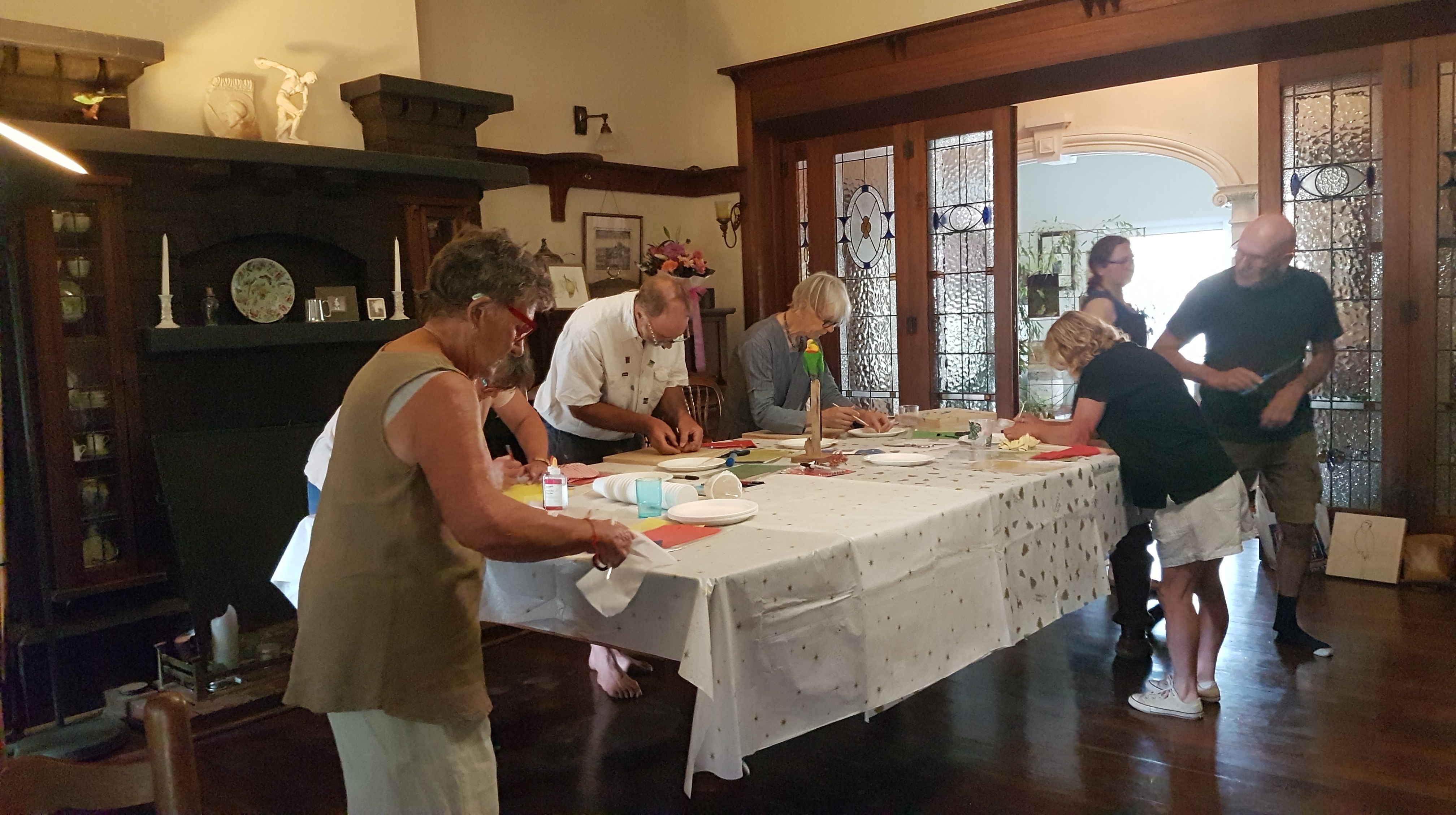
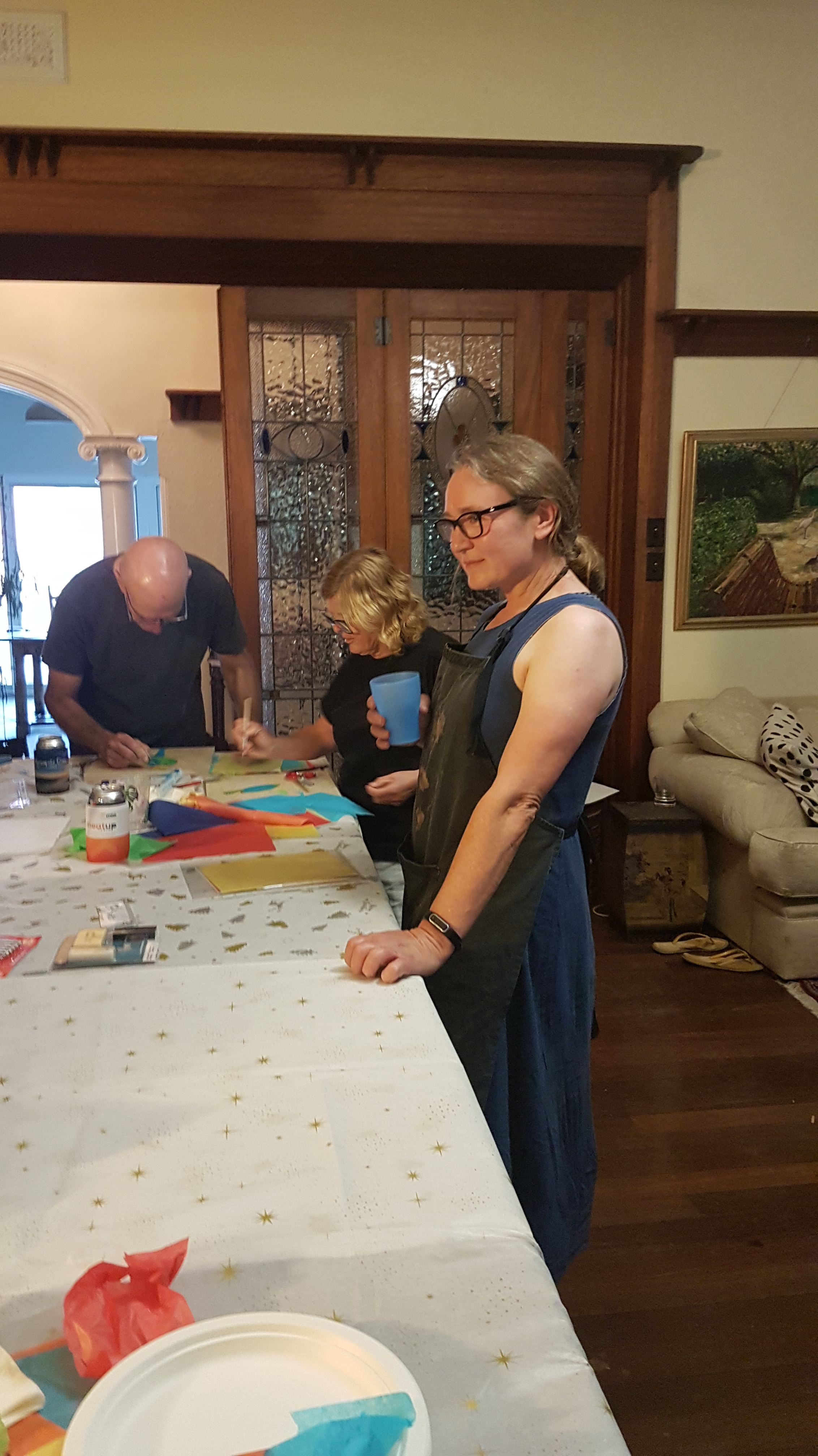
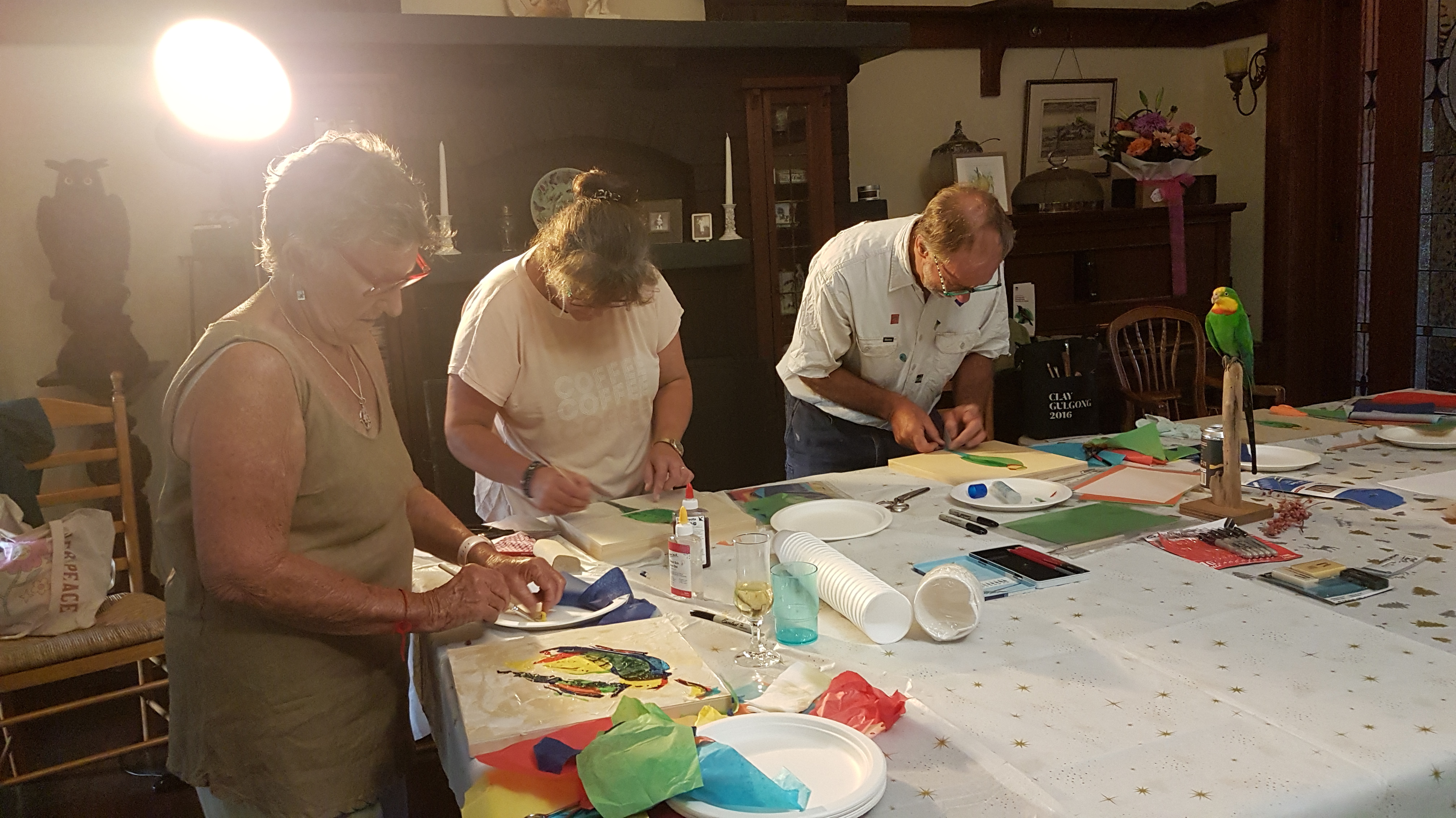
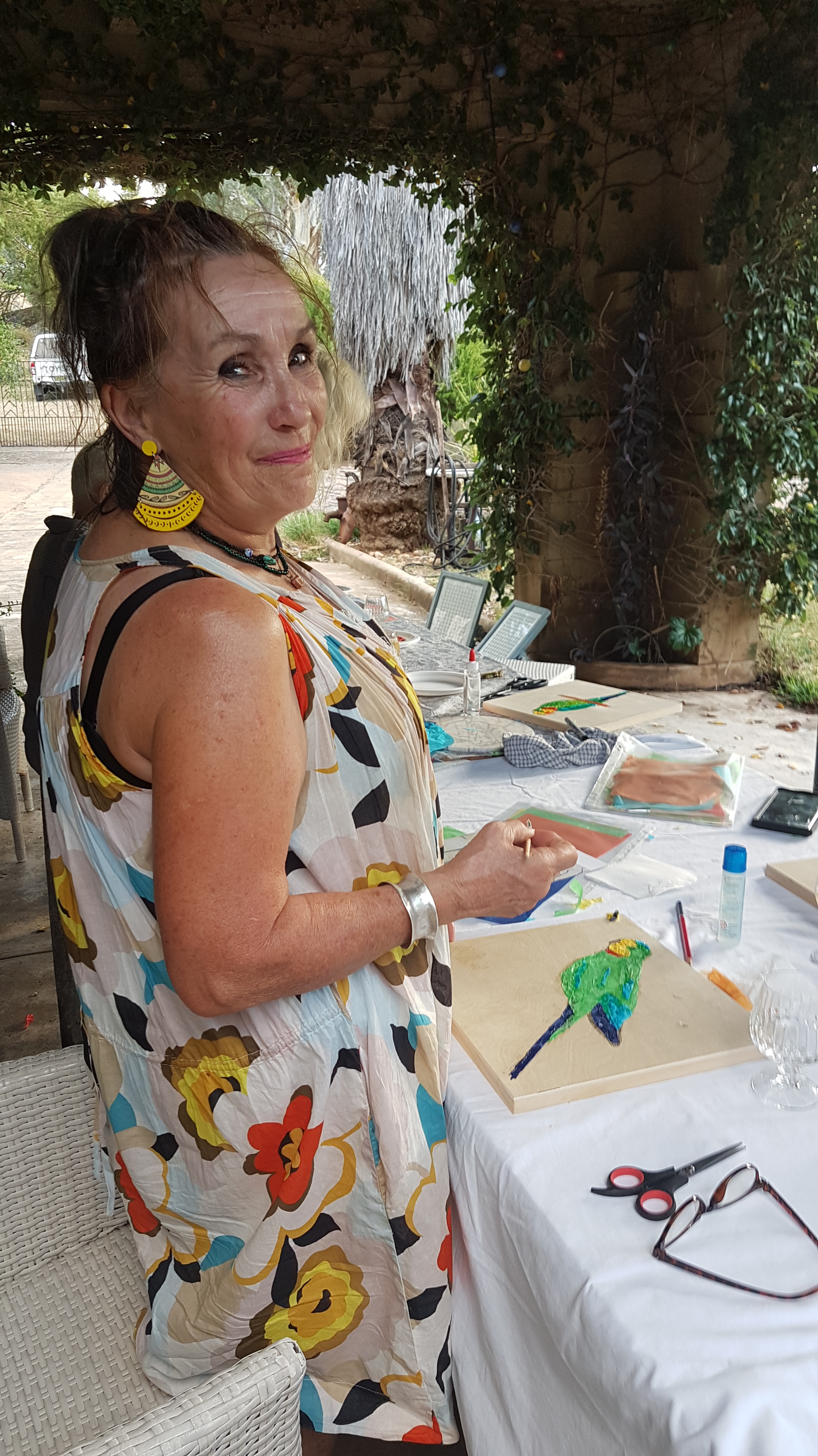
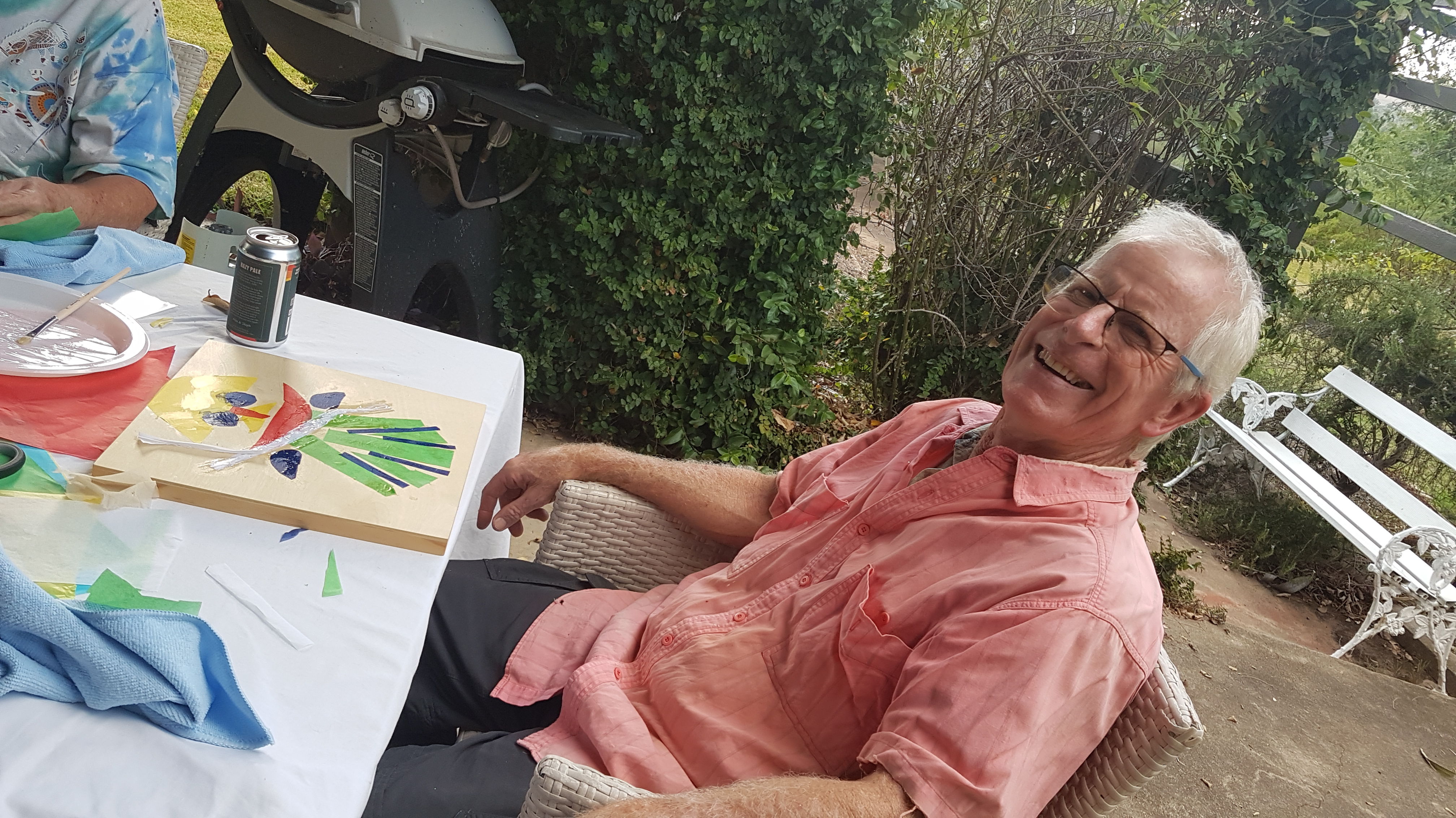
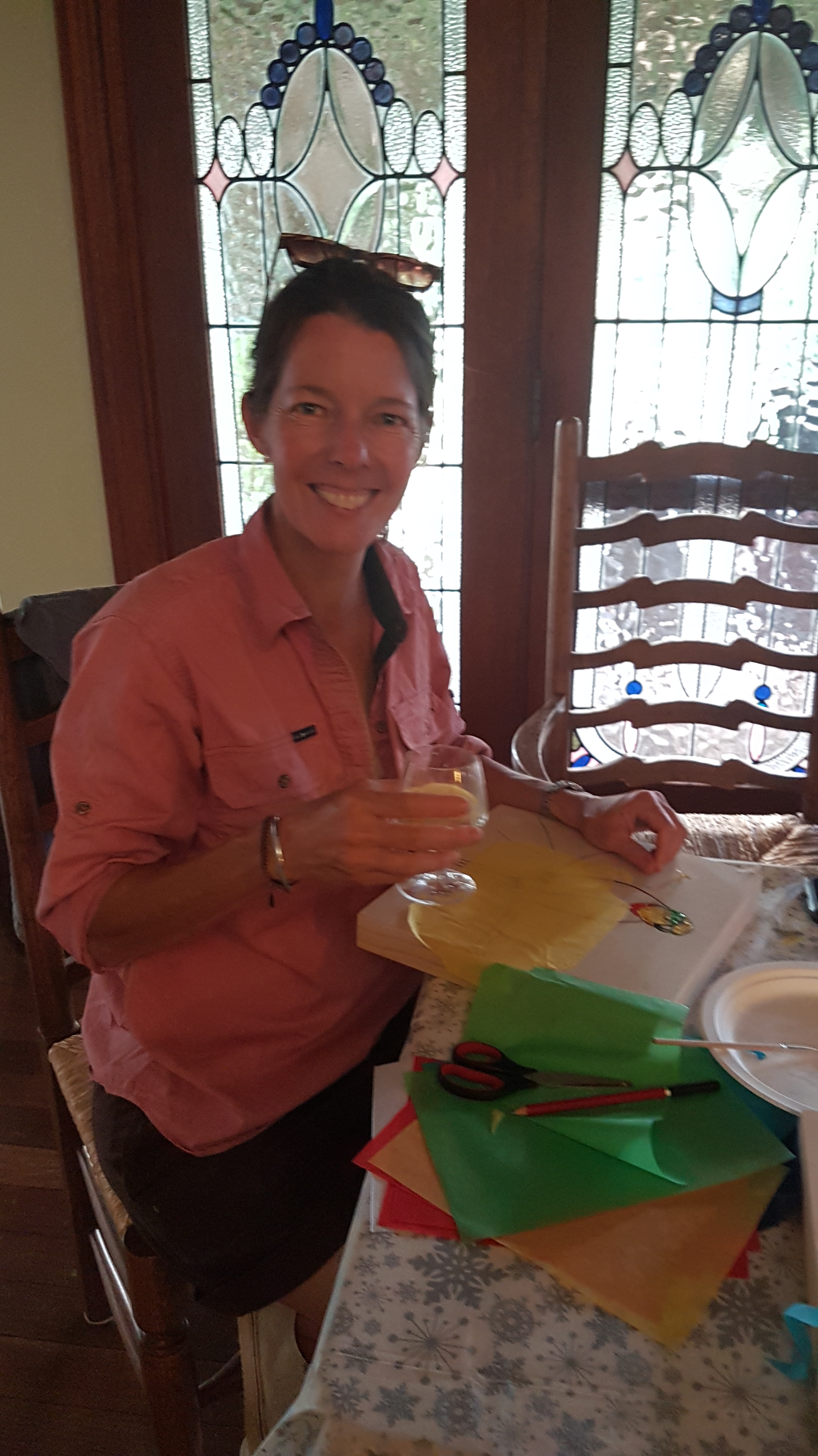
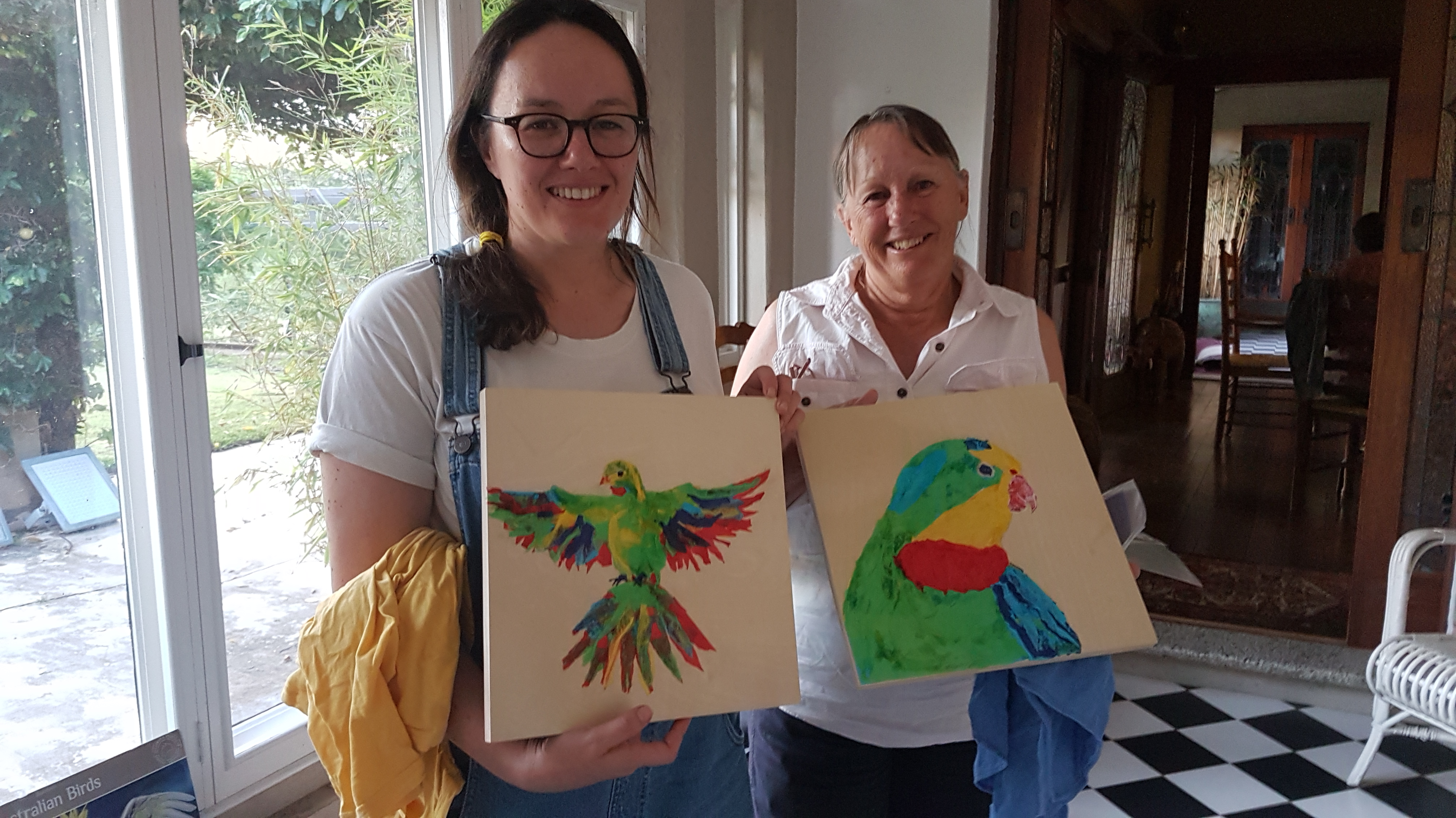
On a very hot March afternoon we came together to honour the Superb Parrot and have a go at tissue paper painting at beautiful ‘Riverslea’ Darby’s Falls.
We had our model sitting in the middle of the table for inspiration and plenty of Superb Parrot photo’s to guide our efforts. Beginners and experienced artists turned up to create thanks to the efforts of Trudi Refshauge who designed and planned the afternoon activities.
It is so wonderful to have Superb Parrots in this region and it was delightful to spend time sharing bird stories and creating this art. We were encouraged to let go of our judgement of ourselves and just have a go.
Huge thanks goes to Trudi & Gordon for allowing us to create at their property.
Just a reminder to everyone that came along to enter your creations at the local shows to raise awareness of the Superb Parrot in our region. We discussed this on the night but I’m not sure how many people were keen to do it. I’m just putting it out there again 😉
Our grazing plate feast was supplied by DJ’s Grazing and we had Bubbles from Rosnay and Antonio’s. The beer we sourced from the great new Bulla Creek Brewery at Monteagle.
We will have 1 more opportunity in 2025/26 to plant scattered paddock trees across the region. If you are interested in ‘Saving the Superb Parrot’ keep your eyes out for our newsletter in the second half of this year for details on how you can take part in planting for the Superb Parrot.
This project has been made possible through funding from the NSW Government through the Saving our Species program.








 Mid Lachlan Landcare