Mid Lachlan Landcare
supporting sustainable agriculture and restoring the environment
Help Map the Migration Paths of the Bogong Moth
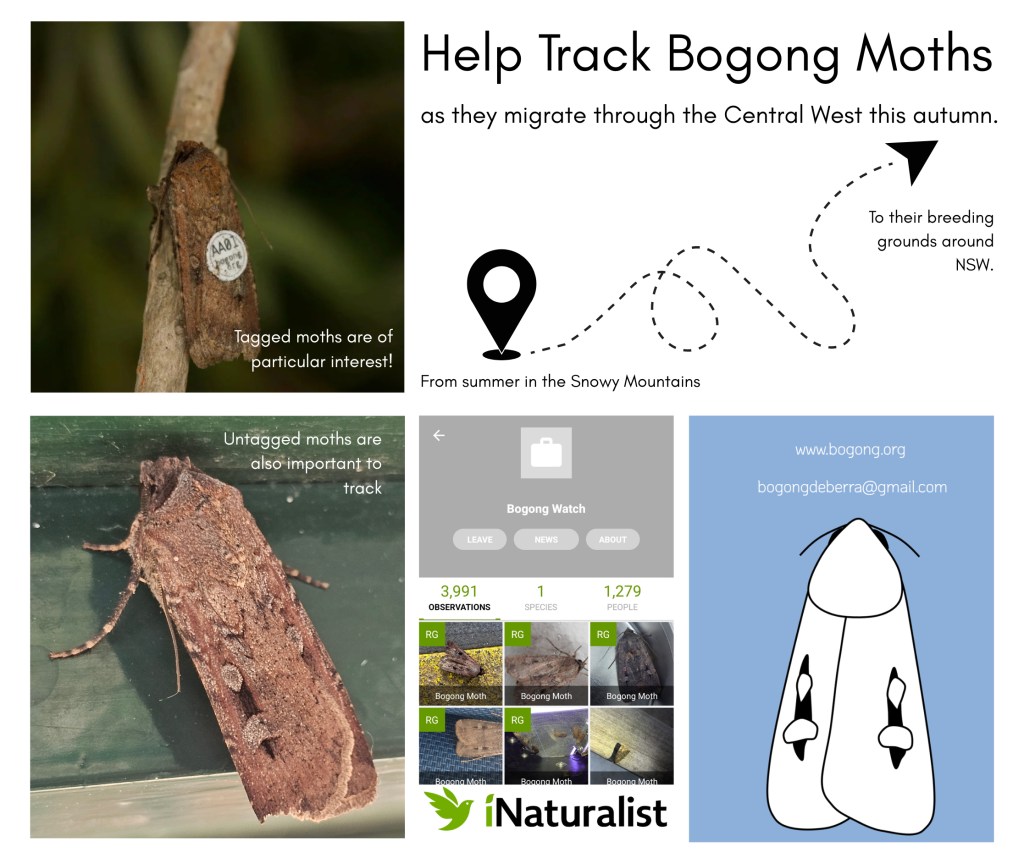
Bogongs are part of the cutworm family of moths. There are a few in the family that look similar but Bogongs are the only ones with stripes and a kidney beans pattern.
The Bogong Moth Tagging project aimed to tag 10,000 moths over summer as the moths rested up in the cool caves of the Snowy Mountains National Park. I’m not sure how many they’ve ended up tagging but at the time of their live webinar update on 3rd March, they were well on track to exceed that number – a herculean feat if you ask me!
So why are they tagging moths?
We know that the moths arive in the caves of the snowy mountains in December in what’s called a Maelstrom. The team assured us listening that this Maelstrom is one of the seven wonders of the natural world – an event that fills you with a sense of awe!
Outside of this mass migratory event, entomologists have gaps in their undertanding around where the moths are travelling from and going back to once the weather cools down again. Tagging and (hopefully) spotting moths as they move through the country will provide some much needed insights into their lives.
Tagging so many moths is necessary for a statistical chance to see a tagged insect.
How do they tag them?
During the time of tagging, the moths were hiding out in the caves and resting. These moths are caught & popped little tubes. If that sounds a bit cruel it’s not, they get into the tubes them themselves as they like squishy little places.
The tubes get stored on ice to slow the moths down a bit. Then the moths are knocked out with CO2 from a modified soda stream & marked with either a little round piece of paper covered in beeswax to make it waterproof, or with an insect-friendly posca marker. Then they are released back into the cave.
How soon we we see tagged moths around the Central Tablelands?
While the team are not entirely sure, it’s likely they’ll start moving once the weather starts cooling down – so around now (March through to May)
What should we do to help?
Like all Citizen Science projects, it needs eyes on the ground (or in the sky, or by our porch lights) during the evenings to search for the moths! Invertabrates Australia have all the information you need to participate in the Bogong Search project on their website.
For those within our Mid Lachlan Landcare region looking for more tips or help with organising or participating in moth hunts, do get in touch because this can be a fun and low-cost activity for school and community groups wanting to know more about the insects that we share space with.
Trail Cam Captures During A Long, Hot Summer.
It’s been a long, dry summer here in and around Cowra and on my place, up in the hills of Woodstock, there’s not much feed or water around. As depressing as that sounds, it’s also a great opportunity to see what’s hanging out at my place. I don’t have any stock but I do have some water troughs hanging around from when this place was grazed so I dragged this one to a good location, filled it up and popped a trail camera up in a spot where it wouldn’t go off every five minutes for no reason!
This is the spec of my camera and the features I chose it for:
* Solar charging so you don’t need to change any batteries
* Wifi in the camera so you don’t need to take the SIM card out or take the camera down every time you want to look at the pictures. This basically means the camera syncs to your phone via an app and you can view the photos and then choose which to download.
* Buying from a site with a listed address and phone number so you can call them and make sure they are real before sending your money! I’ve not actually had any issues from buying online before but there are a lot of ‘ghost’ stores popping up that ship directly from China – that’s not always a bad thing but if you’re parcel doesn’t arrive, you have nobody to call for a refund or to chase up with.
Here are some of the pictures I got during the heat wave week
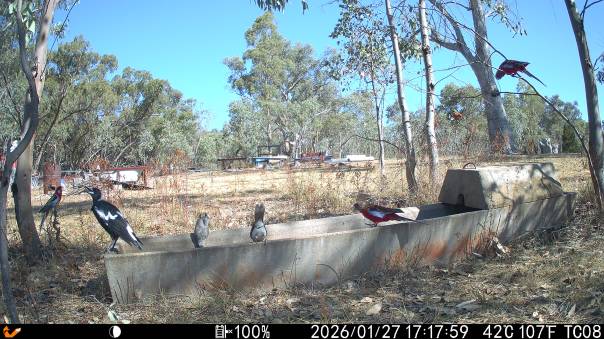
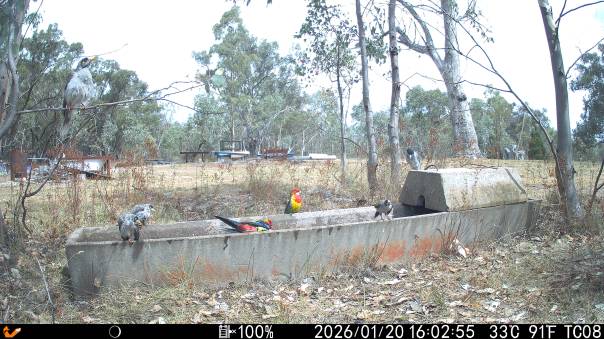
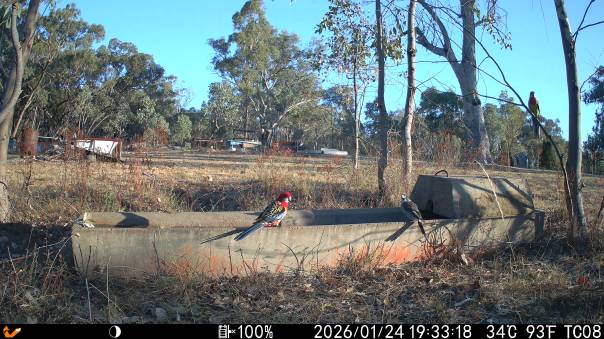
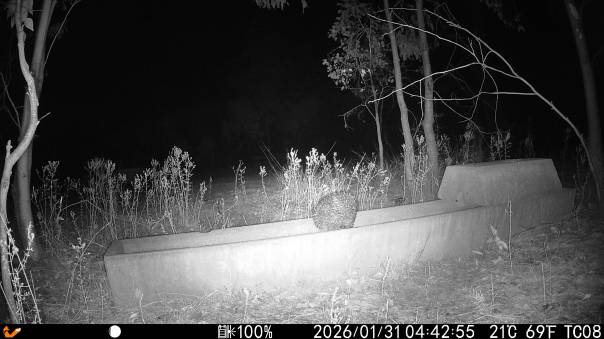
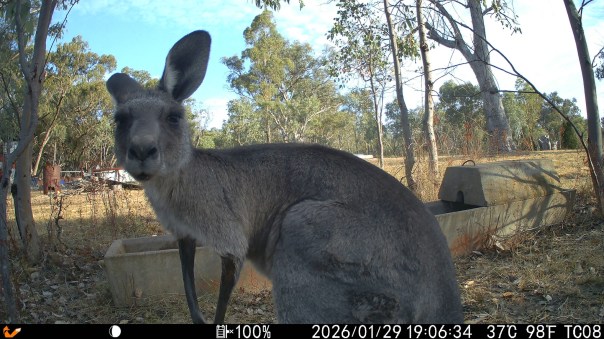
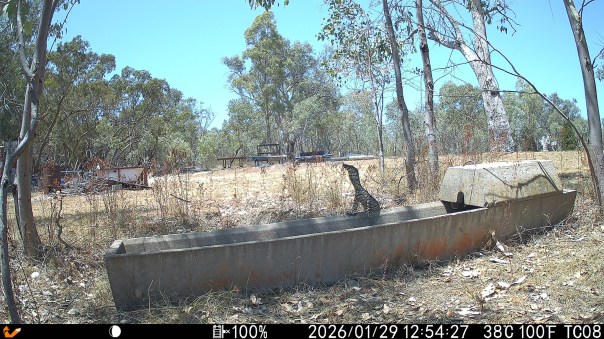
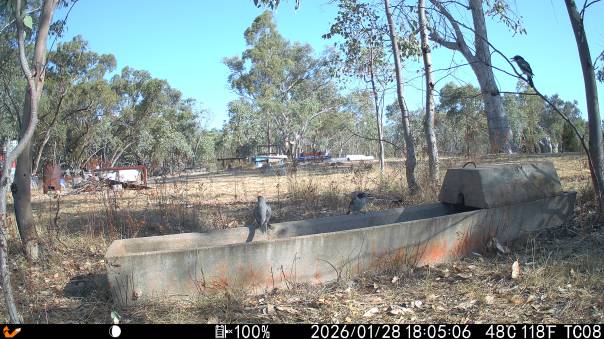
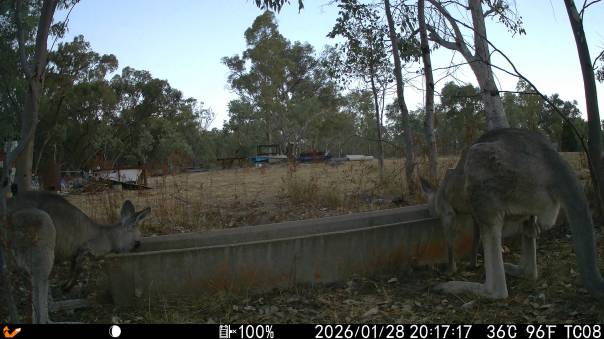
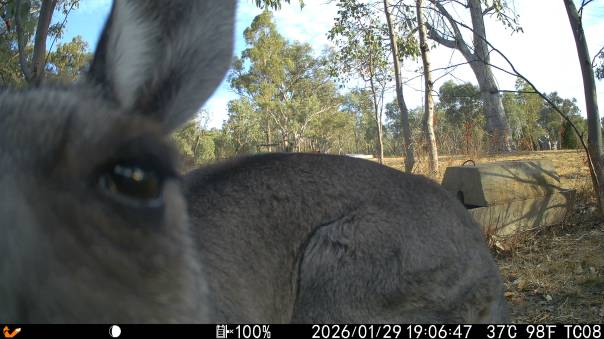
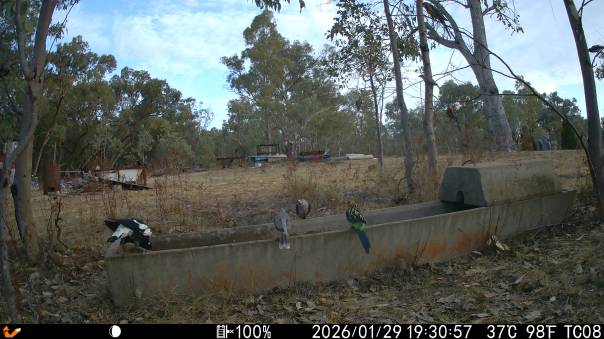
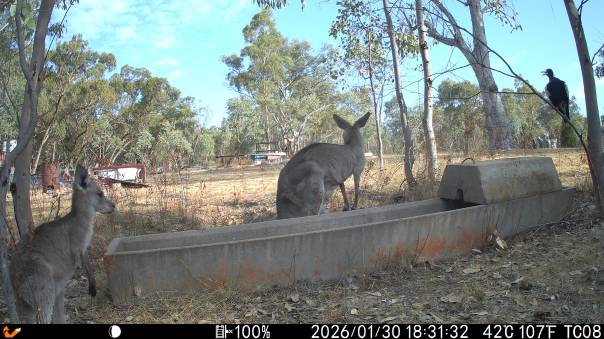
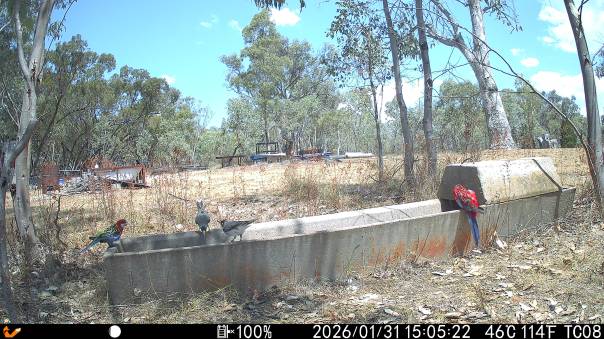
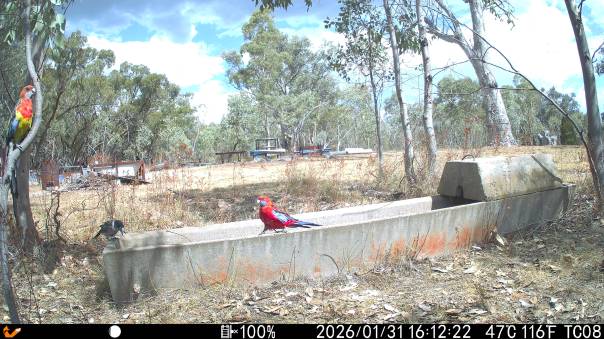
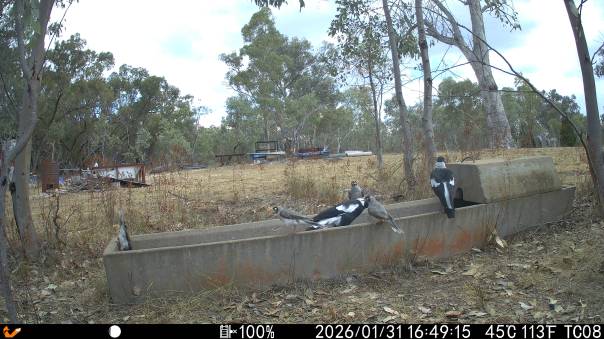
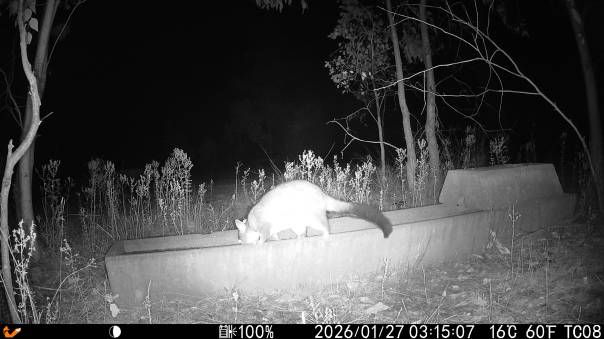
I noted that when it’s not super hot, we tend to get one or maybe two species of bird in the trough at the same time. During this very high heat event I counted up to five species hanging around at the same time. I don’t know exactly why this is but would like to think the birds had all came to an agreement that cooperation and collegiality was required to win the day – save those petty squabbles for when it’s a bit less sweaty!
I did get quite a lot of footage during this week as the trough was very popular so my top tip would be to check the camera every day or so rather than leave it for five days (as I did) and then having to wade through around 4000 images of birds skinny dipping…
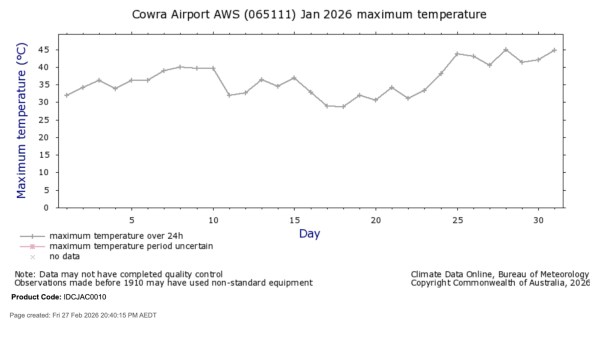
As you can see from the trough cam, temperatures at ours got up to 47C which feels absolutely bonkers! I’m glad the birds, lizards, echidna, possum, kangaroos and wallaby’s dropped by during this time as I’m sure they would have all been feeling quite parched.
Do you have any good trail cam footage to share? If so, email it to us here at Mid lachlan landcare @ gmail dot com as we’d love to see what visits your place. Oh and make sure you let us know if we can share it on with our fellow landcarers.
Healthy Rivers: The Murray Darling Basin Authority’s Consultation & Submission Process.
A very thoughtful and engaged group of locals met with the Murray Darling Basin Authority in Cowra this week to discuss the basin plan review.
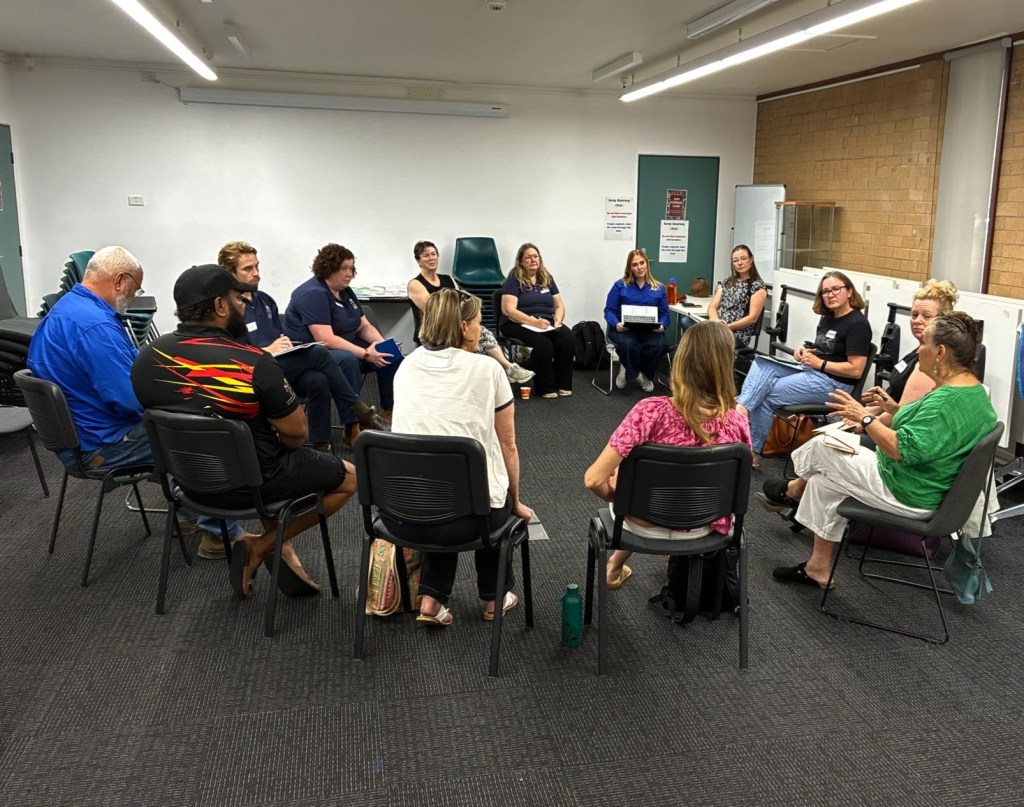
Thanks to Peter Thomas (MDBA engagement officer) for popping a visit to Cowra on the agenda & to the members of public who came along and contributed so many great ideas & reflections.
We’re told a Submissions Bus  & team will be visiting town at some stage to help people make their submissions. You can share your thoughts on how the river is managed/ your relationship with the river via voice recording, written submission or video. Don’t know much about river management? No problem, just share what you can about what concerns you, what you love and what you’d like to see made better.
Feel free to get in touch with us at Landcare or to the MDBA team directly if you have any questions. Once we have the date for the bus we’ll publish that.
Want more information? Here’s what Peter shared with us.
The Murray-Darling Basin Authority (MDBA) is pleased to announce the release of the 2026 Basin Plan Review Discussion Paper.
To read the Discussion Paper, and to find out more information about the review including how to make a submission please visit getinvolved.mdba.gov.au/2026basinplanreview
The Basin Plan was made in 2012 with the ambition restore the health of Australia’s most important river system and secure the long-term health and sustainability of the Basin’s rivers and environment, while providing water for towns and industries. The Basin Plan is now being reviewed by the MDBA.
The Discussion Paper explores the challenges the Basin faces and proposes solutions to address them.
Attend a free webinar
There will be a series of free public webinars on the Discussion Paper that you can join to find out more.
Webinars | Murray–Darling Basin Authority. Ifyou are unable to attend the webinar, recordings will be available online for you to view at any time.
The release of the Discussion Paper commences 12 weeks of public consultation. This is an opportunity to share your insights, ideas and experiences to help shape the Basin Plan for the next 10 years.
Get more info and make a submission
Submissions are open from 5 February 2025 until 5.00 pm AEST 1 May 2026. Submissions must be received by 5pm AEST, 1 May 2026 and can be made online (preferred), sent by email or by post.
Online: getinvolved.mdba.gov.au/2026basinplanreview
Email: BPRsubmissions@mdba.gov.au
Postal address: Basin Plan Review submissions, Murray–Darling Basin Authority, GPO Box 1801, Canberra, ACT 2601
During theconsultation period, the MDBA team will be in communities across the Basin to share information about the Basin Plan Review and the Discussion Paper, and support people who would like to make a submission. Please feel free to contact me on peter.thomas@mdba.gov.au or 0419038929 for further information on locations and dates for community sessions. .
Checking in on one of our Glossy Black Cockatoo Plantings
Here’s Tracee’s report from one of the Cockatoo planting sites we worked on during our BUPA Healthy Communities project from May – August last year. This particular site was planted out in late May 2025 with Eugowra Catchment Landcare. This planting occured on productive agricultural grazing land in the Conimbla/ Nangar fly-over zone.
“Very excited to have visited one of our Glossy Black Cockatoo plantings from last year and see some fantastic growth. It’s been a dry season and there were quite a few losses but those still surviving are doing so well and the 50 plus surviving Allocasuarina verticillata’s are going to start providing food for the Glossie’s in just a few years.” Mid Lachlan Landcare Coordinator Tracee Burke.
Thanks again to all the wonderful volunteers who came to help plant for these projects. We hope you love seeing the progress of your plants
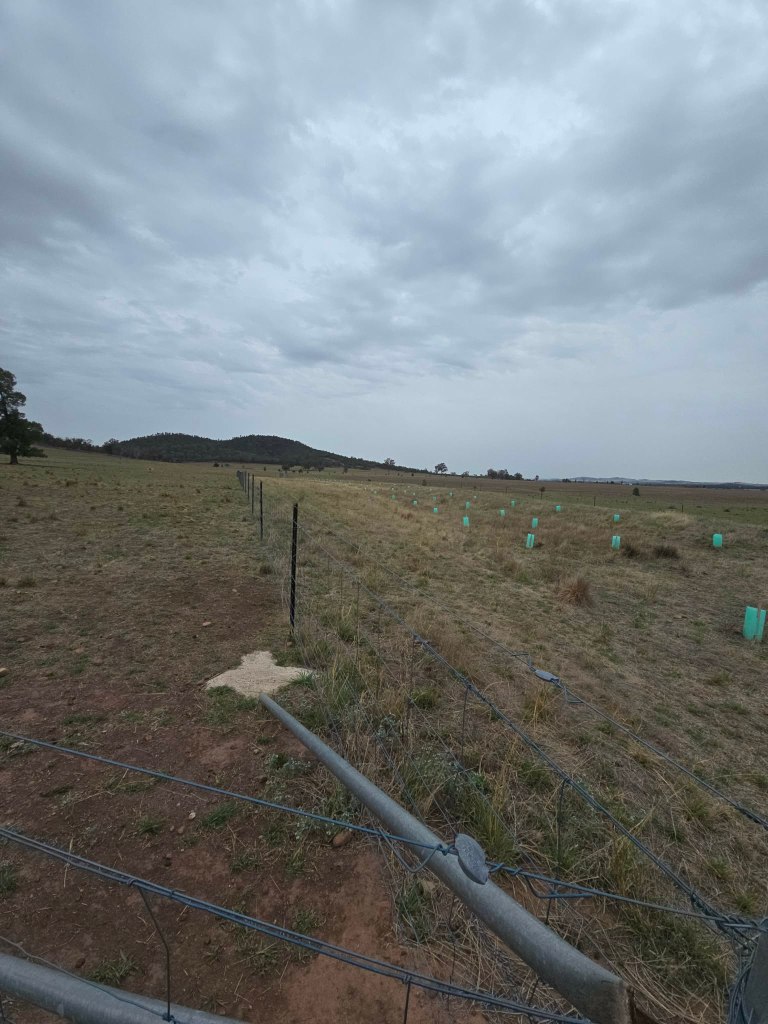
- Fence it off. The landholder undertook all the fencing required for this project to be protected from stock and it is going to be such a great revegetation project into the future.
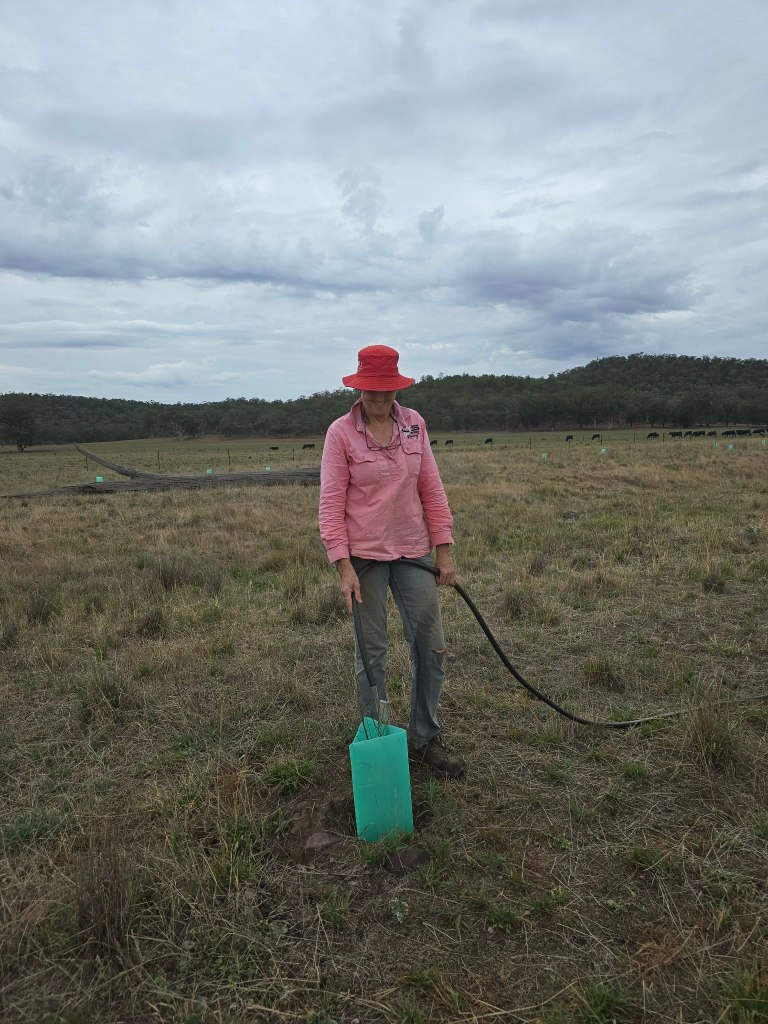
2. Water is life! Taking the time to give these survivors a drink. They just need a little help due to this extra hot dry season we are experiencing
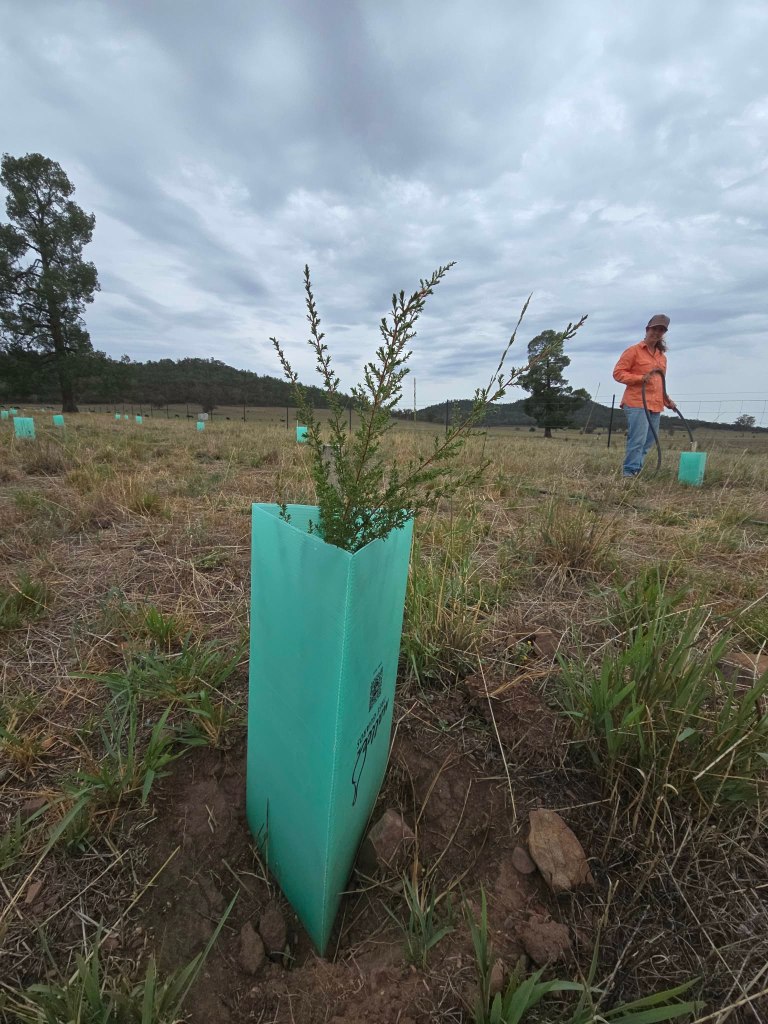
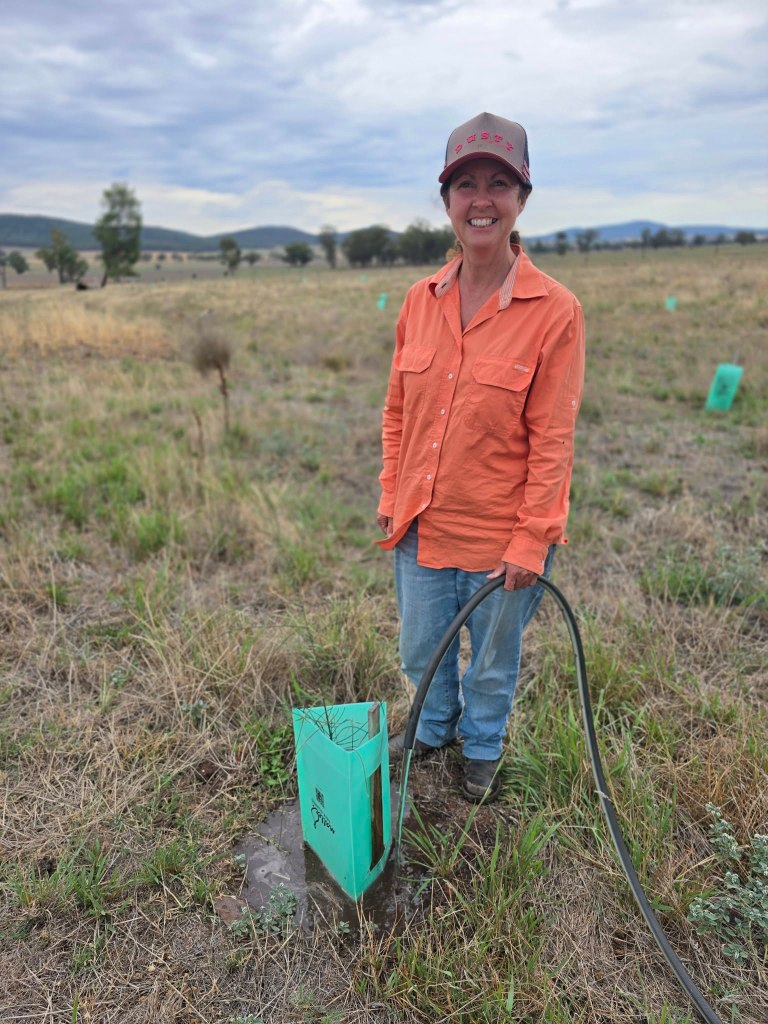
3. Diversity of Planting. Here we’ve got Allocasuarina vertiillata, Acacia paradoxa (Kangaroo Thorn), Acacia uncinata & Cymbopogan refractus (Barb wire grass).
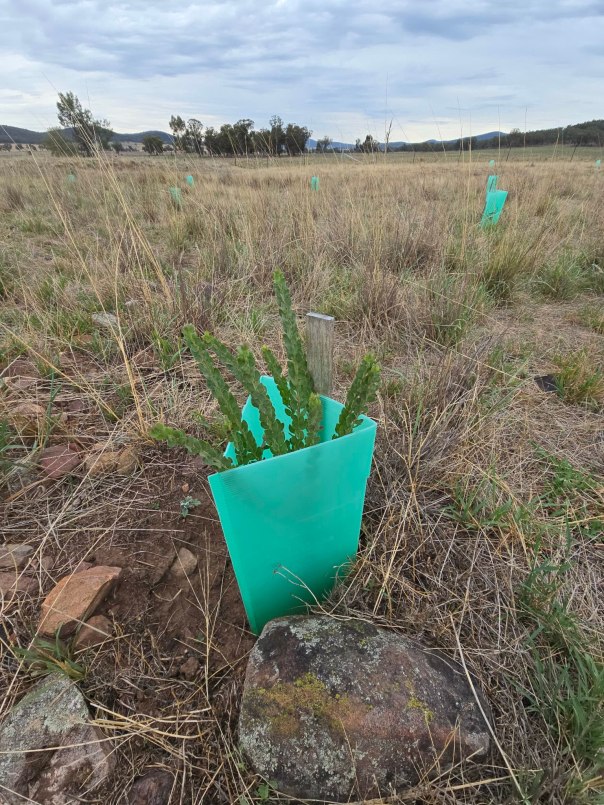
This is Acacia uncinata and Ash grew this one herself to plant in this section as it’s local but doesn’t seem to be available at the nurseries so much. It’s gorgeous. 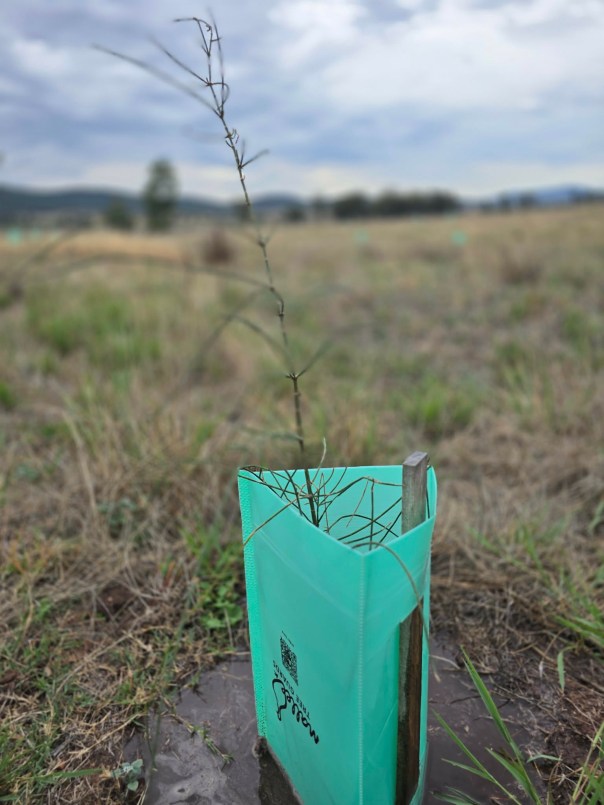
Allocasuarina verticillata – Look how big this Glossy Black Cockatoo feed tree is already. We can’t wait until they start producing seed. 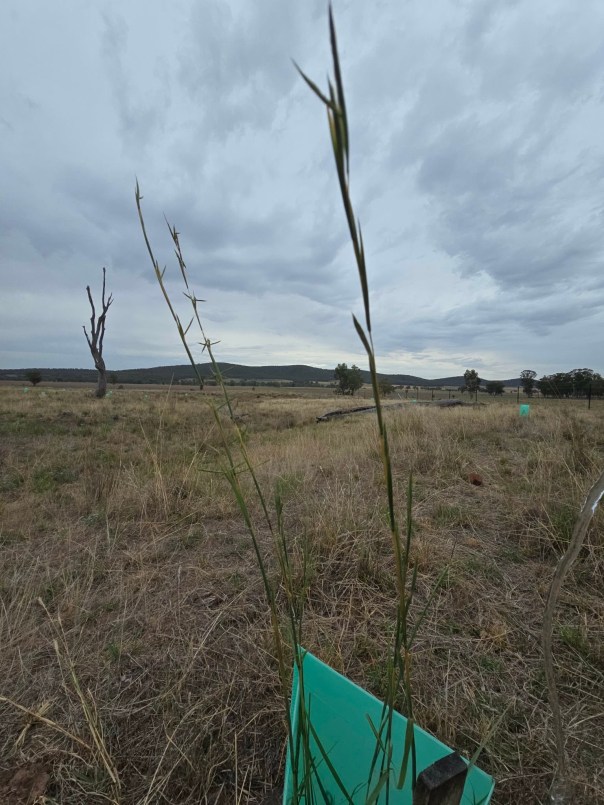
They have also intruduced some Barb Wire Grass (Cymbopogan refractus) which is a hardy local grass that is not found in this area so much anymore. A fabulous summer growing grass. 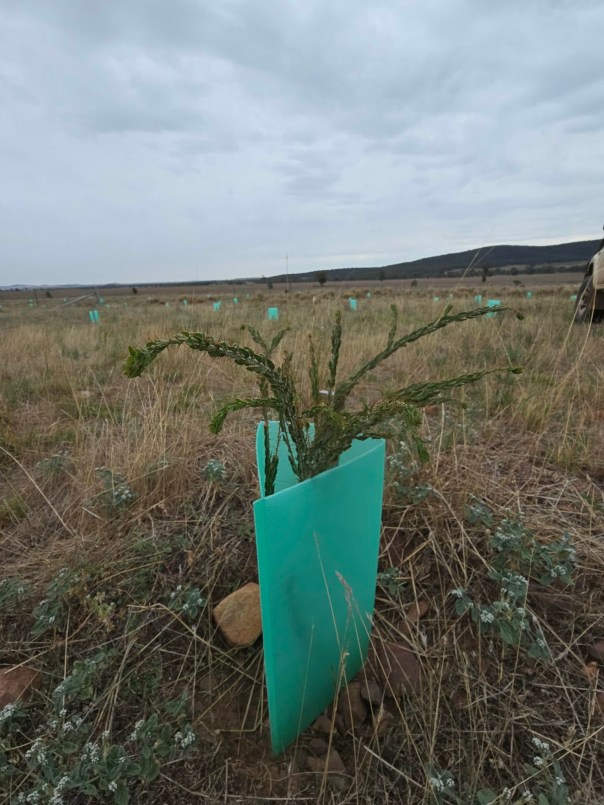
This one is Kangaroo Thorn (Acacia paradoxa) Some people don’t really like this local native but it does provide wonderful habitat for all our little birds, it’s nitrogen fixing and only grows about 2m tall. It’s doing a job in our paddocks to build soil and improve nutrients.
Responding to Cowra’s Flying Fox Camp 2026 Heat Stress Event
On the evening of 24th January, Cowra welcomed the Sydney Wildlife mobile bat hospital team into town to help us manage the impending heat stress event – an event that went on to last for ten exhausting days but that luckily resulted in relatively few bats succuming to the harsh conditions.
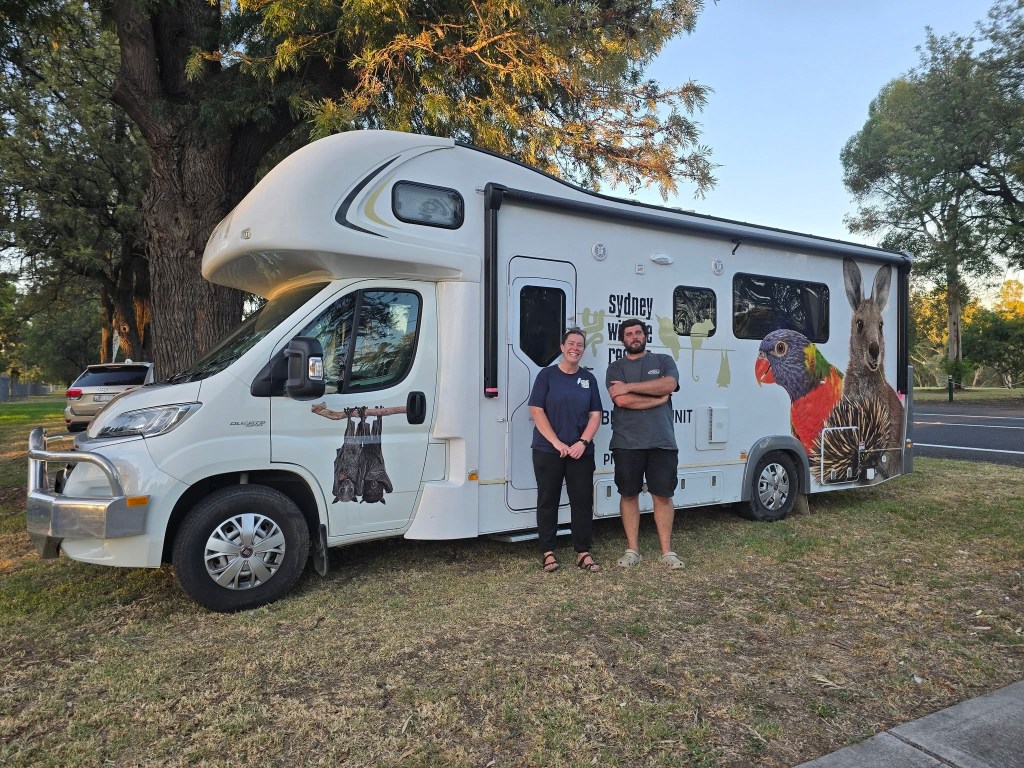
The response was initiated by concerned locals with our Landcare team being made aware of the impending event a few days before it happened and receiving our briefing the day before crews arived.
The Australasian Bat Society reports that temperatures higher than 42C can kill flying foxes – a temperature Cowra exceeded five times over the space of eight days this January.
The Flying Foxes struggle with heat is partly because they can’t sweat and as such rely on panting and flapping to cool themselves down. These behaviours exhaust them during prolongued heat events.
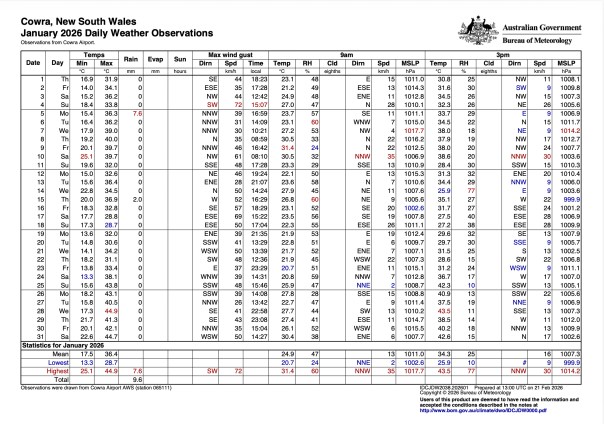
Sydney Wildlife Rescue led the on-ground response to the Heat Stress Event with assistance on site from two other wildlife volunteer rescue organisations: Wildcare Queanbeyan and ACT Wildlife. Wildlife ARC on the Central Coast also assisted by rehabilitating some of the rescued bats.
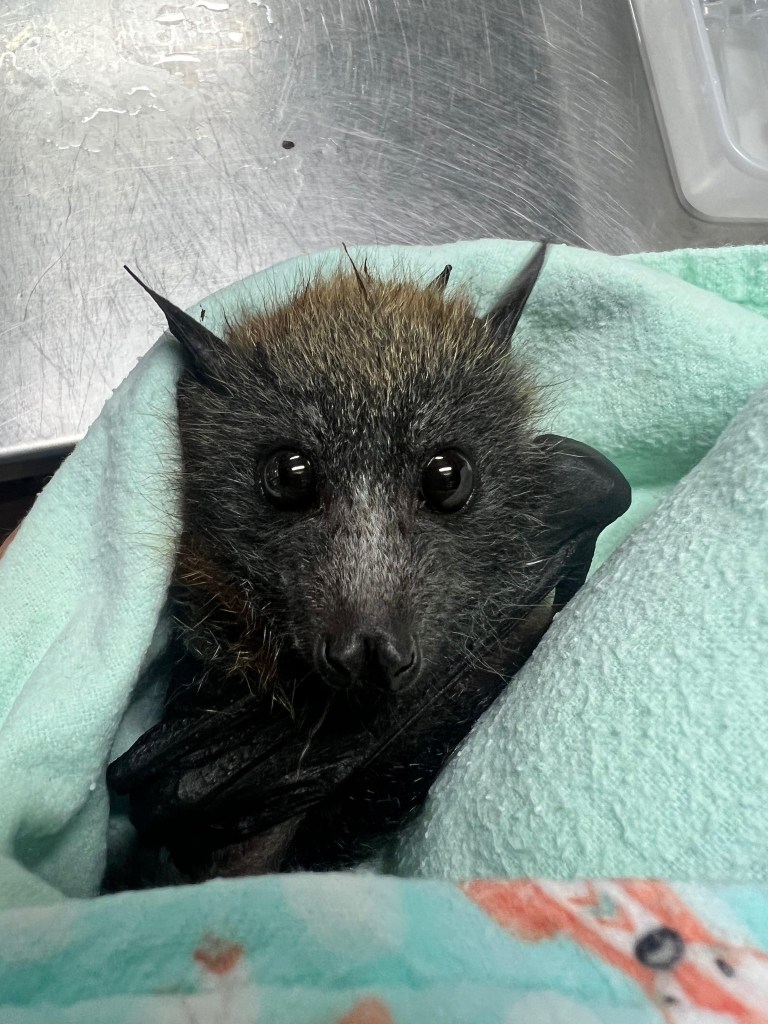
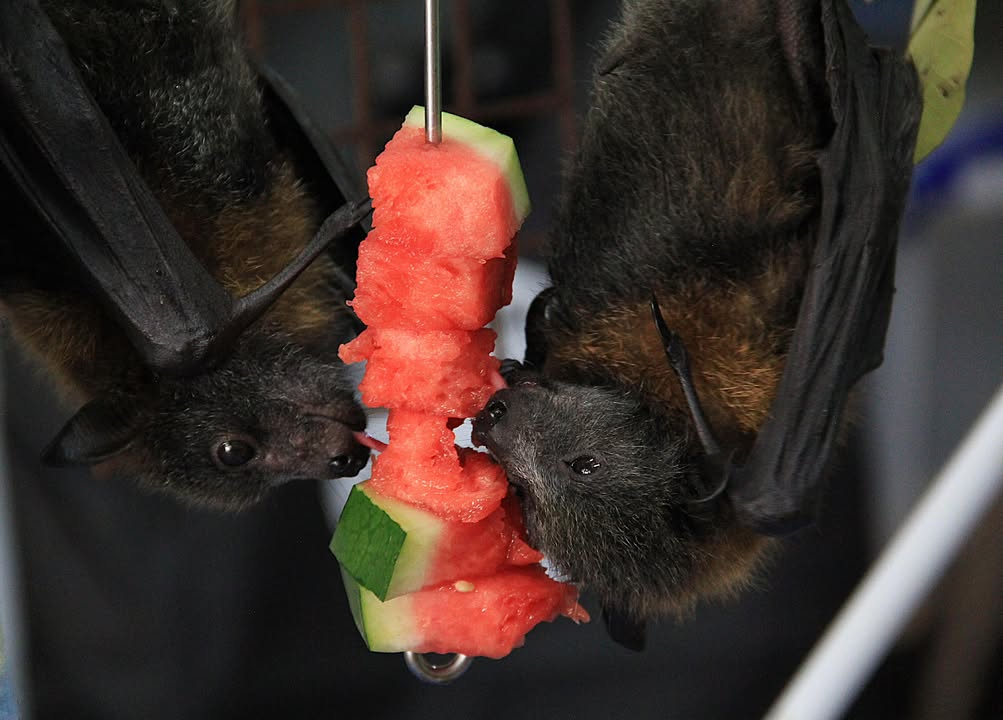
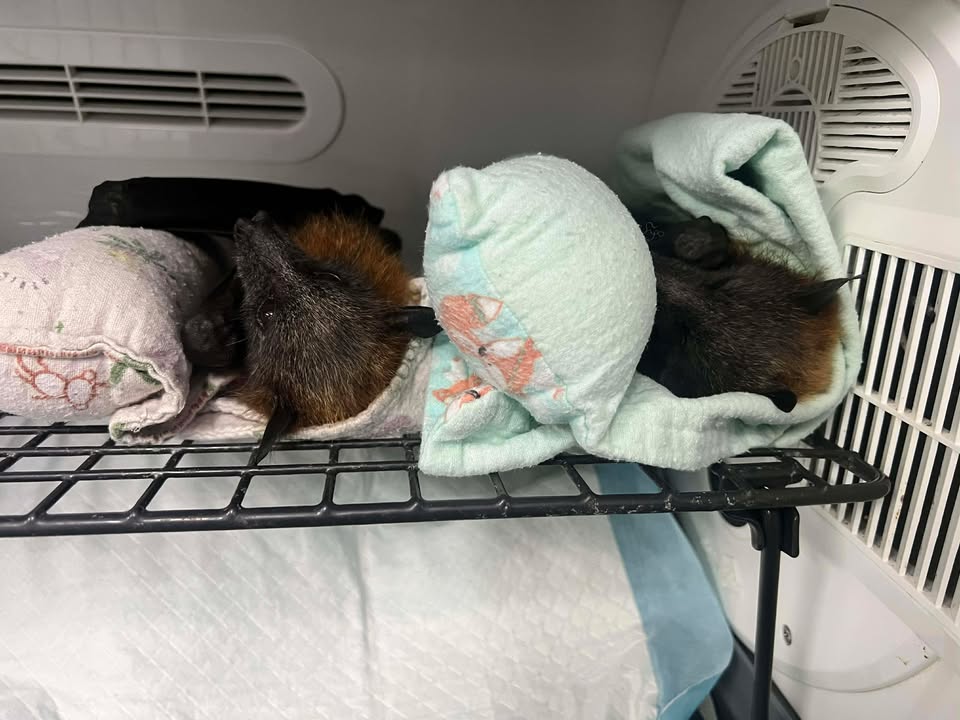
A number of pups were rescued over that first weekend and it wasn’t long before we were updated as to their condition. Paula from Bouddi Wildlife Bat Facility on the Central Coast sent this adorable picture of one of the recovering babies.
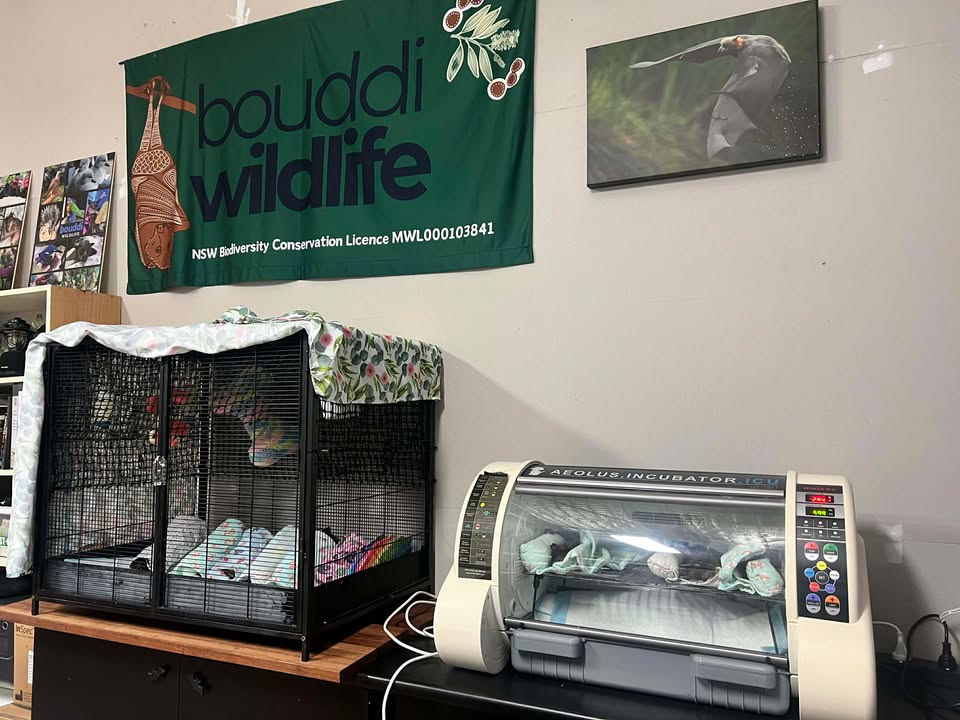
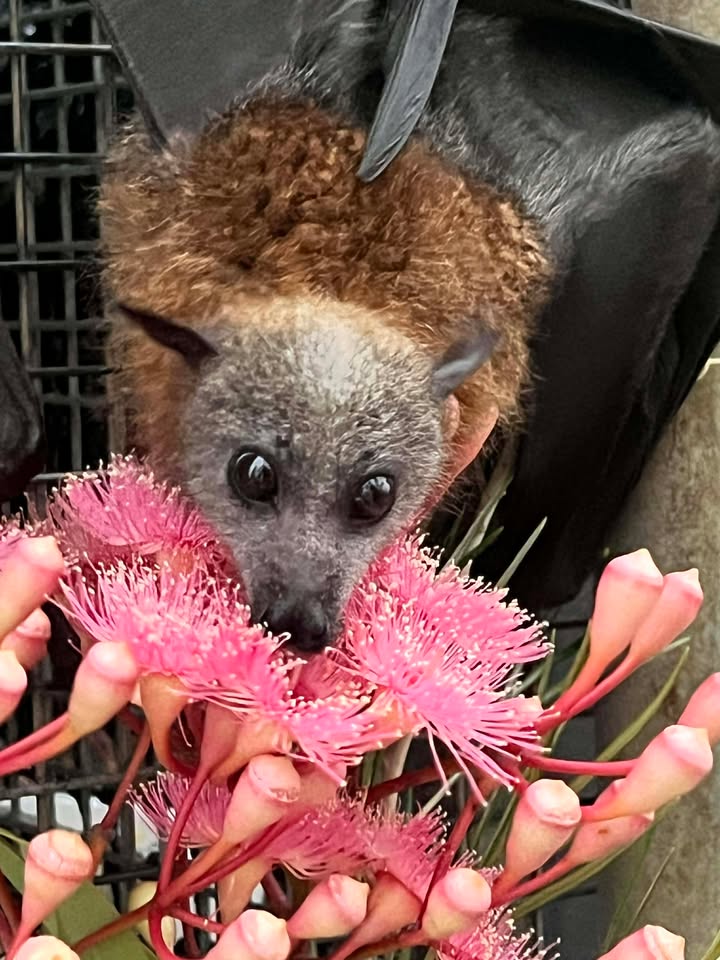
Paula later sent a few more happy snaps which were gratefully received by our community who were following along with the operation on Facebook & through the good old bush telegraph.
We were also sharing updates from our local Landcare volunteers who were dropping by the camp to offer moral support, disposal bags, food and even a generator!
Update from day 2
“The bats are pretty stressed with the heat and flying about a bit. Young ones seem to be getting affected more so, getting some of them in time to get into the hospital van but not all. There were 3 watchers walking round to get those bats they can reach. ( As they become more fatigued they get lower down the trees/ fence).” Will.
The Sydney Wildlife hospital van could only stay in town until Tuesday at which point it was replaced by a team lead by Rob Leach from the International Fund for Animal Welfare Australia. You can access the article they wrote about our event here.
Before I go on, it’s important to thank the vets, disaster response professionals & visiting volunteers that were on site during the event, some of whom had travelled significant distances or who had been hopping from disaster to disaster in order to be with us instead of their families. We can’t thank you all enough for your support and professionalism. I didn’t get to meet everyone during the event but some of our other
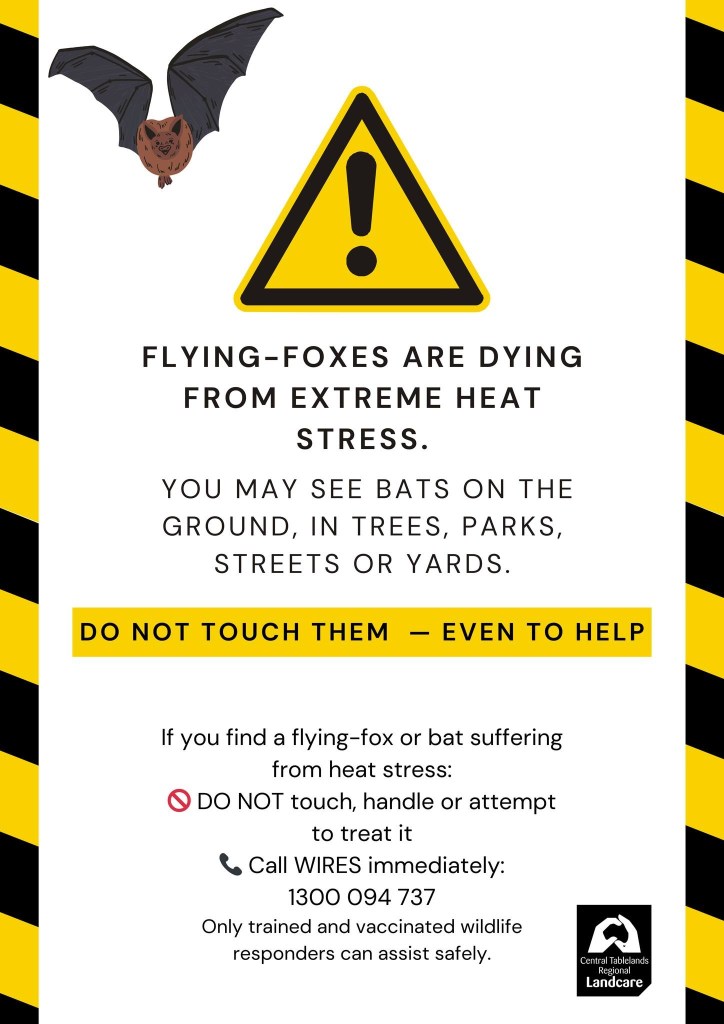
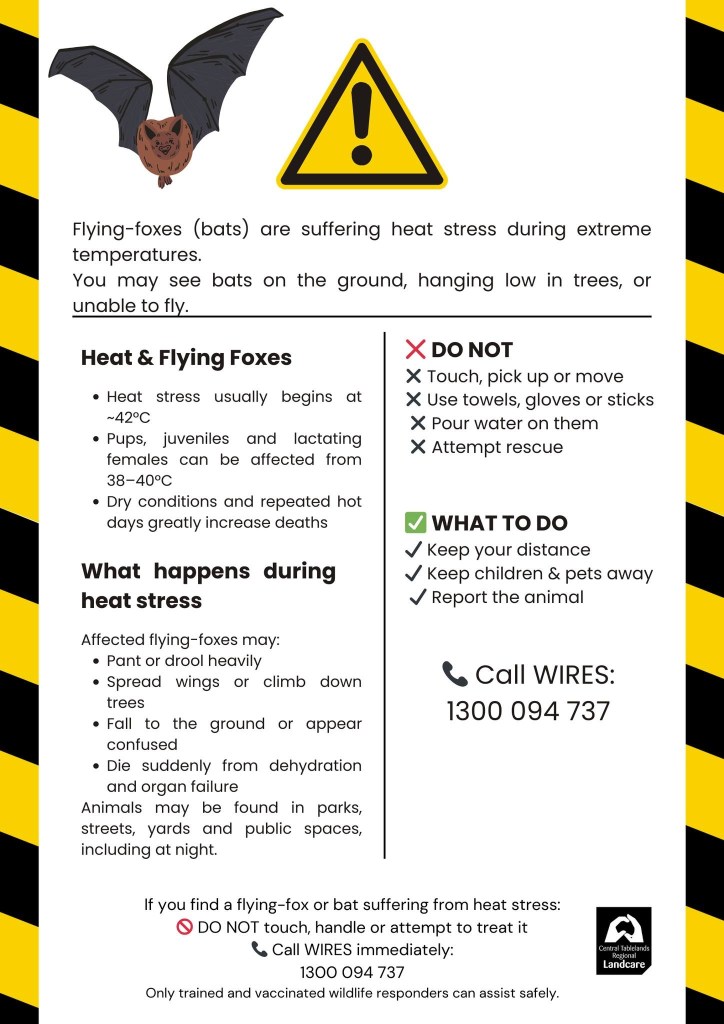
During this time I was spending much of my time backing up the team on the ground as best as I could, helping them find accomodation for the distressed bats and maintain power, water & site cleanliness. Our Central Tableland Regional Office provided us with a useful infographic to share with the public about what to do should they come across a distressed animal:
By Day Seven, the worst had past and we received this update from Rob.
“We hit 44 degrees on Wednesday, and thankfully only 40 degrees yesterday at the bat colony. We had 7 babies rescued on Wednesday, and they’ve all been transported to Canberra to be in care with ‘ACT Wildlife’. Yesterday with the reduced heat, we only needed to rescue 1 baby. It was severely underweight but our experienced rehabilitator here has managed to already get it to start drinking and toileting in her care overnight. It will be transported to ‘Wildlife ARC’ on the central coast with our volunteer today for intensive rehabilitation.
As we do in emergency management, we prepare for the worst, with options to scale up and down as needed. We came in ready for catastrophe with the predicted weather. Thankfully, what we saw was a very resilient flying fox colony. Yes we had a number that didn’t make it and we rescued what we could, but overall I feel it was a lot better of a result that what we’ve seen in other parts of the state and even country with similar weather.
With the resilience of this camp, we’re taking our experts advice that it’s time for us to demobilise. We anticipate there may be some cumulative/exhaustion impacts with a small number not making it over the next few days, but for overall colony welfare we’re going to minimise our interventions/presence.
Again we would like to sincerely thank all the volunteers and Landcare for all you have done to support our efforts here, it really could not have been as smooth or well-resourced without your help. We are incredibly grateful, and we will no doubt be looking forward to working closely together for whatever the next environmental disaster may be.”
– Rob Leach
Sydney wildlife rescue, and IFAW Animal Rescue Program Officer – Oceania
The On-Ground efforts Wrap-Up
Just before the swat team of carers dispersed Sarah’s Bats (bat Carer based in the Blue Mountains) posted a delightful update of the bats belly skimming in the Lachlan River to cool off. While at the camp Sarah caught up with Sam Yabsley who was also in town collecting data for her PhD on heat stress events. Below isn’t Sarah’s footage but it is of a Grey-headed Flying-Fox – the type we mostly get in Cowra.
With that, the teams dispersed, leaving the bats to their own devices. We did have reports of a couple more distressed animals after this point but they were managed in a ‘business-as-stretched-but-usual’ way.
The Aftermath.
Having never participated in a heat stress event like this before, I had no expectations of what would come next so I was pleasantly surprised when Rob kept in touch and invited me to join his de-brief session with Wildtalk.
Wildtalk provide mental health support to wildlife carers and are experts at helping teams de-brief and re-group after events such as this. I turned up to the ZOOM call with no expectations and very little idea of what was to come but found the two hour session very helpful indeed, not least because I finally got to put faces to names and ‘meet’ some of the folks who’d been helping us in Cowra.
Since then I’ve written up a Case Study outlining the event and the actions I’d like to see come from this. Since completing this report, I’ve been told our Local Land Services do not have any juristiction over native animals – good to know!
You can access my case study here.
Finally, I want to leave you with a bit of a review of what’s happened from a Flying Fox perspective this summer. It feels to me like it’s they’ve had quite a bad run but I can also see through looking at past news items that mass colony collapse events such as those listed below from this year have happened many times before thanks in a large part to climate change.
While this event worked out relatively well for us here in Cowra, I’m definitely not feeling like it’s time to sit back and leave them to it. If anything, there’s quite a lot of work we can do to help make sure our Flying Foxes stay with us and helping us grow our forests for many years to come.
Onwards and upwards as they say…
A Round-Up of how camps across Australia have faired this summer.
- Brimbank Park, 15km north of Melbourne CBD – mass mortalities. Brooks Creek Dapto approx 500 deaths plus 170 at Figtree. Also Wolli Creek, Windsor, Parramatta, Campbelltown and Wagga Wagga.
- 80% of a colony in Naracoorte, South Australia were wiped out this summer.
What Action is Being Taken / Requested
Moreton Bay in Queensland have installed 16 sensors to help monitor the health & welfare of their flyijng fox colonies.
Wellingtonshire council in Victoria closed roads and footpaths to help the Flying Foxes keep their cool & protect the public from coming into contact with any dead or injured animals.
Ipswich City Council in Queensland closed part of their Japanese gardens to help flying fox colony thrive.
Wildlife Victoria were recently assisted by the Department of Energy, Environment and Climate Action (DEECA) & local councils.
Many places, including us here in Cowra are calling for coordinated state wide emergency response plans.
Mount Isa City Council are putting together a flying fox management plan for the community. This is the questionnaire they made available for local residents.
According to this article, camps in Canberra faired reasonably well thanks in part to understory plantings and misters installed by the National Capital Authority.
Further Information
Heat events and Australian Flying Foxes fact sheet April 2025
Heat Stress Forecaster from the Australasian Bat Society.
Mapping salinity & more with our bespoke field-mapping app
Last week Tracee & I joined Wooly (Andrew Wooldridge) on a salinity measuring day around Cowra.
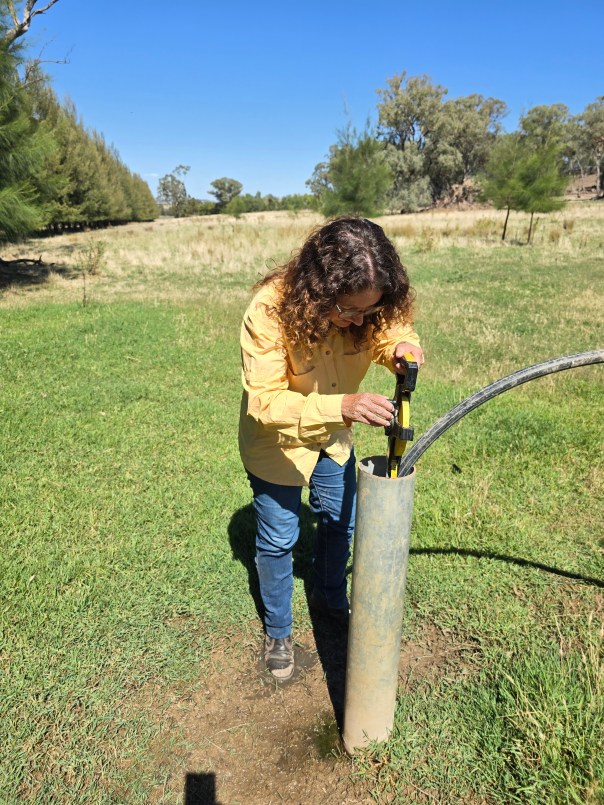
Tracee recording the depth & salinity of the water table 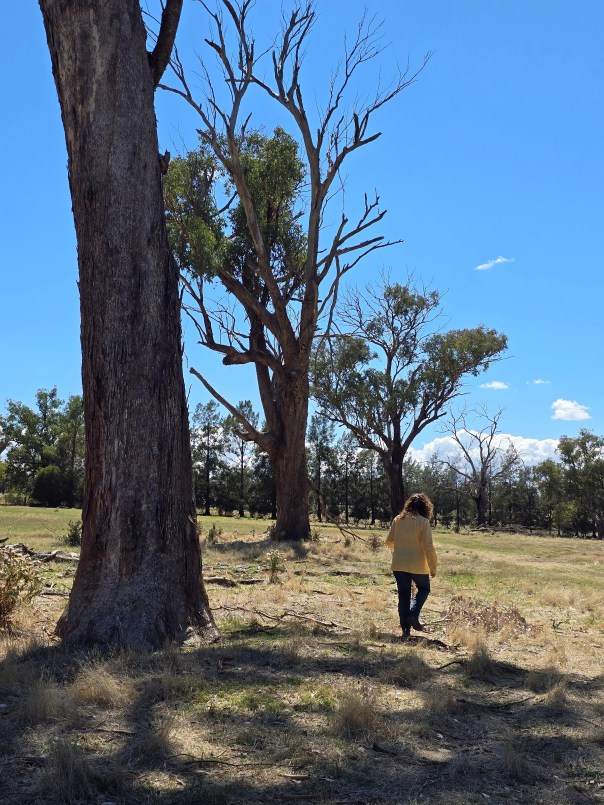
Salinity impacted trees 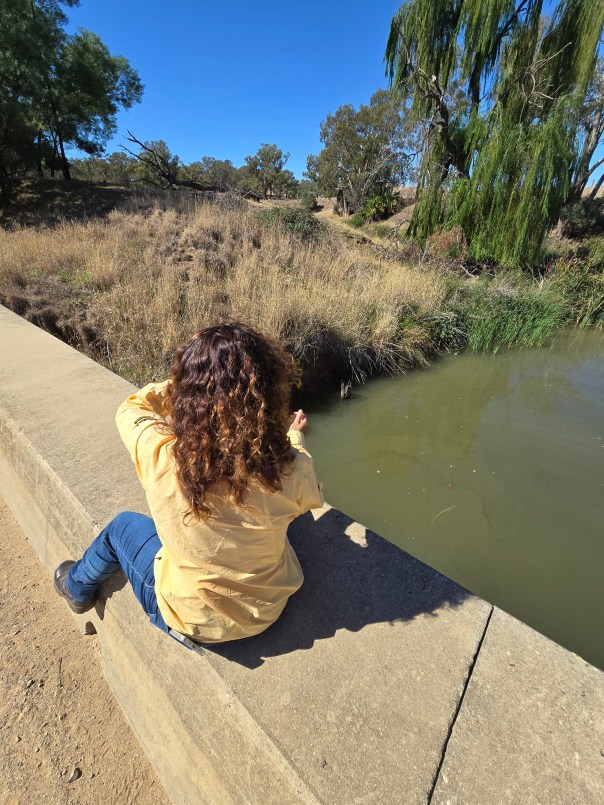
Measuring salinity in the creek 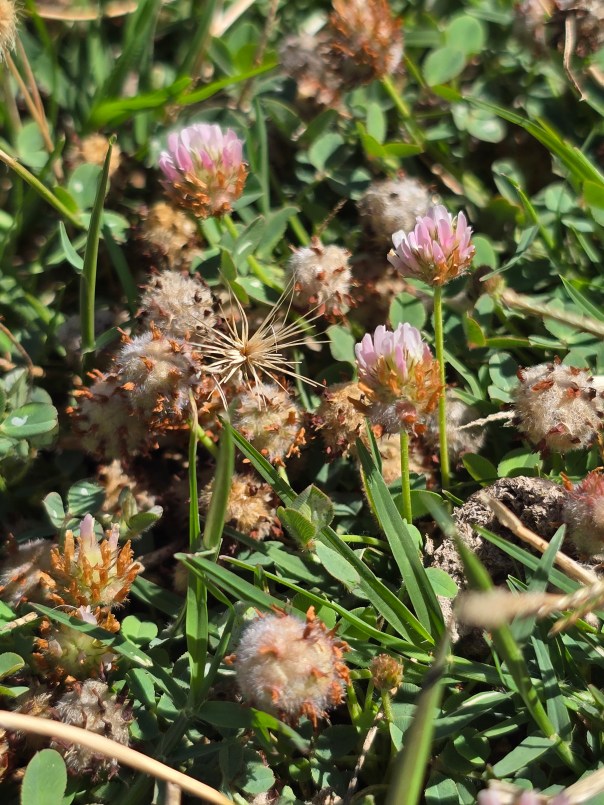
Persian (or Strawberry) clover. A salt tolerant pasture species 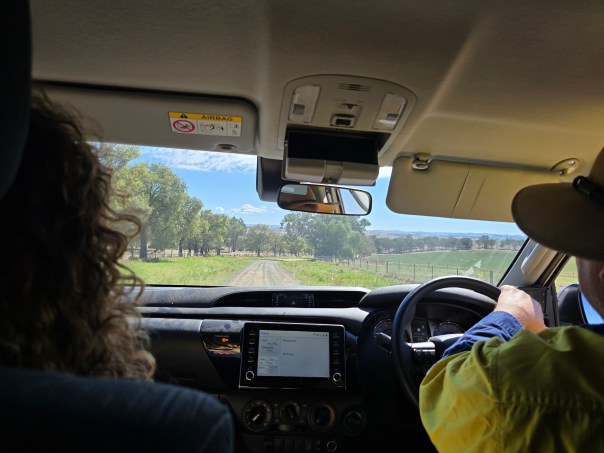
Driving around the loop 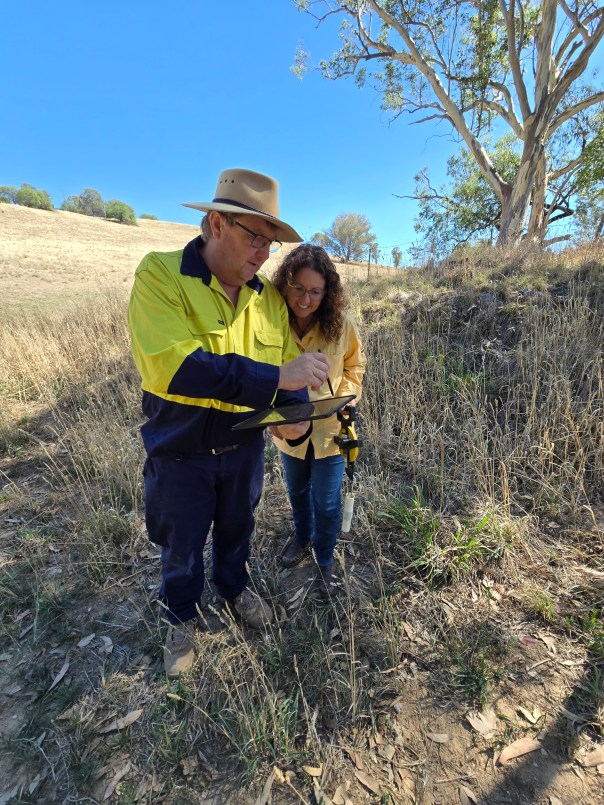
Uploading our data to the app. 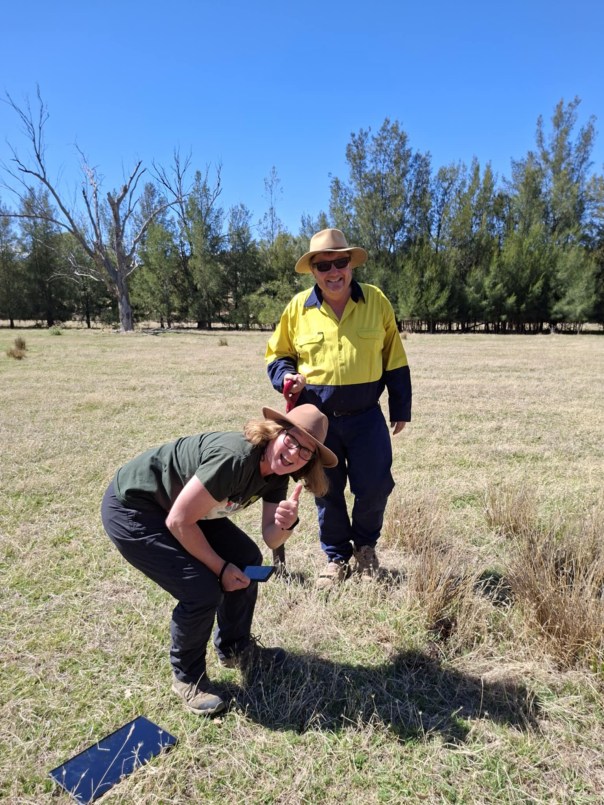
Flora survey -looking for salt tolerant plants 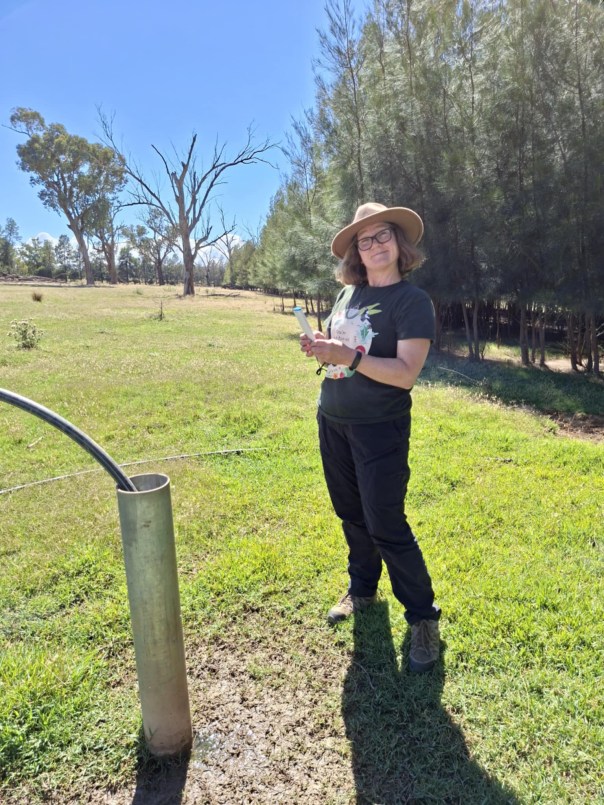
Reading out the salinity data
Wooly both volunteers with Mid Lachlan Landcare & Works with the Department of Climate Change, Energy and the Environment. Salinity mapping, measuring, monitoring and managing is one of his things!
Wooly has been working with us and other Landcare groups in the central west to test-drive a custom-made app that allows us to ‘see’ salinity, it’s impacts and the mitigation/ remediation measures we’re taking & deliver that data direct to farmers, land managers and other interested parties.
Murrumbidgee Landcare, who are also part of this initiative have uploaded a great summary of this project and have also provided a map of each of our salinity testing loops. We will be making the Cowra loop results available on this centralised website as soon as we can get the data uploaded to our shared app.
This app will make it easier for us as Landcare to track management actions across our area &, more importantly, will help us & our community to make good management decisions.
Salinity data has been something our government has gathered and kept for many years but this is the first time we’ll be able to deliver detailed & specific data to the people responsible for managing it in real time.
Exciting times.
Decision making that shapes resilient farms with Brian Wehlberg.
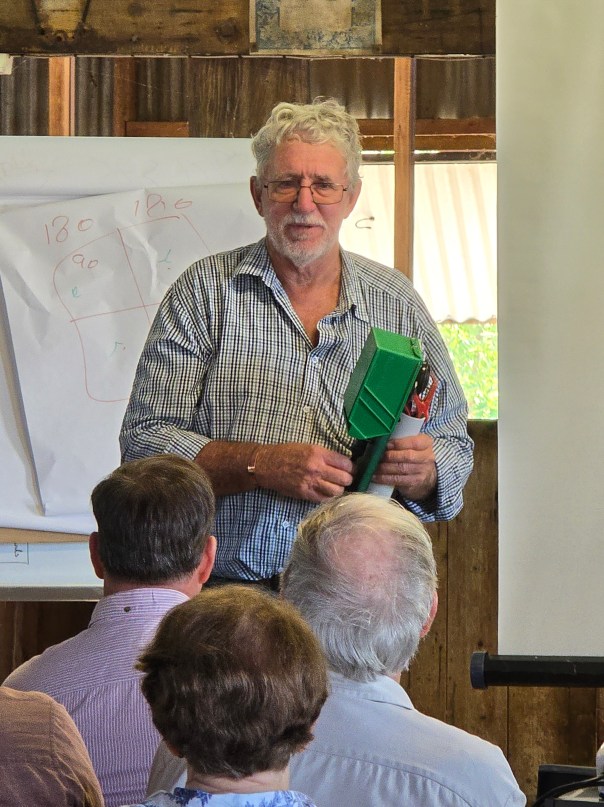
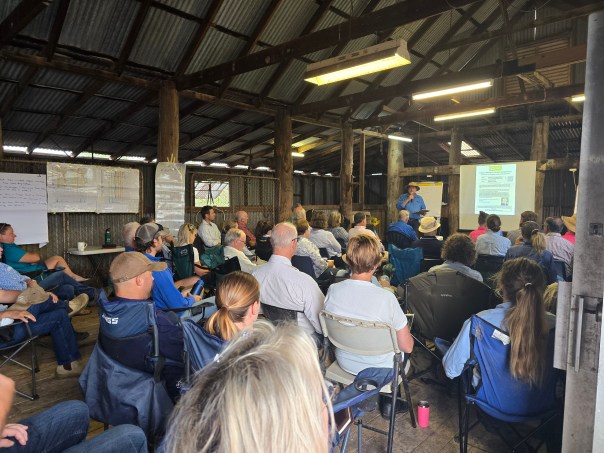
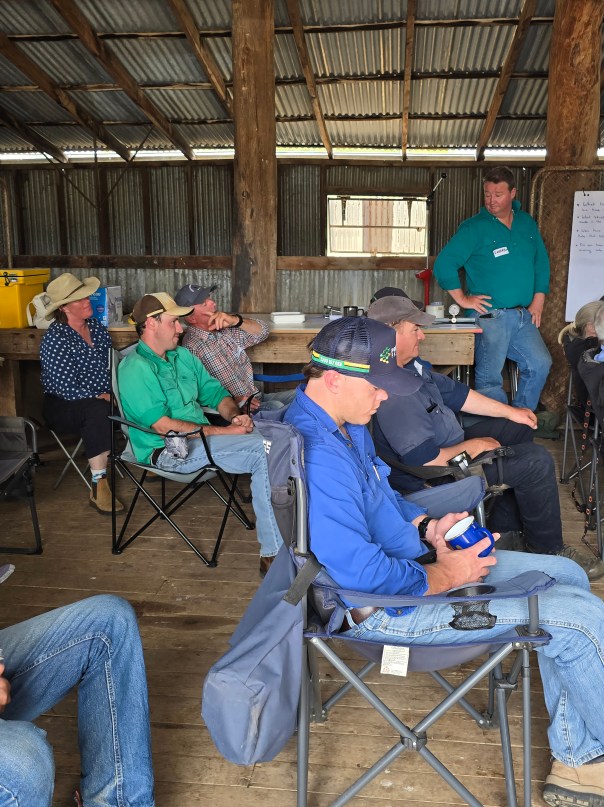
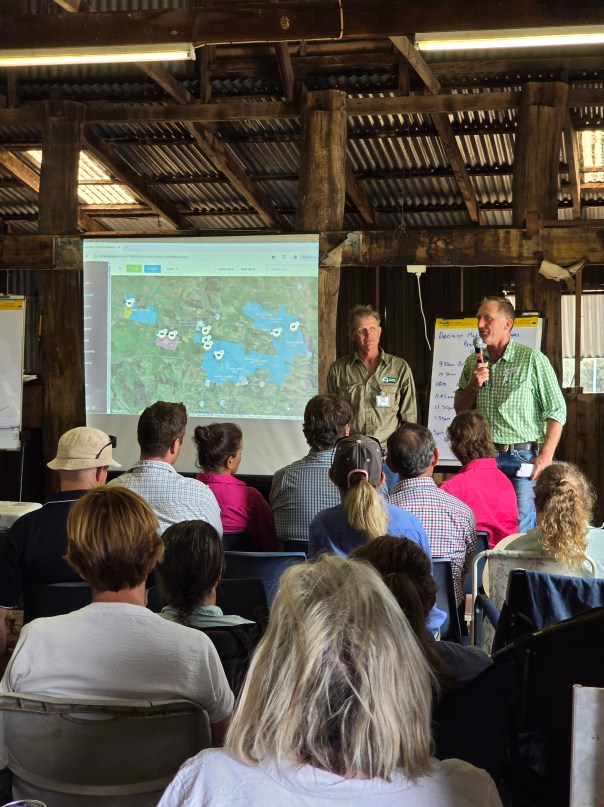
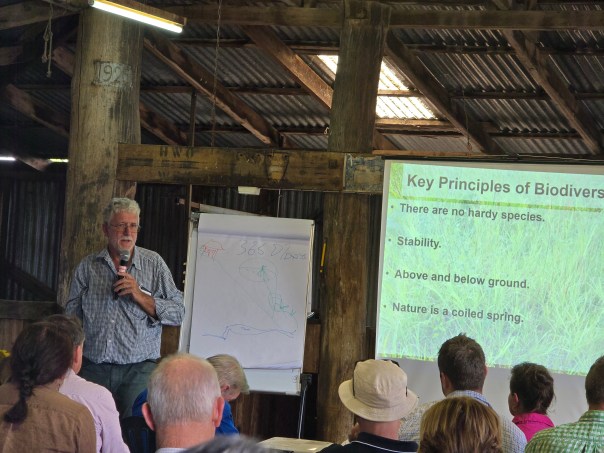
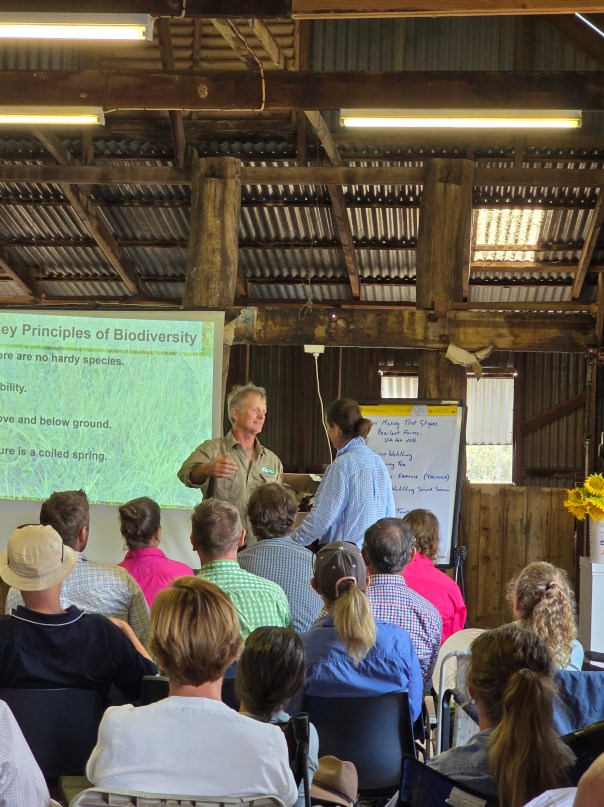
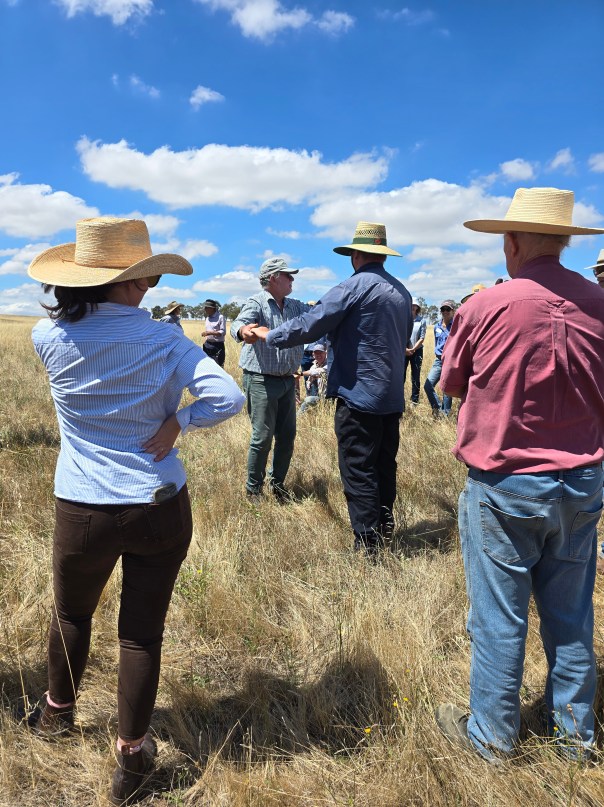
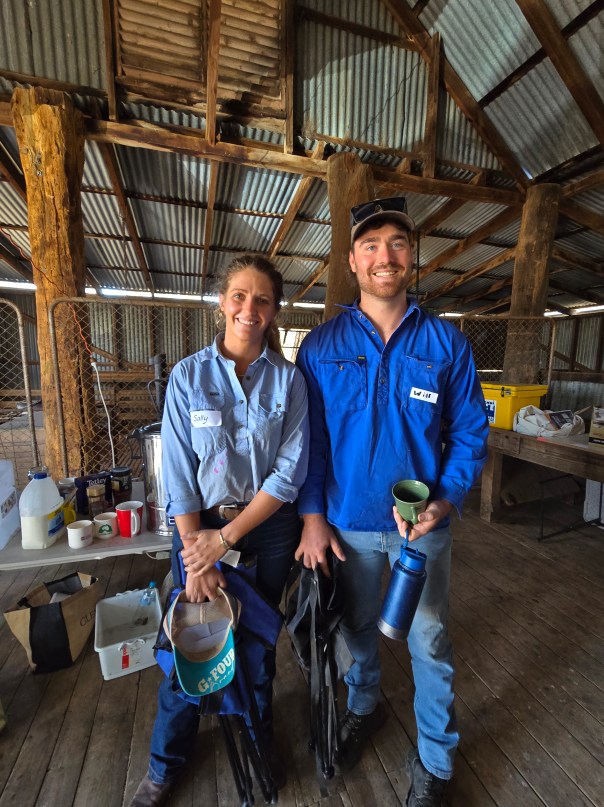
We had a fantastic turn out for our Growing The Grazing Revolution meet yesterday. Guest speaker Brian Wehlburg from Inside Outside Management kept us enthralled with his talk on ‘Decision making that shapes resilient farms’.
While there were plenty of great take home messages, Brian’s reminder of the power of building community, working alongside our neighbours & coming together to share & grow really hit the mark.
It was also really impactful to here from the Hickman’s (Guss, Anna & Tom) about their values, vision & practices at Talinga in Woodstock. Truly inspiring.
‘If you want to go fast, go alone. If you want to go far, go together’
That’s what we plan to do with our Grazing Group over the coming 18 months & we’d love for you to join us!
Thanks for a great day Scott Hickman and a big Thank You to Tamara at Central Tablelands Local Land Services in Cowra for your financial support which went a long way to making this event possible.
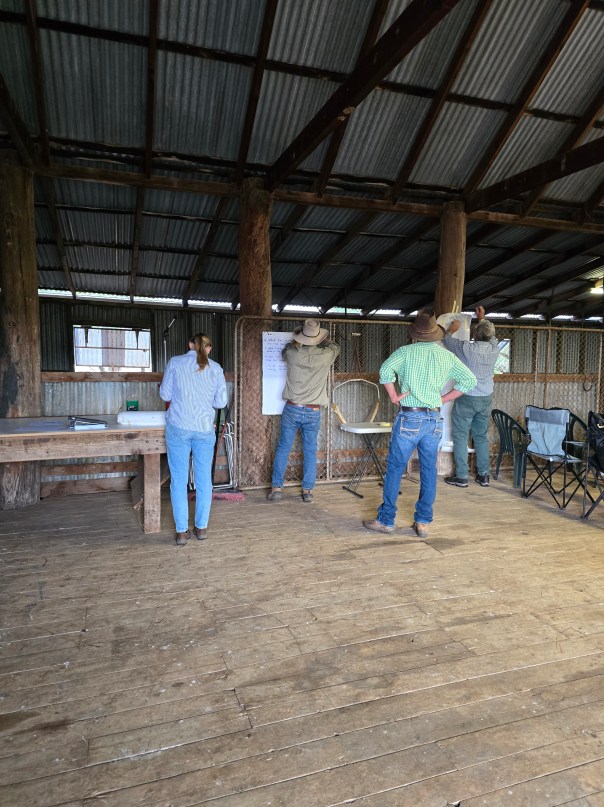
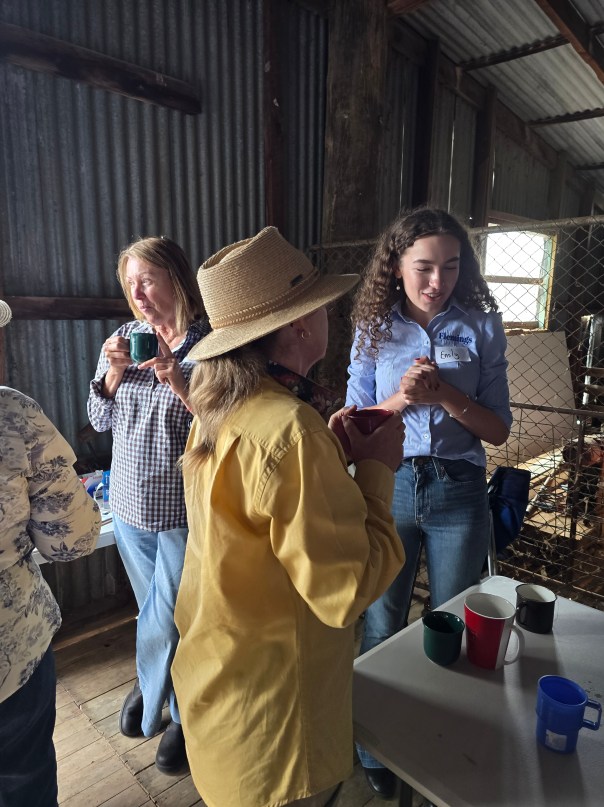
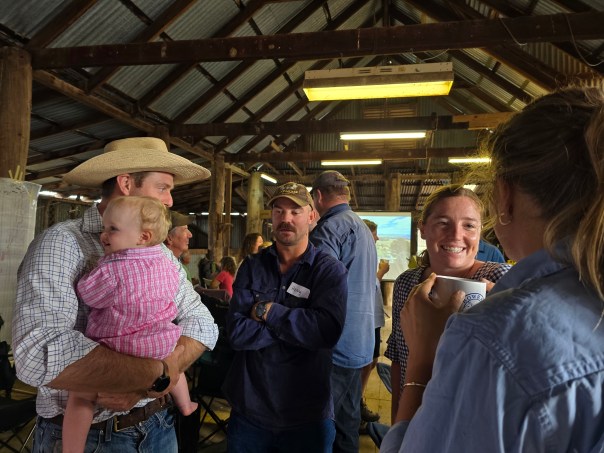
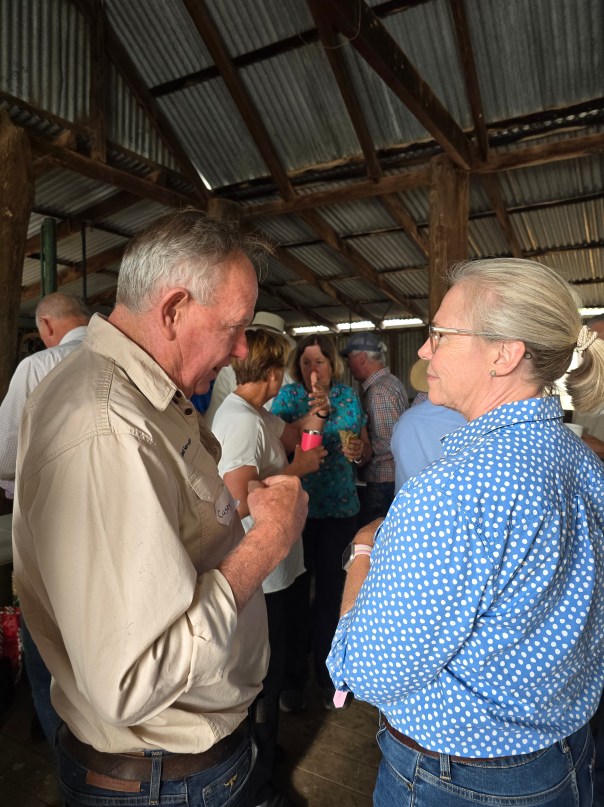
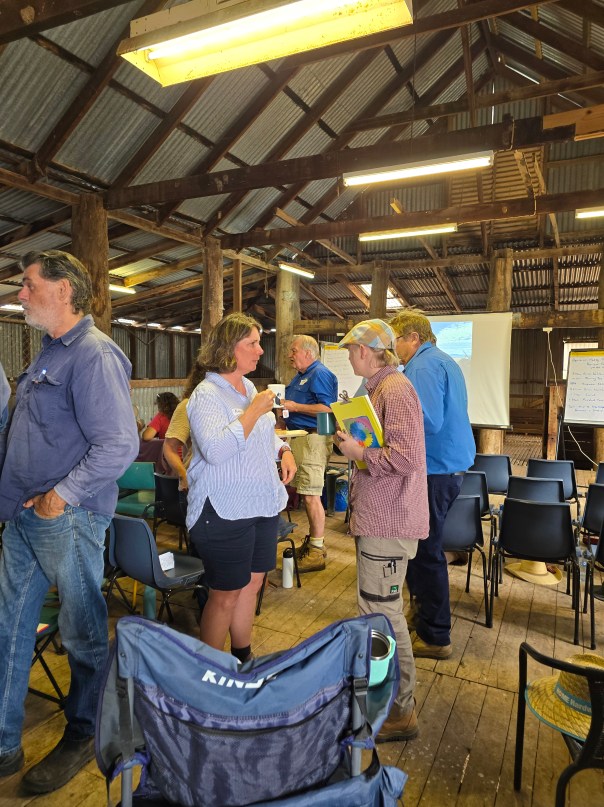
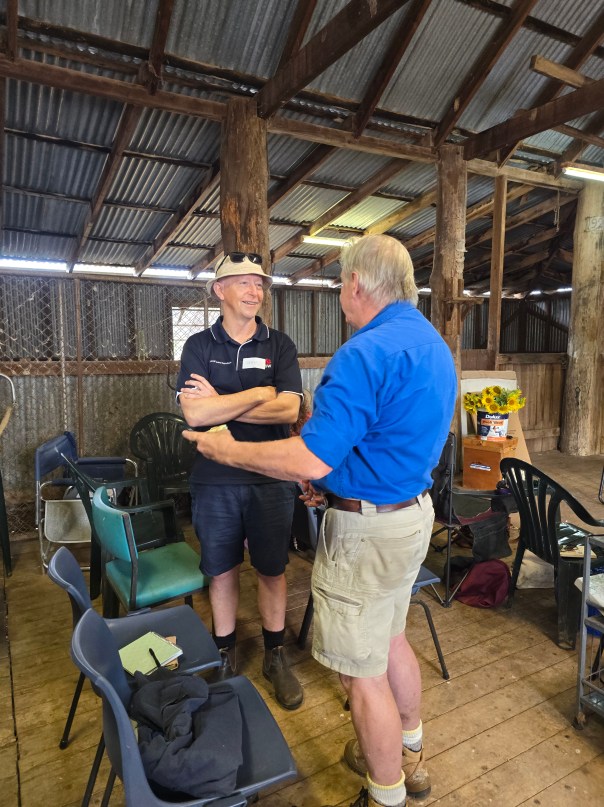
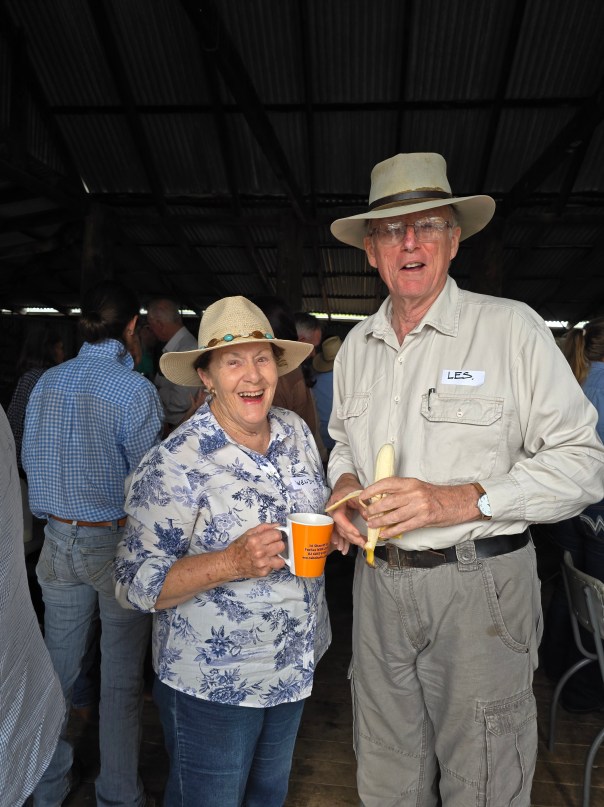
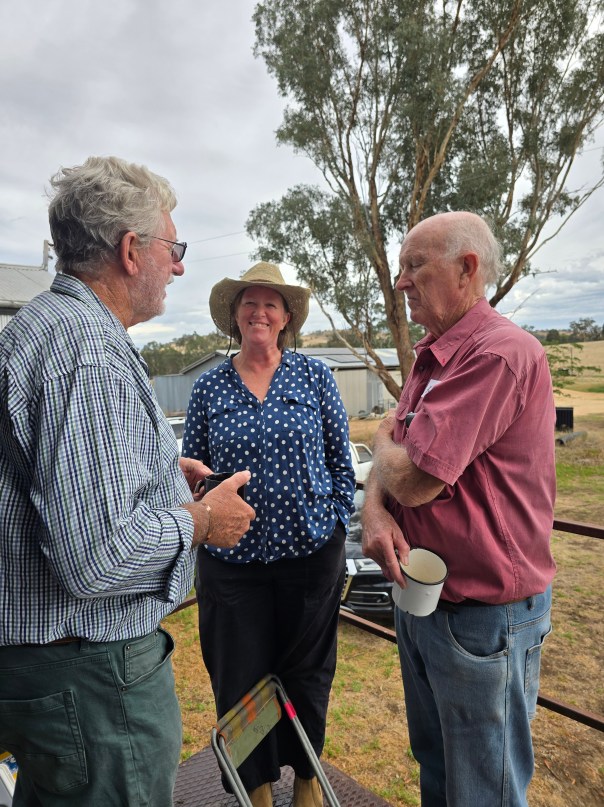
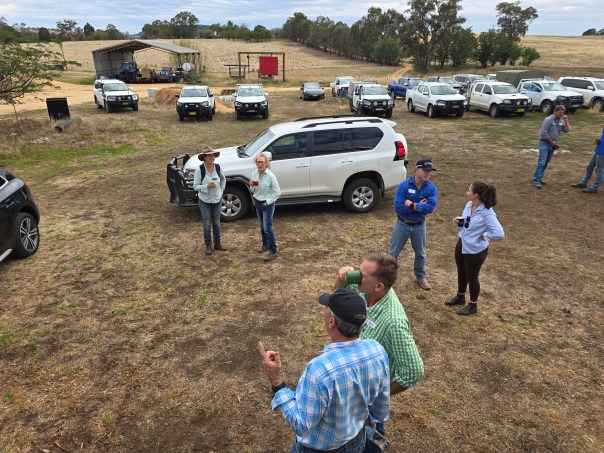
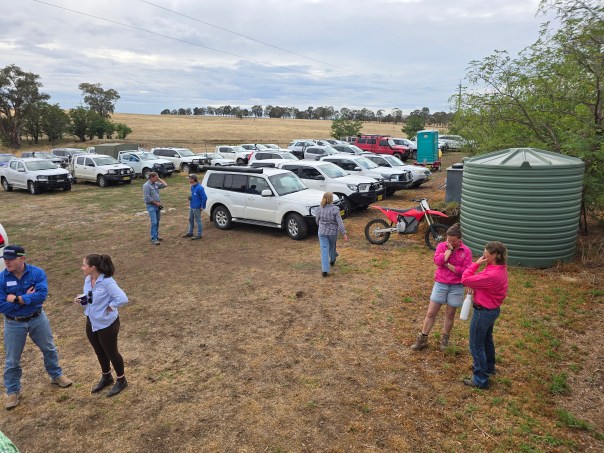
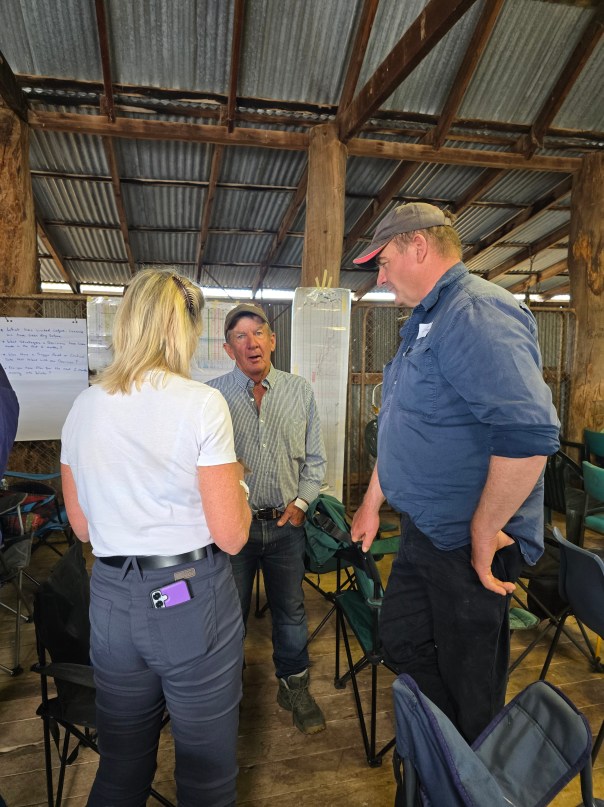
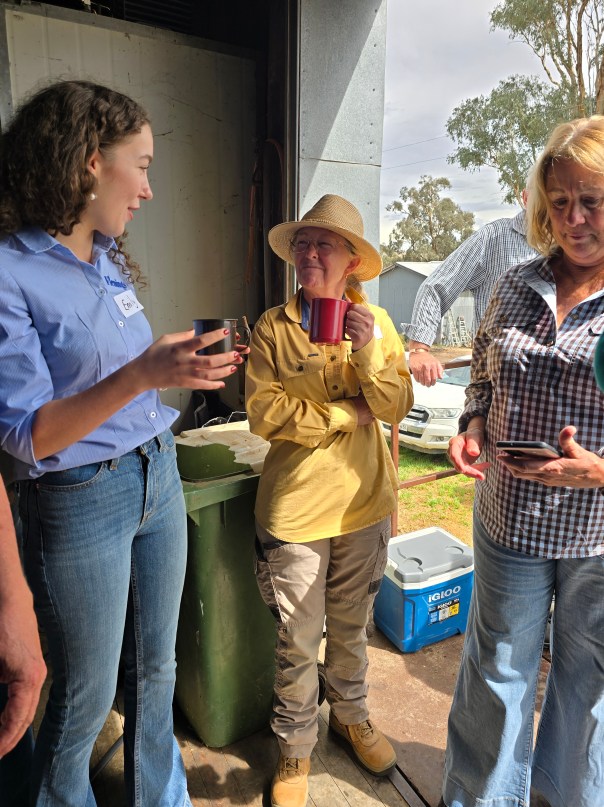
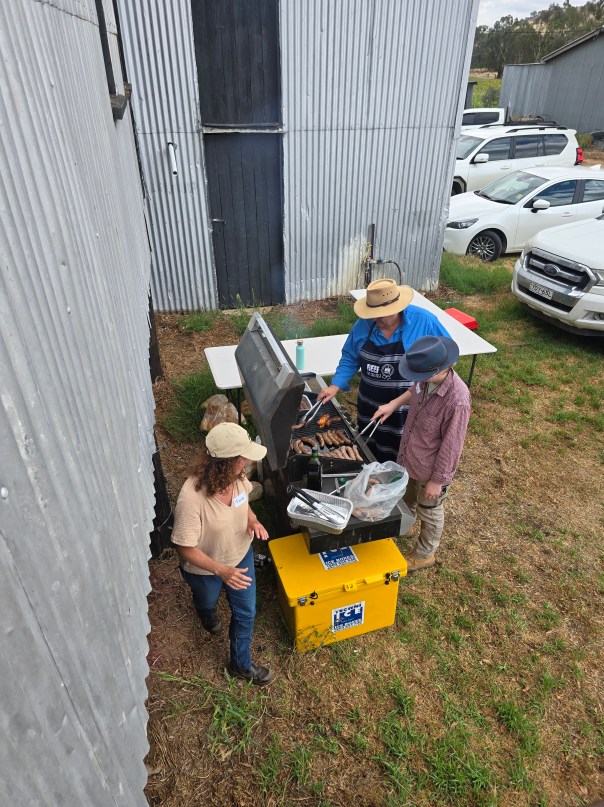
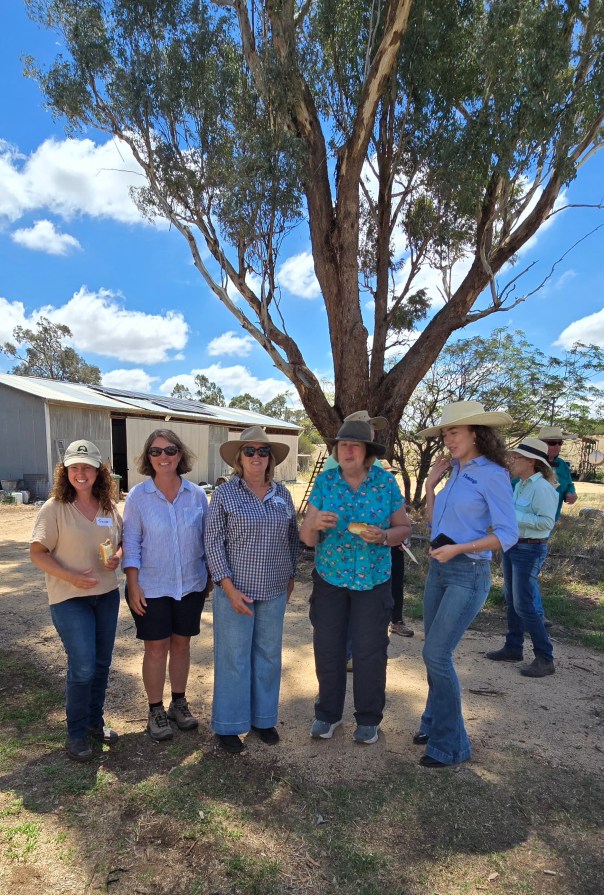
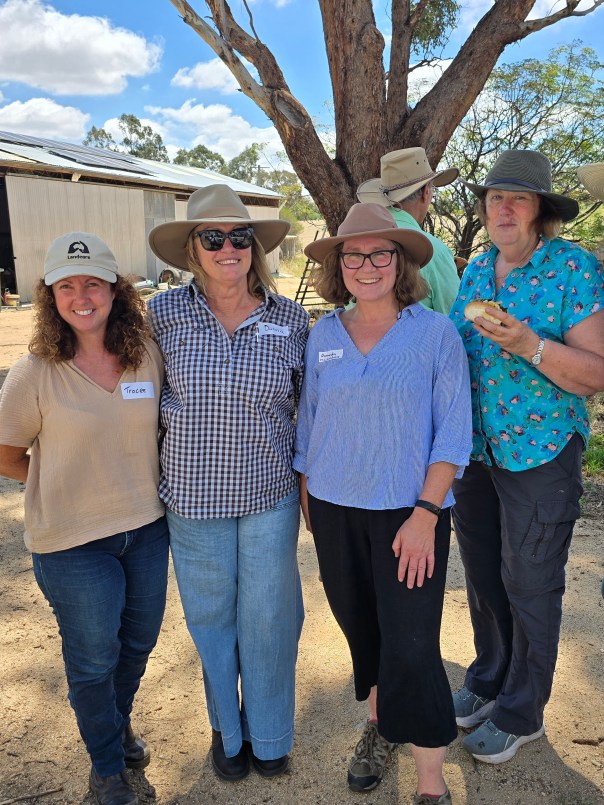
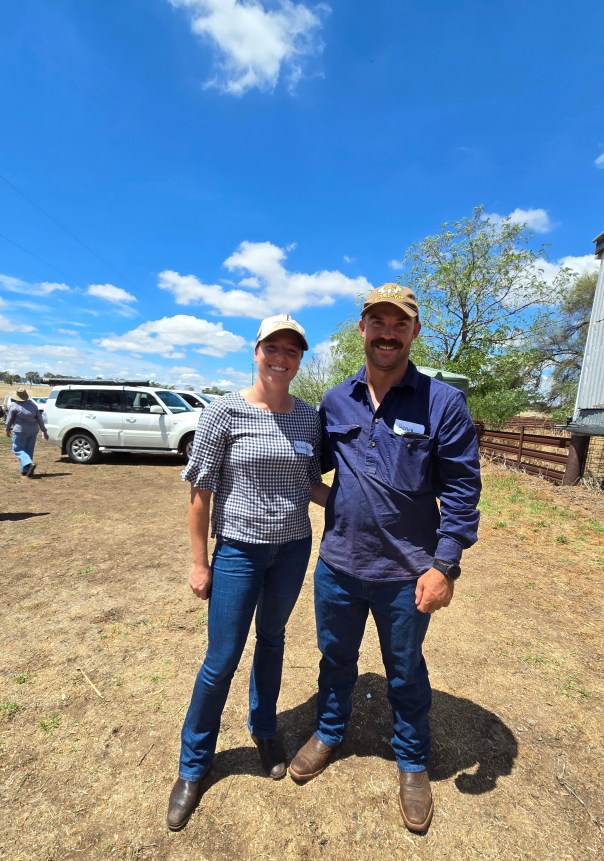
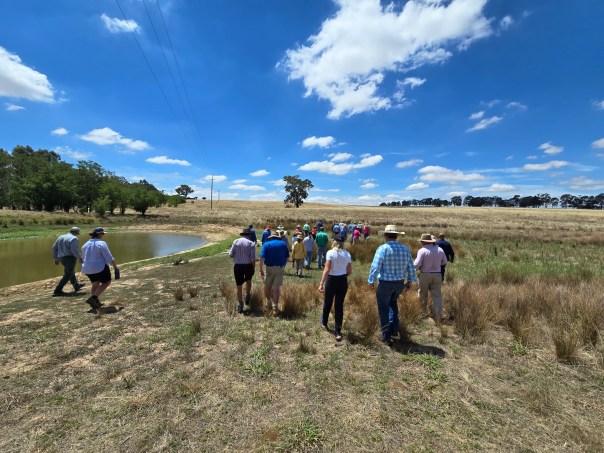
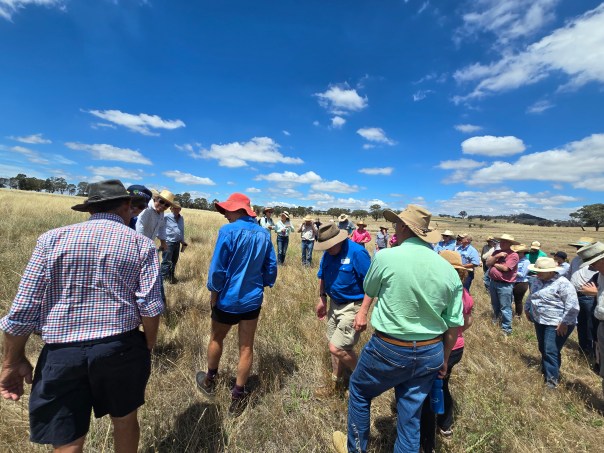
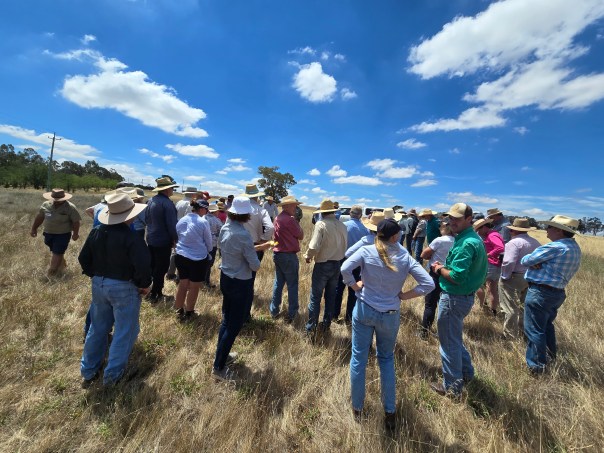
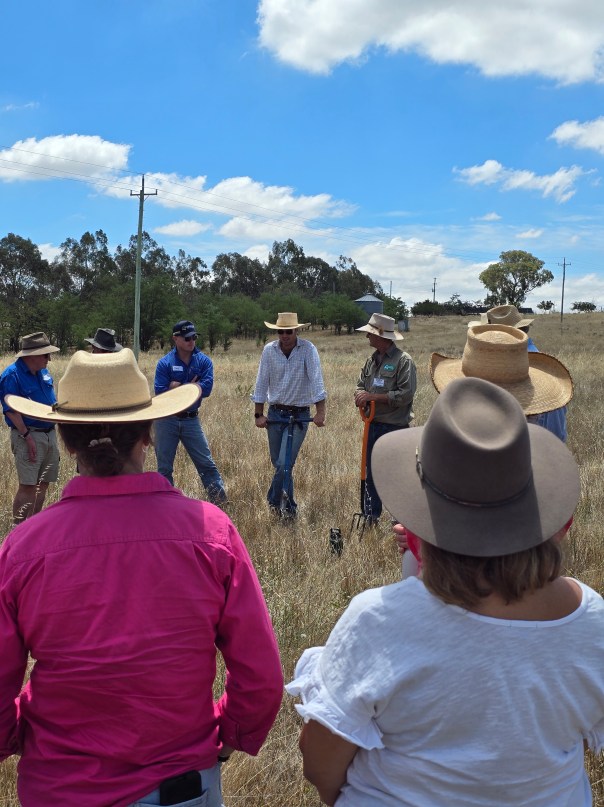
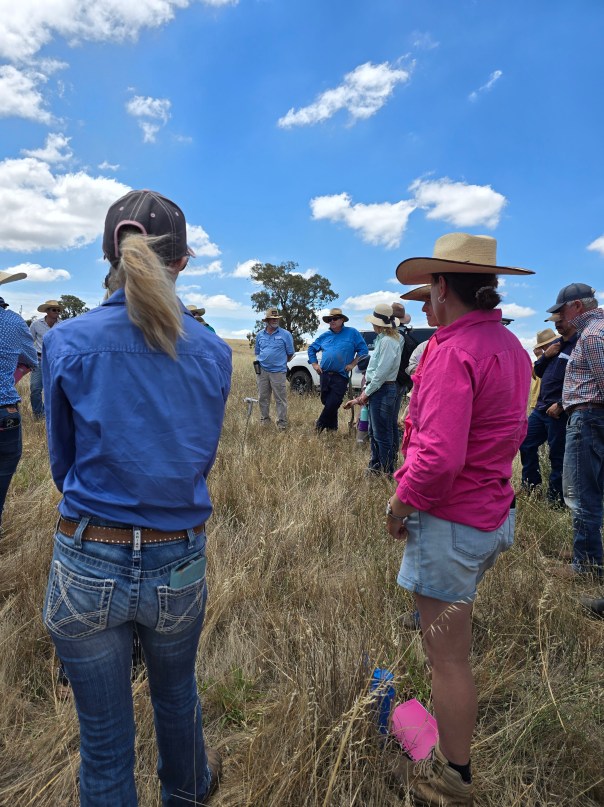
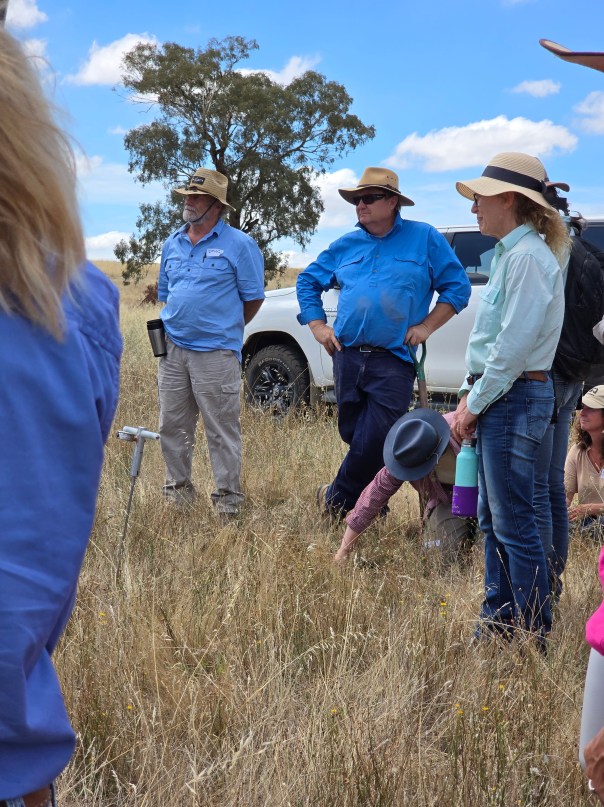
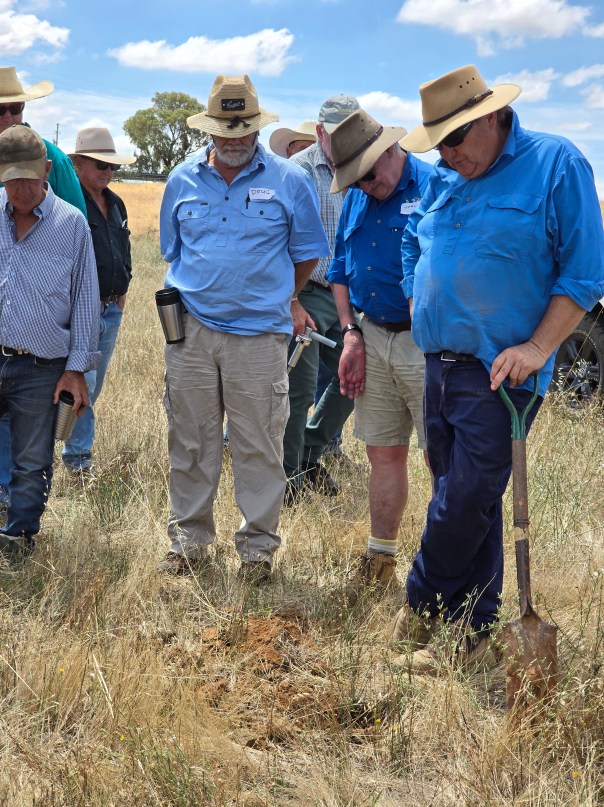
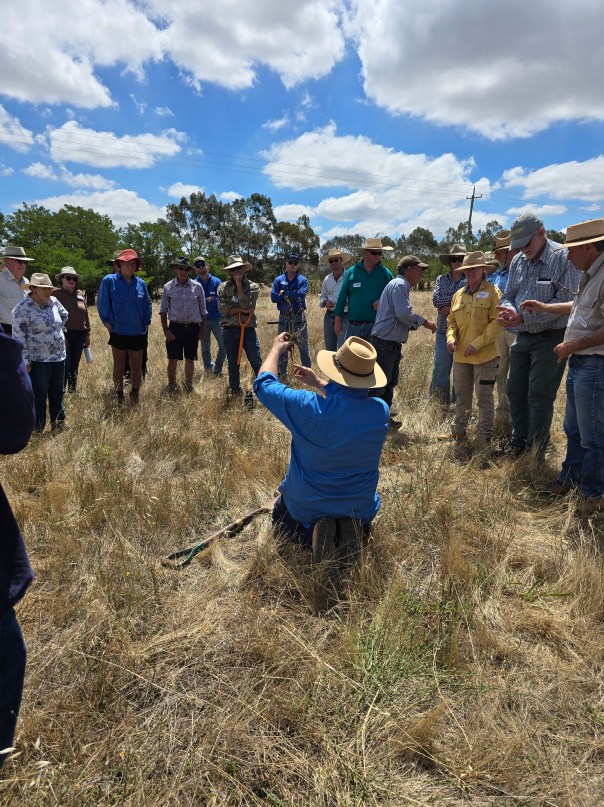
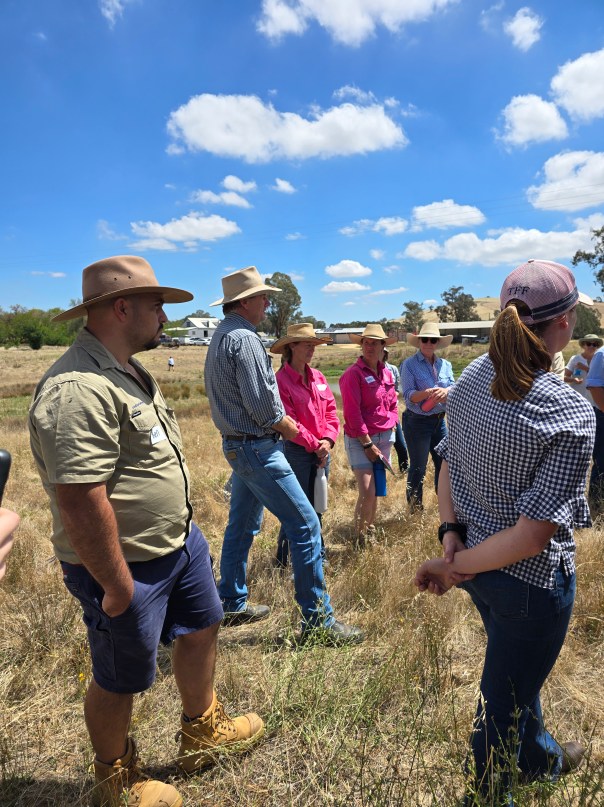
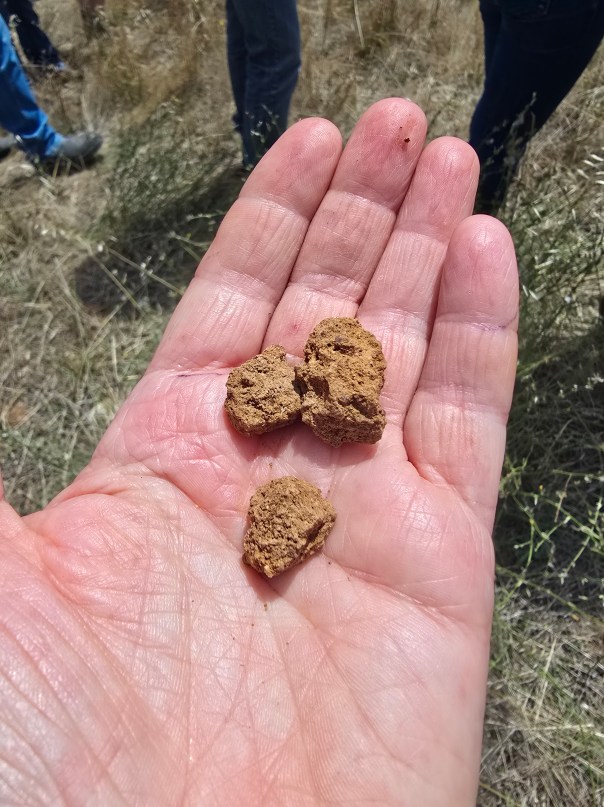
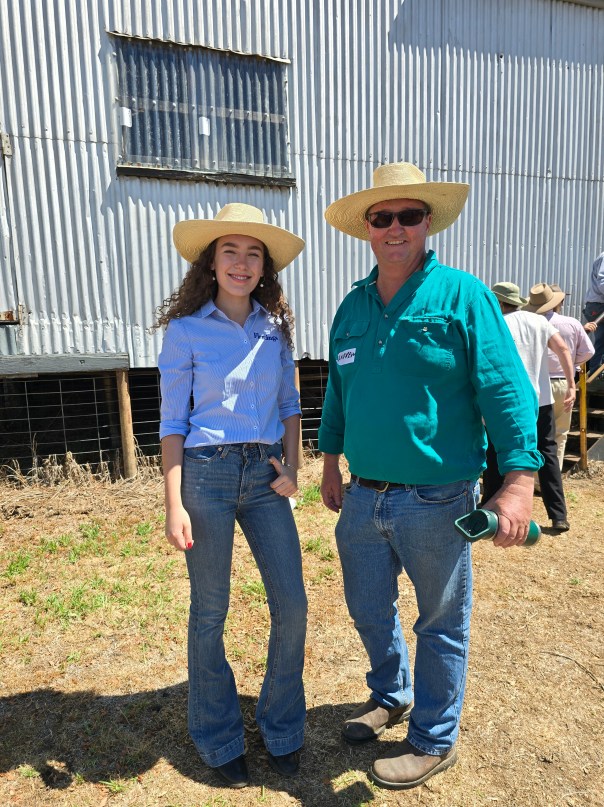
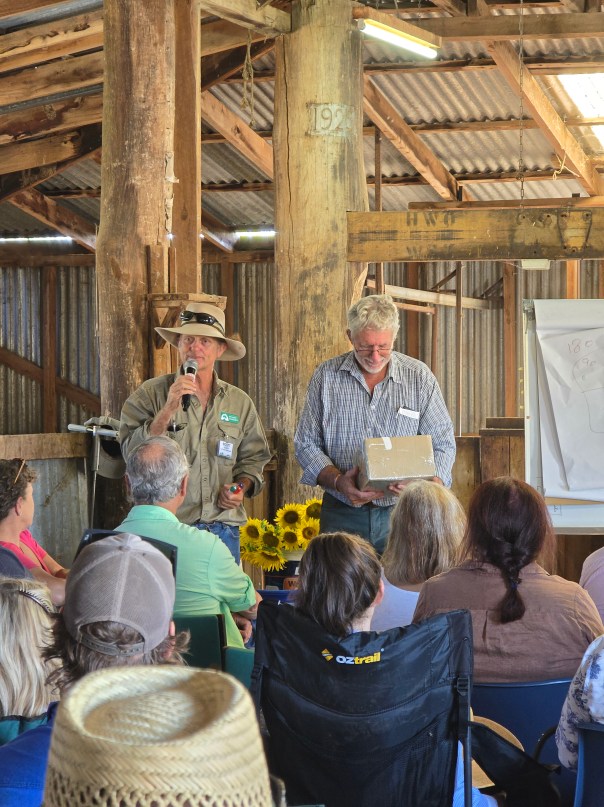
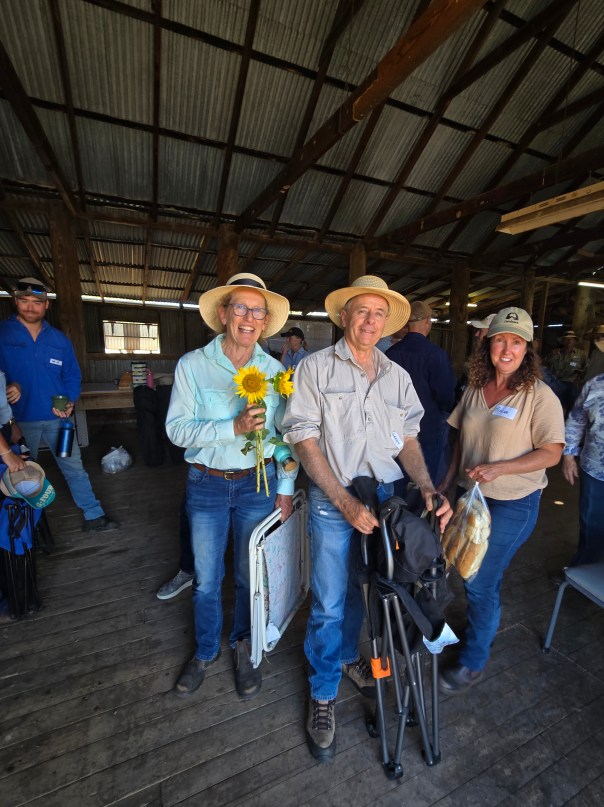
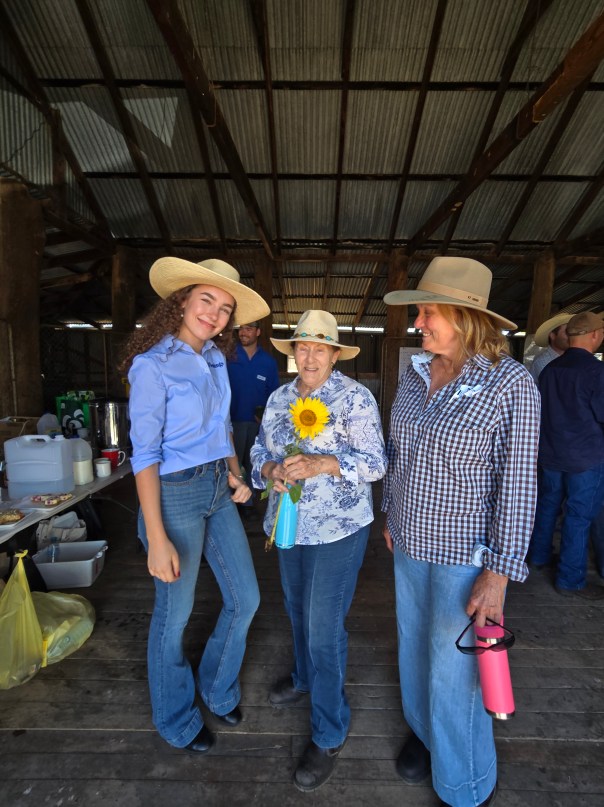
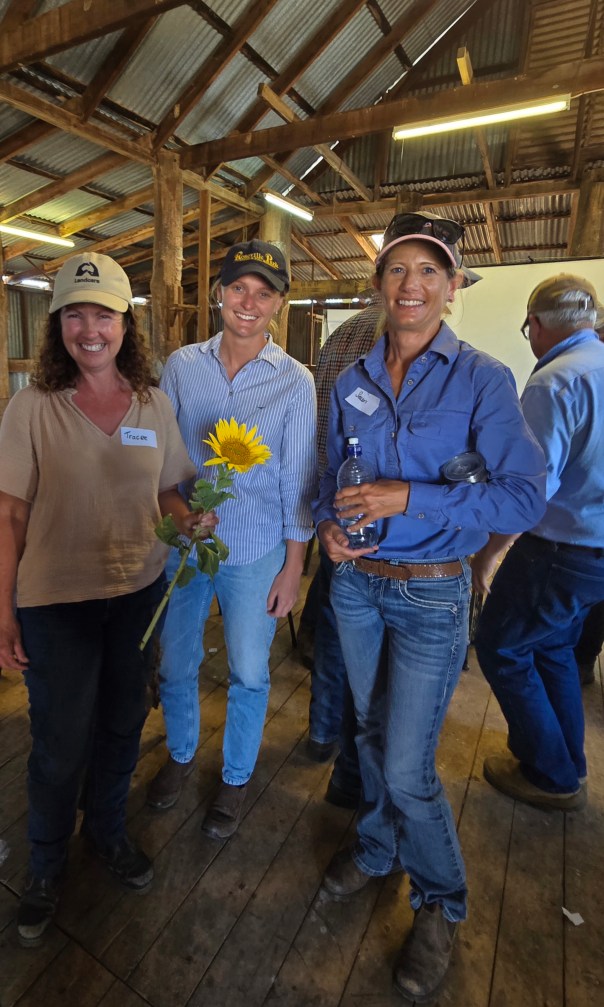
The Sunflowers we’re donning came from the Multi Species Crop planted right next to the shearing shed. Here Tom explains what went into that and how it’s gone:
From Tom Hickman:
Multi species crop was the Summer Super Mix south from down under covers, it included:
Forage Sorghum, Forage Millet, Sunflowers, Buckwheat, Radish, Rape, Purple Top Turnip, Mungbeans, Soybeans, Crimson Clover and Sunn Hemp. It was sown down with YLAD’s Multi-Species Grow granular fertiliser.
The main aim for that paddock was to reduce the amount of pin rush (trial) and improve the soil. The paddock is low lying and receives a lot of run off from the road, historically it has been a sheep/ bull paddock and has not been included in the main rotation so has been neglected.
We started off by slashing the paddock then spraying out with roundup, after which we sowed with a disk planter.
It is hard to say yet if it has reduced the Pin rush but hopefully the ground will be more open/broken up from the tap root and radish plants. We did not have great rain fall so the crop has been severely moisture stressed with areas completely dying off and most species not surviving bar the sunflowers and some millet or sorghum.
Eucalyptus Day & Beyond – Life Around A Gum Tree Teaching Resource
When the charity Eucaluptus Australia formed in 2007 they nominated 23rd March as National Eucalyptus and published their three key priorities:
- Conservation: Projects that identify and address threats to eucalypt conservation
- Education: Projects that raise public awareness of eucalypt cultural and conservation values
- Research: Projects that increase scientific knowledge of eucalypts
You can read more on the history of the day & how it came about here but for now we’d like to introduce you to our ‘Life Around A Gum Tree‘ educational resource & Bingo Cards which is full of local content & perfect for anyone who wants to learn more about these beautiful trees in a fun & interactive way!
About our ‘Life Around A Gum Tree’ Resource.
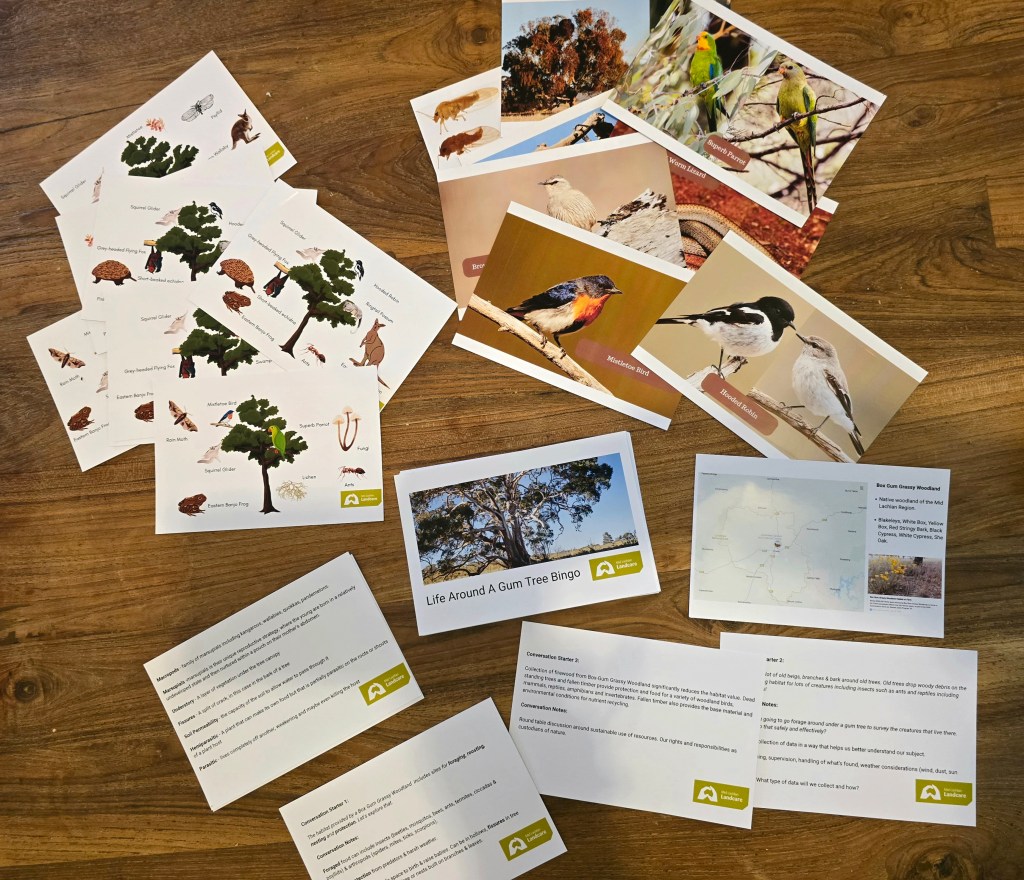
Life Around A Gum Tree is an immersive, multi-sensory teaching resource centred around a ‘bingo’ style game. We’ve provided 8 bingo cards, each featuring 8 living things you’d find around a gum tree.
In the teacher’s pack there are three converstation starters to stimulate discussion plus a set of 20 biology fact cards detailing information about the life you’ll find around a gum tree. These can be read out in any order with students marking off their living thing as it’s name is mentioned. First one to complete the card shouts ‘trees’ and is declared the winner.
The teacher cards contain links to further supporting resources including videos, audio recordings, Citizen Science apps and more.
Finally, and what we like best about this resource is that it was developed locally for our community and can be used to support local field trips, surveys and other such excursions.
For educators, the resource maps well to the primary science syllabus:
Early stage 1: Ste-3LW-ST
Explores the characteristics, needs and uses of living things.
Stage 1: ST1-4LW-S
Describes observable features of living things and their environments
Stage 2: ST2-4LW-S
Compares features and characteristics of living and non-living things
Stage 3: ST3-4LW-S
Examines how the environment affects the growth, survival and adaptation of living things.
Tip for those wanting to play the game with their class.
Print out then laminate your bingo cards so they can be wiped down and re-used. This also works well for anyone wanting to take the game outdoors in all weathers.
For the general public
We encourage you to download the PDF and spend an hour or so sitting under your favourite gum tree & contemplaiting the diversity of life it supports.
World Wetland Day Kayak at Wyangala Dam
After successfully kayaking in the new year in 2025, we’ve decided to do it again!
Join us at Wyangala Dam on Thursday 29th January as we reflect on water management from our Landcare perspective while enjoying a paddle and float.
We’ll share an outline of what water-focused events we’ve got planned for the rest of the year (think enhancing farm dams, Carp musters, ecological planting etc) while encouraging reflection on the origins of World Wetland Day.
We look forward to spending a relaxing morning in nature with you in beautiful surrounds just 30 minutes from Cowra CBD
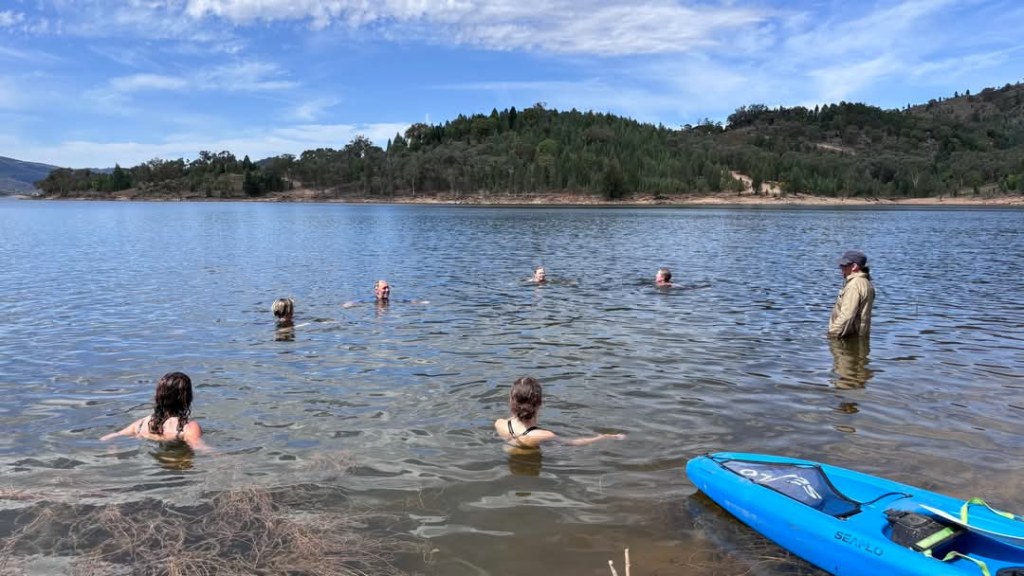
So what will the kayaking be like?
We plan to kayak only 2-3km return, following the banks of the dam out to a swimming spot before returning back to the shore for a picnic. The shore line is rocky in parts but there are plenty of areas along the stretch we’ll be visiting with easy access to the water.
Feel free to give Amanda a call if you want to talk through any questions before deciding whether to join. 0439 576 903
And what is World Wetlands Day?
World Wetlands Day is marked on 2nd Feb each year. The first World Wetlands Day was held in Ramsar, Iran in 1971 day 1971, a day that marked the anniversary of the Ramsar Convention.
It is essential to our survival as a species that we protect and conserve the worlds wetlands – something that we’ve often not prioritised as human populations have expanded across the world. It will be interesting to consider the role of water management (including the building of dams) in wetland conservation and spend some time thinking on our personal and community values, wants and needs.
Life Around The Gum Tree: The Helena Gum Moth
Summer is a great time for bug spotting and this season, I’ve spotted a few interesting things while out and about, including these Helena Gum Moths – Austrocaligula helena.

My first sighting was of the adult moth resting on an Acacia shrub. The adult moths live for around 2 weeks during which time they focus all their energy on breeding. During this stage in their life-cycle, they can’t eat due to having no mouth parts. As such, while are most likely to be found on or around Eucalypt trees during their Caterpillar stage, as moths, they could be hanging out anywhere!
Here’s the Caterpillar I spotted – these are pretty big and chunky! I spotted this on the side of the road so I moved them into the leaf litter. Hopefully this one will make it to its next lifecycle stage – the cocoon which apparently they can remain in for up to 2 years. Wow!
Want more information? Here’s a short and informative video on gum moths.
These beautiful insects can be found across our Landcare region so keep your eyes peeled!


 Mid Lachlan Landcare