Mid Lachlan Landcare’s chair Wendy Bowman presented at the Landcare NSW Conference this year, sharing what our ‘Growing the Grazing Revolution’ program has meant and continues to mean to her. Her presentation is shared below:
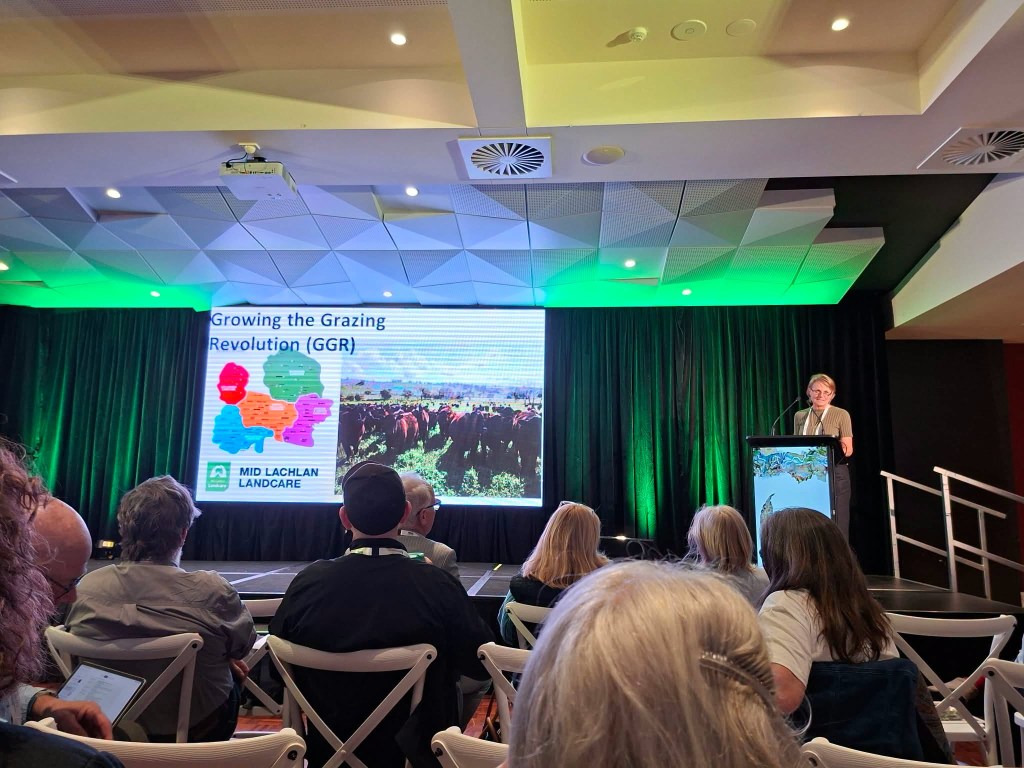
Mid Lachlan Landcare sits in the Central Tablelands region, right in the heart of beautiful Wiradjuri country. Our patch covers the communities around Cowra and Canowindra. One of our signature projects — now in its fifteenth year — is called Growing the Grazing Revolution, or as we all know it, GGR.
When writing this talk, I set it out in a series of questions. Here’s the first one:
Question 1: What is the need that GGR meets that makes it successful?
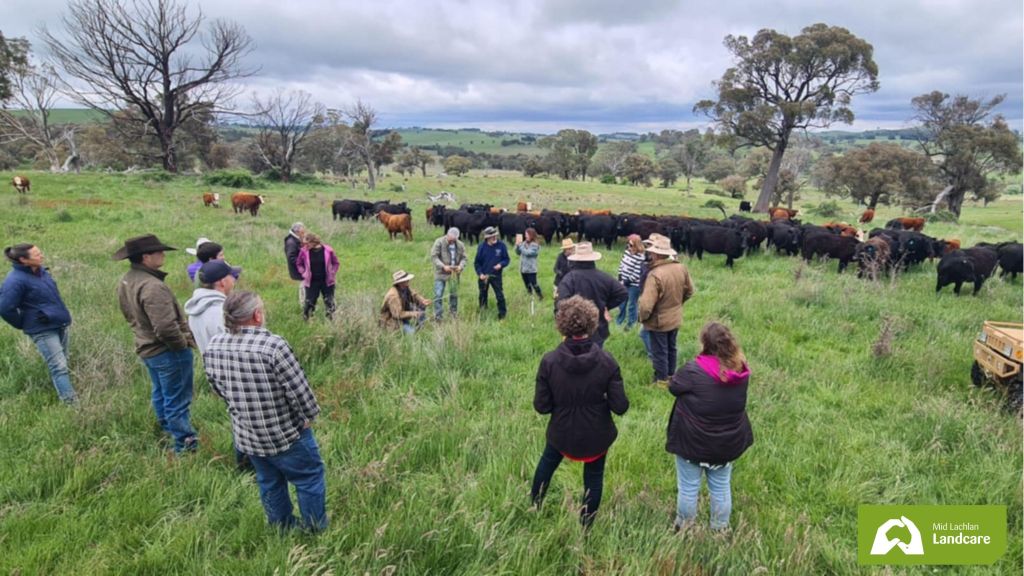
15 years ago, we noticed that cropping farmers had plenty of support. Seed and fertiliser companies ran trials, DPI held field days, and there was no shortage of advice. But for graziers? Not so much. Grazing can be a very solitary occupation, you’re out there in the paddock with just your livestock for company and they can’t tell you what they or the land needs. Around the same time, courses like Holistic Resource Management and Grazing for Profit were starting to become popular.
I did Holistic Management in 98, and it just made so much common sense to me. I grew up hearing my father say “Mother Nature can be cruel” and “we’re always fighting Mother Nature”. I didn’t want to fight Mother Nature………..I was afraid she’d win.
Now, as it turned out, I wasn’t alone. There was a growing movement of graziers who wanted to work with nature, rather than against it.. GGR brought those people together. It created a community — a place to belong, to share ideas, to ask questions, and most importantly, to build the confidence to change the way they managed their livestock.
Question 2 – How is GGR good for Landcare?
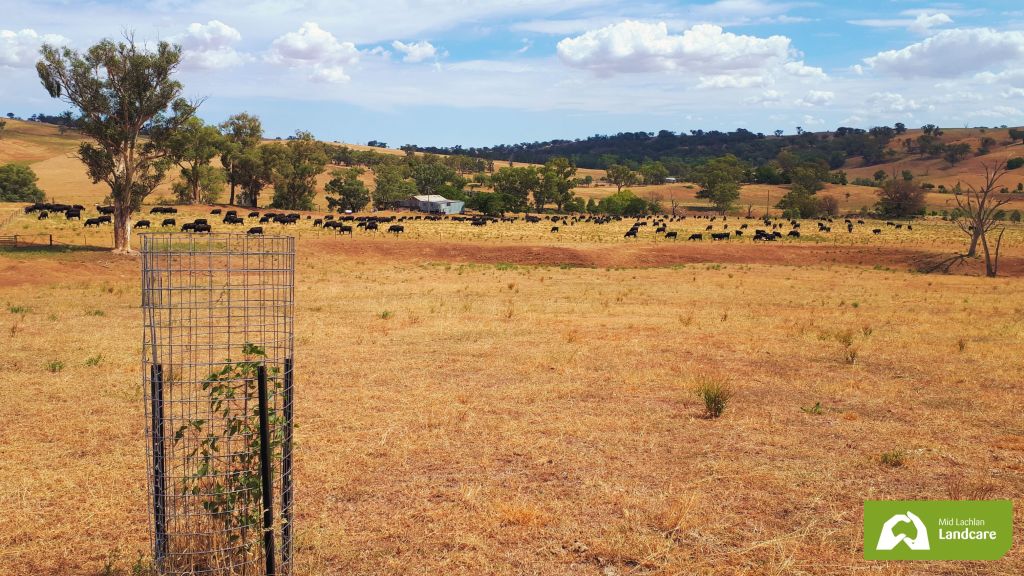
Grazing in a way that mimics nature increases biodiversity — and it does so at very low cost. It also brings a whole new group of people into the Landcare movement. Once they’re involved in GGR, they’re exposed to other Landcare projects and activities.
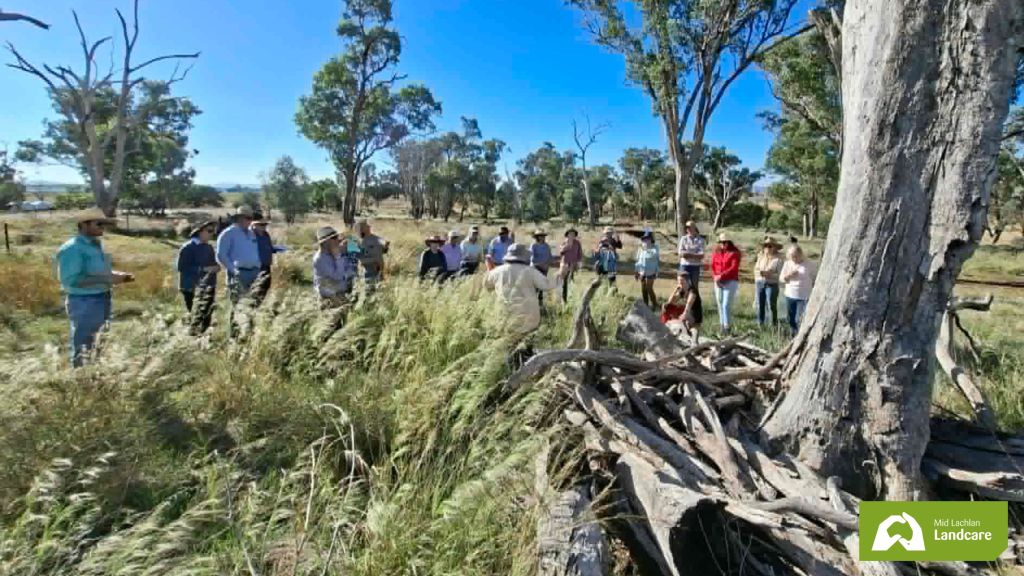
In my case, I started as a GGR participant, then on the GGR board, then joined the Mid Lachlan board, now I’m Chair and part of the regional Steering Committee. GGR doesn’t just grow better grazing — it grows Landcare!
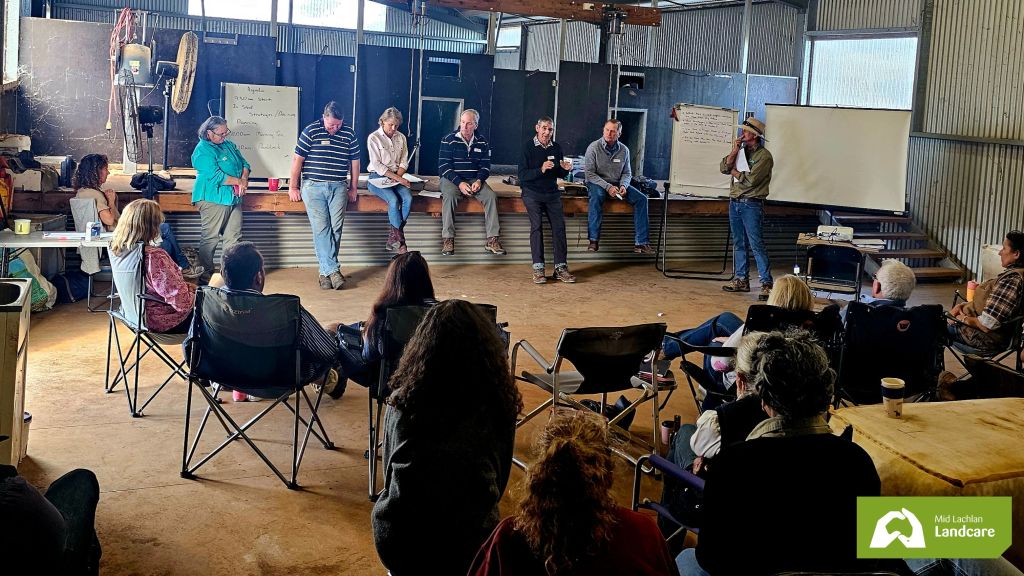
Question 3: How does it work?
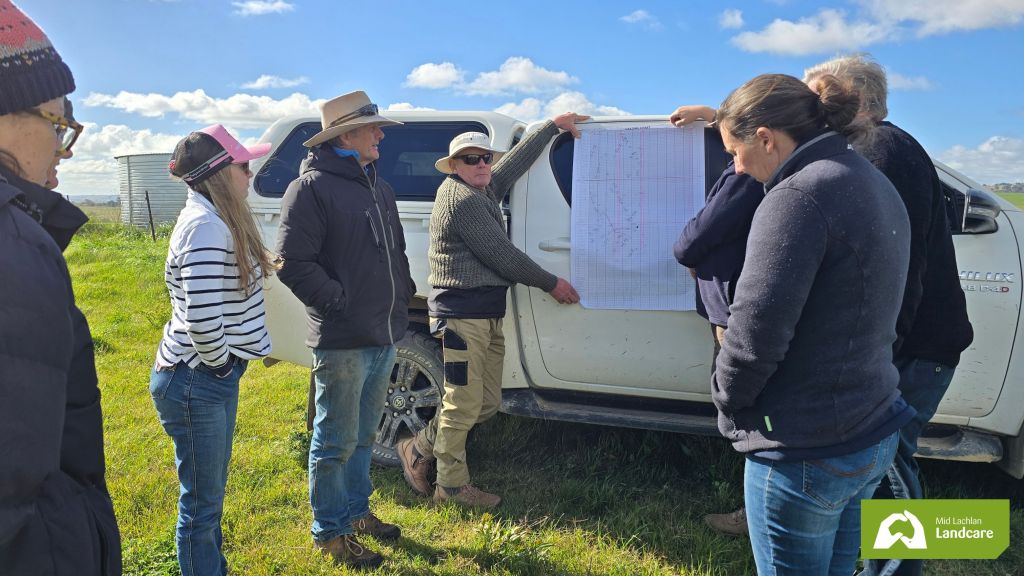
GGR employs local grazier Scott Hickman as the facilitator, and he reports to a volunteer board. Scott organises cluster group meetings — small groups of graziers in a local area, hosted on one of their farms. The group leads the discussion, choosing whatever topic matters to them at the time. They share ideas, troubleshoot problems, eat some cake, and then head out into the paddock to scratch around in the soil.
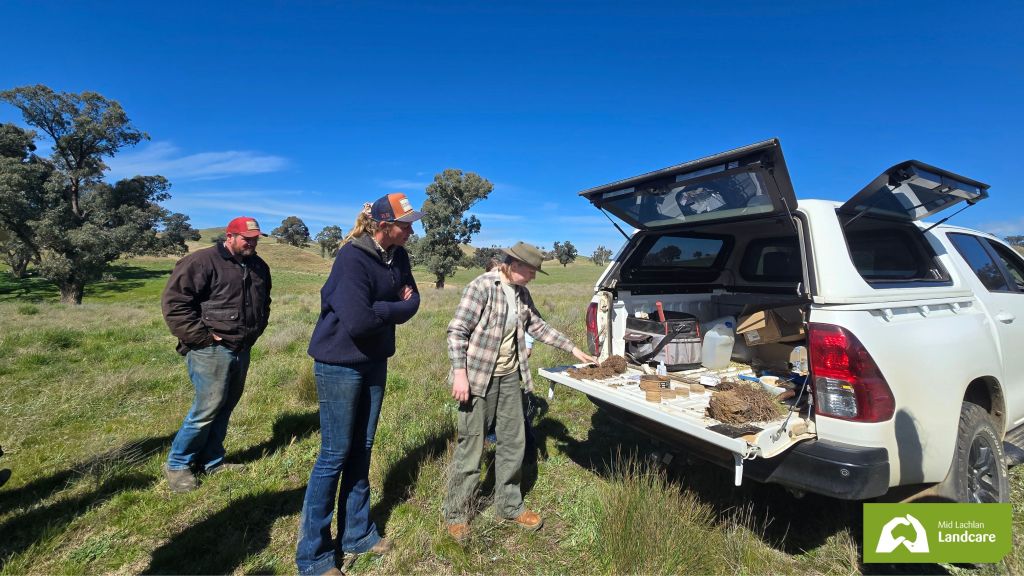
A couple of times a year we run larger field days with guest speakers. Scott also conducts oneonone farm visits and has recently started a group for younger farmers.
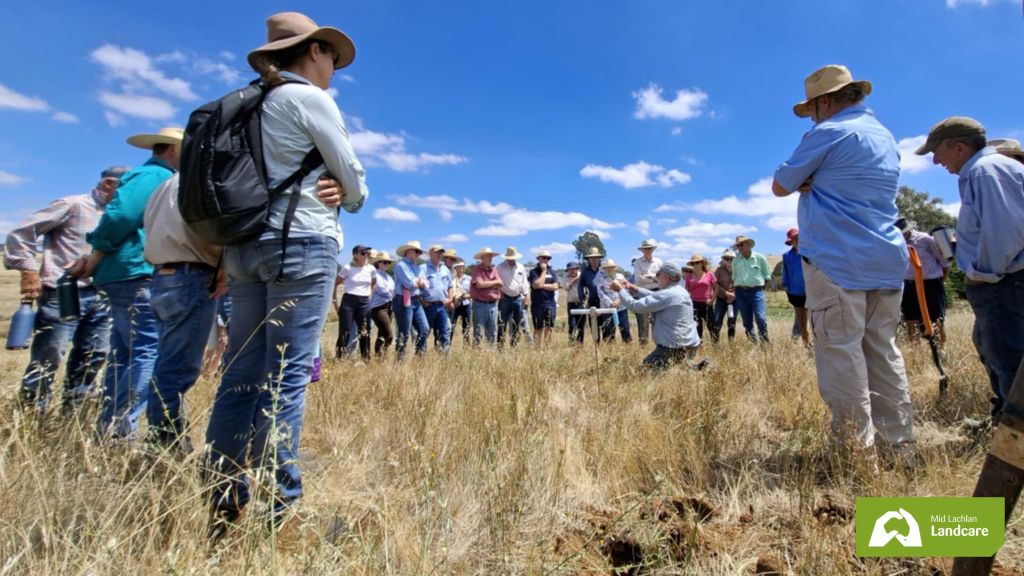
At its heart, GGR is peertopeer learning and support. That’s what gives it strength, effectiveness, and longevity. It’s not topdown instruction — it’s graziers helping graziers, and that’s why it works.
Thank you for listening.


