Mid Lachlan Landcare
supporting sustainable agriculture and restoring the environment
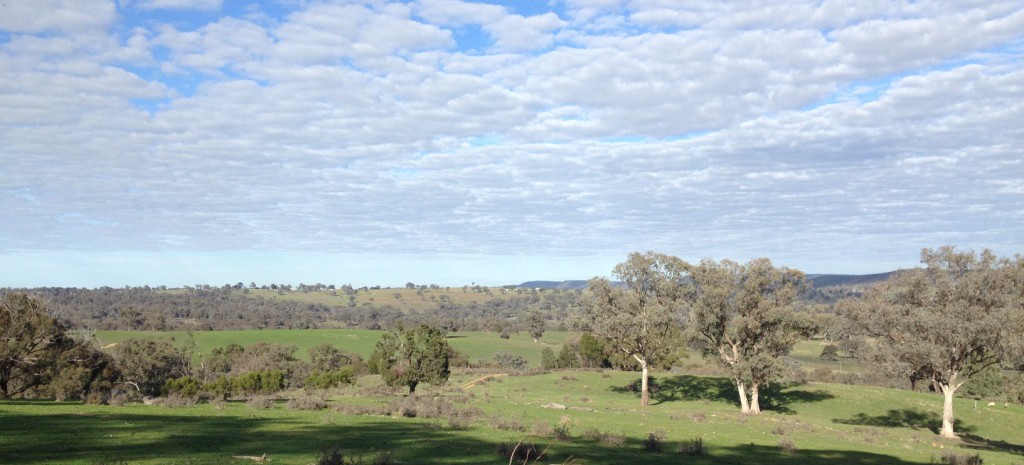
Woodland Wildflower and Orchid Walk

The day couldn’t have been any better for our Woodland Wildflower and Orchid walk at the end of September. We had along some new people who hadn’t been involved with Mid Lachlan Landcare previously which was fantastic, and we all made some new friends as well as seeing some of the gorgeous local wildflowers and orchids.
It is amazing to think that much of our local Box Gum Grassy Woodlands used to be covered in many wildflowers, lilies, and orchids. Most of these have now been grazed out unfortunately, but you can see an amazing diversity up around Conimbla National Park.
Some favorites for everyone on the day were the Purplish Beard Orchids, Gompholobium huegelli (what a name!), Dampiera, the Bearded Greenhood and a couple of Sun Orchids. We’ve created a bit of a list of what we found including pictures that we are happy to share with anyone who would like to see it.
Towards the end of the year, we are planning to do another walk up there to visit the Flannel Flowers which are rare around this area. We are also keen to see what else we can find. If you would like to take part in our next walk or get involved in other opportunities with Mid Lachlan Landcare, please get in touch with Tracee on 0417 799 425 or email us to be included in our subscribers list midlachlanlandcare@gmail.com


New Recruit for Mid Lachlan Landcare
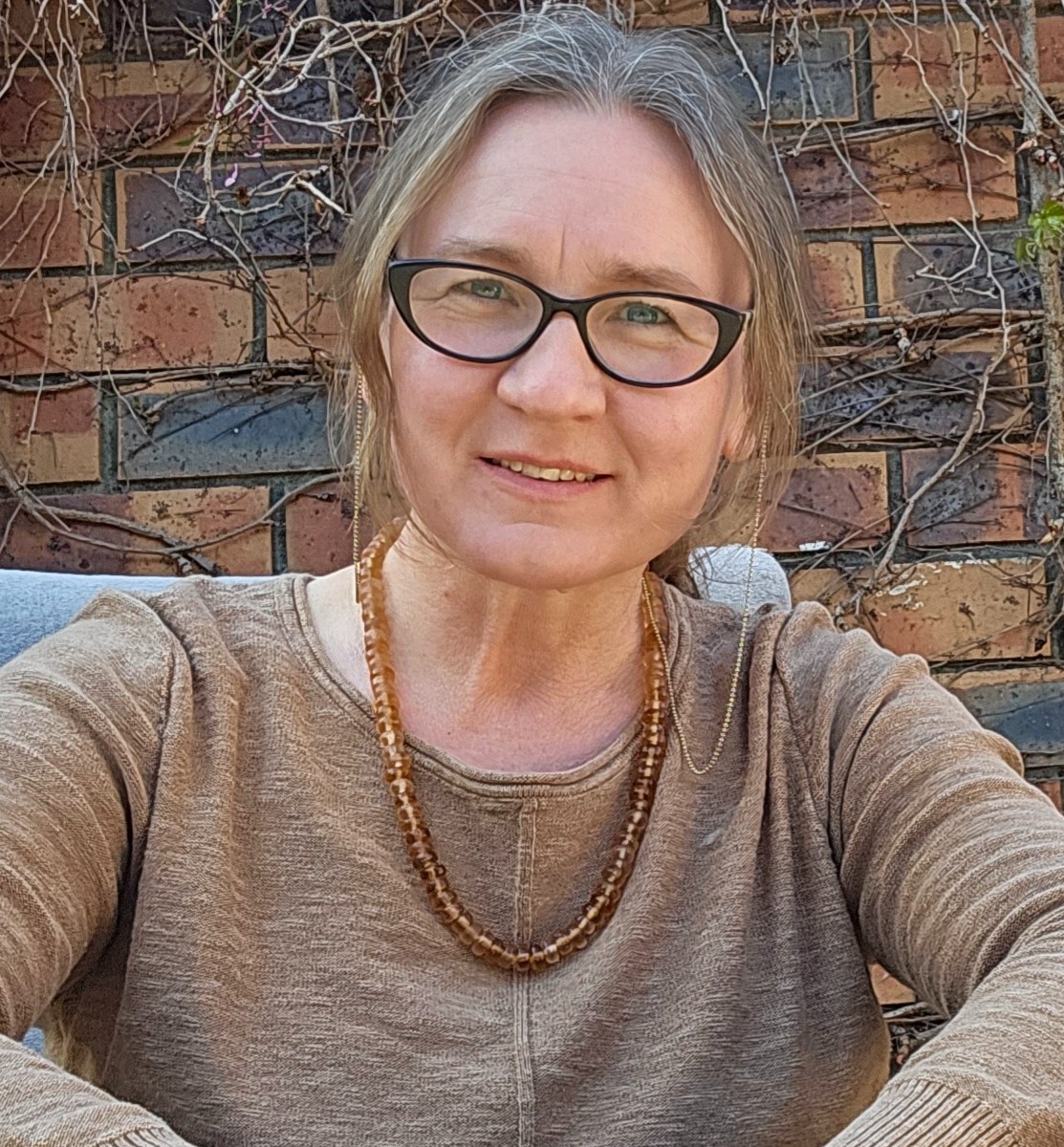
An additional new Landcare Co-ordinator has come to Mid Lachlan Landcare to help the
community of Cowra and its wider district with Landcare education and Landcare project
administration and management.
Amanda Foxon-Hill has a passion for plants, herbs, fungi and essential oils and brings skills in
small business management, teaching and Industrial Chemistry to her new coordinator role.
Amanda hails from the Blue Mountains but has been looking for the opportunity to spend
more time in the Woodstock-Wyangala region where she and her husband, Aubry own a
‘weekender’ land holding.
‘We have spent the past nine years undertaking conservation projects including weed
reduction and grassy-box woodland restoration on our block of land near Woodstock,’ she
said.
Foxon-Hill moved to Australia 19 years ago from Leicestershire in the United Kingdom. ‘We
both grew up among cattle farms and canola crops. We have found the Cowra-Woodstock
region to be very familiar to us and our upbringing.
‘When we immigrated to Australia, we were a family of five, with two young girls and a
father-in-law, looking for employment and education stability. The Blue Mountains gave us
this, but our children are now adults (one working in London and the other graduating as a
primary school teacher) and we are looking to focus on doing more of what we love, and
that means moving to our block in Woodstock,’ she said.
Existing Mid Lachlan Landcare Coordinator, Tracee Burke will be handing over some of her
tasks to Foxon-Hill. ‘We are pleased to find someone with the skills Amanda has to assist
with our activities,’ said Burke.
Box Gum Grassy Woodland Habitat on Farm – Funding Available

If you live in the Cowra/Canowindra region, have some remnant woodland on your farm and would like to take some actions to protect or enhance it for the future, we would love to hear from you.
Some activities you might like to undertake could include:
- controlling weeds
- increasing woodland patch sizes and improving condition
- reconnecting fragmented remnant patches
- fencing off remnant patches to allow strategic grazing.
- establishing appropriate grazing regimes to improve groundcover within a remnant area.
- supplementary planting within the remnant area
- supplementing lost timber with other woody debris
We can provide funding to help with these activities if your remnant area is Box Gum Grassy Woodland. Don’t worry if you are unsure what type of remnant patch you have. Our project officer is more than happy to discuss with you and work it out.
To find out more about how to get involved please send Tracee an email at midlachlanlandcare@gmail.com by the 30th of September 2023 and let her know you are interested. Please include your nearest town. Or you can give her a call on 0417 799 425.
White Box, Yellow Box, Blakely’s Red Gum Grassy Woodland is now listed as a critically endangered ecological community, and we can take actions on our farms to help it survive into the future. We are really looking forward to hearing from you and doing some awesome projects over the next 12 months.
This project has been made possible thanks to the NSW Government via the NSW Environmental Trust, the program is interested in collaboration between Government, the community, non-government organisations and industry.
Woodland Wildflowers and Orchids
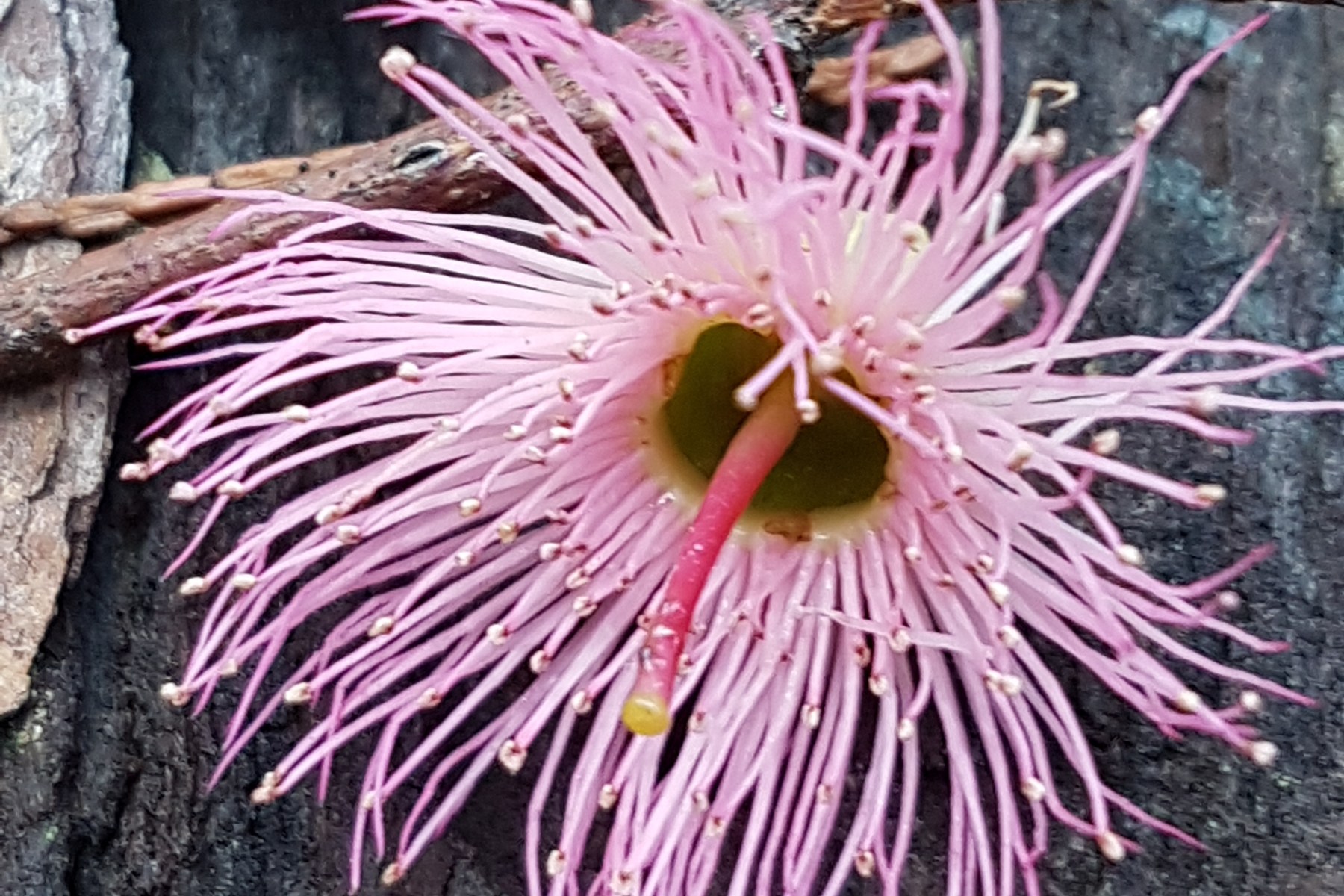
Spring has sprung, and the weather has been magnificent. Perfect for a trip out to Conimbla National Park for a walk and maybe a picnic. Every couple of days there are new plants coming out in flower with a gorgeous display of colours.
Currently the Hardenbergia is out with its clusters of small purple flowers and the spray of blue flowers from the Nodding Blue Lilies are just lovely. There are small Beard Heaths covered in tiny white flowers and of course we can’t forget the green and gold of the many varieties of Wattle currently flowering. It really is worth a visit if you get a chance. It’s even worth heading up there once a week at the moment as new plants are continuously coming out in flower.
A favorite are the orchids and we have photographed over 20 species up there over the last few years. On the weekend the Donkey Orchids were flowering and the tiny Blue Fairies.
Conimbla National Park covers 7590 Hectares and is important because it contains a sample of plant and animal communities of the Central West. Establishment of the Park was first proposed in 1963 and was turned into a National Park in the early 1980’s.
Last week we found some Yass Daisies, which are a threatened species, and this would be about the Western limit for this plant. A little later this year the Flannel flowers will also be coming into flower. The Flannel flowers are rare in the Central Western slopes region so it’s special to have them here in our local National Park.
We are going to have a walk up there on Tuesday the 25th September starting at 9.30am. It is a bring your own everything event. We will start with a quick cuppa and chat then head out to see what we can find. Below is a selection of just a few things that were out a couple of weeks ago. I can’t wait to see what species will be in flower when we get up there. You can book your spot on the walk here

Grevillea ramosissima 
Ruby Urn Heath (Melichrus erubescens) 
Indigofera australis 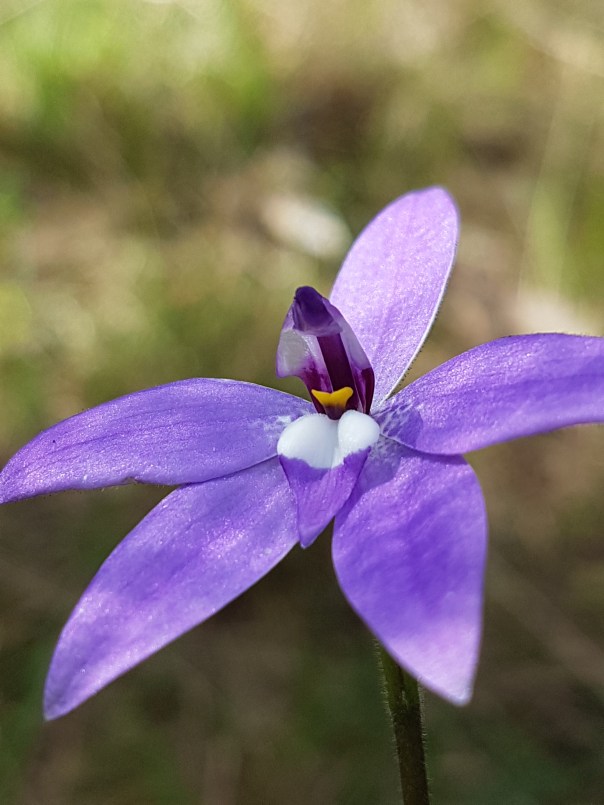
Wax Lip Orchid (Glossodia major) 
Grevillea lanigera spp. Grenfell form). Stunning low growing grevillea. Apparently there are 4 species of Grevillea up around Conimbla but I’ve only been able to find 3 so far! 
Donkey Orchid (Diuris goonooensis) 
Bulbine Lily (Bulbime bulbosa) 
Creamy Candles (Stackhousia monogyna) 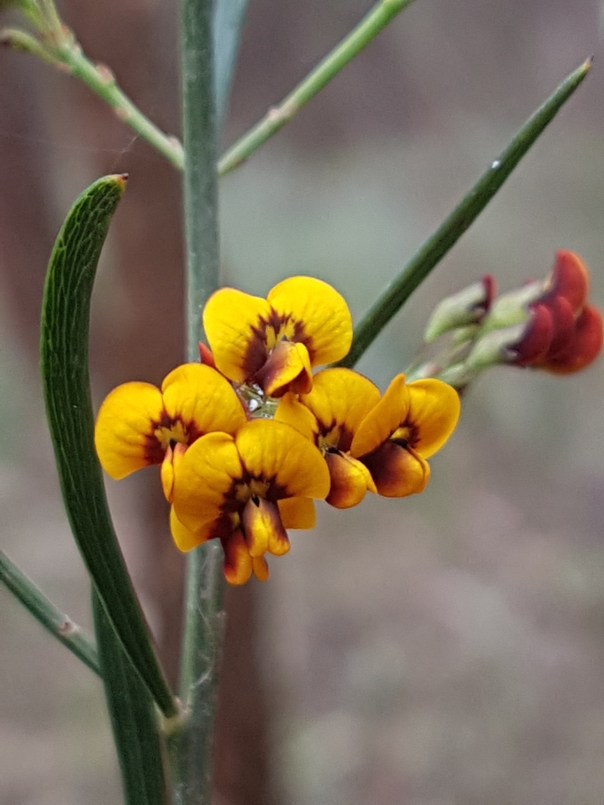
Narrow Leaf Bitter Pea (Daviesia leptophylla) 
Murnong (Yam Daisy)
Cowra Concentrates on Trees for Landcare Week
August 7 marks the beginning of National Landcare Week. To celebrate, Mid Lachlan Landcare (MLL) is launching its new online instruction video, ‘How to Build a Paddock Tree Guard’.
‘Every week is considered Landcare Week by Mid Lachlan Landcare,’ says coordinator Tracee Burke. ‘But for this Landcare Week, we are celebrating all our region’s tree planting achievements and we invite district residents to share their tree stories with us.
‘Trees are so essential’ says MLL’s Education Officer, Trudi Refshauge, who recently spoke to all the Year five and six students at Cowra Council’s Tree Day. The students told me, ‘trees are important for oxygen, firewood and koalas. At the end of my session, they understood our native gum trees support far more beneficial and complex ecosystems, involving native animals, fungi, flora and agriculture.

MLL’s Education Officer, Trudi Refshauge, speaks to Year five and six students at Cowra Council’s Tree Day.
‘The first thing students did when they arrived, was to run to the base of the largest eucalypt tree in the Nature Playground, depositing their bags and drink bottles for safe keeping. I told them that turtles, birds, marsupials, and lizards use trees in a similar way; to navigate and seek shelter and refuge.
Trudi Refshauge shows students how our native gum trees support many beneficial and complex ecosystems, involving native animals, fungi, flora and agriculture through her game ‘DINGO’.

‘District landholders are planting trees across our network and are noticing the important work trees do, functioning as natural pumps and air conditioning units. They tell me, in frosts the air is warmer, in scorching heat, the air is cooler. In areas of waterlogging, a chain of paddock trees can stabilise soil. Research from the Australian National University claims these native paddock trees and shelter belts encourage native insects that protect grasses and crops from harmful and damaging insects.
MLL is currently supporting landholders to plant new paddock trees, protect established old trees and improve habitat and connectivity for the Superb Parrot.
Scattered paddock trees are critical to the Superb Parrot’s survival, says Coordinator Tracee Burke. ‘For a range of reasons, farm trees, including ones that are more than 100 years old, aren’t being replaced when they die. We encourage all landholders to protect old paddock trees and plant new ones.
Funding has come from the NSW Government’s Saving Our Species (SOS) Program and fourteen landholders in Cowra, Canowindra, Cargo, Gooloogong, Manildra, Newbridge and Woodstock (all within the Mid Lachlan Landcare boundary) have been successful in receiving rolls of steel cage mesh, fence posts and native tube stock.
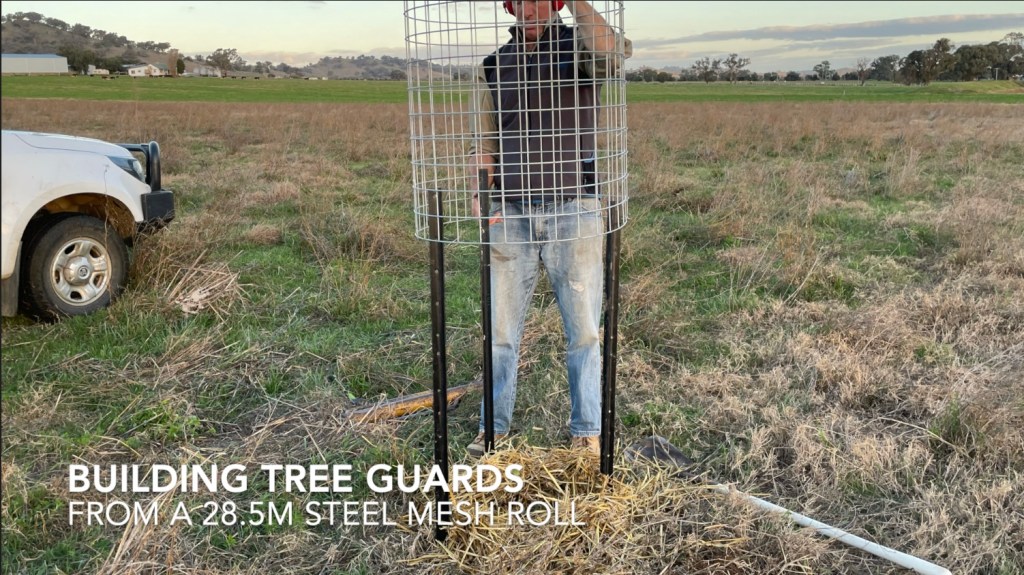
This YouTube video is available to anyone needing help to build a paddock tree cage.
‘Some of our newer landholders needed additional support with the cage construction process so we were grateful our volunteer member, Gordon Refshauge, was willing to help us make a video on his paddock tree cage construction technique,’ said Burke.
Tell us about your tree growing stories; contact midlachlanlandcare@gmail.com
Building Connections -Year 1(2022) Project Summary

Written by: Corey Tatz – ‘Bulding Connections for Biodiversity in the Central Tablelands’ Project Officer
It has been an absolute pleasure hosting our first citizen science project as part of our Landcare and BCT partnership! Thank you to everyone involved for this 12 month pilot project.
We recorded more than 4000 observations and 900 species from a team of 26 observers, with these observations holding 72% research grade. Of the species recorded the top three species were Plants (37.98%), Insects (29.72%), and Birds (12.12%). But we also recorded Fungi (8.8%), Arachnids (4.29%), Reptiles (2.25%), and Mammals (1.82%).

Total Observations and species recorded in iNaturalist for the ‘Building Connections’ project
The Top 10 recorded species are illustrated below. The Common Brown Butterfly (Heteronympha merope) really was common this year as our most recorded species. It was hard to go anywhere without seeing these beautiful butterfly’s during Summer.

Next up is a map of where the observations have occurred across the Central Tablelands. There is so much more of the region we can visit to get observations from. The project has been set up to cover the Local Government areas that best align with our Central Tablelands Landcare Groups.

We are excited to announce that the iNaturalist project has now been extended to 2025. It is hoped that we can really target our efforts in the coming years to focus on particular local geographical areas of interest, or align with other biodiversity species counts such as Frog ID week, bee counts, bird counts, The Great Southern Bioblitz, and other focus areas of interest to our community! If you have suggestions for project focus, please feel free to reach out. Depending on interest and needs of our community we might even be able to offer some photography skills workshops, and some more info sessions on how to use platforms such as iNaturalist.
If you haven’t yet joined, but are interested in taking part follow this link to our iNat community site: https://inaturalist.ala.org.au/projects/building-connections-for-biodiversity-in-the-central-tablelands-nsw
and don’t forget to join our facebook page here.
You can contact myself (Corey) at centraltablelandsbct@gmail.com or you can contact Tracee (Mid Lachlan Landcare) at midlachlanlandcare@gmail.com or ph. 0417 799 425.
Here’s some of the wonderful iNaturalist pictures submitted through the project from around the Cowra/Canowindra area.


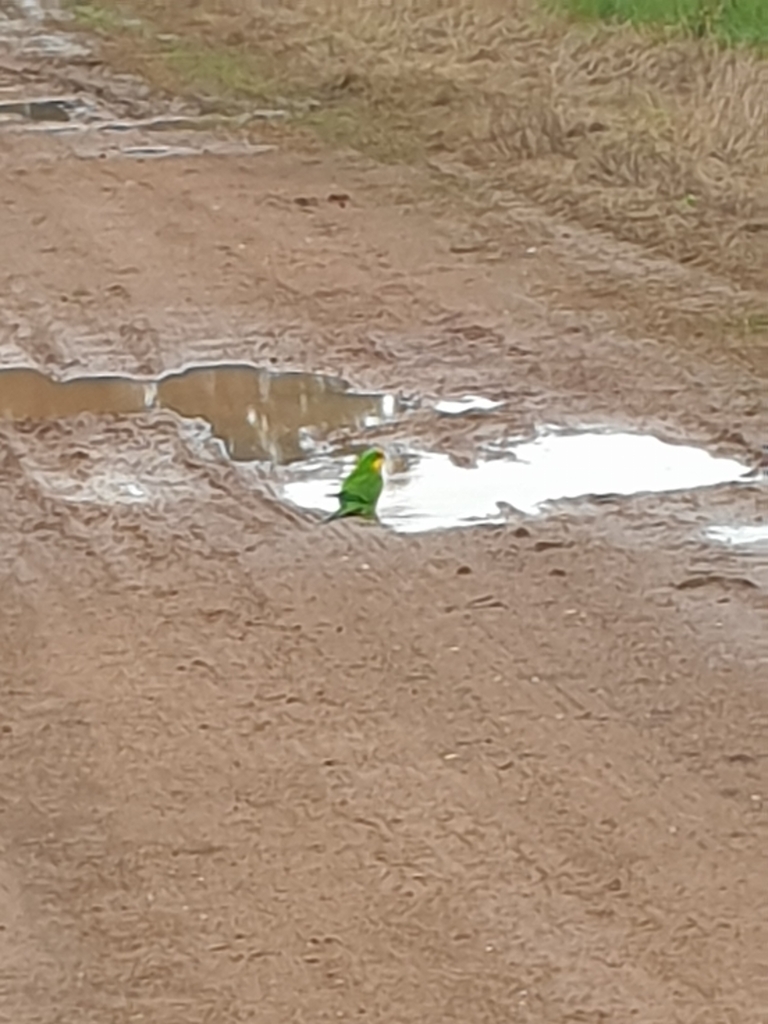



Funding Available – Saving our Superb Parrot
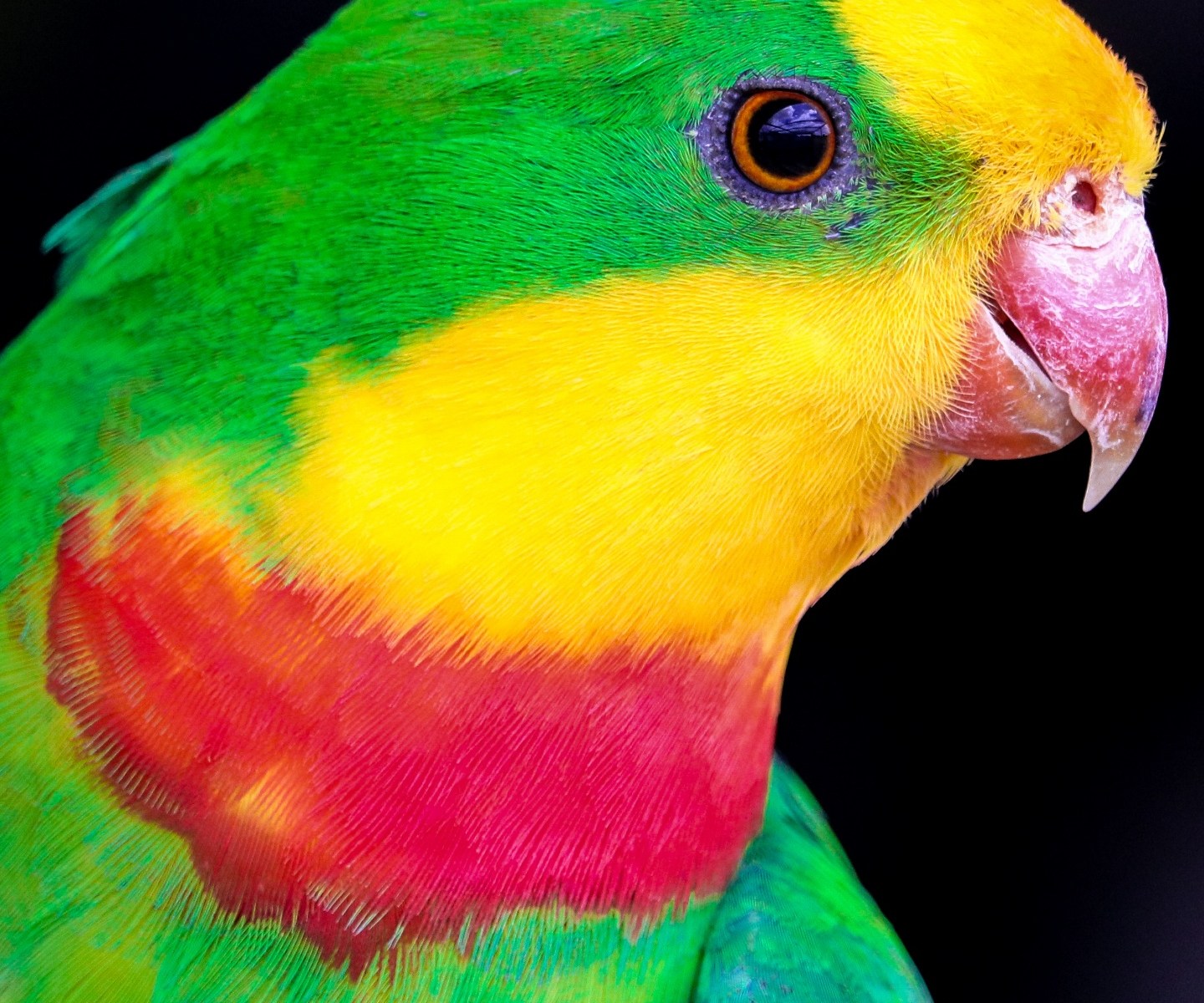
Photo Credit – Jayden Gunn
We are excited to have further funding to continue the critically important work everyone has been doing to put scattered paddock trees back into our farms. Planting trees, for the future, to help the Superb Parrot plus many other species in the long term. Some of the key threats to the Superb Parrot are the loss of living and dead hollow bearing trees and poor regeneration of nesting trees.
This year we also have a small amount of funding to assist you to fence off large old remnant trees to protect them from stock damage so they can continue to provide shade and shelter on your farms for many years to come. There is a fantastic fact sheet, put together by Local Land Services, about the importance of scattered paddock trees in our landscape and for our farms here
Most of you would now be very familiar with the paddock tree work and the mesh we have been using to construct the guards. The cost of this mesh and star pickets has increased significantly again during the last year. We can offer 70% towards the cost of the mesh, star pickets and trees for this project. We can also provide up to $750 towards fencing materials for the large old trees. There are more details in the attached Expression of Interest (EOI). Construction and installation of the guards, fencing and planting of tube stock is to be completed by you. Hopefully we will get a couple of farm depot offers again and will have tractors to load the mesh onto your vehicles when you are ready to collect.
We cannot give exact pricing until all EOI’s are received, assessed and prioritised. The current indication is that a 30% contribution by participants for one large roll of mesh and the pickets needed should work out to be about $350 and less for the shorter mesh rolls. (fingers crossed no more steel price rises in the meantime)
We really hope you would like to be part of this project. If you are not familiar with these tree guards or have any questions, please just give us a call and we can talk you through it.
You can find out more about the Superb Parrot Project and scattered paddock trees on our website here You can also access a Mid Lachlan Landcare region map here to check that you are eligible for funding.
Please contact us midlachlanlandcare@gmail.com if you would like an expression of interest sent through to you. Applications for this grant close on the 19th February.
Eugowra – How you can help
There is the Community GIVIT page where you can donate money here
The Community now has a Eugowra Flood Appeal phone number which is manned from 10am – 4pm daily by locals who are assisting with the recovery at the showground. They ask that if there is no answer, please leave a message or text so that someone can get back to you with the information you need.
The number is 0483 318 383 and it is for people requiring assistance in Eugowra, those who want to offer assistance or for any questions relating to the recovery or the Eugowra Flood Appeal.
There is also a website ‘Eugowra Flood Appeal’ which you can access here. It has heaps of information and in particular it has a ‘help needed’ section that locals can fill out if they have jobs they need help with. It has the specific job and contact details. You can find this section here or navigate to it once you visit the website.
Prior to Christmas there have been community volunteer days along the waterways through private farms cleaning up flood debris and salvaging belongings. Hopefully this can continue after Christmas and if you want to put your name down to volunteer for this work then please email midlachlanlandcare@gmail.com and we will take your details and make sure you are contacted if this work continues.
If you are on social media then the ‘Visit Eugowra’ facebook page is where you can also find lots of information.
We also want to take the opportunity to acknowledge the many people in the Mid Lachlan Region (and beyond) who have been affected by the recent events and want to make sure that if you need help on your farms please contact us and we will try our best to help or point you in the right direction for help. We know many of our committee and members have been personally affected and we want to say take care everyone and look after yourselves.





Ian Cooley & Family – Recognition & Thanks

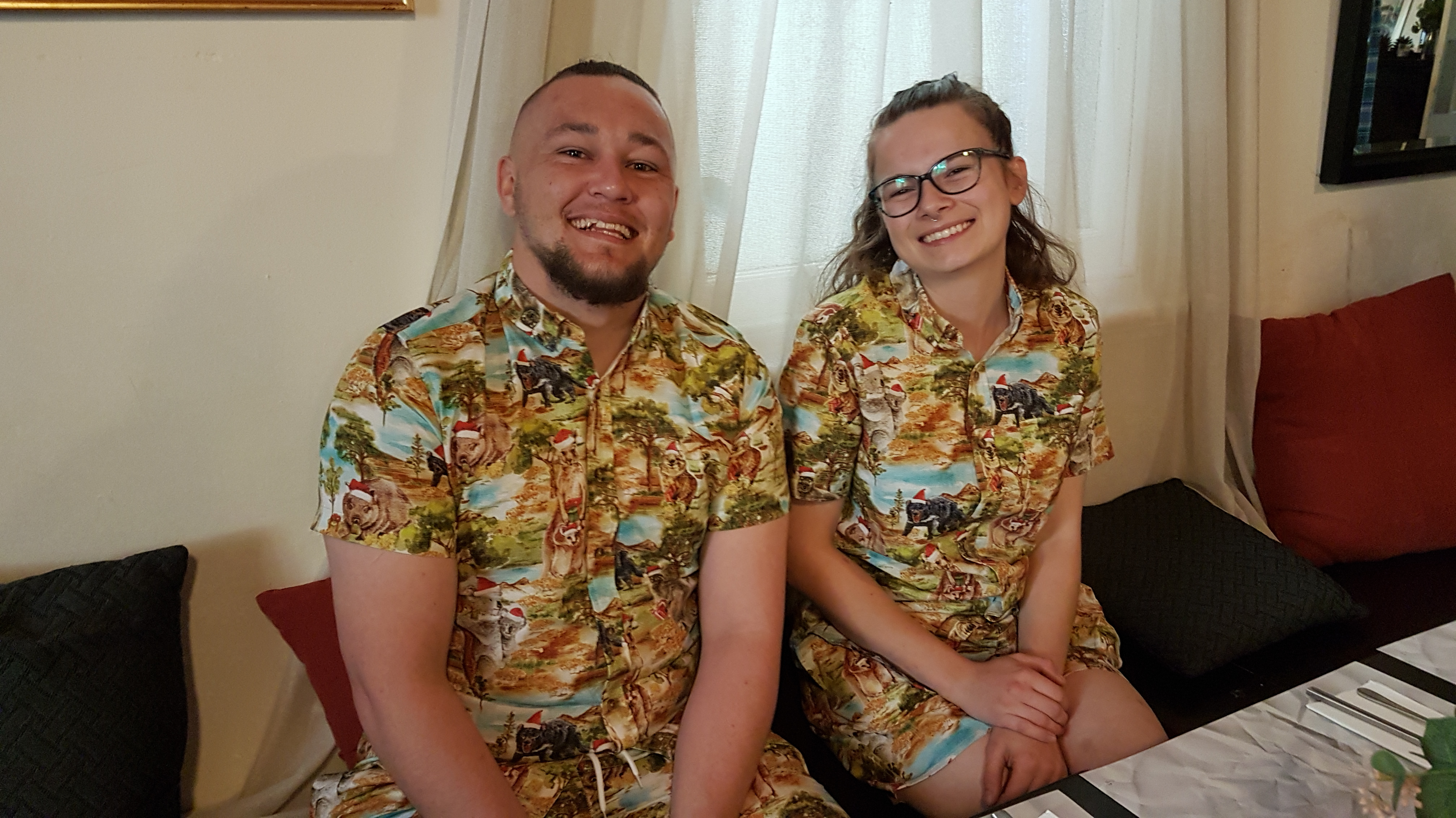
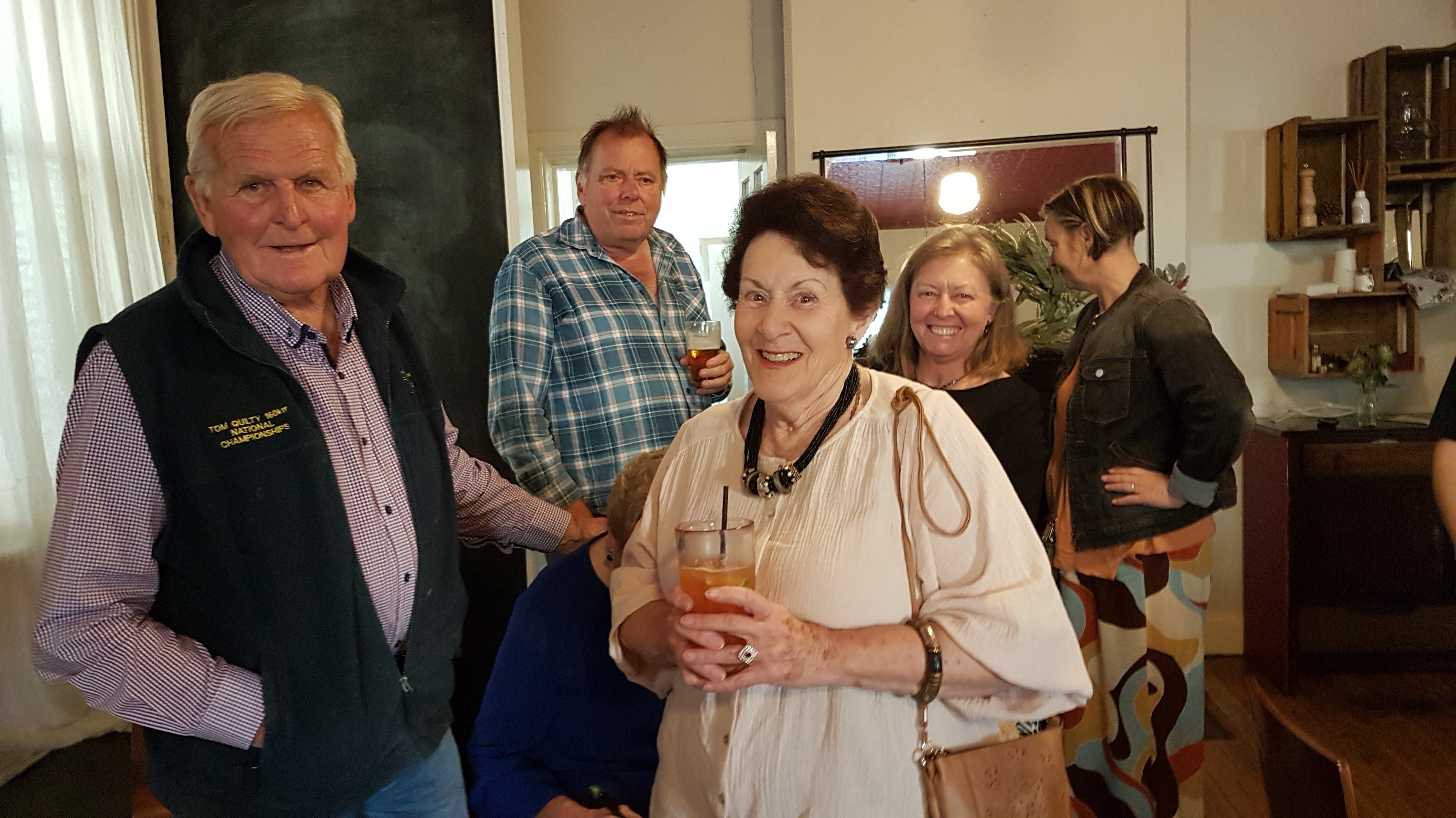
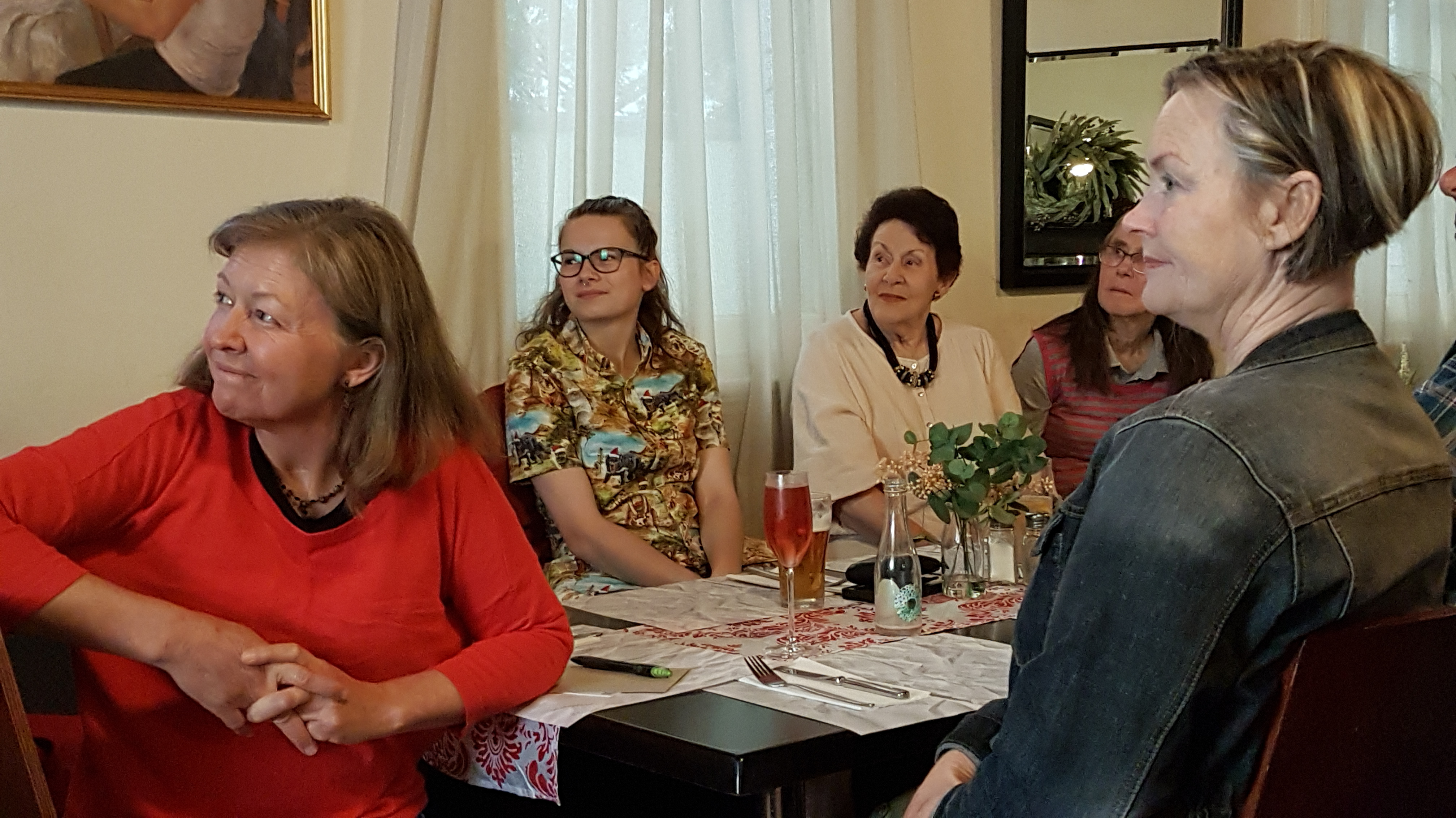
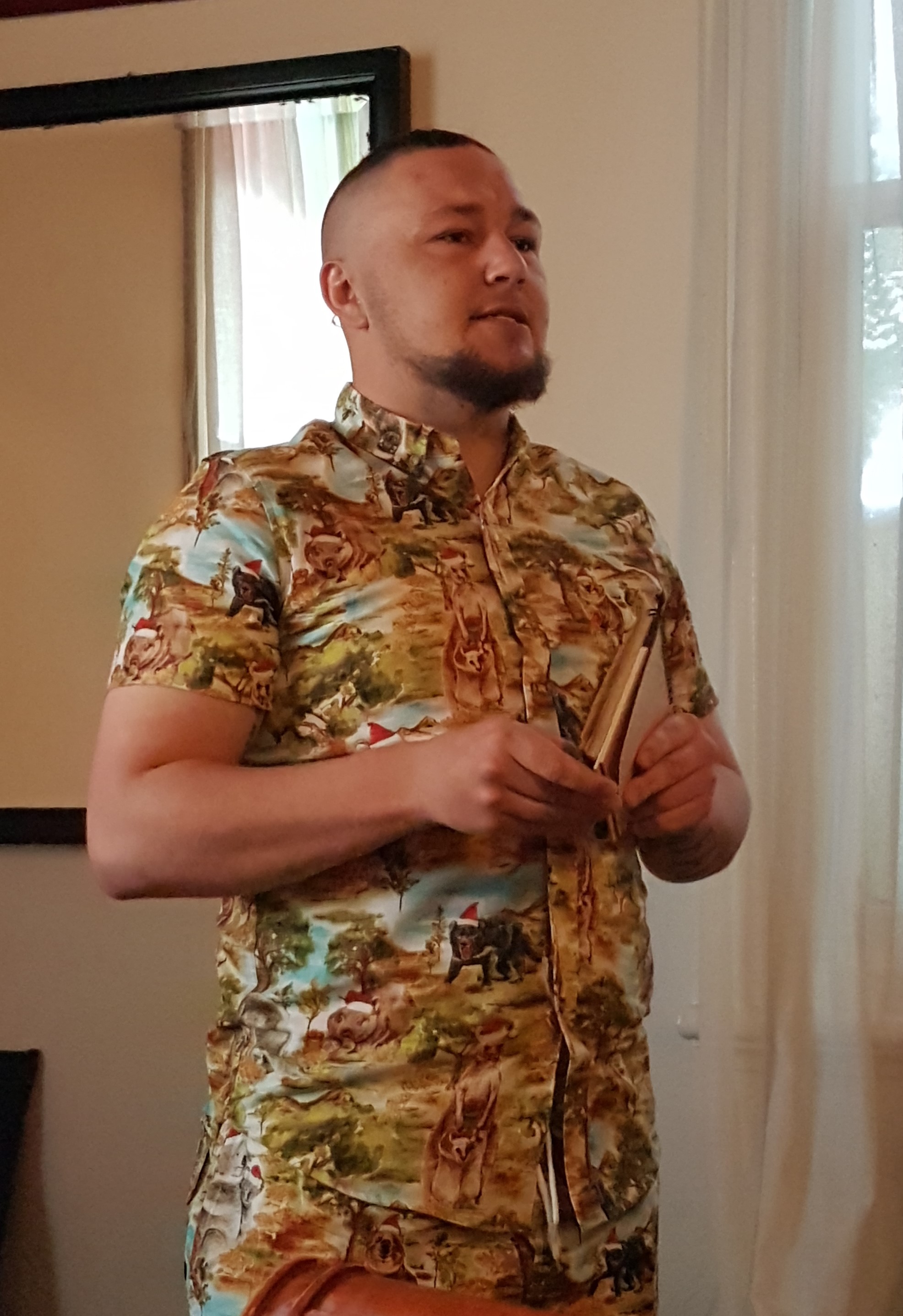
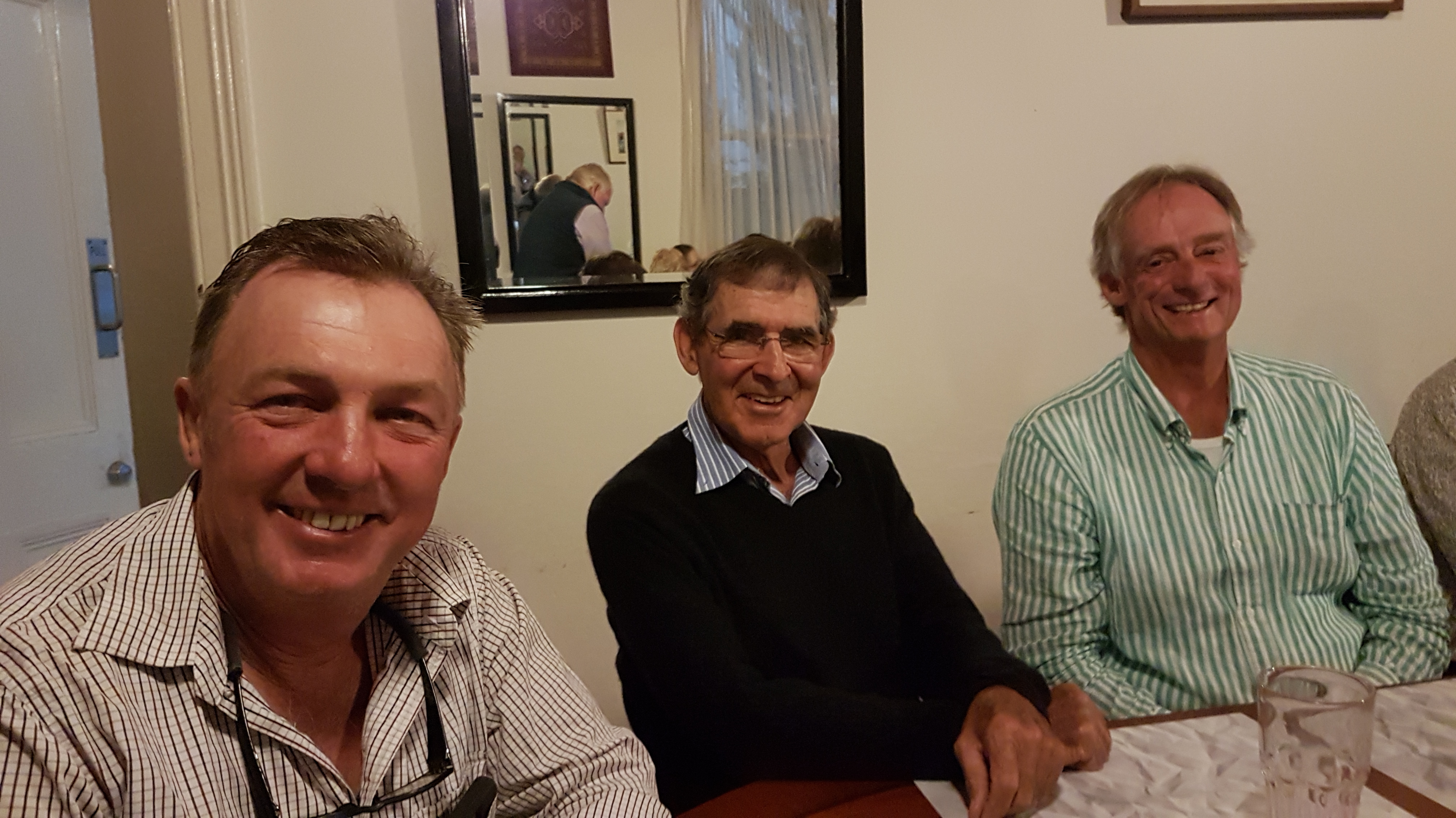
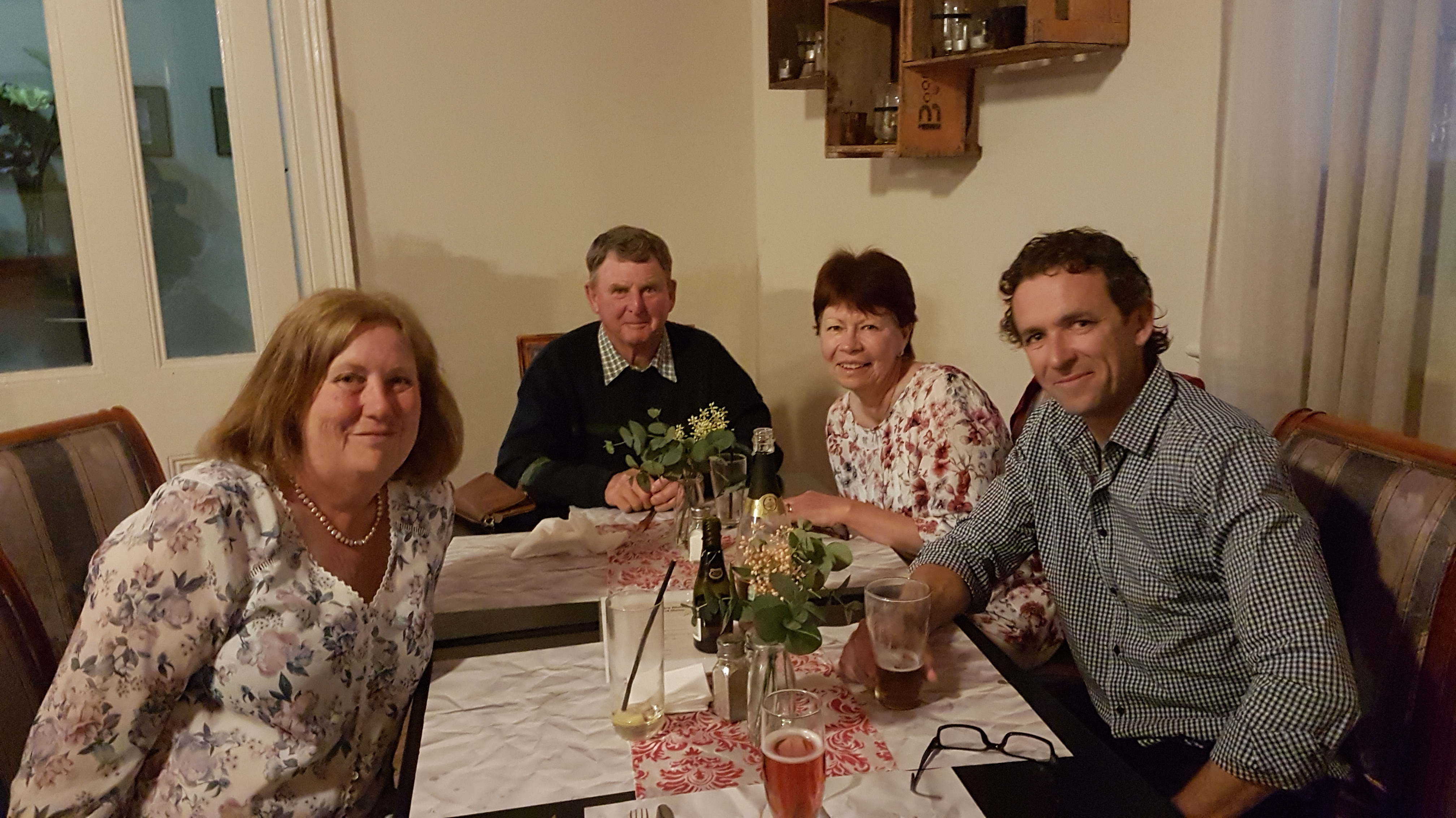
During our Christmas get-together we took the opportunity to surprise Ian Cooley with a plaque and thank you speech from Andrew Wooldridge.
“Ladies and gentlemen of Mid Lachlan Landcare, my job tonight is to say a few words to acknowledge and honour Ian Cooley. Those of you who know Ian would agree that to truly honour him I will be brief and to the point and I will speak with total honesty.
I want to talk about the visitors to the Cooley Farm ‘Westville’ –
- We started counting tour groups that visited Westville in 2000
- Since 2000 there has been 4802 people who have walked around Westville with MLL volunteers and staff.
- Westville has hosted 236 different groups
- Most groups are between 10 -20 people
There have been –
- 23 agency groups made up of mainly public servents
- 10 training groups who made studying Westville part of formal technical training
- 33 community landcare groups from across Australia
- 21 university groups of staff ,undergraduate and post grad students
- 159 visits from 38 different schools from across NSW and ACT.
Most schools have multile visits –
– Bede Polding College has sent student groups every year for 21 years
– Nicole Evans is a high school ag science teacher from western Sydney. Nicole has bought groups from the 3 different schools she has worked at.
It takes a special rare person to open their farm their home, and business to so many complete strangers with such generosity.
What do all these people come to see?
They come to see the Westville landscape. A vision for how the Australian Landcape can produce healthy food and support families and communities.
How we can learn from the past, design a different future and make it happen!
They come to see sophisticated land management practises and a revegetation program which manages soil erosion, water quality salinity, biodiversity and animal welfare….all done by one family over a period of more than 25 years.
They learn that this thing some people call Landcare farming or natural resource management is called business as usual at Westville. It is part of the yearly farming program. Not a special one off project.
Ian has taught me many things about land management –
- I know that if your children/workforce are complaining about the weather during a tree planting job you motivate them by putting the warm dry ute at the far end of the tree row.
- I know that if those same workers are being swooped by magpies while putting on tree
guards you issue them with special protective headwear – that looks a little bit like a plastic
ice cream container – and the job must go on
Ian Cooley You are a leader in our community – You have taught us to get on with it
Ladies and gentlemen – it should be done, in can be done, the Cooley family are doing it.“


 Mid Lachlan Landcare