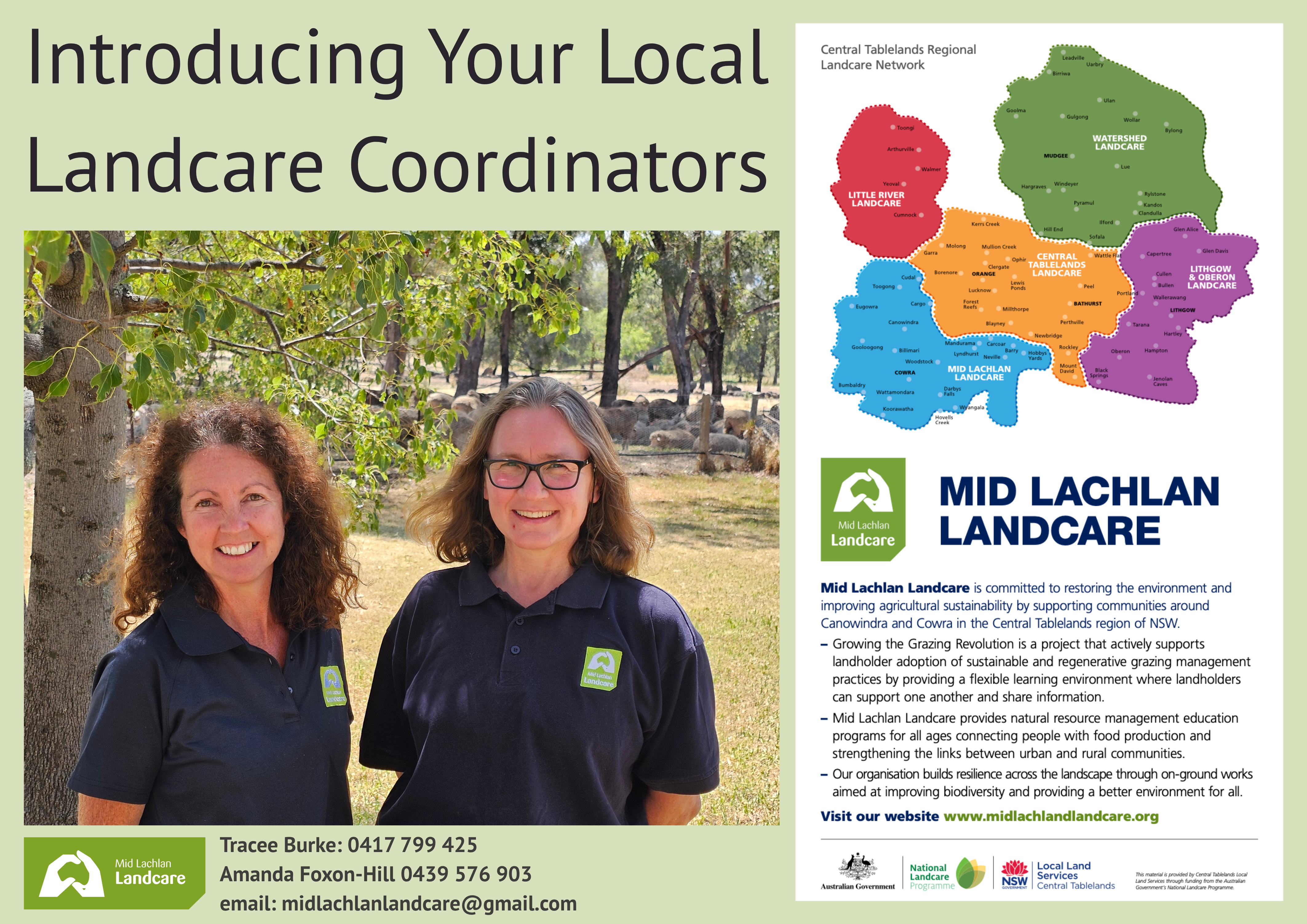
Mid Lachlan Landcare
supporting sustainable agriculture and restoring the environment
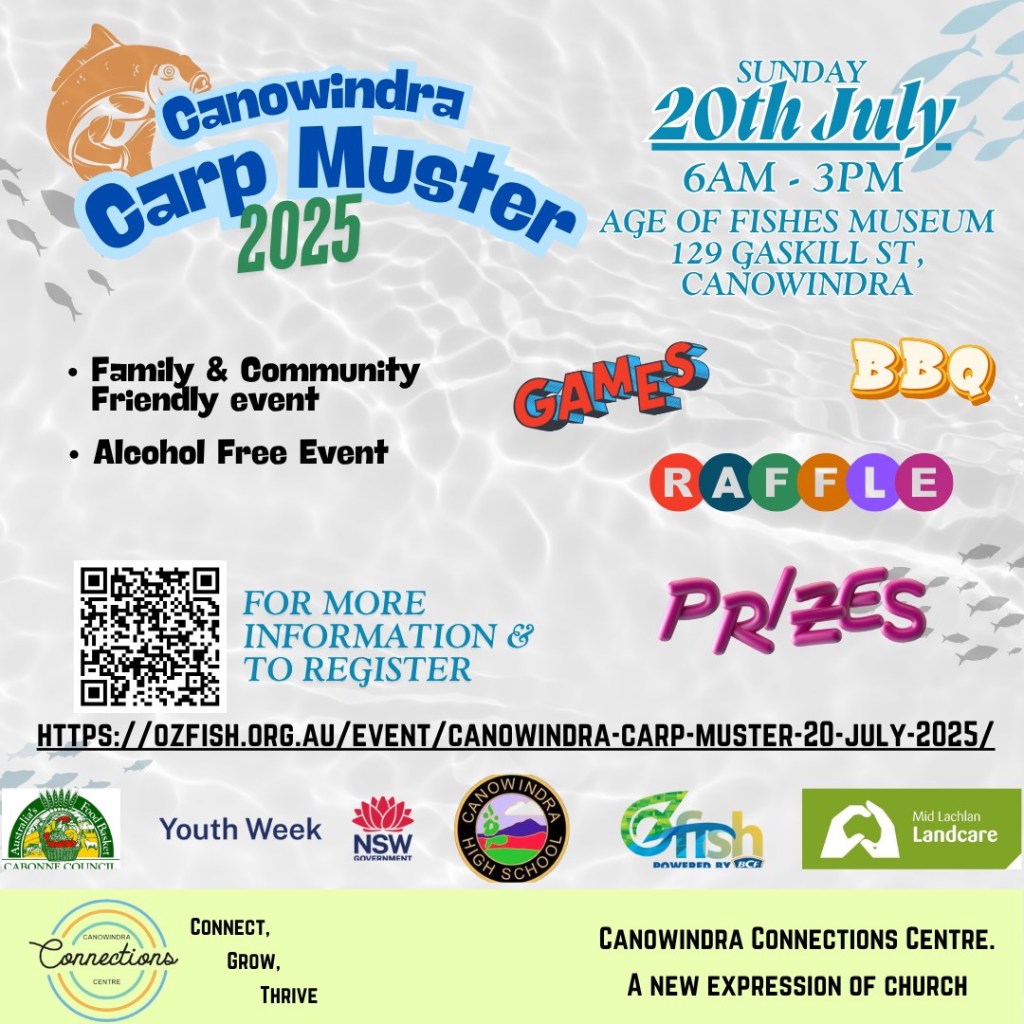
Join us for the 2025 Canowindra Carp Muster this July!
Mid Lachlan Landcare will be joining the Canowindra Connections Centre & Oz Fish for a fabulous day at the Belubula River. Carp cause so much damage to our waterways, muddying up the water for our native fish & competing for food and habitat. While we’re out there we’ll also be encouraging everyone to bring home a bag of rubbish – healthy rivers are essential for all life so let’s get behind this great initiative and clean up Canowindra’s water front areas.
After the event we’ll be taking the Carp and turning it into fish-based fertiliser. This will be our first venture into this waste-to-resource initiative so who know’s how that will go but we’ll definitely be sharing the journey with you. Here’s some information on Charlie Carp, a commercial Carp based fertiliser that’s our inspiration and here’s an interview by Cowra News from nine years ago with founder Bob McFarlane.
Come along as a volunteer helper
We’re looking for helpers on the day for the following tasks:
Barbeque duties- cooking, serving and keeping the area clean.
and
River Walkers – Looking out for muster participants & assisting with rubbish collection.
- Early shift 6am – 9am
- Mid morning shift 9am – 12pm
- Lunch shift 12pm – close (no later than 3pm including clean down)
Drop us an email if you’d like to help out.
This promises to be a great day and we can’t wait to see you all out there!
Get your rods ready and your game faces on – because the Canowindra Carp Muster on Saturday, 20th July 2025 is bringing EPIC prizes to the table! 
Here’s what you could win  :
:
 BIGGEST CARP – across three age categories:
 Under 12s
12 to 16
17 and over
 MOST CARP CAUGHT – as a team or a solo legend!
 UGLIEST CARP – because beauty is in the eye of the angler!
 MOST RUBBISH COLLECTED – for those who want to leave the river better than they found it
This is more than just a fishing comp – it’s about community, caring for our local river, and having a blast while doing it!
 Meeting at the Canowindra Fish Museum
 Saturday 20th July 2025
 Register here: https://ozfish.org.au/event/canowindra-carp-muster-20-july-2025
Grab your bait bags from Canowindra Connections Centre, bring your mates, and let’s see who reels in the glory! 
Join us at the Central Tablelands Regional Landcare Muster
You’re Invited to the 2025 Central Tablelands Regional Landcare Muster!
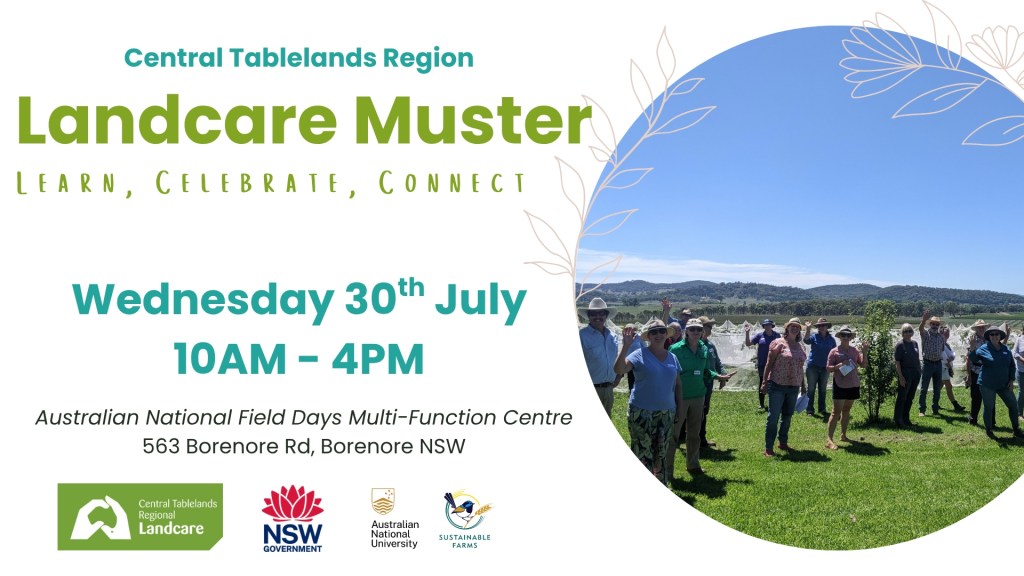
Join fellow volunteers, community members, partners and landcare champions on Wednesday 30 July at the Australian National Field Day site near Orange for a day of connection, collaboration, and big-picture thinking. The Regional Muster is your opportunity to share experiences, explore new ideas, and help shape the future of Landcare in the Central Tablelands. Whether you’re new to Landcare or a long-time advocate, your voice and input are valued.
🌟 Got something to share? We’re also inviting expressions of interest for short, engaging lightning talks during the Muster. If you have a story, project, or insight you’d like to present in 5 minutes or less, let us know when you register or get in touch directly.
Calling all Landcarers! 🌾
Whether you’re a seasoned steward of the soil or new to the Landcare movement, the Central Tablelands Regional Landcare Muster is your space to connect, learn, and grow 🌿
🗓 Wednesday 30 July | 📍 Australian National Field Days Multi-Function Centre
🎟️ Register now: https://events.humanitix.com/ct-regional-landcare-muster
Join fellow volunteers, community members, partners and Landcare champions for a day of connection, practical discussions, and inspiration. Let’s shape the future of Landcare together 💬🌏
Strengthening Connections to Country
Campfire Gathering & Book recommendations from our team for NAIDOC Week.
Last month three Mid Lachlan Landcare team members joined others in our Central Tablelands network for a Campfire day with our Aboriginal Partnerships leader Den Barber. We met at Ganguddy-Dunns Swamp on the Cudgegong River in Wollemi National Park – Wiradjuri land. I didn’t take many pictures but might be able to picture it if I describe it a little.
Imagine being in a clearing encircled by apple box, white gums and bloodwoods. You can hear Lyrebird song reverberating through the trees and feel ice-cold gusts of wind ruddy up your cheeks and leaves gloveless hands throbbing. Our bones remind us that out here, we’re fragile & vulnerable.
Listen to the river meandering along behind us. It’s full of fresh water muscles – evidence of which was scattered on the banks where platypus and Rakali had feasted. Sense rustling in the acacia groves. Taste eucalyptus oil in the leaves as they ignite. Smell the smoke of our camp fire as it wafts above the orange flames, flames that flicker with opportunity and prommise. Flames that draw us closer together.


Over the day, our thoughts and feelings about our Landcare work, our connection to this country and our dreams for the future flowed out as we huddled in a circle under our blankets and listened to each other and then ourselves.
NAIDOC week 2025 runs from Sun, 6 to Sun, 13 July.
Let’s celebrate the achievements of Aboriginal and Torres Strait Islander peoples and recognise the rich history and culture that makes our Australian home so special.
We wanted to mark this important week by sharing some of the books & readings that have shaped our approach to caring for this beautiful place we call home.

Bruce Pascoe, Dark Emu 
Duane Hamacher, The First Astronomers 
Corey Tutt, The First Scientists 
Billy Griffiths, Deep Time Dreaming 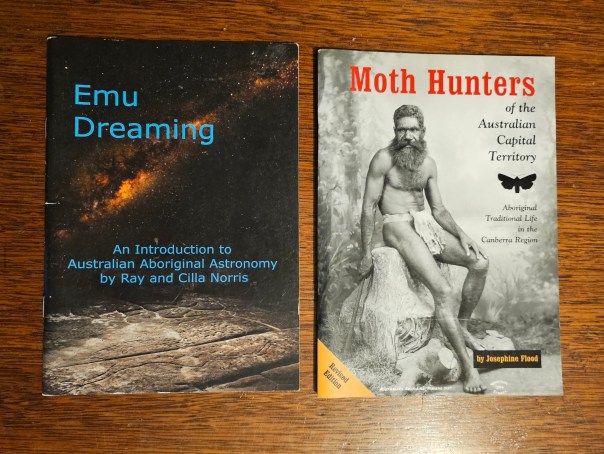
Ray & Cilla Norris, Emu Dreaming. Josephine Flood, Moth Hunters of the ACT 
John Blay, On Track 
Melissa Lucashenko, Edenglassie 
Alexis Wright, Praiseworthy (Audio book) 
Dick Roughsey, Turramulli the Giant Quinkin 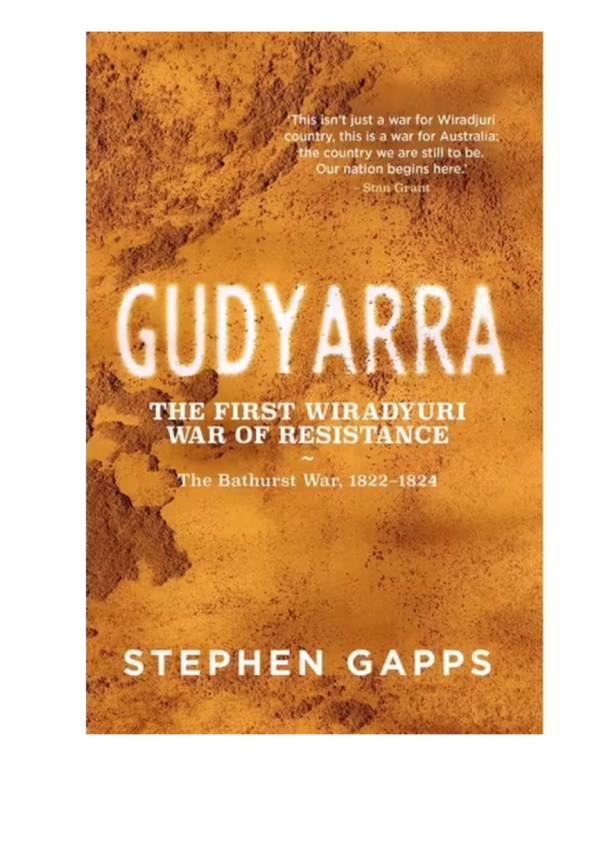
Stephen Gapps, Gudyarra 
Bruce Pascoe, Black Duck 
Victor Steffensen, Fire Country
Wendy Bowman, Mid Lachlan Landcare Chair.
Dark Emu by Bruce Pascoe and Gudyarra by Stepen Gapps.
“I loved both of them and would highly recommend them to others. The reason I loved these books is because I learn something new and fascinating, I was shocked and greatly sadden by the events in the War of Resistance and equally as shocked and saddened by the knowledge lost that Bruce Pascoe is now trying to find”.
Tracee Burke, Mid Lachlan Landcare Coordinator
The First Astronomers – How Indigenous Elders read the stars by Duane Hamacher with elders & knowledge holders
The skies out here on Wiradjuri land are awe inspiring. This book shows how human culture has been shaped by the stars.
Ken Hutchinson. Billy Goat Hill Appreciation Society.
Dick Roughsey’s Turramulli the Giant Quinkin.
“We used to read his books to our children – they are set on the cape York peninsula”
Dick’s stories entertain as they teach us about family law & kinship.
Scott Hickman – Mid Lachlan Landcare’s Grazing Group Leader
Billy Griffiths Deep Time Dreaming, Uncovering Ancient Australia.
You can’t work with the soil like we do and not wonder about its history.
Scott also recommended Fire Country – How Indigenous Fire Management Could Help Save Australia
By Victor Steffensen & Black Duck, A Year at Yumburra by Bruce Pascoe.
Marion Mitchell, Mid Lachlan Landcare Committee/ Accounts
Praiseworthy by Alexis Wright
“This book is set in a fictional Australian town grappling with climate change, Aboriginal sovereignty, and the legacy of colonialism. It’s a story that blends realism with elements of fantasy and Aboriginal cosmology, exploring themes of survival, cultural identity, and the interconnectedness of past, present, and future.”
Edenglassie by Melissa Lucashenko
“A novel that explores the impact of colonialism on Indigenous Australians, particularly in the Brisbane area, through dual timelines. The story interweaves the lives of characters in the 1850s and 2024, highlighting the ongoing consequences of dispossession and resistance.”
“I love her dedication to language both the clan language of old and modern blak language spoken by mob in Brisbane in 2024.”
Amanda Foxon-Hill, Mid Lachlan Landcare Coordinator.
On Track: Searching out the Bundian Way by John Blay.
“I’m very much a non-fiction fan and am also an immersive reader so I read this while hiking in the Snowy Mountains. The book really came alive for me as I walked part of this ancient Aboriginal track that spans some 360km from Targangal (Kosciuszko) to Bilgalera (Fisheries Beach) in Eden on the NSW far south coast. There’s such a great collaborative partnership behind this book and it’s been fascinating to watch this story unfold from the research that went in prior to the 2010 surveying walk to government recognition in 2013 and then this book in 2015. Proof that stories move us in more ways than one. This book also introduced me to ‘Moth Hunterd by Josephine Flood & Emu Dreaming by Ray & Cilla Norris”. You can read more about the Bundian Way here.
The First Scientists by Corey Tutt.
“Corey, founder of Koori Science is a fantastic Kamilaroi young man who I first came across when he was interviewed on the Fizzics Education podcast back in 2019. His book really helped me through my science teaching post-grad course, introducing me and thousands of others, I’m sure, to the many ways Aboriginal & Torres Straight Islander culture is rooted in scientific thinking. I particularly liked the chapter on how Wiradjuri clans created bush ovens in the ground, using clay balls to hold the heat. I’d really love to try that one day!”
Do you have any books you’d add to our NAIDOC reading list? Please feel free to contact us with your suggestions!
Roots, Shoots & Gum Boots – A Family Day Out for the Glossy Black Cockatoo
Our third planting day for the Glossy Black Cockatoo with Eugowra Catchment Landcare out at Mandagery was a great success. The light morning frost quickly thawed thanks to the gentle warmth of the winter sun, making for perfect planting conditions.
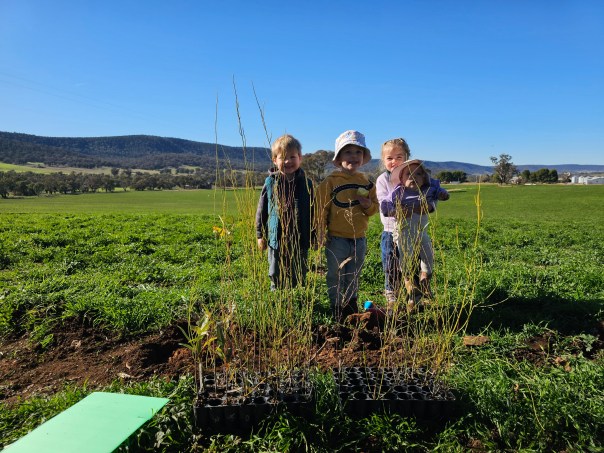
The day had a lovely family feel thanks to our willing little workers who impressed us with the care and attention they lavished on both the trees and creepy crawlies they found along the way. It was particularly heart melting to hear one of our younger helpers exclaim to their parent ‘I’m so proud of myself. I’ve made great choices all day!’. Just delightful.


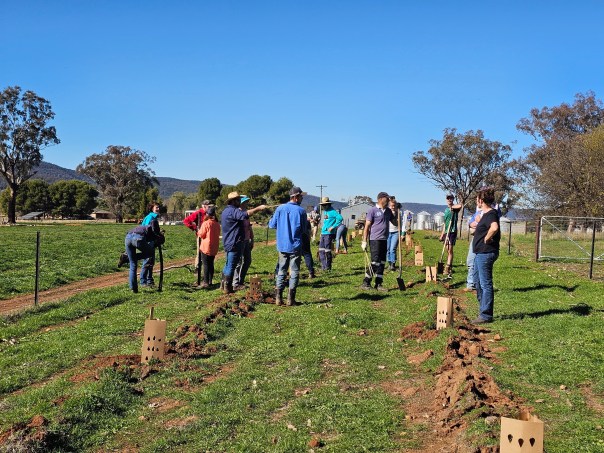


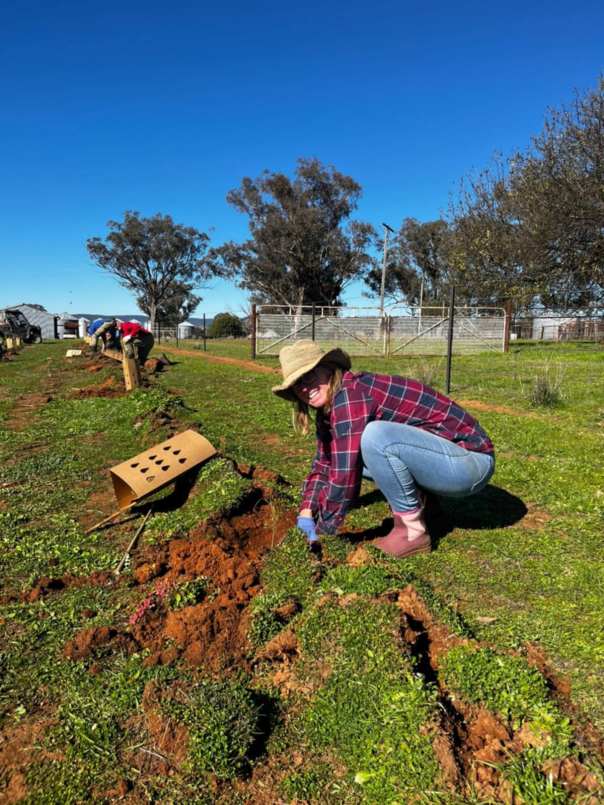
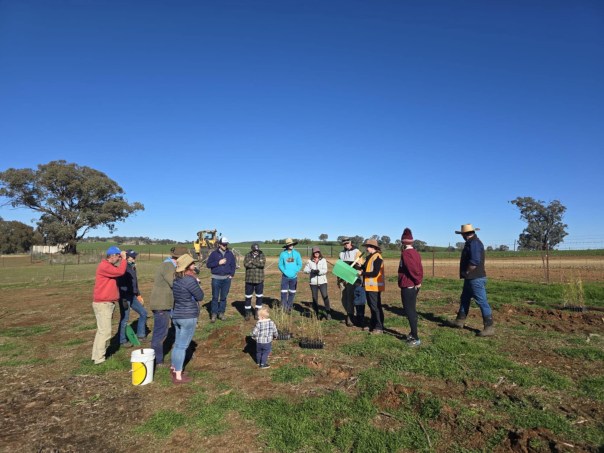
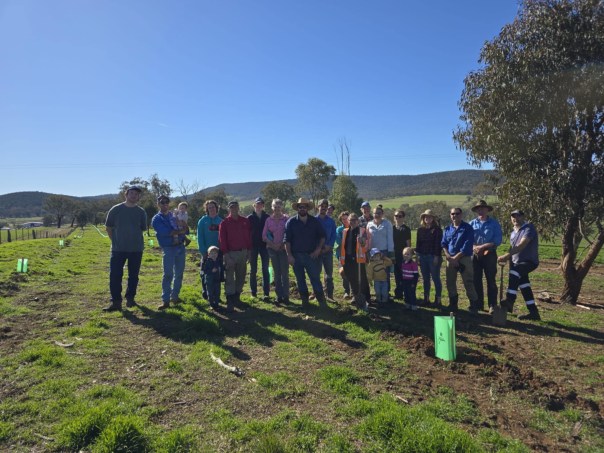

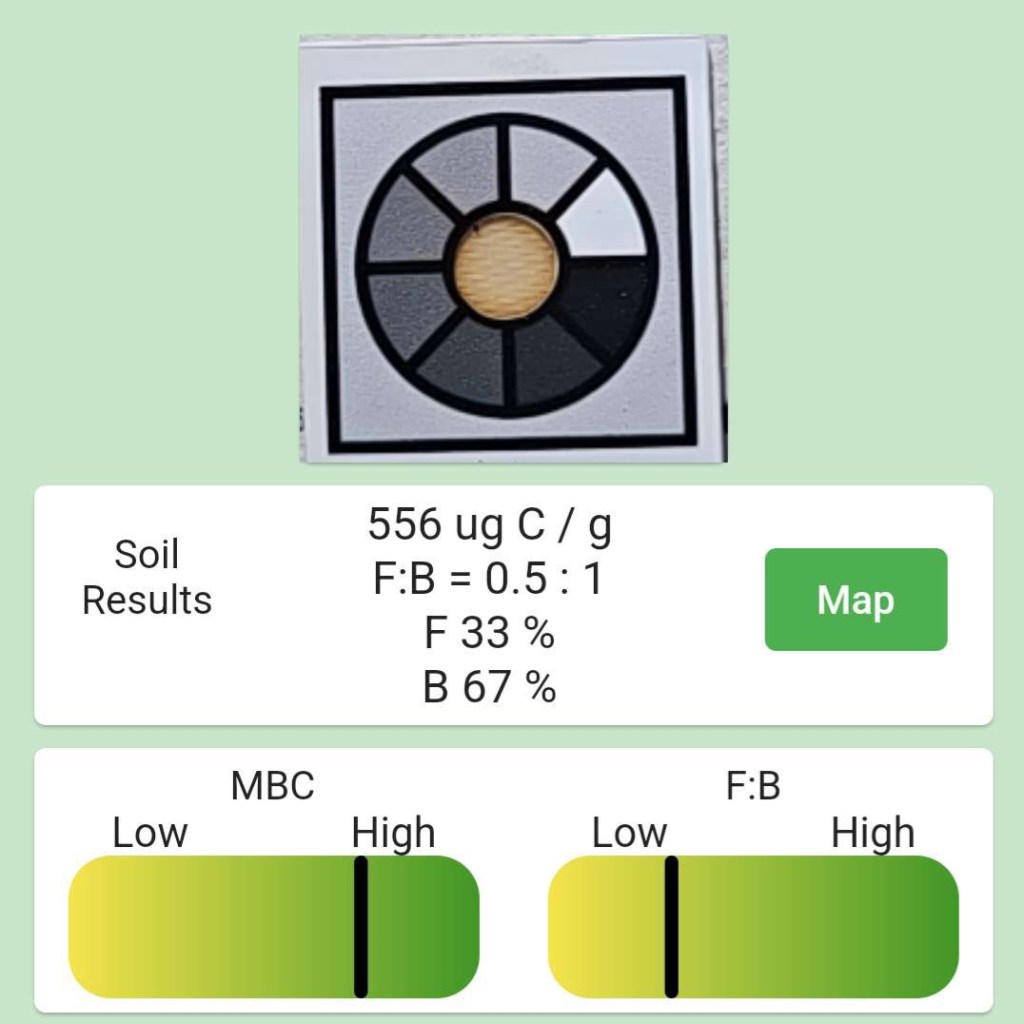
Soil samples were taking during the day and analyzed with our Microbiometer & a simple pH kit. The site had been prepared by ripping rows where the trees were to be placed, that plus recent rain helped make planting relatively easy going. Temperatures on the day were fresh with a light morning frost.
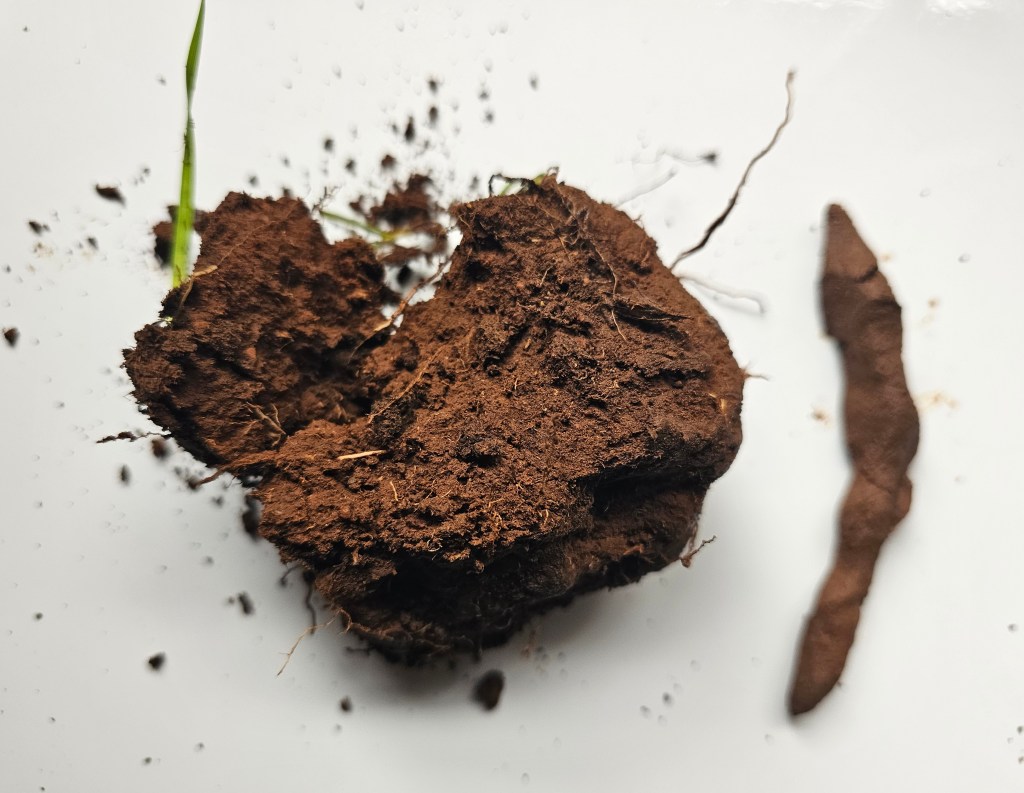
We deterimined soil texture using the ribboning technique which you can review here and found it to be a loamy sand. Loamy Sand and Sandy Loam soils are common to our area. They typically hold less water than heavier, clay-rich soils and as such are fast draining – a feature that many native species like. One issue with soils like this is nutrient availability – popping in some acacias can help boost that by pulling nitrogen out of the air and fixing it into the soil.
The are we were planted was mostly covered by short grass with not much species diversity at this stage and we recorded a total microbe count of approx 500 ug C/g with a Fungi: Bacteria ratio of 33:67. These results are pretty encouraging – it’s hard to give an exact benchmark for what constitutes a good vs bad site as factors such as the weather, ground cover, soil type, site geology and site management history all play a role but as a very general rule of thumb, a ratio like this is indicative of early succession grasslands. So we’re well above a ‘degraded’ or disturbed level where weeds dominate but are yet to fully reach the level of a complex, natural grassland with clover and other forbs.
The site pH sits around 5.5-6 which means its slightly acidic – a situation prefered by many Australian native plants so all good there!
While we planted we were serenaded by the sweet sounds of a butcher bird before being joined by a boystrous group of Superb Parrot! We captured some of their chatter & Shenanigans to share with you all. I’d like to think they’d flown across to encourage us on our planting & to sing up the soil microbes, water and sun so that these trees will grow tall and strong. Whatever they were thinking we were thrilled to have them grace us with their company as we worked this beautiful patch of Wiradjuri land for them.
Many hands made light work and in what seemed like no time at all we were back in the shearing shed for our sausage sizzle. Yum!


We ended up planting over 300 trees which was a great effort and one which we hope our little helpers will continue to care for as they and the trees grow into something maginficent.
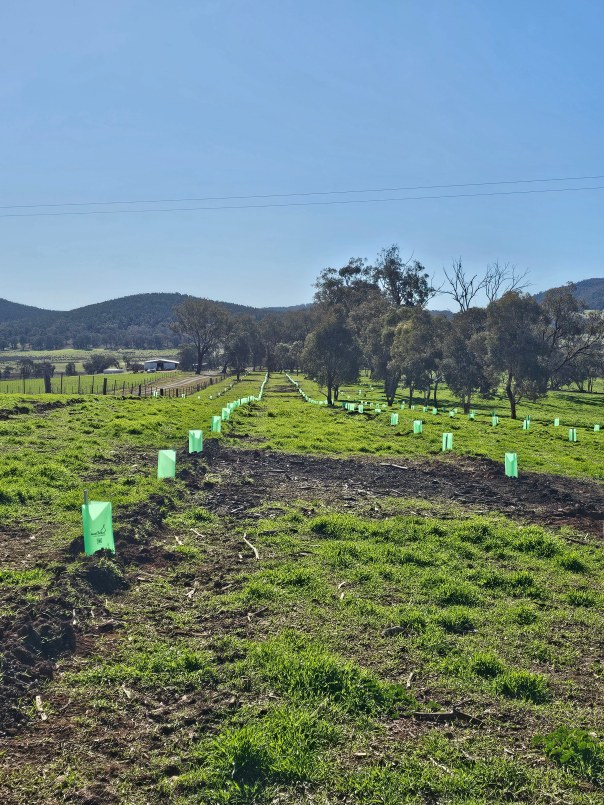
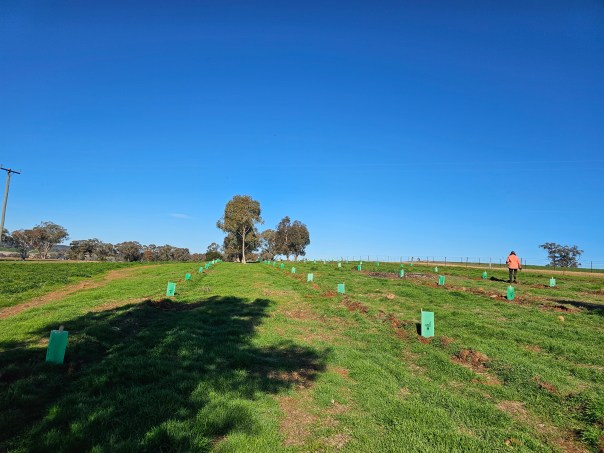

This project is possible thanks to funding from Bupa Australia & Landcare Australia. It’s part of the planting of 80,000 trees, shrubs & grasses across the country, linking environmental health with community well- being.
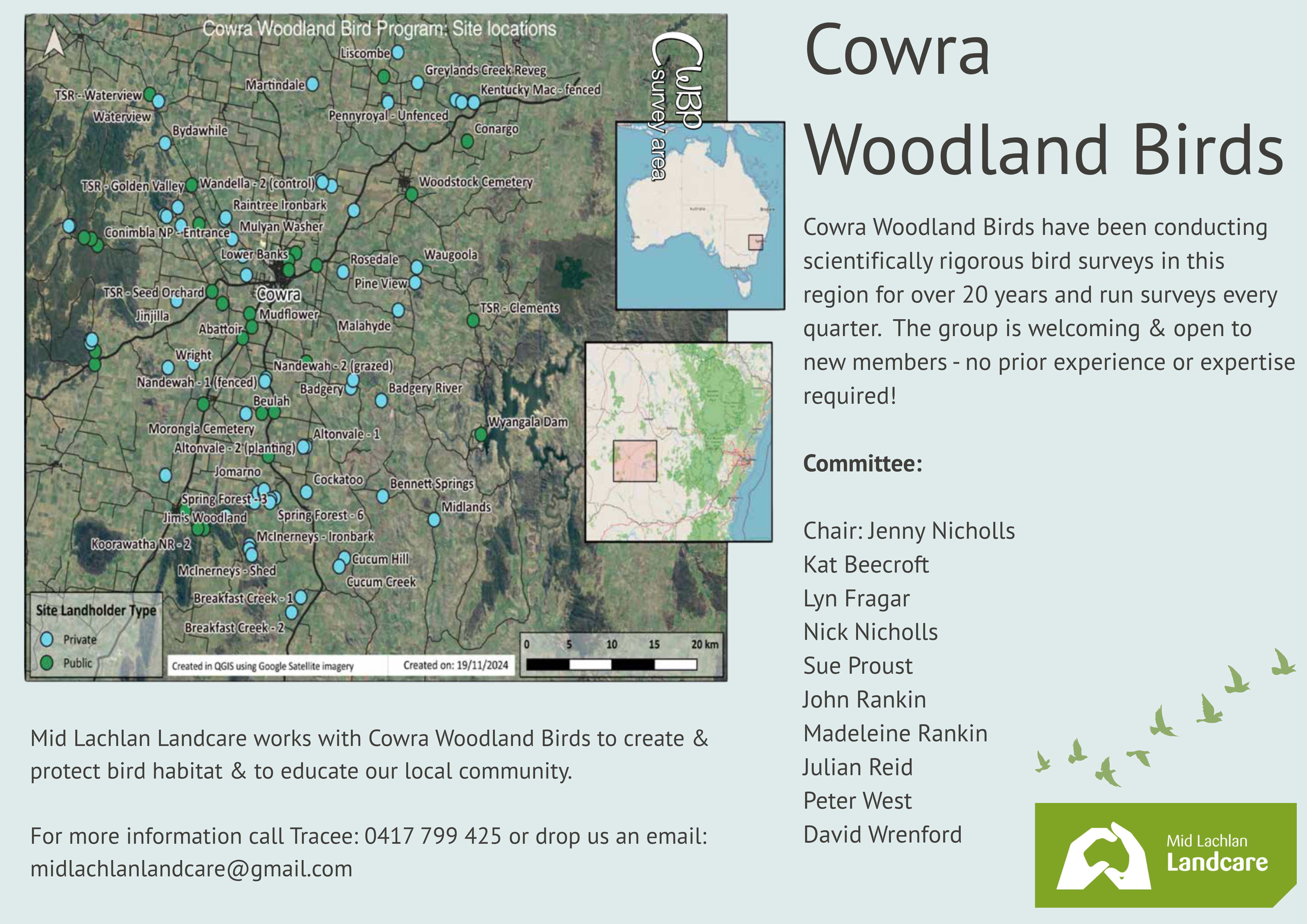
Trees for Birds – Cowra Woodland Birds Spring Forest + Glossy’s planting dates for June-July
‘It is the trees who bring me the answers. Or, rather, the right questions. Trees have their own language, booming from the bone, singing in their sap, sighing on the wind – most of the time we’re just not listening’
That quote is from Understory. A life with trees by Nature Writer Inga Simpson. Inga grew up in Grenfell and I was lucky enough to meet and be taught by her at a recent Nature Writing day hosted by our neighbours at Weddin Landcare as part of the Henry Lawson Festival.
I definitely feel I’ve been shaped & inspired by the trees I’ve grown up around and am always looking for opportunities to go out and hug a few more. If that sounds like you, and you’re passionate about restoring Box Gum Grassy Woodland & other bird-friendly habitat read on!

Spring Forest Planting with the Cowra Woodland Birds Group:
The Cowra Woodland Bird Program survey group (a long running Birdlife Australia program) is having a tree & shrub planting event on Wednesday 2nd and Thursday 3rd July at ‘Spring Forest’, a private property with a conservation covenant. They would love your help, welcoming any other helpers to assist getting some plants in the ground!
This is the second planting on this 50 hectare paddock site, which connects to rare flatland ironbark and woodland habitat. Approximately 300 trees/ shrubs were planted last year and they are hoping to plant and guard another 600 this July.
During the last two day planting get-together, in April 2024, 75 bird species were noted, including Barking Owl, Hooded Robin, Diamond Firetail, Turquoise & Superb Parrots and Black-chinned Honeyeater. Just to name a few!
Spring Forest is approx. 25km south of Cowra. Volunteers are welcome to come and join in both days or drop in for an hour or two across the event – every little helps. For anyone thinking of volunteering for the two days, there is camping available on site but note, it’s fully self-contained as there are no services out there. Otherwise there are lots of accomodation options in and around Cowra including the Cowra Holiday Park which gives discounts for birders if you mention you’re with our project.
Tracee and I will be heading over there for one of the days so we hope to see you there but for further questions about Spring Forest Planting please contact the project co-ordinator Dave.
Spring Forest Project Coordinator Contact: Dave Taylor by email: david (at) taylorecology (dot) net – writing it like that prevents spam apparently!
Glossy Black Cockatoo Project Planting:
This project is part of getting more than 80,000 trees and plants in the ground across Australia and has been made possible due to generous funding from Bupa and Landcare Australia, and it’s linking environmental health with community wellbeing. Locally Mid Lachlan Landcare are delivering this project with the help of Eugowra Catchment Landcare & Kangarooby Landcare.
We’re planting between Conimbla & Nangar National Parks on private property to boost habitat connectivity & enhance feeding opportunities across the corridoor by planting the Glossy’s favoured feed trees (She Oaks) plus complimentary understory species & nesting trees.
Saturday 21st June with Eugowra Catchment Landcare in Mandagery from 10am – 1pm. Book here
Saturday 5th July in Canowindra from 10am- 1pm – This event is now full, so thank you!
And our last planting date for this project is:
Saturday 19th July on the Nangar road from 10am – 1pm. Book here
Volunteering with Mid Lachlan Landcare
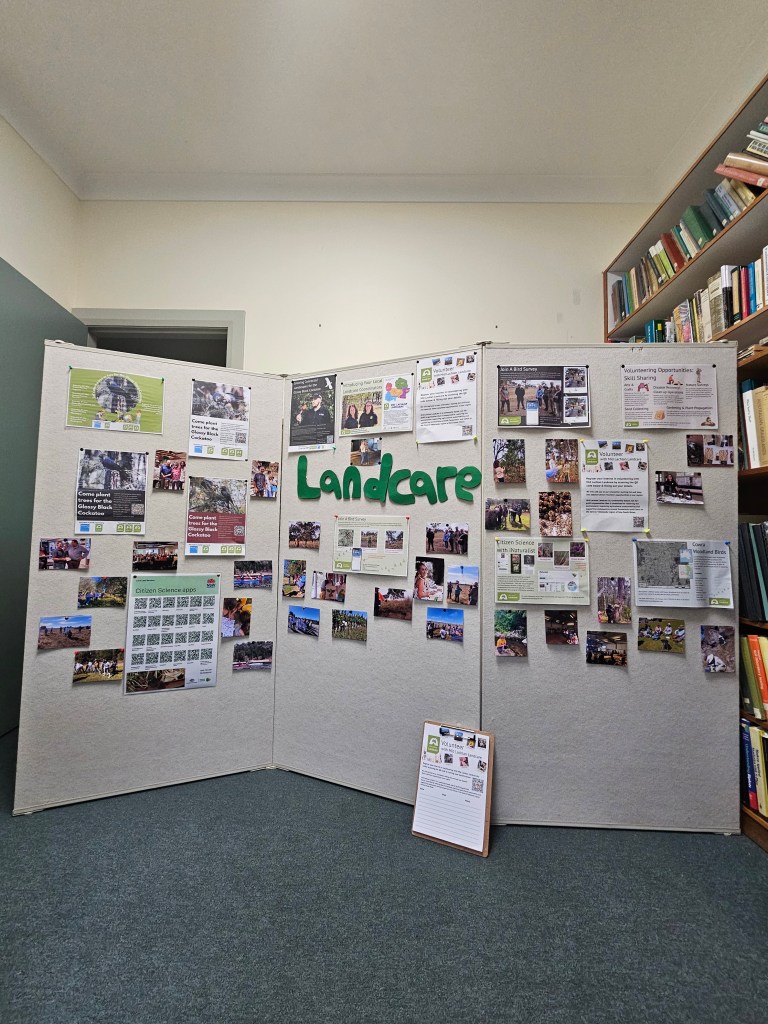
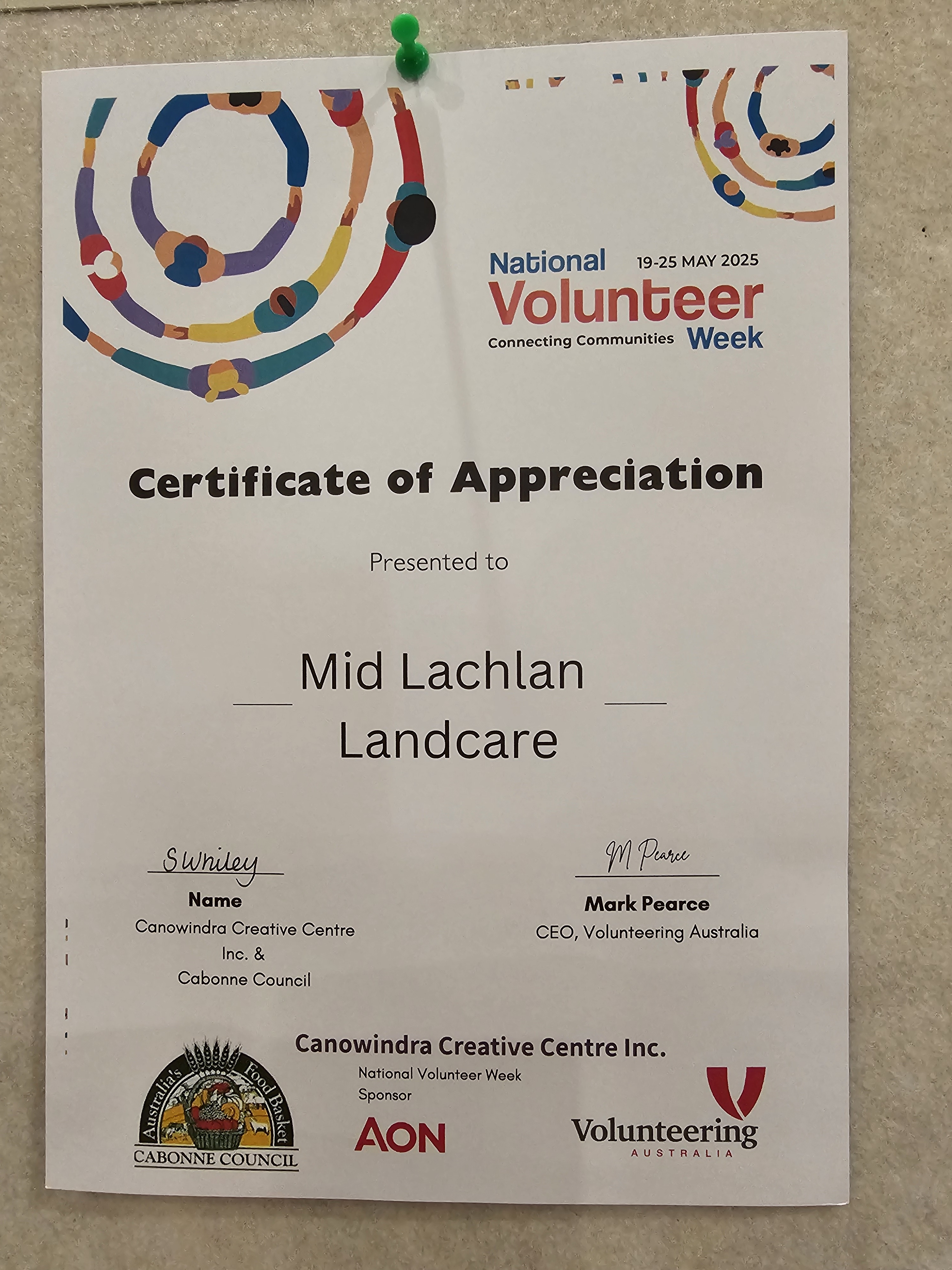
19th – 25th May is National Volunteers week & we celebrated by participating in the Canowindra communities volunteer expo at the Canowindra Serves Club.
As Tracee & I were running our Mycology May event that day, our stand was being looked after by Mid Lachlan Landcare volunteers – President Wendy Bowman & our Treasurer Marion Mitchell.
Puttig this display together was a great way for us to think about the many ways people can get involved in Landcare with us. Volunteering is a great way to feel connected to community, to share your skills & passions and even to help us facilitate events that will educate and inspire you!
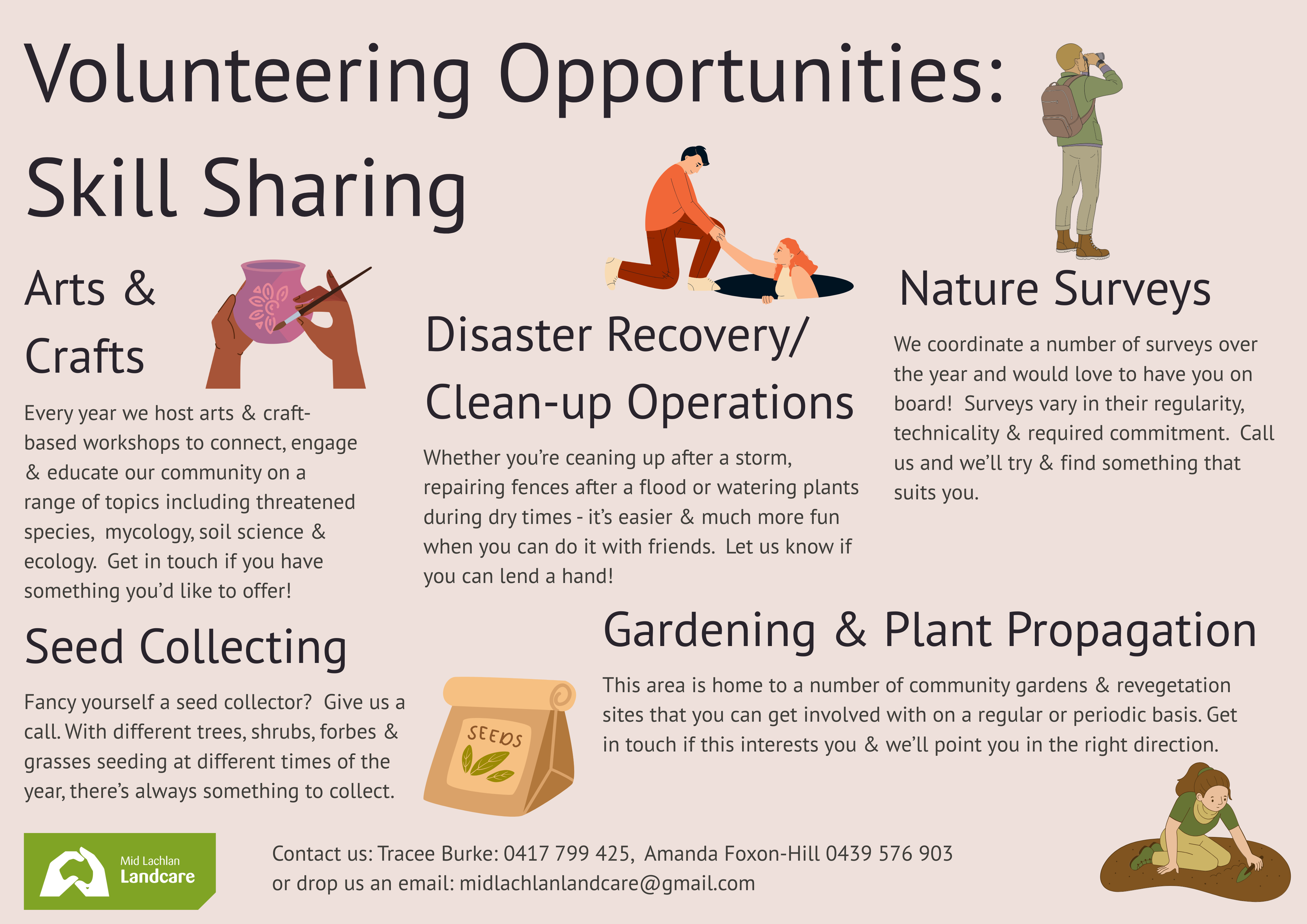
Our volunteers include crafters, artists, technology experts, data collectors, bird surveyors, disaster repairers, bakers, farmers, teachers, local businesses & community organisations. Together we’re working to create a community that’s resilient, connected & full of life. How good is that!
Thanks to each and everyone involved in making Mid Lachlan Landcare what it is today. Here’s to tomorrow.
Habitat Connectivity. A collaborative approach for the Glossy Black Cockatoo
There’s a lot of time to think while completing my weekly migration between the Blue Mountains & the Mid Lachlan region & most recently I’ve been thinking about bird habitat & in particular connectivity.
I’ve been a Blue Mountains resident since moving to Australia in 2004, adding our little piece of heaven at Woodstock, ten years later as a rest-of-life conservation project. Both the contrast and similarities in environment fascinate me, as does the fact that the route I take in my car is a migrationary route for many species of bird, some of which, including the Noisy Friar Birds & Gang Gang Cockatoos, drop in to our piece of woodland from time to time.
In April this year it was confirmed that Mid Lachlan Landcare had been awarded a grant for a Glossy Black Cockatoo habitat boosting project. I’m co-ordinating that project and when it became clear that there was an opportunity for me to bring both of my beloved ‘homes’ together under this banner, I reached out to the Blue Mountains Planetary health team and went for it.
The Glossy Black Cockatoo can be found throughout the Blue Mountains, sightings of which always draw interest & creates a buzz. This iconic bird has inspired school projects & conservation works in the recent past and it’s also about to become the subject of a monitoring program under the Saving our Species initiative which is exciting & also great timing for us!
Out west, we find the Glossy’s out in the region that we’re conducting planting across – the Conimbla to Nangar National Parks & surrounding farm land. We have booked to talk about our project in the Blue Mountains on Saturday 7th June from 4pm-6pm at the Planetary Health Centre in Katoomba where we’ll focus on explaining the habits & preferences of our local population of Glossies, how & why farmers are playing an important role in boosting connectivity & what large-scale connectivity could look like for this and other species. The goal is for us to work together across this broader landscape to broaden & deepen our knowledge of this iconic species & inspire both big-picture and local on-ground actions. We’ll be inviting Blue Mountains residents to come and get a taste of what the Mid Lachlan Region has to offer for birding enthusiasts as well as inviting them to join us in some habitat planting. How very exciting!
You can read the article written about Blue Mountains Planetary Health conducted with me here and watch a video of our discussions
To book into the Katoomba Glossy Black Cockatoo event on Saturday 7th June click here.
To volunteer for tree planting duties on Saturday 5th July click here.
We’ll also be planting on Saturday 21st June which you can volunteer for here.
Here’s to Growing Connected Landscapes together!
Amanda Foxon-Hill, Mid Lachlan Landcare Coordinator & Blue Mountains resident.
Getting Trees in the Ground for the Glossy’s
Hooray, we have some trees in the ground for our Glossy Black Cockatoo project!
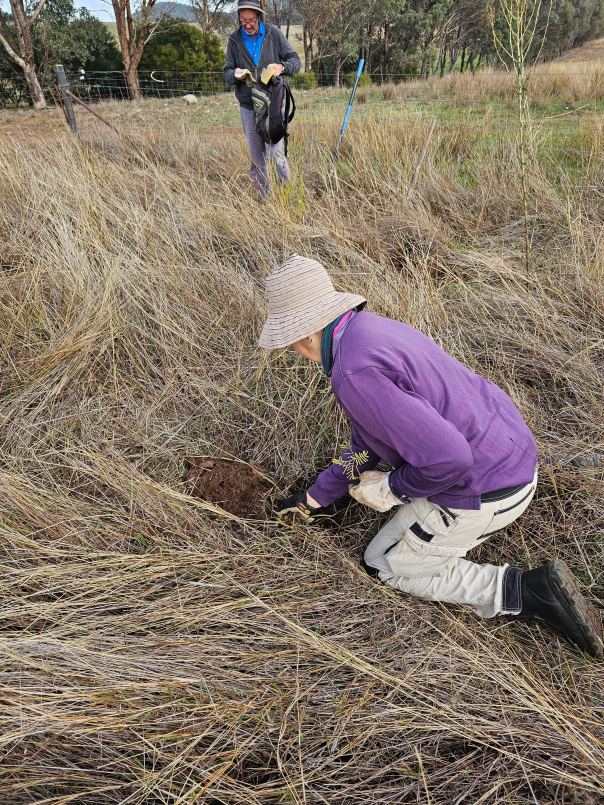
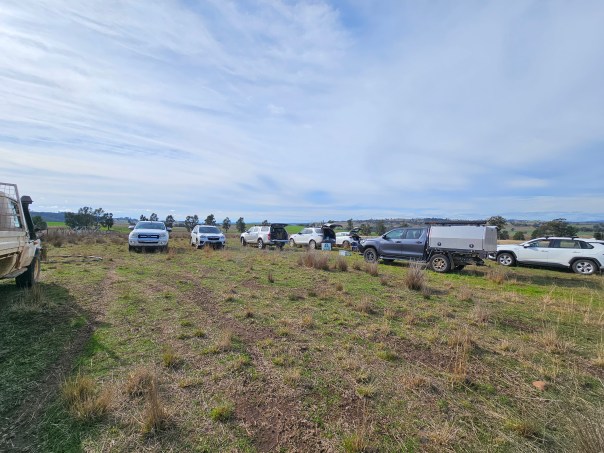
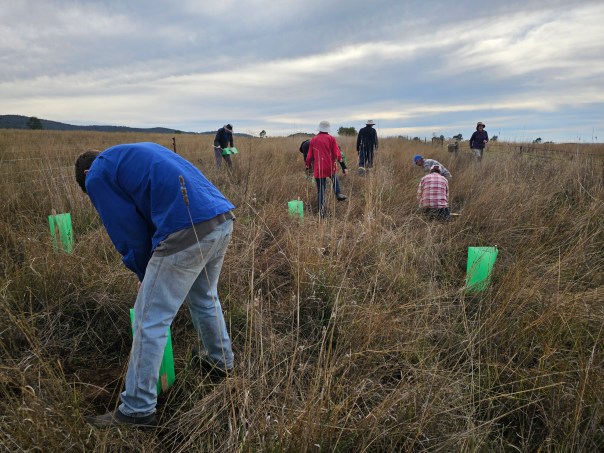
This project involves us planting a minimum of 1000 trees & shrubs to connect the Western Woodland Way between Conimbla & Nangar national parks, centred around Gooloogong. We’ve been planting She Oaks (Allocasuarina verticillata), Eucalypts and some complimentary understory species with the She Oak being key given it’s a prefered feed tree of the Glossy Black Cockatoo – our target species. We’ve got a total of six planting sites in this project, the first two having been planted out over this last week. Here’s how that went…
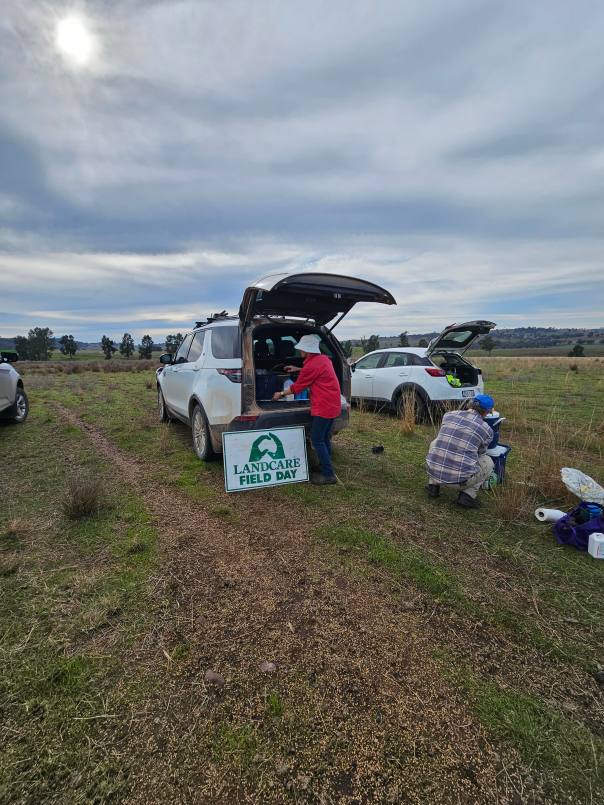
A fabulous crew of volunteers attended our tree planting extravaganza on Saturday morning with Eugowra Catchment Landcare. This included a team of young folks from Sydney who’d previously been involved in The Big Lift and are now, post university, continuing their rural volunteering on their own terms. They were a very interesting & highly skilled bunch and it was great to get to know them a little more in between digging, planting and watering.
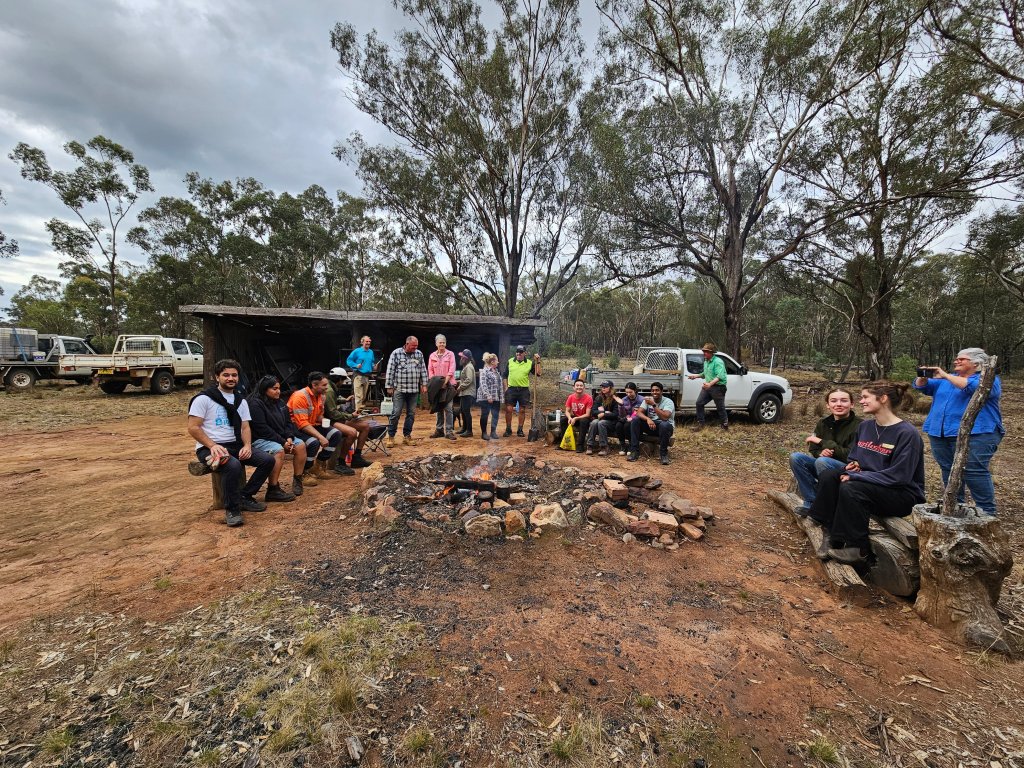
It was lovely to be joined by Tim & Ash’s parents who came armed with home-baked scones and treats. They were able to tell us a little more about their connection to this country and to some of the triumphs and disasters that had occured over the years leading up to today.
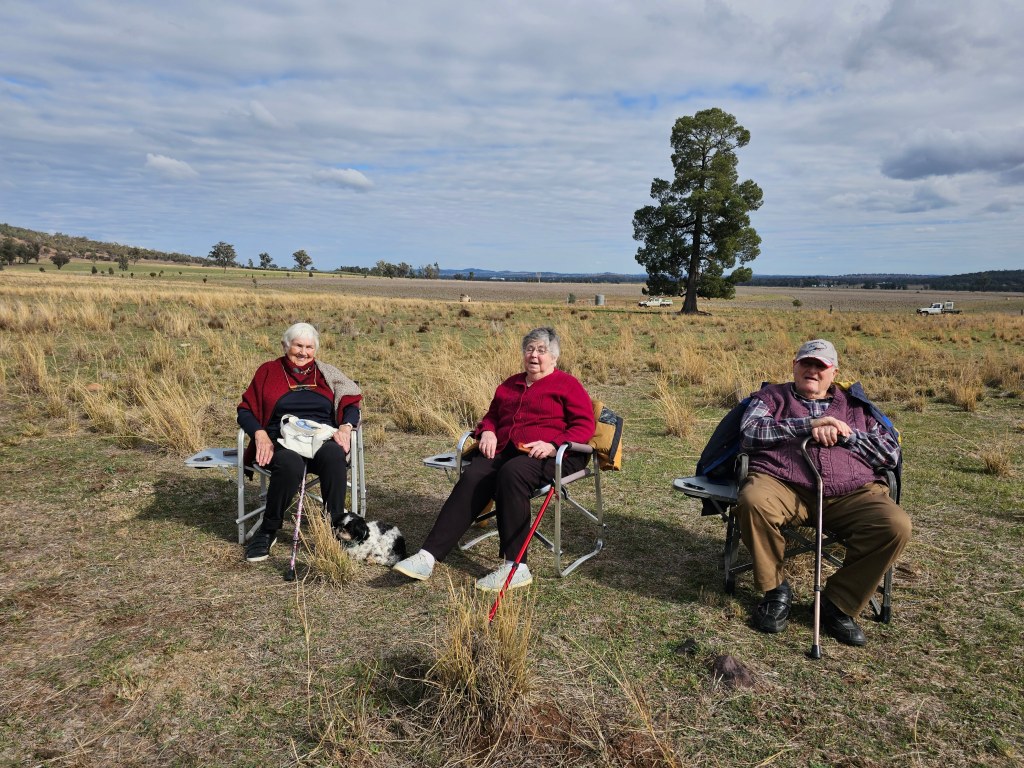
Soil tests were conducted during both planting days to give us an idea of what conditions were going to be like underground for these baby trees. Both pH and soil microbiology measurements (using a microBIOMETER®) were taken as well as an unofficial worm & critter count – the macrobiology is as important as the soils microbiology in creating & maintaining optimal growing conditions.

Results for the first site were pH 6.5-7. Total microbe count 670 ug C/g. Fungi to Bacteria balance: 0.9:1 (47% fungi to 53% bacteria). These are great results given that this is a grazed paddock as often in farmed systems, the fungi numbers are down at under 25%. To put these results into context, a dry paddock with patchy grass will often return figures of between 300-400 total microbe count and a fungi:bacteria ratio of between 0.1-0.2:1 . Fungi is slow growing compared to bacteria so we generally see higher fungi levels in land that’s not been disturbed and especially under woody growth such as trees and shrubs. Total microbe levels generally increase quickly after rain with most of that increase being bacteria. Plants use soil microbes to help them access nutrients from the soil so a healthy, functioning soil microbiology is definitely going to give these plants a good start & I am convinced we have that here.
The first planting for this project wrapped up with a shared barbeque meal at the ‘Bush Hilton’ out on Tim & Ash’s block. Well, that’s where it ended for me at least as I had the Woodstock Soldiers Memorial Hall Ball to get to, I have it on good authority that many of the other’s carried on until dark. Now that’s dedication to the cause!
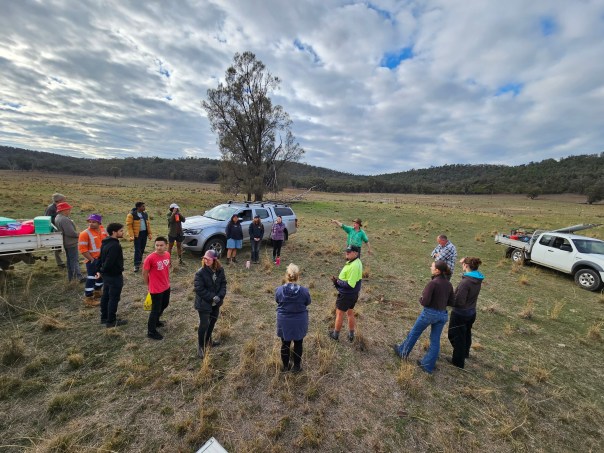


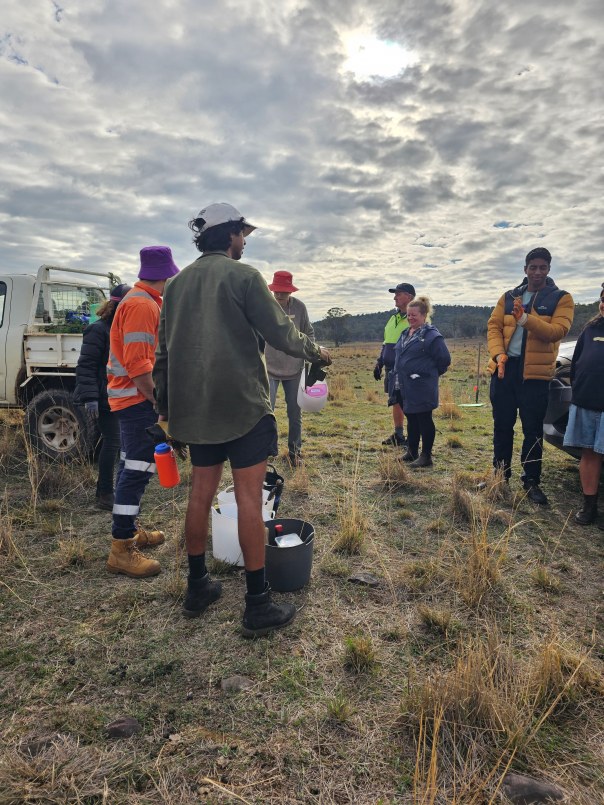
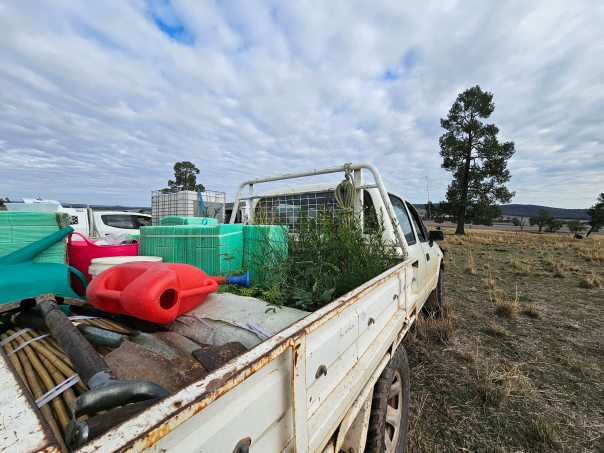


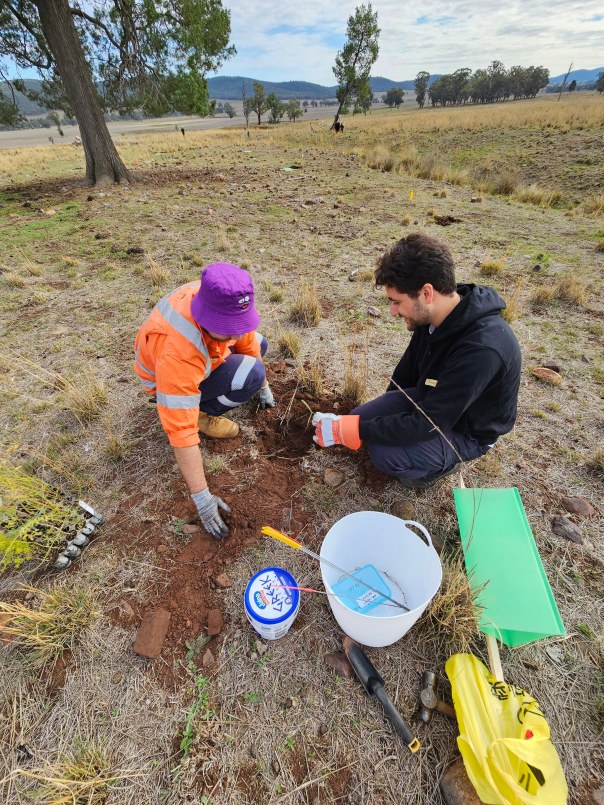

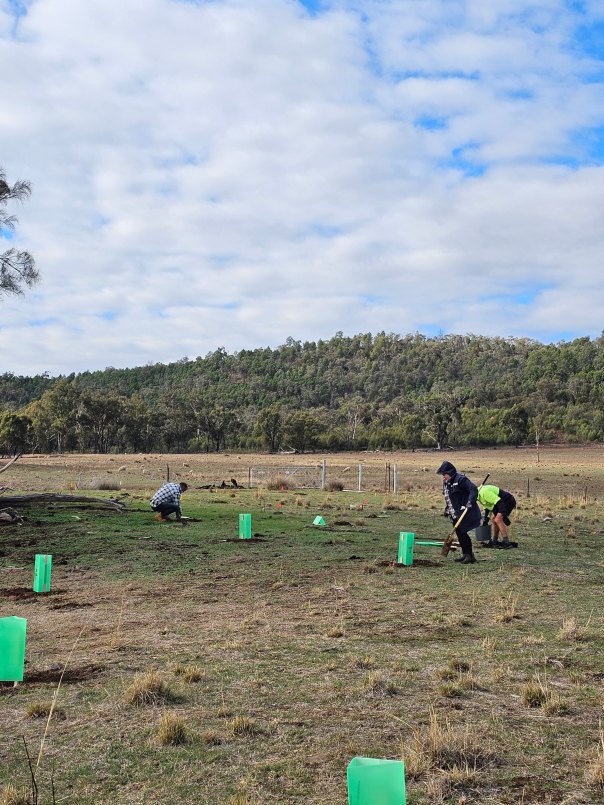


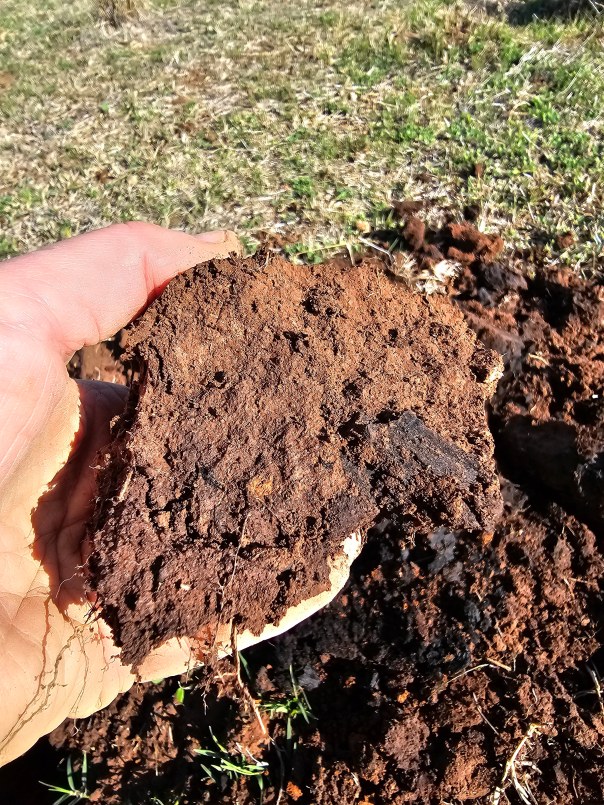
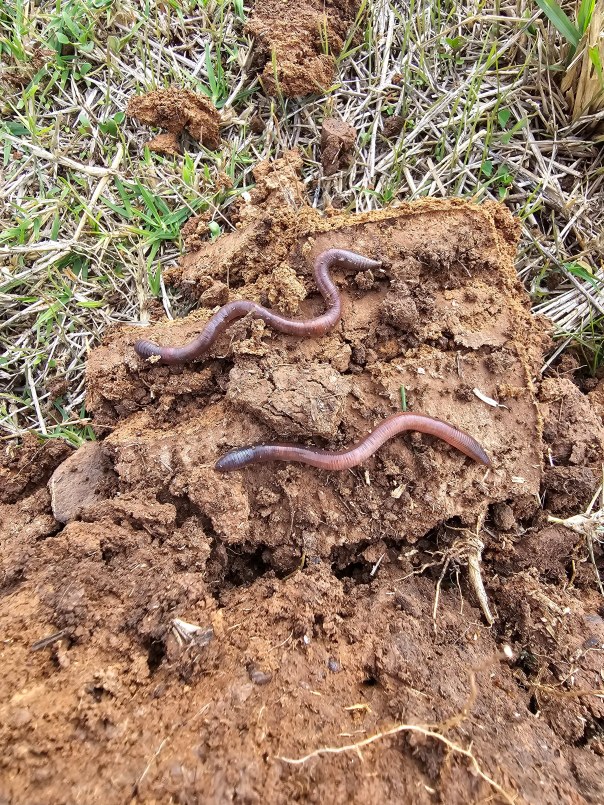

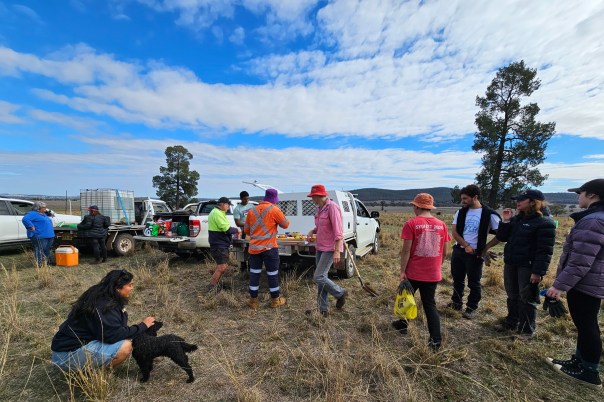
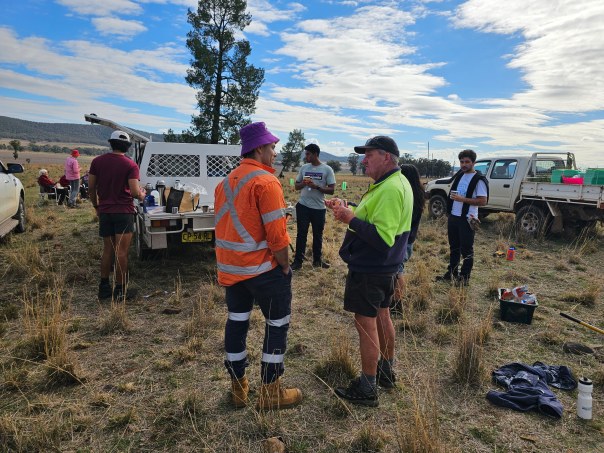


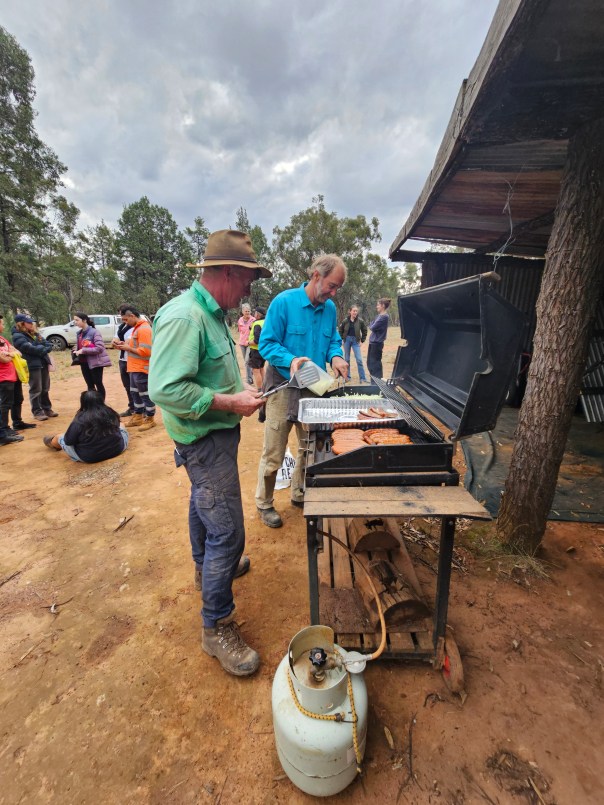
Our second planting event was held yesterday (Thursday 29th May) at Yackerboon, a sheep & conservation enterprise near to Cudal & Manildra. Both the proximity of Mandagery creek & the South West Woodland nature reserve- Mandagery made this a great site for habitat planting.
Our goal for the day was to get 150 trees in the ground, by lunch time we’d planted over 250 which was a fabulous effort!
As with Tim and Ash’s planting, I got some soil testing carried out here too so I could get a feel for the conditions our plants were being introduced to. pH was again good at approx 6.5 and soil microbe levels were very high with lots of fungi indicating a site that’s experienced a low level of disturbance in the recent past. Total microbes were 1082 ug C/g, Fungi:Bacteria ratio of 1.5:1 (60% fungi).
I have been taking soil microbiology measurements using a microBIOMETER®. This is a low cost, 20-minute on-site soil test for microbial biomass and fungal to bacterial ratio that allows you to quickly determine the health of the soil. It’s important to remember that this is a formative rather than summative test which means it’s useful for providing insights that inform ongoing actions rather than being seen as ‘if you get this result, do that to fix or change it’.
The microBIOMETER can be part of a summative site assessment (reviewing what’s been achieved) when readings are evaluated as part of a wider site assessment. I also refer to this as a narrative test meaning you need to consider the results you get from the test along with other factors at the site – what’s growing and how much, what’s the weather doing now/ recently, how has the site been managed, what’s the underlying geology of the site, what about site topography. Keeping all that in mind, both of our sites were in very good shape from a microbial perspective. Very encouraging!

Sharing a cuppa at the end of the day 
Tree planting this way! 
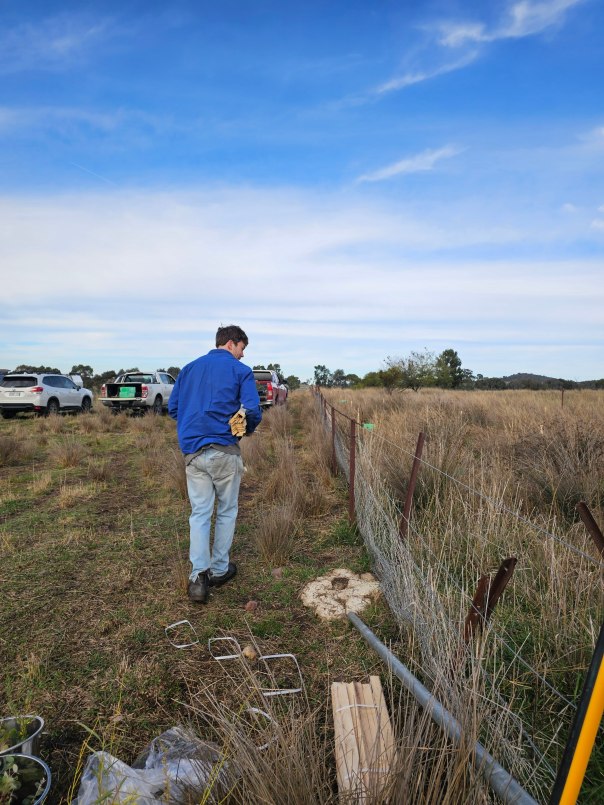


morning tea station 

Sally giving us a little gift to show her appreciation for our help 
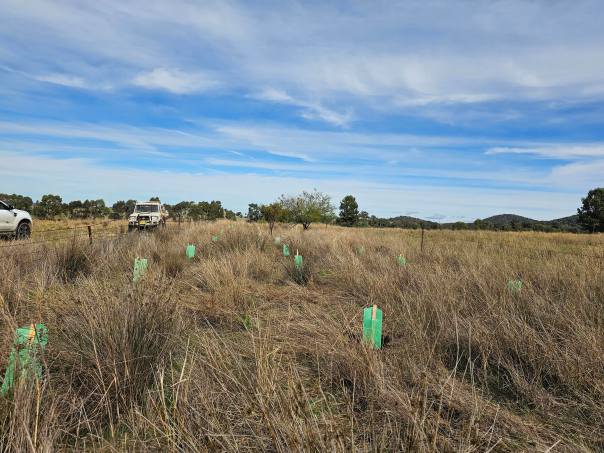

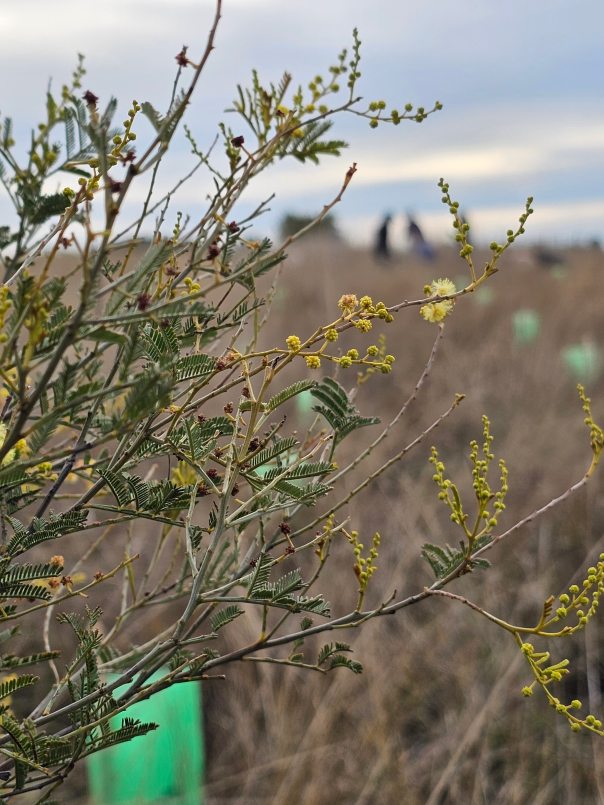
The tree lane we’re creating was direct seeded a while back & already contains a few wattles 
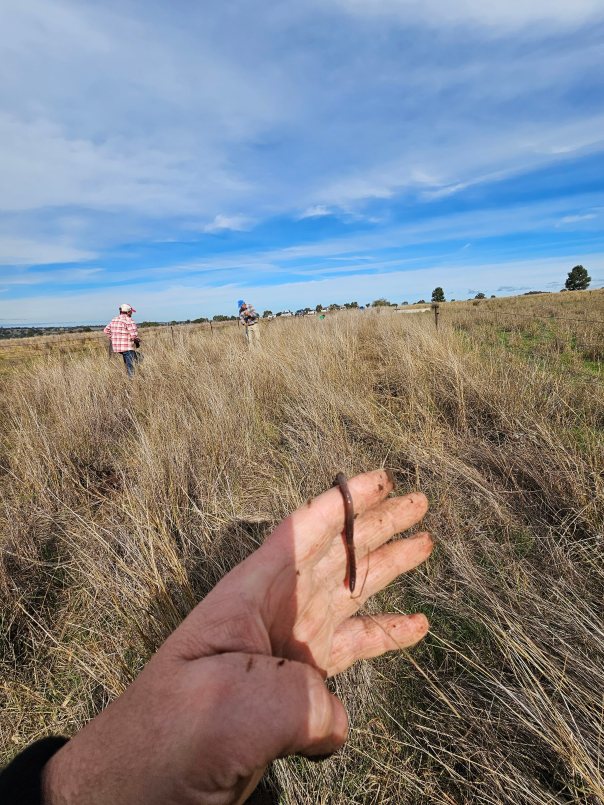
No worms were hurt but some were moved out of the way a little 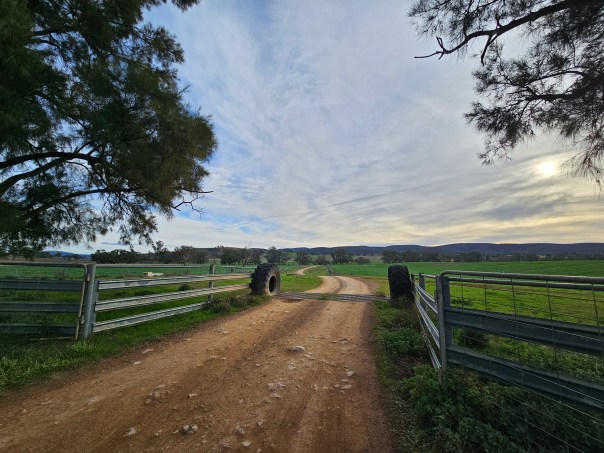
See you sooon baby trees
If you’re wondering why people volunteer their time to labour away in a field here’s some insights from our planting extravaganza.
- Across the two days, it was agreed that what we most love about a tree planting day is the opportunity to make new friends & strengthen existing friendships. Collegiality is highly prized.
- For this particular project, many people were motivated by the direct bird connection & the opportunity help build a better birding future for both themselves, others and the birds of course!
- A desire to feel useful & to work towards a common goal was another big pull factor with many expressing pride and a sense of fulfilment after the opportunity to put their skills and knowledge to use in a meaningful way.
- Then there was appreciation for that wonderfully grounded & connected feeling you get when doing physical work & getting ones hands in the soil.
- Finally we all enjoyed the opportunity to come out and spend time in another little corner of this beautiful country we call home.
This event concluded with property owner Sally sending us home with a tub of home grown tomatoes & some chocolates as thanks for our efforts. How sweet!
This project was made possible thanks to funding from Bupa Australia & Landcare Australia. It is part of the planting of 80,000 trees, shrubs & grasses across the country, linking environmental health with community well-being.
Mid Lachlan Landcare’s Grazing Group is back!
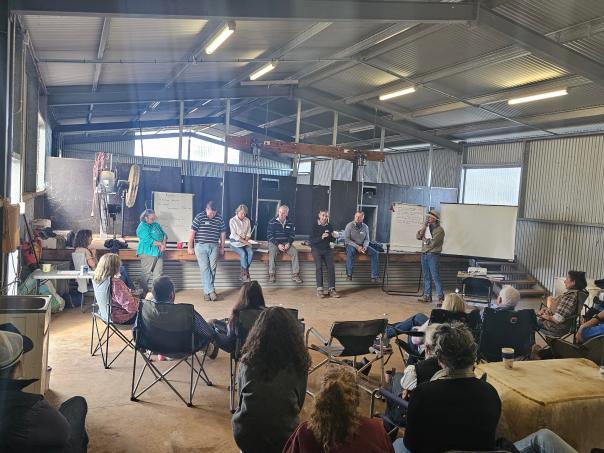
There was a buzz in the air as we pulled up at Garallan’s shearing shed just outside of Cowra earlier this month. It had been a while since the last grazing group meet up and with dry times biting, it definitely felt like the right time to re-ignite the conversation.
Mid Lachlan Landcare’s ‘Growing the Grazing Revolution’ program has been actively supporting graziers wishing to maintain & grow healthy landscapes, stock and business enterprises since 2010. This long-standing project was built on the philosophy that there’s power in getting people together and there’s inherent value within community.
With that in mind we settled in for a morning of conversations on the topic of “confident decision making”. Addressing this were a panel of local graziers, each with their own diverse enterprises, personalities, priorities & business structures. We were also joined by Mel Kiel from KRL marketing, a company with tools & courses that help graziers understand when to buy, sell and hold stock.
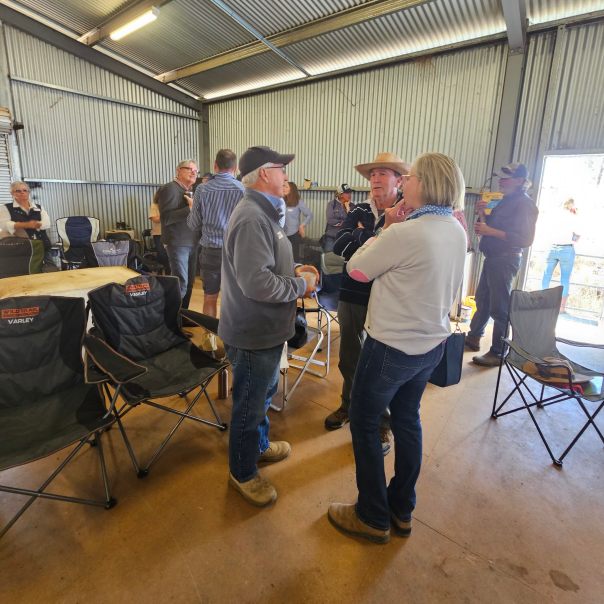
After seven lively, heartfelt & insight-rich reflections we broke for morning tea and a chance to discuss the key points raised:
Of key Importance is that landscape health is maintained & damage to ground cover is minimised.
Maintaining the health of stock is a priority for all graziers
Clear planning leads to better decision making
Have a plan for making decisions and stick to it. The plan is typically informed by an individuals vision, values & goals
Know your trigger points for making decisions before you have to make them!
Next we headed out to the paddock where Andrew’s Optiweigh scales were waiting for us. Wendy & Scott demonstrating two ways of undertaking a grass budget & we learned a little about how soil health is evaluated.
All in all the event felt like a great re-start to our grazing program and a timely reminder that the only stupid question is the one you don’t ask and with that in mind, we’ve got another event being scheduled for August so watch this space.
Re-activating our Growing the Grazing revolution network has also reminded us just how many amazing mentors we have in our midst. If you’re looking for a mentor, mateship or just a little timely support to help you reach your livestock management goals, this is the group for you.
As Scotty says ‘We’re just here supporting people to be out there doing what they do best’
The future looks bright!

Time to get started 
The ute parade outside 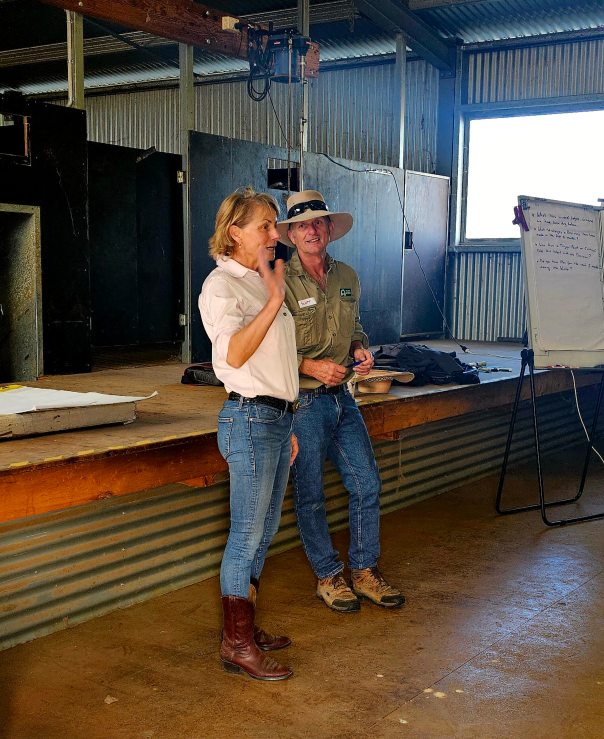
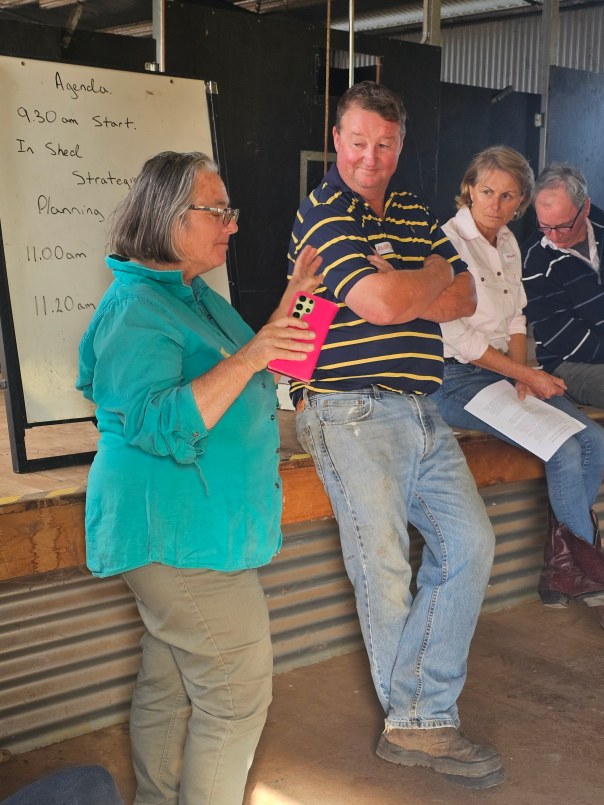
Mid Lachlan Landcare President Wendy Bowman & Grazing Group leader Scott Hickman kicking off the day 
Scott laying out the agenda 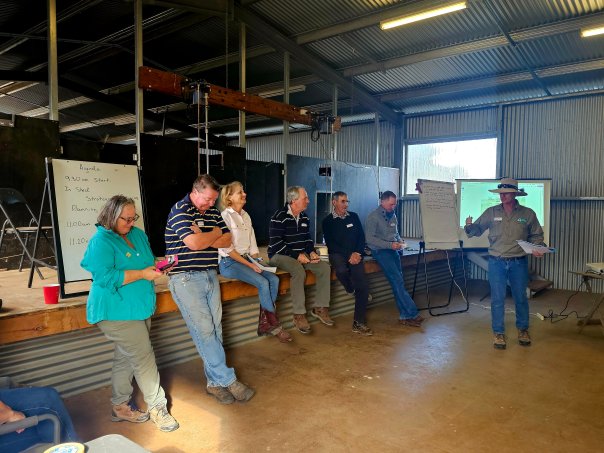
Panel L to R: Marion Mitchell, Andrew Dowd, Wendy Bowman, John Rowlands, David Marsh, Gus Hickman, Scott Hickman 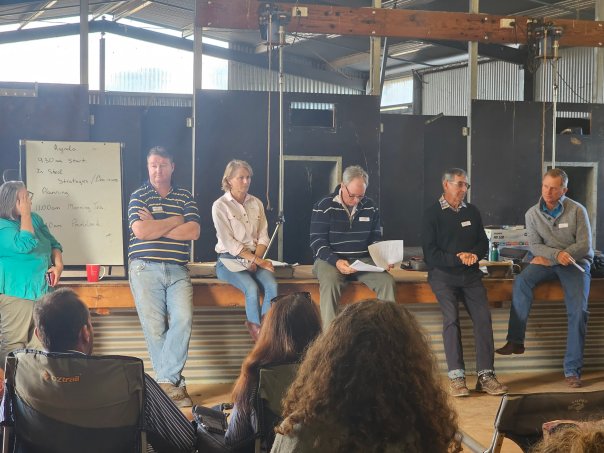

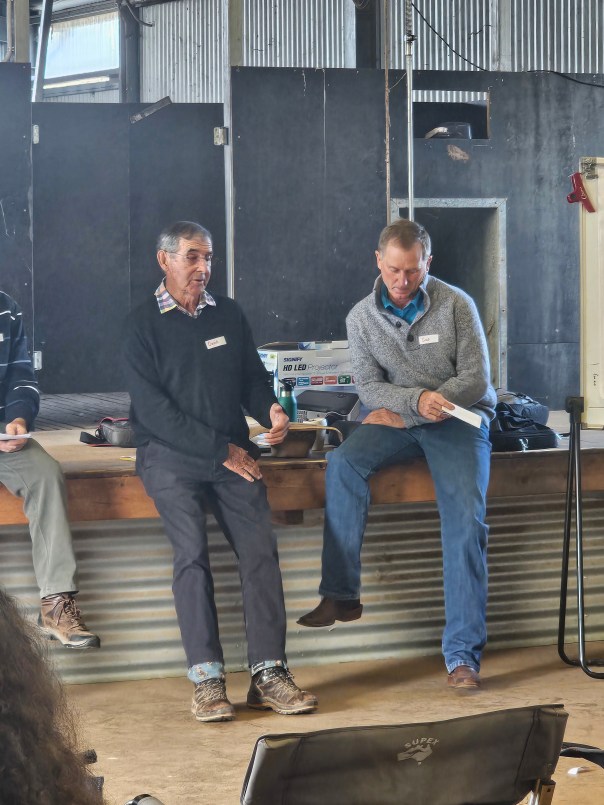

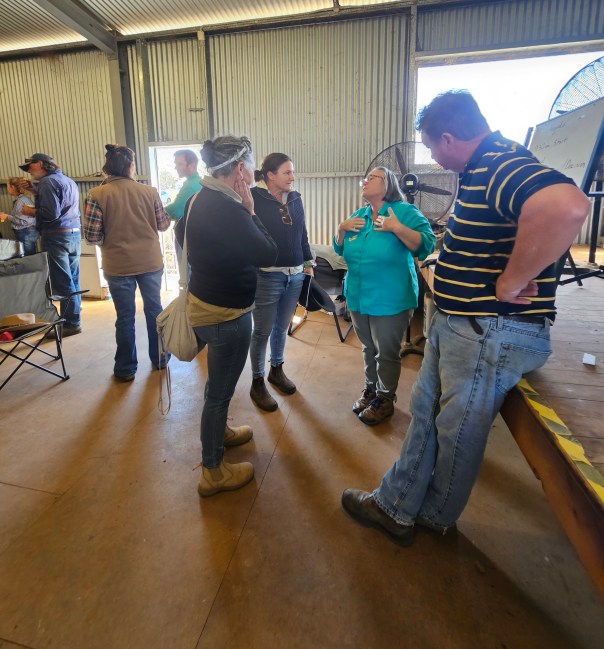

Mel Kiel from KRL marketing 
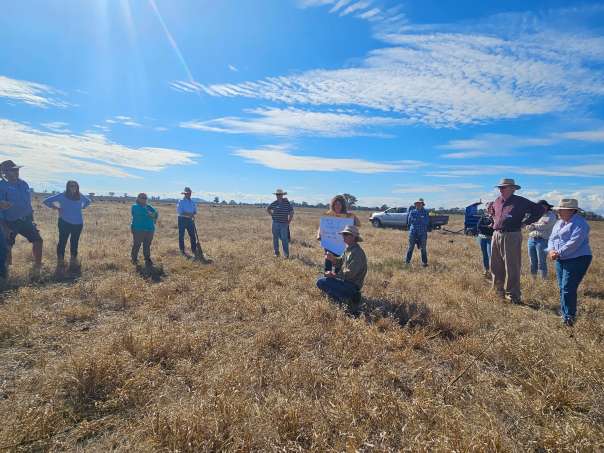
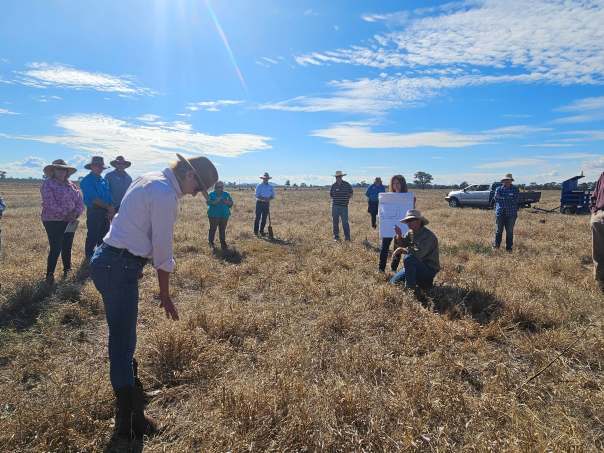
Grass budgeting demo with Wendy 

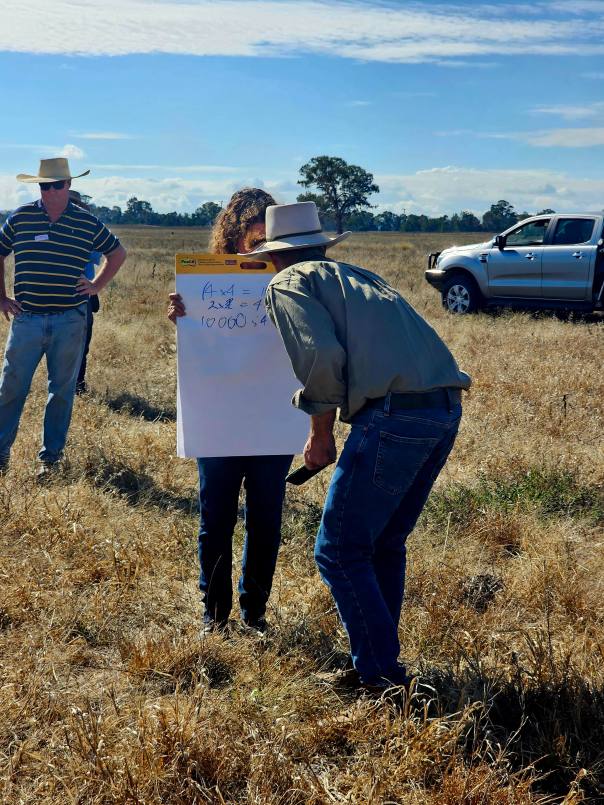
Scott explains how a grass budget is calculated. Tracee Burke lending a hand 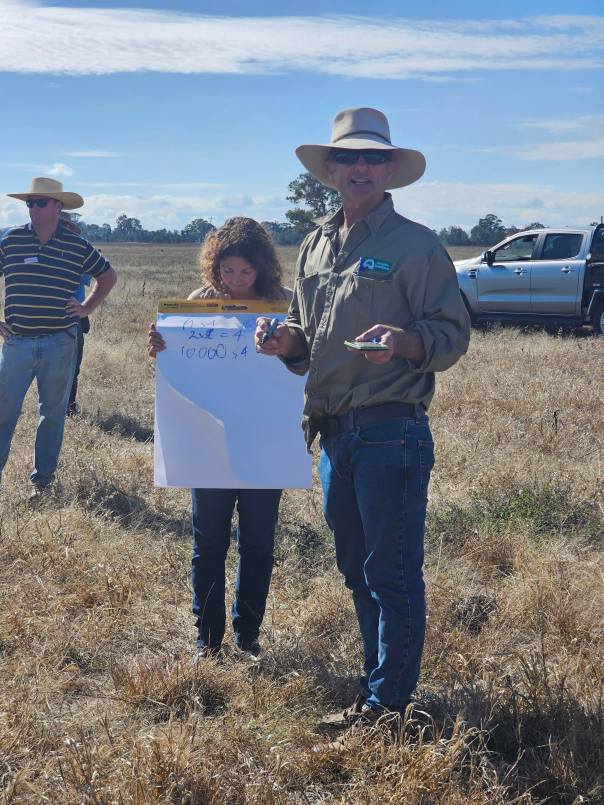

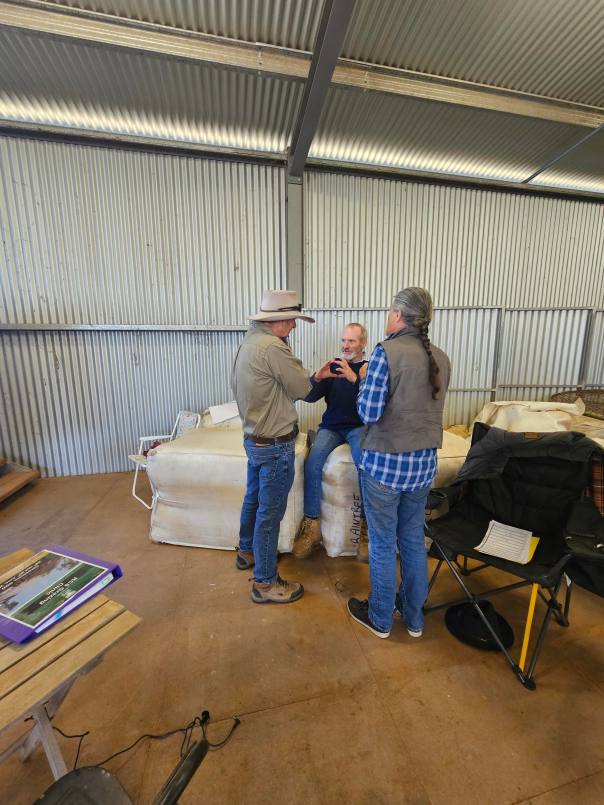

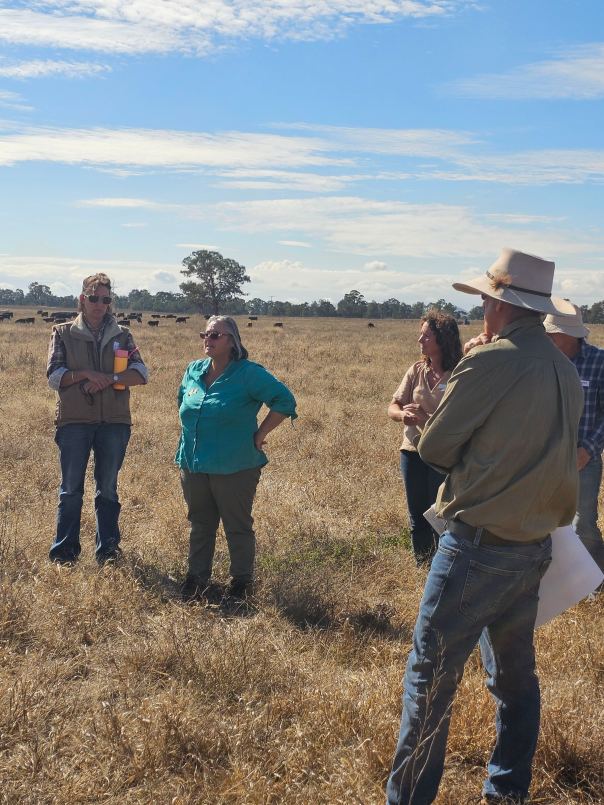

Explaining the Optiweigh technology 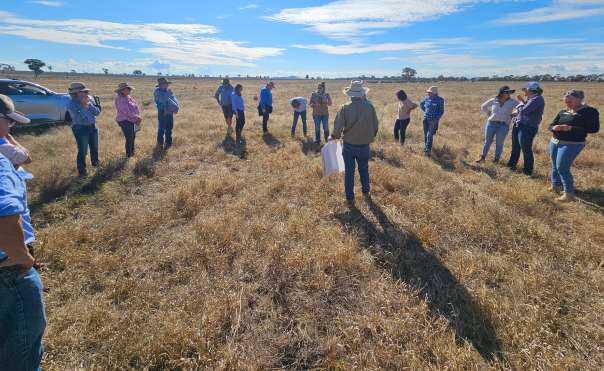

Ian Packer, Andrew Wooldridge & Robbie Watt assessing the soil 
Mycology May – Pottery & Fungi Foray
Welcome to our Mycology May event at Raintree Marra farm in Cowra!

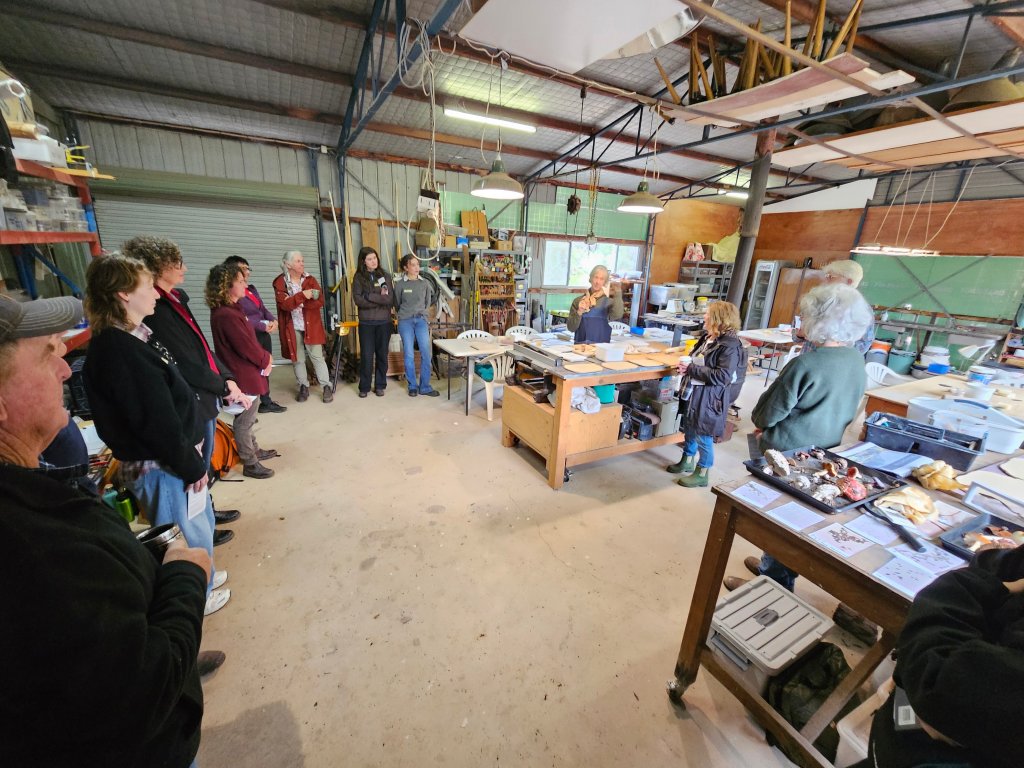
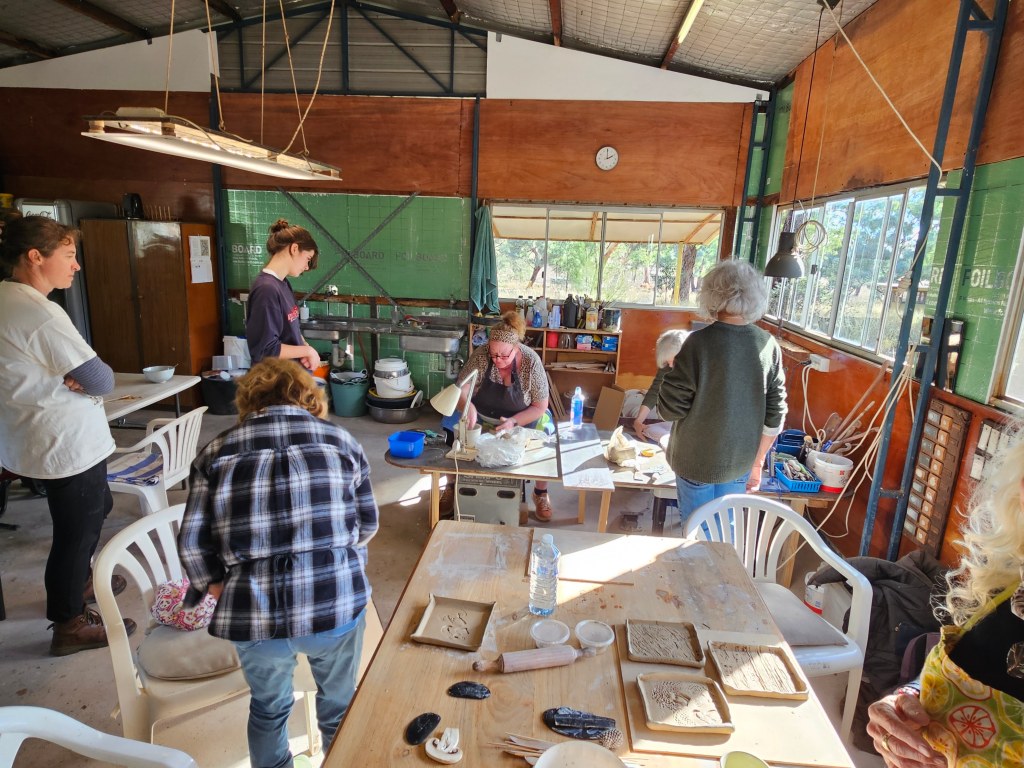
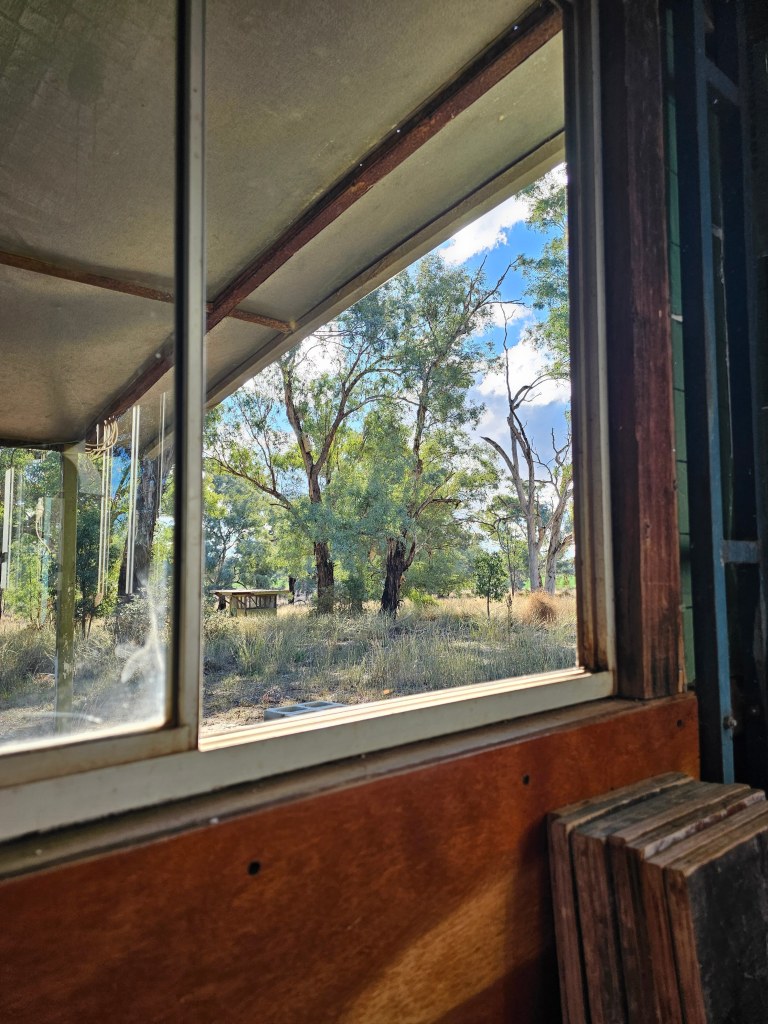
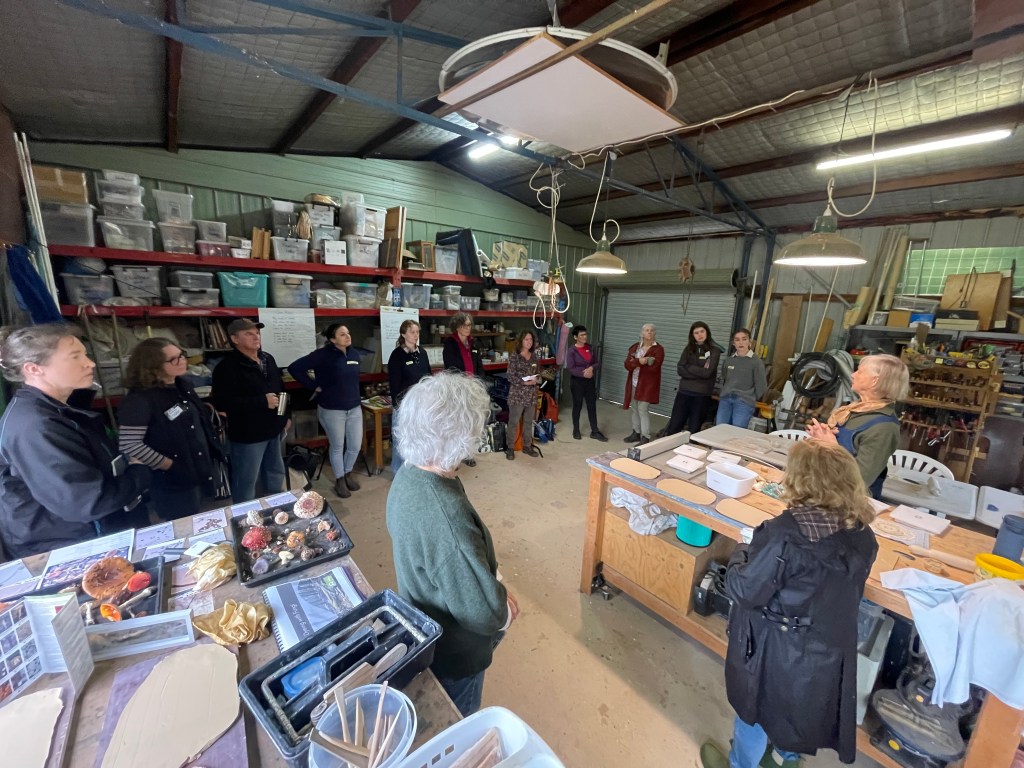
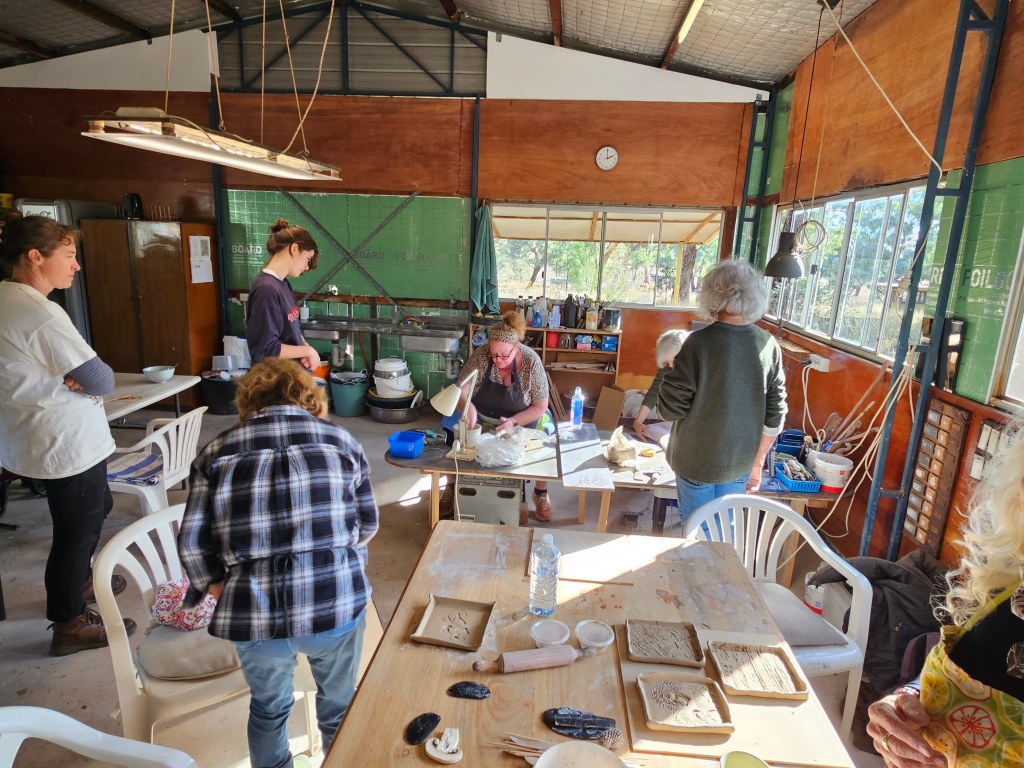
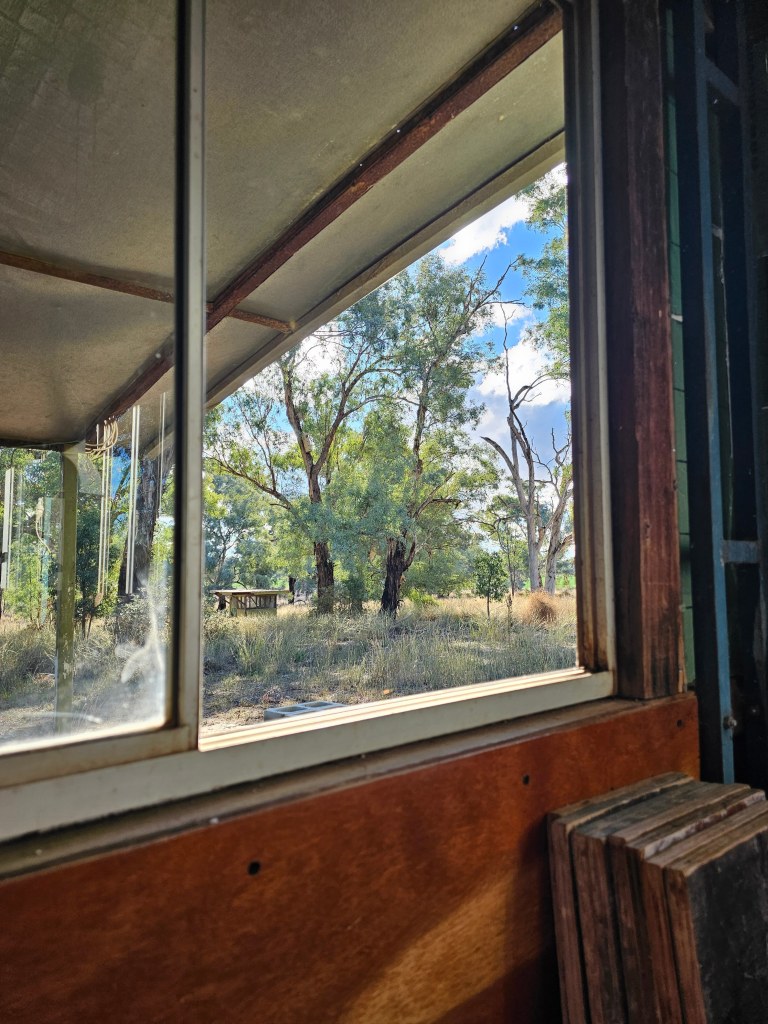
The day started with an introduction to both the farm & Catherine’s pottery barn where the magic would be happening after lunch.
Fungi surveys have previously been conducted at Raintree Marra, including one hosted by the amazing Alison Pouliot who, during her time here saw evidence of fungi succession in action thanks to the conservation work carried out within Box Gum Grassy Woodland on this farm.
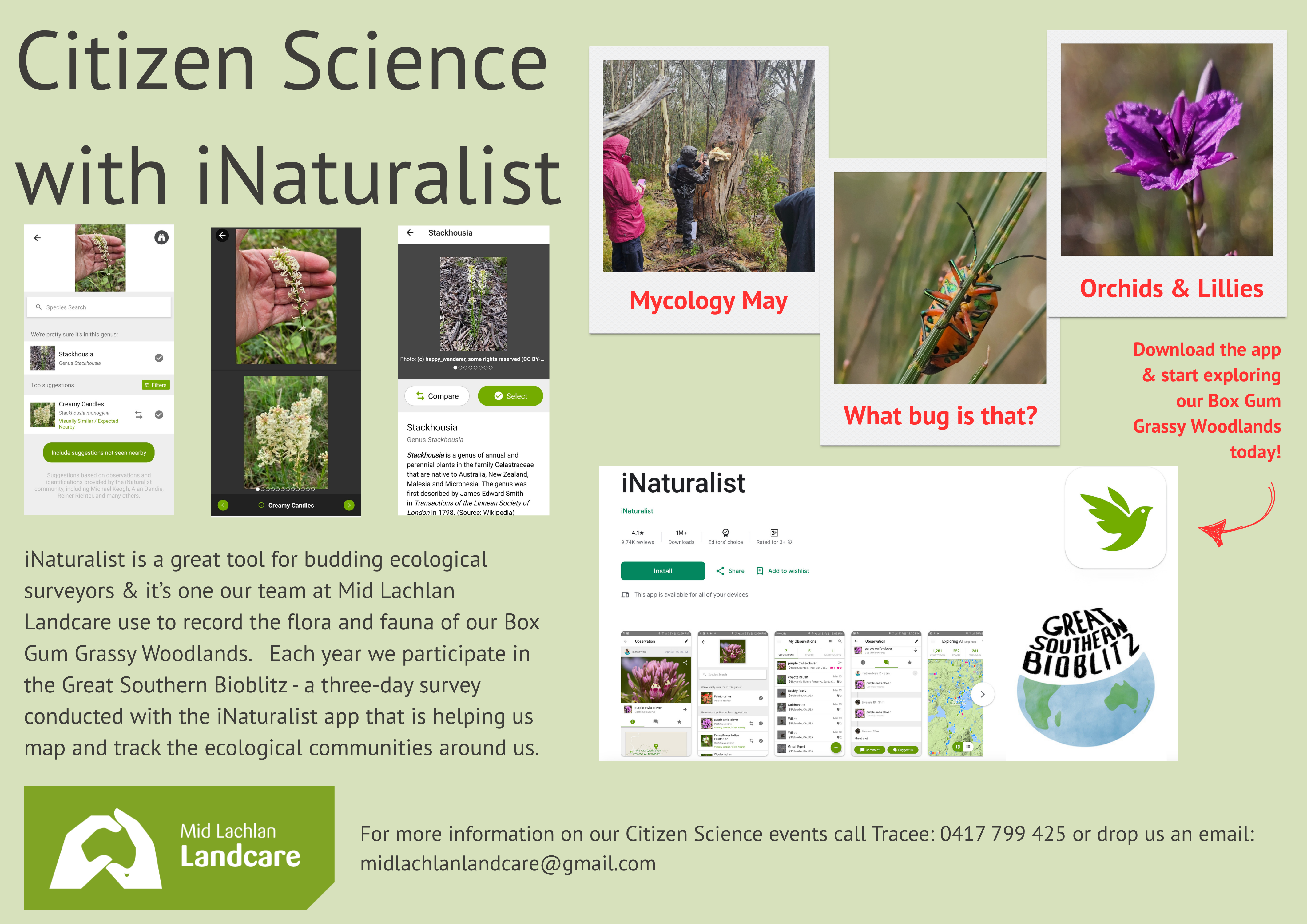
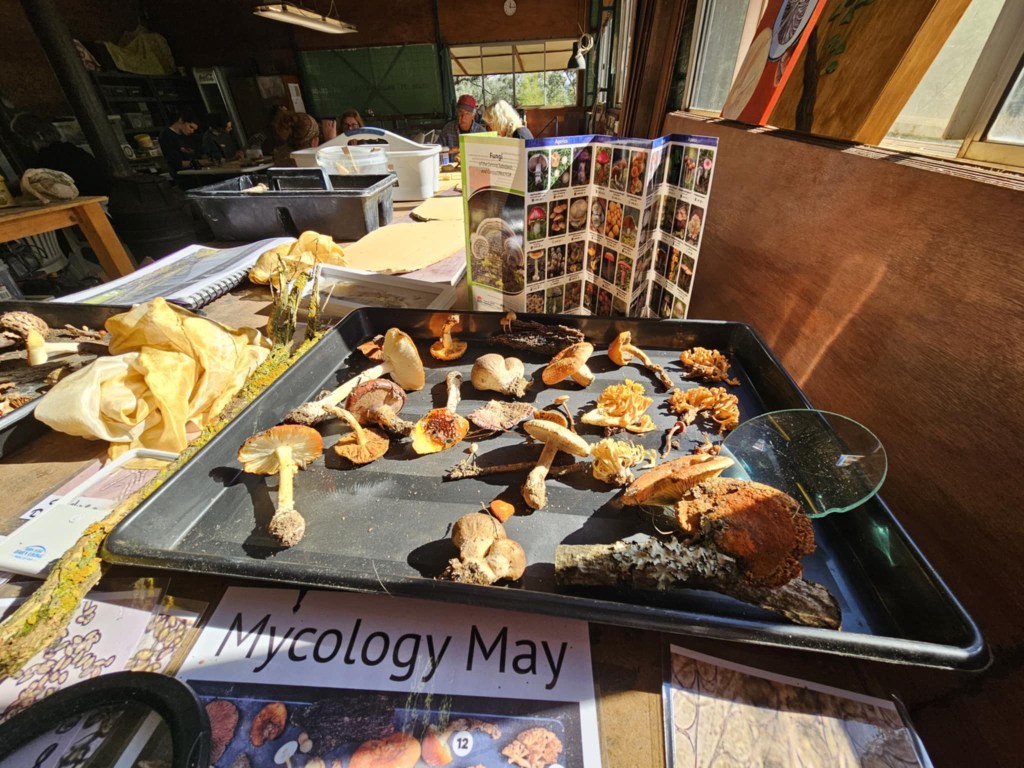
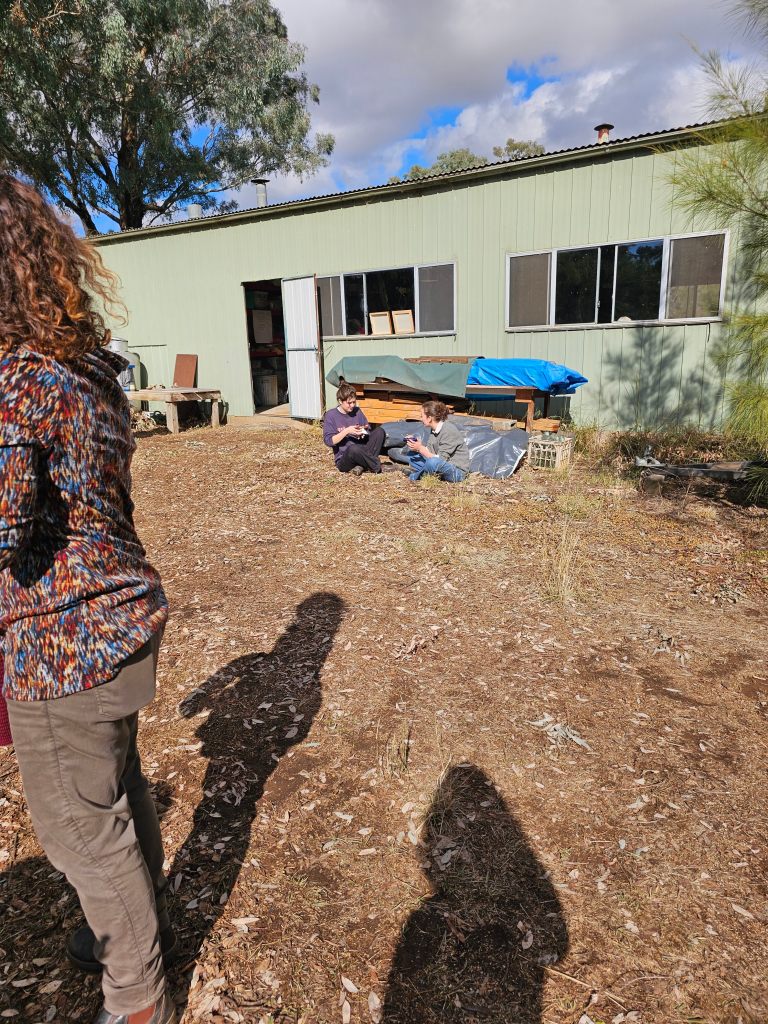
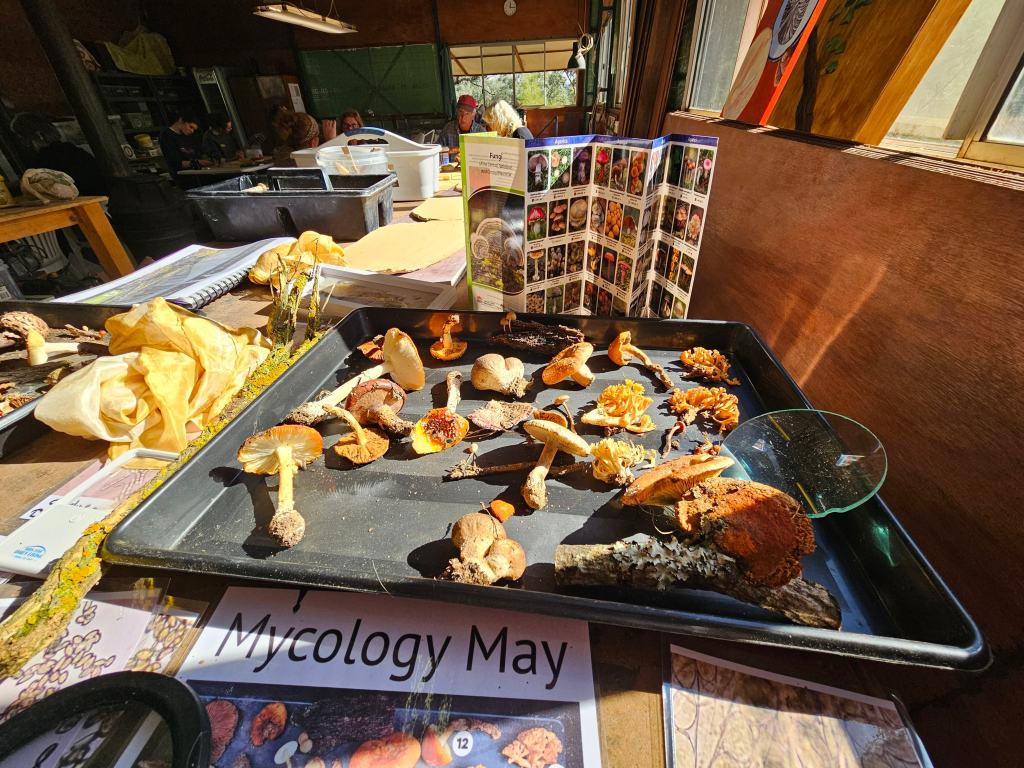
A timely drop of rain brought out a few fungi which we hunted down with great enthusiasm. We uploaded some of our findings to iNaturalist to help build on what we know of this site. Then, once our foray time was up, we shared our discoveries with the rest of the group.

This site is on a working farm and we were searching around the highly trafficked areas and partially cleared areas. That said, this part of the farm remains Box Gum Grassy Woodland and there were plenty of fallen tree limbs, tussucks of native grasses & understory wattles around to provide homes to a range of fungi.

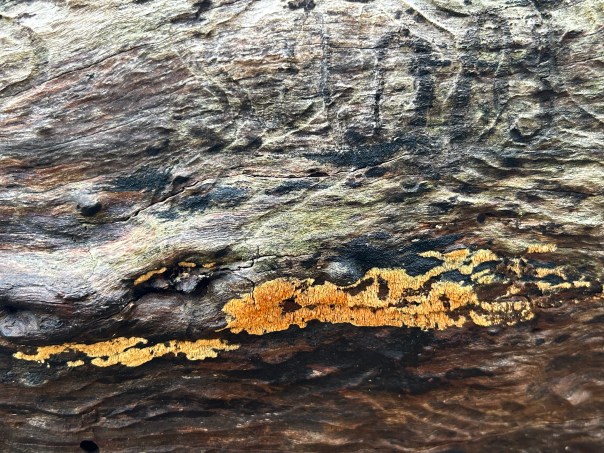

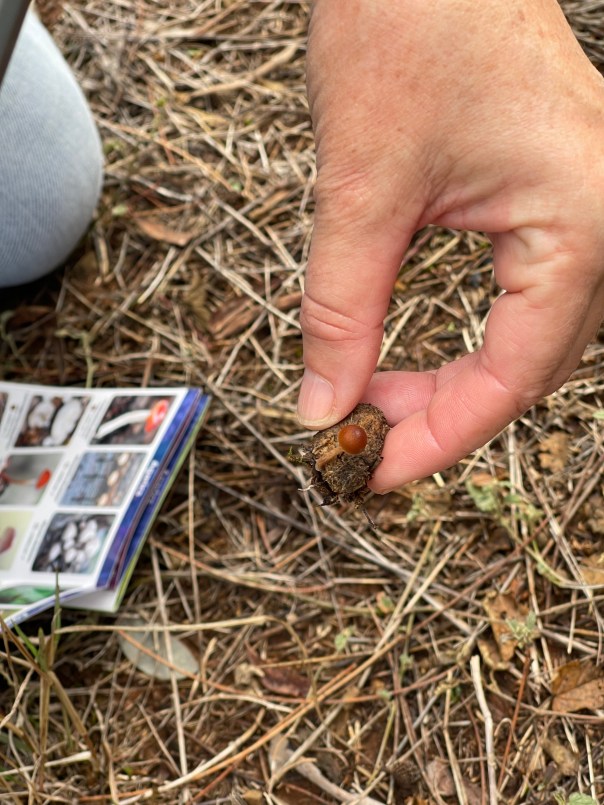
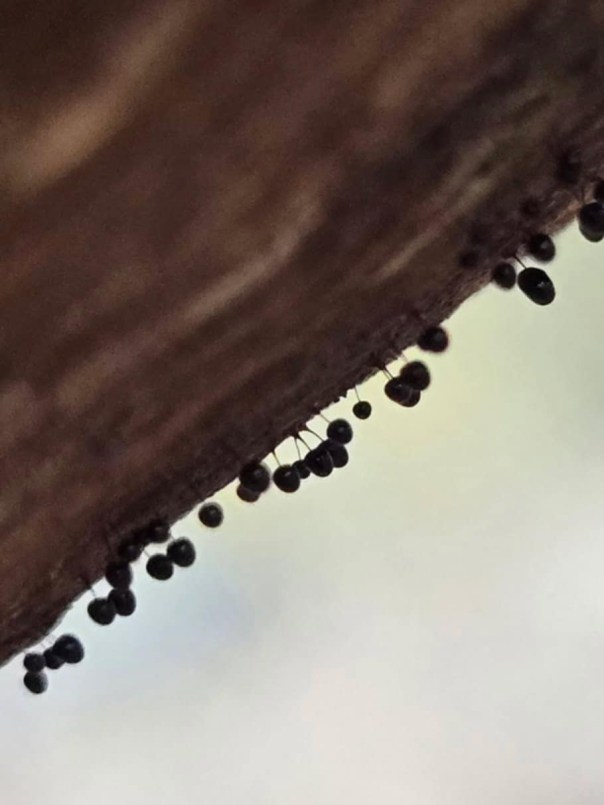


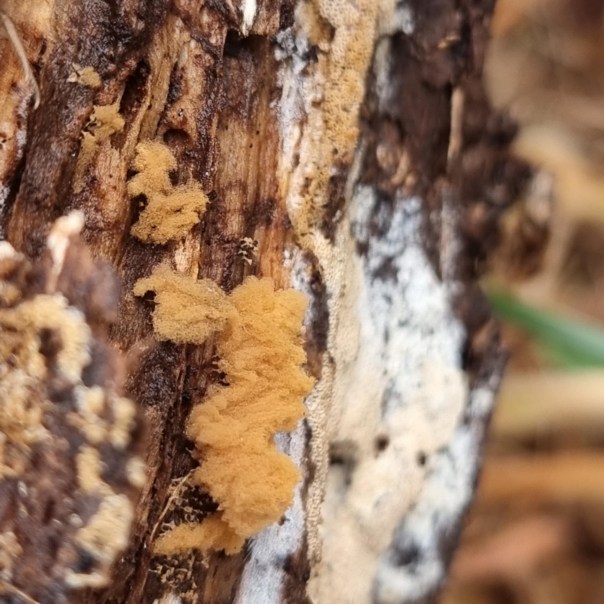


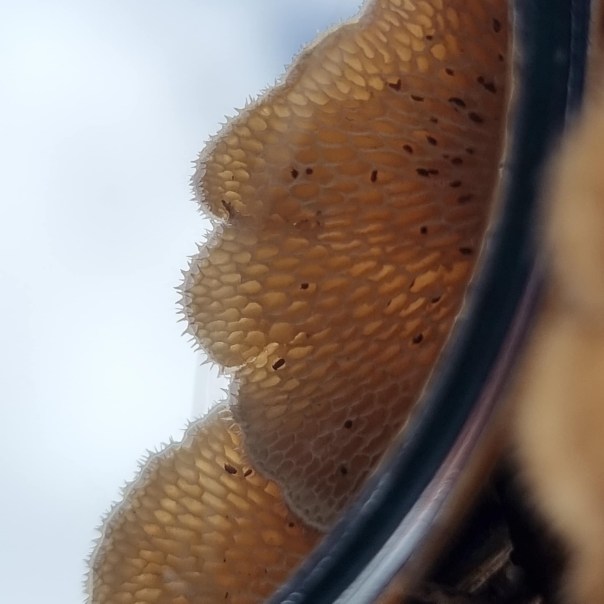
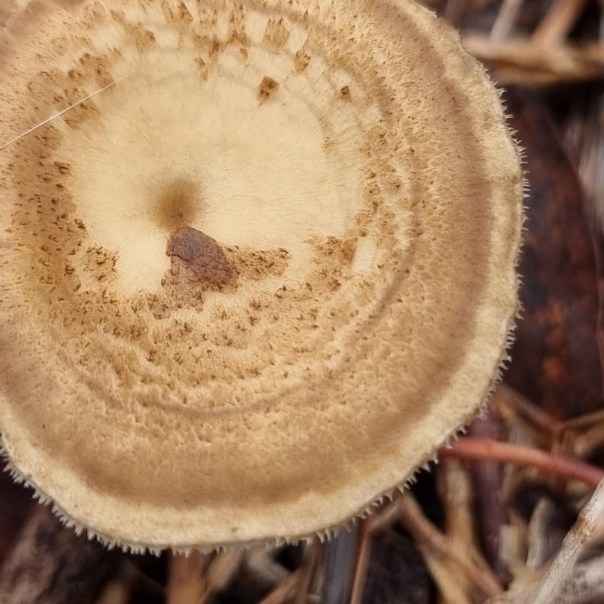
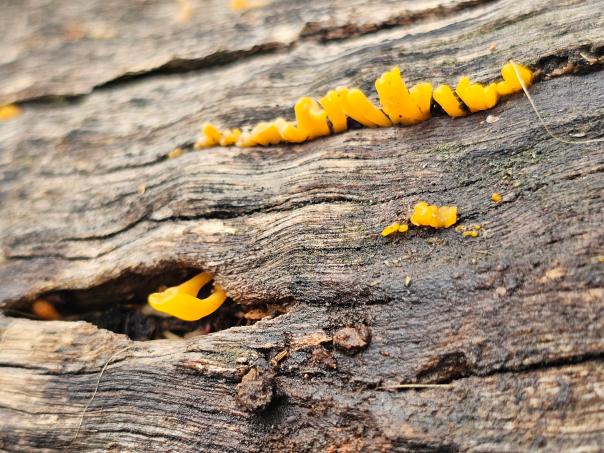

While it had rained just before our foray, it had been bone dry for the previous three months, a factor that definitely influenced our finds.
Here’s Leslie checking out the lichen with the help of a small magnifying glass.

While some puff balls and horse dung fungi had managed to pop out just in time for us to see them, we were mostly finding fungi on rotting wood and under the canopy of the she oaks.

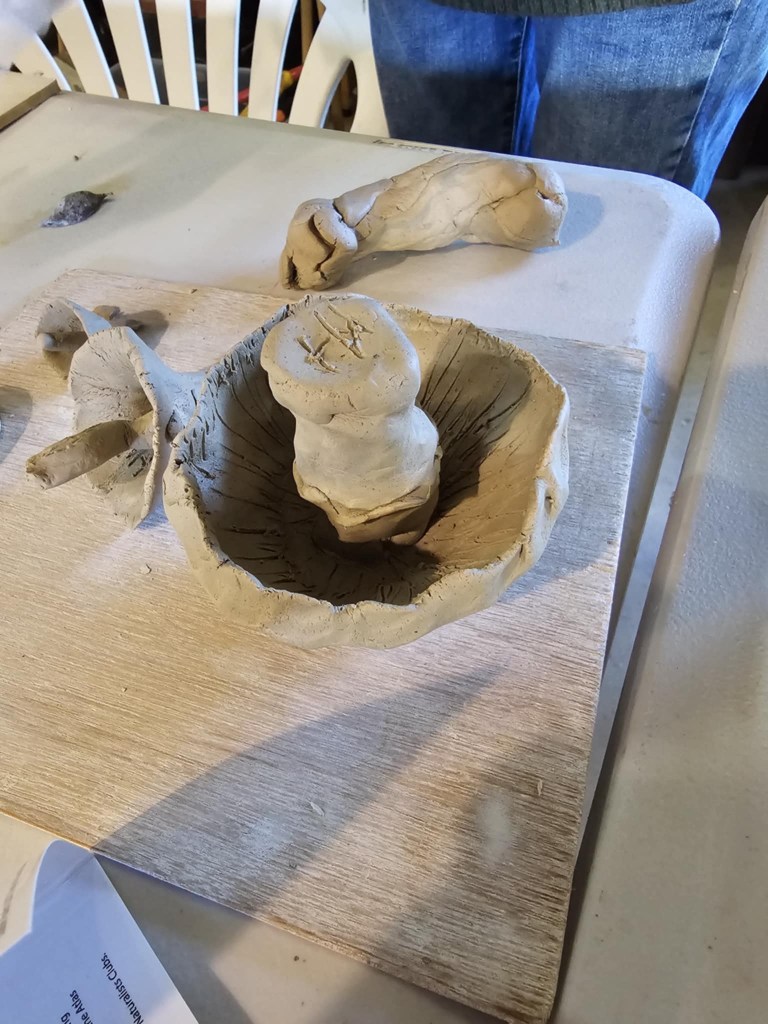
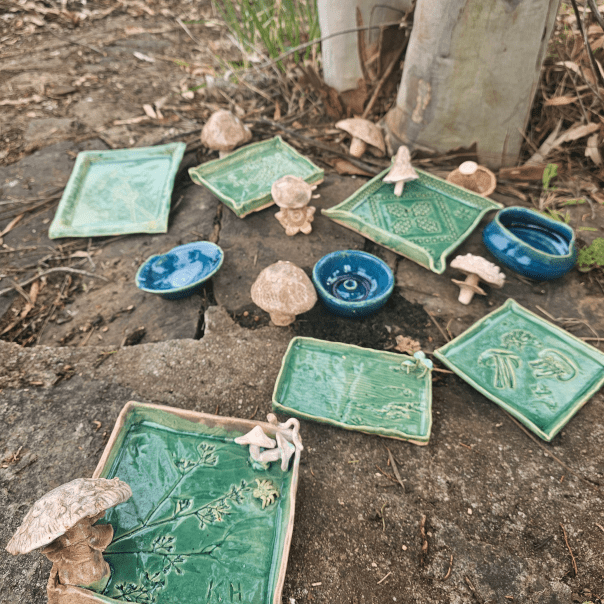
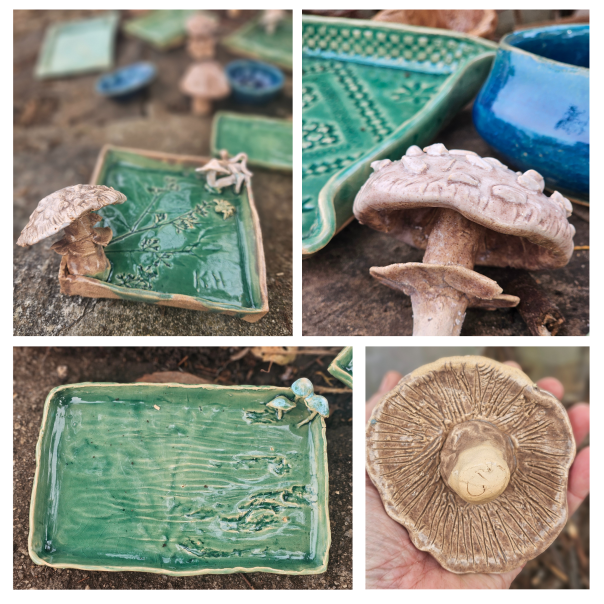
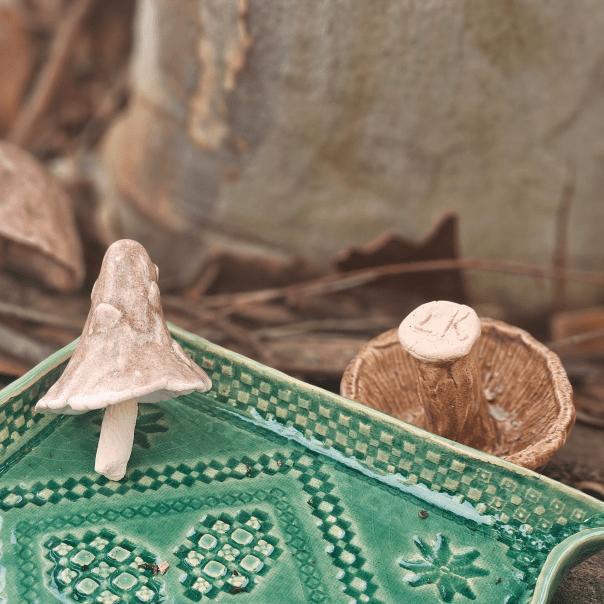
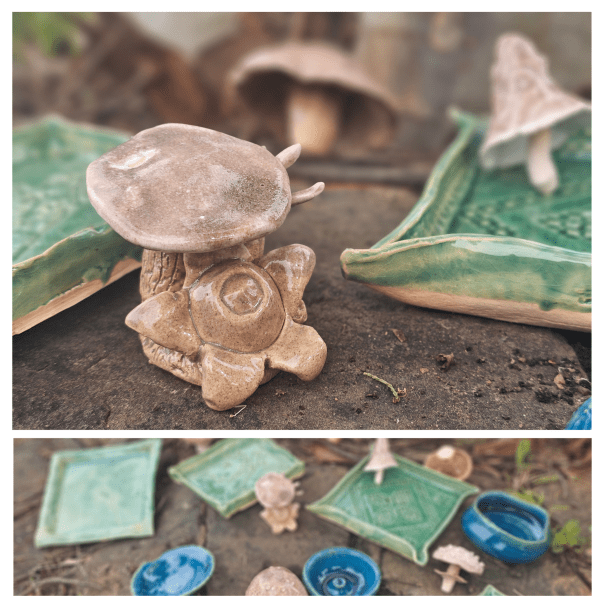
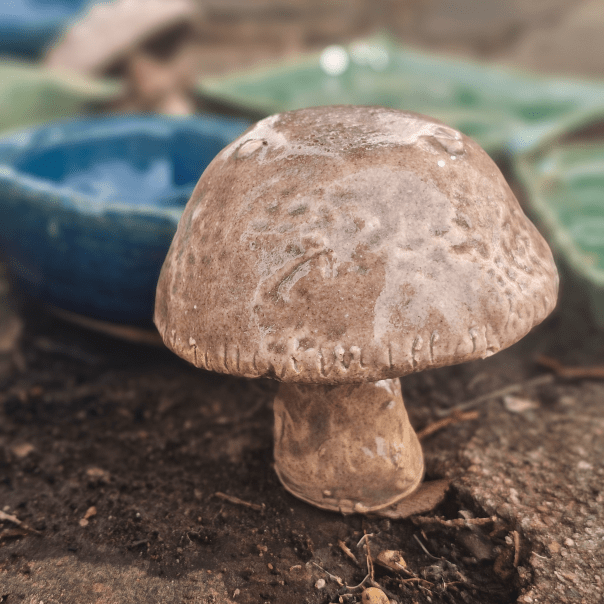
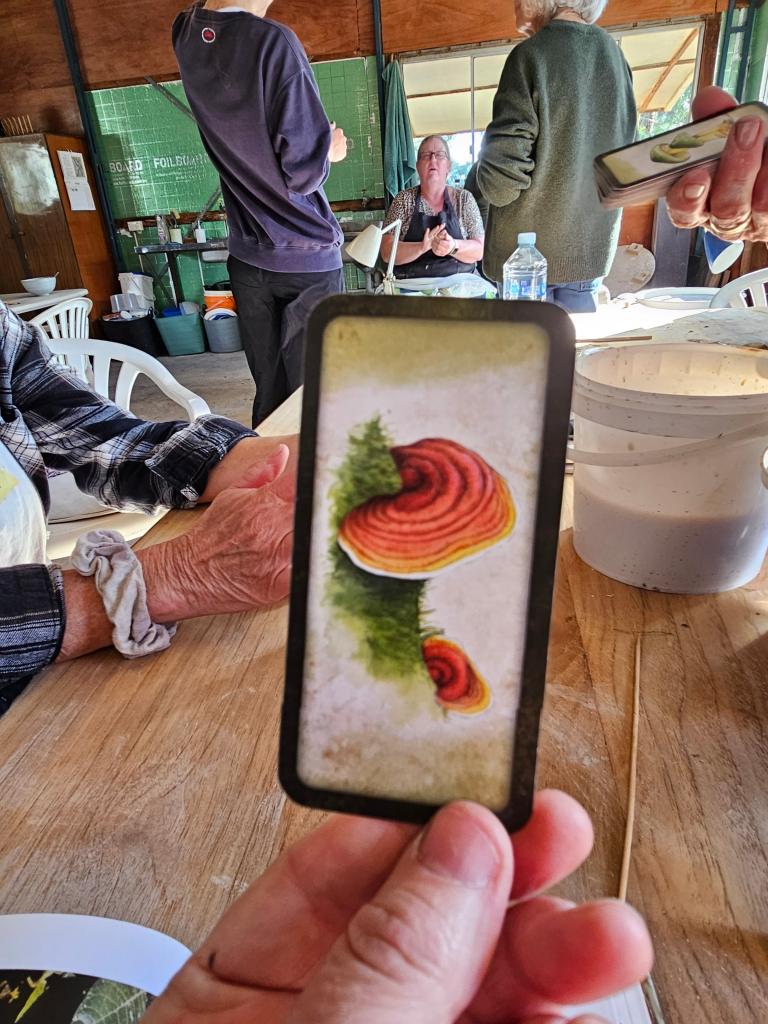
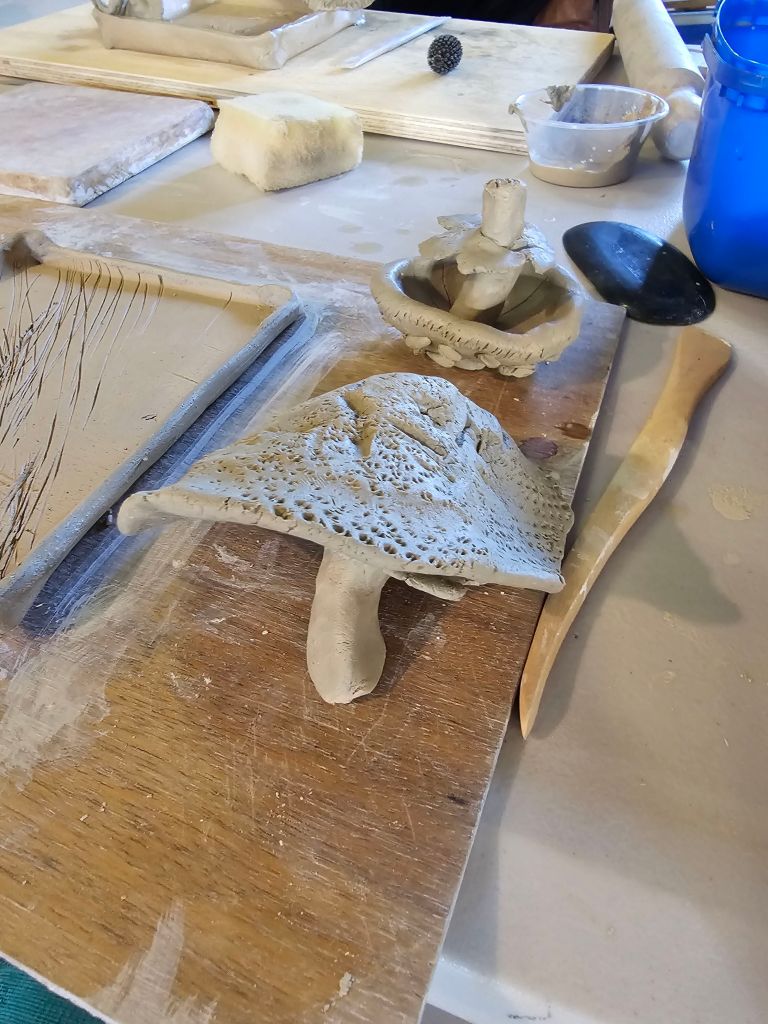
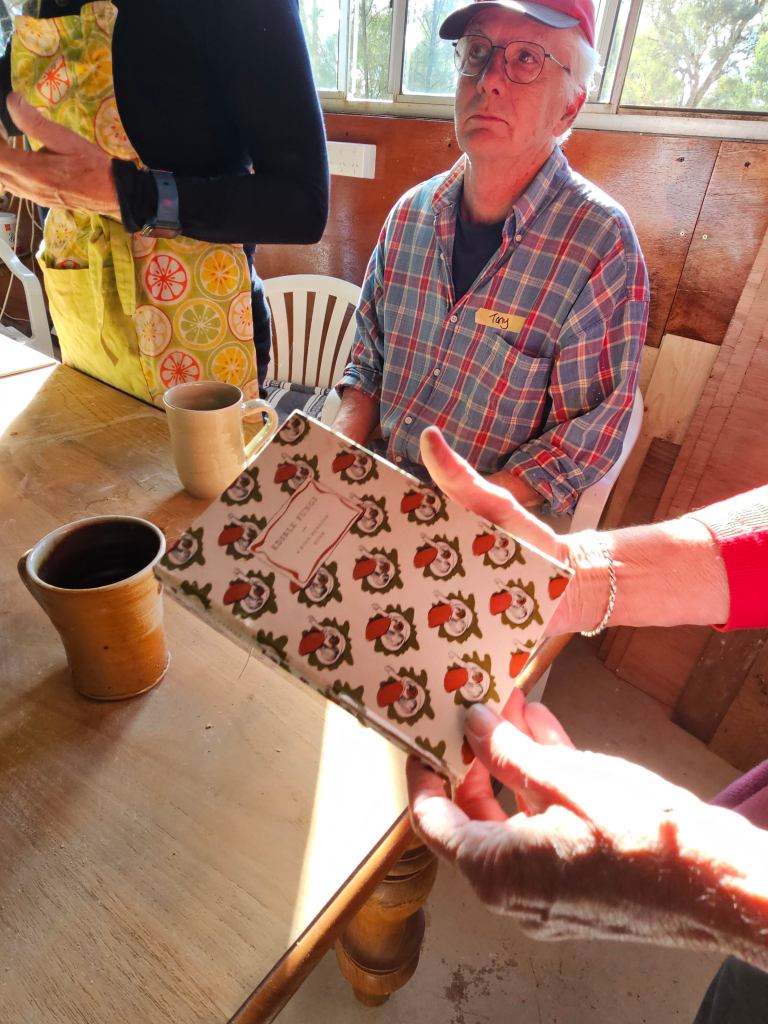
After our foray we came inside to the pottery barn to make our fungi-inspired platters & sculptures. Some of us even tried out the potter’s wheel while the rest of us looked on while sharing around a deck of fungi-inspired affirmation cards & flicking through a beautiful vintage fungi guide found for $1 in an op shop!

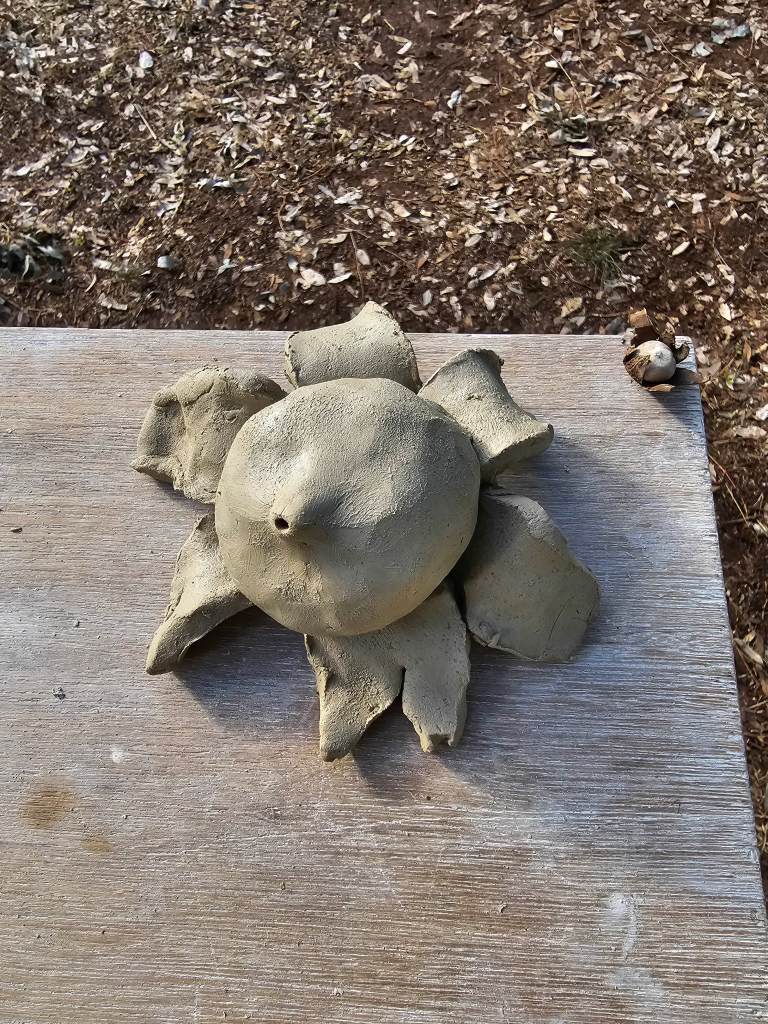
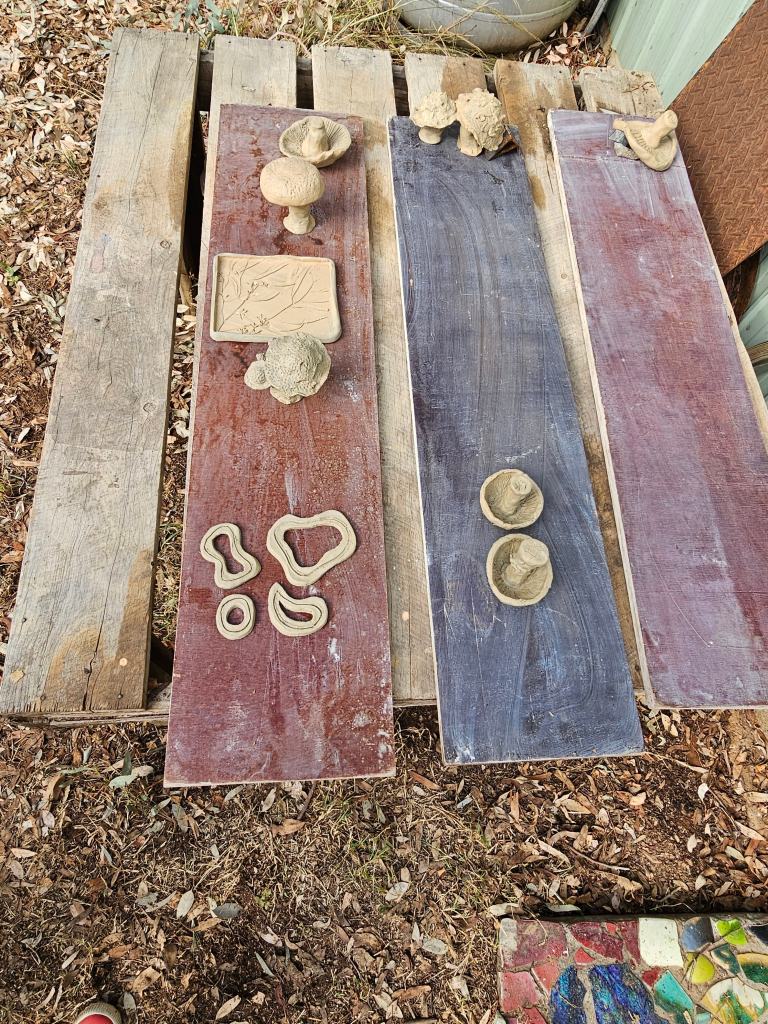

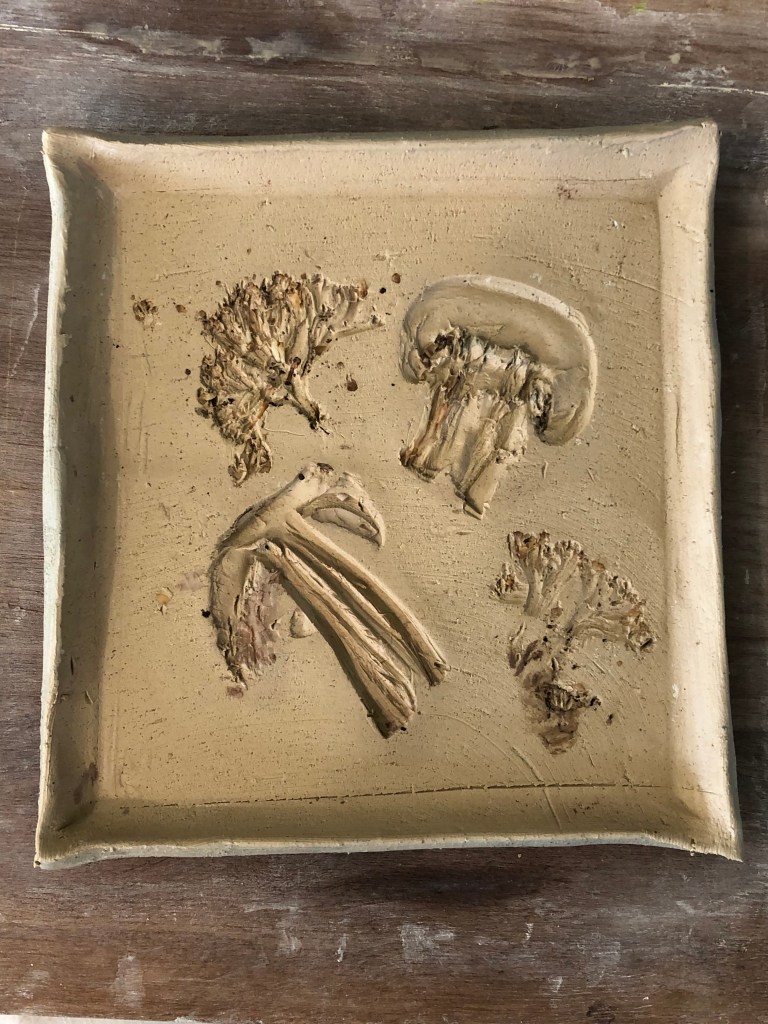
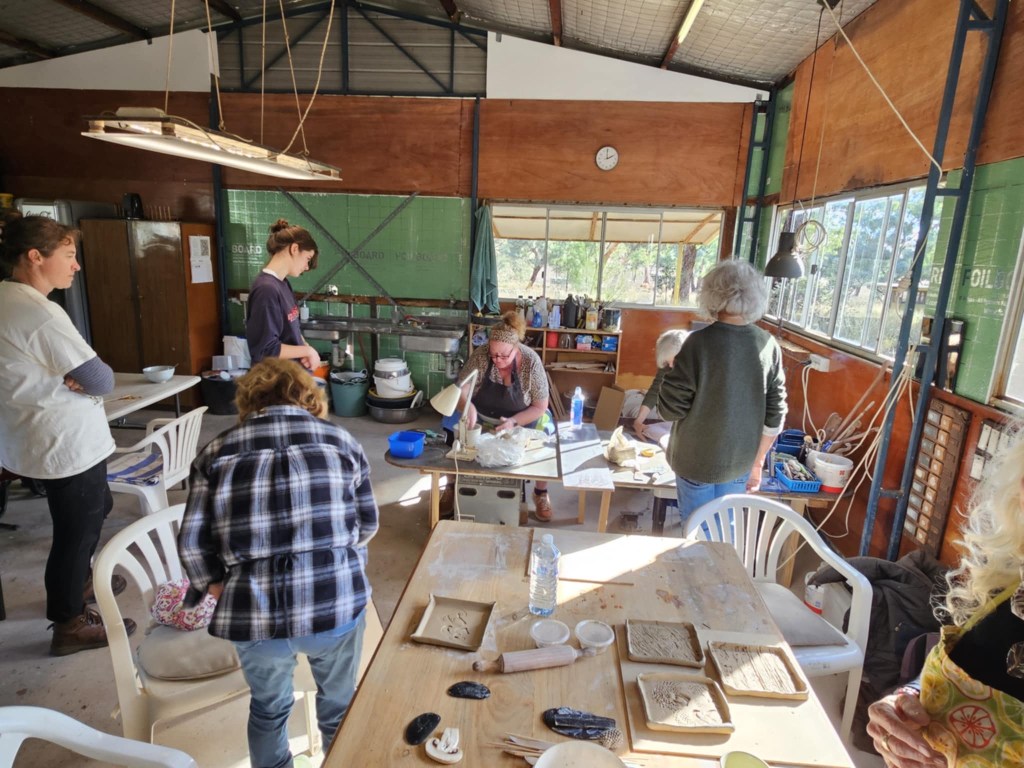

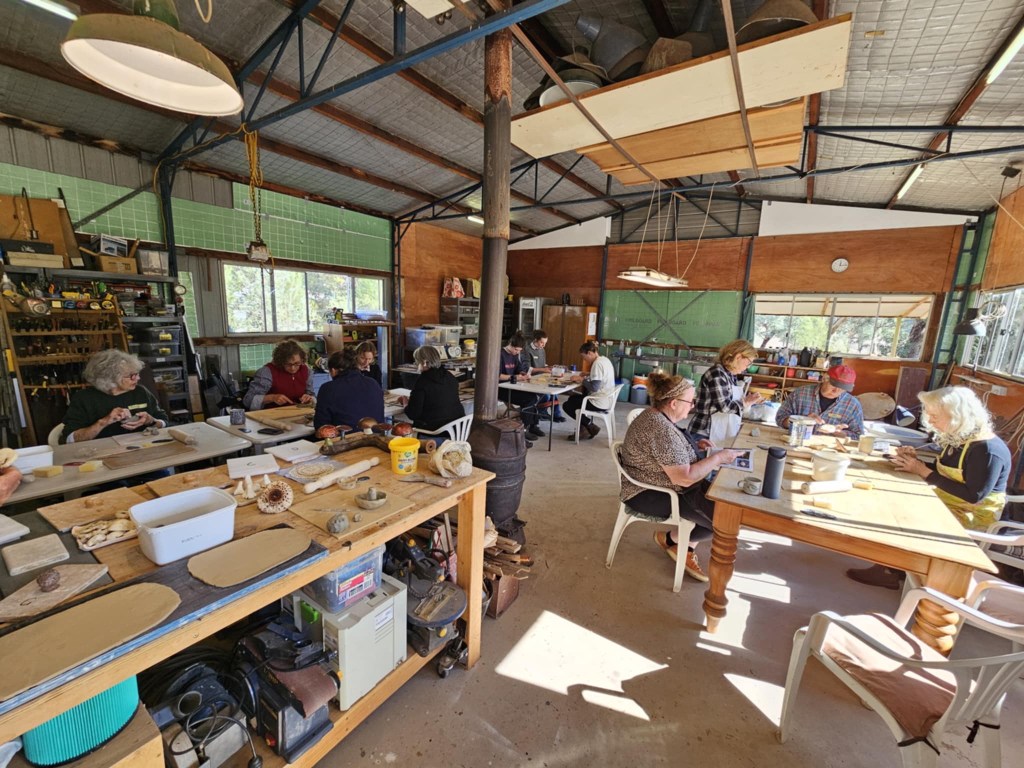

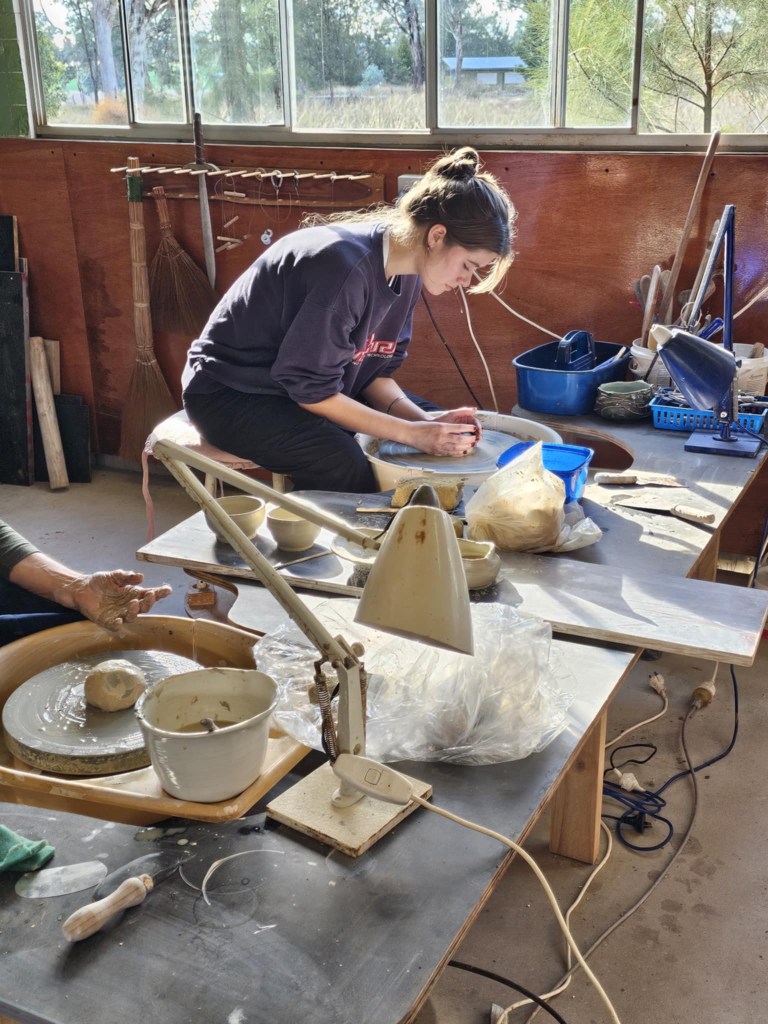


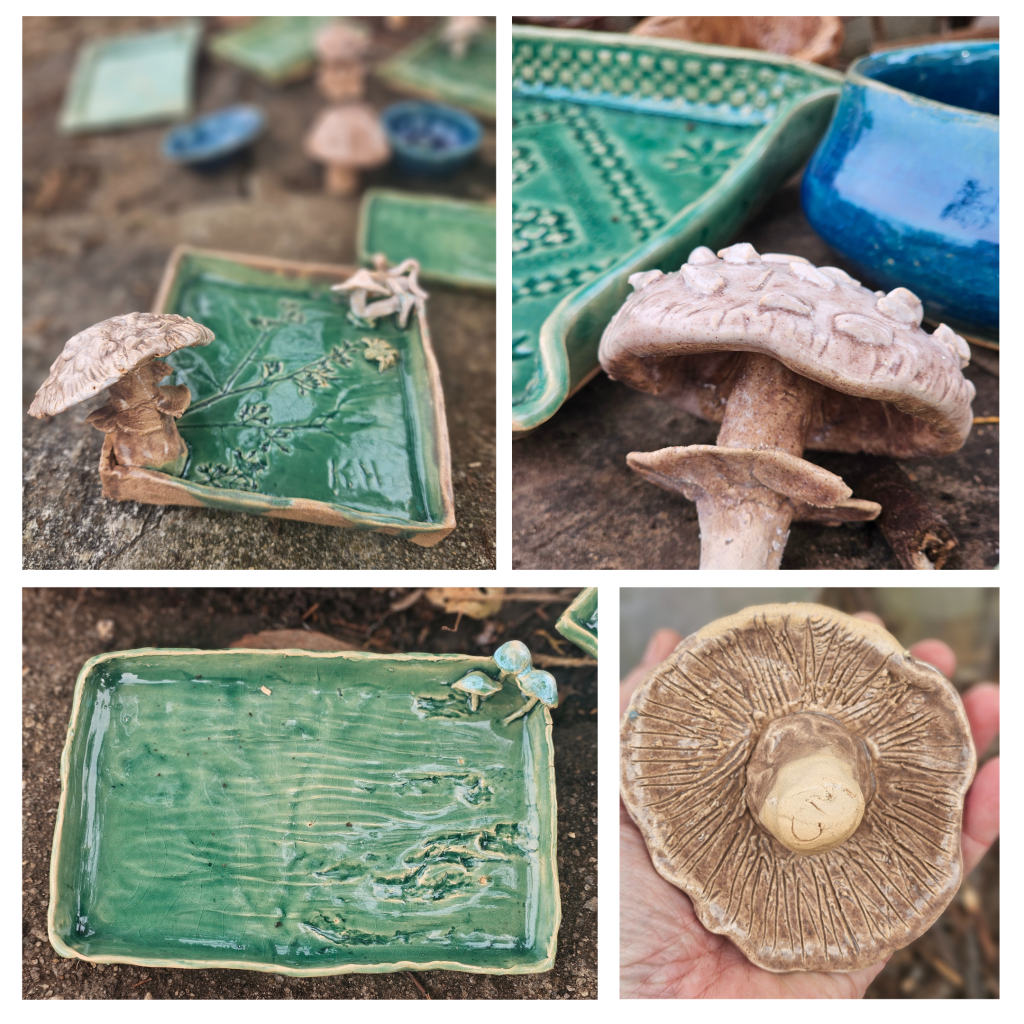


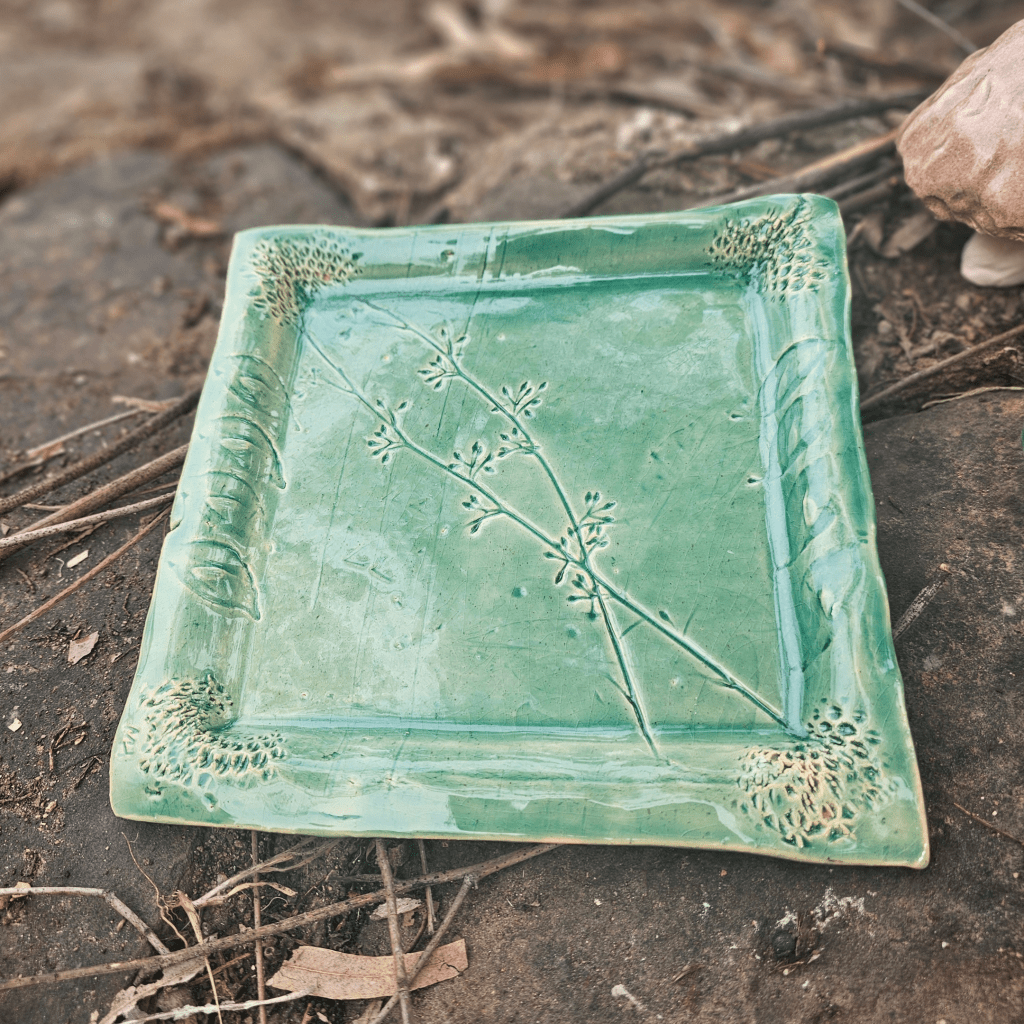
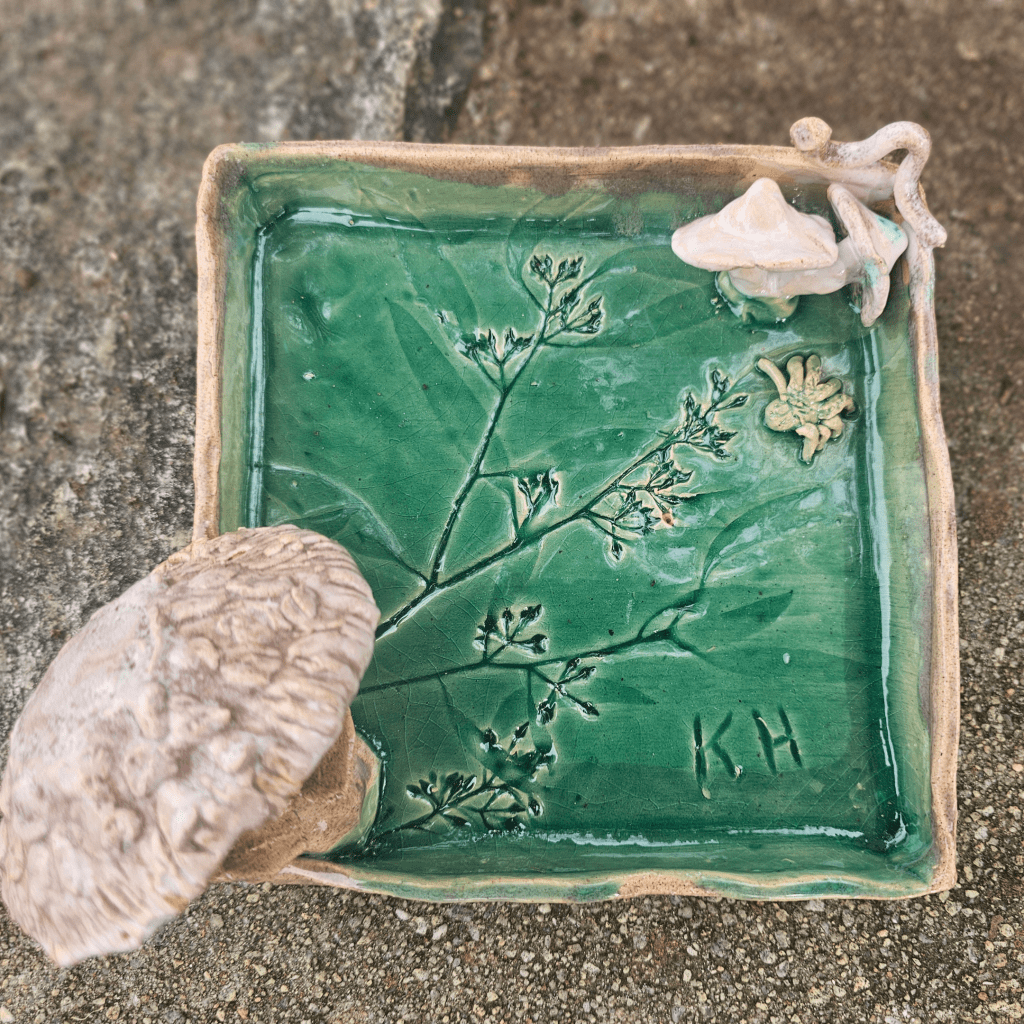
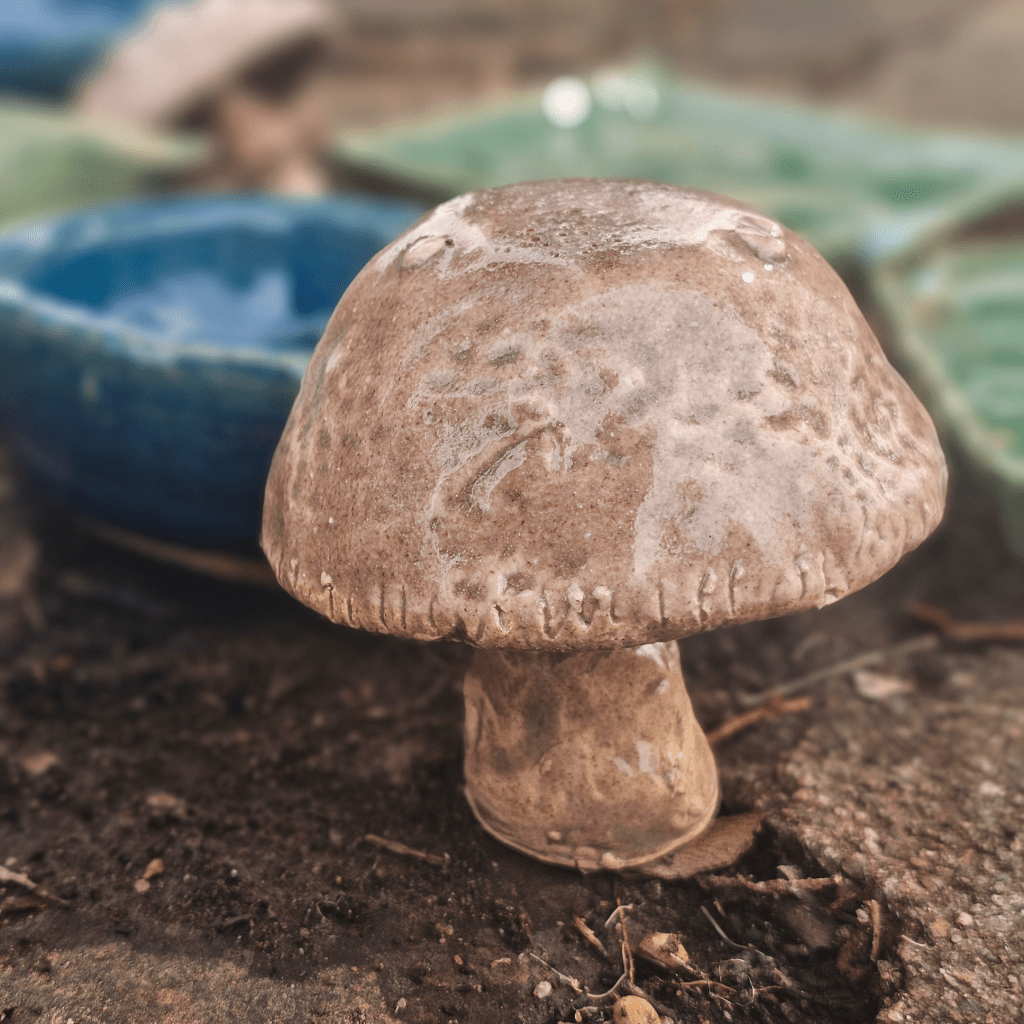
Here’s how some of our pottery turned out after firing and glazing.




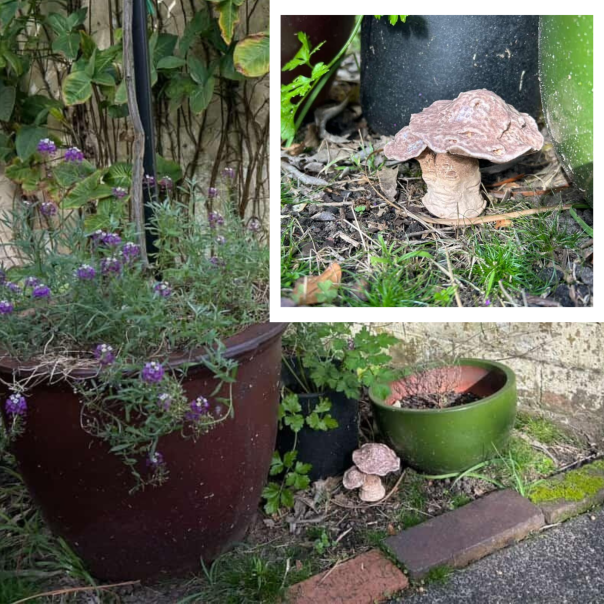
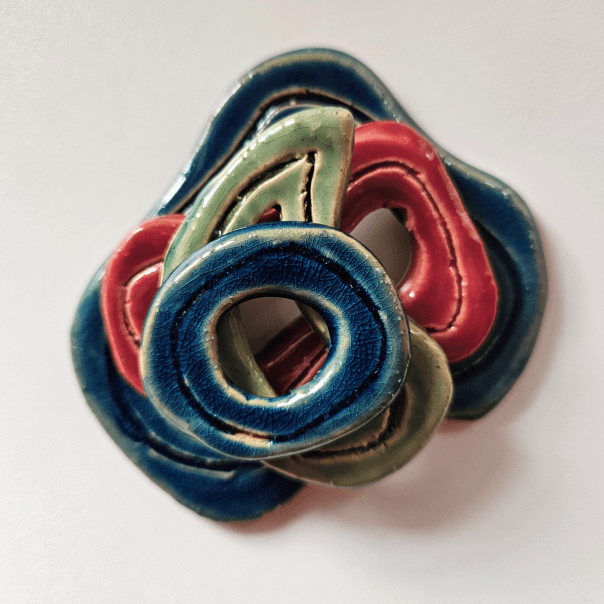
Finally we had time to conduct three microbiometer soil sample tests. One on the driveway, one in long grass and one under a mature gum tree. All samples returned high total microbe counts which was to be expected given the recent rain, but it was the fungi:bacteria ratio that was most interesting sitting at approx. 0%, 25% and 55% respectively & neatly demonstrating how fungi thrives where soil is least disturbed.
Site 1: Grassy area near to pottery Studio.
Total Microbes: 1026 ug C/g, F:B ratio: 0.4:1. Fungi: 26% Bacteria: 74%

Site 2: Driveway. Highly trafficked, very little growing. Water sitting on surface.
Total Microbes: 930 ug C/g, F:B ratio: -0.1:1. Fungi: 0% Bacteria: 100%

Sample 3: At the root zone of a mature Eucalupt.
Total Microbes: 1087 ug C/g, F:B ratio: 1.3:1. Fungi: 57% Bacteria: 43%
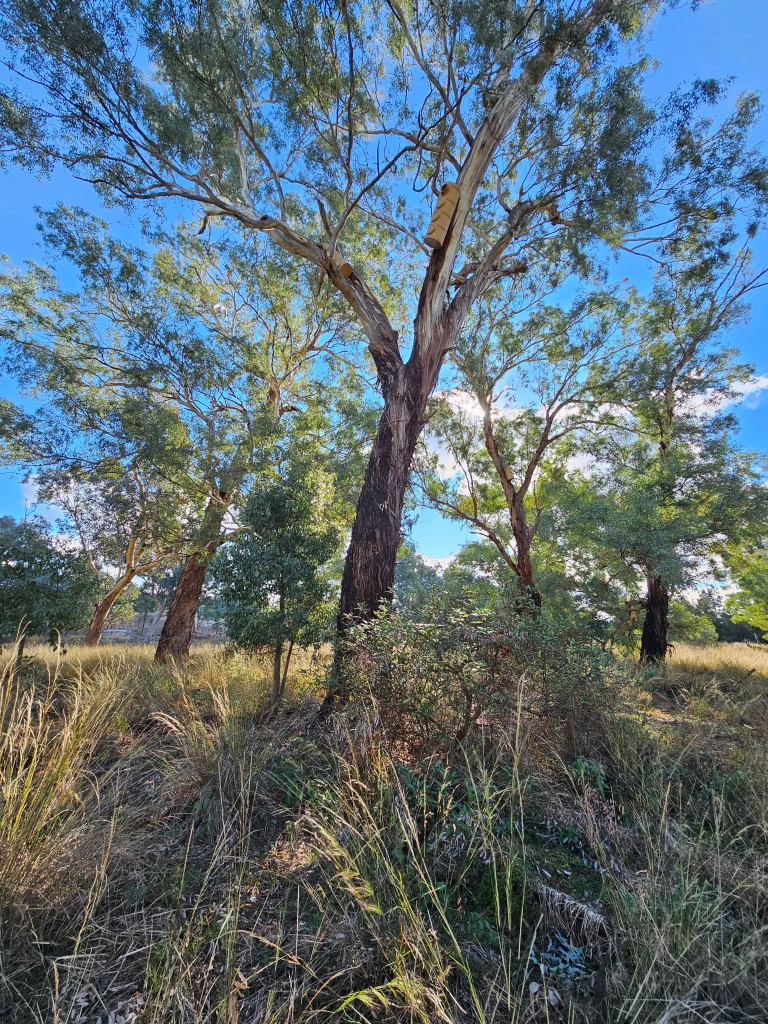
Discussing the soil test results
I used a test kit called the Microbiometer to run these soil tests. The tests were repeated to rule out anomalies in the results and the average result is given.
The microbiometer works by analysing the colour emitted from a sample of the soil microbes. A small sample of top soil (0-10cm) is taken and sieved. 1cm2 of the sieved sample is then placed in a test tube filled with water and a salt solution. The salts precipitate out the microbes from the soil particulates after stirring and then sitting for 20 minutes. At the 20 minute mark, 6 drops of the suspension are placed on a test strip in the same way you’d have carried out a Covid test. After another minute, the strip is scanned by an app on your mobile phone and the above figures are given.
Soil microbiology changes quickly in response to environmental conditions. Most often there is a spike in activity when it is wet and warm. Wet and cold will also give higher numbers than dry weather but to a lesser degree as some microbes slow down their reproductive rates when it gets frosty (and who can blame them!). Bacteria are first to respond to weather events and as such, its common for much of the boost in microbes to be bacterial. Fungi populations tend to be slower to change and therefore are more stable to count. Both fungi and bacteria are typically more abundant when there is a variety of plants growing so we’d expect higher numbers in grassland than on the drive – and that’s what this test showed us. Fungi is more vulnerable to disturbance which is one explanation as to why no fungi was counted on the driveway. Like many trees, Eucalypts have Mycorrhizal relationships with fungi in their root zone so, all things being well, we’d expect a higher fungi ratio around a tree and that’s what we got.
Knowing a soils microbiological profile can be very helpful when trying to understand a sites soil health, it’s potential for growing plants and its vulnerabilities.
These results were typical of what I’d have expected given the location the samples were taken from. They also correlate well with samples taken from this site at this time last year.
Of course we had to continue the fungi theme over lunch with a delicious cream of mushroom soup served up by the team at the Breakout Brasserie in Cowra.




Many thanks to Catherine Bennett for suggesting and organising the pottery aspect of the day and for providing such a wonderful venue for our fungi adventure. And thanks to everyone who participated so enthusiastically & who air dropped their photo’s for us to share. They are all wonderful!


The program is being funded by the NSW Government
through a partnership between the Saving our Species program
and the Environmental Trust.


