Mid Lachlan Landcare
supporting sustainable agriculture and restoring the environment
Planting a Tree or Two for the Glossy Black Cockatoo.
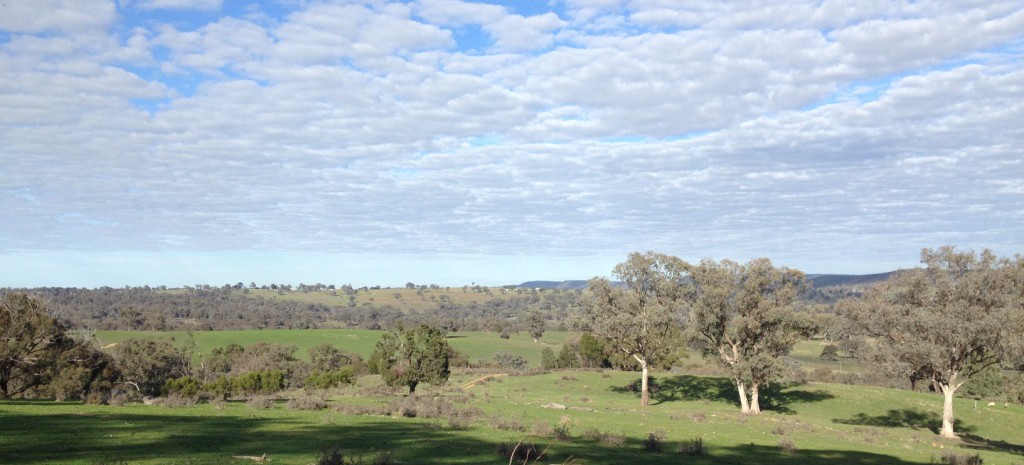
The team here at Mid Lachlan Landcare are excited to have received the Bupa Landcare Grant for our Glossy Black Cockatoo habitat connectivity project. Our project will be part of the planting of over 80,000 trees and plants across Australia, linking environmental health with community wellbeing. Our project will enhance the Western Woodland Way, an area that begins in the north on Queensland’s border at Dthinna Dthinnawan National Park and ends in the south at Weddin Mountains National Park. Within that corridoor, we’ll be planting to connect habitat between the Conimbla and Nangar National Parks, a rural area with Gooloogong at its centre.
The funds we’ve received via this project have enabled us to finance several community tree planting events in conjunction with Kangarooby Catchment Landcare and Eugowra Catchment Landcare groups with whom we are partnered. This area is well known for Glossy Black Cockatoos who favour She Oaks (Allocasuarina sp) as feed trees and these enjoy the climate and conditions in this part of the world.
Our planting area takes in Cowrashire, an area with an excellent reputation for birdwatching thanks in no small part, due to the work of our Cowra Woodland Birds group who’ve been conducting bird surveys in this region for 23 years. See this blog for more information about the birds of the Cowra region. In addition to improving bird habitat, we are aiming for this project and these plantings to further enhance the birdwatching opportunities in this and neighbouring Cabonne Shire.
Landscape connectivity is essential for maintaining ecosystem and species health, boosting long-term survival by enabling populations to diversity and adapt to an ever-changing climate. While we are primarily focused on birds, these principles also hold true for human populations and as such, we’ll be encouraging our friends, neighbours and countrymen to get out amongst it as we plant our way to a greener and healthier tomorrow.
Our events will run from May 23rd to the end of July. Contact us for more information on how you can get inovlved or scan the QR codes below to register for the event:


This project has been made possible due to generous funding from Bupa and Landcare Australia.
Searching for Swift Parrots
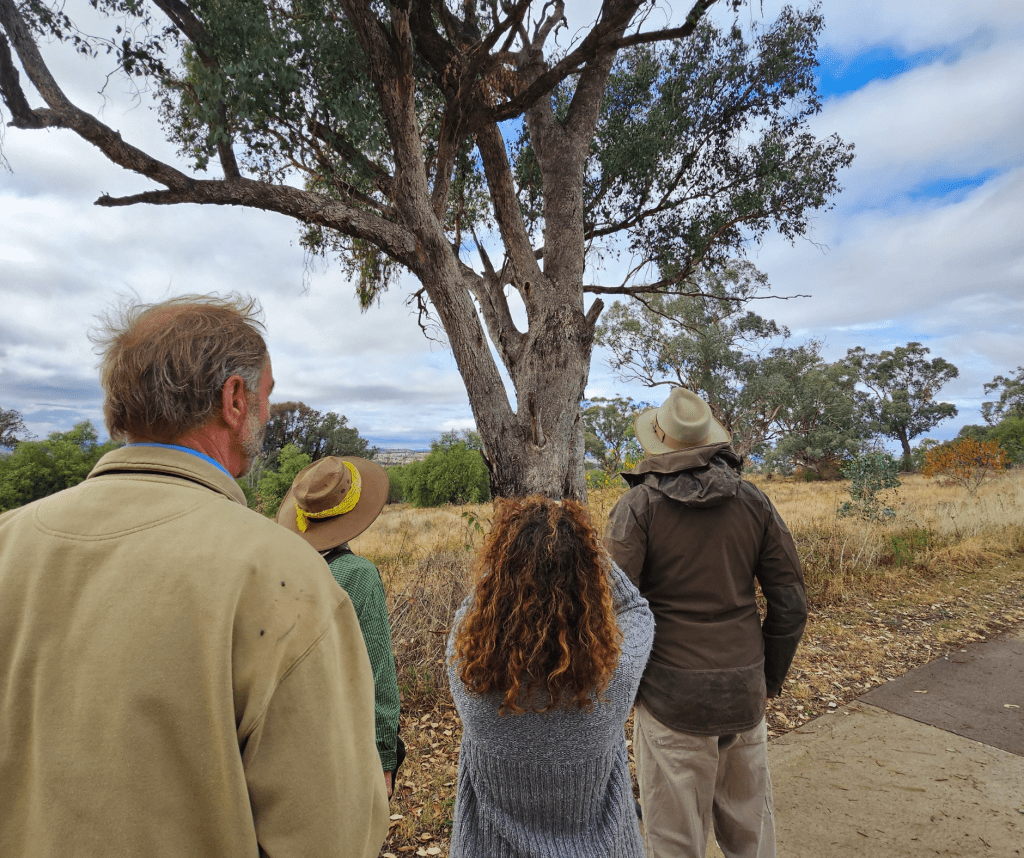
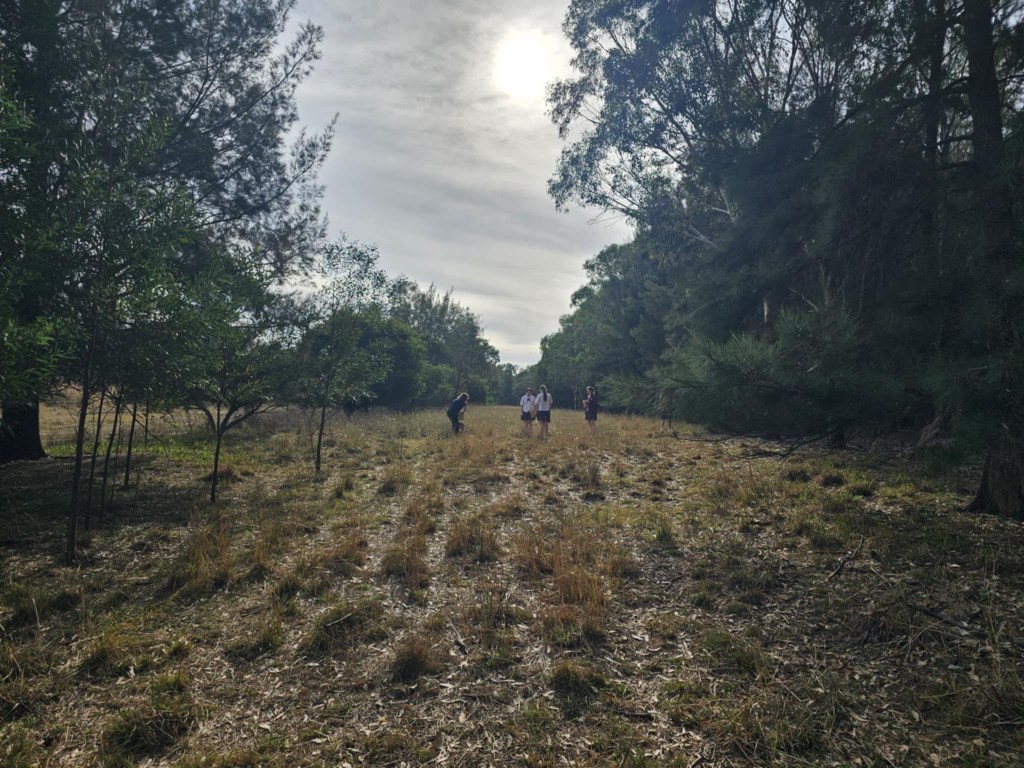
This morning a small group of us met at the Cowra Council Peace Precinct on a search for the critically endangered Swift parrot (Lathamus discolor). It’s estimated there are only 1000 left in the wild so we all knew we’d be lucky to see one today.

Swift Parrots migrate across the Bass Strait to the south-east of Australia to overwinter, feeding on nectar and lerp in our Box Gum woodlands. Cowra is definitely on their migration route with the best time to spot them being between March and June.
BirdLife Australia have a number of survey sites identified in and around Cowra including those we visited today.
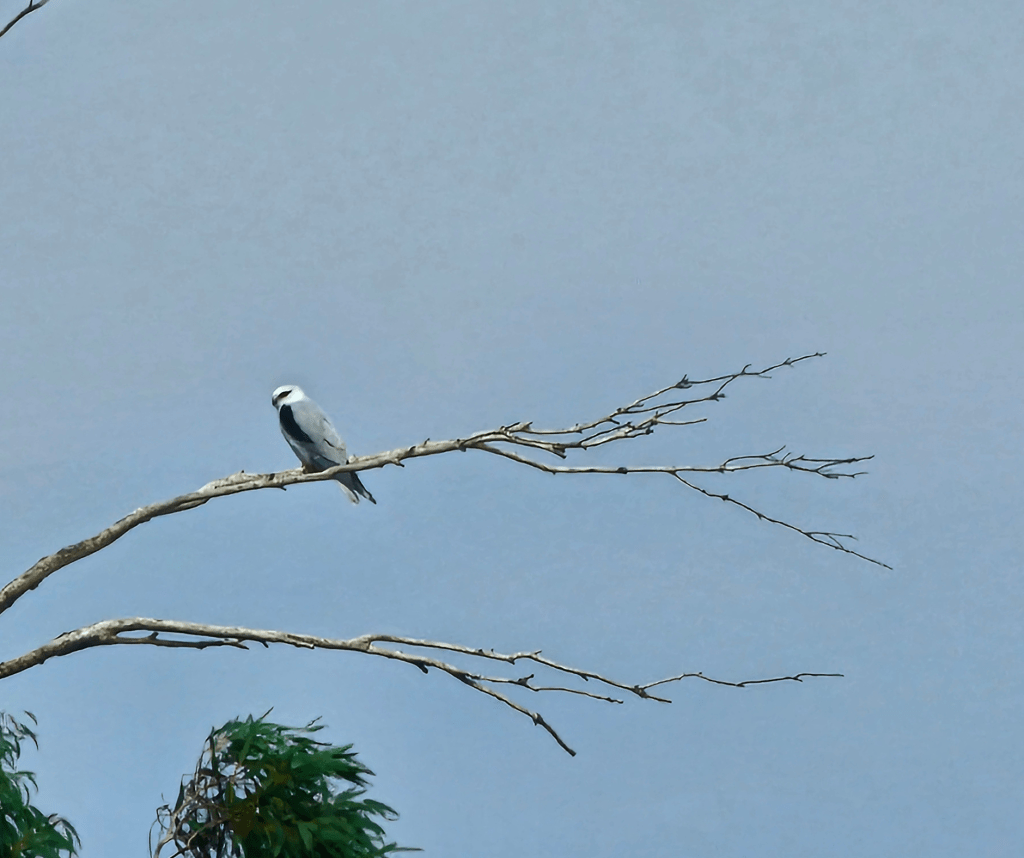
While it wasn’t the best conditions for spotting Swifties (the birds, not the music fans), we did see lots of other wonderful birds including this very chatty Mistletoe bird.




How to join this Citizen Science survey & complete your own 5 minute Swift parrot search
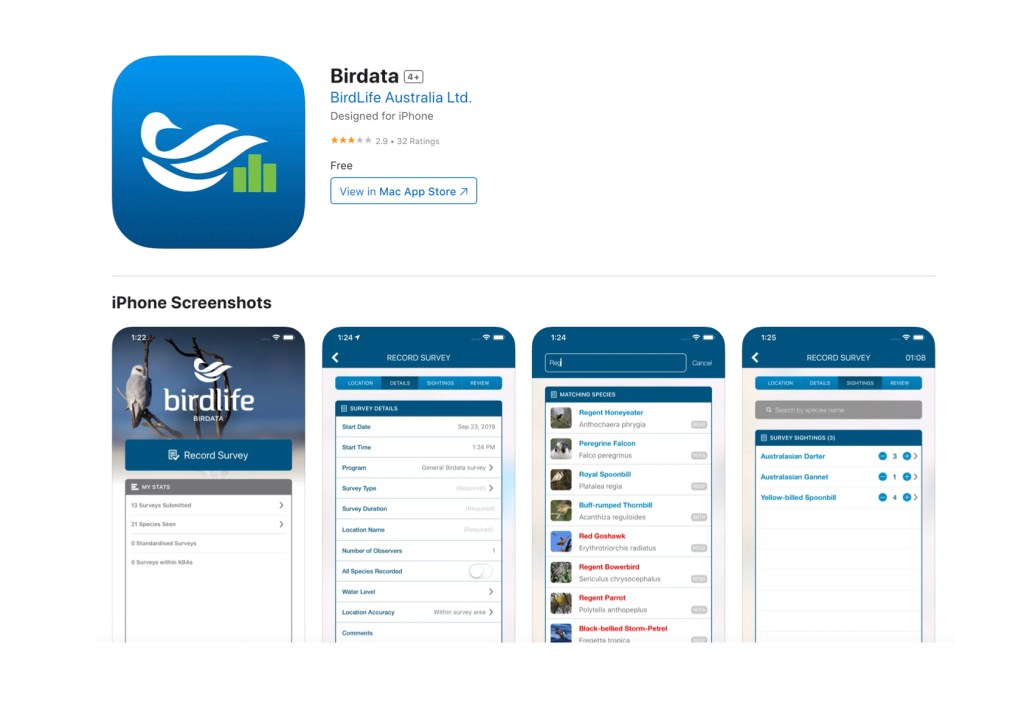
- Download the birdata app – this app is available for both Apple & Android devices.
- Create yourself an account – you’ll need to be in wifi range and have an email address for this bit. You also need to set up a password.
- Familiarise yourself with the app before setting out. If you’re here for the Swift Parrot search:
- click on ‘Record Survey’ and scroll down to the Swift Parrot Search line. Click there and this will bring up a map.
- Zoom into your map and look around. Designated Swift Parrot survey sites near you will become visible as purple circles.
- If you want to carry out your survey now, move yourself into one of the survey circle zones.
- Once in the zone, double tap your screen to confirm your position and start the survey. The survey won’t start until you are in position and have done this.
- Fill in as much data as you can about the trees, lerp and blossom. If you are unsure, leave this blank.
- Complete your 5 minute survey then confirm your data and submit it to Birdlife Australia.
We didn’t spot any Swift parrots today but will keep on looking & completing these surveys over the season as the more we get out there and look, the more likely we are to spot them.
Swift parrots are critically endangered due largely to habitat loss and fragmentation, a situation that’s putting a number of our native species in peril.
May the force (of Fungi) be with you!
Have you seen what mushrooms are doing to our pavements lately?

These little guys just couldn’t wait for the curtain to lift on Mycology May, in fact nothing can keep them down and prevent them living their best lives! These are horse dung fungi or Pisolithus arhizus, an earth ball native to these shores that forms a mycorrhizal relationship with Eucalyptus trees. It’s also one of my preferred fungi species for dye extraction. These fruiting bodies are currently pushing their way through the driveway at our Cowra office.
I’ve become a little obsessed with fungi over the last few years – something that’s easy to do given that our region is the perfect place for mushroom hunting. But it’s also thanks to the work that the Central Tablelands Region Landcare and Local Land Services networks put in to making Mycology May happen and this includes providing financial support for a wide range of fungi-themed events and activities. Mid Lachlan’s Mycology May event booking information is here. Follow this link for more event information.
Back to the pavement vandals…
What you can see below are the fruiting bodies of this fungi. This part of the fungi erupts from the ground in such a spectacular way thanks to hydrostatics – a type of hydraulic Pressure.
Fungi cells swell and collapse in line with their water content. Fungi cells work in the same way as bike tyres – just as tyres get harder and more ridgid when you pump them with air, mushroom cells get harder and more ridged when they are pumped with water. A force we call turgidity. Accurate figures on just how much pressure is involved in this change is hard to find, as to date, there’s no standard way to measure it. However, data on yeasts which are single celled organisms have calculated the pressure to be around 58 PSI or 0.4 mega pascale per cell. Times that by the hundreds or even thousands of cells per fungi fruiting body and it’s easy to see how they make light work of our roads and pavements!
We do hope you enjoy the upcoming Mycology May and look forward to hearing about your discoveries.

An Autumn Among the Trees – National Eucalyptus Day + Daydreaming in She Oaks.
March has ended in a flurry of tree-themed activities and it’s all been rather lovely. Last weekend we celebrated Eucalyptus day with our neighbours Weddin Landcare & team at their community nursery with a bit of essential oil distillation. I’ve been researching plant chemistry (phytochemistry) for the last 15 years of so and have a particular interest in plant aromatics (essential oils, resins and balsams) – in particular how plants use aroma chemistry to both communicate & stay well. It was great to be able to share a little of this with the good people of Grenfell, many of whom I’m sure will be rushing off to buy themselves an air still so they can create aromatic potions of their own!
I’ll share more detail on eucalyptus oil distillation in a later blog so stay posted – and for those of you who attended the talk and want to get cooking, I had a chat to the good people at Fork in the River, Cowra and they can supply you with this very same air still so go look them up.
Thanks to Clare from Weddin Landcare for this photograph.

Other than Eucalyptus, I’ve fallen down a She-Oak shaped rabbit hole and it’s all been rather lovely. Before you start wondering ‘why are we paying someone just to daydream about trees?’ I can confirm that my research has been transformed into content for a high school seed collecting / tree propagation series of activities – activities that just kicked off this week!

While I’ve always found the She Oaks beautiful and elegant looking, I’ve actually never really thought that deeply about their biology until recently. I knew these trees are wind pollenated, but it didn’t register before now that this meant some trees are boys and some are girls (I’m sure you all knew already so bare with me while I catch up). With that knowledge at the forefront of my mind I stepped into a dense patch of She-Oak woodland with fresh eyes today. It was interesting to see how the trees had orientated themselves – the number of males to females, how many trees were still keeping their gender a secret and where the most prolific seed producing trees were located. Being in a position where I could test out the little knowledge I’ve acquired on the She Oaks left me feeling a bit like a tourist delighting in how assymylated they felt after saying ‘please, thank you and hello’ in the local lingo. I both acknowledged that I still know next to nothing while also feeling so very connected and at-one with the ‘locals’. Amazing!
Once I’d got to grips with the basics, I delved a bit further in my research and found this beautiful doccumentary showcasing how the She Oak transformed a seemingly barron piece of reclaimed land just off Singapore (Coney Island) into a thriving woodland! What’s even more amazing is the time frame in which these trees brought the landscape to life! Anyway, I won’t spoil it as you can watch it for free by clicking below:
I’ve really enjoyed my conversations among trees and tree-loving folks this month and look forwad to many more to come.
Do share your tree-talking adventures with us, it’s always encouraging to know we are not alone in being head over heels in love with our native flora!
Birds & The Brush

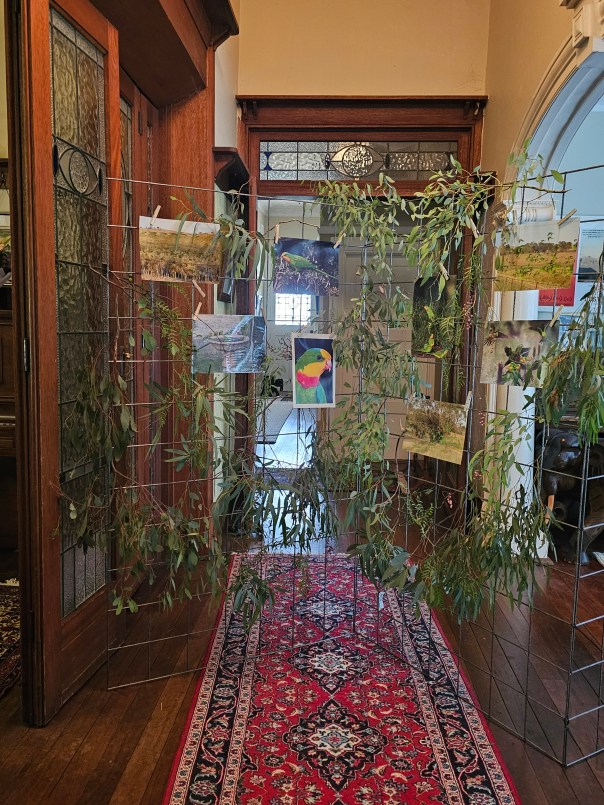
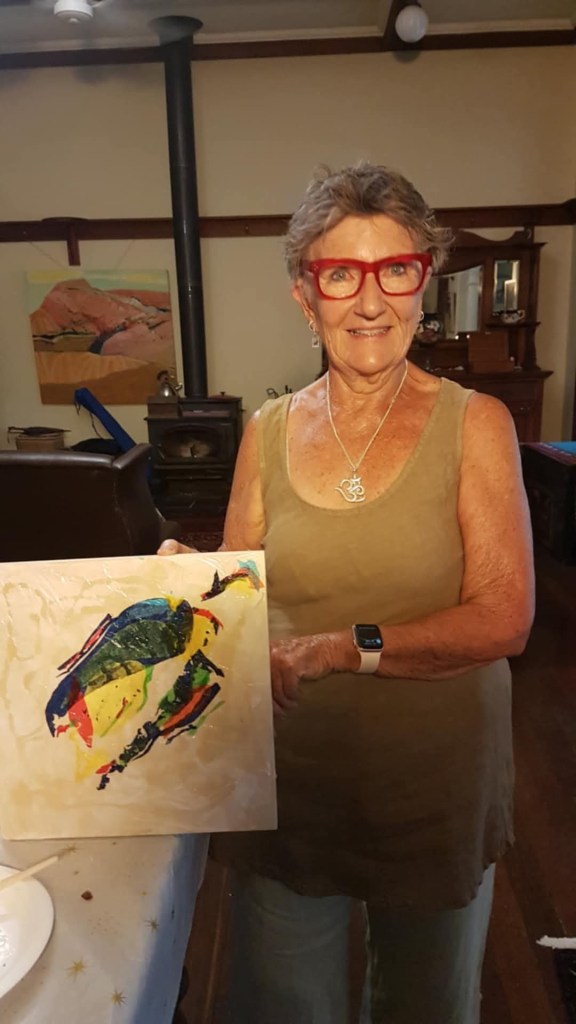

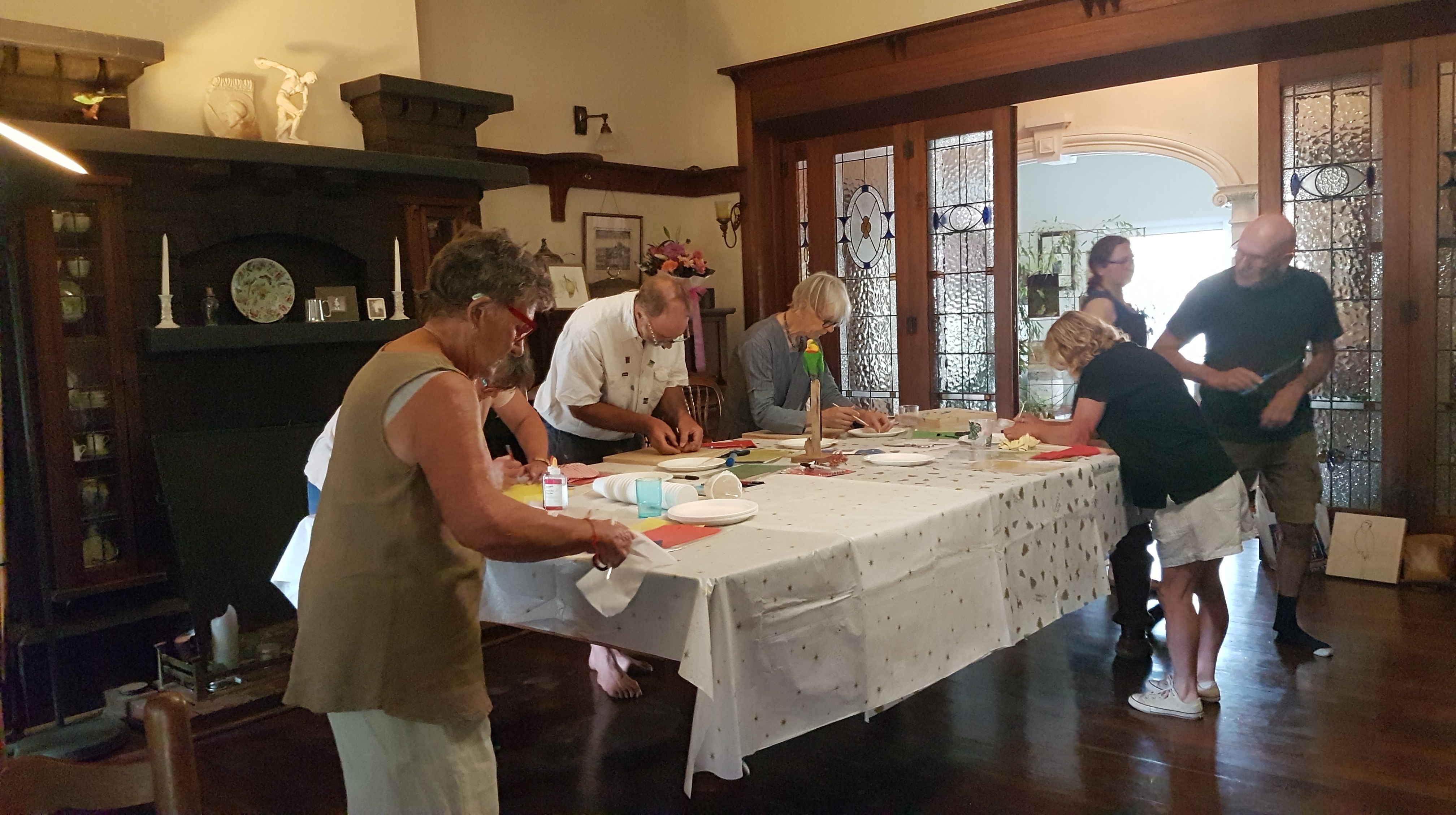
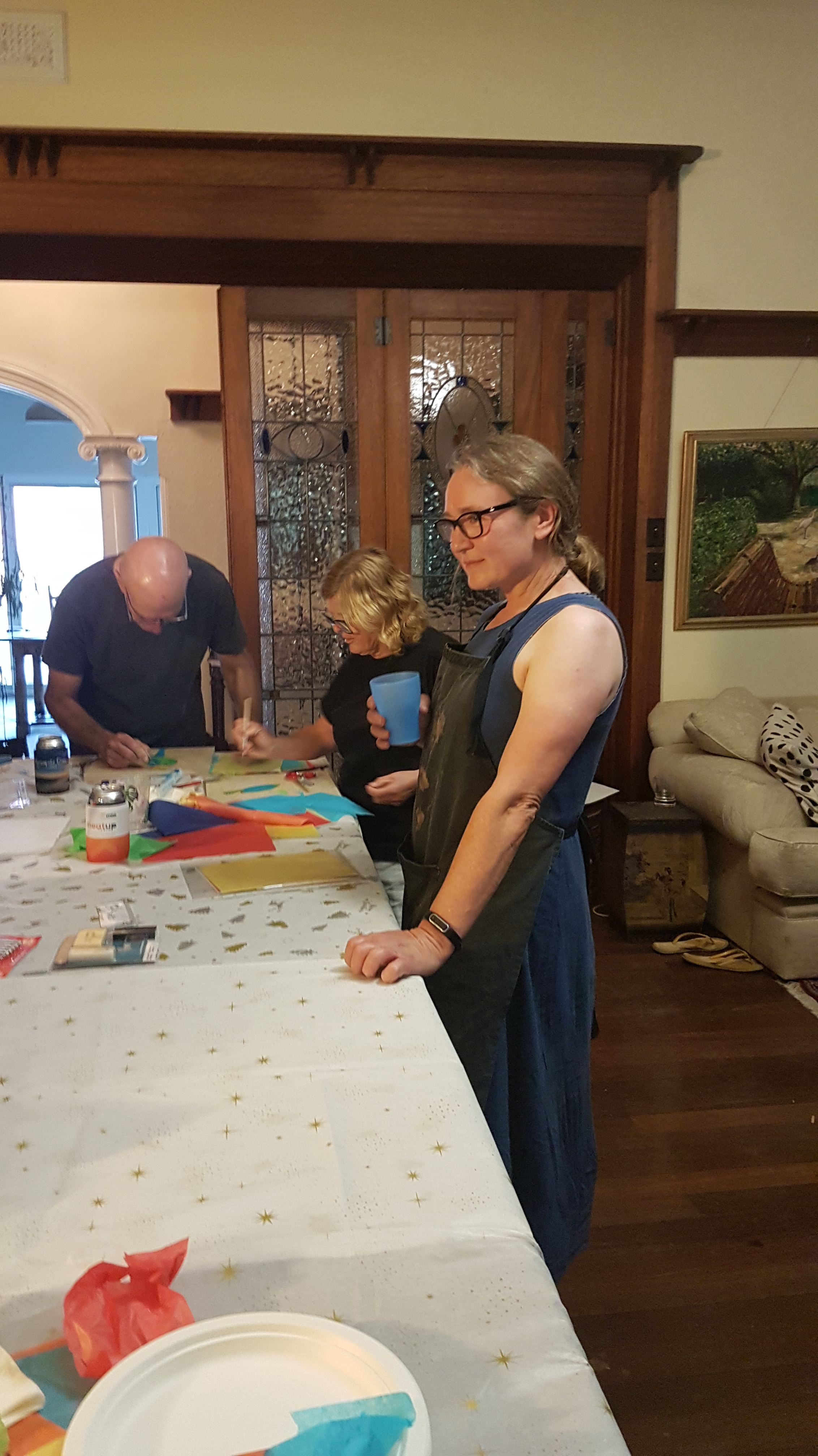
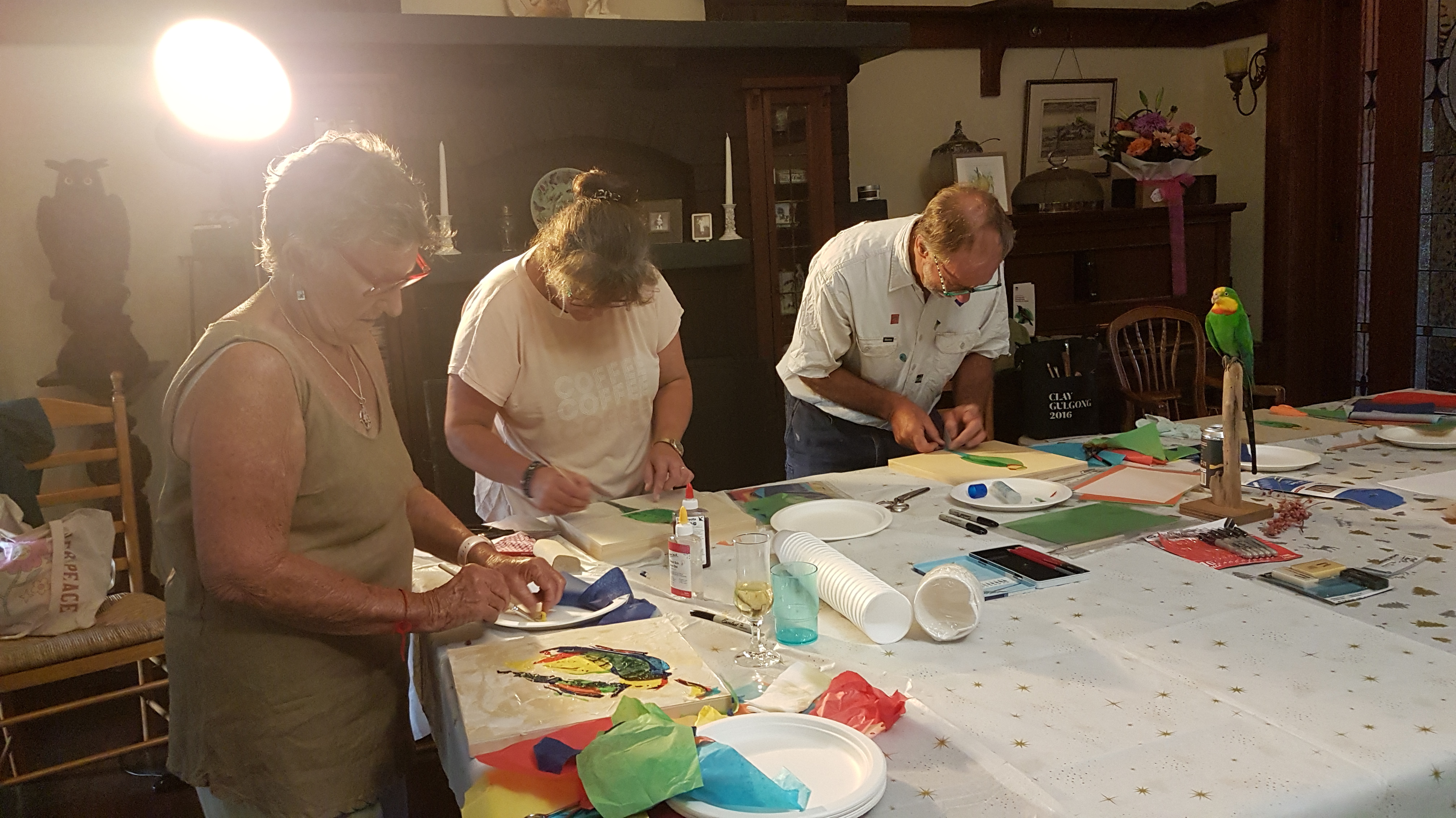
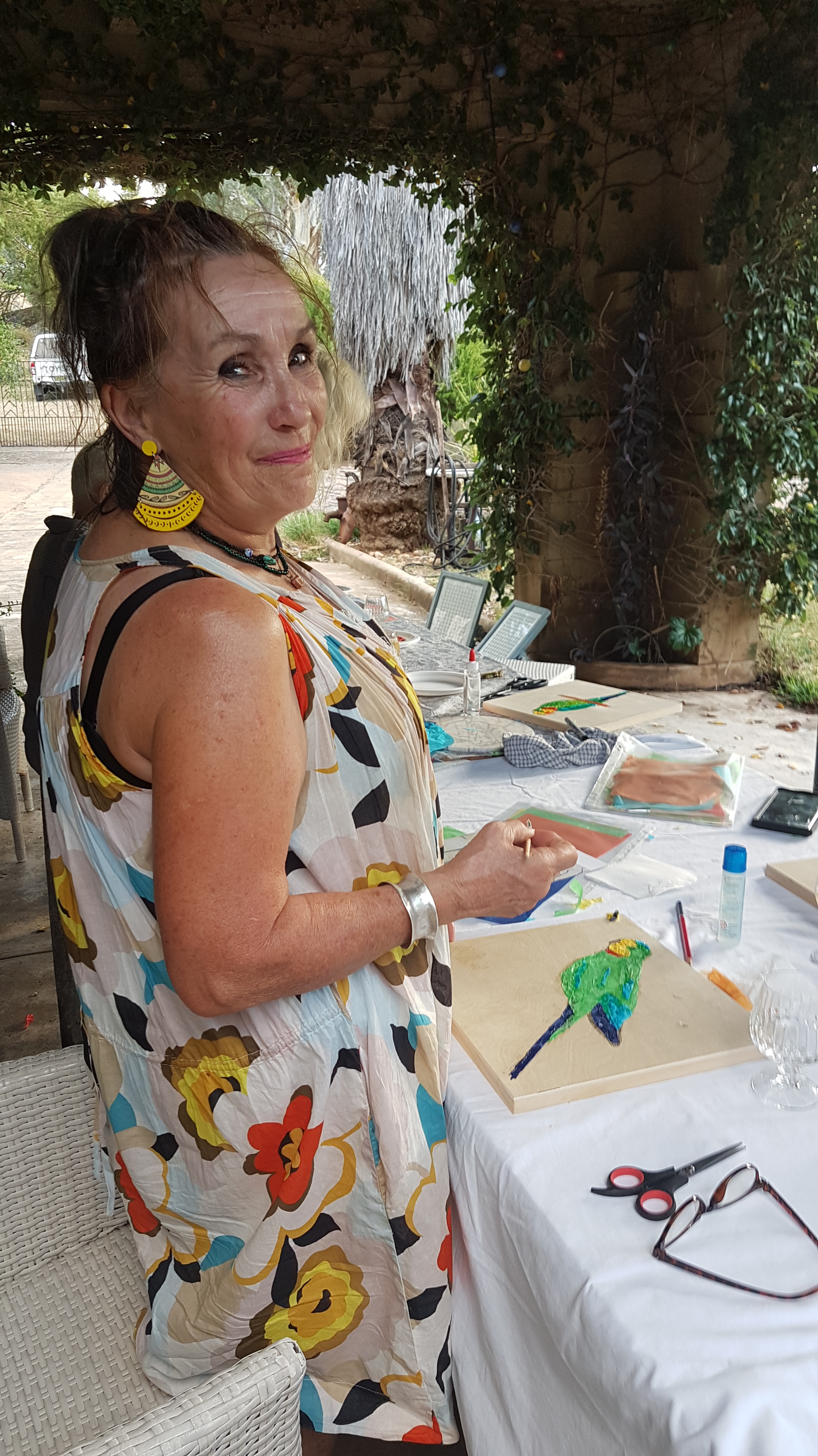
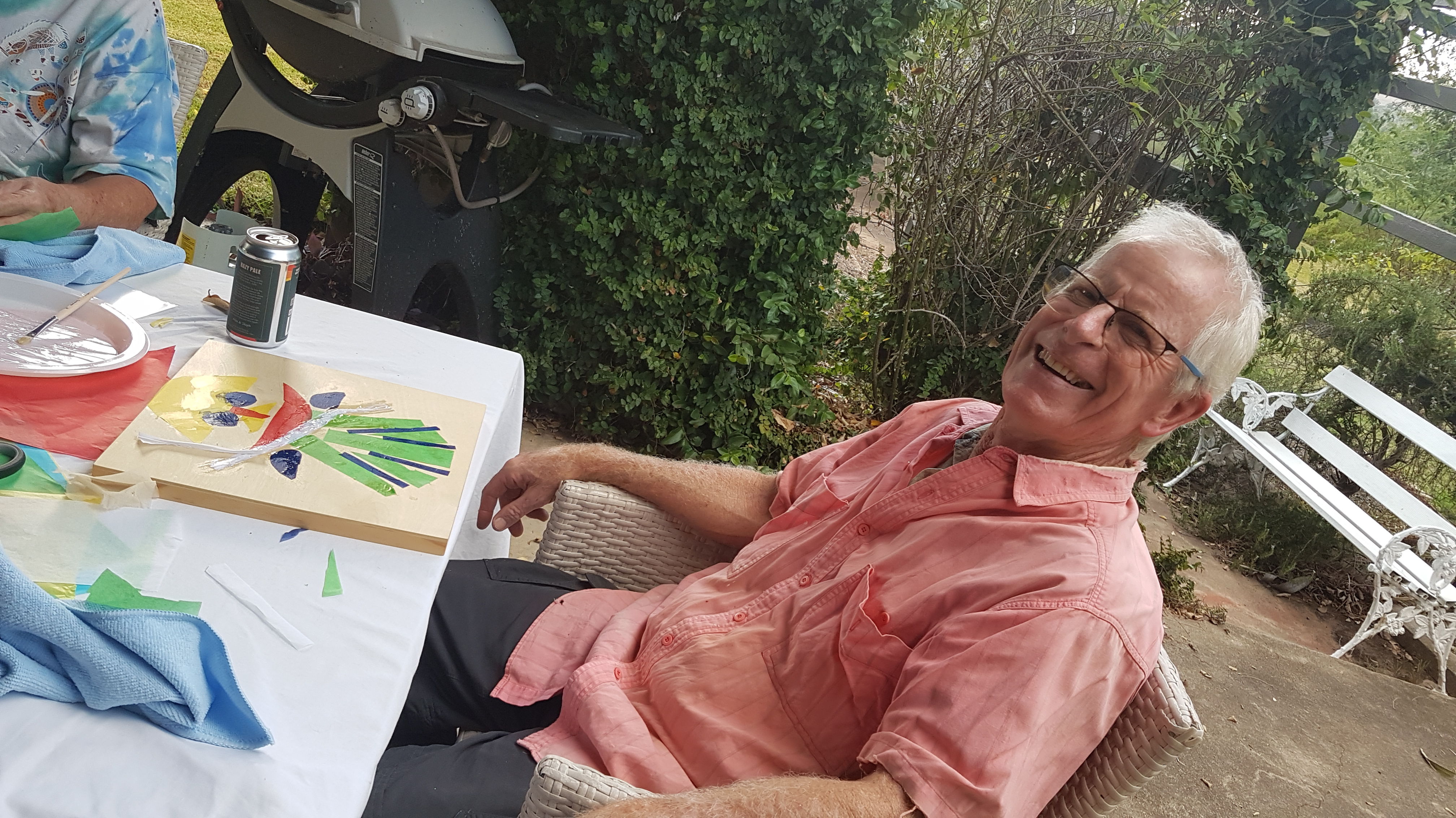
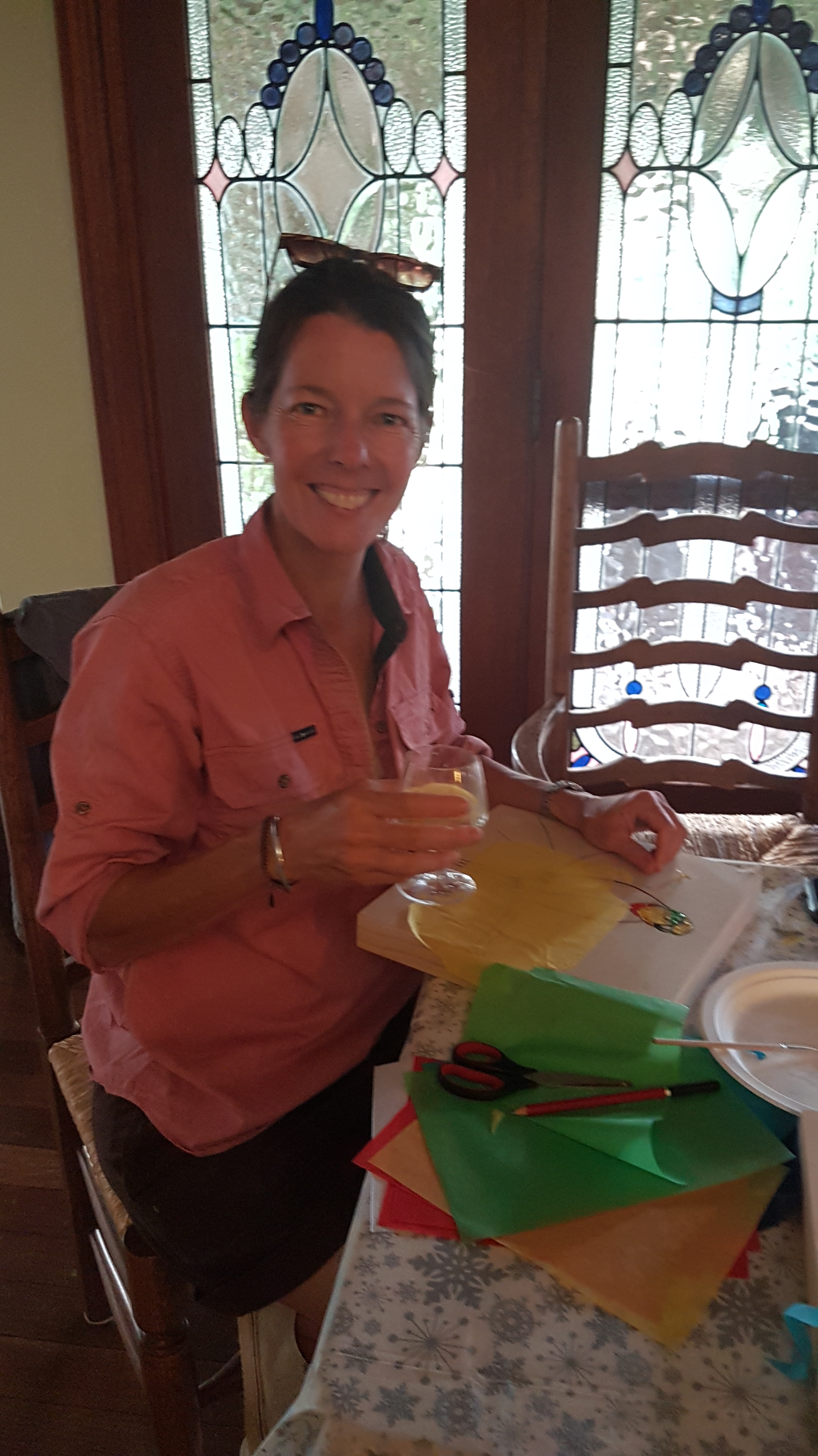
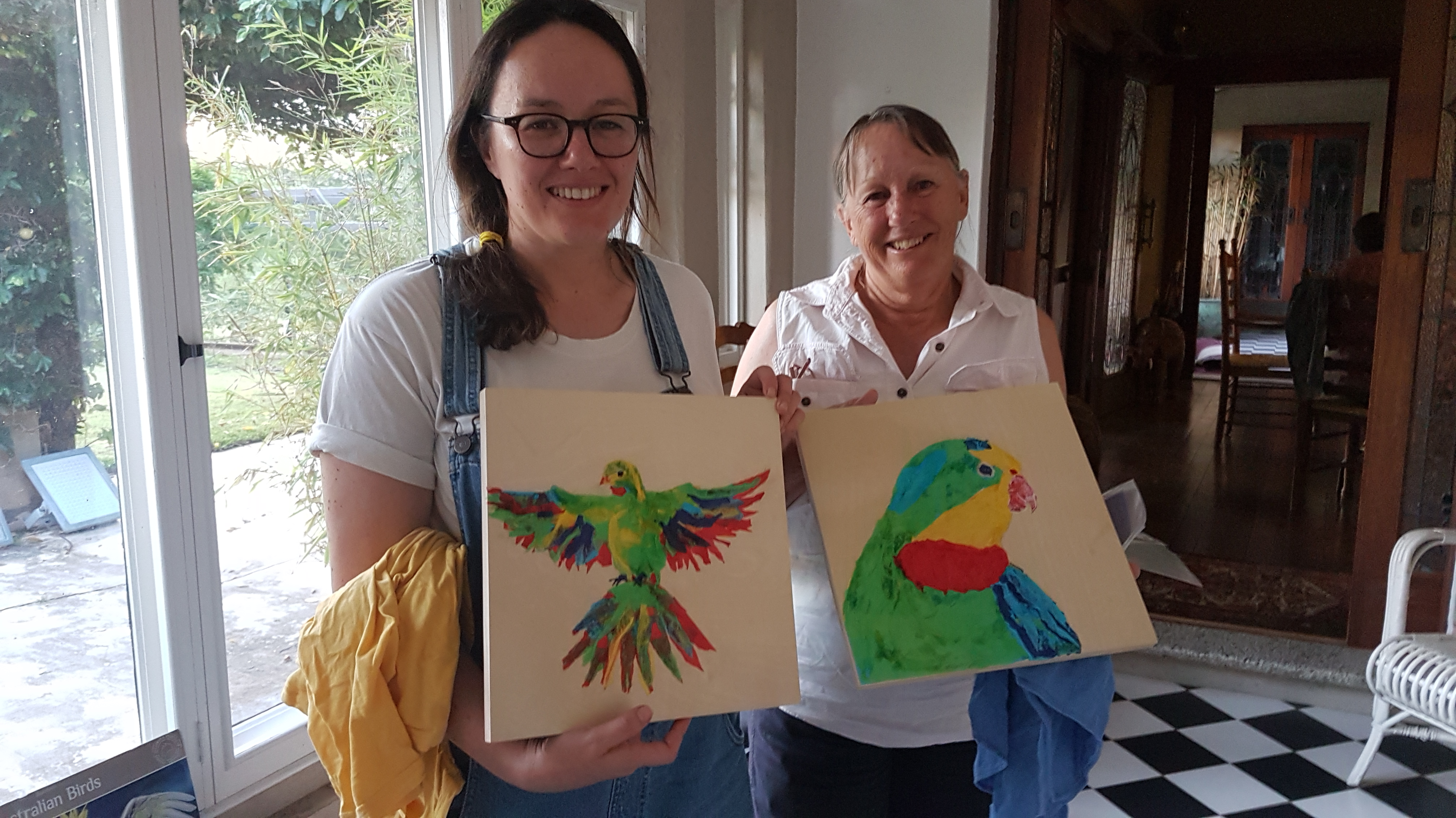
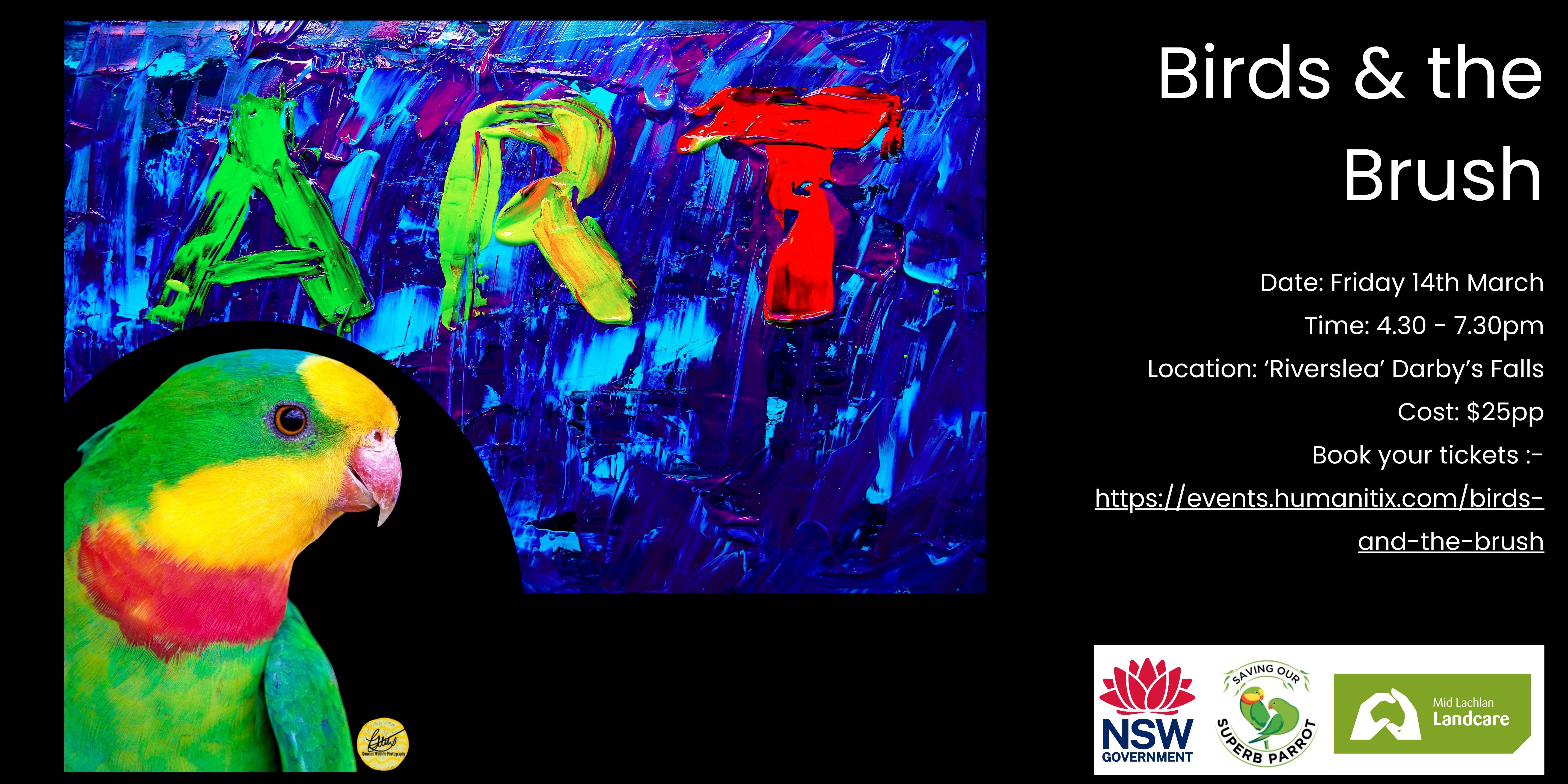
On a very hot March afternoon we came together to honour the Superb Parrot and have a go at tissue paper painting at beautiful ‘Riverslea’ Darby’s Falls.
We had our model sitting in the middle of the table for inspiration and plenty of Superb Parrot photo’s to guide our efforts. Beginners and experienced artists turned up to create thanks to the efforts of Trudi Refshauge who designed and planned the afternoon activities.
It is so wonderful to have Superb Parrots in this region and it was delightful to spend time sharing bird stories and creating this art. We were encouraged to let go of our judgement of ourselves and just have a go.
Huge thanks goes to Trudi & Gordon for allowing us to create at their property.
Just a reminder to everyone that came along to enter your creations at the local shows to raise awareness of the Superb Parrot in our region. We discussed this on the night but I’m not sure how many people were keen to do it. I’m just putting it out there again 😉
Our grazing plate feast was supplied by DJ’s Grazing and we had Bubbles from Rosnay and Antonio’s. The beer we sourced from the great new Bulla Creek Brewery at Monteagle.
We will have 1 more opportunity in 2025/26 to plant scattered paddock trees across the region. If you are interested in ‘Saving the Superb Parrot’ keep your eyes out for our newsletter in the second half of this year for details on how you can take part in planting for the Superb Parrot.
This project has been made possible through funding from the NSW Government through the Saving our Species program.





Beyond Soil Sustainability: Wisdom from Gabe Brown, Col Seis & Walter Jehne
At the beginning of March, I took myself on a scenic 5 hour drive to Quirindi on the Liverpool Plains to participate in a rather fabulous soil science event with Upper Mooki Landcare. One thing you should know about me is I’m one of those annoyingly overly-enthusiastic people who generally wants to give everything a go (ooohhh yes, that sounds very interesting). However, I also have a brain that rapidly swaps impulsive enthusiasm with crippling anxiety. This typically means I spend a good deal of time with my stomach in knots cursing that happy-go-lucky part of myself and dreading the whole thing. But that didn’t happen this time and that’s because Walter Jehne is something of an idol of mine and nothing was going to come between me and his talk – not even my own infernal brain chatter…
The event started off with a truly wonderful welcome by Jason Allen, Chief Executive Officer of The Walhallow Local Aboriginal Land Council, who shared with us the story of ‘Yurrandaali’ creator of the Liverpool plains:
Then came the soil chat which was introduced with a phrase uttered by moderator Stuart Austin, Co-Founder – Audacious Agriculture Advisor, that really resonated with me:
“For too long our Farming mindset has been chemical and we need it to be biological“
Colin Seis
Col champions Pasture cropping / perennial cover cropping and talked us through how this works in practice and the benefits it brings to our soil. He drove home the message that farms should function as an ecosystem and be self-sustaining and resilient – things that are definitely possible once we’ve repaired our soils. Col is a great advocate for letting nature fix the system and for that to happen in a cropping system, that means avoiding soil disturbance as much as possible. Col stated that modern cropping methods haven’t changed fast enough and we can’t go on degrading our top soil in the way we have been.
His pasture cropping practice is extremely fascinating and I’d definitely recommend anyone who hasn’t looked into it before have a watch of the video here. For those who haven’t the time for that but want a bit more information here are some notes:
- Col harvests native grass seed alongside crops of Wheat, oats and rye.
- Zero tilling, using animals. Never kill perennial species. Weeds managed by creating litter by using quality grazing practices.
- Crops are usually grown during the pastures natural Dormant period. Example: So a warm season C4 grass with a wheat crop. C4 grasses are great for sequestering carbon
- Improve functional diversity of cropping lands with grasses, Forbes, trees etc.
- Direct seed on top of grassland.
Biology doesn’t rest so work with it!
Pasture Cropping Benefits Include:
- Produce superior quality and quantity stock feed
- Faster improvements in soil health, structure, carbon and nutrient cycling.
- Add nitrogen (fix from air) with legumes
- Weed control
- Insect control – flowering plants attract beneficial insects.
12 month cycle in a paddock
- Grazing of grassland pre-sowing crop
- Grazing of crop
- Grain from top
- Vegetables
- Grazing of grassland after harvest
- Native grass seed
Gabe Brown
What a treat to have Gabe in the house all the way from North Dakota in the USA, he’s so entertaining to listen to and has the ability to make every challenging on-farm situation seem very do-able!
Gabe works a lot with animal genetics and is especially interested in epigenetic factors – how an animals environment and diet impact their genes and therefore their health, feed efficiency and meat quality. I really can’t do his talk justice with my summing up so I’d recommend you take a look at his TED talk for a quick-fire summary of what he’s all about.
My favourite take-home piece he talked about was his direct seeding tip to “Pop seed of species you want to grow in bales feeding to cattle and let cattle direct seed by pooping it out”. Maybe everyone is doing that already, I don’t know as I don’t have cattle myself but I thought that sounded just fabulous! A real mooo-ing factory.
Walter Jehn
I really appreciate and admire Walter for his ability for turning complex scientific concepts into bite-sized nuggets of seemingly everyday ‘common sense’ that we can all digest and enjoy! That level of competence is only possible when you really know your stuff.
Walter really caught my attention when I was researching methane emissions from cattle and all the hoo-ha that exists around that. I love the way he explains the relationship between methane, water vapor, the sun and plants -a self-balancing system given half a chance. There were many take-home messages from Walter but when it comes to methane it was generally that if you are in the livestock business and manage your pasture well, the government should be paying you your contribution to cleaning the air given that you’re probably producing way more air-cleaning free radicals than methane emissions. So once again, it’s livestock to the recsue which warms my little heart!
Here’s a video that explains what he was talking about:
Walter also talked extensively about soil carbon and the politics around the carbon market. Again his take-home message for this audience of (mainly) farmers was a simple and empowering one: Carbon will pay dividends in other on-farm and community ways. More pasture, better crops, stronger animals, better soil etc.
Working on soil health pays off in the quality and quantity of phytonutrients in food.
Farmers will be rewarded by producing food that really is our medicine.
There’s more information on Walter’s thoughts on Carbon here:
I can’t finish this blog post without sharing a picture of what happened over lunch. Maddie (Watershed Landcare) and I were just tucking into our Chicken Salad when along came Walter – he must have known what fan-girls we are!

Marching Forward Together – Landcare Australia, Celebrating International Women’s Day.
Tracee & I were thrilled to be invited to contribute to Landcare Australia’s ‘Women in Landcare‘ stories. This is what we were asked and what I submitted on our behalf.
Question: What does ‘March forward’ mean to Tracee & Amanda as women working in Landcare.
March: a regular, measured tread.
Forward: To make progress
Progressing towards our goals with regular, measured steps.
The week of writing this marks the end of our first year job-sharing one full-time Landcare Coordinator role. It also marks 18 months of working together. With that realisation my shoulders relax, I breathe out and break into a smile. It’s been a challenge and we did great!
Marching isn’t the first word that comes to mind when trying to describe our cadence but it will more than do now I’ve given it some thought.

When observing the day-to-day, I’ll often ebb when Tracee flows, meandering in a day-dream down each and every rabbit hole I can find or sluggishly slumping over the computer as I battle a level of mental constipation that should be illegal in order to get a newsletter sent. Then there are the days where I’m the one running, bouncing around ideas, breezing through my to-do list with a briskness that has me wondering what came over me. All this while Tracee sits slumped back in her chair, scrolling through the universe in search of the spark that might re-ignite her passion.
Over this past year Tracee & I have learned how to march forward together by observing nature and noting that everything has its pattern, it’s time to shine, to set seed and to retreat. That there is no discordance in the ebbing and flowing of a healthy box gum woodland, thriving paddock or eclectic garden, only cycles that re-invigorate and support each other as nature progresses towards its goal.

While it’s fair to say that sometimes we learned these lessons the hard way, one persons flow catalysing the others ebb and subsequent despair, but over time the conditioning that shaped those judgemental, self-defeating perspectives has been shed, like a skin that no longer fits, leaving us revitalised and comfortable as we march forward together.
Follow this link to read more Women’s Day stories.
Birds in the Club – Protecting our threatened bird species
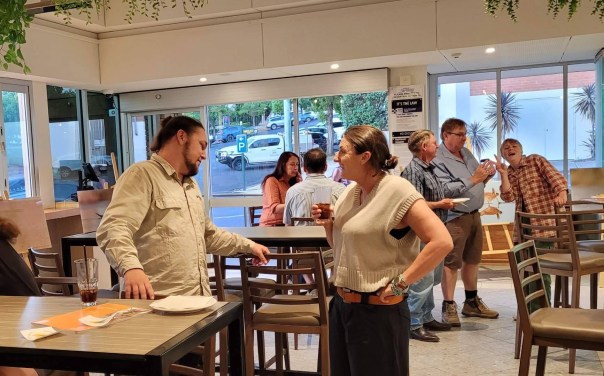
Cowra showed up in force for our ‘Birds in the Club’ event held at Club Cowra on 6th Feb. This evening of edu-tainment, featured four fantastic speakers, each with strong ties to our local area and each fantastically passionate about what they do. It was clear to all of us that Cowra is a hot-bed of talent, enthusiasm and dedication when it comes to birds.
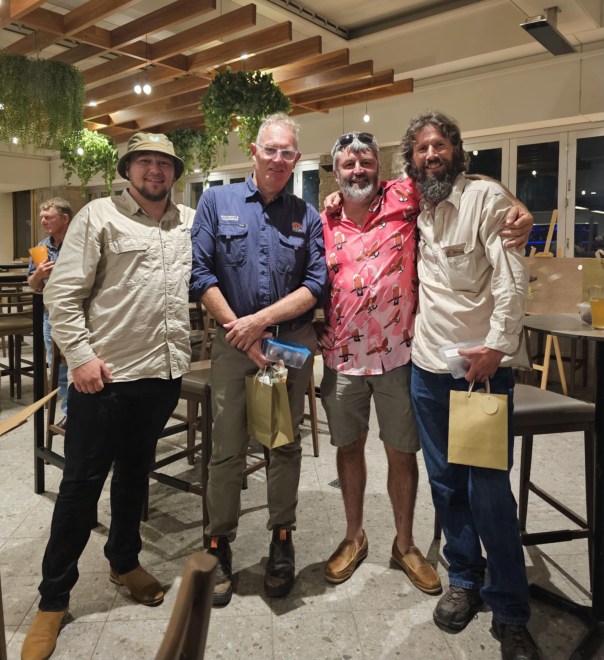
Our speakers for the night from Left to Right. Jayden Gunn, Damon Oliver, Warren Chad, Dan Florance 
Robbie Watt with Tamara Harris (Local Land Services Natural Capital Advisor) 
Tracee Burke. Mid Lachlan Landcare Coordinator 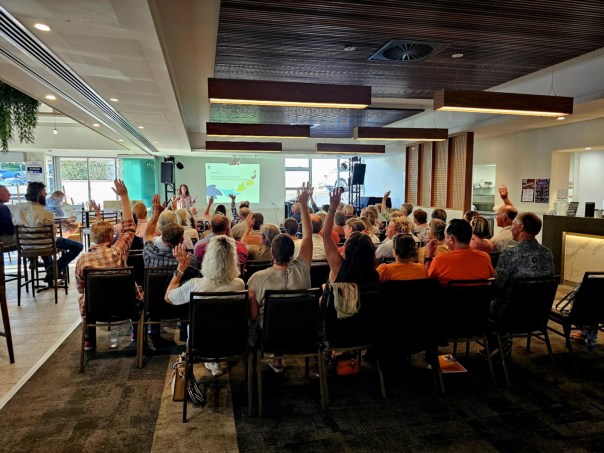
Our ‘How Far Did You Travel?’ Question 
Will Johnson & Mikla Lewis 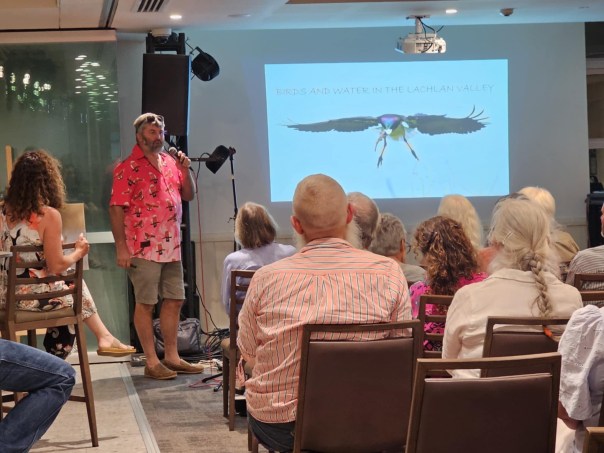
Warren Chad 
Great Buffet by Club Cowra 
Marion Mitchell & Will Johnson 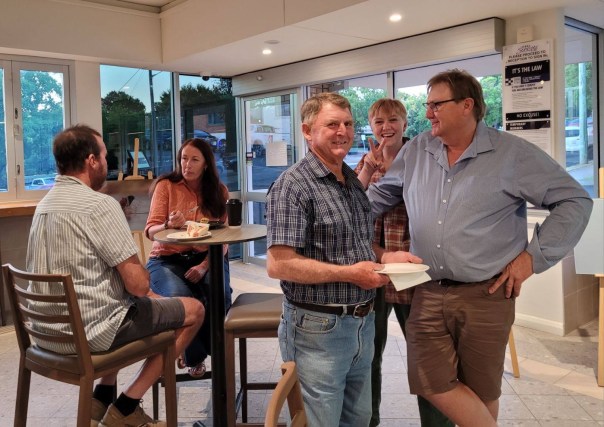
Robbie Watt & Andrew Wooldridge 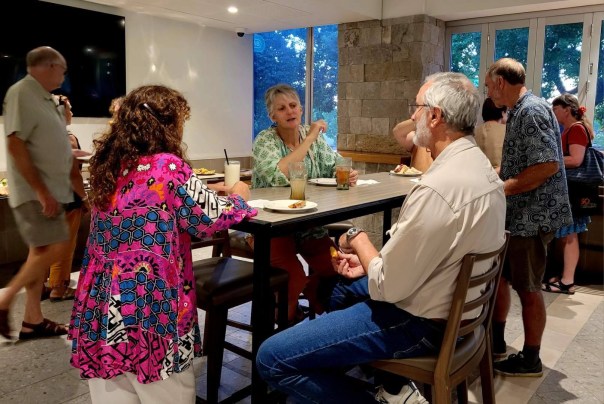
Catching up with friends 
Tamara Harris with Jayden Gunn 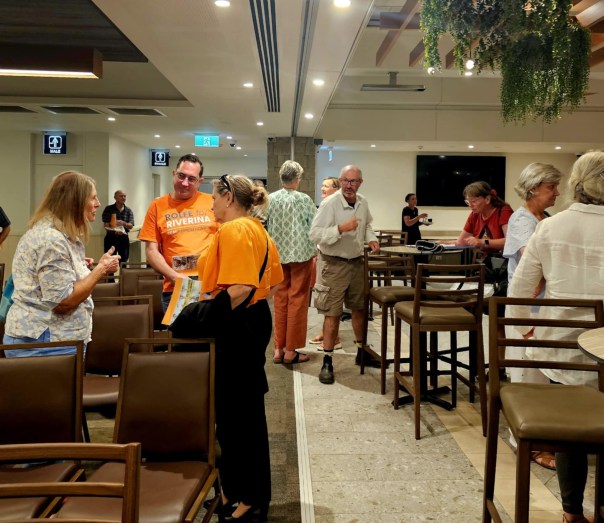
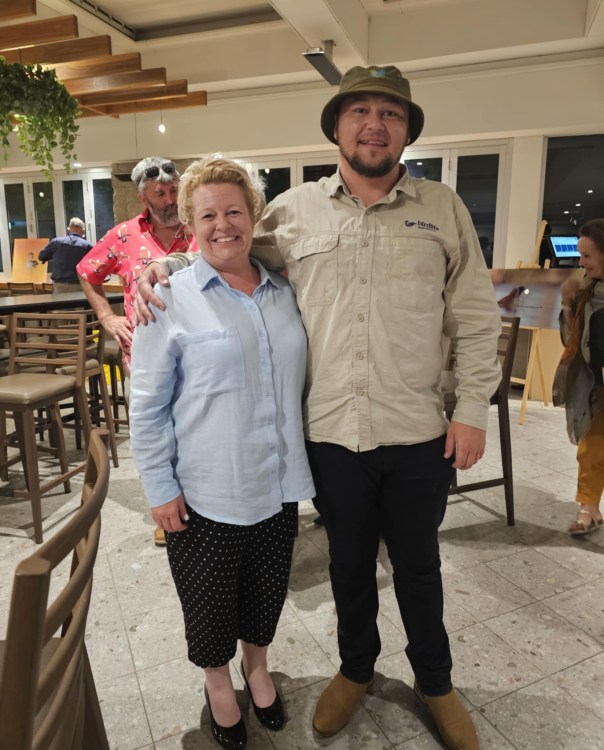
Nikki Kiss with Jayden Gunn 

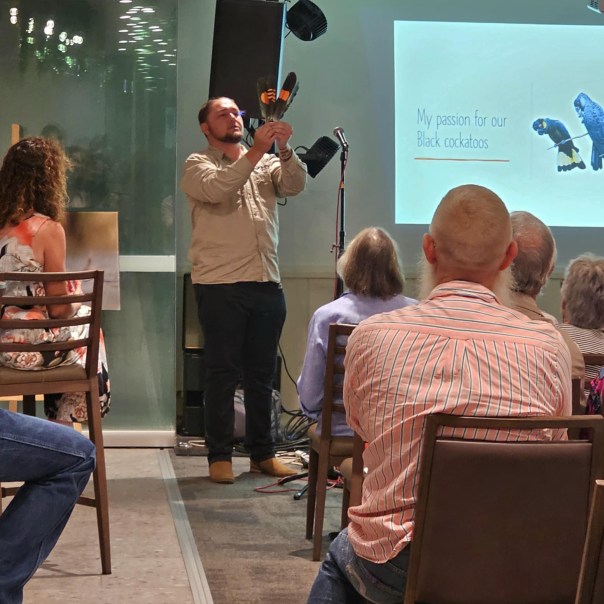
Jayden Gunn 


Dan Florence 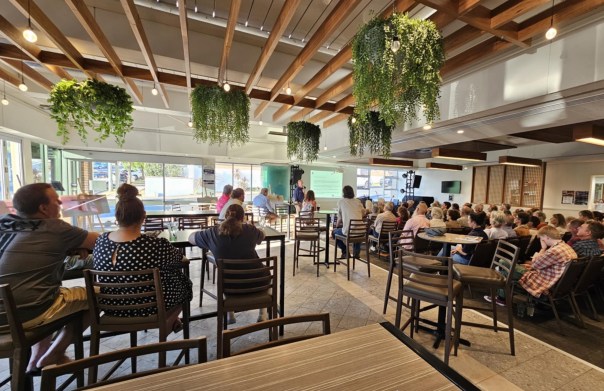

Damon Oliver 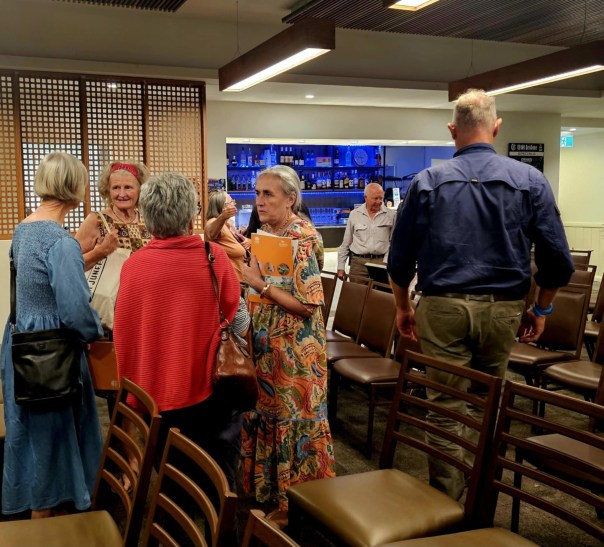


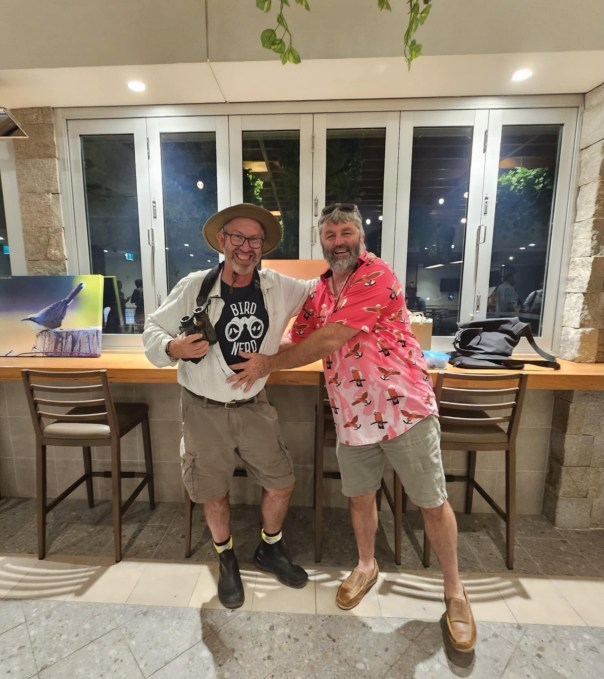
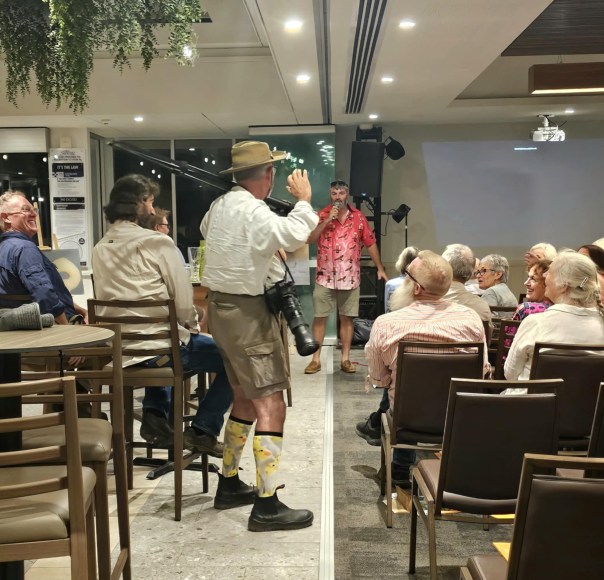
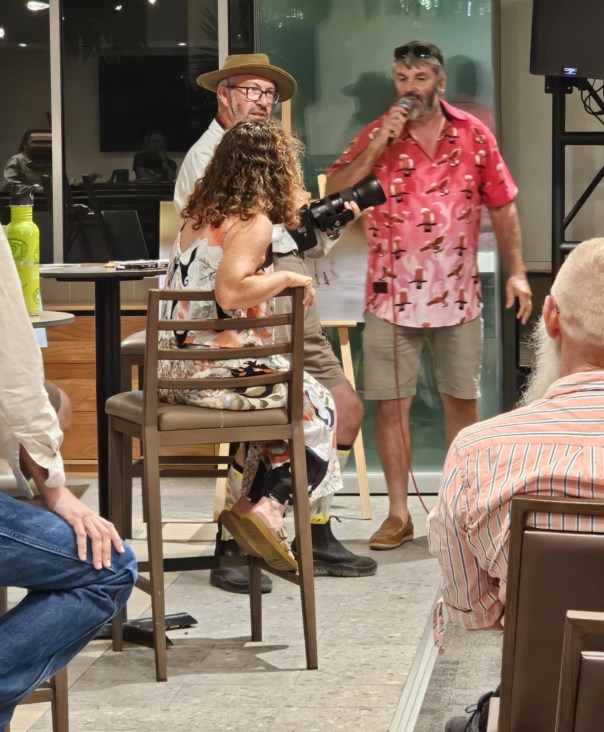
Warren Chad and his Birdwatching skit 

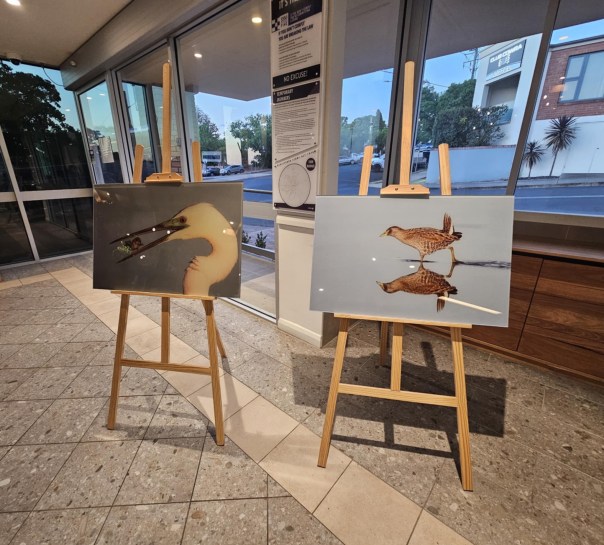
Art by Warren Chad 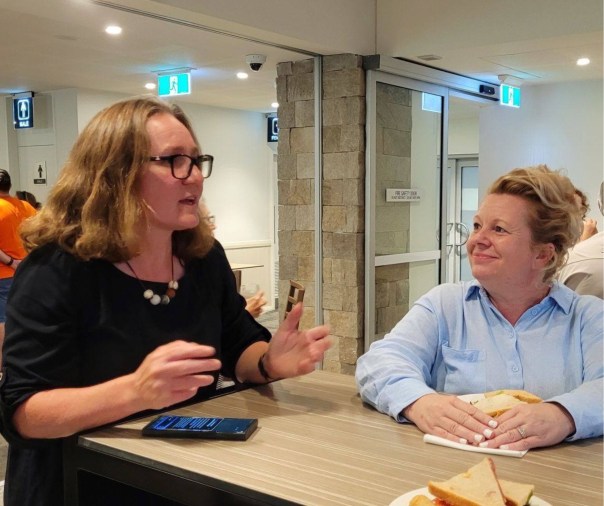
Amanda Foxon-Hill (Mid Lachlan Landcare) with Nikki Kiss
Damon Oliver updated us on the Saving our Superb Parrot initiative, driving home the message that without people like us planting paddock trees and conserving box gum grassy woodland, this iconic and much loved species would really be up against it.
Next Dan Florance talked about the Australian National University’s Sustainable Farms project, focusing on what he’s seen while out surveying properties in our area. He finished up with his top-tips for creating a more bird friendly world.
After a delicious tea break (thanks Club Cowra) Jayden Gunn shared his passion for the Glossy Black Cockatoo with us, updating us on his work with Birdlife Australia and delighting us with his stunning photography.
We finished the talks with Warren Chad (Chaddy) who took us on a meandering bird-focused journey down the Lachlan River (Kalari Billa) from Cowra to the Great Cumbung Swamp, finishing up with a hilarious poem called ‘The Bird Watcher’ (or at least I think that’s what it was called)!
Cowra is well placed to take advantage of the trend in birdwatching tourism thanks to our geographical positioning along a bird migratory pathway, our long-standing Cowra Woodland bird surveying, impressive range of birds on farms participants & work we are doing to protect habitat for threatened bird species
‘International visitors spent $2.6 billion on travel that involved birdwatching in the year to June 2024, according to data from Tourism Research Australia, while domestic overnight travellers spent $636 million over the same period, up from $414 million in 2021 — a 53 per cent increase, national visitor survey data showed.‘
ABC new report 15th February
Thanks to everyone who supported this event, helping us raise awareness of the beautiful but threatened bird species in our region.
This event was made possible thanks to funding from Central Tablelands Local Land Services.
Links
Community Plant Purchase 2025

For those of us who missed the ordering cut-off for plants from our local nurseries this year we are going to have a try at a community purchase with Narromine Transplants and see how it works out for us. Then later this year we will remind everyone to get orders in for their Autumn 2026 plantings as needed by our local nurseries.
If you are looking to plant this Autumn and haven’t been able to source trees/shrubs this could be your opportunity. We will look into going out to collect the plants or getting them delivered to a central location around here. You will need to be able to collect the plants when they arrive.
There will be a minimum order of 80 plants with a minimum number of 10 of each species. These plants will come in the Hiko trays of 40 each. These are smaller than the usual tubestock pots and do need to be planted quicker as they will be ready to go in when you receive them. You will be invoiced for the plants once you have received them.
The list of available stock is here. Please send us an email with the species and numbers you want and we will do our best to get your order. Please note the stock available on the attached list is not accurate and is changing each day as new orders come in. Also note that many of these species are not local to this area and if you would like some advice on species selection feel free to call Tracee ph. 0417 799 425.
We will need you to get the list of what you want back to us by next Friday the 7th March in order to have the best chance of getting everything. Prices will depend on how many plants people order and we will only be able to run this if we get a good amount of orders through.
There are other alternatives that might suit listed below
Gum Tree Nursery over near Young have provided a list here of what they have available and their contact details are on the list supplied. Please contact them directly if any of these plants suit your needs.
The Weddin Community Native Nursery in Grenfell still have the following trees available for purchase at this stage. Please contact them directly if any of these plants suit your needs.
- Eucalyptus camaldulensis (River Red Gum)
- Eucalyptus leucoxylon (White Ironbark or Yellow Gum)
- Eucalyptus macrorhyncha (Red Stringybark)
- Eucalyptus populnea (Bimble Box)
- Casuarina cunninghamiana (River Sheoak)
You can contact the Weddin Community Nursery on 0456 879 481. Please remember to check their opening hours if you plan to visit them.
Can accountants save the planet? Adventures in Natural Capital Accounting.
Imagine yourself, bruised and exhausted after another day battling whistling winds & sheeting down rain while trudging through boggy paddocks. You’re out at it again, attempting to put right all the fences that have buckled, pinged and tumbled after yet another big storm. But then, over the hills your eyes catch a ray of light as it penetrates through the clouds and in that triangle of calm, radiant hope rises an accountant, donning, not in their usual beige and grey but in a super-suit (that’s a reference from the kid’s movie The Incredibles). Welcome to accountant age, it’s time to get out your tape measures, meters and probes because we’re going to be measuring everything…
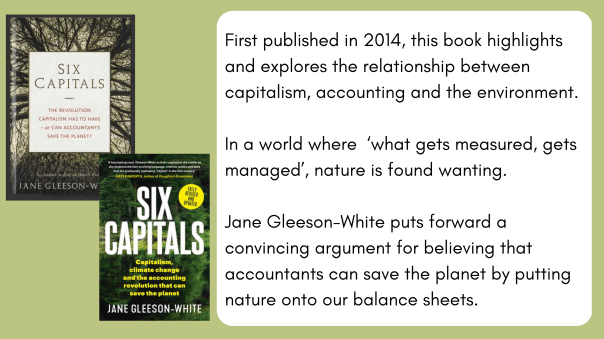
I was working as a consultant chemist when I first got introduced to Natural Capital accounting after attending a book launch by author Jane Gleeson-White (6 Capitals: The Revolution Capitalism Has To Have). It was around 2014 and at that time, I was deeply engaged in investigating the Palm Oil supply chain and in particular, the relationship between this key chemical feed-stock crop and the cosmetic industry.
My interest in palm oil sustainability pre-dated my professional involvement and was instead sparked by my deep love of Indonesia – a key palm oil producer – and the life changing experiences I had there when I visited with a scientific research trust in my early 20’s (that’s me in the checked shirt on the right).

During the 2010’s, palm oil was getting a very bad wrap on social media due to land use changes and its alleged impacts on Orang Utan populations. I was being asked by my cosmetic industry clients to take ingredients made of palm out of formulations. At the same time, the data I was getting from the palm oil supply chain showed palm to be the most efficient vegetable oil on the market. The dichotomy both troubled and intrigued me.
I began by trying to validate the efficiency data that I was seeing but the more I dug into the numbers, the more I noticed that the high yields we were relying on to justify this best-case-scenario crop were only as good as the soil they grew in and at that time, optimal soil health was being taken as a given and not factored into the equation. Jane’s book came at the right time for me and suddenly I had language and context in which to frame my concerns.
Fast forward to 2024-2025 and Natural Capital events and resources are everywhere. As a Landcare coordinator I’m motivated to understand this space from a new perspective. Can I understand this space enough to coordinate, facilitate, support and develop meaningful connections and conversations in my own community? How many Natural Capital dollars are there for us as Landcare groups and members and do the values of the Natural Capital market and Landcare even align?
Getting to Grips With Natural Capital.


- Understanding the basics.
- I found the Natural Capital resources from my Local Land Services team very helpful in getting me orientated in this space as it applies to my work. Other than that, workshops such as the Central Tablelands LLS event I attended at Eugowra were very helpful, both in fleshing out this space and in helping me understand how this type of accounting will work in our landscape and for our land stewards.
- Engaging with the Market
- Landcaring folks tend to engage with the Natural Capital market in one of two main ways. First as a producer looking to have their product and/or natural assets valued through this lens or second, through a conservation lens, looking for help protecting and managing the natural asset we already care for. It’s much easier to navigate the open market provider side of the natural capital market once we’re clear on what we want to achieve and have a framework, or ‘to-do’ list to work through.
- For producers, the CSIRO have a fantastic and very thorough PDF that can be downloaded here. Their ‘practical guide to corporate natural capital accounting, assessment, risk assessment and reporting’ helped me understand how a landscape is valued and how it all fits together in a balance sheet. That, in turn, helped me understand where things such as carbon credits, biodiversity offsets, emissions reduction schemes and water saving initiatives come into play.
- For those looking to protect high quality parcels of land that can be set aside, the NSW Government committed more than $350 million over 5 years from 2019–20 to fund the Biodiversity Conservation Trust to deliver its private land conservation programs. This investment is guided by the Biodiversity Conservation Investment Strategy 2018.
- Landcaring folks tend to engage with the Natural Capital market in one of two main ways. First as a producer looking to have their product and/or natural assets valued through this lens or second, through a conservation lens, looking for help protecting and managing the natural asset we already care for. It’s much easier to navigate the open market provider side of the natural capital market once we’re clear on what we want to achieve and have a framework, or ‘to-do’ list to work through.
- Values Alignment
- I’ve noticed both in myself and in others I’ve talked to, a feeling of un-ease (dis-ease maybe) around the idea that nature and whole ecosystems could or should be assigned a dollar value. Should nature be given the full capitalist treatment? I’m still not sure whether Landcare as an organisation is best placed to answer that but feel the conversation is definitely worth having. The Australian Earth Laws Alliance has some great food-for-thought in this space.
- Can I have a worked example please?
- The over-the-fence experiments carried out by Peter Byck in his recent ‘Roots So Deep’ documentary series are great for helping anyone still a bit confused by the whole Natural Capital space. Not that this is a long-form advert for this way of accounting, more that it helps really bring to life all the different tools and processes involved in building value back into a natural system. Whether people watch this and then jump into the Natural Capital market or run completely in the opposite direction is irrelevant. Just seeing how all the things these accountants want to measure come together in a way that tells a compelling story of life, beauty and sustainability is inspiring.
Final Reflections
Natural Capital Accounting does feels like a significant step in the right direction given the game-of-life we are playing. Sure it’s casting a net around nature and yes, that means some things will be missed but that doesn’t mean it’s catch won’t have value. This will be the first time we have a system of accounting that has the capacity to consider factors such as soil carbon & microbiology, water cycling, biodiversity, ecosystem chemistry, biomass, water quality and salinity, not only ‘at-all’ but ‘in-one-place’ which could both create a way of valuing land that’s more elegant and representative of its true form.
In the context of the game we are playing (western world capitalism) I feel accounting for nature is a significant step in a positive direction.
I feel it’s still worth holding in mind that Natural Capital Accounting is something, but not everything. It’s a tool that helps us find a solution for a practical, objective problem that exists within our status quo. In the words of Simon and Garfunkle, I see Natural Capital Accounting as a bridge over troubled waters.
The views expressed in this blog post are personal rather than representative of Mid Lachlan Landcare.


