Mid Lachlan Landcare
supporting sustainable agriculture and restoring the environment
Utilising the Power of Microbes to Turn Carp into Fertiliser
I turned my Laptop on and ‘Zoomed’ into the last Carp Muster planning meeting a few weeks before the big event only to find that I’d (and my that I mean us at Mid Lachlan Landcare) had been deligated the job of managing the dead Carp. What a great opportunity!

Having never participated in such an event before we were a little unsure of what to expect – how many Carp do you reckon we’ll get? Approximately how much will that weigh? How likely is it that we’ll get any at all?
As it turned out we got enough to make what I’m about to discuss happen but not too much that we were overwhelmed. Nice one!
From Feral to Fertiliser
Back in June this year, Watershed Landcare hosted a fantastic workshop with Gerry Gillespie doccumenting how to Transform Feral Animals into a Resource: Composting for Healthy Land. I’d wanted to attend but couldn’t quite stretch myself to swinging past Mudgee that day so instead, I caught up with project leader Cheryl Nielsen over the phone for a one-on-one briefing.
Cheryl was immensely helpful and has remained a great support, sharing resources and assuring us that the process would be simple, scalaeable and (my biggest fear) not smelly! So with that we started to prepare what I’m now lovingly referring to as our Carp digester serum. Yum!
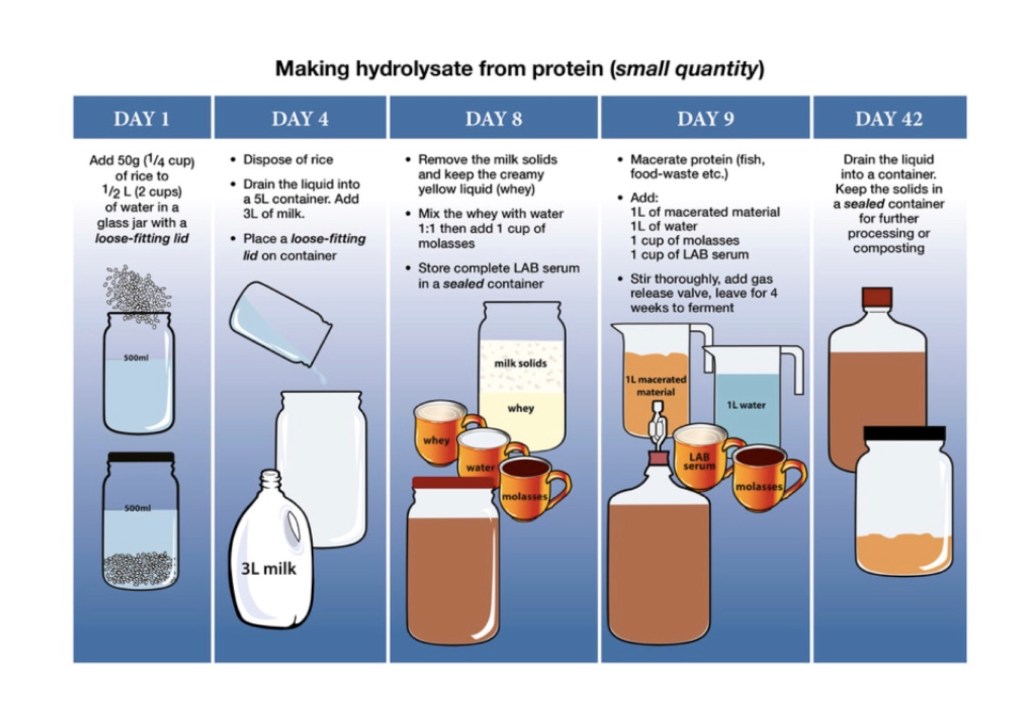
So this is the recipe we settled on : a brew made from rice water, milk and molasses.
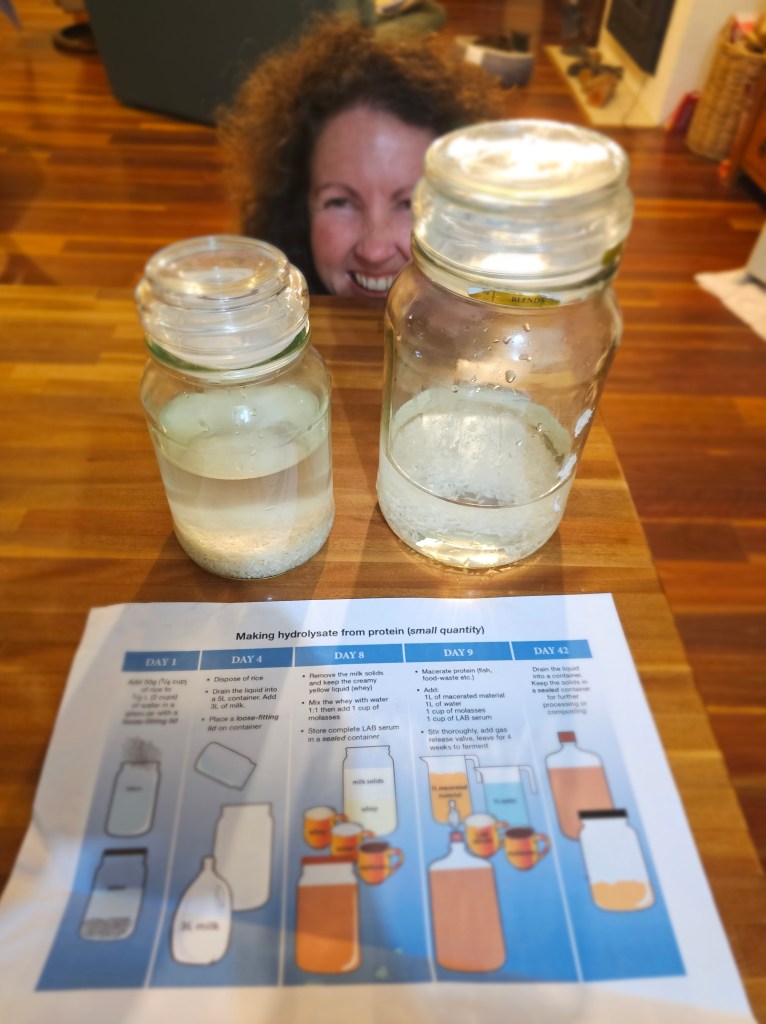
Tracee & I started a small batch each at the same time so we could compare notes on how things were progressing:
After about a week, I started on a second, larger batch to ensure we had enough should Carpmageddon hit on muster day.
You’ll see from the notes above that on day 8 you are supposed to separate the milk solids from the Whey. Well, it turns out I didn’t do that so well and as such, my bucket ended up with a frothy fatty head on it which, as it turns out, isn’t such a big deal after all. The brew will still deliver!
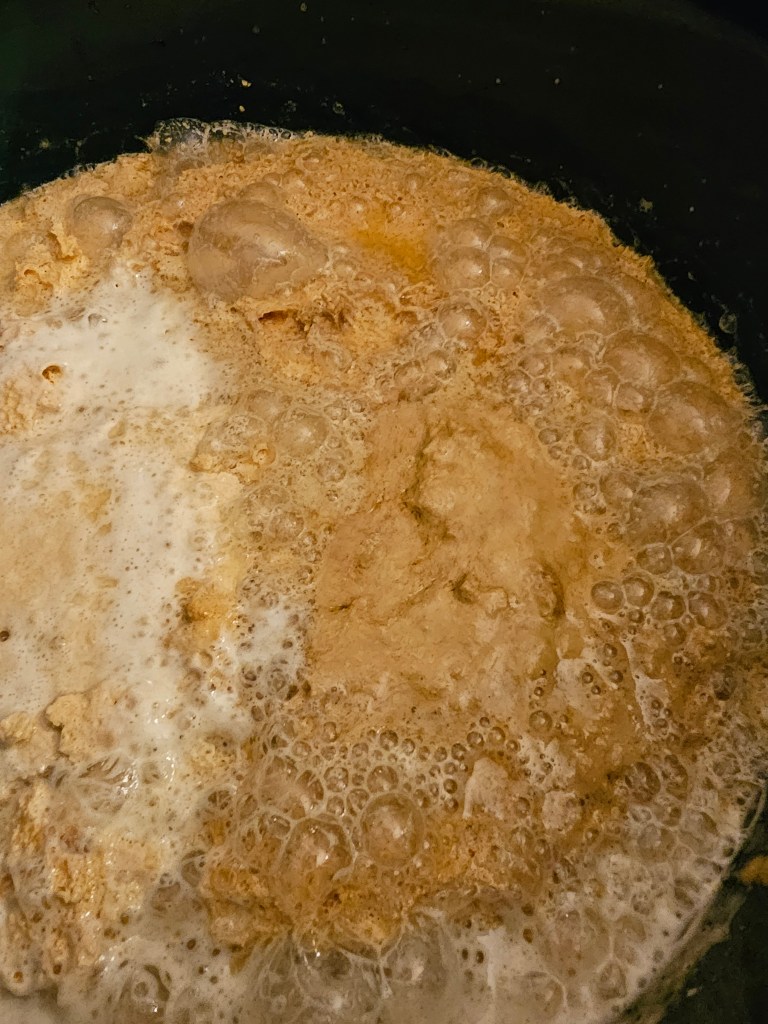
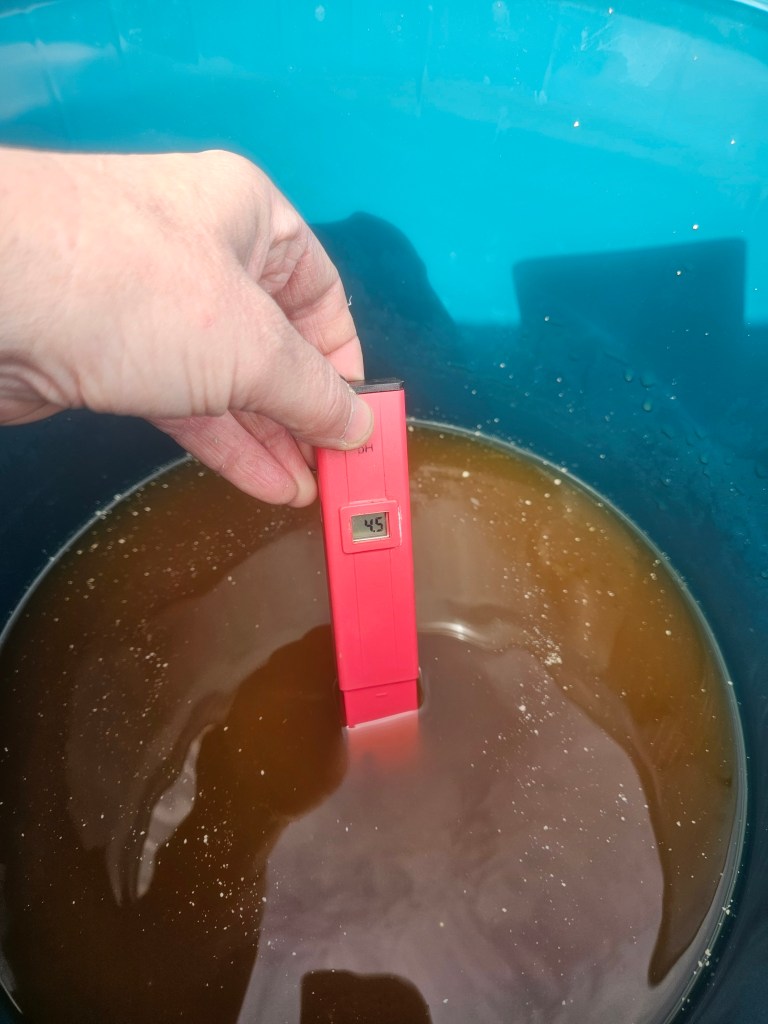
This is what the brew is supposed to look like just before the protein goes in. Well, this minus those little white flecks- they are left over bits of fat.
Our mixture was sitting at pH 4.5 which is spot on for the type of microbes we were ‘cooking’.
Our protein source, Carp, was popped into a sealable food-grade blue drum where it would ferment and break down over the coming weeks – the recipe says leave it 4 weeks but as with all things microbe, the exact time will very much depend on the exact ratios you’ve got in the mix plus the temperature conditions. This being winter – and a fairly cold one at that – it may take a little longer.
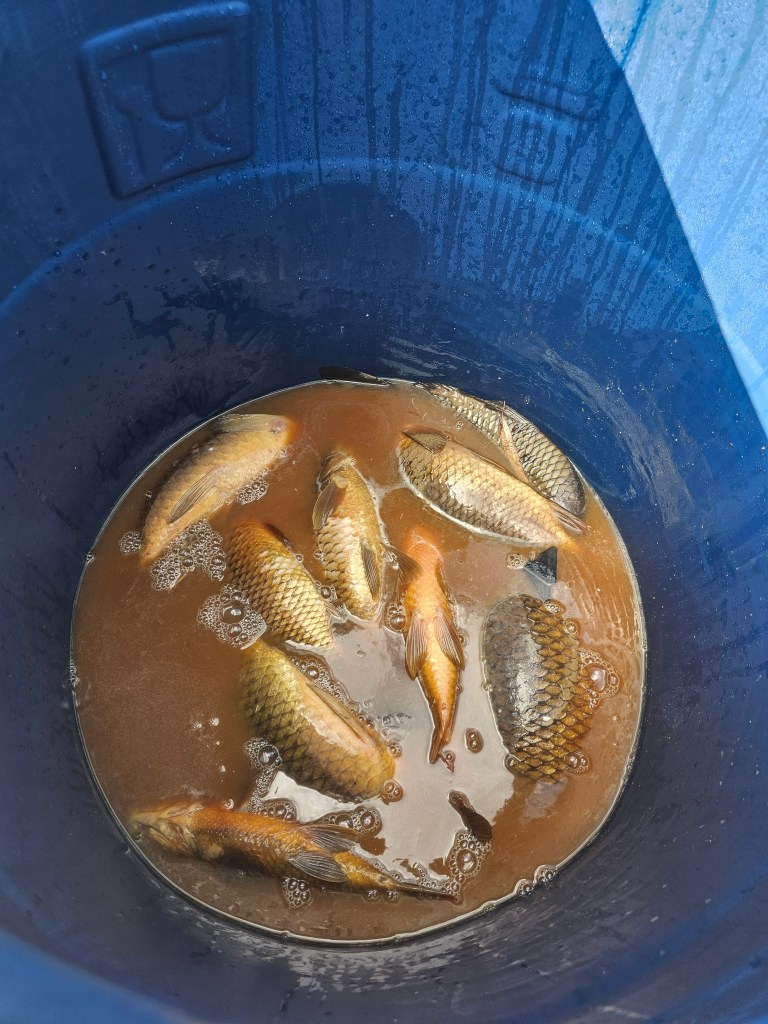
The other thing to note from the picture above is that we didn’t macerate the protein for a start as per the recipe instructions. The reason for this is me wanting to experiment with whole or chunky pieces of protein first, thinking that if this were to be used with say feral pigs or deer, it would be a bit of an ask and potentially dangerous (more so with the pigs) to have to mash all that up in the field. Let’s start from simple and add extra steps if needed…
So it’s coming up to three weeks now and the fish is still looking pretty together but has softened somewhat, making maceration a little easier. The smell coming off this barrel of carp is actually quite pleasant thanks to the microbes and molasses. It’s definitely not what I was expecting. We’ll check it again in a week or so and keep on like that until the fish have broken right down. After that, we plan to sieve out any solids then take samples of the liquid for chemical analysis (N, P, K and heavy metals probably) before spraying it out on a patch in one of the paddocks.
So what have we made?
According to those in the know, we’ve created a lactobacillus-dominant hydrolysate. This type of bacteria possess enzymes capable of breaking down proteins into smaller peptides and eventually into free amino acids. So in a way, we’re using microbes like a pair of biological scissors to chop up and break down this big chunk of protein! How awesome.
I’ve been personally fascinated by soil microbiology since starting work at Landcare and am especially interested in how solutions such as this can be used on farms & small blocks where feral animals may be a problem. The slighly gruesome aspect of all this is probably why I like it so much – it’s really pushing the limits of my curiosity and sensory tolerance while aligning with my conservation values.
Stay tuned for more adventures in microbe-land and an update on how our brew turned out.
Muster Moments – Reflecting on the Canowindra Carp Muster
We had an amazing time at our first Carp Muster & riparian clean up back in July and can’t wait to do it all again (if we can find a funding partner – anyone want to take that bait…)

The event proved to be extremely popular with families and by the bid day Oz Fish had received 70 pre- entries which we were very happy with. Another 20 or so turned up and registered on the day before heading off to the river to try their luck at catching something.
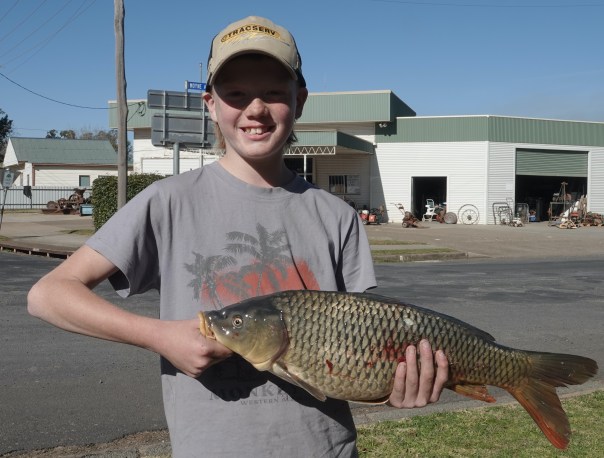
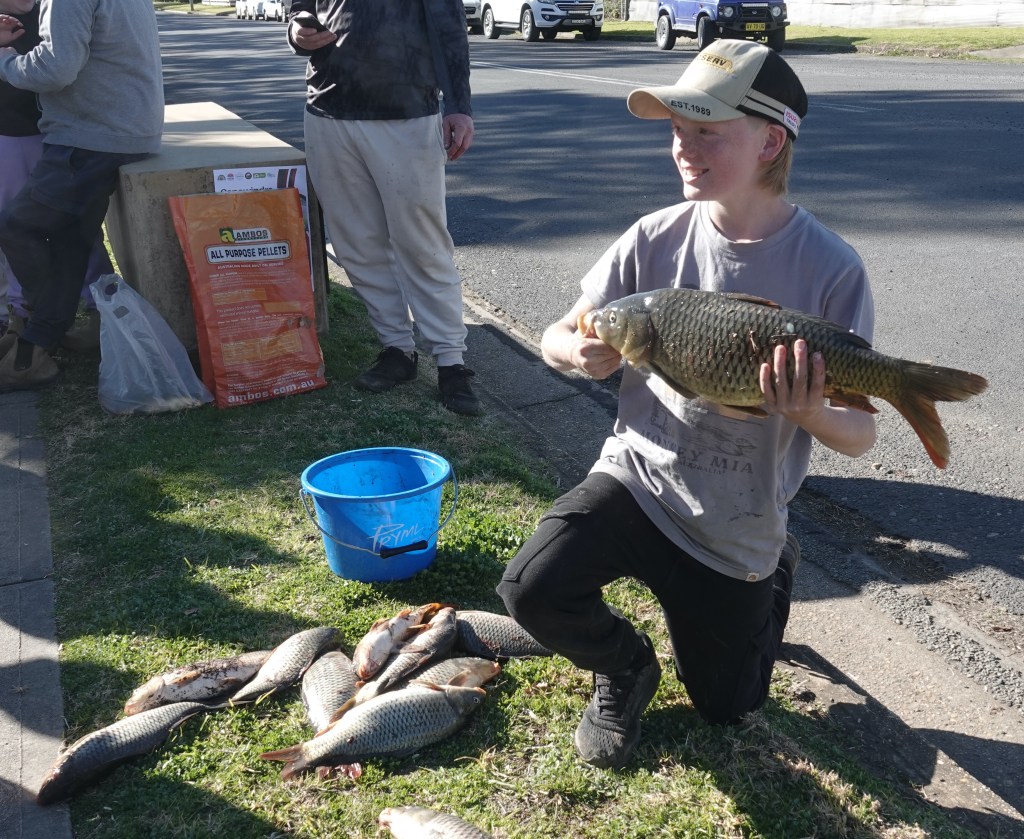
While the Carp were a little elusive we still ended up with a haul totalling around 50kg, some of which are now being digested by our microbial ‘soup’ on a farm in Canowindra – yes, we’re turning them into fertiliser (using Charlie Carp as our inspiration). You can read more about that process here.

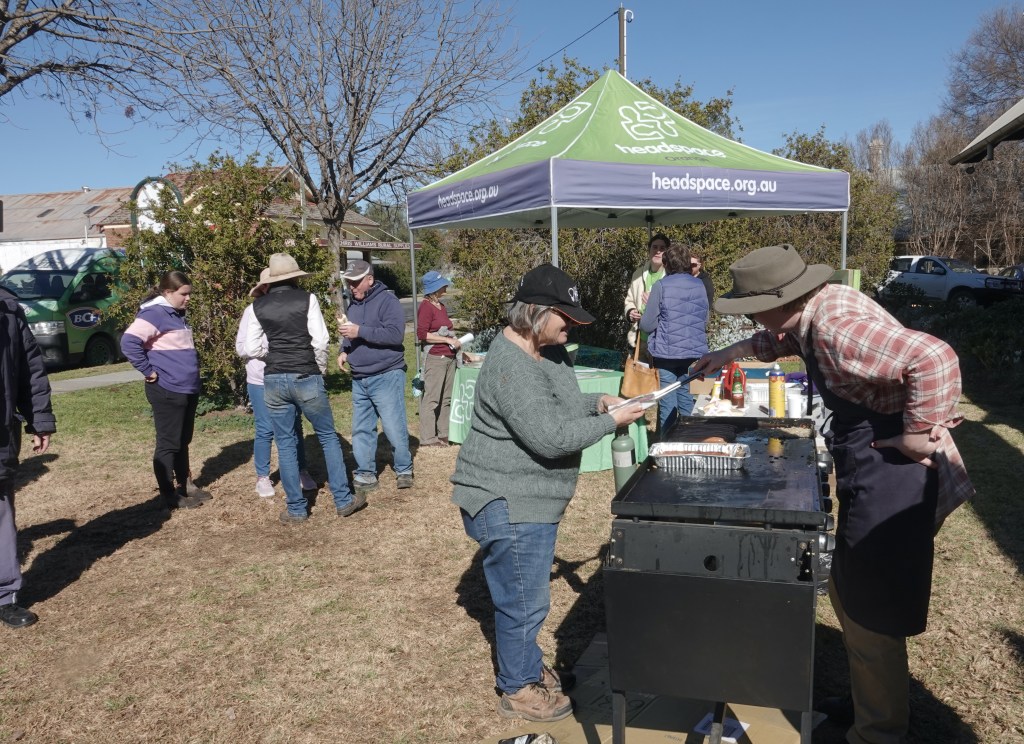
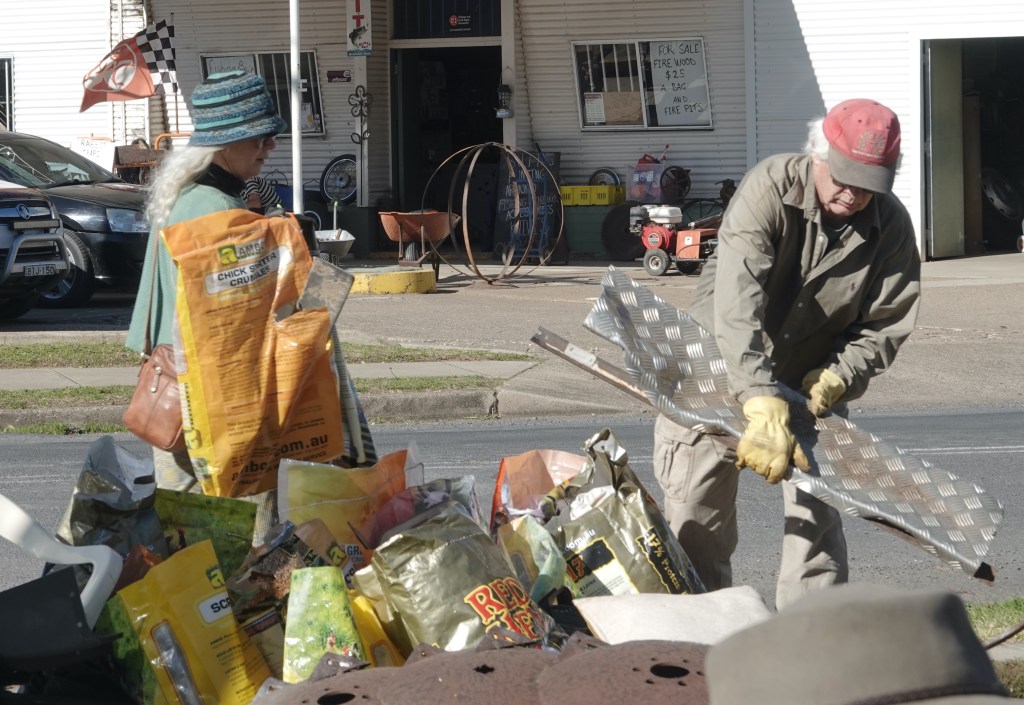
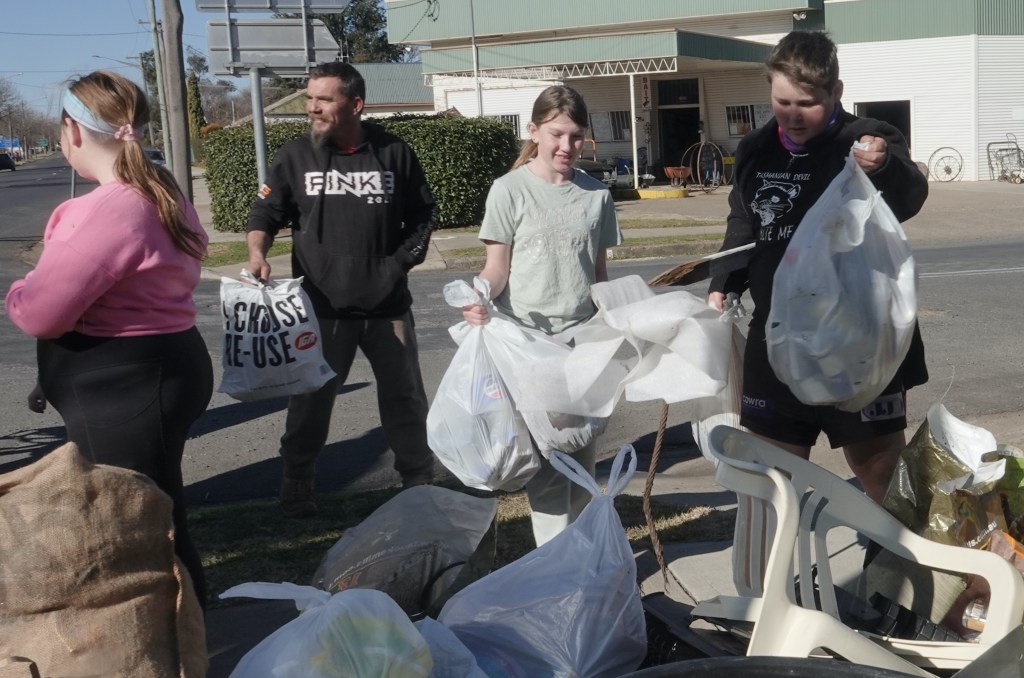
Our official team photographer for the day was the lovely Richard Swansborough – a Canowindra local with a long and distinguished history of nature photography. It was great to have him on board to help out given that most of our Landcare committee were otherwise engaged either cooking up a storm on the barbeque, entertaining the crowds with an im-promptu gig or pounding the pavements collecting litter!

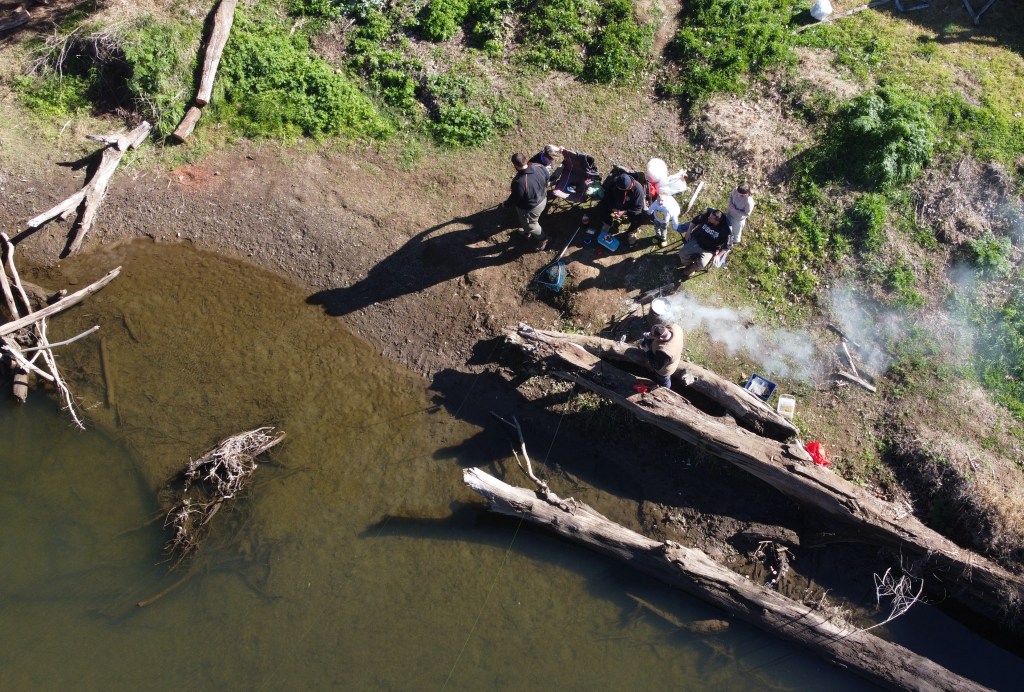
It was great to have him on board to help out given that most of our Landcare committee were otherwise engaged either cooking up a storm on the barbeque, entertaining the crowds with an im-promptu gig or pounding the pavements collecting litter!

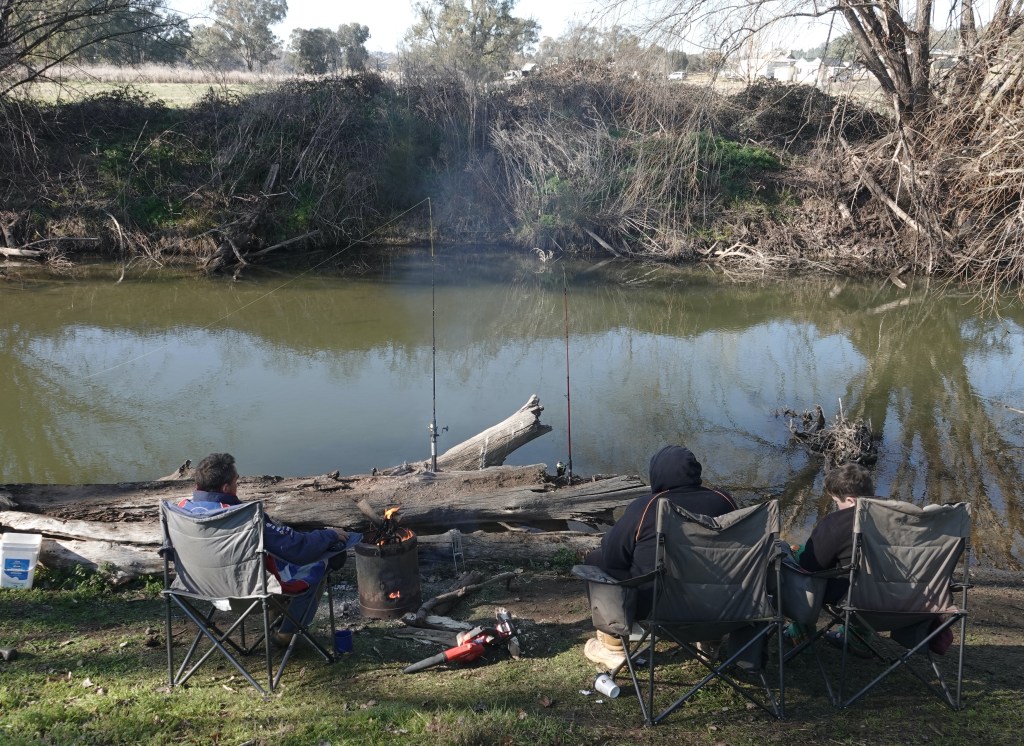
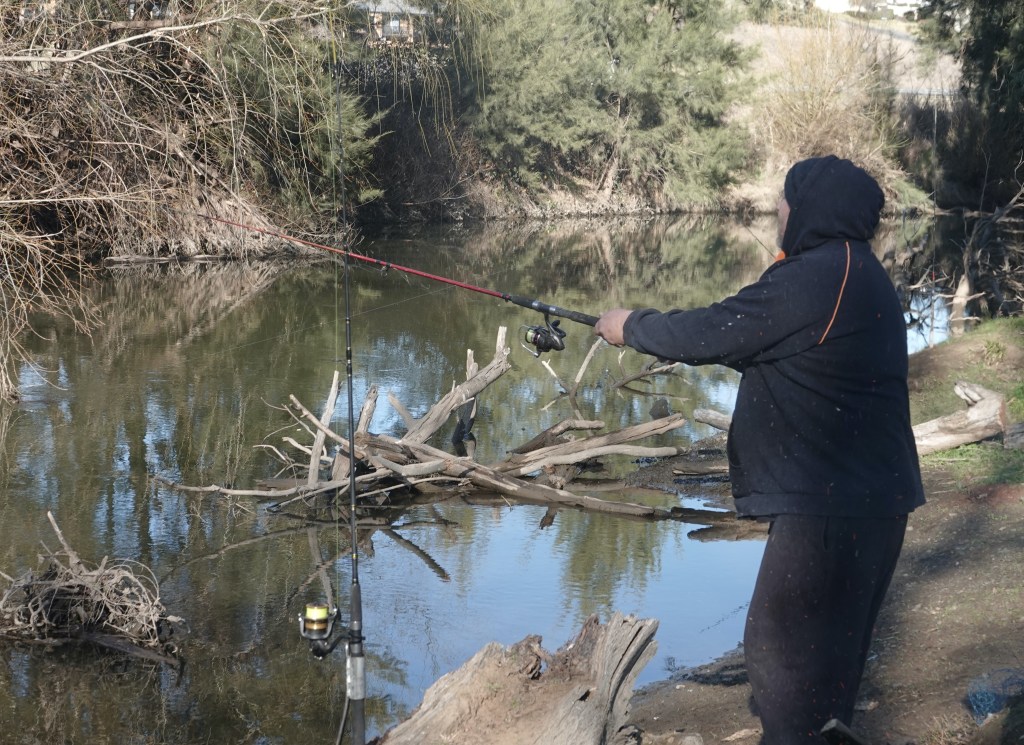


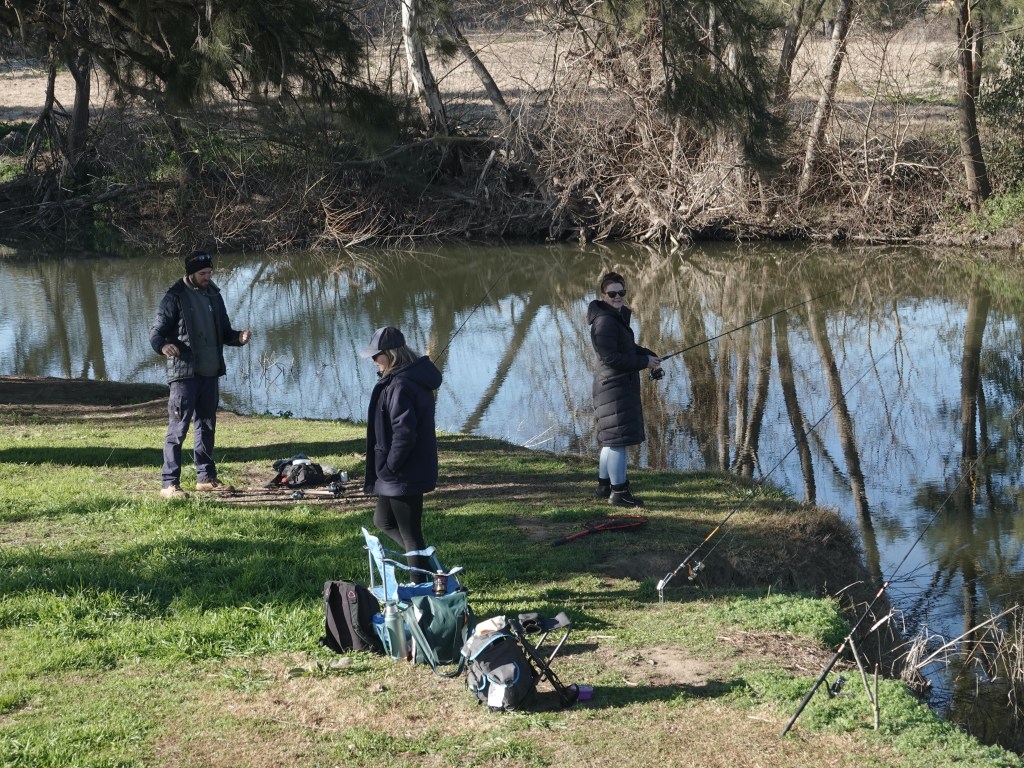
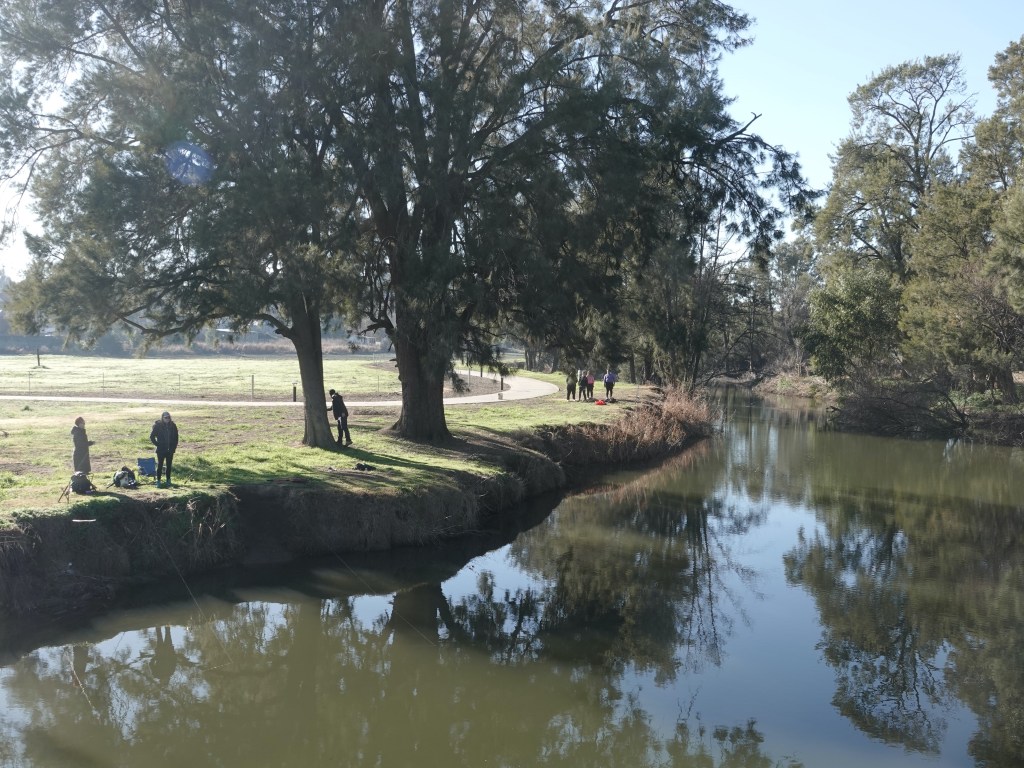





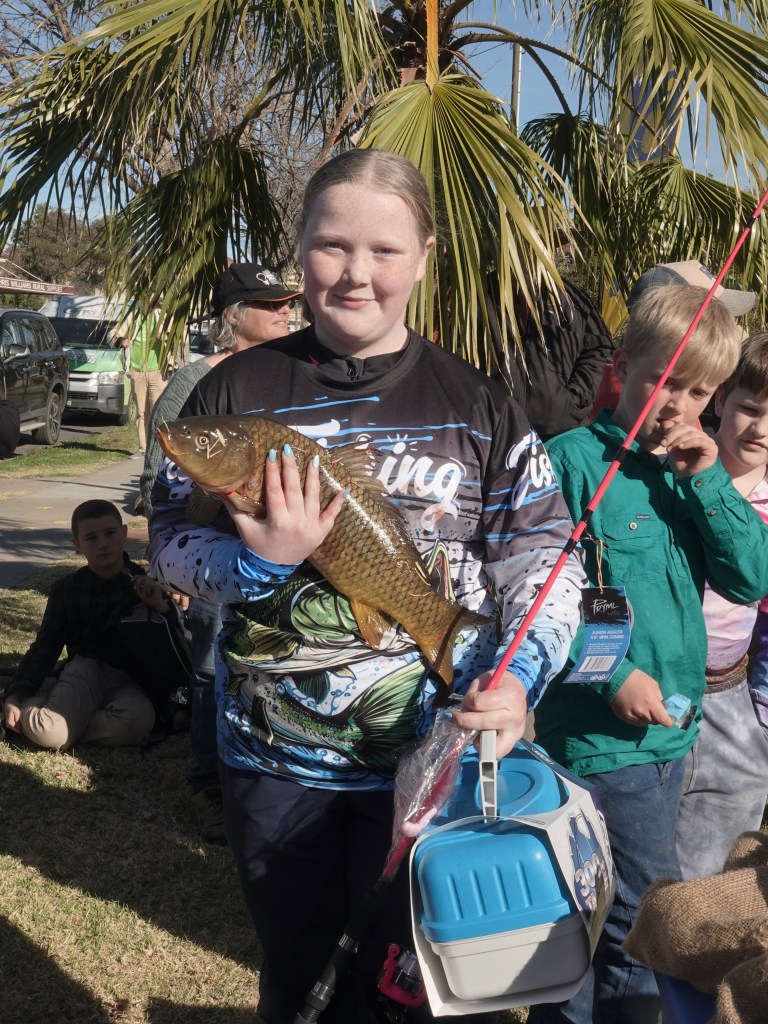
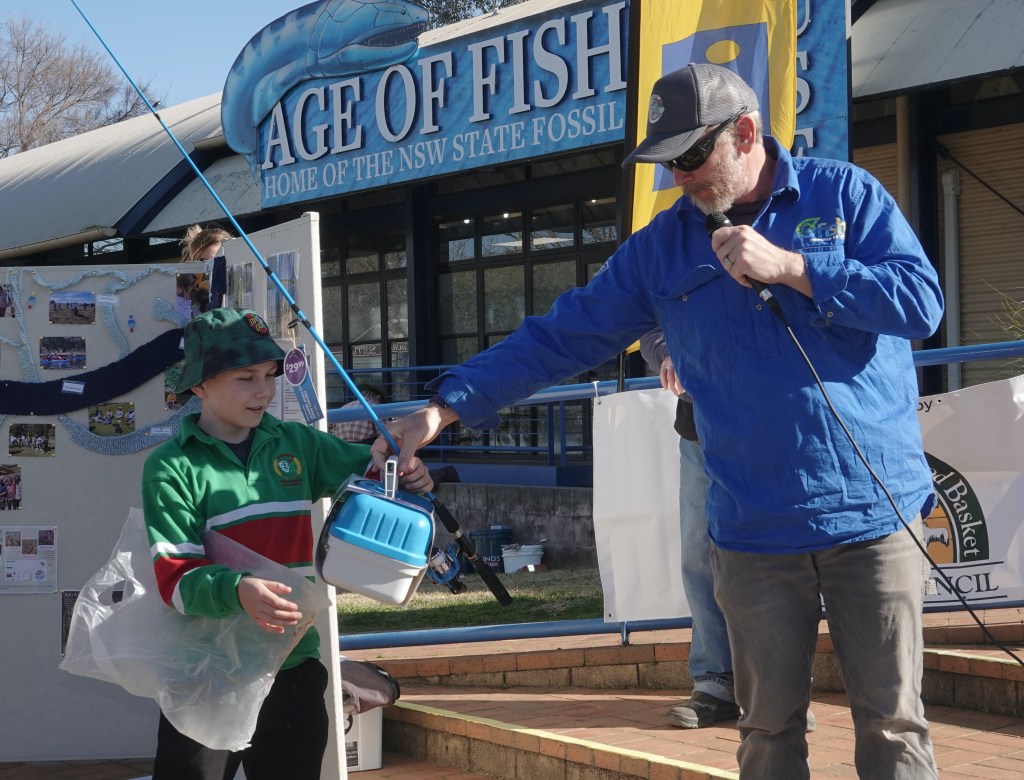
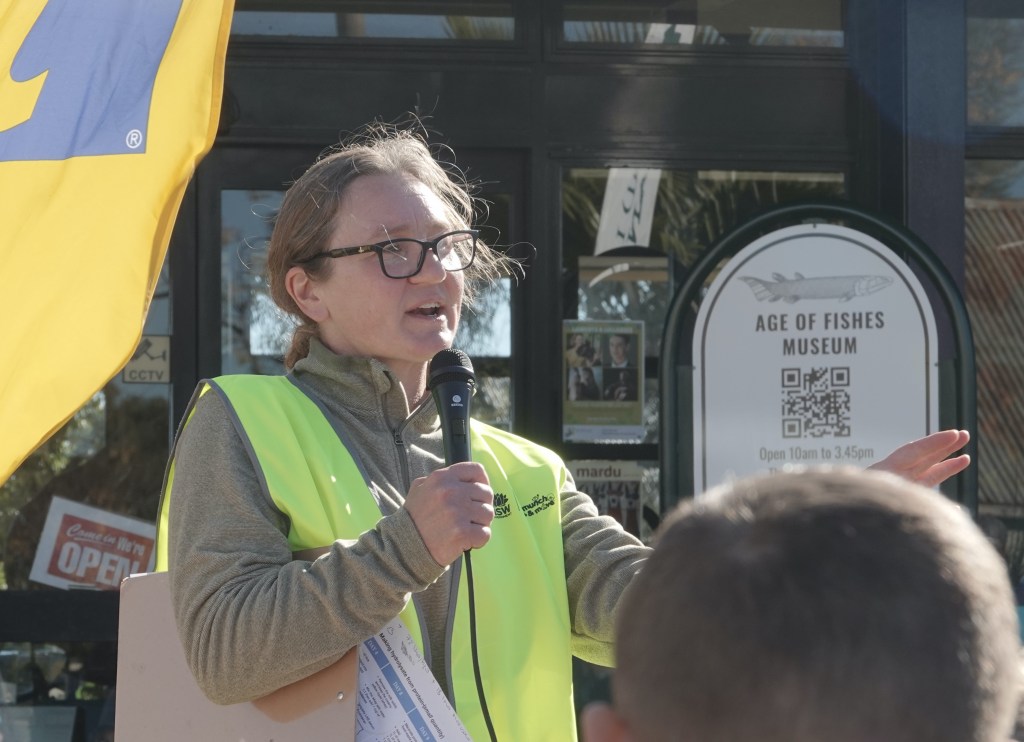


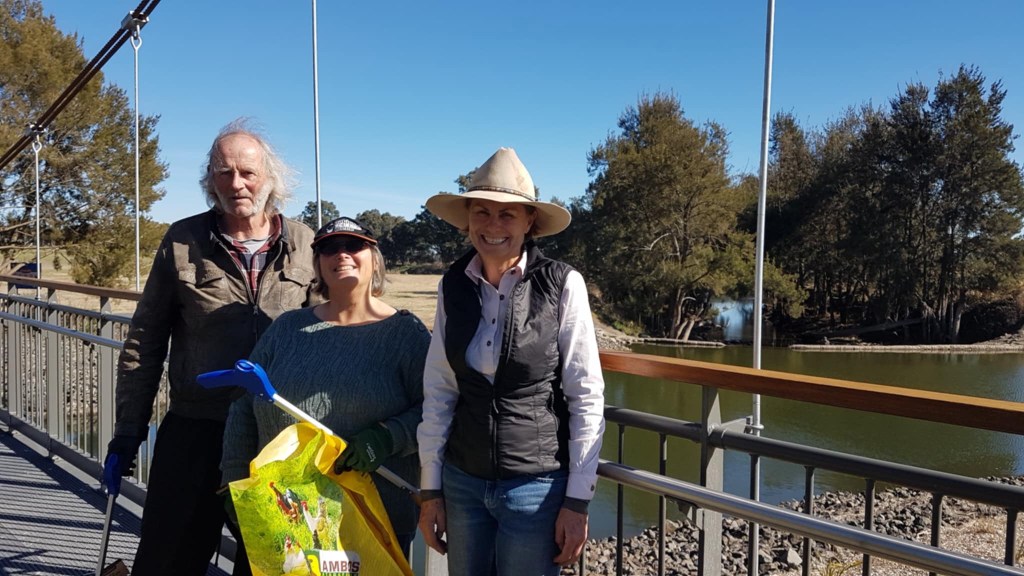
Thanks to Canowindra Connections Centre for making this happen. Thanks to The Age of Fishes Museum for hosting us, OzFish Unlimited for organising the comp and Cabonne Council for sponsoring the day as part of its Youth Week activities. It was also great to see everyone get behind the colouring comp run by Canowindra High School – great effort all!
Landcare NSW & Oz Fish joined forces in 2020 to help improve waterways across the state. Better waters = better fishing and that’s something we can all get behind.
We did it, over 1000 trees & shrubs are Growing for the Glossies!
Back in May we set out to plant 1000 trees and understory species on private land in an area between Conimbla and Nangar National Parks, the idea being that eventually this landscape will re-connect, strengthening both local and regional connectivity across the Western Woodland Way. By the end of July we’d completed our mission and everything was looking great! Our final plants-in-the-ground tally being substantially increased thanks to many of our project participants supplying specimens from Greening Australia, local nurseries and even stock they’d grown themselves.
The furure for our Glossy Black Cockatoos is looking brighter!
Planting Site 4: Mt Belubula, Canowindra.
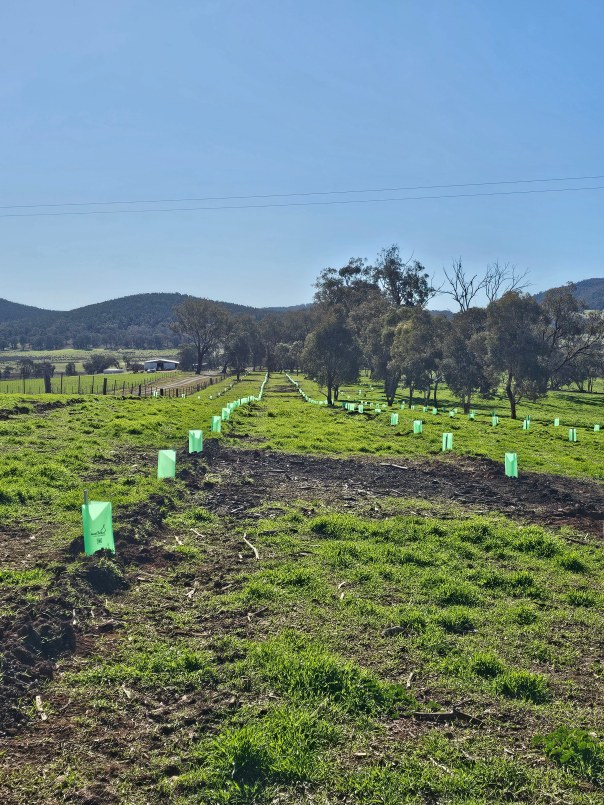
This planting complements an earlier direct seeding project of this landway and will provide cover for birds as they move between the higher, rugged, she-oak forests of Mt Belubula and down to the Nyrang creek below. This was definitely our coldest planting day and the one most impacted by seasonal flu with many of our Blue Mountains bird lovers having to call off their trip out to join us. That said, we were lucky enough to be joined by Katoomba locals plus another visiting volunteer who’d joined us from Parkes for a morning of planting followed by an afternoon spent up amongst a forest filled with mature She-Oaks, Wattles & Gums – a known Glossy Black Cockatoo haunt!
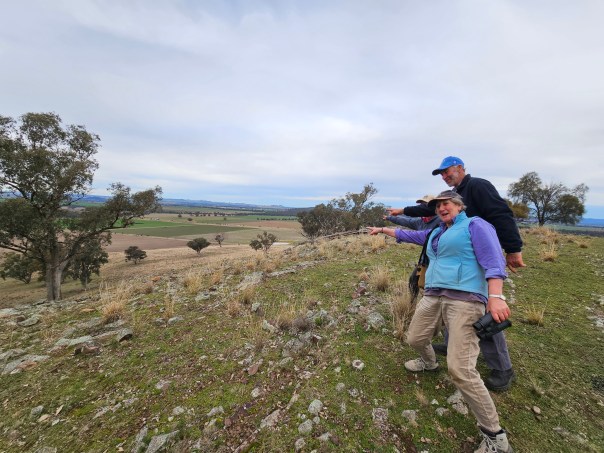
While we didn’t see any glossies, it was great to get a birds-eye view of the area we’d just planted and see how these new focus areas would grow and start connecting up the patches of remnant woodland. Beautiful!

Soil Science at Mt Belubula Site
As usual for this project, soil samples were taken and analysed for their pH and microbiology. We also noted the underlying geology of the area, outdoor temperature during planting and weather leading up to our day. For this site two samples were taken, one at the highest point of the strip we planted and the other at a low point. This laneway sits between two paddocks on each side, the top two being different soil conditions to the bottom – the bottom showing evidence of being generally wetter.
pH was around 6-6.4 for the bottom of the hill sample and 5.9-6 for the sample took from the top.
Microbe Count and characterisation using a Microbiometer.
Top of planting total microbes 1030 ug C/g of which around 63% was fungi, 37% bacteria.
The high microbe numbers are very encouraging showing lots of potential for the soil microbes to support the growth of these trees & shrubs. Fungi dominance is generally a good thing showing the soil is less disturbed that typical agricultural soils so that’s also good. It’s likely the fungi numbers were a bit higher than they normally would be due to the composting effect of the cut grass and the low level of grass growth typical of this time of the year. But that’s all good.
Bottom of planting total microbes 1160 ug C/g of which around 63% is fungi, 37% bacteria so I’d not say these are significantly different to the top of the slope.
Before planting the area was slashed a little and the slashed grasses used as mulch around the planting. The day hovered around 8C and the site had seen recent rainfall. While there were some shrubs growing in the area, these had mostly taken in the bottom half of the planting rather than the top.
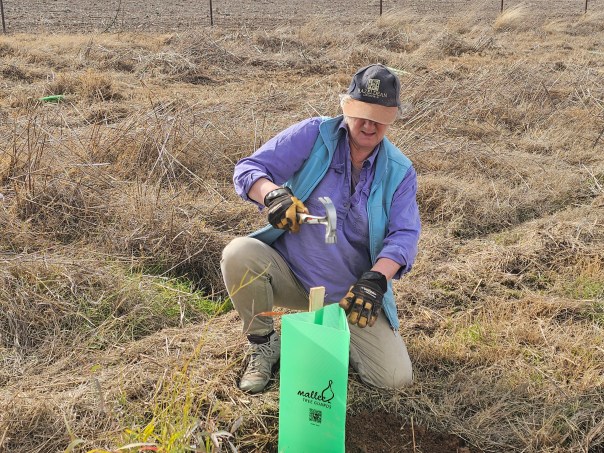
Bron hammering in the stakes 
Ruth getting her hands dirty 
Tracee standing out in her pink shirt 
The Mt Belubula Team 
Lunch at the shearing shed 
Mt Belubula planting 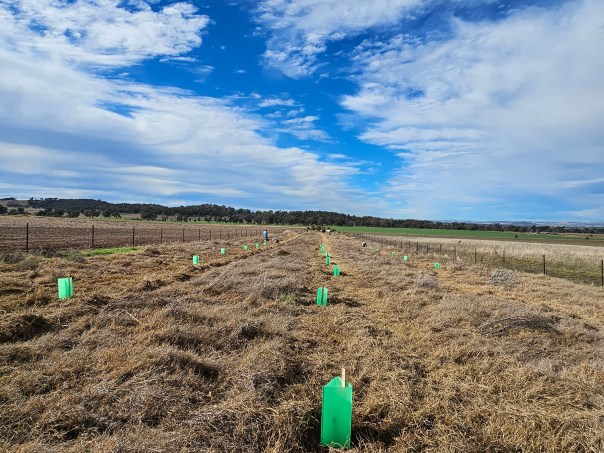
Our tree rows are in! 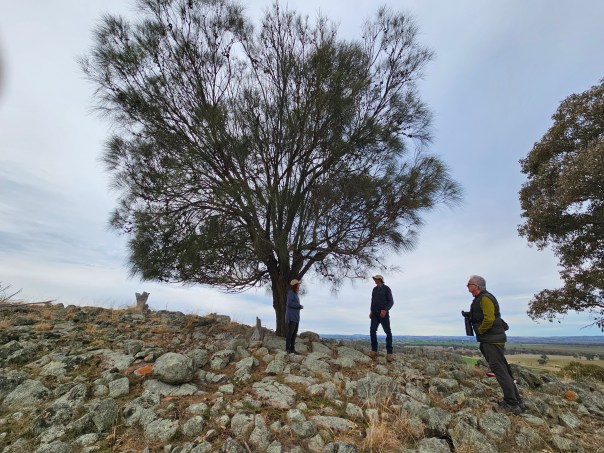
Checking out the mature She Oaks on the hill overlooking our planting Bird walk crew 
A view from the She Oak 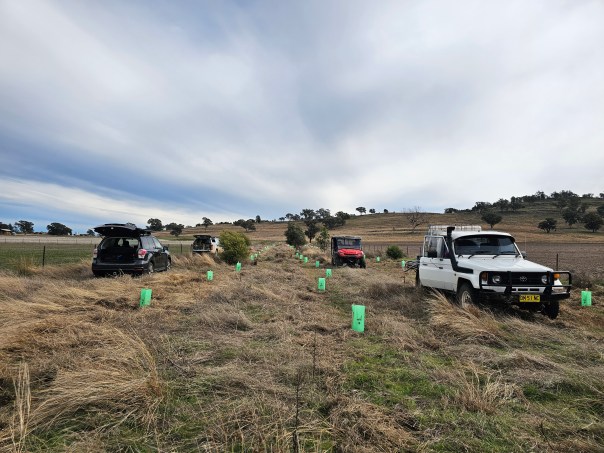
Work site 
A little bush cockroach 
There were plenty of worms at this planting site 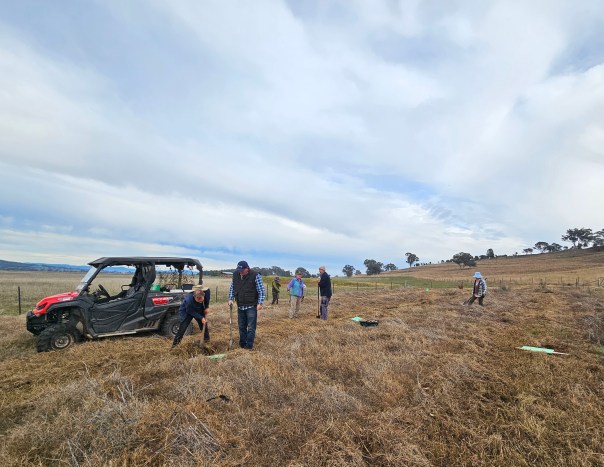
Working hard Look, that’s where we were planting!
Planting site 5: Nyrang Creek riparian area, Canowindra.
Our last community planting events for this project was carried out at the property neighbouring site 4 along the upper banks of Nyrang creek. Our target species – Allocasuarina Vertillilata (drooping she oak) prefers it ‘feet’ to stay on the dry site, so it was important for us to be more strategic with our placement of them. We ended up scattering the She Oaks at the top of the gully, a little away from where the creek usually spills when it’s flowing fast. Along the bottom we planted our other understory species which included a large range of locally growing Acacia (Wattles) plus some Kunzea, Kurrajong and Melaleuca. This planting also included Eucalyptus microcarpa and melliodora to help create a strong and diverse habitat for years to come.
Soil Microbiology
Two soil samples were taken at this site, one at the lower end of the planting, where the creek would typically reach during large flows and one from on the higher areas, away from the main water chanel.
Sample 1: Low in landscape.
Total soil microbes here averaged 242 ug C/ g which is a little on the low side, likely due to previous erosion and increased by the seasonal growing conditions. Fungi levels were also very low at an average of only 10% or 1:10 ratio. Ideally we like our fungi levels to be a minimum of 25% in a conservation area as that shows the soil is recovering its functionality and experiencing less disturbance either from human or natural causes.
Sample 2: Higher on the banks & away from the frequent flood zone
Total soil microbes here averaged 600 ug C/g – that’s significantly higher than the numbers we saw just meters below, highlighting how frequent disturbance impacts microbiology.
Fungi levels in this sample came in at an average of 27% or approx 0.3:1 ratio which is what I’d be expecting for an early recovery site like this. What I mean by that is this site has been fenced off from stock for a while giving the slower growing fungi a chance to settle in and start spreading.
pH for both sites sat at around 6.5
This being the first remediation at this, a clear erosion site, the lower numbers serve more as a starting point than destination. The range of acacias we’ve planted here should definitely help microbial activity pick up. As a pioneer plant that can fix its own nitrogen, the lower microbial levels shouldn’t be too much of a bother. This site could also be supplemented by planting a few native grasses and forbes such as sedges & lomandra’s to help protect the site further and slow down any excess of water that flows through before the understory has had a chance to grow a bit. This would also serve to boost habitat for smaller birds such as shrub wrens and thornbills. That said, there’s plenty of grasses and sedges about plus some lovely Cotton Bush (Maireana aphylla) amongst the mix of young, mature and older existing trees. Overall, a beautiful spot and one we’re sure will become a favourite drinking spot for the Glossy black cockatoos!
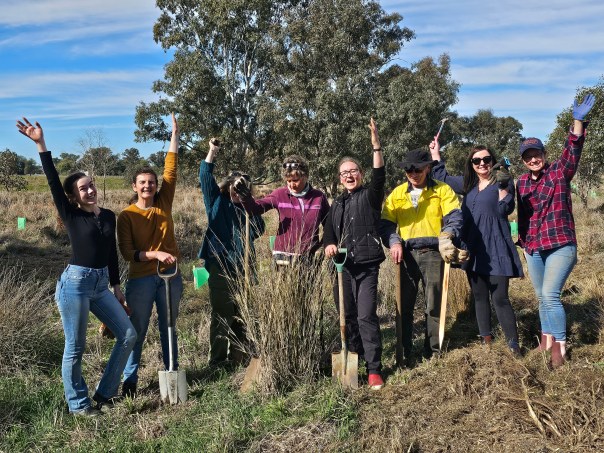
Hooray, we did it! 
Enjoying a light lunch of home-made soup together 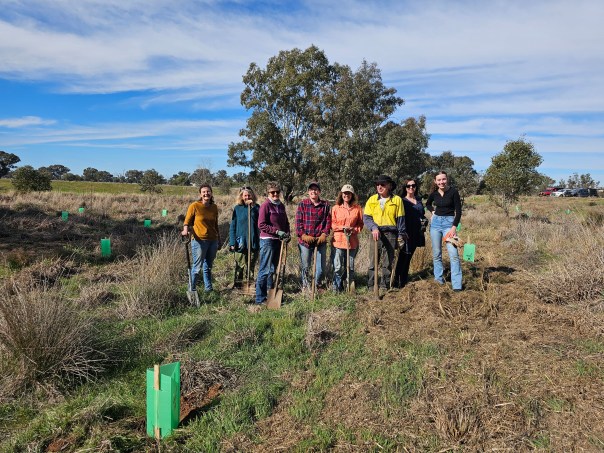
Admiring our work 
Sally planting some undersstory acacias 
Our planting area 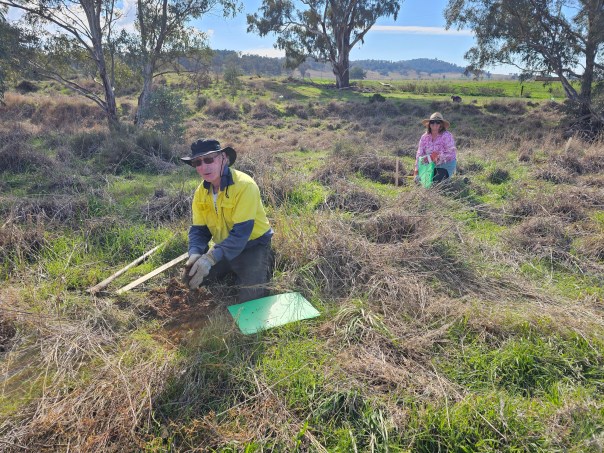
Working away in the sunshine 
Our lead digger! 
Plant delivery 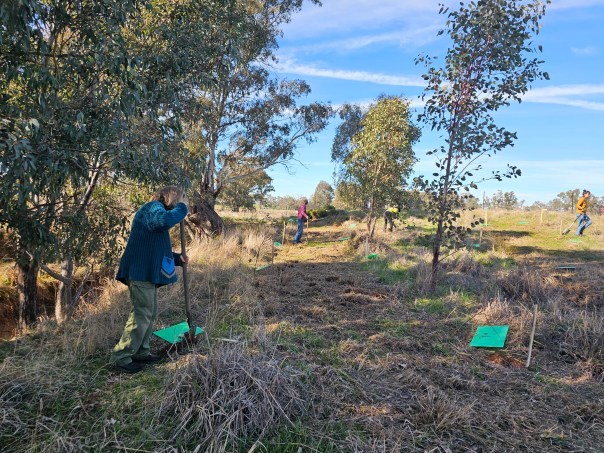
Cutting through the long graasses to the soil beneath 
Creating habitat 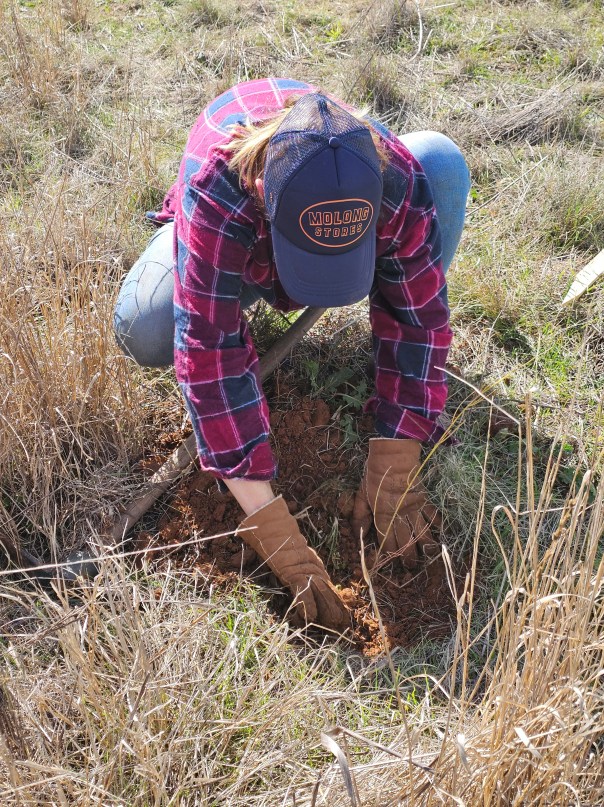
Tending to our baby plants 
Cotton Bush – great bird habitat 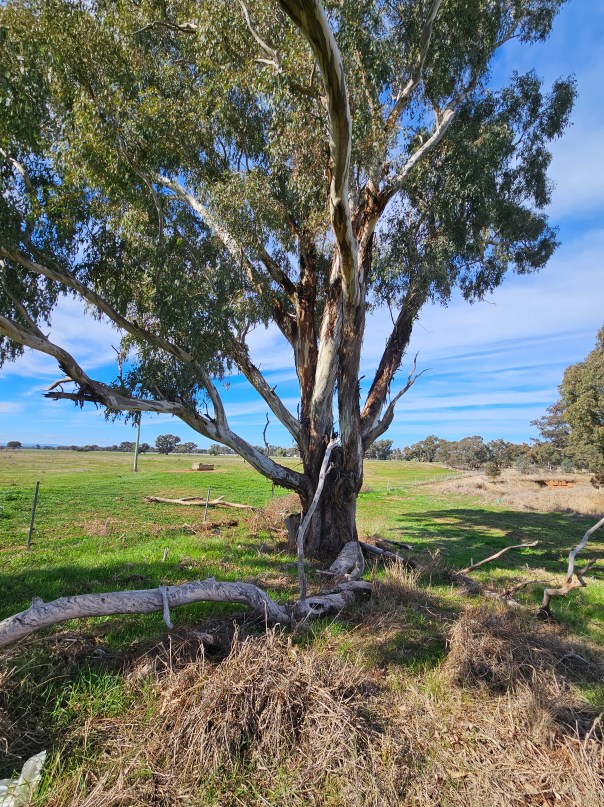
One of the mature trees along the riparian area 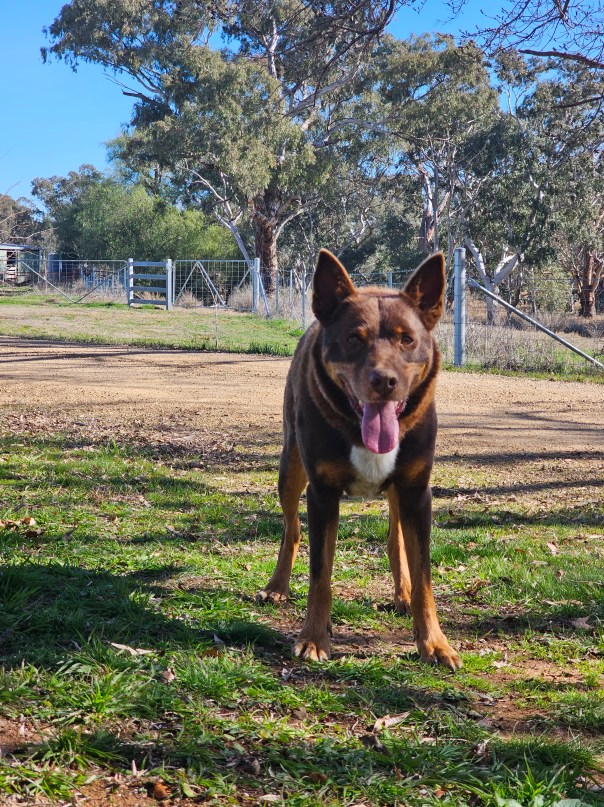
Red Dog getting in on the action 
These tree guards are essential for protecting the plants from trampling 
Those white bits are from the fungi! 
Little wren stopped by to say hello! 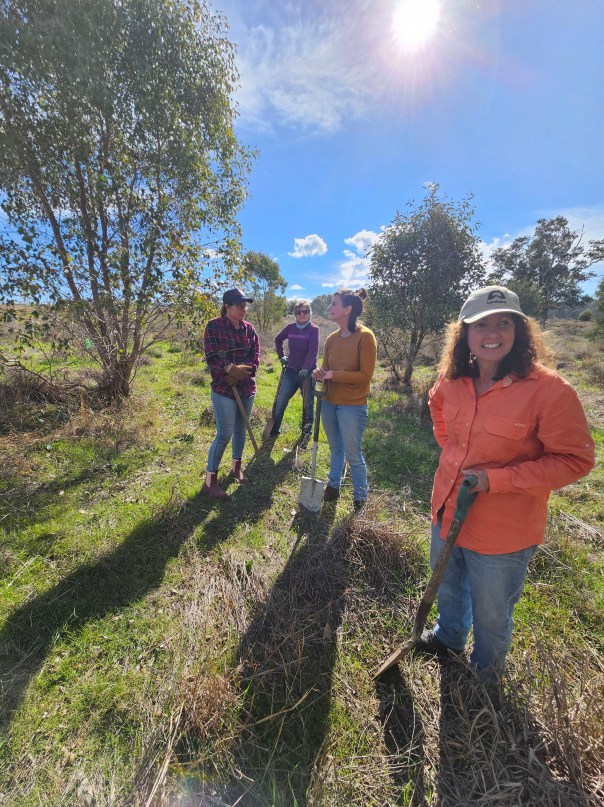
Taking stock 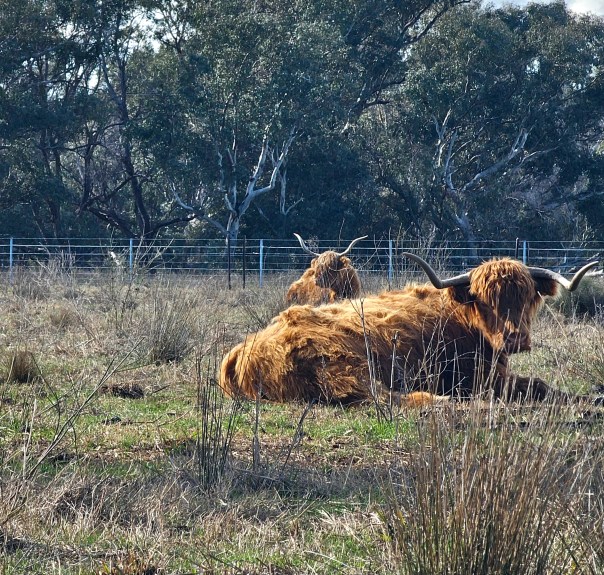
Beautiful old Highland Cows!
In between these two community events, we also met up with two smaller block property owners who’d expressed interest in the Glossy’s project. We were able to grant them 25 trees and shrubs to plant out thus taking our total of private plantings to 7 across the corridoor.

A picture from one of our micro planting sites out in the Eugowra catchment.
This project was made possible with funding from Bupa Australia and Landcare Australia.
- We ended up planting approximately 2200 trees & shrubs planted between Conimbla & Nangar National Parks
- Planting happened across 7 private land holdings
- Engaging 70 volunteers
- A total of 310 planting hours

Belubula River Riparian Project
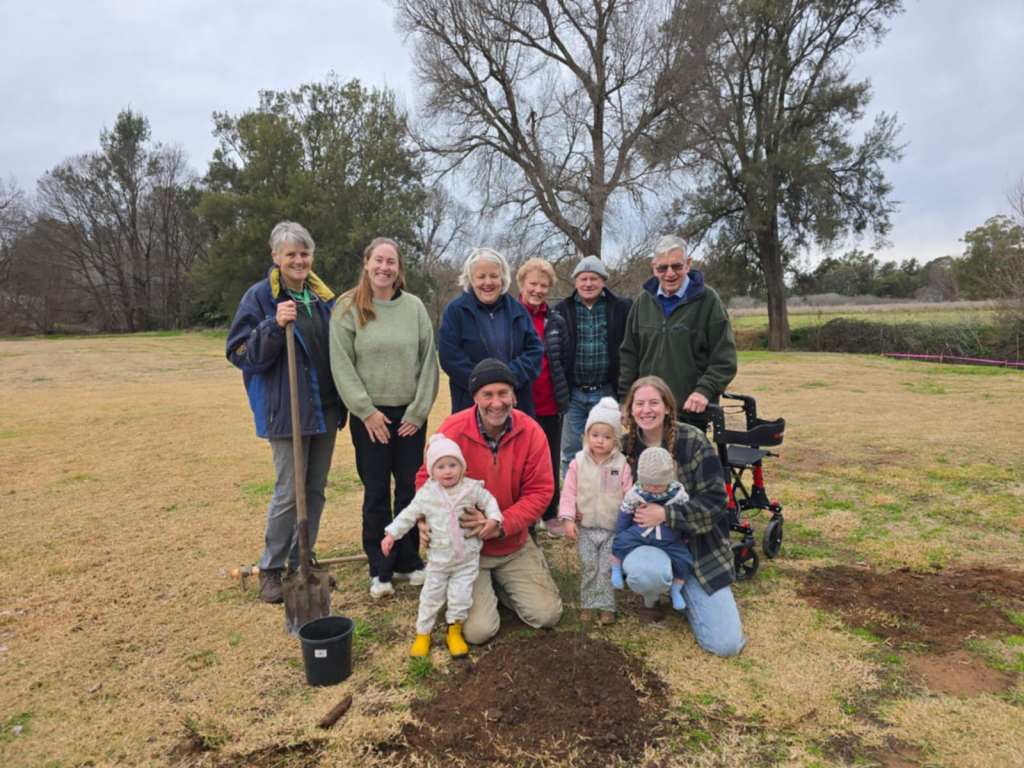
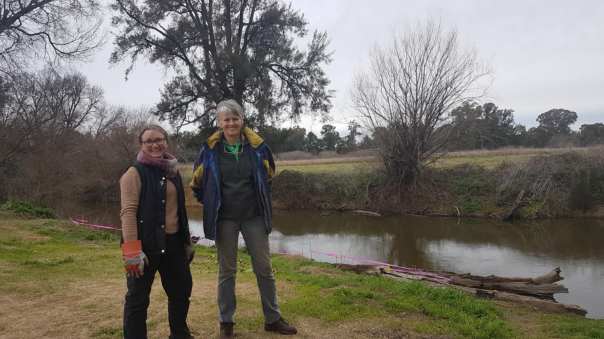
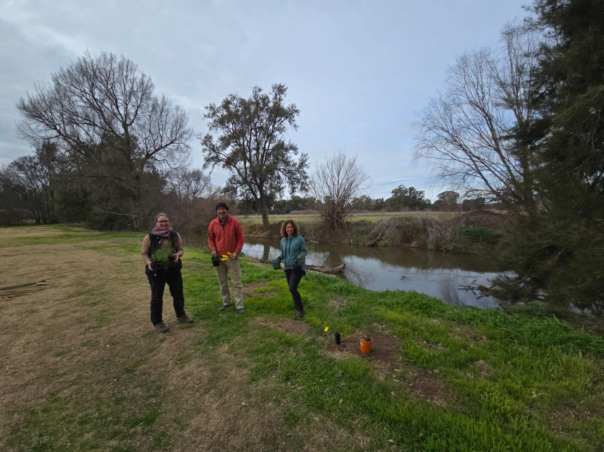
On Friday the 25th July we had a fabulous time down on the Belubula river at Canowindra.
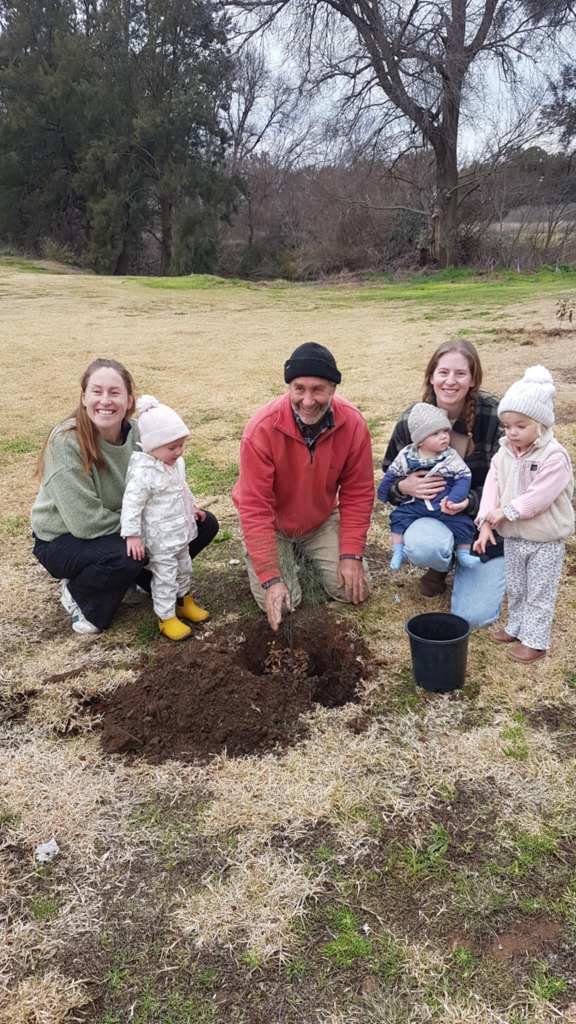
Sue Johnson’s family planted a beautiful tree she had grown.  Thanks to Anne Ward for coming up with the brilliant plan. Sue was very special to the Canowindra Community and anyone who knew her would know how much she loved her native plants. Sue sadly passed away in November last year and the tree is a beautiful reminder of her for us all.
Sue & Will’s property ‘Lowanna’ has been one of our farm depots for the Superb Parrot project mesh over the last few year’s. Anyone who has gone there to collect the mesh for projects would have seen all the work the Johnson’s have put into planting on their farm. There is a beautiful film of the work they have done filmed just a couple of years ago ‘A Shared Existence’
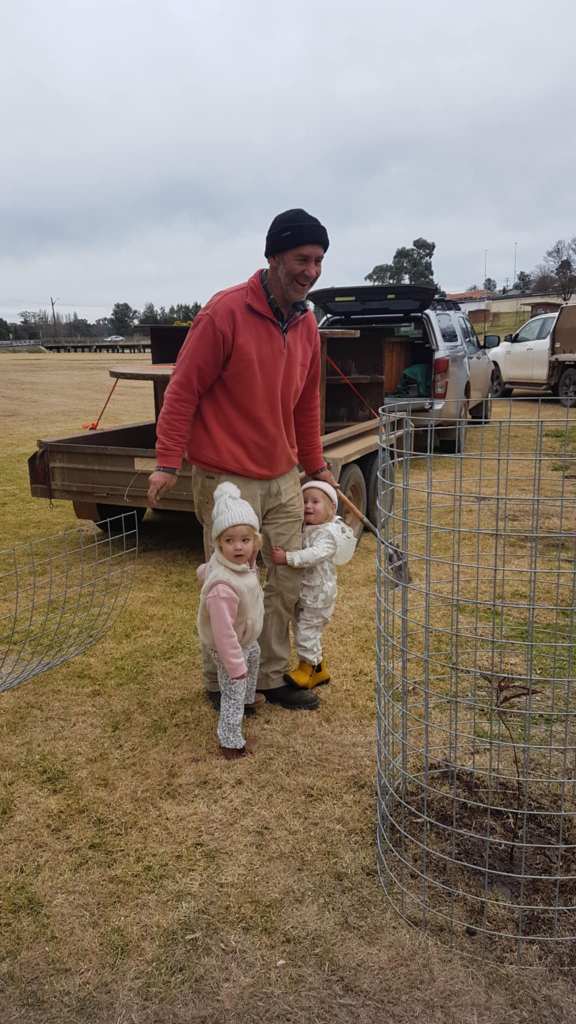
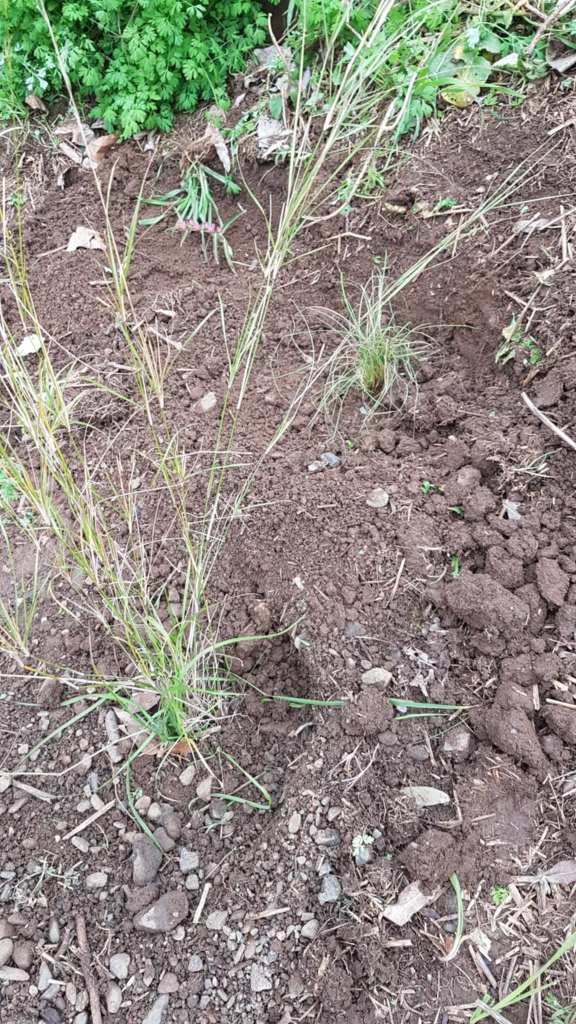
As well as planting this special tree we have also planted out some great little local native grasses and groundcovers that Ash Wright had grown from seed as well as a couple of lovely plants from the Weddin Community Native Nursery
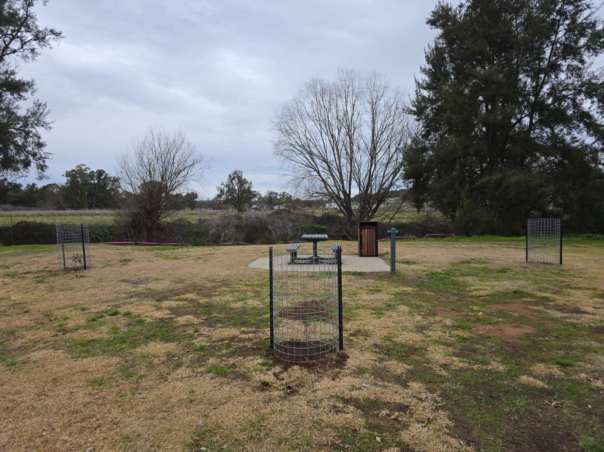
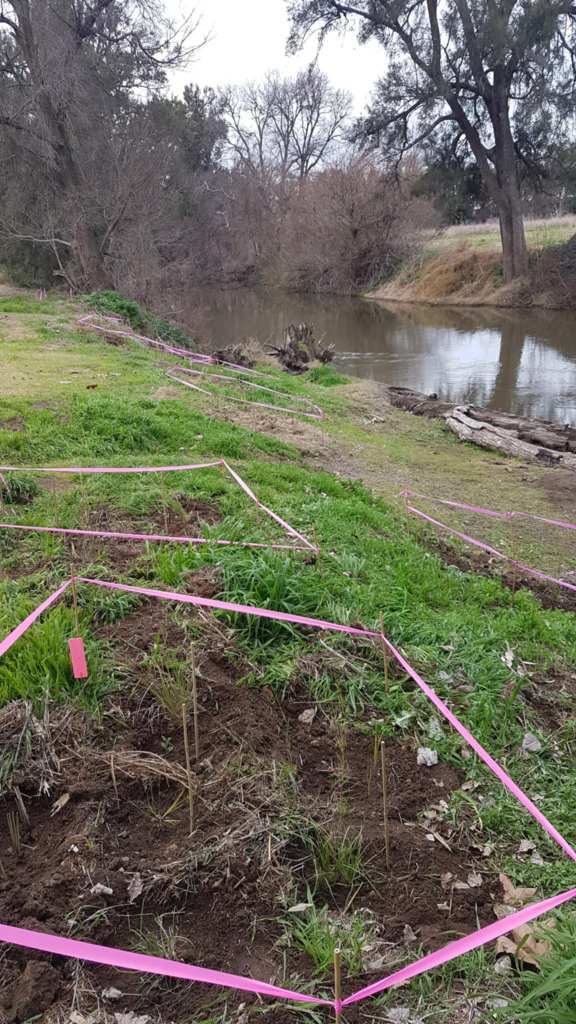
This project is a part of a collaboration with the Canowindra Garden Club and the Canowindra Connections Centre to plant some shade trees around the new table they have had installed.
It is also a trial planting of local native grasses and groundcovers on the bank of the river. So if you see our lovely pink circles on the riverbank please be mindful of them as we are very excited to see how they grow. If they do well it would be so good to extend the planting.
We will be having a few working bee’s to maintain this small area and if you are interested in helping please let us know and we will add you to the Belubula River What’s App group.






10 ways to increase farm biodiversity without costing too much.
Wendy Bowman is the chair of Mid Lachlan Landcare and a Beef producer from Canowindra. Here’s what she presented in her 5 minute ‘Lightning Talk’ at last week’s Central Tablelands Landcare Muster.
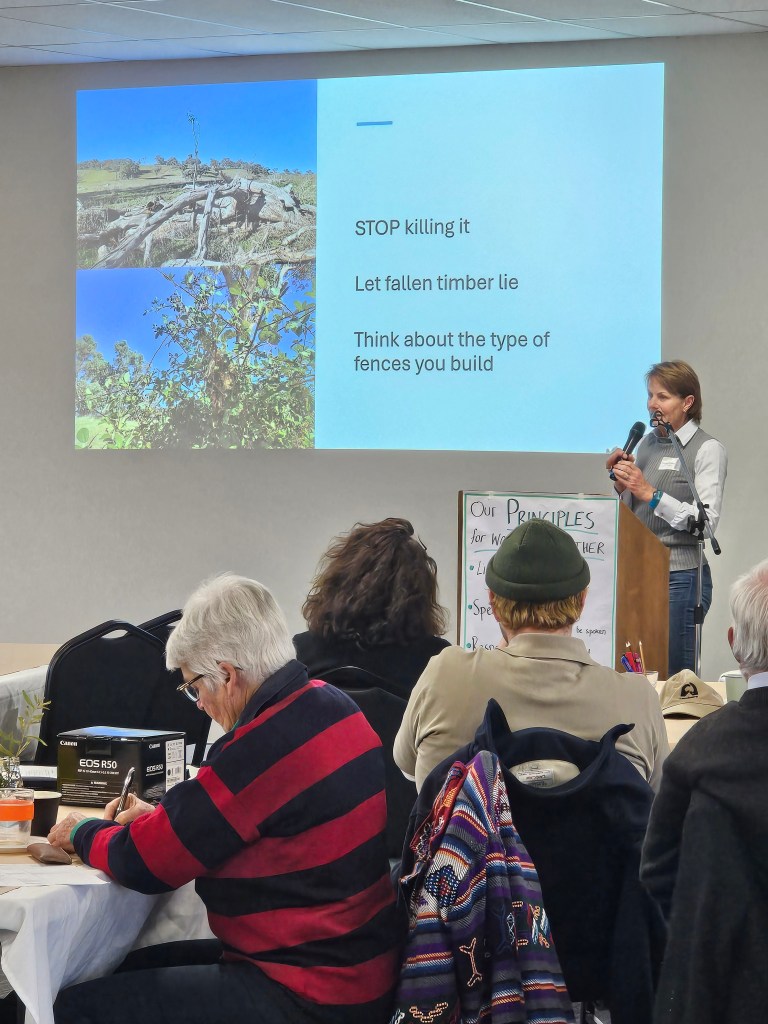
Use farm mapping to identify and highlight your quick win and biggest threat areas are.
- STOP killing it.
- Let fallen timber lie.
- Think about the type of fences you build.
- Protect what you have.
- Plant (or import) what you don ’t have.
- Connect it.
Make increasing farm diversity part of your overall farm management plan.
- Think about the type of grazing management you use.
- Everything needs water.
- If you manage livestock, sometimes you must manage dead stock.
- Take the time to look, listen, and learn.
Examples of on-farm biodiversity
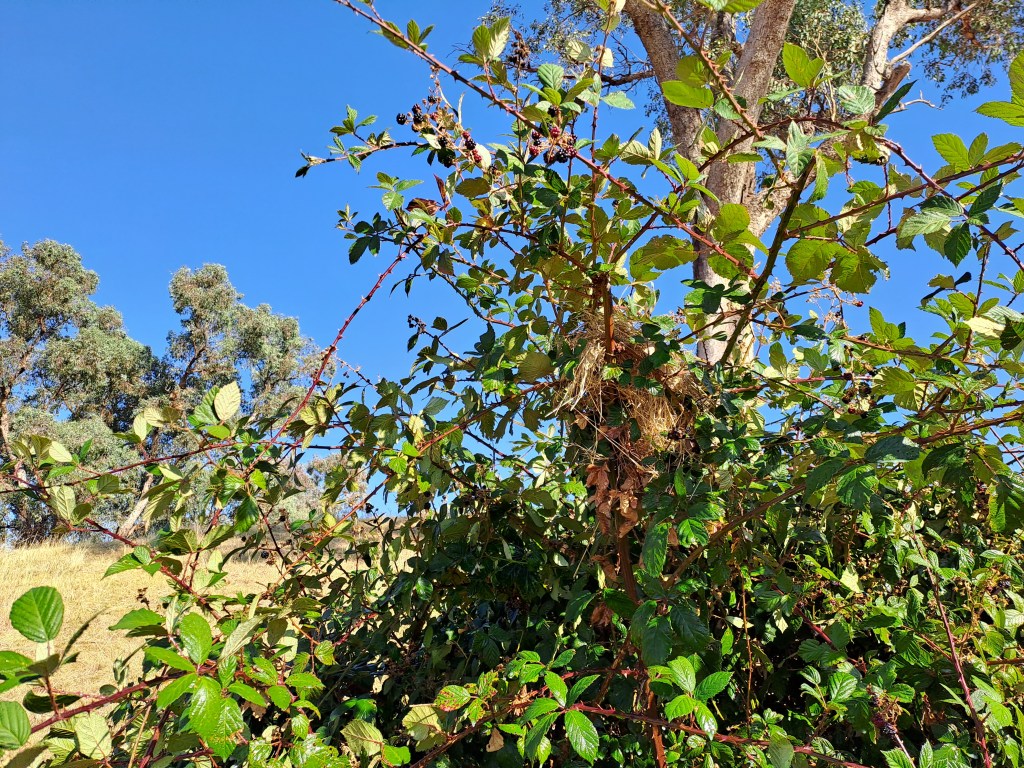
Bird’s nest in a black berry bush
Woody weeds such as blackberry provide small birds with an ideal habitat for foraging and nesting.
Replace woody weeds with woody native shrubs such as prickly acacias, local varieties of hop bush, prickly heath species or indigo bush to maintain bird habitat and take advantage of good soil nutrition. Small birds help keep insect numbers down while adding to the overall fertility & beauty of the landscape.
Young Tree Growing Through Fallen Timber
Fallen timber makes a great nursery for young saplings as it provides protection from both harsh weather conditions and predators. Saplings also avoid getting trampled and can take advantage of the support the fallen timber offers as they grow.

Protecting self-seeded trees
Reduced grazing pressure creates opportunities for self seeding of Eucalypts and other species. This natural succession can be protected by tree guards which, if the land is to be re-grazed, need to be fairly sturdy to withstand interest from inquisitive stock.

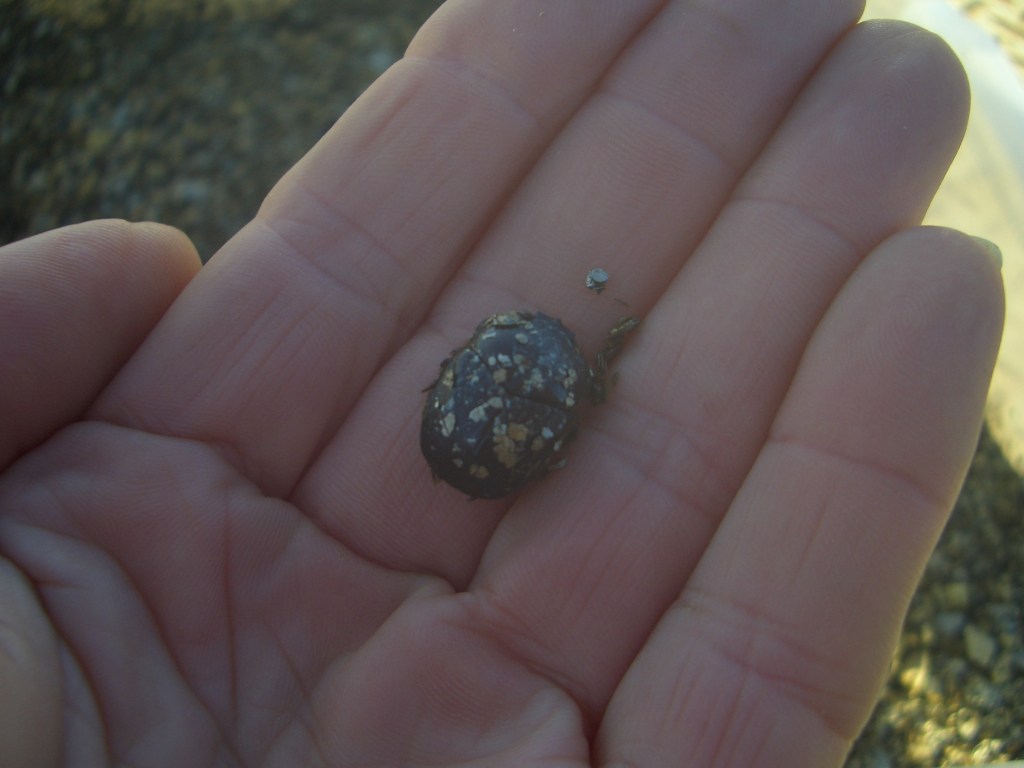
Dung beetles
Dung beetles are all part of the natural nutrient cycling process but we can’t take their presence for granted. Beetle numbers will fall when the environment becomes too challenging for them such as during floods or under some chemical use regimens.

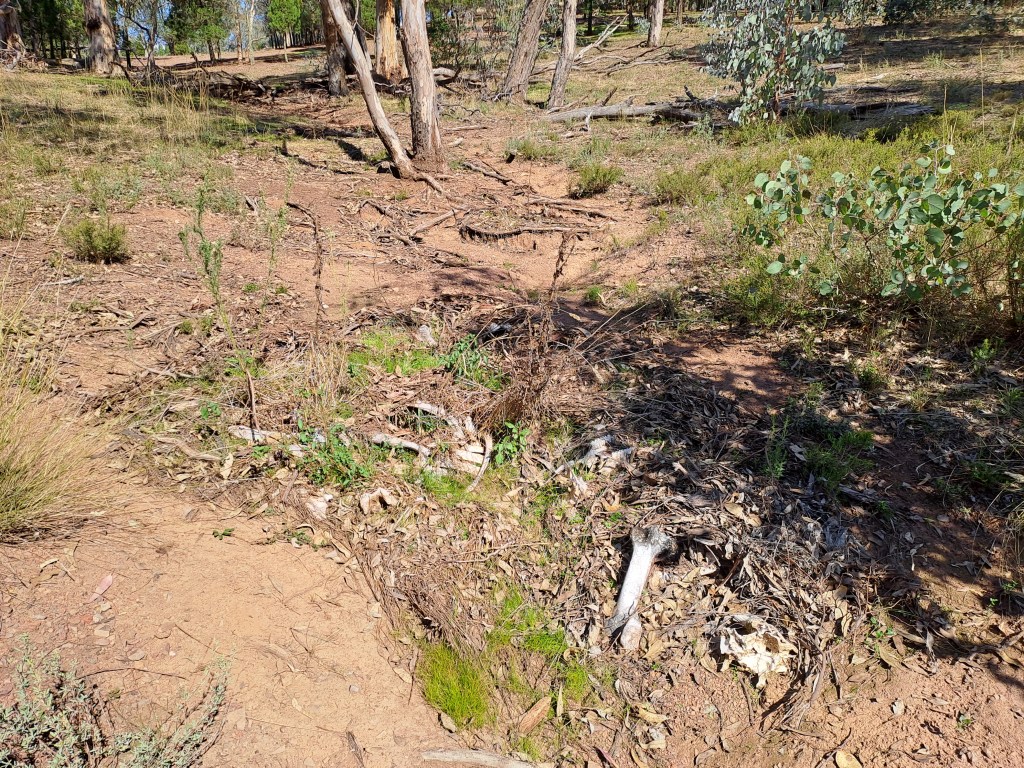
When live stock expire
If you are in the business of live stock, you’ll also have to manage dead stock. Dead stock will return nutrients to the soil as they decompose. Strategically placed carcuses can also be used to slow water flow across a landscape and in doing so, reduce erosion threats. Dead stock can be left to break down in their own time or the process can be expedited by creating a compost pile around the body and by the use of microbiological digesters such as those being trialled with the Carp from our recent Carp Muster.
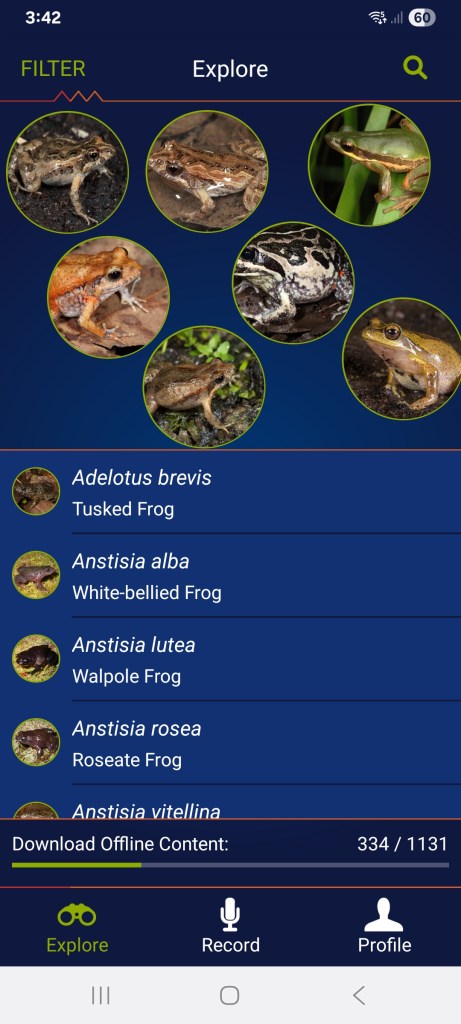
Cirtizen Science: Frog ID.
Familiarising yourself with all the different apps and online tools available to help identify the flora, fauna and fungi you encounter on your farm rounds. The knowledge gleaned from these apps can help inform management decisions by bringing a deeper level of understanding about the micro and macro habitats that exist.
Join us for the 2025 Canowindra Carp Muster this July!
Mid Lachlan Landcare will be joining the Canowindra Connections Centre & Oz Fish for a fabulous day at the Belubula River. Carp cause so much damage to our waterways, muddying up the water for our native fish & competing for food and habitat. While we’re out there we’ll also be encouraging everyone to bring home a bag of rubbish – healthy rivers are essential for all life so let’s get behind this great initiative and clean up Canowindra’s water front areas.
After the event we’ll be taking the Carp and turning it into fish-based fertiliser. This will be our first venture into this waste-to-resource initiative so who know’s how that will go but we’ll definitely be sharing the journey with you. Here’s some information on Charlie Carp, a commercial Carp based fertiliser that’s our inspiration and here’s an interview by Cowra News from nine years ago with founder Bob McFarlane.
Come along as a volunteer helper
We’re looking for helpers on the day for the following tasks:
Barbeque duties- cooking, serving and keeping the area clean.
and
River Walkers – Looking out for muster participants & assisting with rubbish collection.
- Early shift 6am – 9am
- Mid morning shift 9am – 12pm
- Lunch shift 12pm – close (no later than 3pm including clean down)
Drop us an email if you’d like to help out.
This promises to be a great day and we can’t wait to see you all out there!
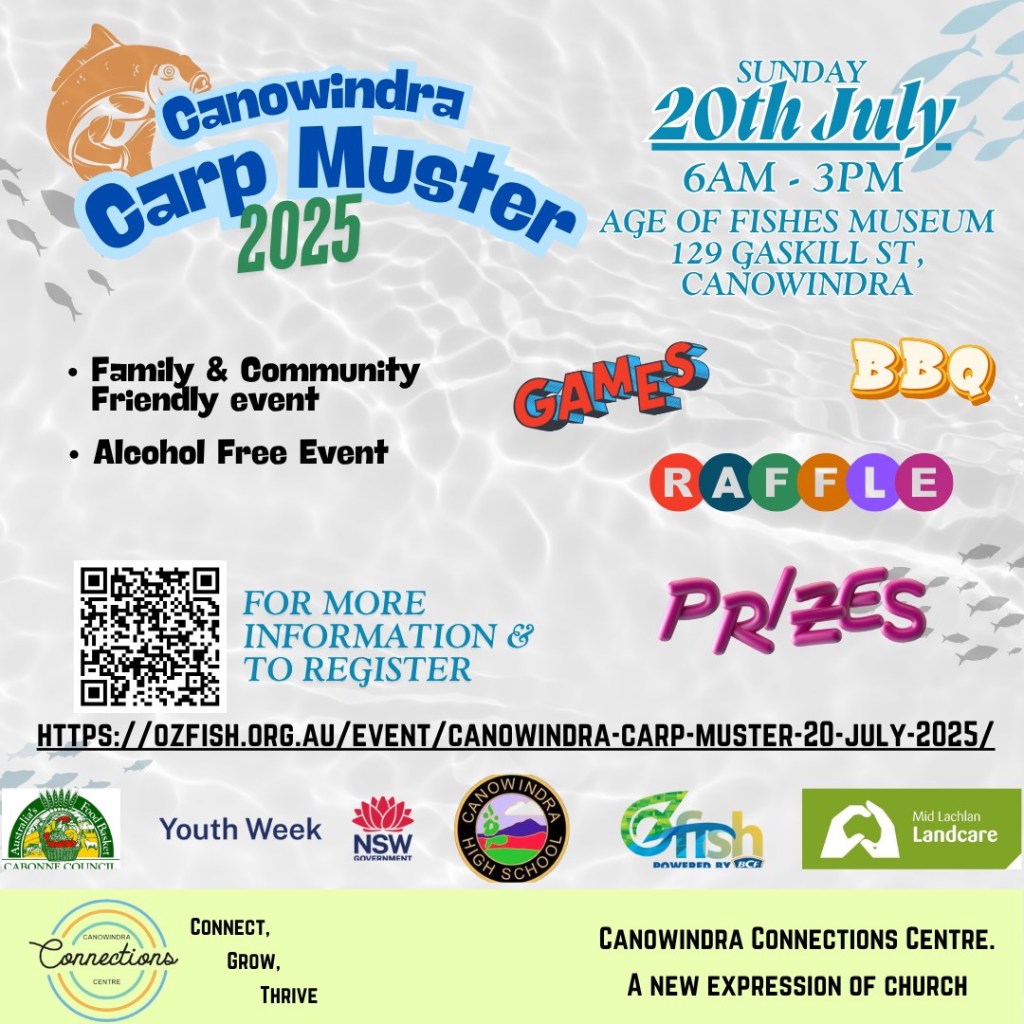
Get your rods ready and your game faces on – because the Canowindra Carp Muster on Saturday, 20th July 2025 is bringing EPIC prizes to the table! 
Here’s what you could win  :
:
 BIGGEST CARP – across three age categories:
 Under 12s
12 to 16
17 and over
 MOST CARP CAUGHT – as a team or a solo legend!
 UGLIEST CARP – because beauty is in the eye of the angler!
 MOST RUBBISH COLLECTED – for those who want to leave the river better than they found it
This is more than just a fishing comp – it’s about community, caring for our local river, and having a blast while doing it!
 Meeting at the Canowindra Fish Museum
 Saturday 20th July 2025
 Register here: https://ozfish.org.au/event/canowindra-carp-muster-20-july-2025
Grab your bait bags from Canowindra Connections Centre, bring your mates, and let’s see who reels in the glory! 
Join us at the Central Tablelands Regional Landcare Muster
You’re Invited to the 2025 Central Tablelands Regional Landcare Muster!
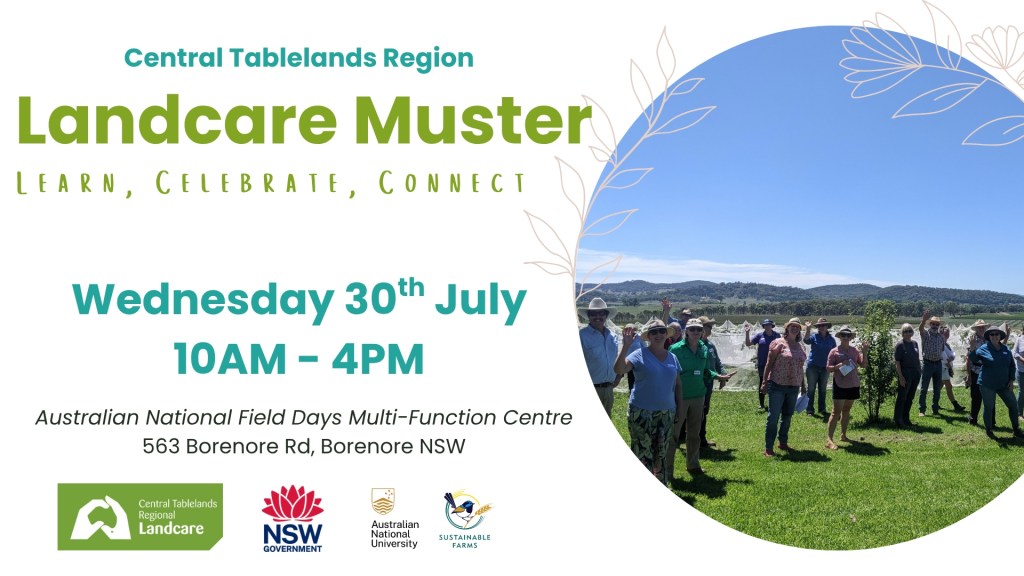
Join fellow volunteers, community members, partners and landcare champions on Wednesday 30 July at the Australian National Field Day site near Orange for a day of connection, collaboration, and big-picture thinking. The Regional Muster is your opportunity to share experiences, explore new ideas, and help shape the future of Landcare in the Central Tablelands. Whether you’re new to Landcare or a long-time advocate, your voice and input are valued.
🌟 Got something to share? We’re also inviting expressions of interest for short, engaging lightning talks during the Muster. If you have a story, project, or insight you’d like to present in 5 minutes or less, let us know when you register or get in touch directly.
Calling all Landcarers! 🌾
Whether you’re a seasoned steward of the soil or new to the Landcare movement, the Central Tablelands Regional Landcare Muster is your space to connect, learn, and grow 🌿
🗓 Wednesday 30 July | 📍 Australian National Field Days Multi-Function Centre
🎟️ Register now: https://events.humanitix.com/ct-regional-landcare-muster
Join fellow volunteers, community members, partners and Landcare champions for a day of connection, practical discussions, and inspiration. Let’s shape the future of Landcare together 💬🌏
Strengthening Connections to Country
Campfire Gathering & Book recommendations from our team for NAIDOC Week.
Last month three Mid Lachlan Landcare team members joined others in our Central Tablelands network for a Campfire day with our Aboriginal Partnerships leader Den Barber. We met at Ganguddy-Dunns Swamp on the Cudgegong River in Wollemi National Park – Wiradjuri land. I didn’t take many pictures but might be able to picture it if I describe it a little.
Imagine being in a clearing encircled by apple box, white gums and bloodwoods. You can hear Lyrebird song reverberating through the trees and feel ice-cold gusts of wind ruddy up your cheeks and leaves gloveless hands throbbing. Our bones remind us that out here, we’re fragile & vulnerable.
Listen to the river meandering along behind us. It’s full of fresh water muscles – evidence of which was scattered on the banks where platypus and Rakali had feasted. Sense rustling in the acacia groves. Taste eucalyptus oil in the leaves as they ignite. Smell the smoke of our camp fire as it wafts above the orange flames, flames that flicker with opportunity and prommise. Flames that draw us closer together.


Over the day, our thoughts and feelings about our Landcare work, our connection to this country and our dreams for the future flowed out as we huddled in a circle under our blankets and listened to each other and then ourselves.
NAIDOC week 2025 runs from Sun, 6 to Sun, 13 July.
Let’s celebrate the achievements of Aboriginal and Torres Strait Islander peoples and recognise the rich history and culture that makes our Australian home so special.
We wanted to mark this important week by sharing some of the books & readings that have shaped our approach to caring for this beautiful place we call home.

Bruce Pascoe, Dark Emu 
Duane Hamacher, The First Astronomers 
Corey Tutt, The First Scientists 
Billy Griffiths, Deep Time Dreaming 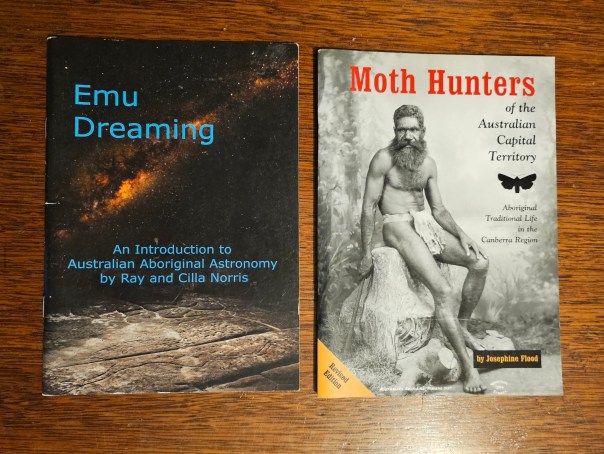
Ray & Cilla Norris, Emu Dreaming. Josephine Flood, Moth Hunters of the ACT 
John Blay, On Track 
Melissa Lucashenko, Edenglassie 
Alexis Wright, Praiseworthy (Audio book) 
Dick Roughsey, Turramulli the Giant Quinkin 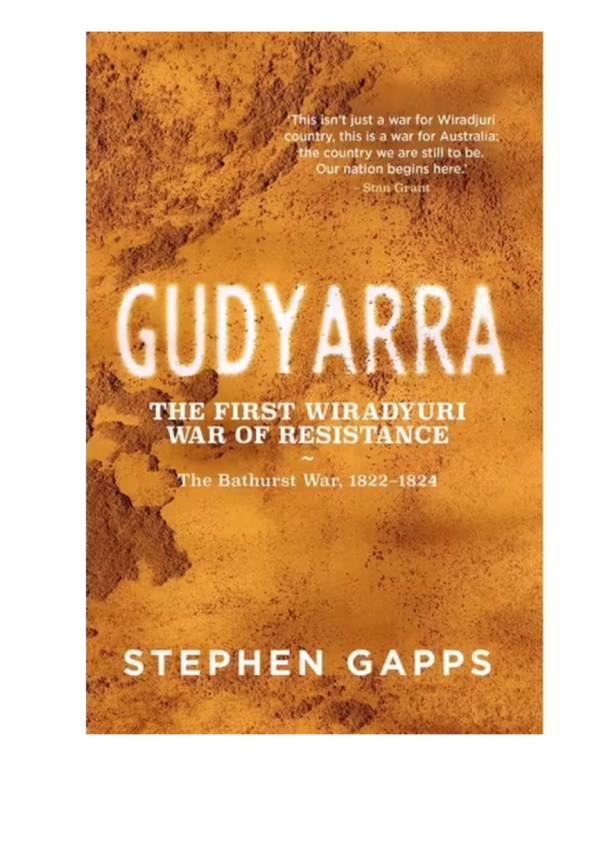
Stephen Gapps, Gudyarra 
Bruce Pascoe, Black Duck 
Victor Steffensen, Fire Country
Wendy Bowman, Mid Lachlan Landcare Chair.
Dark Emu by Bruce Pascoe and Gudyarra by Stepen Gapps.
“I loved both of them and would highly recommend them to others. The reason I loved these books is because I learn something new and fascinating, I was shocked and greatly sadden by the events in the War of Resistance and equally as shocked and saddened by the knowledge lost that Bruce Pascoe is now trying to find”.
Tracee Burke, Mid Lachlan Landcare Coordinator
The First Astronomers – How Indigenous Elders read the stars by Duane Hamacher with elders & knowledge holders
The skies out here on Wiradjuri land are awe inspiring. This book shows how human culture has been shaped by the stars.
Ken Hutchinson. Billy Goat Hill Appreciation Society.
Dick Roughsey’s Turramulli the Giant Quinkin.
“We used to read his books to our children – they are set on the cape York peninsula”
Dick’s stories entertain as they teach us about family law & kinship.
Scott Hickman – Mid Lachlan Landcare’s Grazing Group Leader
Billy Griffiths Deep Time Dreaming, Uncovering Ancient Australia.
You can’t work with the soil like we do and not wonder about its history.
Scott also recommended Fire Country – How Indigenous Fire Management Could Help Save Australia
By Victor Steffensen & Black Duck, A Year at Yumburra by Bruce Pascoe.
Marion Mitchell, Mid Lachlan Landcare Committee/ Accounts
Praiseworthy by Alexis Wright
“This book is set in a fictional Australian town grappling with climate change, Aboriginal sovereignty, and the legacy of colonialism. It’s a story that blends realism with elements of fantasy and Aboriginal cosmology, exploring themes of survival, cultural identity, and the interconnectedness of past, present, and future.”
Edenglassie by Melissa Lucashenko
“A novel that explores the impact of colonialism on Indigenous Australians, particularly in the Brisbane area, through dual timelines. The story interweaves the lives of characters in the 1850s and 2024, highlighting the ongoing consequences of dispossession and resistance.”
“I love her dedication to language both the clan language of old and modern blak language spoken by mob in Brisbane in 2024.”
Amanda Foxon-Hill, Mid Lachlan Landcare Coordinator.
On Track: Searching out the Bundian Way by John Blay.
“I’m very much a non-fiction fan and am also an immersive reader so I read this while hiking in the Snowy Mountains. The book really came alive for me as I walked part of this ancient Aboriginal track that spans some 360km from Targangal (Kosciuszko) to Bilgalera (Fisheries Beach) in Eden on the NSW far south coast. There’s such a great collaborative partnership behind this book and it’s been fascinating to watch this story unfold from the research that went in prior to the 2010 surveying walk to government recognition in 2013 and then this book in 2015. Proof that stories move us in more ways than one. This book also introduced me to ‘Moth Hunterd by Josephine Flood & Emu Dreaming by Ray & Cilla Norris”. You can read more about the Bundian Way here.
The First Scientists by Corey Tutt.
“Corey, founder of Koori Science is a fantastic Kamilaroi young man who I first came across when he was interviewed on the Fizzics Education podcast back in 2019. His book really helped me through my science teaching post-grad course, introducing me and thousands of others, I’m sure, to the many ways Aboriginal & Torres Straight Islander culture is rooted in scientific thinking. I particularly liked the chapter on how Wiradjuri clans created bush ovens in the ground, using clay balls to hold the heat. I’d really love to try that one day!”
Do you have any books you’d add to our NAIDOC reading list? Please feel free to contact us with your suggestions!
Roots, Shoots & Gum Boots – A Family Day Out for the Glossy Black Cockatoo
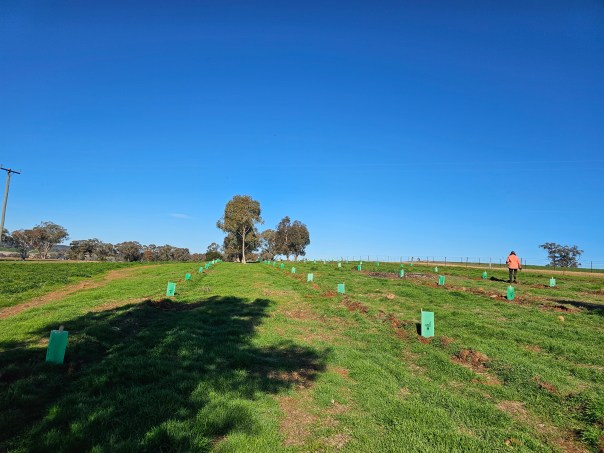
Our third planting day for the Glossy Black Cockatoo with Eugowra Catchment Landcare out at Mandagery was a great success. The light morning frost quickly thawed thanks to the gentle warmth of the winter sun, making for perfect planting conditions.
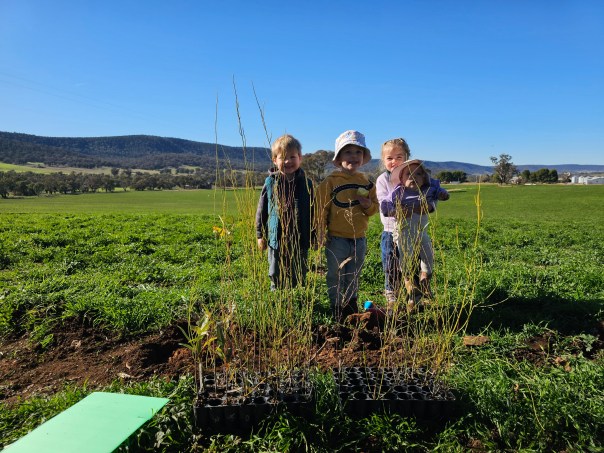
The day had a lovely family feel thanks to our willing little workers who impressed us with the care and attention they lavished on both the trees and creepy crawlies they found along the way. It was particularly heart melting to hear one of our younger helpers exclaim to their parent ‘I’m so proud of myself. I’ve made great choices all day!’. Just delightful.


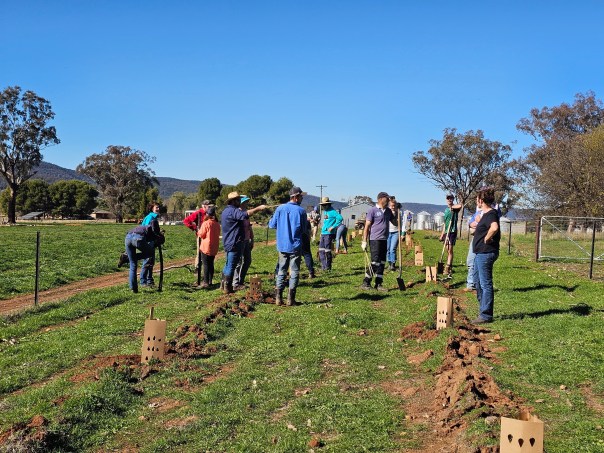


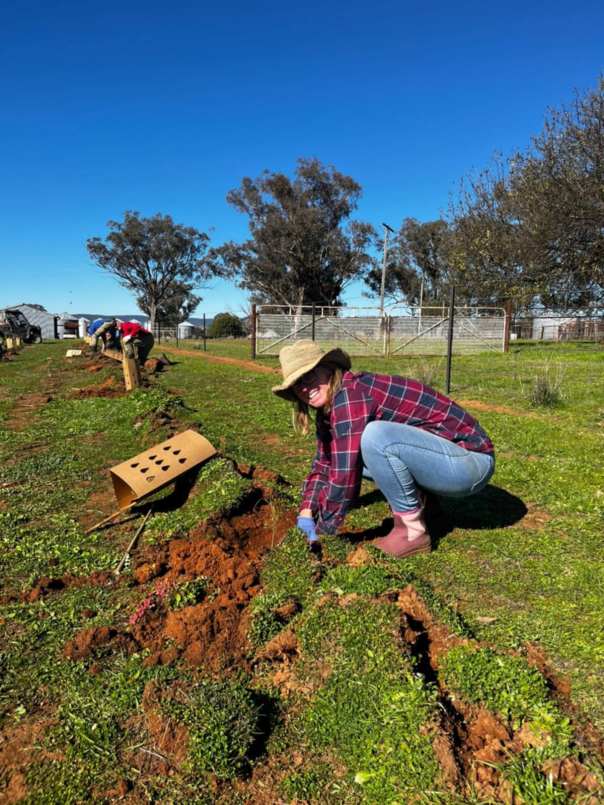
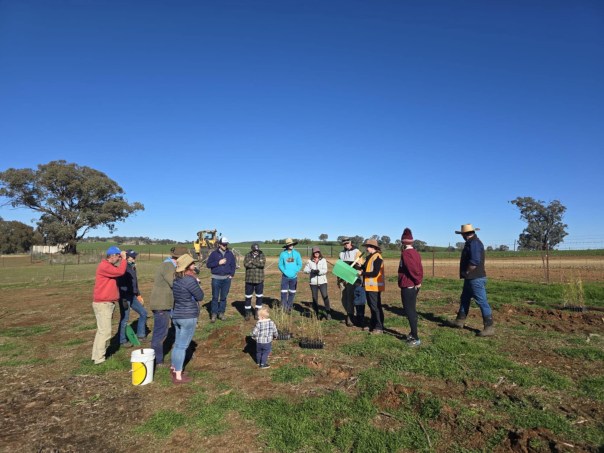
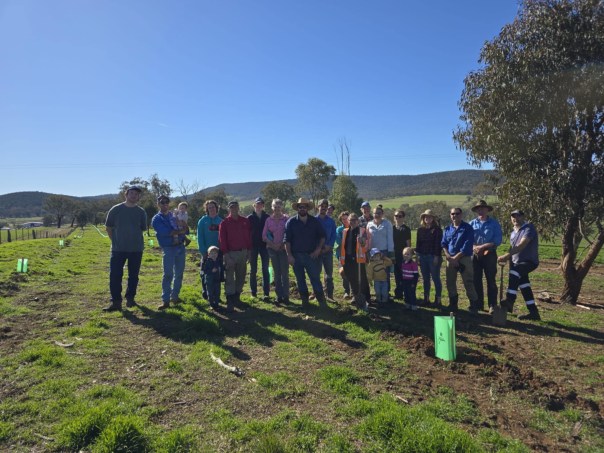

Soil samples were taking during the day and analyzed with our Microbiometer & a simple pH kit. The site had been prepared by ripping rows where the trees were to be placed, that plus recent rain helped make planting relatively easy going. Temperatures on the day were fresh with a light morning frost.
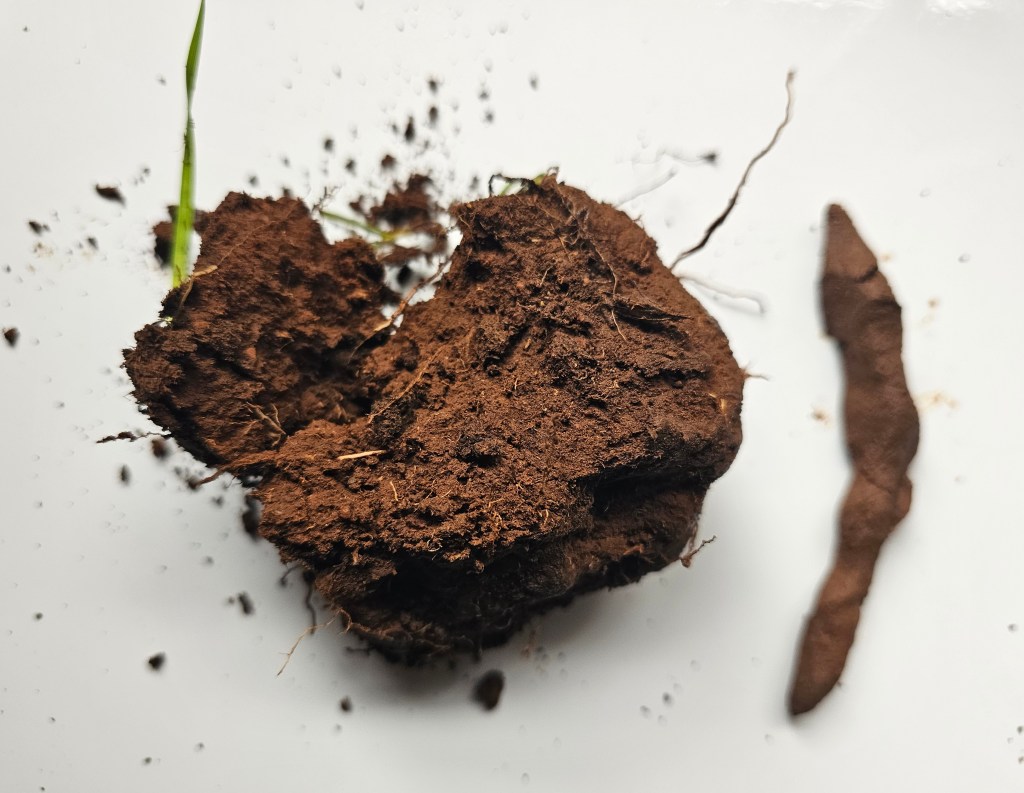
We deterimined soil texture using the ribboning technique which you can review here and found it to be a loamy sand. Loamy Sand and Sandy Loam soils are common to our area. They typically hold less water than heavier, clay-rich soils and as such are fast draining – a feature that many native species like. One issue with soils like this is nutrient availability – popping in some acacias can help boost that by pulling nitrogen out of the air and fixing it into the soil.
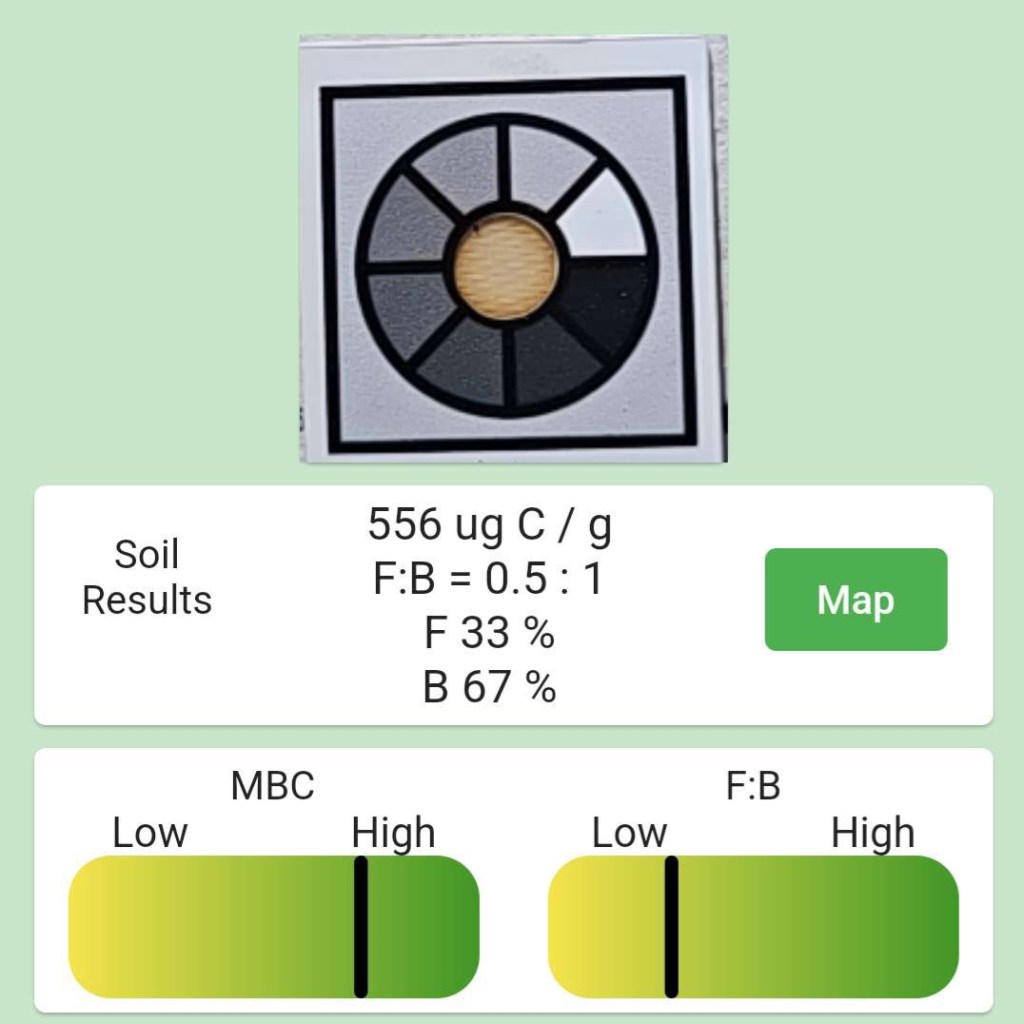
The are we were planted was mostly covered by short grass with not much species diversity at this stage and we recorded a total microbe count of approx 500 ug C/g with a Fungi: Bacteria ratio of 33:67. These results are pretty encouraging – it’s hard to give an exact benchmark for what constitutes a good vs bad site as factors such as the weather, ground cover, soil type, site geology and site management history all play a role but as a very general rule of thumb, a ratio like this is indicative of early succession grasslands. So we’re well above a ‘degraded’ or disturbed level where weeds dominate but are yet to fully reach the level of a complex, natural grassland with clover and other forbs.
The site pH sits around 5.5-6 which means its slightly acidic – a situation prefered by many Australian native plants so all good there!
While we planted we were serenaded by the sweet sounds of a butcher bird before being joined by a boystrous group of Superb Parrot! We captured some of their chatter & Shenanigans to share with you all. I’d like to think they’d flown across to encourage us on our planting & to sing up the soil microbes, water and sun so that these trees will grow tall and strong. Whatever they were thinking we were thrilled to have them grace us with their company as we worked this beautiful patch of Wiradjuri land for them.
Many hands made light work and in what seemed like no time at all we were back in the shearing shed for our sausage sizzle. Yum!


We ended up planting over 300 trees which was a great effort and one which we hope our little helpers will continue to care for as they and the trees grow into something maginficent.

This project is possible thanks to funding from Bupa Australia & Landcare Australia. It’s part of the planting of 80,000 trees, shrubs & grasses across the country, linking environmental health with community well- being.
Trees for Birds – Cowra Woodland Birds Spring Forest + Glossy’s planting dates for June-July
‘It is the trees who bring me the answers. Or, rather, the right questions. Trees have their own language, booming from the bone, singing in their sap, sighing on the wind – most of the time we’re just not listening’
That quote is from Understory. A life with trees by Nature Writer Inga Simpson. Inga grew up in Grenfell and I was lucky enough to meet and be taught by her at a recent Nature Writing day hosted by our neighbours at Weddin Landcare as part of the Henry Lawson Festival.
I definitely feel I’ve been shaped & inspired by the trees I’ve grown up around and am always looking for opportunities to go out and hug a few more. If that sounds like you, and you’re passionate about restoring Box Gum Grassy Woodland & other bird-friendly habitat read on!

Spring Forest Planting with the Cowra Woodland Birds Group:
The Cowra Woodland Bird Program survey group (a long running Birdlife Australia program) is having a tree & shrub planting event on Wednesday 2nd and Thursday 3rd July at ‘Spring Forest’, a private property with a conservation covenant. They would love your help, welcoming any other helpers to assist getting some plants in the ground!
This is the second planting on this 50 hectare paddock site, which connects to rare flatland ironbark and woodland habitat. Approximately 300 trees/ shrubs were planted last year and they are hoping to plant and guard another 600 this July.
During the last two day planting get-together, in April 2024, 75 bird species were noted, including Barking Owl, Hooded Robin, Diamond Firetail, Turquoise & Superb Parrots and Black-chinned Honeyeater. Just to name a few!
Spring Forest is approx. 25km south of Cowra. Volunteers are welcome to come and join in both days or drop in for an hour or two across the event – every little helps. For anyone thinking of volunteering for the two days, there is camping available on site but note, it’s fully self-contained as there are no services out there. Otherwise there are lots of accomodation options in and around Cowra including the Cowra Holiday Park which gives discounts for birders if you mention you’re with our project.
Tracee and I will be heading over there for one of the days so we hope to see you there but for further questions about Spring Forest Planting please contact the project co-ordinator Dave.
Spring Forest Project Coordinator Contact: Dave Taylor by email: david (at) taylorecology (dot) net – writing it like that prevents spam apparently!
Glossy Black Cockatoo Project Planting:
This project is part of getting more than 80,000 trees and plants in the ground across Australia and has been made possible due to generous funding from Bupa and Landcare Australia, and it’s linking environmental health with community wellbeing. Locally Mid Lachlan Landcare are delivering this project with the help of Eugowra Catchment Landcare & Kangarooby Landcare.
We’re planting between Conimbla & Nangar National Parks on private property to boost habitat connectivity & enhance feeding opportunities across the corridoor by planting the Glossy’s favoured feed trees (She Oaks) plus complimentary understory species & nesting trees.
Saturday 21st June with Eugowra Catchment Landcare in Mandagery from 10am – 1pm. Book here
Saturday 5th July in Canowindra from 10am- 1pm – This event is now full, so thank you!
And our last planting date for this project is:
Saturday 19th July on the Nangar road from 10am – 1pm. Book here


 Mid Lachlan Landcare