Bogong’s are a native and culturally significant species of Agrotis moth – Agrotis infusa. This family of moths also includes Agrotis munda, A.ipsilon and A.radians – Noctuidaein or night-feeding moths which can all be found in NSW and have lavae that are commonly referred to as cutworms.
Agrotis cutworms can become pests in a whole range of cropping systems, doing widespread damage by chewing down saplings as they emerge from the ground. Here’s an article about Canola crop damage from 2014 – a particularly bad year for southern NSW and Victoria thanks in part to optimal soil moisture conditions.
The Agrotis moth species are most likely to feed on dryland cropping paddocks during the cooler months when soil moisture levels are higher while crops under irrigation can be affected by moth lavae at any time.
Moth numbers can naturally fluctuate, rising in wetter years and fall during periods of drought. But can that fully explain population booms and busts?
Bogong Moth numbers made headlines at the 2000 Sydney Olympics for gate-crashing the closing ceremony in numbers so great, weather forecasters thought the shadow they could see was a rain storm. The moths were back in the news in 2017 for a dramatic decline that saw Pygmy Possums starve and fail to raise their young right across the snowy mountains. After a few more years of devastatingly low numbers the moth was listed as endangered in 2020.
While soil moisture levels have been proven to be a factor in the moth’s lifecycle, the general consensus for why Bogong moths declined so rapidly in 2017 was thought to be due to a combination of factors. Along with drought, the period saw increasingly more land turned over to cropping in their feeding/ breeding ground. With land use change comes a change in soil conditions and general site ecology. A decline in moth habitat is likely to have driven another nail in this iconic moth’s coffin.
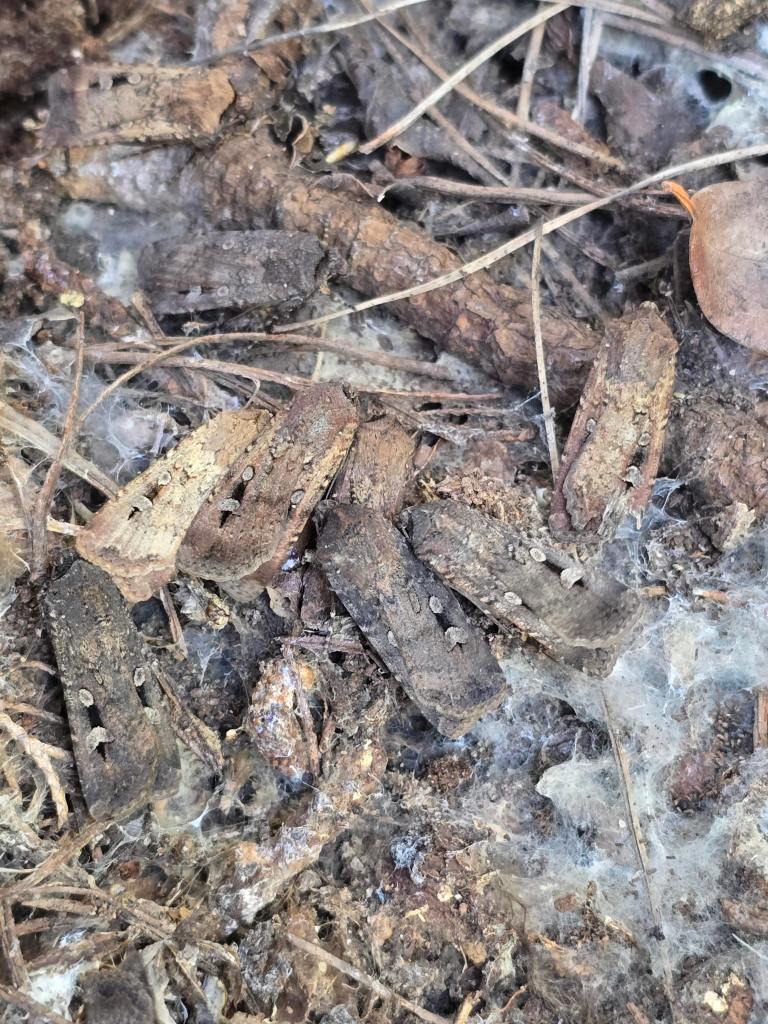
These Bogong Moths were found huddled up in leaf litter and under fallen timber in a wooded part of the landscape. As you can see the environment is cool, dark and fungally dominant – a combination not typical of cropping paddocks.
In addition to land use change, cropped land often requires spraying with pesticides to ensure a decent and high-quality harvest. Back in 2017 it was not unusual to target cutworms, when needed , with Cutmoth targeting pesticides. It’s definitely possible the Bogong moth was caught up in that in what became a deadly trifecta of circumstances for this iconic night-feeding pollinator.
Correlation does not prove Causation
Untangling the rate-determining steps in complex ecological systems is always difficult and it’s important to keep in mind that scientists are still working on the exact reasons for the Bogong moth decline, just like they’ll now be investigating the current boom to work out if it’s a blip or start of an upwards trend.
However, pesticide laws did change between 2017 – 2024 and that is an important talking point for our region.
After a period of consultation the APVMA phased out pesticide Chlorpyrifos starting in 2024. Other pesticides have been under review too but this one in particular targeted cutworms and is therefore worthy of mention.
This year is possibly the first full season that this Chlorpyrifos is out of the cropping system for the lifecycle of the moth and while that definitely DOESN’T automatically mean it caused or even contributed to the decline, it does represent a change in the right direction as far as threats to the Bogong moth goes. But yes, it will also mean the Bogong moths less welcome friends will also be having an easier time of it too…
The only real choice we have is how we respond.
As a moth enthusiast with a keen interest in ethnobiology (Ethnobiology is the scientific study of how human cultures interact with, manage, and understand the plants, animals, and ecosystems in their environments) I am beyond thrilled with all of the above and am delighting in spending time with the Bogong Moths that are currently making their way through these lands. However, I’m also acutely aware that there are others in and around our community that’ll be experiencing a more complex emotional reaction to these times.
Earlier this week I joined a webinar with the Soils for Life team and listened to Jake Ryan explain how he responds to the chemical signals his crops put out to ensure they grow as healthy and resilient as possible. His combination of scientific data, chemical relationality and timely biological imputs is paying dividens, not least because it’s reducing the need for pest-controlling inputs.
During this Webinar Jake talks us through Tissue Testing, BRIX measurements and SAP testing before explaining how he uses all three to inform his management decisions.
I’m excited by stories like this and while now is definitely not the time to say the type of monitoring Jack is talking about can save the world and all of our prefered moth species, it does raise the spirits. What Jake is talking about serves as a good example of smart systems thinking and in particular how turning our attention to the small details and nuances within our pastures and farming environmnent can lead us to smarter, ecologically sound and economically rational management outcomes. In the end it won’t really matter if chlopyrifos use in particular or pesticide use in general caused Bogong moths to decline or not, if you don’t need an input because your crop can handle itself you’re quids ahead.


The article suggests that a change in pesticide legislation could be linked to the population explosion of Bogong moths. This is an interesting hypothesis as pesticides can have both positive and negative impacts on ecosystems.
LikeLike