I’ve known there’s been deer up our way – around Roseberg forest – since we moved in eleven years ago but have never really thought much of it given that pigs have been much more of an pest for us. That said, it’s been niggling away at me, especially since we put trail cams out by the creek…
“From Tasmania’s Walls of Jerusalem to Victoria’s Yarra Ranges, from the Blue Mountains to the Adelaide Hills and even the outskirts of Perth – feral deer are reshaping Australia’s landscapes at an alarming rate.” Invasive Species Council.
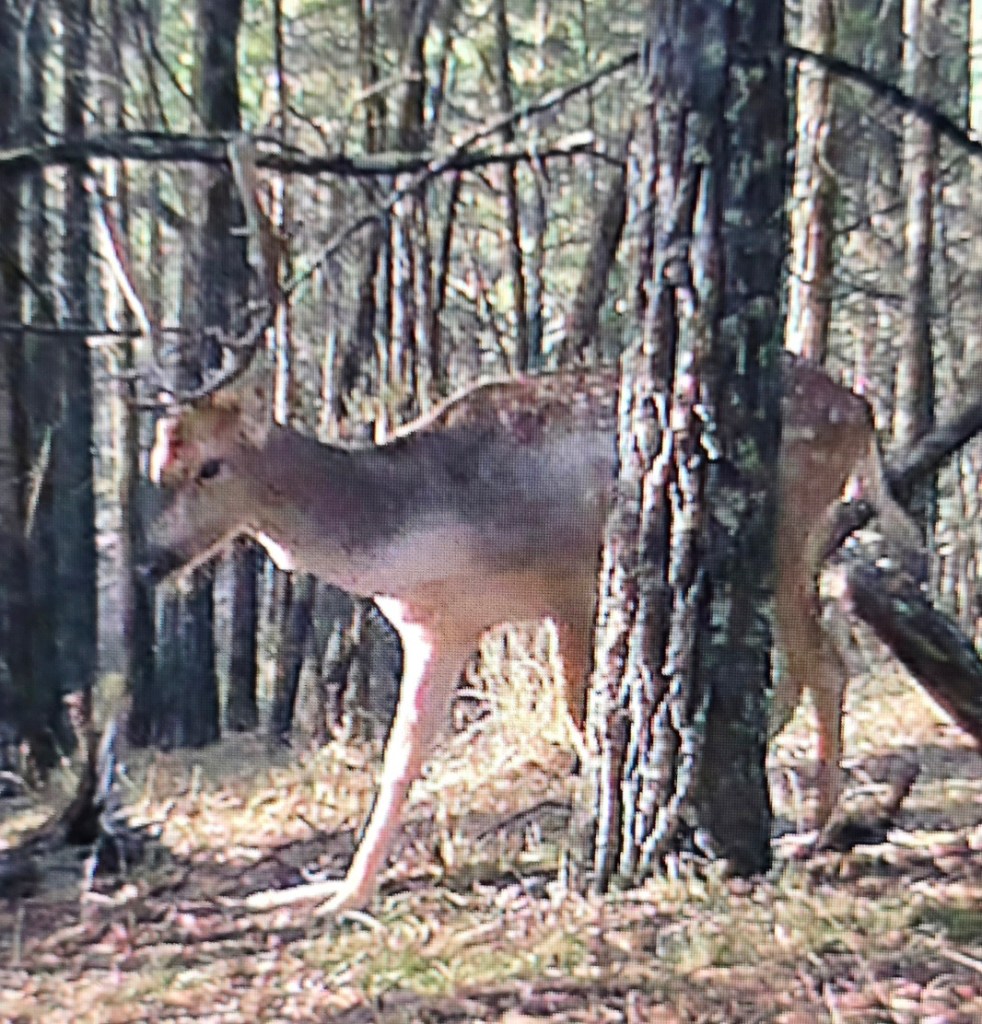
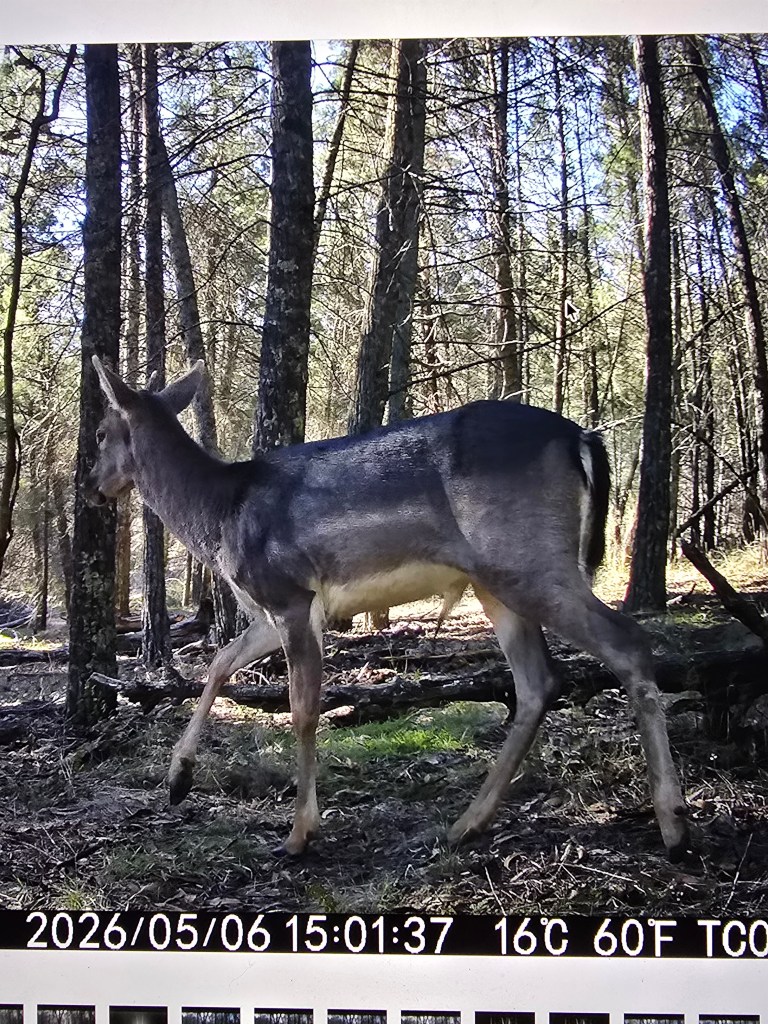
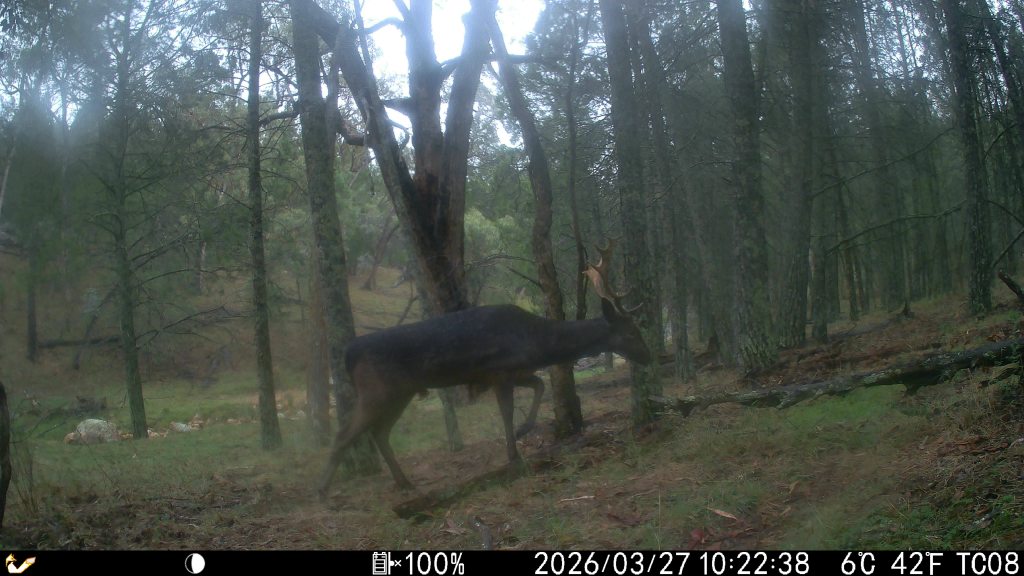
After spotting this lot on my camera I invited a couple of local hunters up to have a look around the back of ours & help me understand the size and scope of the deer situation. It looks like we have a batchelor pad of sorts that travels through these parts. Small numbers – maybe 3, maybe 5 individuals, mostly dispersed through the expanse of cypress forest that runs between Wyangala and here. Enough to know they are there – especially during the rutt – but possibly not the numbers needed to trigger an aerial cull…
So off I went to the webinar to learn a little more about this beautiful yet feral species.
- Deer were introduced to this country for hunting in the early 1800’s.
- In the 1990’s deer farms (farming for venison) started to close down and during this time some animals were released into the wild causing wild numbers to jump.
- While there is a national action plan for deer control, not all states and territories have the same level of issue with this animal or the same laws around them.
- In NSW while the damage done by deer was formally recognised in 2004, deer were still protected for hunting until September 2019.
- In Victoria feral deer are still protected as a hunting resource. This situation has led to the state having the largest deer population in Australia. Landcare can’t access funding to help with deer management due to their protected status.
- Tasmania’s deer shooting lobby is strong, having deer under legal protection, a situation that’s contributed to a 162% increase in Deer caused road traffic incidents in the last five years.
- WA has been mapping and controlling deer with a goal to complete erradication.
- NSW does have deer listed as feral and has control measures in place. There are specific action plans around assets such as the Blue Mountains National Park to prevent deer from reaching the area.
- The South Australian government is leading the nation in feral deer control. Successful culls in the Adelaide Hills and also taking advantage of the opportunity the Fleurieu peninsula bush fires created for an aerial shoot.
The Importance of Maintaining Your Social Licence.
During the webinar we heard from Nicola Barton, Media and Communications contact for Deer. She stressed the importance of being mindful when talking about feral deer control. Many of us are fond of these beautiful creatures and grew up reading and watching fairy tales featuring them. How deer are talked about in the context of Australian ecosystems makes all the difference when it comes to public backing.
“We’ve undertaken quite a bit of social research in this space, and one of the things we’ve found is that people are much more accepting of difficult control methods when they’re presented with the real choice involved.
If you simply ask people whether they support shooting deer, many will understandably say no. But when you explain the trade-off – that no one likes to see animals killed, but unfortunately we have to choose between protecting an invasive species or preventing the extinction of our native wildlife – people are much more willing to accept that difficult decision.” Nicola, Invasive Species Council.
Best Practice Control Methods.
Aerial Culls are by far the most effective way of dealing with this species but there is a catch 22 with this as these culls work best when deer numbers are relatively high. Small, dispersed deer populations, possibly like that we have around Roseburg, may not make the criteria for an aerial cull. That’s where ground hunting supported by monitoring by citizens helps.
Why Bother?
We only have to look to victoria to see the devastating impacts large deer numbers can have on our forest ecosystems. Deer transform forests, destroying undergrowth and spreading weeds. As with any large hoofed animal, these heavy beasts when poorly managed, cause damage.
From a local Landcare perspective we’ve heard from people around our area who want to partipate in tree planting initiatives but either have experienced or worry about potential damage deer will do to the young saplings. Deer definitely have the potential to undermine our land restoration efforts and at the very least, push up the cost of plantings.
Aside from ecosystem impacts, there are the dangers to human life and property that come with deer on and around roads. I’ve seen deer close to the roadside when driving at night around our region – hitting one of those would cause serious damage all around.
An Action Plan for Mid Lachlan?
Feral animal control is something that Mid Lachlan Landcare would seek to work with Local Land Services to manage, with us potentially taking a Citizen Science approach to help monitor the on-ground situation through the Feral Scan website and app or the Invasive Species Council’s survey.
Landcare groups such as ours are in a great position to start conversations & maintain social licence around feral deer control, amplifying the message, science and latest intelligence from groups such as the Invasive Species Council. How much we do and how long we spend on that depends on the wants and needs of our community.


