On Saturday I took a drive to Young for a morning with the ladies of Young Country Women’s Association. They were celebrating their International Culture, Agriculture & Environment day and I was heading out to update them on our work with the Glossy Black Cockatoo.

Having never been to a CWA event before, I was not sure what to expect – especially as my country womaning skills are a little lacking (I’m famous for producing rock-hard scones- but thankfully that’s not all the CWA are about). I’m pleased to report that everything turned out wonderfully & I had a great day meeting some fabulous women!
Here are two of our Glossy Black Cockatoo Haiku’s from the day – just remember we only had 5 minutes to do this so I think we did great!
- Listening for the crunch, there are glossies eating lunch, then they fly away.
- Mountain habitat, flyiung free among she oaks, glossy black beauty.
Word of the presentation was: orts – a word used for the she-oak chewings the glossy cockatoos make and leave on the ground.

Amanda Foxon-Hill & Janice Ward 
Getting stuck into the craft activity with Barbara Cocavert – make a collage of Glossy Black Cockatoo habitat in 20 minutes or less! 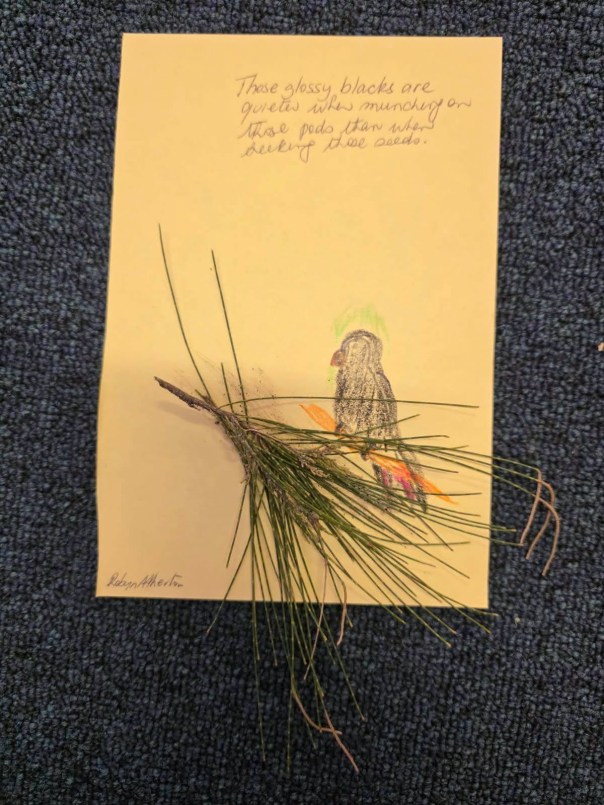
A Glossy inspired haiku using information learned from the talk! 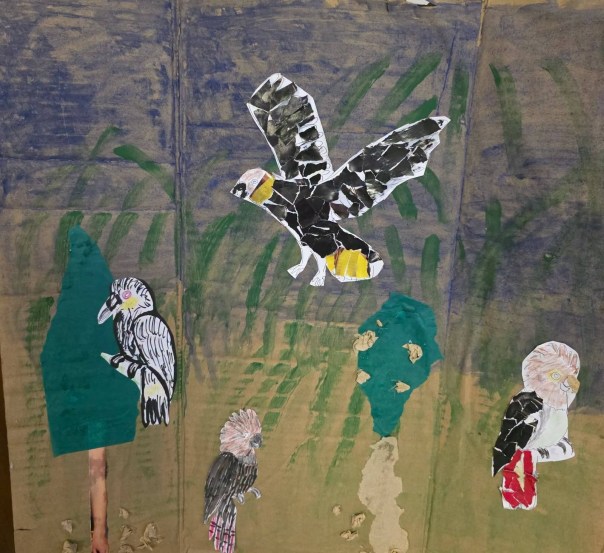
Finished Glossy Black Cockatoo Collage 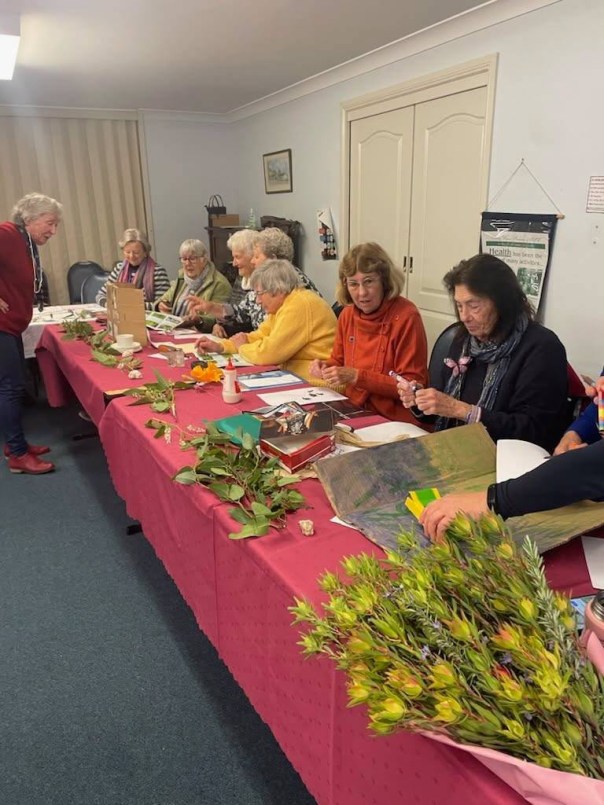
A hive of activity at the Young CWA 
Quizz Master Norma and the day’s winners – Left to right, Barbara, Amanda & Maureen 
Winner of the Best Paper Flower Prize Rhonda Sellenthin 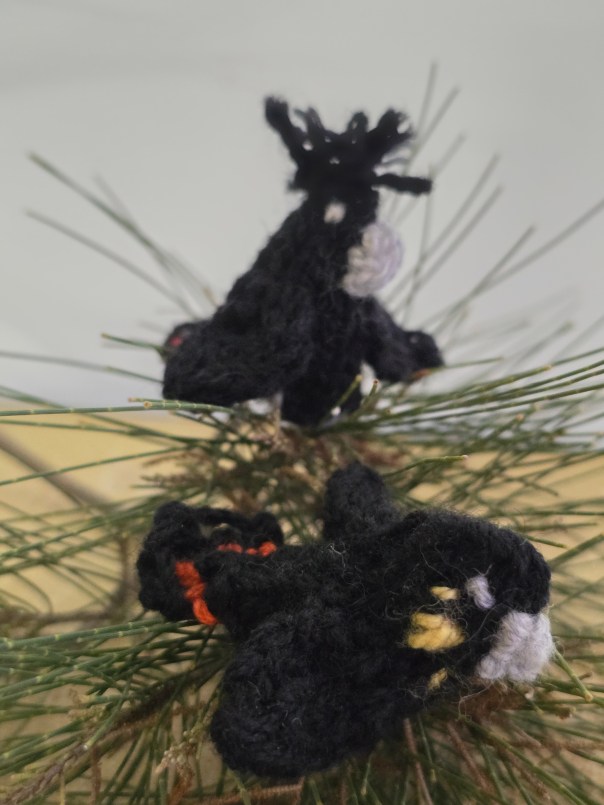
Cute Glossy Black Cockatoo ornaments made by Janice Ward 
Glossy’s Display 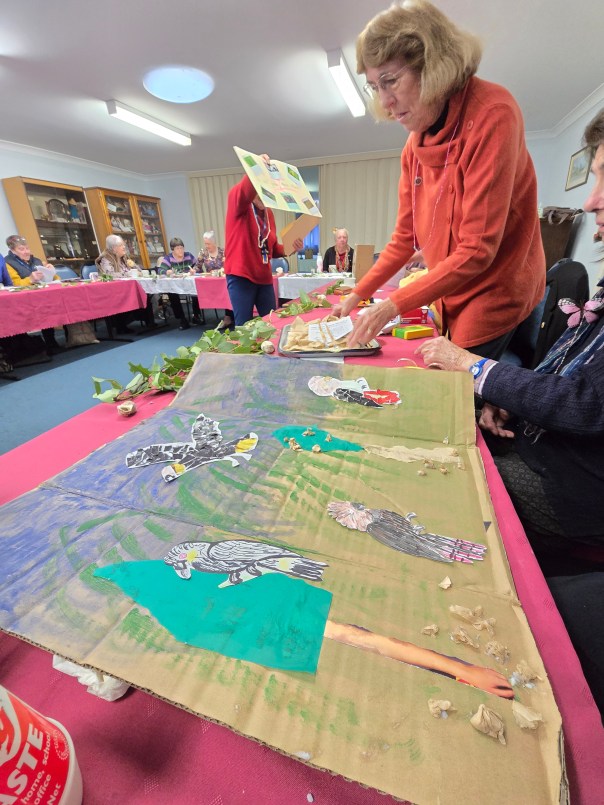
Creating our art 
Robyn Atherton, Group Cultural Officer. 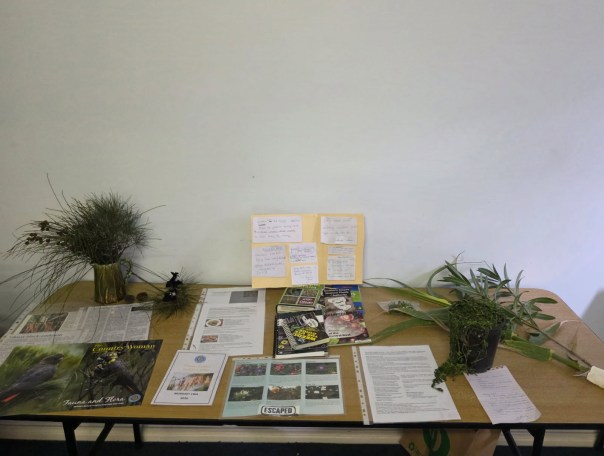
Glossy Black Cockatoo Display 
Getting Creative
An interesting aspect of the event for me turned out to be the judging of the escaped weed competition – not a sentence I thought I’d ever utter but here we are!
The following weeds were brought in for me to assess:
- Galium aparine or what I know as Cleavers (or my mum, in Scotland called Sticky Willy)
- Oleander
- Bamboo
- Pigface
Now I was not prepared for this task but wanted to take it seriously so it was time to pull out the phone and work out a judging criteria. After learning a little more about each plant I decided that the ‘winner’ should be the most dangerous of those listed above and for that I chose the pigface. Why? Because it’s quite a powerful little succulent that can (according to the A.I generated summary) can undergo ‘genetic hybridisation, aggressive habitat takeover, and the potential extinction of pure native strains’. That’s not to say that the other weeds are not problematic, they all are in their own way but the main risk from the other three is their ability to compete for resources. I felt the pigface, being a sweet and beautiful little plant was most dangerous as it’s mode of operating was a little more discrete – quietly wipe out our native varieties’s genetics!
The winner was Carol Xuereb who bagged up some of the pig face and brought it in for us to discuss.
In other news I did make a special mention of the Galium or cleavers. This plant has a special place in my heart as it’s one my mum still collects as part of our native (cultural significant) wild foods. It’s used to make a soothing, anti-inflammatory drink back where I come from!
Bamboo is also something that quickly becomes a nightmare thanks to its ryzome root system but again, that’s more of a space and time issue than a genetic take-over and then there’s Oleander. Now I found out that Oleander while pretty is highly toxic to both humans and animals. That said, it’s a rare garden escapee and so as long as nothing eats it or you don’t inhale the smoke when it burns you’ll be right.
Now it may turn out that my judging criteria had holes in it but I was pretty happy with that given the ten minutes I had to come up with something.
It was really lovely to share our Landcare project work with the CWA ladies and I hope we can collaborate again in the future!


