Mid Lachlan Landcare
supporting sustainable agriculture and restoring the environment
Thanks for your Feedback

In November we are asking you all for a bit of feedback to help us plan for the future. Thanks so much to everyone who has replied so far. We have had feedback via email and also at our AGM. Here are some of the comments so far. Please keep the feedback coming.
In regards to Mid Lachlan Landcare :-
Question 1) What has been the most valuable to you in the last 5 years?
Tree planting native species.
The social aspect – it has been really wonderful these last few months to attend the social gatherings and have such interesting, friendly, welcoming and motivated people to talk to
Growing the Grazing Revolution program and the support it gave during the drought, it really helped make the hard decisions.
Support for paddock tree plantings on farm to address habitat for rare and endangered species, plus shade and shelter for livestock
Farm visits and hearing people’s journey of change, their successes and also things that went off track and what they learnt from those experiences.
Networking, farm visits, collaborations with soil carbon & other projects, group brains better than individual .
CIBO Labs and Pasture key biomass satellite monitoring workshops and dung beetle breeding
The opportunity to mix, talk and share ideas with like minded good people.
And so many other great answers to this question. We really appreciate this feedback!
Question 2) What should we do in the next 5 years?
I would love to see something on Bees and keeping one or two hives (even better Kenyan top rail hives), propagation of native trees and how we can do even better at maintaining productive pastures along side regenerating native vegetation.
Some stuff on environmental markets/ecosystems services/natural capital- and how to measure the value of these access these markets?
Projects around the planting of trees on farm and the associated benefits are great, the best ways to plan and execute the plantings (identify suitable places on farm that perhaps may otherwise be non-productive anyway?).
It shouldn’t be all about change, stay with the good stuff
Could landcare push the healthy pasture story. Trees and habitat are of course also vital but healthy pastures can lift productivity and pull carbon into the soils. They can be very beneficial to birds, and insects as diverse feed sources
Erosion, streambank slumping and loss of trees along our creeks and rivers – loss of old >100yo trees with habitat hollows.
Funding opportunities to encourage landholders to value the ecological aspects of the land they caretake are encouraging and important.
If you haven’t supplied us with any feedback as yet we would love to hear from you. Please email us your answers midlachlanlandcare@midlachlanlandcare
It doesn’t look like Landcare are going to run out of things to do anytime soon 🙂

Wattle Day – 1st September
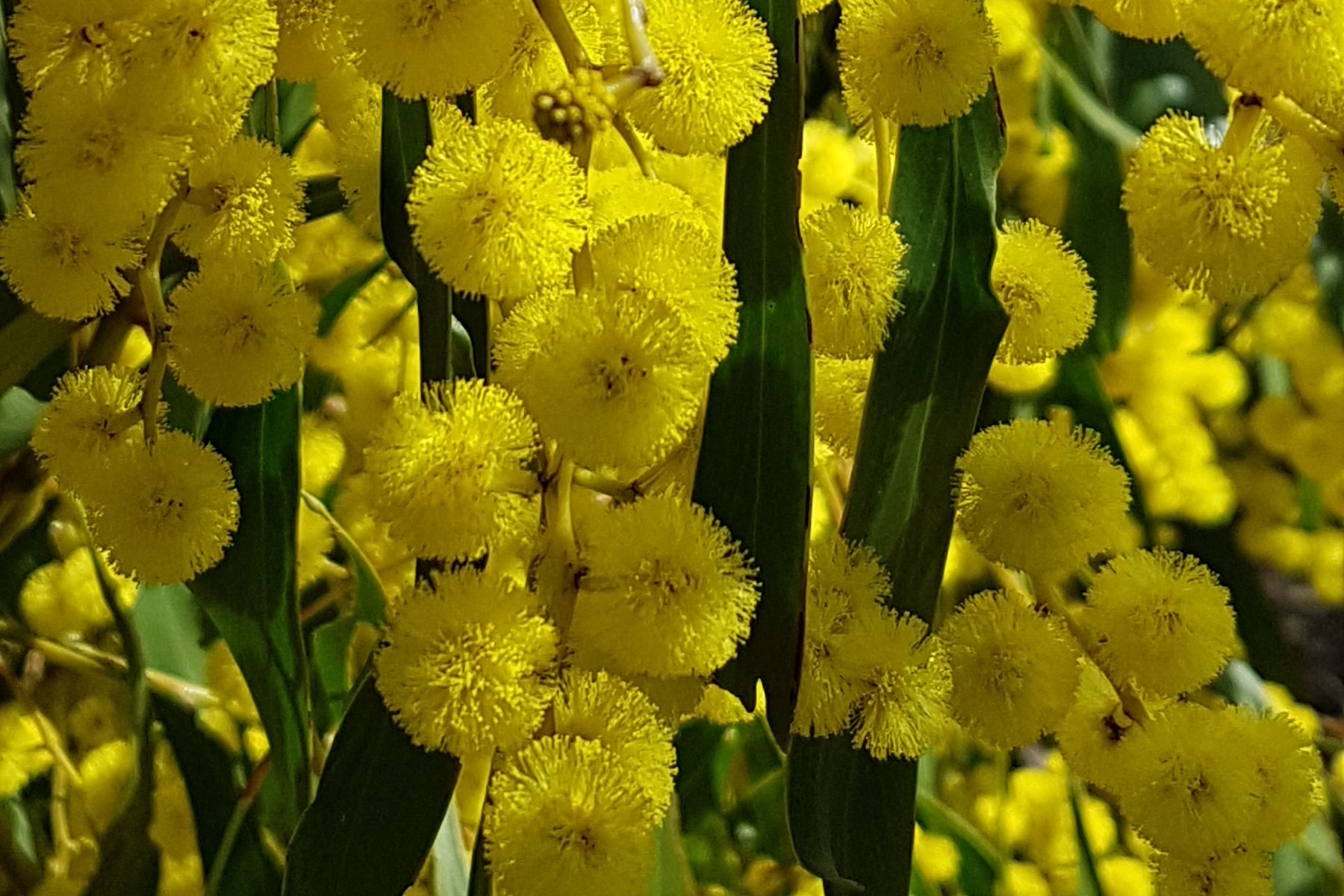
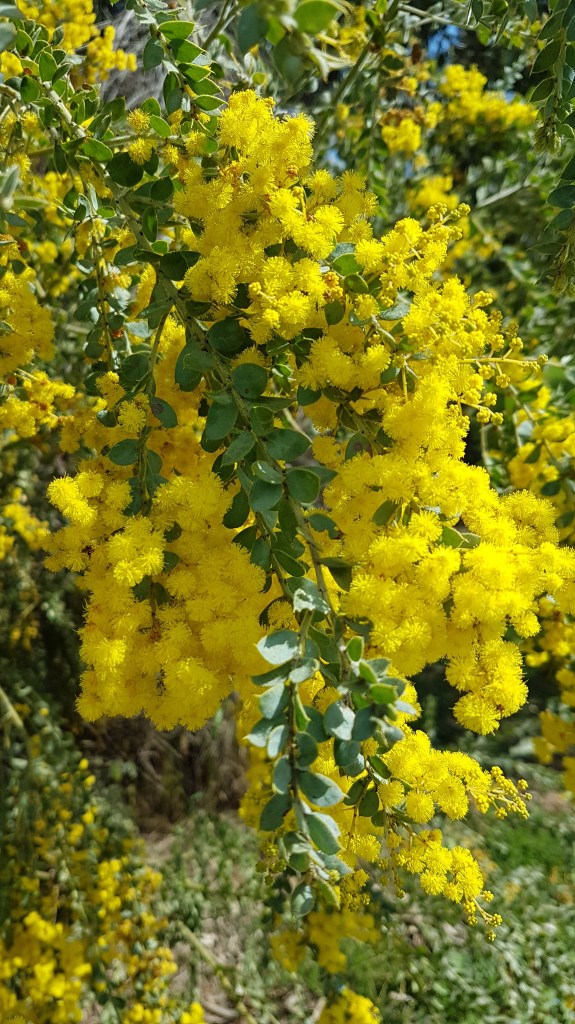
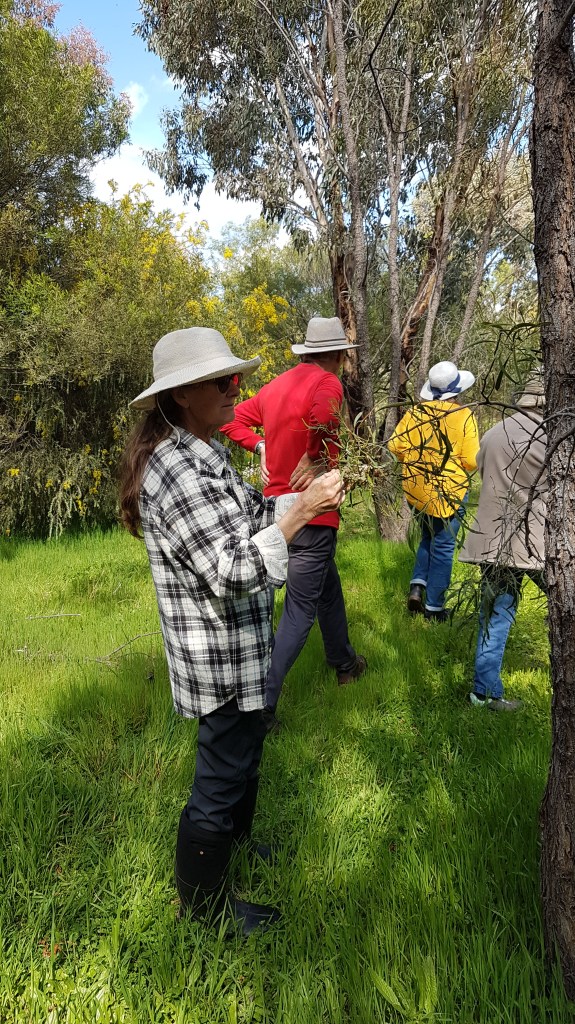
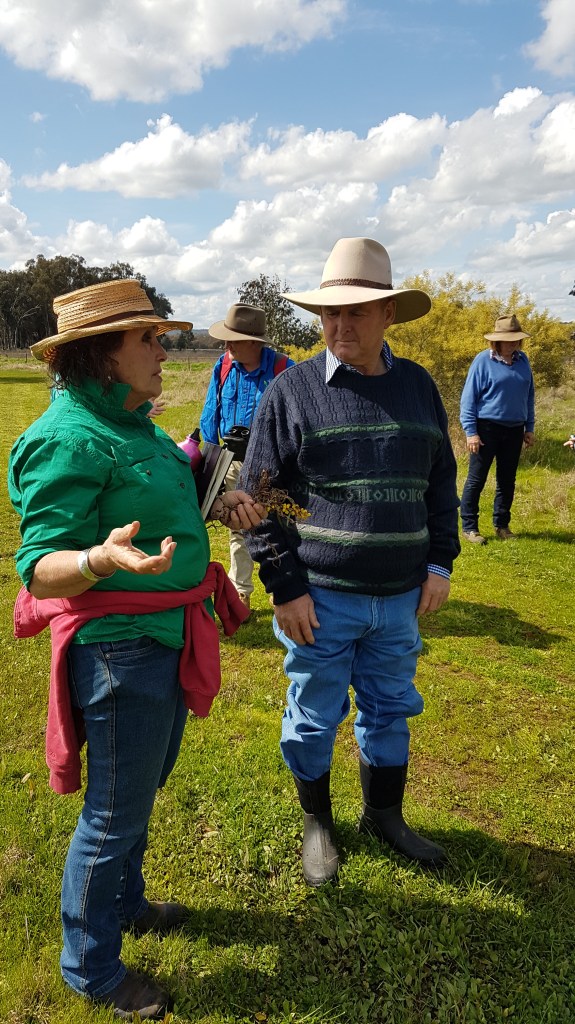
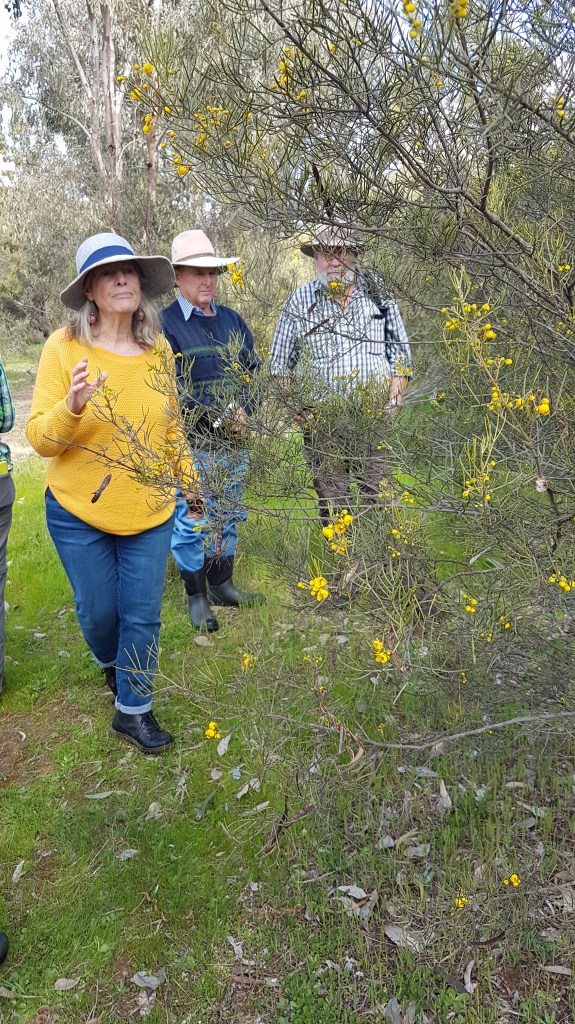
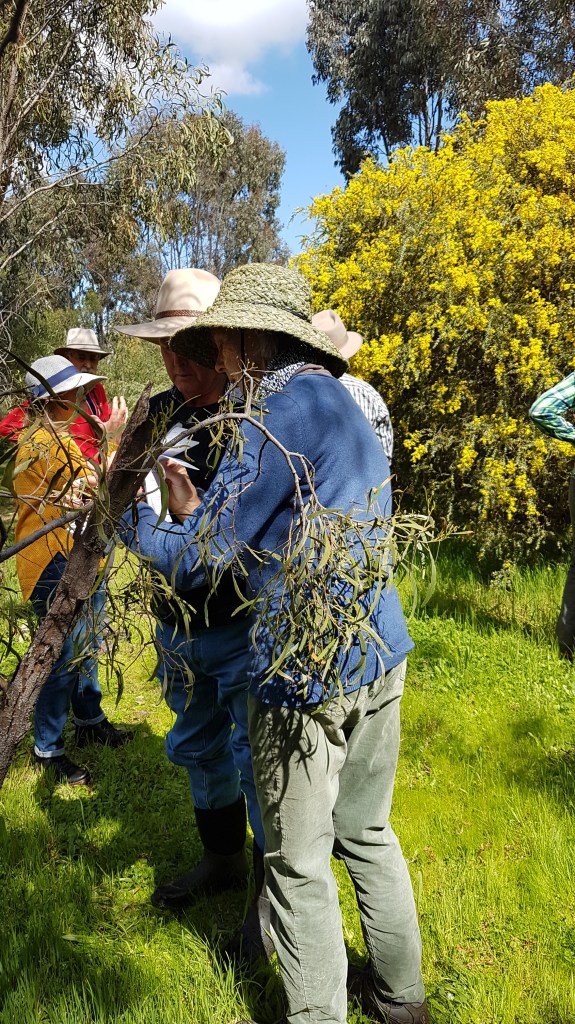
There were a few of us who could not make it to the formal Wattle Day event at Mikla and Wayne’s property in Grenfell earlier in September and Mikla kindly offered to host another event for us that somehow we manged to have on the official Wattle Day – 1st September which was wonderful.
A very informal affair, with a bring your own everything plan, Mikla and Wayne were fantastic hosts explaining the various projects they have been involved with on their farm including planting thousands of wattles across the property.
Mikla took the time to explain the changes they have seen on-farm and why wattles are such an important part of our landscape. They are heroes of Box Gum Grassy Woodlands!!!
Weddin Landcare have created a really informative article on wattles, their history and their roles in our landscape ‘Wattle – The heart and soul of Box Gum Woodlands’ It is well worth a read.
We all had a great time exploring the farm and lunching among the wattles in Mikla and Wayne’s back garden. A big thanks also goes to the Weddin Community Native Nursery for gifting everyone a local wattle to take home and plant.
You can also see the article that ABC has written about the formal Wattle day event at Mikla and Wayne’s ‘After planting thousands of wattles, farm goes from bare paddocks to teeming with wildlife’
Thanks so much to everyone that came along. What a special day it was.







Cowra district graziers use satellite technology to farm plan
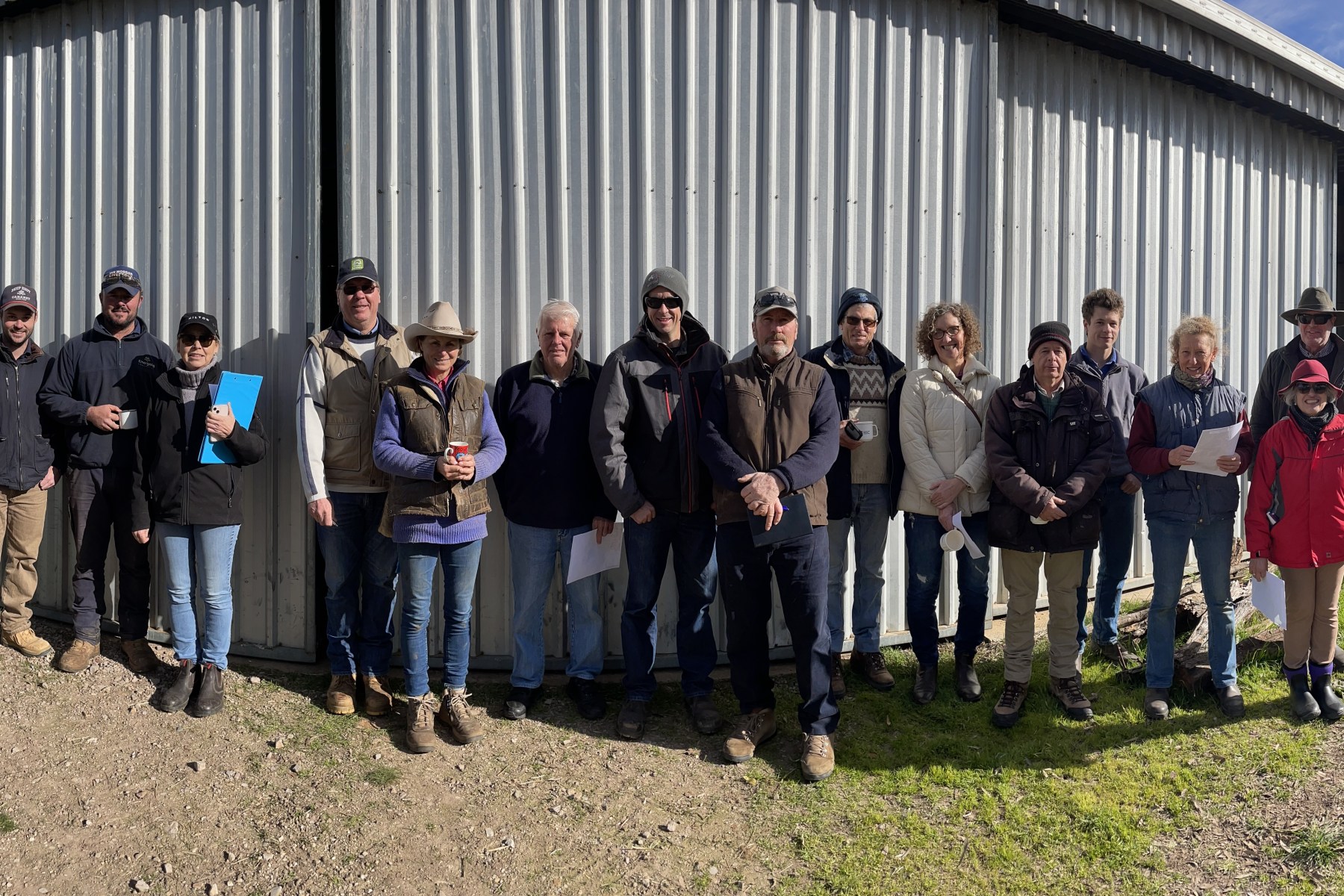
Over the past five months, 15 Cowra district properties have been trialling the use of satellite technology to measure pasture growth rates on their individual properties, helping graziers with the management of grass budgeting and stock movements.
Mid-Lachlan Landcare (MLL) has partnered with CIBO LABS Operations Manager, Nik Henry and Senior Extension Officer, Wendy Gill to run a series of workshops for participating properties.
On August 24, MLL is offering everyone from across the Mid-Lachlan Landcare district an opportunity to attend a workshop. ‘This workshop will enable the group to share the experiences and knowledge gained through the program’, says MLL grazing facilitator Peter Davis. ‘It’s another tool to help with fodder assessment and management’.
Within the grazing industry, there has been an ever-increasing interest in rotational and timed grazing, and therefore, grass budgeting.“Our satellite assisted forage budgeting systems provide graziers with weekly satellite maps showing the variability in pasture biomass and ground cover for every paddock on the farm. This information provides objective data for planning rotational grazing, match stocking rates to carrying capacity and managing land condition”, says Henry.
CIBO LABS also offer clients a groundcover report based on 30 years of satellite history. From this, clients can see their individual property landscape health and pasture growth rates with regional comparisons. This can be useful when telling a story about historical management, drought management and pasture improvements over time.
‘We have the ability to look backwards and are able to quantify and marry data with stories about how new management has impacted or improved landscape,’ says Henry.
Livestock corporations in Northern Australia have been using this program effectively since 2018,’ says Henry. ‘The satelite images encompass the full range of shrub and tree cover, grass growth and weeds. Some of the satellite images of weeds and other unpalatable vegetation can be misleading. To compensate, the technology improves as data is fed in by agronomists and pastoralists to ground-truth the satellite images.’
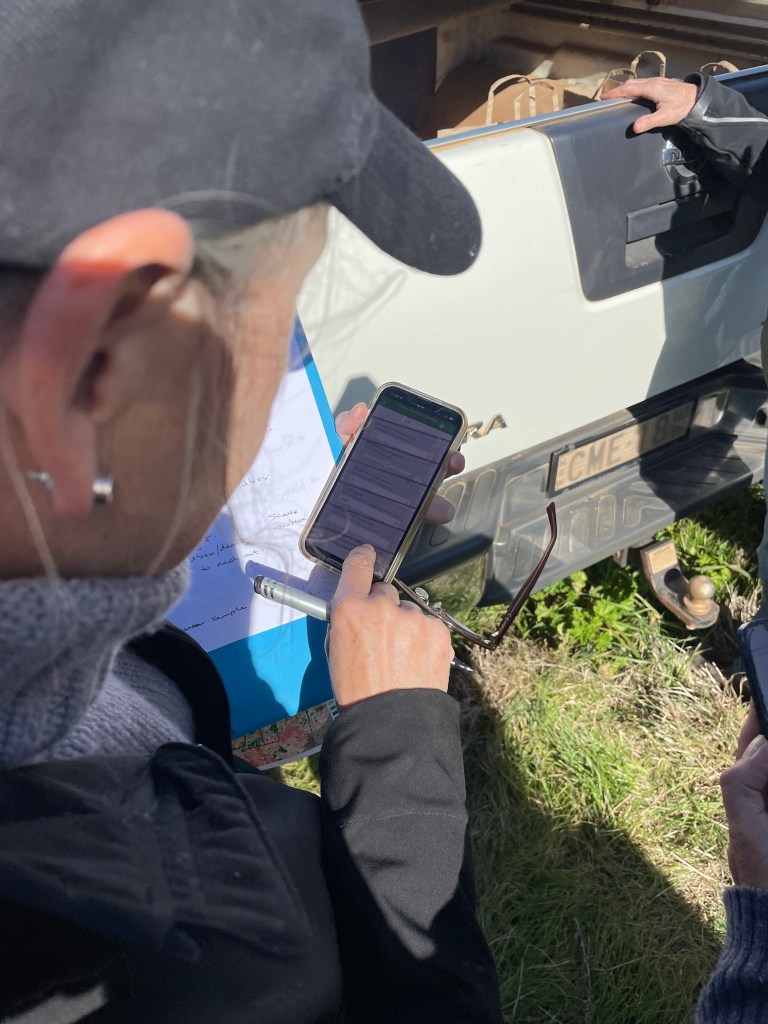
Since 2020 ,the southern landscape has seen ground truthing of pasture biomass (which comprises a completely different species to the north). MLL participants have been working with the satellite data, using apps, taking photos, taking pasture cuts and measuring growth rates to add to the biomass library for visual calibration of the southern data.
MLL’s Peter Davis explained this program has been funded through a grant from the Foundation for Rural and Regional Renewal through the Australian Government’s Future Drought Fund – a program to build drought resilience. ‘This program is helping farming businesses to plan for future weather events such as the next dry spell,’ he said.






Growing the Grazing revolution (GGR) Update

Peter Davis – GGR Grazing Officer
Unfortunately the latest round of funding for this project, as part of the Australian Government’s ‘Smart Farms Small Grants’ program, finished at the end of June. We have been searching for other opportunities to be funded over the last 8 months but there hasn’t been a suitable option for us yet. Don’t worry we will continue searching and if anyone has any ideas feel free to contact us.
The Mid Lachlan Landcare Committee met to discuss this issue and voted unanimously to keep the project running using our own funds and reducing the workload until further funding is secured. The project board then met to discuss the best use of resources.
Just prior to this meeting our Grazing Officer Peter Davis put through his resignation as of the end of August so he could spend more time on the farm. We are all very saddened by this news as Peter is a great asset to the team and has worked so well with Scott over the last 4 years. We aren’t losing Peter though which is wonderful. He has accepted a postion on the GGR board and also on the Mid Lachlan Landcare committee so he will still be a big part of Mid Lachlan.
The board has worked with Scott and developed a plan. For the next six months he will be working one day a week. We will not be running any of the cluster group meetings but will likely hold a few events on farms which will be open to all members of the GGR cluster groups. We will also work to hold one big field day/event before the end of this year based on feedback from all of you but we will have to make it cost neutral which we are sure you will all understand.
This project has been running for over ten years now which is a huge achievment and looking back on the last two years, under this recent funding, it has achieved so much and supported so many people through some really tough times. Thanks so much to Scott Hickman who has been a driving force throughout the whole 10 years and also the entire GGR board. We hope to continue to be there for you all for a long time yet.


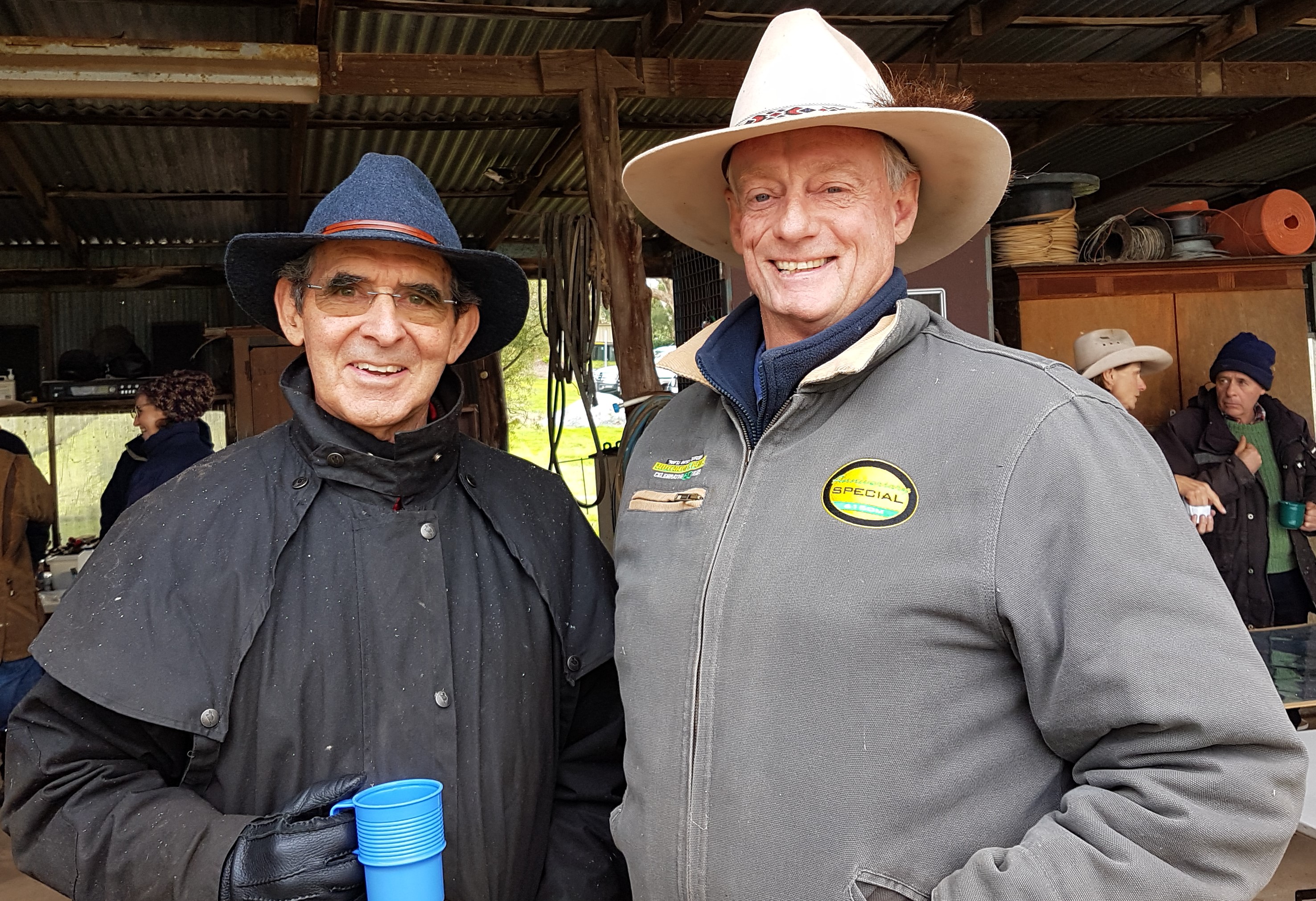
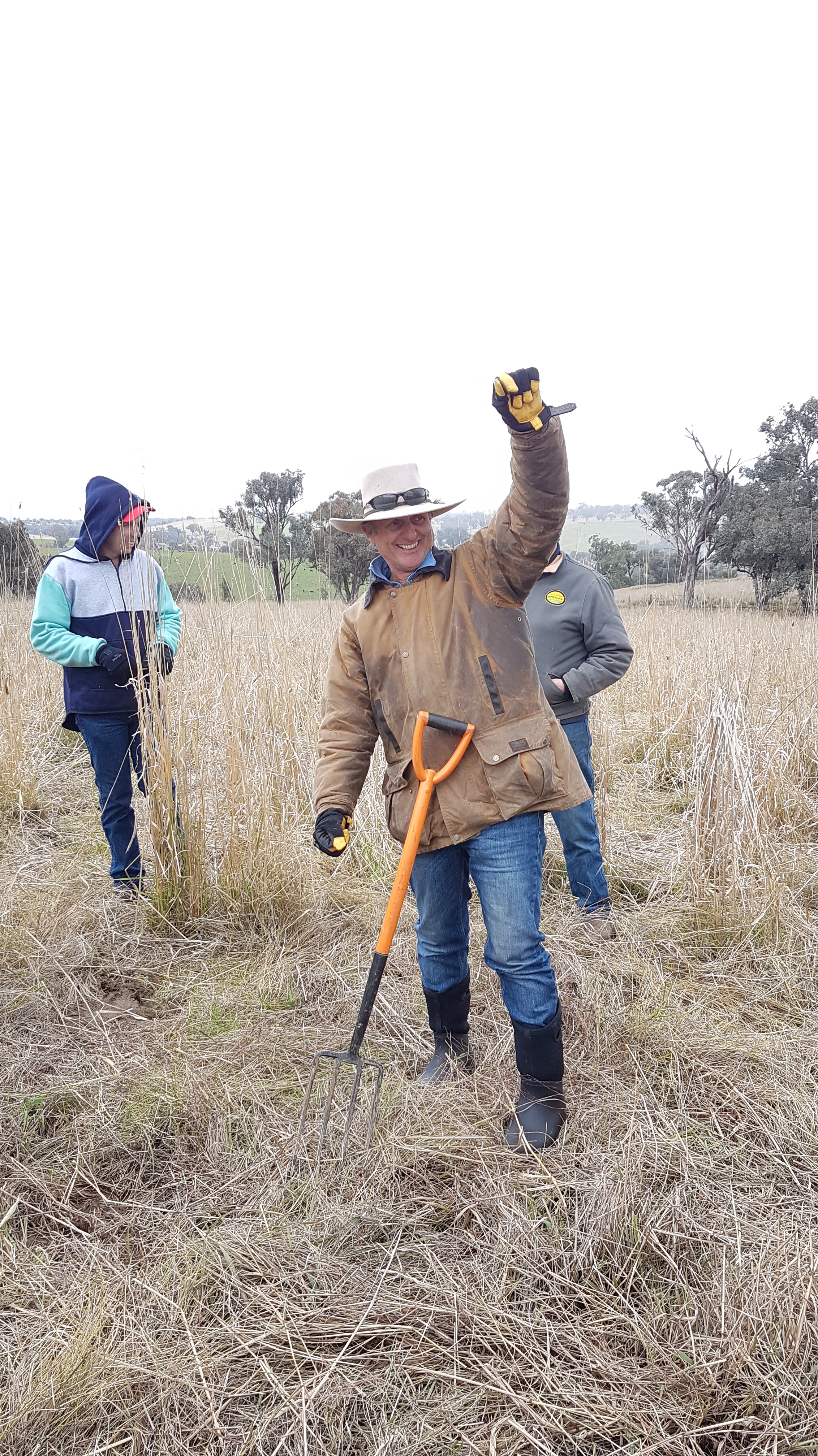
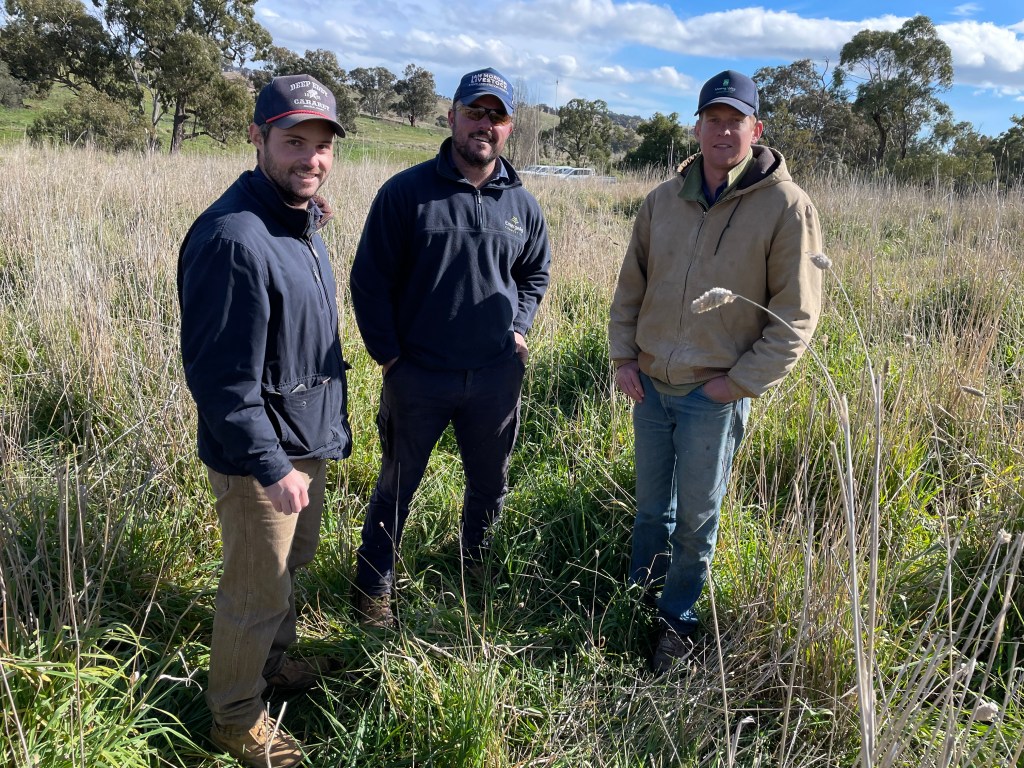
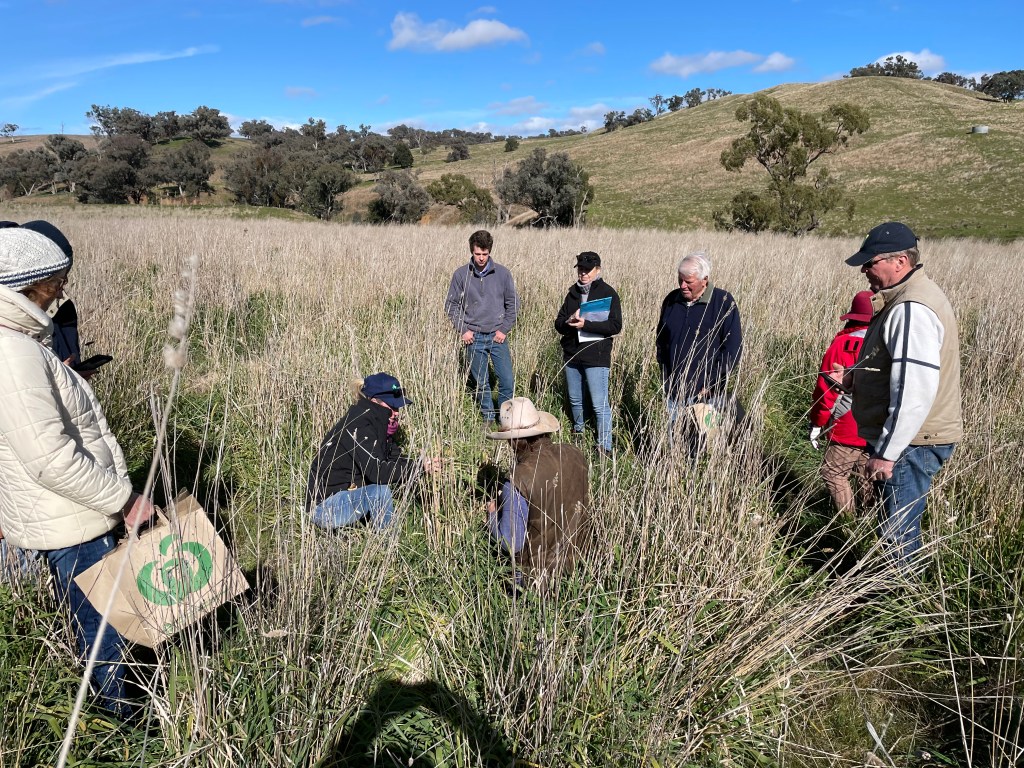
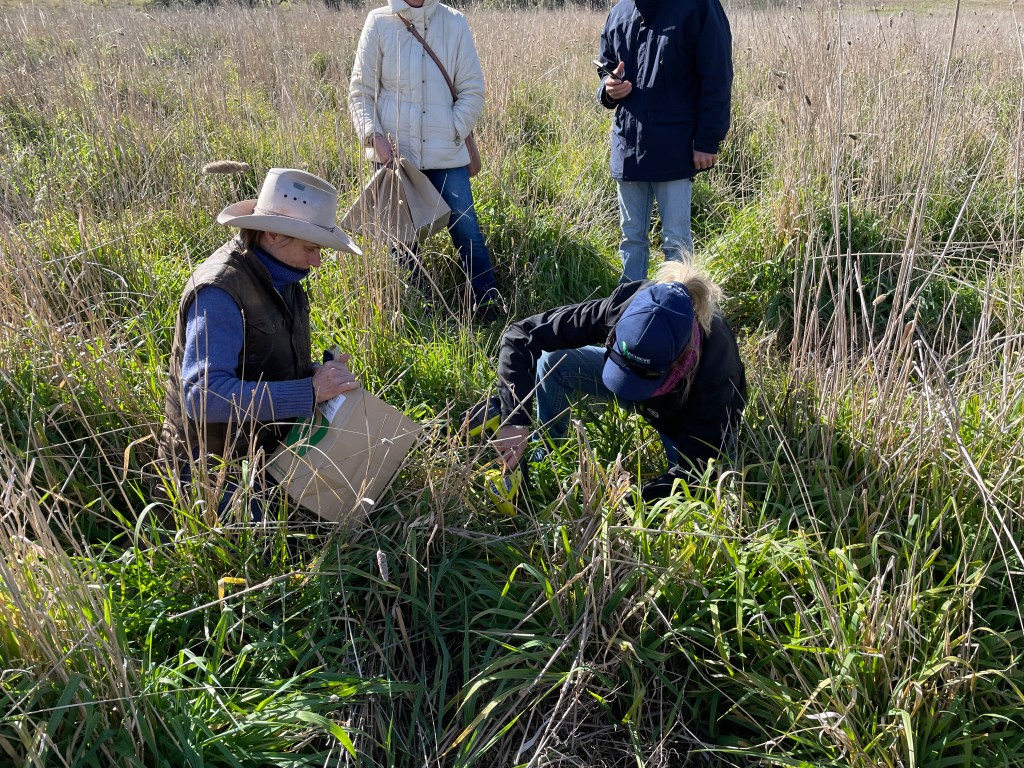
Photo’s from our recent grazing meeting in June 2022 at Wendy Bowman’s property near Canowinda
Community Purchase – Amulla or Winter Apple

Thanks to everyone who got behind our trial Box Gum Grassy Woodland groundcover purchase. I hope your groundcovers grow well and reproduce for the future.
It was awesome of Oz Plants and the Weddin Community nursery to try growing these to order for us. As anticipated there were some unsuccessful germinations but recently an extra 2 species have started coming up and these should be ready late Winter/early Spring. Overall we ended up with 7 of the 11 species growing.
You can check out all the species we tried here in our original post. It includes links to descriptions of each species which are all important species in our Box Gum Grassy Woodlands.
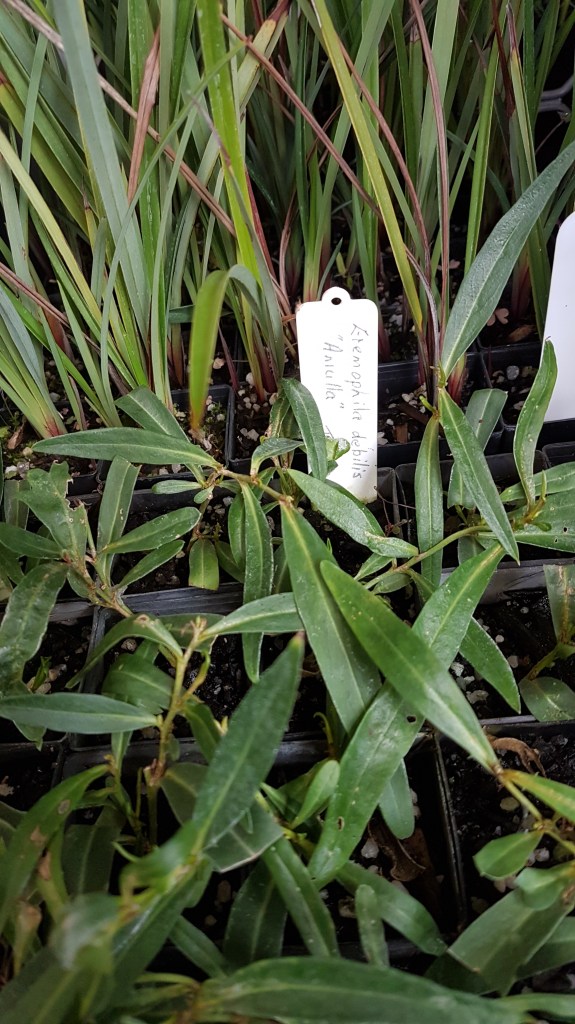
I thought we might focus on Amulla or Winter Apple (Eremophila debilis) in this post. My first introduction to it was when I was out exploring a TSR (travelling stock reserve) and it really struck me. It has these bright pink fruit during the Winter months that must be important to plenty of native species. Now that I have had it planted in my garden for a few years I have noticed the Eastern Rosella’s and even the odd King Parrot that look to be feeding on the fruit.
This plant is frost tolerant and is described as drought hardy. I haven’t given mine any extra care and they are spreading well and have even germinated a couple of new ones.
They are edible but I find them a bit on the bitter side with quite a large seed and not much flesh. They are described as ‘Small green fruits approximately 8mm in size that appear in autumn/winter either turning white or pink when ripe. The fruit has an appearance of a tiny apple with a similar crispy texture and sweet taste.’
I purchased about 30 of them during this community opportunity and I am in the process of planting them in some of my revegetation sites on the farm. Can’t wait to see how they go.
Apparently Amulla is not unpalatable to stock and can be heavily grazed at times even with it’s low growth-habit. It is not a common species but this could be due to the fact that it is palatable and has now been grazed out of many sites where it may have previously grown. Each plant can live for 10-20 years, which is amazing, and one plant will cover an area of about a square meter in a couple of years.
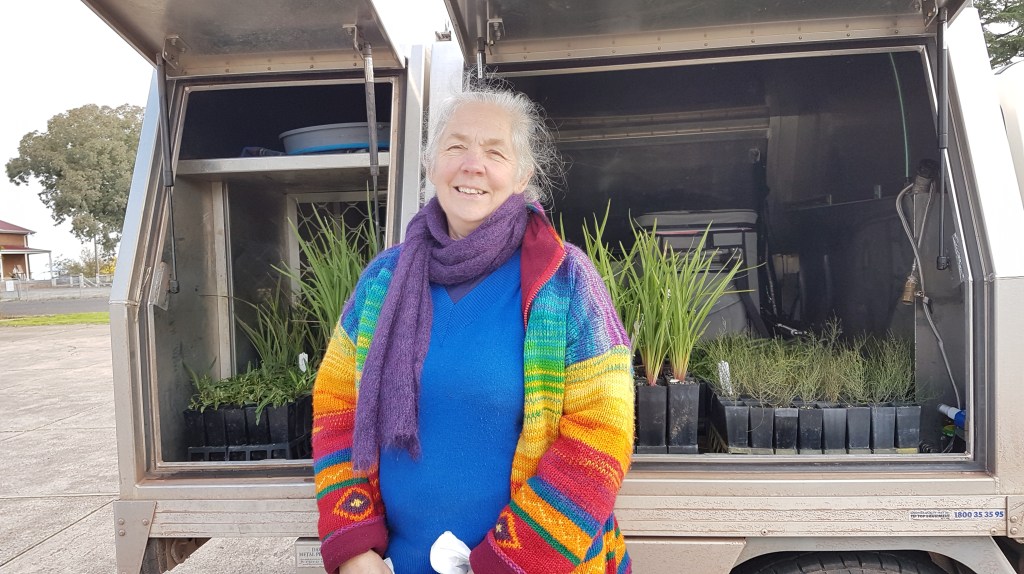
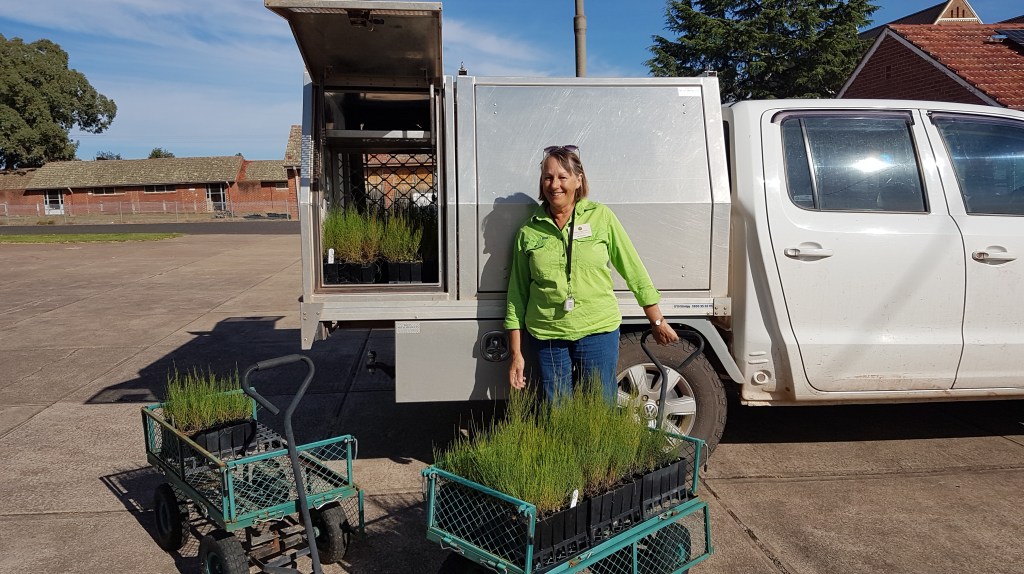
The Weddin nursery propagated 243 of these Amulla which are in the process of being collected and planted across 16 farms in our region.
All up including the Amulla 964 plants have been successfully propagated with a further 250 coming up now. If you haven’t already collected your order from the nurseries don’t forget. Please let me know if you are having trouble getting to either of the nurseries to collect and I’ll see if I can help.
We would love to hear how your plants are growing and where you have planted them so please let me know and send us some pictures 🙂


Mycology May – Fungi surveys – Box Gum Grassy Woodland – Cowra
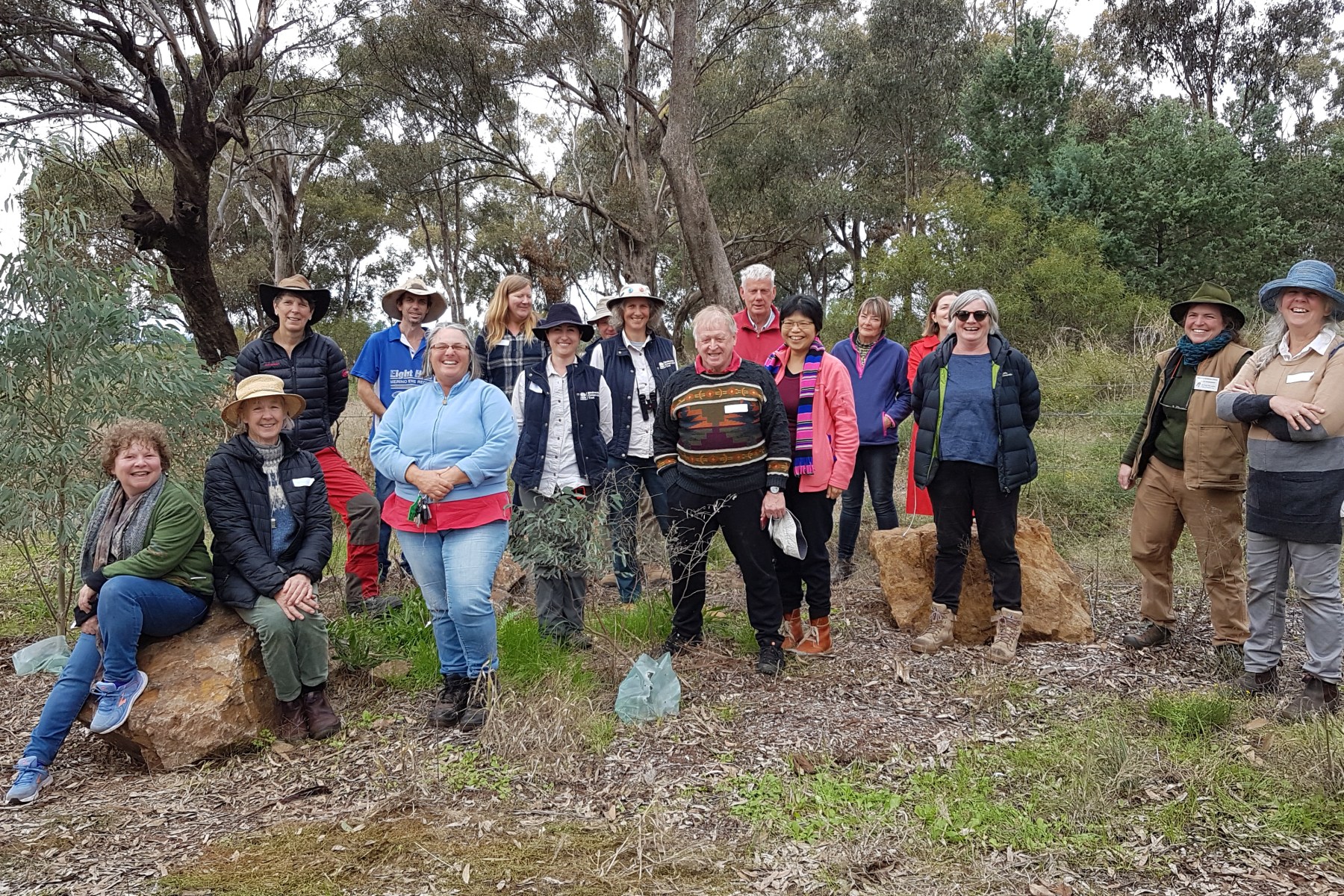
On Saturday the 21st May we held our first ever Fungi Surveys of Box Gum Grassy Woodlands on 2 sites around Cowra. One site was the Chiverton TSR on the Grenfell Rd. and the second site was in remnant woodland on the farm of one of our Box Gum Grassy Woodlands Habitat on Farm projects.
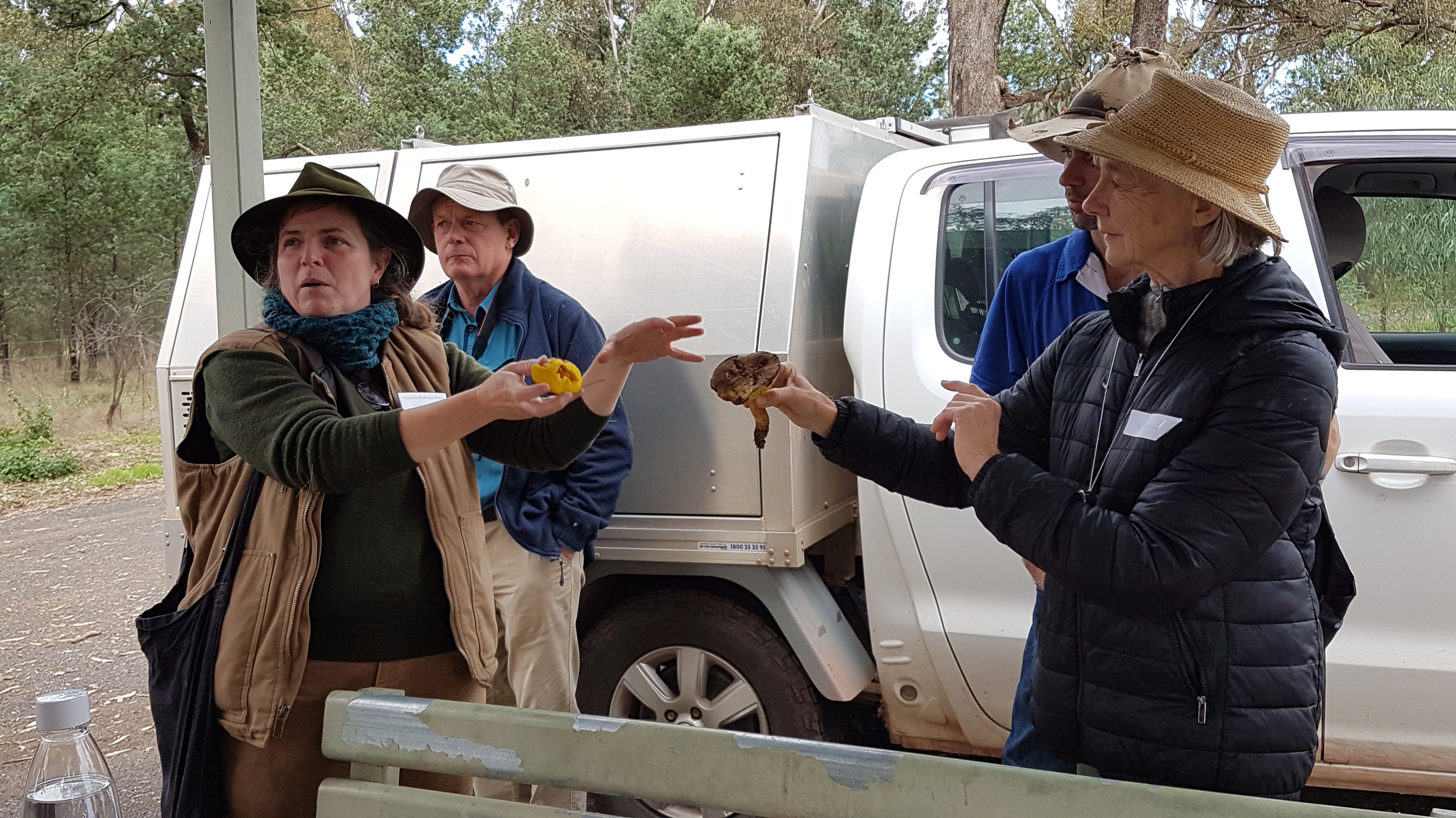
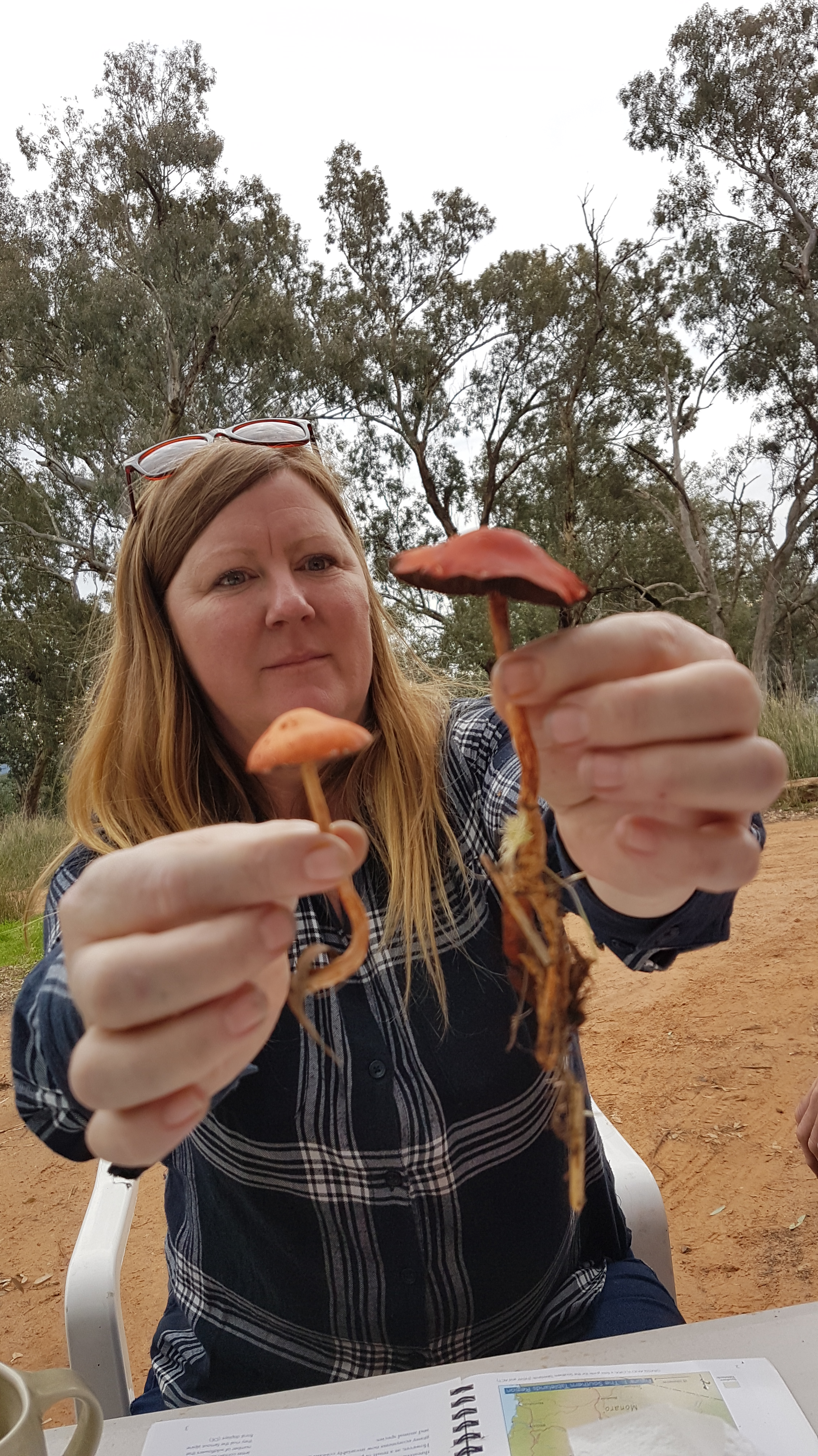
It will be wonderful to start gathering data on the fungi in our woodlands. We set up 4 teams on each site and collected 101 fungi specimens that have all gone to the Orange Ag Institute for official identification and recording.
In case you needed a bit of extra encouraging to love fungi, Alison Pouliot reported in this FungiMap BLOG about the fungi of Central Victoria’s Box Gum Woodlands and I am sure the same would be said for our local woodland here :-
Hundreds, possibly thousands of species of fungi inhabit Central Victoria’s Box-Gum Grassy Woodlands and Derived Grasslands. Although rarely a focus of biodiversity management, fungi are vitally important to the health and resilience of these ecosystems.
Many fungi may be threatened by processes that have resulted in widespread destruction or deterioration of these woodlands, especially as they are now largely restricted to isolated remnants.
It is so important for us to learn more about the fungi of these Woodlands to help us protect them into the future. The fungi are just as vital as the trees, understory, forbs, fallen timber and everything else associated with the woodlands. Interestingly it was noted by Alison that there was quite a difference in species when comparing the two sites. The species at our farm remnant site were very much colonising fungi species and although we found many fungi, it was not as diverse as the TSR (Travelling Stock Reserve) site. The TSR site also contained a greater variety of understory and groundcover plant species.
It really helped to tie the day together having some of the Biodiversity Conservation Trust team along to talk about the Box Gum Grassy Woodland remnants we were surveying in.
I am truly blown away everyday at how much everything links up with everything else. We still have such a small knowledge of this interconnectedness around us. They say Fungi is the Forgotten Kingdom but we are working to change this across the Central Tablelands. I can’t wait until next May!!!
The CSIRO did a study published in 2009 ‘Fungus diversity in revegetated paddocks compared with remnant woodland‘ in the area around Holbrook which is an interesting read if you wanted to have a look at it.
You can also check out this article recently produced by The Conversation ‘Beyond Flora and Fauna: Why it’s time to include fungi in global conservation goals‘ which further discusses the importance of fungi in our ecosystems and life.






Special thanks goes to all the partners who helped to make this event possible. They include Central Tablelands Local Land Services, Saving our Species, the Environmental Trust and also the Biodiversity Conservation Trust.



Listening to the Lachlan

By Trudi Refshauge (Note: this BLOG does not cover all conference topics and issues)
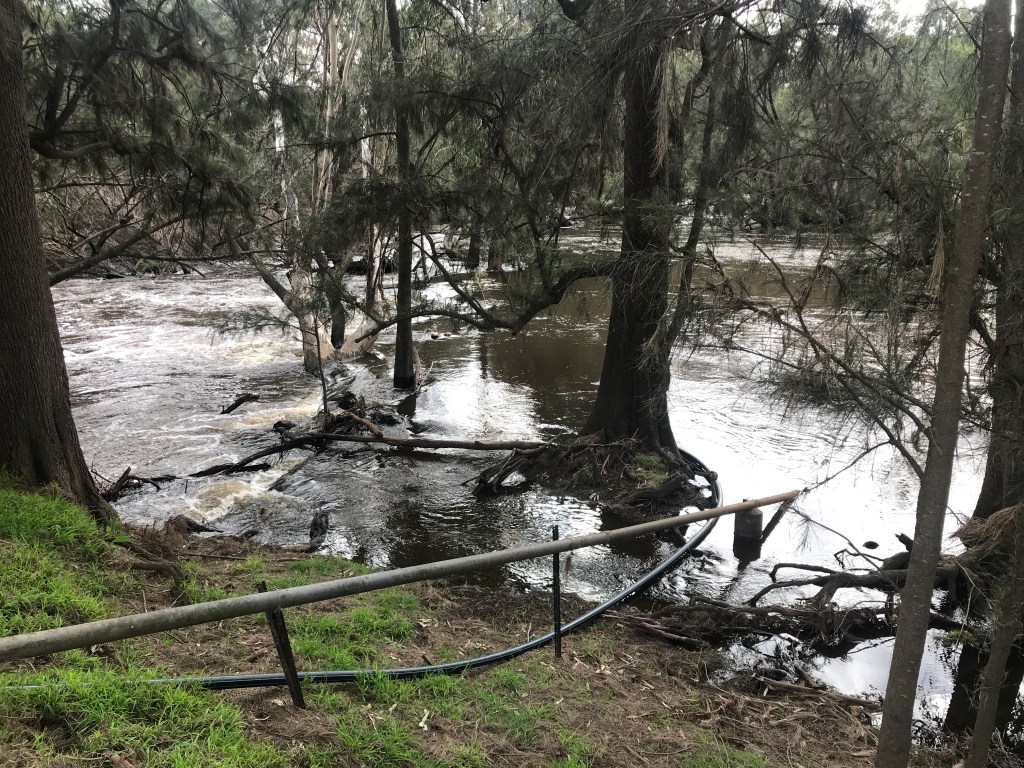
Listening to the Lachlan was a two-day conference, held in Forbes, 21st and 22nd June 2022, exploring social, economic, ecological, and cultural issues currently connecting to the Lachlan River.
Stakeholders from the Upper Lachlan (Reids Flat) to the lower Macquarie Marshes, joined irrigators, ecologists, engineers, graziers, first nations peoples, politicians, and government agents, offering facts, feelings, reports, and concerns about the Lachlan River.
Central West Lachlan Landcare, Mid-Lachlan Landcare, Lachlandcare and Hovells Creek Landcare sent representation.
The Issues (The following conference questions revealed several key issues)
Do more dams make more water? Is raising the Wyangala Dam wall robbing Peter to pay Paul? (e.g., will downstream farmers gain water security while upstream farmers lose their productive grazing lands?
Does Raising a Dam wall make sense, if it means drowning a critically threatened Grassy Box Woodland? (NOTE: 1 % of this ancient Eucalypt ecosystem remains in the Central West, having cleared most woodlands for agriculture).
The proposed Wyangala Dam wall upgrade will require a vehicle movement about every 33 seconds during the build, and every second vehicle will be a heavy truck. 875,000 truckloads of earth and gravel, equaling one truck every 18 minutes for four years. How will this effect local roads, or the people, livestock and native fauna that share the road?

Will irrigating from the Lachlan River become more expensive than irrigating with bottled water? (A $2 billion upgrade = $30,000 per mega-litre).
Can the dam be managed for both flood and drought mitigation (meaning it will need to be kept full but have air-space at the same time)?
The Lachlan River’s catchment is disconnected from the Murray-Darling Basin. Has it missed out on critical funding for water efficiency programs and largely been forgotten by government?
How do we value ducks and native fish populations opposed to irrigation production systems?
How can The River’s connected flood plains and wetlands be maintained in a hotter, drying climate?
Country is currently and noticeably drying from the bottom up (small and medium size flood/flow events have stopped and major flow events are now smaller). The downstream floodplains have dried out since the 1971 raising of the Wyangala Dam wall, so what will happen if the wall is raised higher?
What effects has the decline of 71 % of water coming into the Great Cumbung swamp had on water birds (as water birds eat grass-hoppers, does bird loss contribute to pest plagues and ecosystem decline?
Has ‘The River’ become a (turbid and sand-clogged) pipeline for irrigators and towns as opposed to a once sacred common, offering clear water, food, and access to all?
Has the introduced system of trading water moved all the power to the high-end user and is this fair?
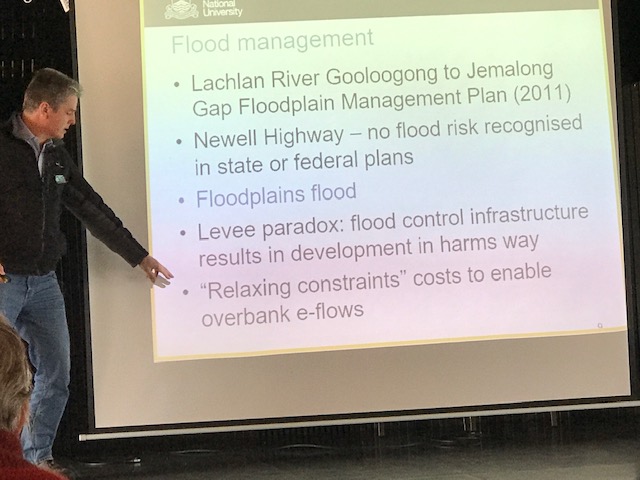
Australian National University researcher discussed Forbes railway line as contributing to existing flood problems for Forbes and suggested their were engineering solutions to mitigate this issue.
Cultural issues????

The Solutions
- Transfer costs of building Wyangala Dam wall to invest in alternative water security measures;
- Develop systems that both utilize groundwater and allow for full aquifer recharge
- Instill water treatment plants for towns to reuse and recycle storm and waste water
- Support irrigators to update and improve their water efficiency (e.g. pipelines)
- Allow more flows to flood plains allowing waterbirds and other native species to flourish
- Control all land erosion sites that contribute to the existing and growing sand slug
- Protect and restore a long-term water plan supporting people and food security as well as indigenous culture and ecological diversity (particularly protecting water bird and native fish breeding habitats).
Key Facts
- The Lachlan River is the 4th longest river system in Australia.
- It is the only river with a decreasing channel capacity, that terminates inland (into the Great Cumbung Swamp).
- There is a complex system of governance aligned to the River and its wetlands (independent rules exist for irrigators, towns and each of the following systems; Lake Cowal, Lake Brewster, The Great Cumbung Swamp, the Macquarie Marshes).
- There is currently an expanding 150-kilometre-long sand slug moving downstream from Wyangala Dam, filling and suffocating fish breeding holes, causing localized flooding beneath bridges, and becoming problematic to irrigators.
- Since 1971 (construction Wyangala Dam wall 2), Macquarie Marshes has flipped from being a wet, constantly flooded system to a dry, occasionally flooded system.
Concluding statement from Macquarie Marshes farmer Garry Hall
“Climate change is real and it’s here and we all need to Listen to the Lachlan to help it survive.”
A huge congratulations to Pennie Scott (a Canowindra local) who organised this special conference.
Glossy Update April 2022

There were a few of us that took part in the first annual Great Glossy Count last month and we surveyed grids in Conimbla NP, just outside Conimbla NP and over at Back Yamma State Park. The aim of the surveys were to look for Glossies and also to look for their feed trees. Unfortunately we did not see any Glossies but we certainly found feed trees in and around Conimbla. There were no feed trees recorded in Back Yamma unfortunately.
Jayden identified that the trash they drop while eating the seed at the sites varied in age from 2 to 4 weeks old. So fantastic to see the Glossies had been there recently. It will be so fantastic to have this data collected across Eastern Australia in their range. Hopefully it will help the birds into the future.

We have also recently collected some more of the trees that the Weddin Nursery have grown specifically for this project and they are being planted into some of the project sites. I have been told that the trees that went in last year are growing well too which is great news.


Rakali – a sad local story

Last weekend whilst walking along a a creek near Koorawatha one of our members came across some bailing twine tied to a log and trailing down into the creek. She decided to investigate what it was and wanted to let everyone know.
“I’ve had a sad experience over the weekend of getting my first Rakali sighting ever, unfortunately deceased in an opera house net. It appears to be a mother and offspring, based on sizes/sex etc – this was the cost of catching one small yabby. I can only hope there were other siblings around that are old enough to survive without the mother.
I thought it could now at least be something that can be shared among our Landcare network?
A reminder about the risks and impact of enclosed nets (legal or illegal), as some people really seem to forget why opera house nets are illegal to begin with, and the need to not submerge enclosed nets ……this one even had excluder rings on the entrances, so that’s also still not safe.
I thought it’s likely some people would think these were just exotic rats if they caught them too..”


Maybe you did not know that the opera house nets are now illegal as of the 30th April 2021. You can find out more here. New open top style yabbie nets are widely available and must be used instead to allow non target species to safely exit the traps. Please don’t use the closed in nets anymore.
You can also find out more about the wonderful Rakali (sometimes described as Australia’s otter) here.
Saving our Superb Parrot – Funding Available
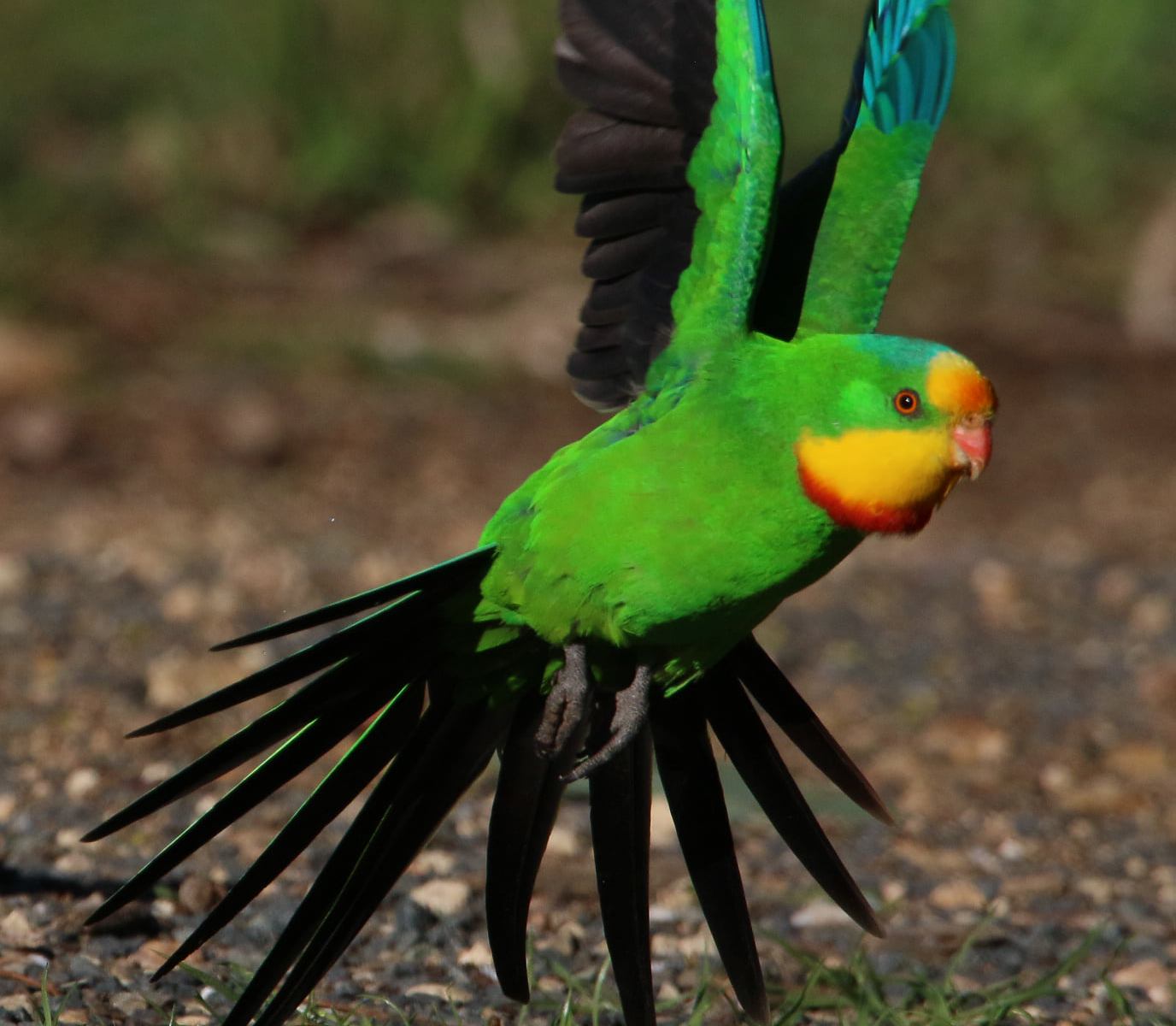
Photo Credit – Phillip Weyers
We are excited to have a little bit more funding to continue the fantastic work everyone has been doing to put scattered paddock trees back into our farms. Planting trees, for the future, to help the Superb Parrot plus many other species in the long term. Some of the key threats to the Superb Parrot are the loss of living and dead hollow bearing trees and poor regeneration of nesting trees.
The aim of this funding is to build on the work done for this project in 2018/19. To enhance areas of our highly cleared landscape in the Mid Lachlan Landcare region by further developing connectivity through the landscape to improve movement and habitat of the Superb Parrot and other local fauna. The trees must be planted within 30m of each other and preferably connect remnants i.e., roadside vegetation and an existing mature paddock tree.
Most of you would now be very familiar with the paddock tree work and the mesh we have been using to construct the guards. The cost of this mesh and star pickets has increased significantly during the last 2 years. We can offer the trees plus 50% off the cost of the mesh and star pickets for this project. There are more details in the attached Expression of Interest (EOI). Construction and installation of the guards plus planting of tube stock is to be completed by you. Hopefully we will get a couple of farm depot offers again and will have tractors to load the mesh onto your vehicles when you are ready to collect.
We cannot give exact pricing until all EOI’s are received, assessed and prioritised. The current indication is that a 50% contribution by participants for one large roll of mesh and the pickets needed should work out to be about $450 and less for the shorter mesh rolls. (fingers crossed no more steel price rises in the meantime)
We really hope you would like to be part of this project. If you are not familiar with these tree guards or have any questions, please just give me a call and I can talk you through it.
You can find out more about the Superb Parrot Project and scattered paddock trees on our Website here You can also access a Mid Lachlan Landcare region map here.
Please feel free to forward this email to anyone in the region you think might also be interested in taking part in this project.
We are looking forward to receiving your expression of interest.


 Mid Lachlan Landcare