Mid Lachlan Landcare
supporting sustainable agriculture and restoring the environment
Summer Update from ‘Birds on Farms’

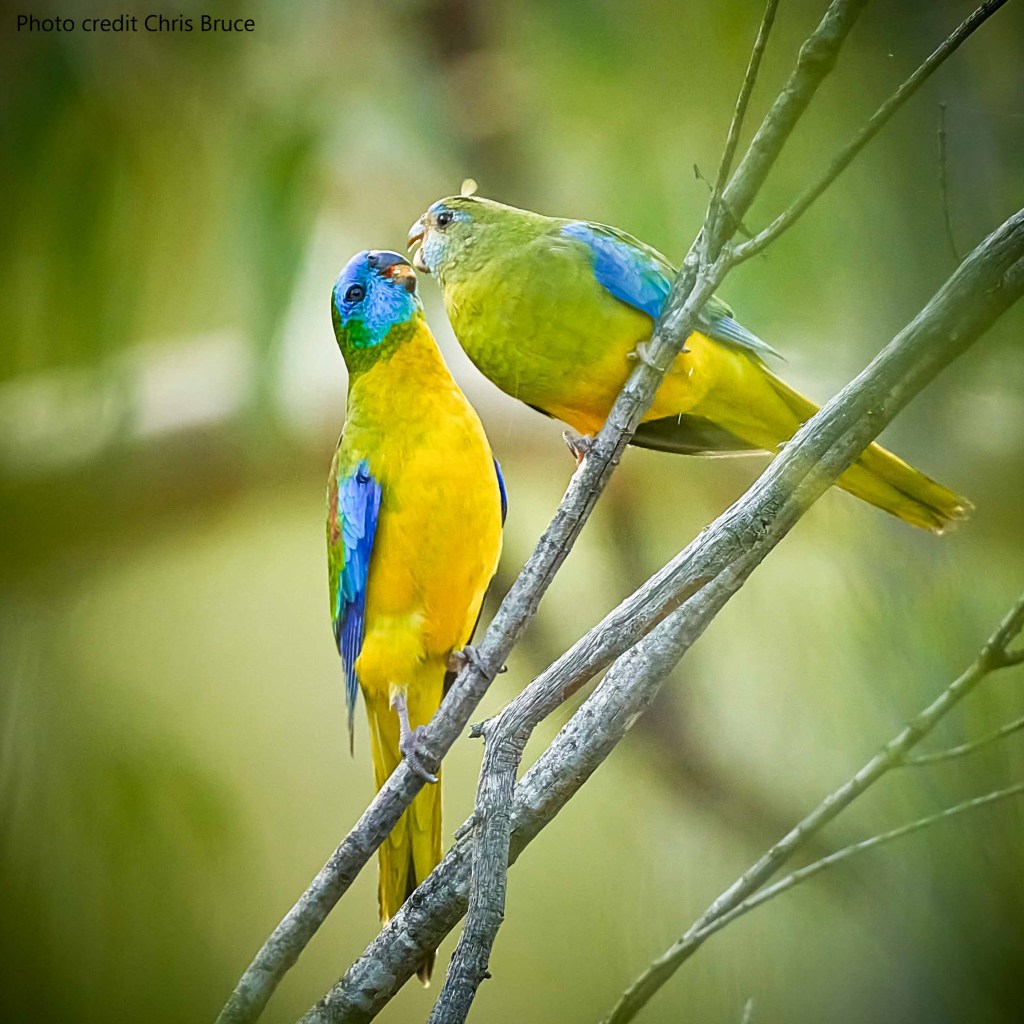
Gorgeous Turquoise Parrots. Photo credit Chris Bruce
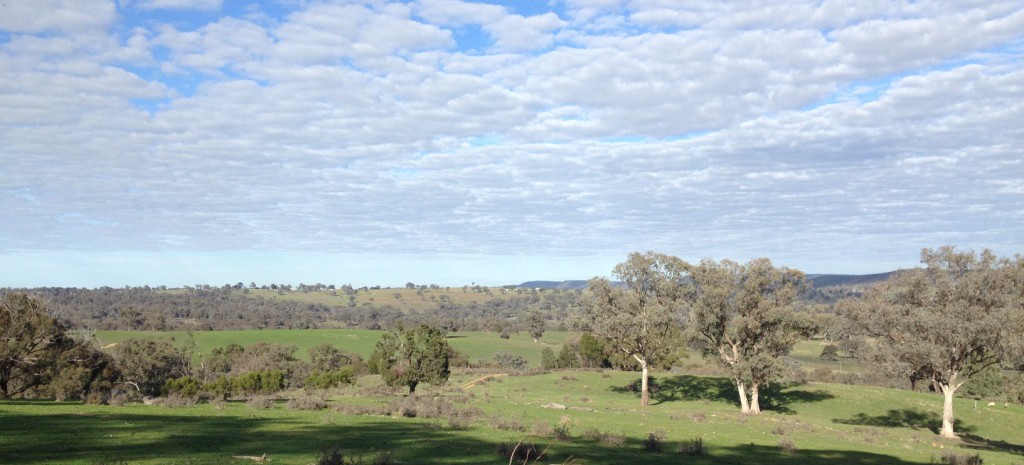
The end of 2021 saw the beginning of the Central NSW Birds on Farms Summer surveys with results that would have any bird enthusiasts ecstatic. Summer saw the return of some of our most spectacular migratory woodland bird species. Dollarbirds, Rainbow Bee-eaters and Sacred Kingfishers contributed awe inspiring colour to our woodland forests and waterways once again and were sighted frequently throughout the survey period. With the consistent rainfall and an explosion of food availability some bird populations have boomed and expanded beyond their typical ranges so keep your eye out for anything unusual and exciting. 2022 began with a sighting of a Spotted Bowerbird at a participating property on the doorstep of the Weddin mountains, scattered flocks of Budgerigars throughout properties in the Central Tablelands and a pair of Brolga nesting in flooded fields near Grenfell. 2022 couldn’t have looked more promising, that was until attending a recent survey on a participating property near Nangar National Park and sighting upwards of 40-50 Turquoise parrots in a single survey site! This sighting inspires hope as we intensify our efforts to support the Turquoise Parrot, Hooded Robin, Brown Treecreeper and all other woodland birds today and well into the future
A high level of enthusiasm was shared among all participating landholders and I was overjoyed to meet so many new people keen to learn about and support our woodland bird species!
If you would like to know more about the Central West Birds on Farms Program check out the link below;
https://birdlife.org.au/projects/woodland-birds-for-biodiversity/reaging-woodlands-cwnsw
This project is being funded by the NSW Government through a partnership between the Saving our Species program and the Environmental Trust, and by support from the Corella Fund.
Mid Lachlan Landcare would like to thank Jayden Gunn – Central NSW Woodland Bird Coordinator for Birdlife Australia for providing us this update on the project we know many of you are involved with. It’s really very exciting what you are finding on your farms.

Bursaria spinosa flowering now

We were recently reminded about this wonderful plant by Mid Lachlan Landcare member Ruth Workman. This is what she had to say :
“The Bursaria spinosa is in full froth at the moment. We all need reminding just how great this sweet smelling, mid-summer flowering, adaptable, drought hardy, frost hardy, spikey, bird protecting, insect attracting, gorgeous shrub really is! All this frilly, honey scented blossom, in the middle of summer when most things have stopped flowering in normal years, followed by attractive colourful seed pods. What is not to love!”
What more can we add to this description!! It really is beautiful when out in flower and so special that it flowers in Summer. It is found in Box Gum Grassy Woodlands and can grow from 2-10m high. Interestingly there are 2 subspecies, B. spinosa subsp. spinosa and B. spinosa subsp. lasiophylla. The subspecies lasiophylla is the host plant for the Purple Copper Butterfly. This Butterfly is a threatened species and there is, and has been, plenty of work going on to grow and plant this subspecies over Lithgow/Bathurst way. The aim is to help increase the habitat for the Butterfly. You can see a great video on the Purple Copper Butterfly here.


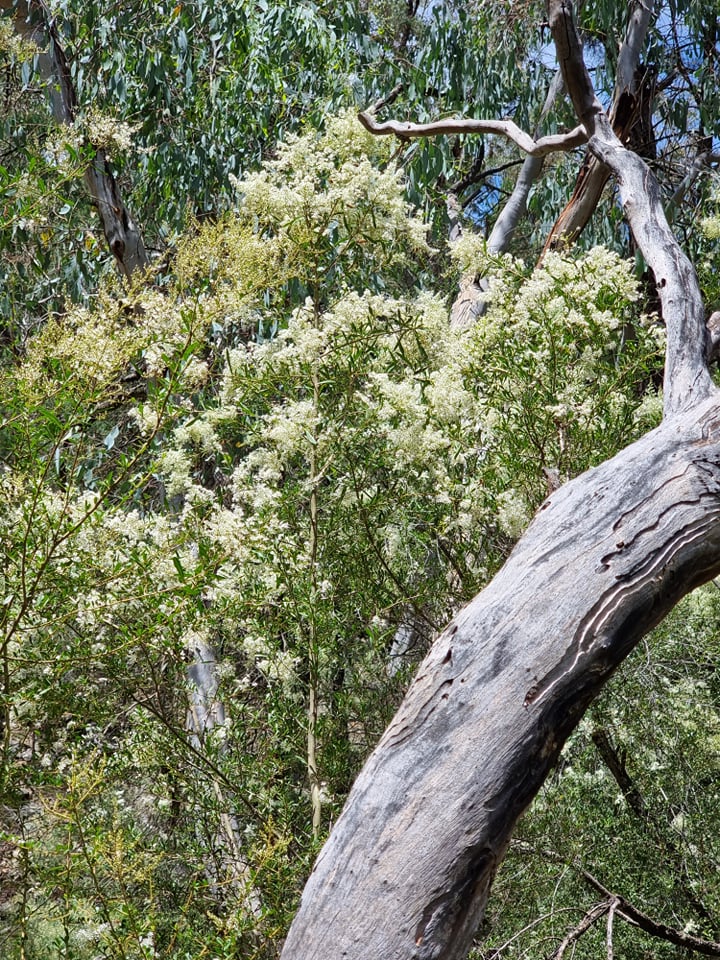
Thanks to Ruth Workman for the photos
Within our Mid Lachlan Landcare region, we have the subspecies spinosa as far as I know. We are a bit low in the Landscape as the Butterflies are only found over the 900-metre altitude mark.
This plant is hardy and easy to grow. Just remember it is spiky so don’t put it somewhere you need to get access to very often. It is a good addition to your garden and can apparently be pruned.
If you have remnant patches of Box Gum Grassy Woodland on your farm it would be great if you planted a few of these in your patch. It is also a good plant to include in any revegetation works you might be undertaking.
So, if you’re looking for a hardy native that grows in the region and has beautiful perfumed flowers in the Summer this is the plant for you.
Fun Fact : The leaves of Bursaria contain a secondary compound called aesculin (a coumarin glucoside), which was exploited as an ingredient in sunscreens in the 1940s and is used in medical research today.
Profitable Farming with Carbon

Join us on Wednesday 9th March 12 – 4pm in Cowra $20pp afternoon tea included.
Book your tickets here
We are sorry but this event has now been fully booked out.
Spring 2021 Conimbla National Park explorations
What a magnificent season to get out and explore your local area. I’ve been getting out around Conimbla NP as much as I can and so has Ruth Workman from Kangarooby Catchment Landcare. We even got to do a bit of exploring with Noel and Dennis from the Weddin Community Native Nursery recently.
A few plants we have found and have fallen in love….
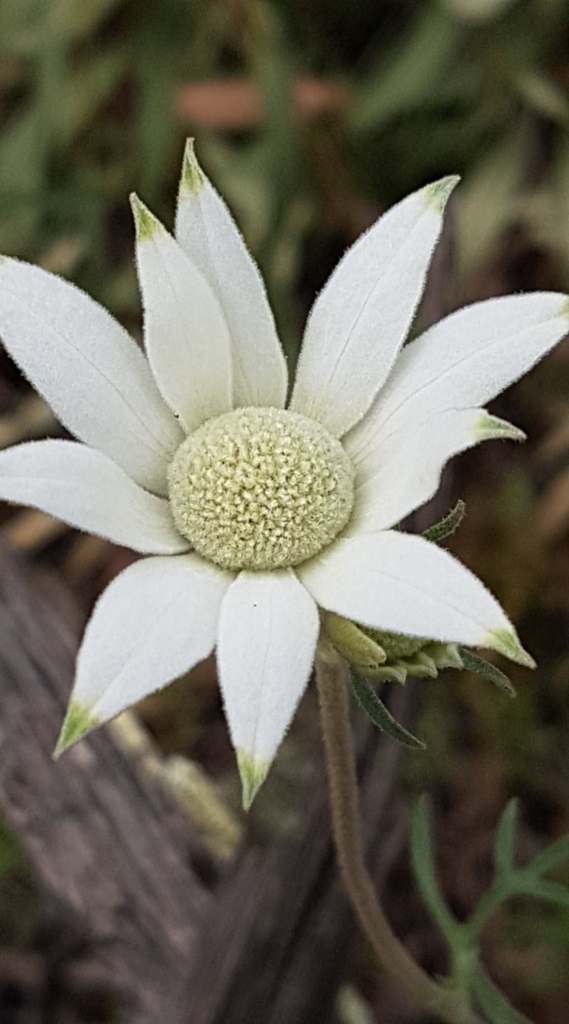

Look at the height of these Flannel Flowers (Actinotus helianthi) They were only just coming out but it would be a picture up there now. In the Park Management Plan they note that Flannel Flowers are rare in the Central Western Slopes region of NSW so it’s pretty special they can be found up there.
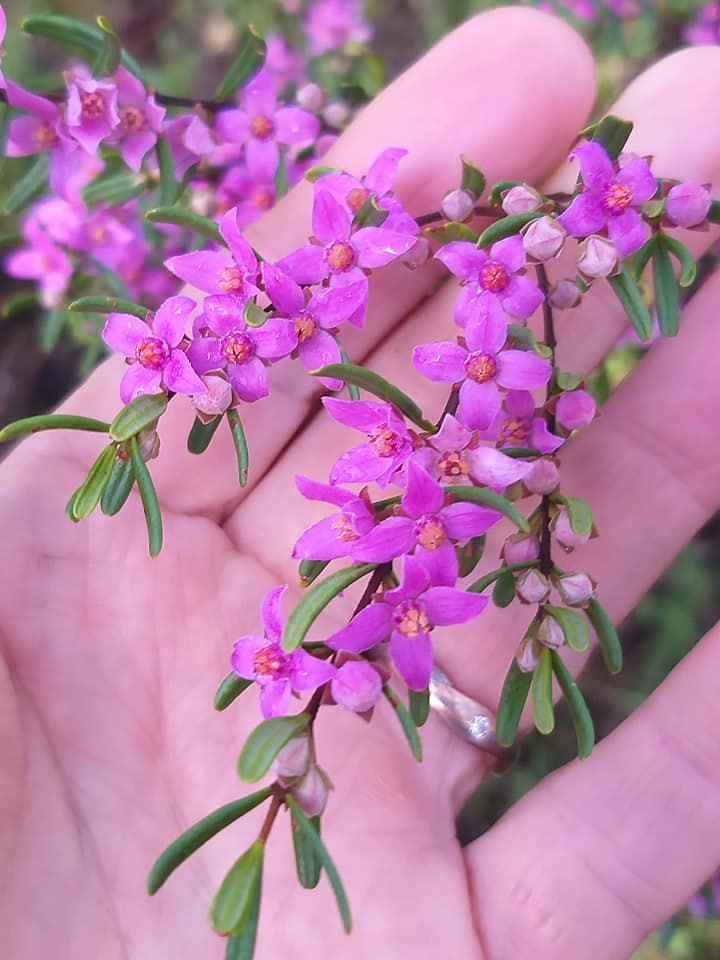

This beautiful Boronia just absolutely covered in flowers. We noticed the purple/pink colour in the bush while driving through and then had to stop to go and investigate what it was. It is apparently Sandstone Boronia (Boronia glabra). It smells divine as well.


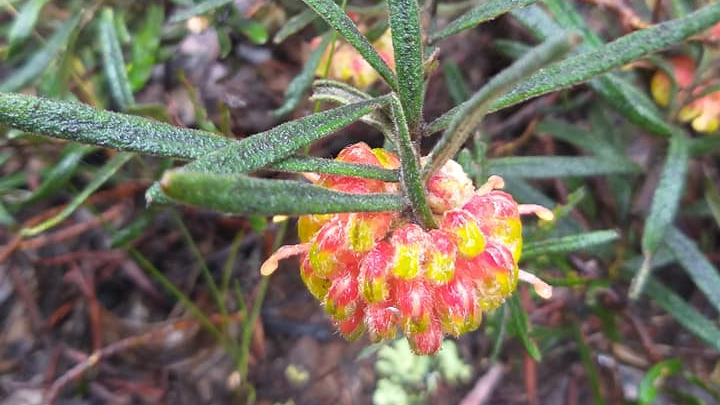
This is Crimson Grevillea (Grevillea polybractea) I have not had the pleasure of seeing it yet and will have to wait until next year now but isn’t is stunning!!! There doesn’t seem to be much information about this species and many of the NSW records for it seem to be around and within Conimbla NP. How lovely would this one be in our gardens 🙂 Such an interesing flower shape.


We did find these ones for the first time last year but it’s so worth including them in this post. These are Blue Pincusions (Brunonia australis). According to Weddin Landcare they were pretty common around here in the past but it appears their numbers have been greatly reduced along with a number of species mainly as a result of predation and ground degradation by feral goats, rabbits and pigs. It is really great that we have found a new population of them and we have let Noel from the Weddin Community Native Nursery know.
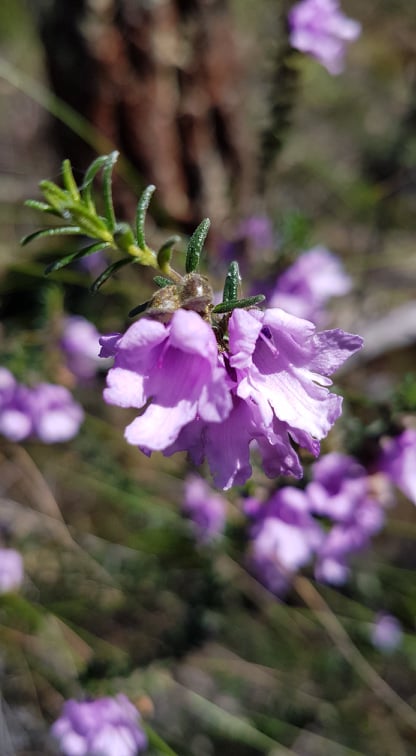
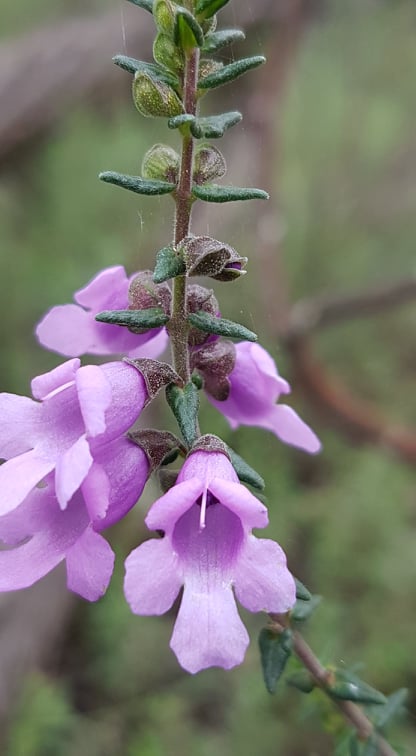
Last but definately not least is our mysterious Mint Bush (Prostanthera sp.) This year we have found another location of these which is fantastic. After trying to have them ID’d, it is believed these are an undescribed species of Mint Bush which is a bit exciting. We are hoping someone will do some work on them in the future to get them sorted out. The leaves of these smell absolutely gorgeous as well.
We hope this has given you a bit of inspiration to head out and explore your local area this season. You never know what you will find?
The value of Surface Rock on our Farms
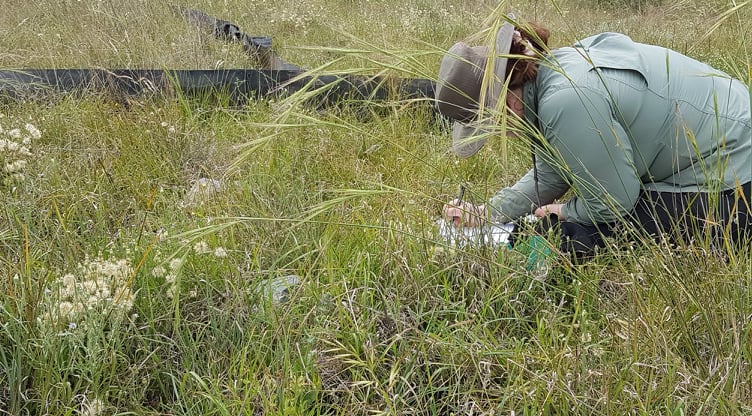
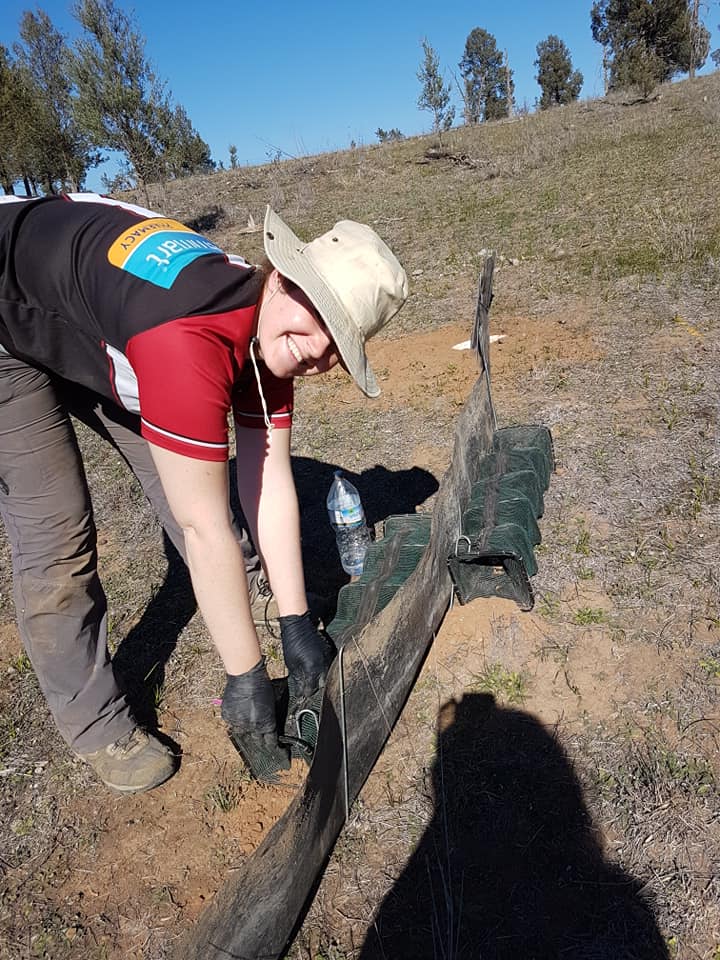
Many of you would know we have had the lovely Jacky from the Australian National University working on her PhD since around August 2019. She has set up plots on properties across Hovells Creek, Canowindra, Mandurama, Gooloogong, Woodstock and Murringo. All to study the benefits of surface rock in landscapes and if you can improve habitat in agricultural land for reptiles. Surface rock is added to some sites, some sites are fenced from livestock, others set up within a grazing paddock and she has control sites as well.
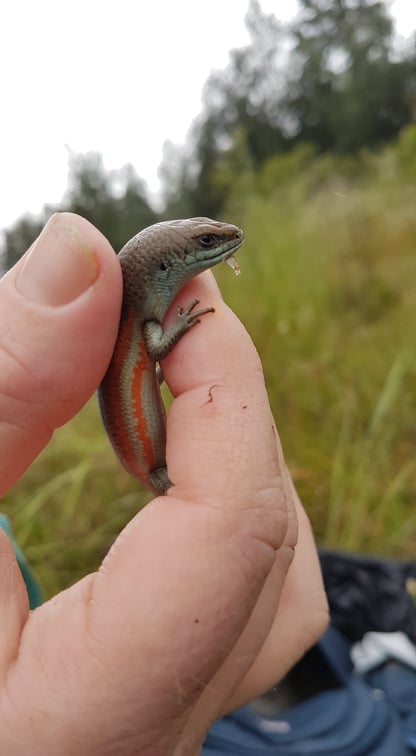
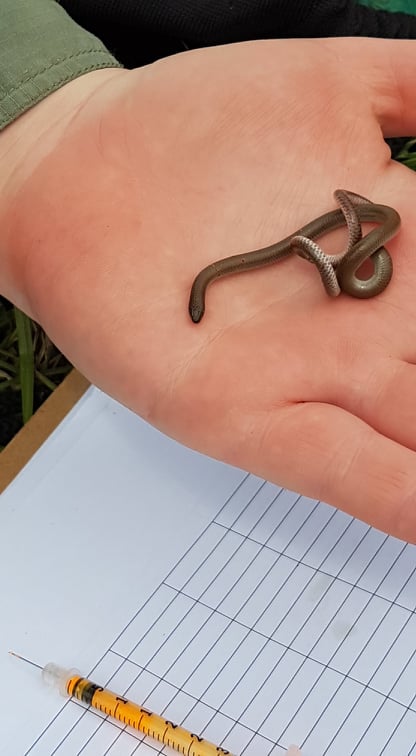
Being lucky enough to tag along during some of the surveys I have learnt heaps and while the results all still need to be sorted through my view is that the surface rock is hugely important habitat within our landscapes. On the sites I visited we found 2 threatened Pink Tailed Worms Lizards and a gorgeous but cranky Rainbow Skink utilising the site that now had the surface rock added. Prior to adding the rock we found nothing in that site.
So, this could be something else you consider if looking to rehabilitate/revegetate an area on your farm. You could look for a site that already has surface rock included or if you have somewhere you know you can get some rock from (many of us have rock piles that have been picked up out of paddocks in the past) you could add a few into the area to further enhance the site.
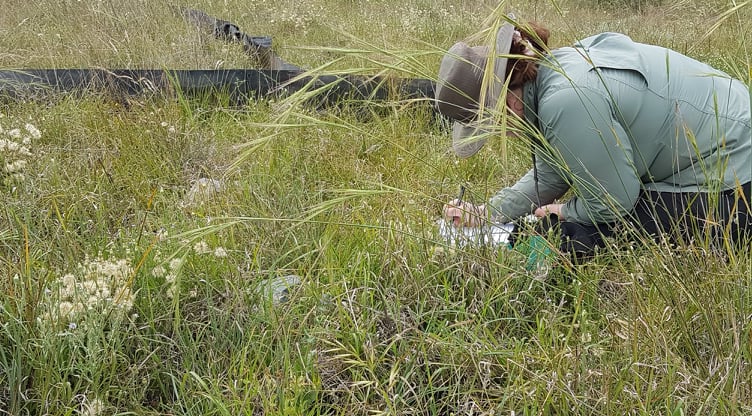
I’ve attached a few photos from the surveys I have been on. I’ve also included a picture of Jacky in August 2019 in the midst of the drought. She has had to go through extremes for this research and I commend her for soldiering on. First drought, then COVID wouldn’t allow her to get out here from Canberra and now the last few weeks she has been surveying during this latest weather event. Trying to avoid getting bogged, dodging flooding rivers and still finding plenty of reptiles.


Monitoring the Round 2 Woodland Sites

In October Dan Florance (with me as his apprentice) began the monitoring of the project sites from round 2 of our Box Gum Grassy Woodland Habitat on Farm project. It’s a hard job but someone has to do it 🙂
It’s such a treat to discover what has started happening once the works have begun on the sites. I thought in this post it would be good to touch on why every single project site is so important.
“How do conservation areas that are limited in extent contribute to ecosystem services and functioning across the landscape?
Maintaining grassy woodland biodiversity through the provision of core conservation areas can be equated to maintaining a store of critical supplies. This store contains the ingredients and tools that may be used to sustain, rehabilitate and create new resources in the future, as well as provide sustenance and habitat for organisms in the present. A core conservation area may contain a range of plant and animal resources of benefit to other parts of the property, provide habitat and food for wildlife, and sustain critical ecosystem services (pest control, pollination, soil health). By minimising agricultural impacts on a portion of the property the options for the future are increased” This quote is from ‘Managing & Conserving Grassy Woodlands’ S.McIntyre, J.G.McIvor & K.M.Heard.
I can really understand where they are coming from in this quote when undertaking monitoring in the project areas. Each project, on different properties, and even within the one site can have huge differences in species diversity, especially groundcovers. You can really start to see how taking, even small actions, to conserve and enhance areas on your farm will contribute to the long term survival of Box Gum Grassy Woodlands. Through monitoring we now know where some species are that we haven’t seen on other properties. This has potential in the future for us to share with each other to create greater diversity across all our properties and assist with the future of these plants within Box Gum Grassy Woodlands.
Just a couple of small examples are Pale Vanilla Lily (Arthropodium milleflorum) which is a gorgeous, quite large, lily that I have not seen anywhere except on one property near Eugowra, last year when monitoring we found the Yass Daisy (Ammobium craspedioides) on one property near Mandurama and in this recent monitoring we have found the Kangaroo Apple (Solanum aviculare) near Canowindra. Now this may not seem that exciting to you, but to me it is wonderful to know we have these species in the area and importantly, to know where they can be found. Potentially this information can be used in the future for more conservation projects. We are so happy to work with everyone who is keen to look at protecting/enhancing Box Gum Grassy Woodland on farm and want you all to know you are contributing more than you realise by putting aside, or managing an area a little bit differently to the rest of the farm. Together we can make a big difference!!
Here’s a few pictures from some of our monitoring….
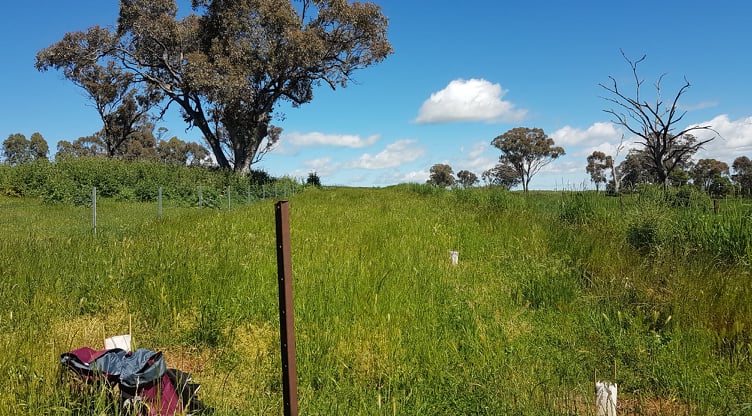
This is going to be a wonderful corridor of shrubs to enhance the many wonderful remnant trees on this property near Mandurama. 
Awesome remnant patch that has been fenced off to manage differently to the rest of the farm in regards to grazing. 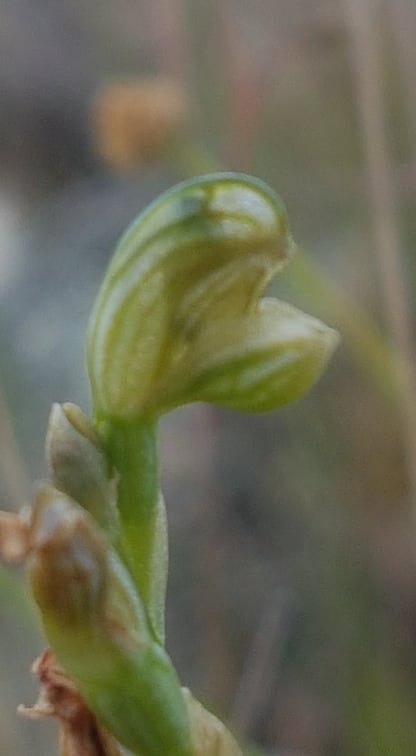
Beautiful Greenhood Orchid discovered on a project site near Canowindra 
These seedlings have naturally regenerated just this year within this project site. 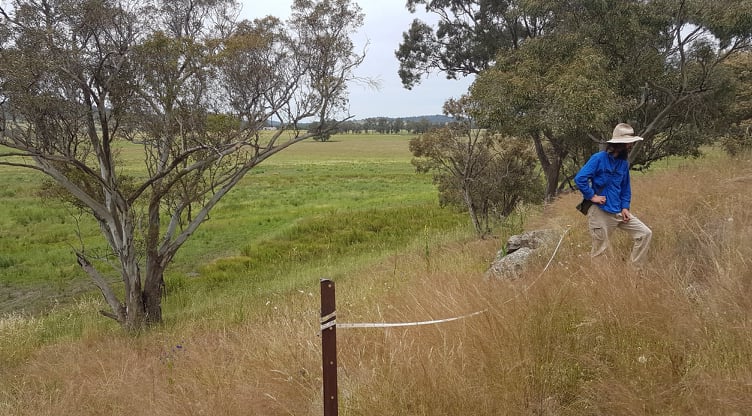
Dan hard at work within one of our ‘Rapid BAM’ random monitoring plots. ‘BAM’ stands for Biodiversity Assessment Method. 
This is the Kangaroo Apple which I had never seen. It is so lush and a member of the tomato/nighshade family. 
Flower of the Kangaoo Apple. It was about 4-5cm in size! 
The gorgeous Yass Daisy which is also a threatened species.

Saving our Species program and the Environmental Trust
Community Box Gum Grassy Woodland Groundcover Plant Purchase

This is a great opportunity for you to order some Box Gum Grassy Woodland groundcover plant species for Autumn next year. This is a trial but if it goes well we could look at running this type of community purchase each year.
Oz Plants and the Weddin Community Native Nursery are going to attemp to grow us the 11 different species listed below. These plants would be fabulous to include in any Woodland patches you may have. They could also go into any revegetation projects you may have completed or are working on. Many of them are also truly worthy additions to your garden.
I’ve included the species and they link to further information. Feel free to contact us if you have further questions about any of the species. I love to talk about them as many of you would already know 🙂
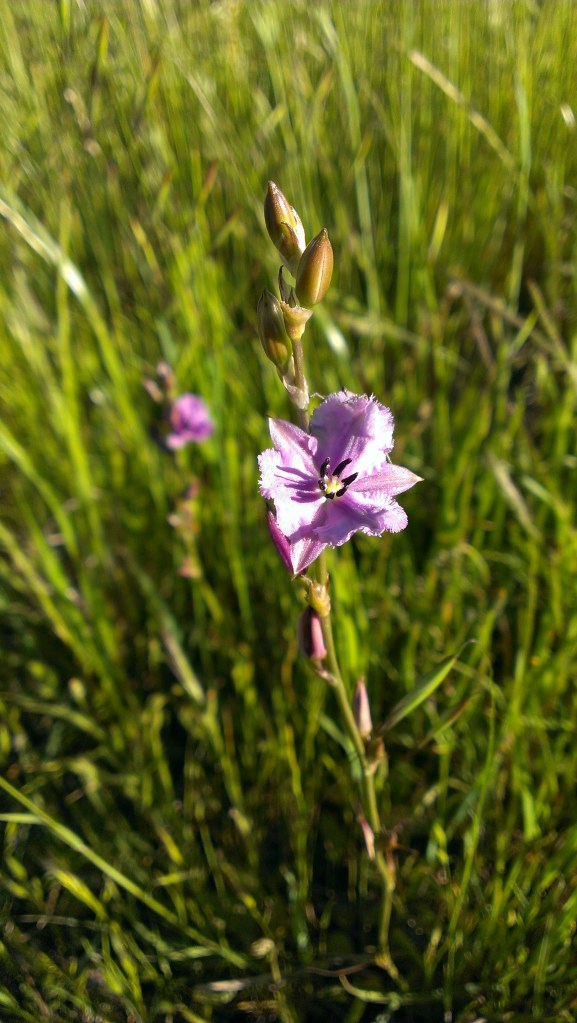
Chocolate Lily (Dichopogon strictus)
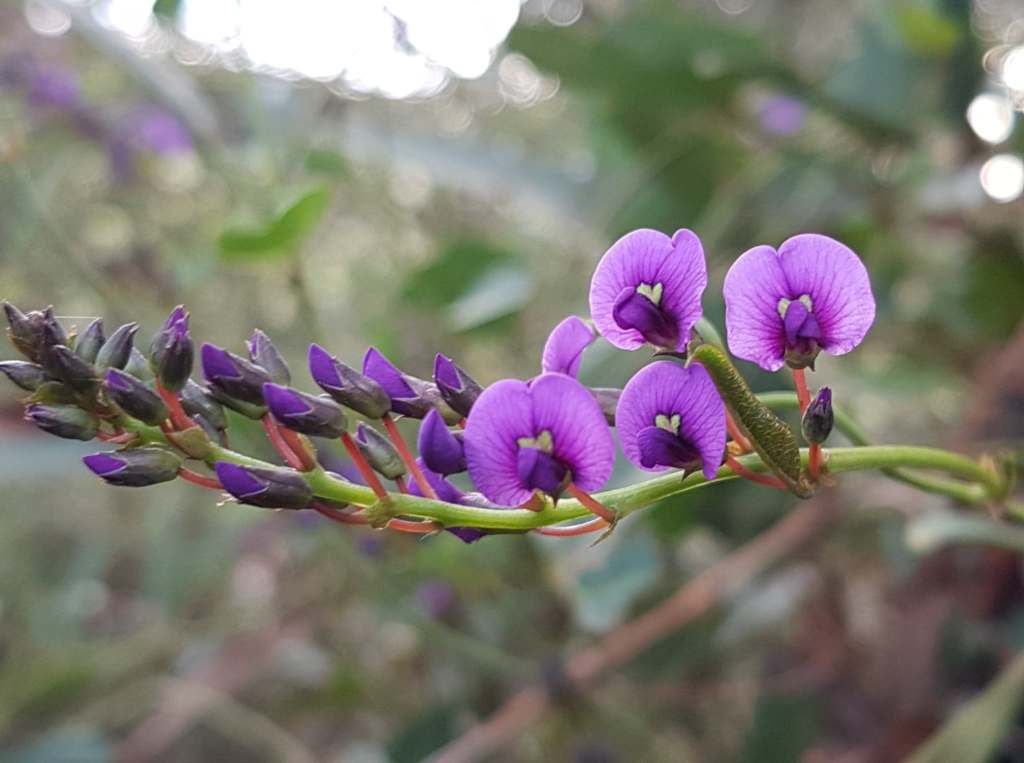
Hardenbergia (Hardenbergia violacea)
Spreading Flax Lily (Dianella revoluta)
Wallaby Grass (Austrodanthonia sp.)
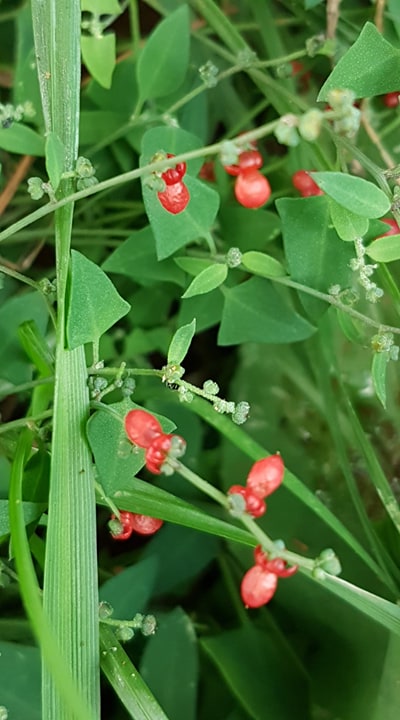
Climbing Saltbush (Einadia nutans)
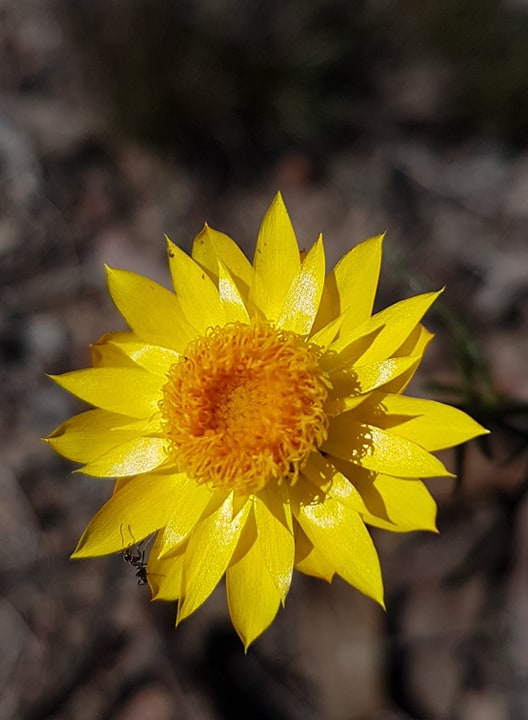
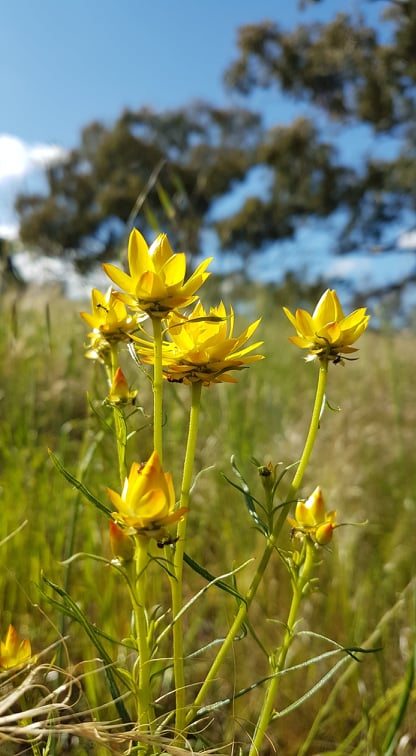
Sticky Everlasting Daisy ( Xerochrysum viscosum)
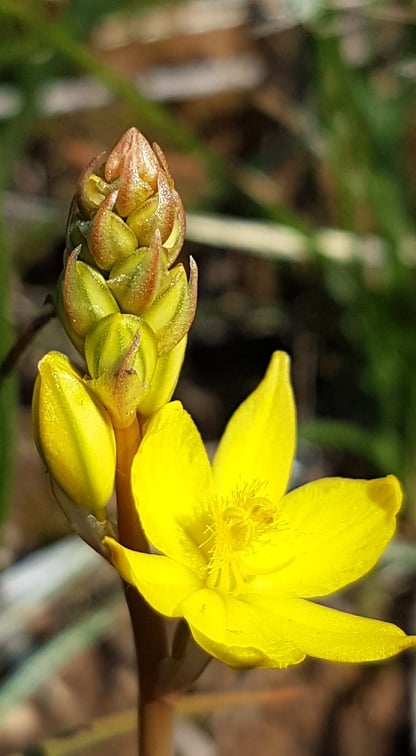
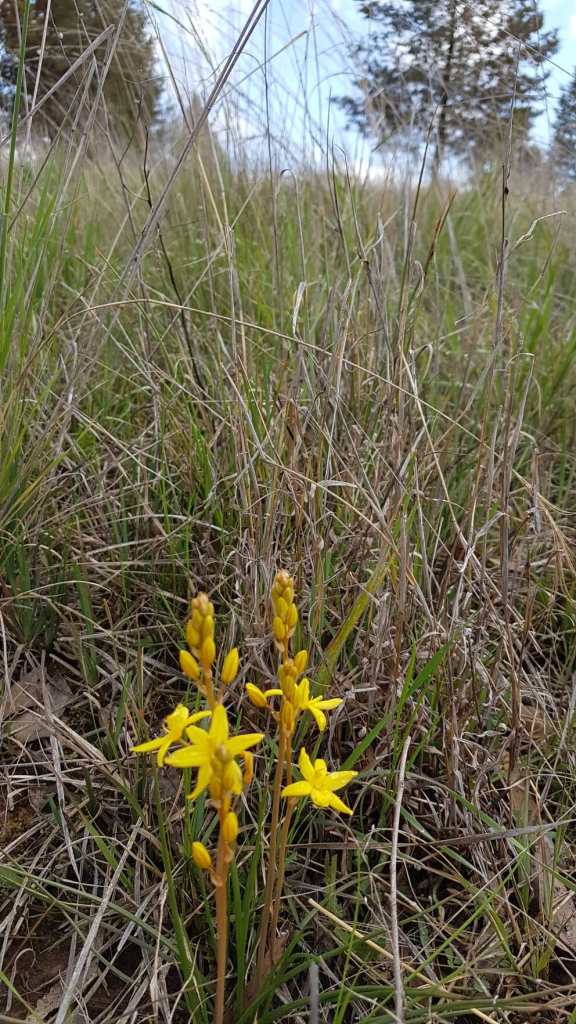
Bulbine Lily (Bulbine bulbosa)
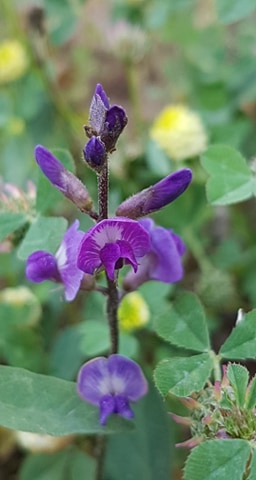
Twining Glycine (Glycine clandestina)
Weeping Grass (Microlaena stipoides)
We cannot guarantee that we will be able to grow all of the species successfully and in the quantities ordered but we will do our best. The plan is to have them ready for planting in Autumn but some may take a bit longer to come up?
Next Steps :
Send an email to midlachlanlandcare@gmail.com listing the species you would like and the amount of plants by Wednesday the 17th November 2021.
We will tally up the total numbers and will then be able to let you know how much it will cost per plant. Note: we are anticipating approximately normal tubestock pricing. You will then confirm your order if you are happy with the pricing.
Best attempts will be made to grow these gorgeous groundcovers and we will keep you all updated on how they are coming along. Then fingers crossed in Autumn they will be ready to plant 🙂
Mid Lachlan Landcare will work with you to adjust numbers to match available plants if lesser numbers germinate.
We have seen all of these great groundcover species during the monitoring of our Box Gum Grassy Woodlands Habitat on Farms project which is great news and so we know they should all be in our landscape around here.
Below are a few pictures of some of the above species I have taken over the last couple of years on farms around the region 🙂





Cowra Archibird photo competition 2021

Time to get your photo’s in for this years Archibird photo competition. We are so excited to be able to support the Cowra Natural Resource Management Committee to run this again for the 3rd year. Hopefully it is going to become a permanent event.
This competition has received exceptional support from our community with over 200 entries last year covering about 65 different species. Lets make this year even bigger!!!!
Remember this is about showcasing the amazing birds in our region and involving you all in getting out into nature to try your hand at bird photography 🙂 Your photo’s don’t need to be perfect.
We are calling it Cowra bird month and have picked October as it coincides with the National Aussie Backyard Bird count. Did you know that last year within the Cowra LGA there were 39 observers who took part during the week and 88 bird species recorded for the area. Those 39 observers recorded 4725 individual birds during that week.
It would be great to have more people taking part in the Aussie Backyard bird count for the region as well. This runs from the 18th – 24th October. You can find all the information you need to partake in the count here. I’m no good at photographing birds so I’ll participate in this instead 😉
Please note entries for the Archibird close on the 12th November.
The terms and conditions can be found here
All the wonderful photographs can be viewed on the Cowra NRM facebook page here
Birds On Farms – Birdlife Australia Project

Hooded Robin – photograph by Jayden Gunn
Hi everyone,
My name is Jayden Gunn, I’ve recently filled the role of Project Coordinator for Birdlife Australia’s Central West NSW Birds on Farms project.
Woodlands have been severely depleted throughout south-eastern Australia. Temperate systems in the Central West of NSW – one of the country’s longest-settled agricultural regions – have been particularly impacted resulting in widespread and catastrophic consequences for our native woodland dependent birds. Birds on Farms is a monitoring program coordinated by BirdLife Australia and implemented by citizen scientists across Victoria and NSW. It aims to address important conservation questions about bird distribution, population health and habitat use on private rural land. Importantly, the project also engages new landholders in bird identification, appreciation of their behaviour, ecology and habitat use. The project has 3 focus species – the Turquoise parrot, Hooded robin and Brown treecreeper where some on-ground conservation work will be implemented to support these species into the future.
We are currently seeking EOI’s for properties to be involved in our bird monitoring program. Surveys are undertaken quarterly. The surveys are undertaken by the landholders if they are skilled and experienced birdwatchers. Otherwise we’ll help to arrange an external birdwatcher to undertake the surveys instead, in which you are also able to be involved as an assistant/trainee if you are interested. Please feel free to let your neighbours and colleagues know about this monitoring program as well, as we are seeking at least 40 properties to be part of this program. We would assist you in the set-up of the 2-hectare survey locations, understand the monitoring of these sites and provide guidance in other relevant aspects.
Please don’t hesitate to contact me for further information. I look forward to hearing from you.
Please have a look at this projects introduction below and it provides all the information you need to know to contact Jayden and get involved.

Animals of Box Gum Grassy Woodlands

On the 16th of September about 25 people settled in to watch our live ‘Animals of Box Gum Grassy Woodlands’ event with the fantastic team from Australian Wildlife Displays and Anthony the ranger leading this event. We were able to get up close and personal with the Tawny Frogmouth, Murray Darling Python, Green Tree Frog, Goanna, Cunnigham’s Skink, Long and Short Necked Turtles, Bearded Dragon, Shingleback Lizard and a wonderful cute young Squirrel Glider.
Did you know:-
- Long Neck turtles are carnivorous and short neck turtles are omnivorous.
- Squirrel Gliders can travel 50m in one glide.
- Shingleback lizards are omnivorous and love eating flowers especially our native groundcover type flowers.
- Green Tree Frogs can live for 16-20yrs
- Bearded dragons have an arrow shaped head and can get themselves stuck in chicken wire
- Cunningham’s Skinks live in family groups and can smell who are their relatives so they know not to mate with them.
- Shingleback lizards can live for 20-25yrs and they mate for life.
- Foxes can smell buried turtle eggs and dig most nests up and eat all of the eggs.
- Young Squirrel Gliders love mealworms.
A couple of things stood out the most in regards to habitat requirements for almost all of these animals and what we can do to encourage and protect them on our farms.
- All of them need timber/trees either living trees, dead trees or fallen timber on the ground. This is all crucial for them to move through the landscape and have areas to live, shelter or hide. It is hard to not ‘clean up’ our farms but if we can consciously try and leave some fallen timber (especially if it has hollows) and not cut down the trees that have died it can make such a difference to the long term survival.
- Foxes are a huge threat to all of these species and Anthony truly believes one of the best things we can all do to help is to undertake fox control on our farms.
- Fencing off Riparian areas was another important way we can help our wildlife into the future.

Anthony talked about a time not that long ago when you would see a bearded dragon on almost every fence post and pairs of Shingleback lizards were almost an everyday sight. Why do we not see this anymore?
We have such a huge diversity of animals that depend on our Box Gum Grassy Woodlands and with less than 10% of the pre European distribution left in NSW we need to do everything we can to preserve and enhance these areas on our farms.
We need to continue to look for innovative ways to strive towards healthy, profitable farms whilst enhancing and preserving any patches of woodland we might have.
Little actions by us can make a big difference to these species!
If you would like to find out how you can get involved in doing on ground works on your farm to protect or enhance your Woodlands, please contact us at midlachlanlandcare@gmail.com
The ‘Animals of Box Gum Grassy Woodlands’ event was made possible by the NSW Government through a partnership between the Saving our Species program and the Environmental Trust.


